
Reviewed · CALLIGRAPHY & CRAFT CLASSES
2-Hour Chinese Calligraphy with an Artist in Shanghai, China
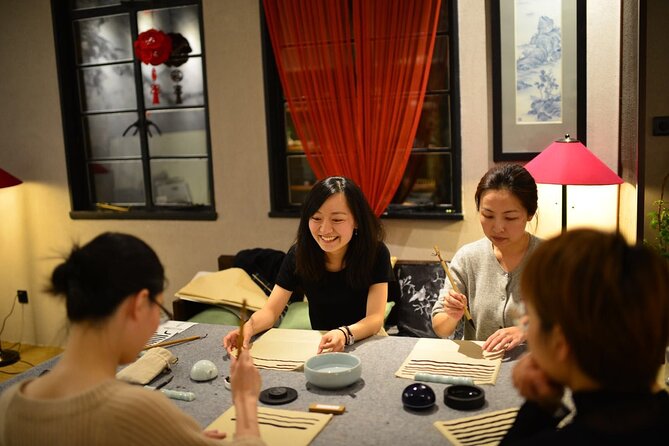
A brush, a pool of black ink, and one careful stroke are enough to change the pace of a Shanghai day. In this two-hour class, artist and teacher Lucy introduces you to Chinese calligraphy, then helps you create a personal work on a traditional folding fan. You leave with more than a souvenir. You leave with a better eye for the characters you see across China.
I like the small group of up to eight, which gives Lucy room to correct hand position and brush movement. I also like the clear progression from history and famous examples to practice, then a finished piece you can carry home. Tea or coffee adds a welcome pause.
The main consideration is finding the studio. It is in a lane near Jing’an and close to public transportation, but the entrance can be easy to miss. Follow the directions carefully, and allow extra time rather than arriving at the last minute.
Key points at a glance
- A real hands-on lesson: You learn to hold and use traditional calligraphy tools, not simply watch a demonstration.
- Lucy teaches in English: Her patient, flexible approach suits complete beginners, children, and adults.
- A fan becomes your souvenir: You select a Chinese character and apply it to a traditional folding fan, with scroll work also part of the practice.
- Only two hours: The class fits neatly between sightseeing stops, shopping, or a visit to Jing’an Temple.
- Small groups matter: With no more than eight people, you get personal help with brush pressure, strokes, and layout.
- Three time choices: Morning, afternoon, and evening departures make it easier to fit into a Shanghai schedule.
Why calligraphy makes a good Shanghai break
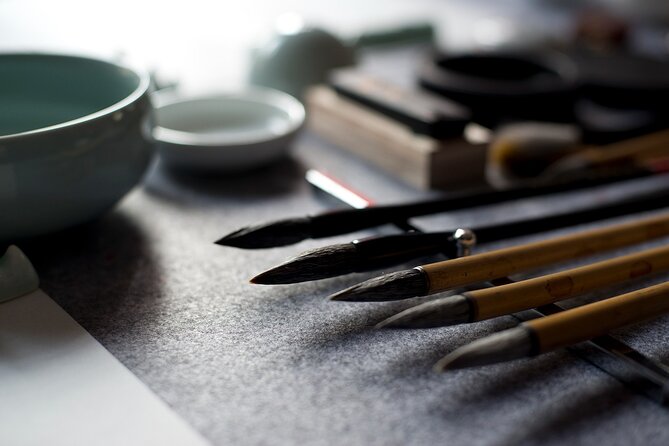
Shanghai can fill a day with towers, museums, malls, temples, and long walks. This class gives you a quieter kind of activity. Instead of rushing from one sight to the next, you sit down and pay attention to the movement of your hand.
Chinese calligraphy is not simply handwriting in another language. The shape, pressure, speed, and balance of each stroke matter. Even if you cannot read Chinese, you can begin to see why a character is treated as art as well as writing.
Lucy starts with a short introduction to the development of Chinese calligraphy and the way Chinese culture views the art form. She also uses examples of respected calligraphy works to show how different scripts look and feel. This opening is brief enough for beginners, but it gives the brush work a cultural frame.
I especially like this approach for people who plan to visit museums, temples, or historic streets later in their trip. After the lesson, you may look at signs and calligraphy displays with more curiosity. You begin to notice line quality, spacing, and the character of different scripts instead of seeing every Chinese character as a block of unfamiliar marks.
Other things to learn to make in Shanghai:
- Shanghai: Zhujiajiao Water Town with Calligraphy Experience
★ 5.0 · 17 reviews - 2-Hour Private Chinese Ink and Brush Painting Workshop in Shanghai
★ 5.0 · 15 reviews - Private Qibao Ancient Town Walking Tour with Tea Tasting and Calligraphy Experience
★ 5.0 · 4 reviews
The opening lesson: scripts, stories, and old tools
The first part is called Chinese Calligraphy 101. You hear about the history of the art and the ideas behind it, along with stories connected to famous works. The aim is not to turn you into a scholar in two hours. It is to show why calligraphy has such a respected place in Chinese culture.
You then examine the basic tools. The class includes the materials you need, so you do not have to arrive with brushes, ink, paper, or previous experience. The tools have been used in forms for centuries, and handling them helps make the class feel like an art lesson rather than a standard craft workshop.
This section is useful because many beginners approach calligraphy like drawing. That can lead to stiff wrists, uncertain pressure, and an attempt to copy the finished shape without understanding how the line was made. Lucy breaks the process into smaller actions and explains how the brush should move.
The information is delivered in English. Lucy is described as a clear and patient teacher, and the class can be adjusted to suit the group. One participant wanted to work in regular script instead of seal script, and Lucy adapted the final piece. That flexibility is valuable if you already have a character or style in mind.
Practice time: learning why the brush behaves differently
The warm-up is where the class becomes tactile. You practice basic strokes and get used to the way ink flows from a soft brush. It can look simple when an experienced artist makes a line. In your own hand, pressure and speed become much harder to control.
That contrast is part of the fun. A small change in pressure can make a stroke thick or thin. A pause can create a heavy mark, while a quick movement can leave a lighter line. Lucy gives demonstrations, then watches your attempts and offers corrections.
You should not expect polished masterwork after one session. The useful goal is to understand a few basic movements and gain enough confidence to make a personal final piece. The class is designed for beginners, and you do not need to prepare in advance.
Children can take part as well. A family group with children ages 5, 9, and 12 was able to work through the class and leave with a good memory of the activity. Younger children may need help staying focused during the history section, but the brush practice gives them something active to do.
Creating the folding fan and scroll work
The final stage gives the lesson a satisfying purpose. You choose a favorite Chinese character and work toward a finished piece on a traditional folding fan. The design becomes a souvenir connected to what you learned, rather than a mass-produced item picked up in a shop.
Lucy guides you through the character and helps refine the technique. You get to try the strokes yourself, but you are not left alone with a wet brush and a blank fan. Her support matters because the final surface is less forgiving than practice paper.
Scroll work is also part of the session. The exact balance between fan and scroll may depend on the group and the lesson, but the practical point is clear: you produce something personal to take home. Some participants carried the fan during the rest of their Shanghai visit, which says something about its usefulness as a warm-weather souvenir as well as an artwork.
I like that the class does not promise instant mastery. The finished fan is likely to show the marks of a beginner, and that is part of its value. It records a moment in Shanghai and the first steps of learning a traditional art. If you want a perfectly finished calligraphic piece made by a professional, this is not the right product. If you want to make your own, it fits well.
Other two-hour trips in Shanghai:
- Private 2-Hour Walking Tour of Shanghai’s Jewish Ghetto
★ 4.0 · 33 reviews - Private 2-Hour Shanghai Lanes and Alleyways Walking Tour
★ 4.5 · 14 reviews - 2-Hour “Ancient & Modern” Beijing Sidecar Tour (Day /Night)
★ 5.0 · 36 reviews - 2-Hour Beijing Private Forbidden City Tour: History & Highlights
★ 5.0 · 28 reviews
Lucy’s teaching style and the value of a small group
Lucy is the heart of the experience. She is described as kind, encouraging, patient, and flexible, with strong English communication. Those qualities matter more here than a long lecture because calligraphy requires repeated correction and reassurance.
A small group makes the two-hour format work. With a maximum of eight people, Lucy can watch how each person holds the brush and respond to different skill levels. A larger class might leave you practicing alone for long stretches, which would undercut the main reason to book an in-person workshop.
The setting is described as a spacious, calm studio with a welcoming feel. Tea or coffee is included, and one account mentions air conditioning and quiet music, useful details during a hot Shanghai day. These touches keep the class relaxed without turning it into a passive demonstration.
The class can also suit someone who wants more than a tourist activity. One participant enjoyed it enough to ask about additional lessons. If you have lived in Shanghai for a while, or if calligraphy is an ongoing interest, the workshop can be a starting point rather than a one-off souvenir stop.
Location near Jing’an and getting there
The meeting point is Yugucun, North Gate, at 361 Nong 3-127, Yuyuan Road, in Jing’an District, Shanghai. The activity ends at the same meeting point, so you do not need to arrange a separate return transfer.
The area is convenient for combining the class with other plans. It is near Jing’an Temple, shopping centers, and public transportation. That makes a morning class easy to pair with an afternoon in the district, while an evening class can follow sightseeing earlier in the day.
The lane setting is the one logistical wrinkle. The studio may feel off the main tourist path, and directions from the metro area have been described as needing close attention. Once inside the lane, the house numbers are well marked, but you should read the supplied directions before setting out.
For a smooth arrival, use the exact meeting-point information rather than relying only on the name of the studio. Keep your phone ready for directions, and avoid cutting the journey close. The class is calm once it begins, so there is no reason to start it stressed after a rushed search.
Is $50 a fair price for two hours?
At $50 per person, this is not the cheapest craft activity in Shanghai. The price makes more sense when you count what is included: an English-language lesson, a local artist’s instruction, all tools and materials, tea or coffee, practice time, and a finished fan or scroll.
You are also paying for individual guidance. In a casual demonstration, you might watch someone write a character and then try to copy it from a distance. Here, Lucy can adjust the lesson to your ability and help you improve the final work.
The value is strongest if you care about cultural context and want to make something yourself. It is weaker if you only want a quick souvenir or already have strong calligraphy skills. Advanced students may find the introductory pace basic, though Lucy can adapt the script and answer questions for people with more specific interests.
Compared with another short Shanghai attraction, the class offers a different kind of return. You spend two focused hours learning a traditional art, and the object you take home carries a personal connection to the city. For many people, that is worth more than another purchased trinket.
Who should book this calligraphy class?
This experience suits first-time visitors who want a break from large attractions. It also works well for solo visitors, couples, families, and small groups looking for an activity that does not depend on good weather.
You should consider it if you:
- Want a hands-on introduction to Chinese culture
- Prefer a small class to a large tour
- Enjoy making a personal souvenir
- Have an interest in Chinese characters, art, or museum displays
- Need a two-hour activity near Jing’an
- Are traveling with children who can follow a guided art lesson
You may want to skip it if your main goal is a long, advanced study of calligraphy. The workshop gives you the basics, practice, and a final piece. It is an introduction, not a full artist-training course.
Most people can participate, and service animals are allowed. The class is offered in the morning, afternoon, or evening, so you can choose the slot that best matches your day.
Booking details worth knowing
You receive confirmation at booking, and the ticket is mobile, which keeps the arrival process simple. The class requires a minimum number of participants, so a cancellation for that reason comes with the choice of another date or experience, or a full refund.
Free cancellation is available up to 24 hours before the start time. If you cancel or request changes inside that 24-hour window, the payment is not refunded and changes are not accepted. Cutoff times follow Shanghai local time.
The experience has a maximum of eight participants. That limit is one of the main reasons the price feels reasonable, since personal correction is central to learning brush technique.
Should you book it?
I would book this class if you want to slow down, learn something specific about Chinese culture, and take home an object you helped make. Lucy’s patient teaching, the small group, and the balance of history with practice give the session more substance than a simple souvenir workshop.
Book it with two practical points in mind: arrive early enough to find the lane, and keep your expectations at beginner level. You will not master Chinese calligraphy in two hours, but you can learn how the tools work, understand why the art matters, and create a fan or scroll that brings the memory of Shanghai home.
FAQ
How long does the Chinese calligraphy class last?
The workshop lasts approximately two hours.
How much does the experience cost?
The listed price is $50 per person.
Who teaches the calligraphy class?
The class is taught by a local artist named Lucy, also referred to as Lucie in some experience details.
Is the class taught in English?
Yes. The workshop includes instruction in English.
What does the price include?
The price includes the calligraphy tools, materials, instruction, and tea or coffee.
What will I make during the class?
You create your own artwork using a favorite Chinese character, with a traditional folding fan as the main final piece. Scroll work is also part of the practice.
How many people can join the workshop?
The group has a maximum of eight participants.
Where does the class meet?
It meets at Yugucun, North Gate, 361 Nong 3-127, Yuyuan Road, Jing’an District, Shanghai. The activity ends at the same meeting point.
Can I cancel for a full refund?
Yes. You can cancel at least 24 hours before the start time for a full refund. Cancellations or changes made less than 24 hours before the start are not accepted for a refund.
New reviews from Shanghai
- Shanghai To Beijing Bullet Train Ticket with Local Private Transfer★ 5.0 · 12 reviews
- Shanghai Spicy Food Tour★ 5.0 · 3 reviews
- Shanghai Uncommon Historic Sites Tour★ 5.0 · 3 reviews
- Shanghai Tower Observation Deck 118 floor Tickets Pre-booking.★ 5.0 · 4 reviews
- Shanghai Pudong airport transfer to Disneyland:Private with Meet & Great service★ 5.0 · 3 reviews
- Pudong Airport to Hangzhou: Private with Meet and Greet Service★ 4.5 · 4 reviews
- Private Transfer: Hotel to Shanghai Wusongkou Cruise Terminal (Baoshan Port)★ 3.5 · 6 reviews
- Shanghai Pudong International Airport (PVG) to Shanghai Hotel★ 5.0 · 4 reviews
Calligraphy & Craft Classes, compared.
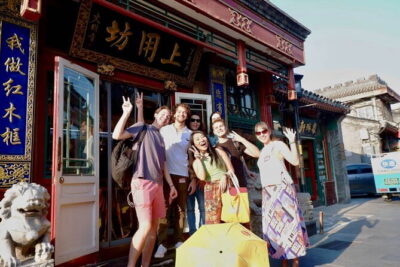
Beijing Historic City Guided Walking Tour + Calligraphy Creation
Read our review →
Beijing Wangfujing Calligraphy Class by Forbidden City
Read our review →
Beijing Culture: Tea Ceremony, Heritage Instrument & Calligraphy
Read our review →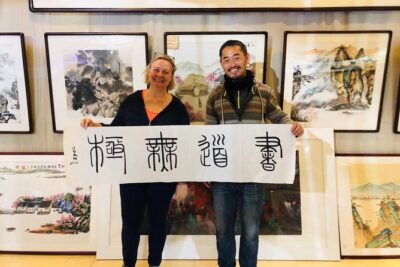

Discover Old Beijing: Hutong Walking Tour & Calligraphy
Read our review →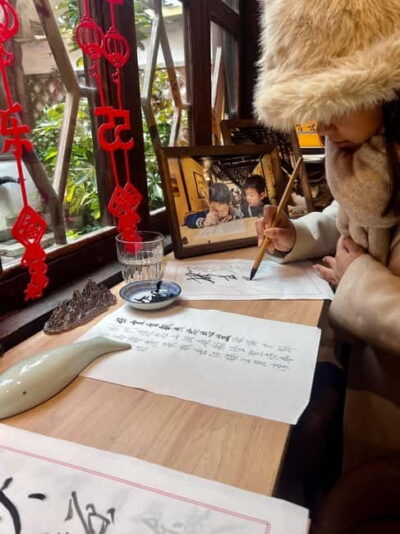
Zhujiajiao Water Town with Calligraphy Experience
Read our review →Browse the lists this tour appears in