
Reviewed · CALLIGRAPHY & CRAFT CLASSES
Beijing Historic City Guided Walking Tour + Calligraphy Creation
Beijing’s past comes alive here not through grand palace gates, but through hutong lanes, old shops, food stalls, and working neighborhoods. This 3.5-hour walk connects Huguang Guild Hall with Liulichang, Dashilan, and Qianmen, giving you a useful look at how the imperial city grew and changed.
I like the mix of big themes and small details, especially the contrast between an 1807 guild hall and creative back streets. I also like the route’s food and calligraphy angle. The main catch is the tips-based price: the $5 booking fee is only a reservation charge, and you should plan on tipping 160 to 200 RMB. A large group can also make the experience feel less personal.
Key things to know before you go
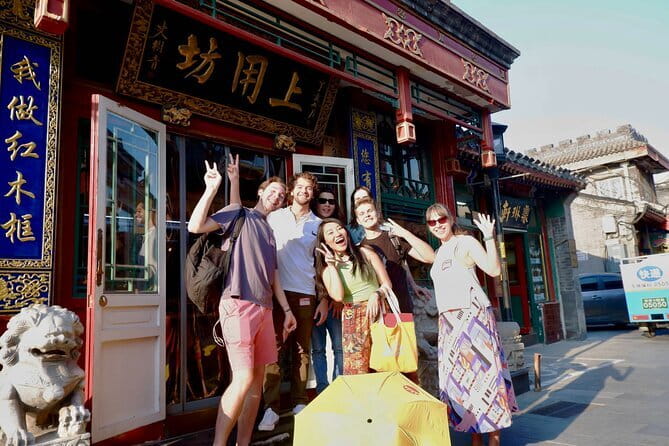
- An old-Beijing route: Walk from Huguang Guild Hall through hutongs, Liulichang, Yangmeizhu Byway, Dashilan, and Qianmen.
- Calligraphy and culture: Liulichang provides the setting for traditional writing, painting, and the calligraphy creation included in the experience.
- A local-history focus: Expect stories about dynasties, city planning, merchants, officials, neighborhoods, and daily life.
- Food along the way: Street food and local snacks may form part of the walk, but exact tastings are not specified.
- Tip-based pricing: Pay $5 to reserve your place, then budget a suggested tip of 160 to 200 RMB.
- Easy central finish: The walk ends by Zhengyangmen, near Qianmen Metro Station and south of Tiananmen Square.
What this Beijing walk really offers
I see this as an introduction to Beijing’s old central districts rather than a greatest-hits tour of imperial monuments. You will not enter Tiananmen Square, and the route does not list the Forbidden City, Temple of Heaven, or other major ticketed sights.
That is not necessarily a weakness. If you have only a short time in Beijing, the walk shows how the city works at street level. You move from a historic performance hall to residential alleys, old commercial streets, art shops, cafes, and a modern pedestrian district. The result is a useful picture of Beijing as a living city, not just a collection of monuments.
The route begins at 10:00 a.m. and lasts about three and a half hours. That is enough time for short explanations at each stop without turning the morning into a lecture. The pace and variety are especially useful if you want history with movement, food, and everyday scenes mixed in.
The English-speaking guides are the heart of the experience. Kris is praised for a well-organized presentation, clear explanations, anecdotes, and food and drink tastings. Hao is noted for keeping the group moving in cold weather while adding context at each stop. Guide quality can vary on any shared tour, but the strongest descriptions point to patient, friendly storytelling rather than a dry list of dates.
More Calligraphy and Craft Classes in Beijing
- Beijing Calligraphy Class
★ 4.9 · 112 reviews - Chinese Calligraphy Class for Small Group
★ 5.0 · 104 reviews - Beijing Wangfujing Calligraphy Class by Forbidden City
★ 5.0 · 58 reviews
Huguang Guild Hall, where the route begins
The first stop is Huguang Guild Hall, built in 1807. It once served merchants and officials from Hubei and Hunan provinces, making it a useful introduction to the way regional communities formed a place for business, social life, and performance in the capital.
You have about 20 minutes here. The building’s opera stage and traditional details give the guide something concrete to explain. Instead of starting with an abstract lecture on imperial Beijing, you begin with a place connected to real people who came from elsewhere and made a life in the capital.
Admission is included at no extra charge. The short visit means you should not expect a full theater tour or a long performance. Think of it as a strong opening scene that sets up the city’s commercial and cultural connections.
I like this stop because it gives the tour a human scale. Beijing was not only a court city. It was also a meeting point for merchants, officials, artists, migrants, and provincial communities.
One hour among Beijing’s hutongs
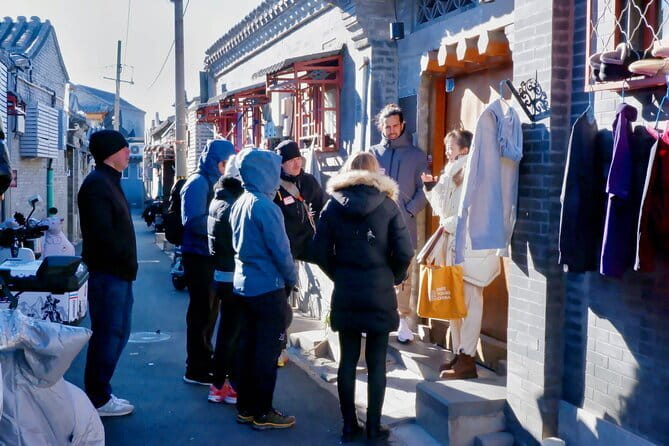
The longest part of the tour is the one-hour hutong walk. These narrow lanes and old residential quarters offer the clearest look at Beijing beyond monumental architecture.
A hutong visit can be more revealing than another photo stop at a huge square. Here, the guide can explain how traditional homes, alleys, local commerce, and neighborhood life fit together. You will see the physical pattern of older Beijing and hear how the city has changed as roads, housing, and modern development have pressed into these districts.
The route description points to traditional residences, local culture, and marketplaces. Street scenes may include food vendors and small shops, though the exact route and tastings can change. Keep your expectations flexible. This is a walking exploration, not a museum display preserved behind glass.
The hutong section also gives the tour its strongest sense of place. The lanes are not simply old scenery. They show the tension between conserving familiar neighborhoods and adapting the city for present needs. That urban-planning theme is one of the more useful parts of the experience, especially if you want to understand why Beijing looks so different from one block to the next.
The practical drawback is group size. The booking is limited to six people per reservation, but the activity information also gives a maximum of 50 participants overall. Ask how many people are expected on your date if a small-group feel matters to you. A compact group makes narrow lanes easier and lets you ask more questions. A large group may mean standing farther back while the guide speaks.
Liulichang and the calligraphy connection
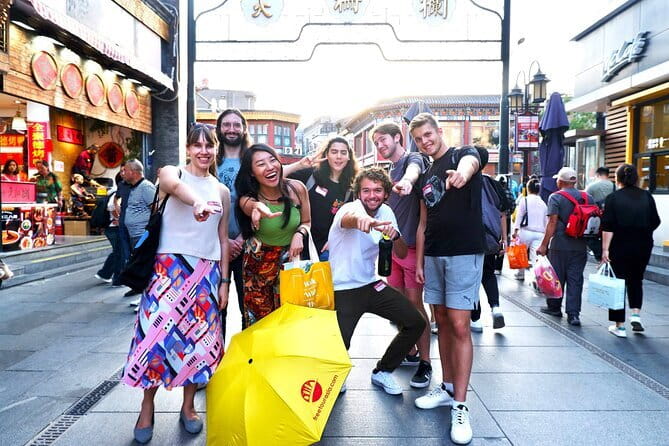
After the hutongs, the route reaches Liulichang Street for about 40 minutes. This is Beijing’s traditional art and antiques quarter, with shops linked to calligraphy, painting, and other forms of Chinese cultural work.
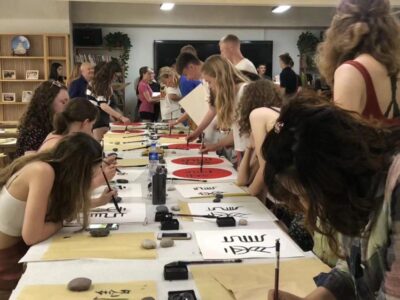
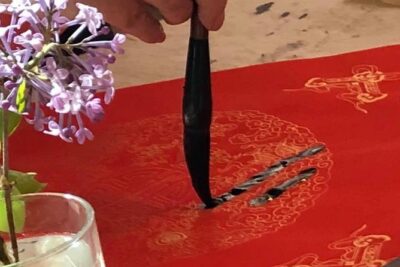
This is the natural place for the calligraphy creation part of the experience. The information provided does not spell out the exact format, length, or whether you take home a finished piece, so you should confirm those details before booking if the hands-on activity is your main reason for joining.
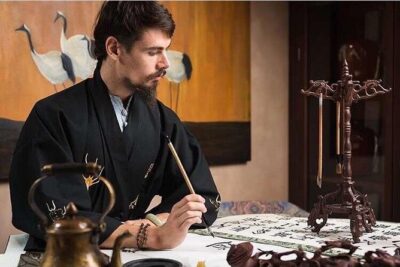
Still, the setting matters. Calligraphy makes more sense when you encounter it in a district known for writing supplies, art, and old cultural trades. You can look at the characters, tools, and shop displays with some background instead of treating them as decoration.
The 40-minute stop is long enough for an introduction and some browsing, but it is not a full art course. I would approach it as a cultural activity added to a walking tour, not as a specialist calligraphy lesson.
Liulichang also provides a welcome change from the residential lanes. The route shifts from neighborhood life to the city’s artistic and commercial traditions. If you enjoy paper goods, brushwork, paintings, or old-style shops, this may be one of the morning’s most appealing sections.
Other things to learn to make in Beijing:
- Beijing Culture: Tea Ceremony, Heritage Instrument & Calligraphy
★ 5.0 · 57 reviews - Beijing Wangfujing Calligraphy Class Nearby Forbidden City
★ 5.0 · 56 reviews - Discover Old Beijing: Hutong Walking Tour & Calligraphy
★ 4.3 · 24 reviews - Beijing Hands-On Culture Tour: Tea, Instrument, Calligraphy
★ 5.0 · 6 reviews
Yangmeizhu Byway, old lanes with new ideas
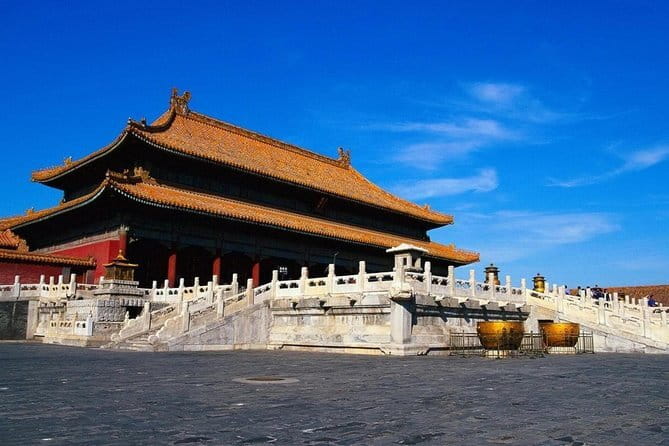
The walk continues to Yangmeizhu Byway for around 20 minutes. This alley brings together older Beijing streets with boutique shops, art studios, and cafes.
The value here is contrast. You have just looked at older residential life and traditional art, then you see how designers, shop owners, and creative businesses use historic streets in new ways. It is a compact lesson in Beijing’s changing neighborhoods.
Twenty minutes is not long, so do not expect a leisurely cafe visit or extended shopping time. The stop works best as a quick look at a street where preservation and new business meet. I would keep your camera ready, but avoid treating it as a shopping stop unless the guide gives you free time.
This is also a good point to notice the tour’s wider theme: Beijing is not frozen in its imperial past. Old buildings and lane patterns now share space with modern tastes, and that mixture is part of what makes the walk more interesting than a standard monument circuit.
Dashilan Street and the city’s commercial memory
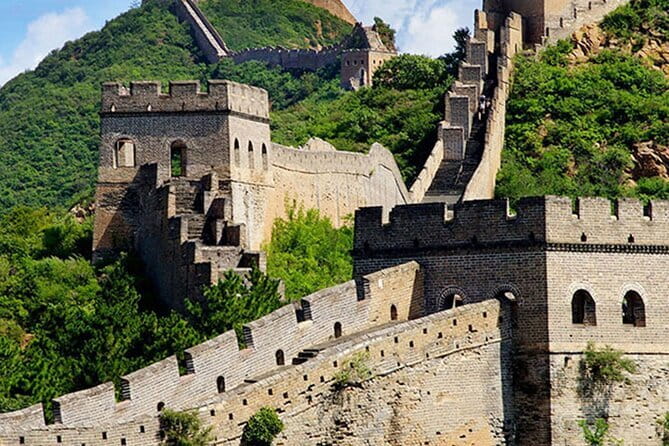
Dashilan Street receives another 20 minutes. Known as one of Beijing’s oldest commercial areas, it brings you into a more energetic shopping zone with established shops, newer boutiques, and local food.
The short visit lets you see the street’s character without spending the whole day in a retail district. The guide can connect its shops and trade to Beijing’s wider commercial development, while you get a chance to notice signs, storefronts, snacks, and the flow of people.
This is a place where the experience may feel crowded and noisy. That is part of the point, but it can make long explanations harder to hear. Stay close to the guide and use the quieter moments between stops for questions.
I especially like Dashilan as a bridge between the old lanes and Qianmen. It shows that Beijing’s historic center was not only a political stage. It was also a place to buy food, clothing, medicine, art, and everyday goods.
Qianmen Walking Street and the final stretch
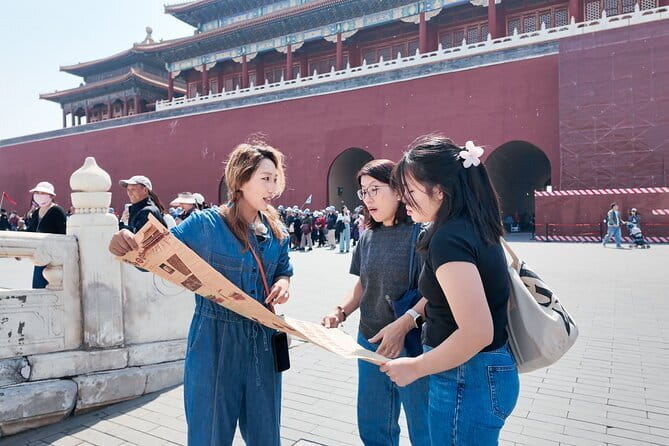
The final stop is Qianmen Walking Street, another 20-minute section. Qianmen lies just south of Tiananmen Square and combines restored historic streets with shops, restaurants, and city traffic.
The route ends in front of Zhengyangmen, near Qianmen Metro Station on Lines 2 and 8. This is a practical finish. You can continue exploring central Beijing, take the metro, or arrange your next stop from a well-connected part of town.
Do not confuse finishing near Tiananmen Square with visiting Tiananmen Square. The tour does not enter the square. If you want to visit, you must make your own reservation at least one day ahead, since same-day reservations are not available.
Qianmen works well as the final chapter because it gathers the route’s themes in one place. You have seen old neighborhoods, traditional arts, trade streets, and modern shops. Here they meet in a polished pedestrian area that can feel more commercial than the hutongs.
The tip-based price and its real value
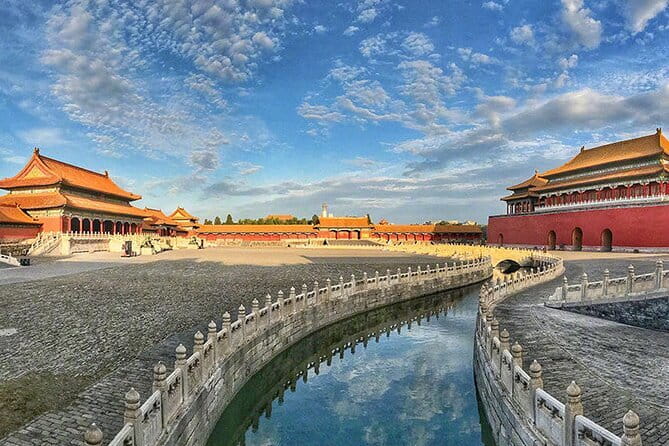
The advertised $5 price is not the full cost of the experience. It reserves your place, but the tour operates on tips. The suggested tip is 160 to 200 RMB, listed as roughly $20 to $25, and you decide what the guide deserves.
That makes the value depend on your expectations. If you want a low-cost introduction with an English-speaking guide, the total suggested amount is attractive compared with many private city tours. You receive three and a half hours of guiding, history, neighborhood walking, and cultural context without paying separate admission fees at the listed stops.
At the same time, do not book this expecting a $5 tour. Budget for the suggested tip from the start. The tip is not a minor extra if you want to recognize the guide’s work.
This model can suit people who like flexible pricing and informal guiding. It may frustrate anyone who prefers one clear all-in price. I would also carry some RMB for snacks or drinks, since the route includes commercial streets and may include food sampling, but no specific food cost is stated.
Timing, meeting point, and what to bring
The walk starts at 10:00 a.m. at Huguang Guild Hall, 3 Hu Fang Lu in Xicheng District. It ends near Zhengyangmen at Qianmen, close to the Qianmen Metro Station.
You receive a mobile ticket and booking confirmation when you reserve. The start and finish are in central Beijing and near public transportation, which keeps the logistics simple. Plan to arrive early enough to find the guild hall and meet the group without rushing.
Wear comfortable shoes. The route includes about three and a half hours of walking through lanes, commercial streets, and pedestrian areas. Weather matters, since the activity can be canceled in poor conditions. A guide kept the group moving during cold weather, but you should still dress for the forecast.
The tour is listed as suitable for most people. No special access details are provided, so if you need specific support, ask the operator before booking.
Who should book this experience
I would choose this walk if you want a first look at Beijing’s older central neighborhoods and prefer stories about daily life to a long list of major sights. It suits people who enjoy walking, local food, old shops, urban change, and short cultural stops.
It is also a good fit for a first morning in Beijing. The route helps you get your bearings around several central districts, and the Qianmen finish leaves you well placed for more sightseeing afterward.
You may want a different tour if Tiananmen Square, the Forbidden City, or major imperial architecture is your main goal. Those sights are not part of this route. You should also think twice if you dislike tip-based pricing or crowded walking groups.
Families and casual sightseers can likely manage the pace, since most stops are short and the route changes scenery often. Art lovers may enjoy the Liulichang and calligraphy section, while food-focused visitors will appreciate the chance to see street vendors and local shops, though the exact tastings are not guaranteed.
Should you book this Beijing walking tour?
Book it if you want a compact, human-scale introduction to Beijing rather than a monument checklist. The best parts are the hutong hour, the old guild hall, the calligraphy setting at Liulichang, and the way the route links residential life with commerce and modern redevelopment.
Go in with clear expectations: the $5 payment reserves your place, the suggested tip is extra, Tiananmen Square is not included, and the total group may be larger than the six-person booking limit suggests. If those points work for you, this is a strong-value way to spend a morning with guides such as Kris or Hao, especially when you want history told through streets, shops, food, and ordinary city life.
FAQ
How long does the Beijing walking tour last?
The experience lasts approximately 3 hours and 30 minutes, beginning at 10:00 a.m.
Where does the tour begin?
It begins at Huguang Guild Hall, 3 Hu Fang Lu, Xicheng District, Beijing.
Where does the tour end?
The walk ends at Zhengyangmen near Qianmen Walking Street and Qianmen Metro Station, served by Lines 2 and 8.
Does the tour enter Tiananmen Square?
No. The tour ends in front of Tiananmen Square but does not enter it. You must make your own reservation at least one day ahead if you want to visit the square.
What is included in the price?
The $5 payment is a booking fee to reserve your place. An English-speaking local guide is included, but the tour uses a tips-based model. The suggested tip is 160 to 200 RMB.
Is calligraphy part of the experience?
Yes, calligraphy creation is part of the experience title and the route includes Liulichang Street, an area known for calligraphy and traditional art. The exact format and duration of the calligraphy activity are not specified.
Can I cancel for a full refund?
Yes, you can cancel at least 24 hours before the local start time for a full refund. Cancellations or changes made less than 24 hours before the start time are not refundable. Poor weather or failure to meet the minimum number of participants may lead to a different date or a full refund.
More walking tours in Beijing
- Beijing Hutong Walking Food and Beer Tour at Hidden Restaurants
★ 5.0 · 1,132 reviews - Private Beijing Walking Tour of the Forbidden City with 7 Options
★ 5.0 · 675 reviews - Forbidden City Private Walking Tour with Optional Sights
★ 5.0 · 400 reviews - Beijing Private Hutong Food Walking Tour
★ 5.0 · 299 reviews
More history to see in Beijing
- Beijing Historical Tour II including Summer Palace, Lama Temple & Panda Garden
★ 4.0 · 187 reviews - Beijing Historical Tour I – Forbidden City, Tiananmen Square & Temple of Heaven
★ 4.0 · 120 reviews - Beijing: Bell and Drum Towers Entry Ticket—Historic Landmark
★ 4.6 · 23 reviews - Beijing:Tiananmen Square Entry Reservation – Iconic Landmark
★ 4.0 · 17 reviews
New reviews from Beijing
- Mutianyu Wall, Summer Palace & Old Summer Palace Day Tour★ 4.8 · 34 reviews
- Night Market Haggling Adventure with an English Guide!★ 4.8 · 7 reviews
- BusDa-Mutianyu Great Wall&Forbidden City Full-day Coach Tour★ 4.9 · 11 reviews
- Mutianyu Great Wall Ticket with Roundtrip Cable Car★ 5.0 · 20 reviews
- Mutianyu Great Wall Bus Trip+Ticket 7/8/9/10/13/13:30/15:30★ 4.7 · 24 reviews
- Mutianyu Great Wall Entry Ticket Chairlift Up Toboggan Slide★ 4.9 · 8 reviews
- Mutianyu Great Wall 5-KM Guided Hike with Uphill Cable Car★ 4.8 · 16 reviews
- Mutianyu Great Wall Admission Ticket★ 3.6 · 7 reviews
Calligraphy & Craft Classes, compared.
Beijing Wangfujing Calligraphy Class by Forbidden City
Read our review →
Beijing Culture: Tea Ceremony, Heritage Instrument & Calligraphy
Read our review →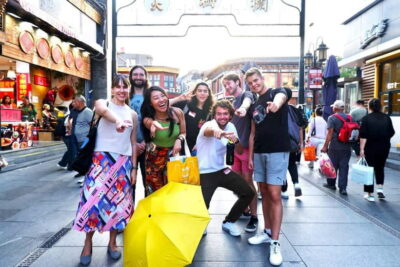
Discover Old Beijing: Hutong Walking Tour & Calligraphy
Read our review →
One Hour Chinese Calligraphy or Painting Lessons in Yangshuo
Read our review →
Beijing Hands-On Culture Tour: Tea, Instrument, Calligraphy
Read our review →
Beijing liulichang : Learn Calligraphy orCarving from Master
Read our review →Browse the lists this tour appears in