
Reviewed · CALLIGRAPHY & CRAFT CLASSES
Beijing Culture: Tea Ceremony, Heritage Instrument & Calligraphy
The most unusual part of this Beijing experience is that you do not just watch Chinese traditions. You brew tea, write characters with a brush, and play a melody on the Guqin, an ancient seven-string instrument. The setting is a quiet private venue at 813 Creative Park, away from the city’s louder sightseeing circuit.
I like the small maximum group of eight, which should give you time with the instructors, and I like that the tea, music, and calligraphy are explained rather than presented as a quick photo stop. The chance to wear traditional clothing and take your calligraphy home adds a useful personal touch.
The main consideration is the price: $78.60 per person is fair for a specialist workshop, but it is not a bargain if you only want a short cultural performance. You also need to arrange your own transport to the meeting point.
Key points at a glance
- Three hands-on traditions: Brew tea, write Chinese calligraphy, and learn a full Guqin melody.
- National-level cultural specialists: Tea and music are taught by established practitioners rather than general entertainers.
- Small group format: The experience accepts no more than eight people.
- Quiet private venue: The air-conditioned space at 813 Creative Park is closed to the general public.
- Useful keepsakes: Traditional clothing is available for the ritual and photos, and your calligraphy can go home with you.
- English support: A bilingual guide with a master’s degree in history and sociology explains the ideas behind each activity.
A quiet change of pace in Beijing
Beijing sightseeing can be noisy, crowded, and screen-heavy. You move from one major sight to another, take a few photos, and try to remember what you were told. This workshop offers a different rhythm. For about two and a half hours, you stay in one calm indoor setting and work with objects that carry cultural meaning.
That slower pace is the point. Tea, brush writing, and Guqin music all reward attention. None is difficult to approach, but each asks you to stop rushing. I especially like this for a middle day in Beijing, when you want something thoughtful without another large palace, temple, or museum.
The experience takes place at 813 Creative Park in Chaoyang. The meeting point is listed as VGP3+CCX, 813 Creative Park, and the activity returns there at the end. Transportation is not included, so plan your route before you go. The venue is near public transportation, which helps, but Beijing traffic can still make a simple cross-city journey take longer than expected.
More Calligraphy and Craft Classes in Beijing
- Beijing Calligraphy Class
★ 4.9 · 112 reviews - Chinese Calligraphy Class for Small Group
★ 5.0 · 104 reviews - Beijing Historic City Guided Walking Tour + Calligraphy Creation
★ 5.0 · 59 reviews
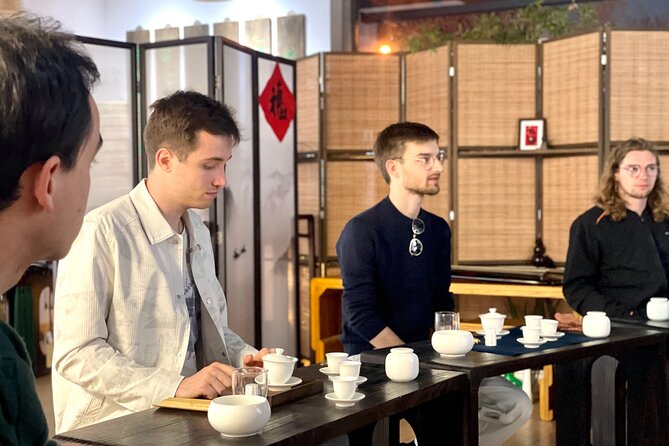
Tea ceremony: learning through taste and ritual
The tea portion is led by a certified tea master at national level. You are not simply handed a cup and told which tea to like. You take part in the brewing and tasting, while the guide explains the purpose behind the movements and the place of tea in Chinese culture.
That distinction matters. A tea demonstration can be pleasant but passive. Here, you have a job to do. You handle the tea, observe the water and brewing process, and taste the result. Tea snacks are included, though this is not a meal, so do not arrive expecting lunch or dinner.
The ceremony is likely to be the most relaxing part of the session. The quiet room, warm tea, and measured movements create a welcome pause after a day of Beijing traffic. It also gives you a gentle entry into the rest of the workshop. You do not need previous knowledge of Chinese tea or formal etiquette.
The useful question is not simply which tea you prefer. It is how a familiar drink can carry rules, gestures, hospitality, and ideas about attention. The bilingual guide is there to connect those pieces. Since the guide has a master’s degree in history and sociology, the explanations should be especially helpful if you want cultural context rather than a list of facts.
One practical note: the tea portion includes tasting and snacks, not a full meal. If you book this around lunchtime, eat beforehand or plan a meal afterward.
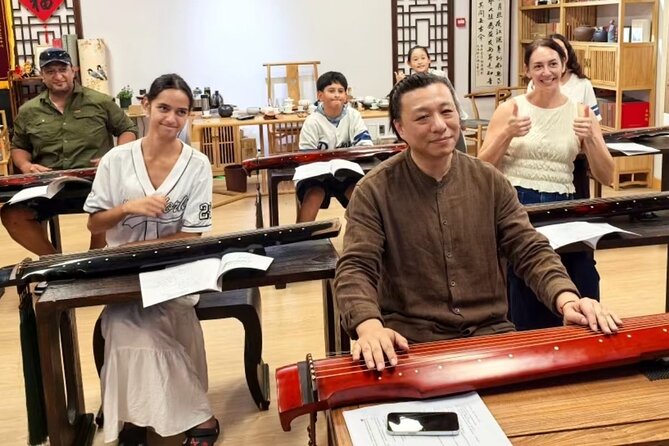
Guqin music: from listening to playing
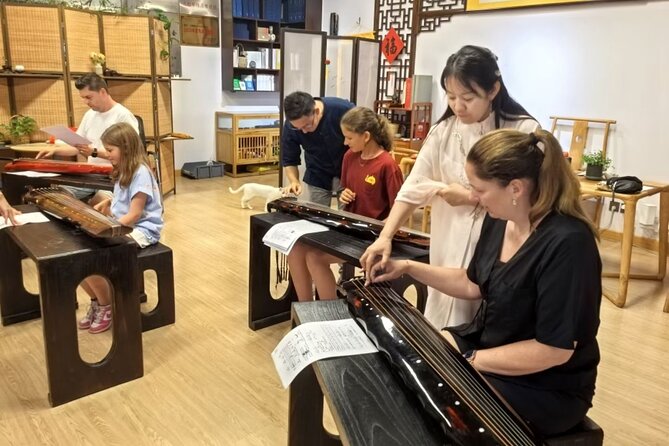
The Guqin is one of China’s most revered classical instruments. Its long body and quiet strings can seem intimidating at first, but the session is designed for beginners. You first hear a live performance by a national-level heritage artist, then receive hands-on instruction.
This two-part structure is important. Listening first lets you hear the calm, restrained sound of the instrument before you touch it. Then, with guidance, you try to play a full melody yourself. The aim is not to become a musician in one sitting. It is to feel how the instrument works and understand why it holds such a respected place in Chinese culture.
You can expect the instructor to guide your fingers directly. That personal help makes the lesson less daunting, especially if you have never played a stringed instrument. It also gives the session a more intimate feel than sitting in a concert audience.
The Guqin section may be the strongest reason to book this experience. Museums can show you an ancient instrument behind glass, and stage performances can let you hear one from a distance. Here, you get a brief chance to create sound yourself. That physical contact changes how you remember it.
Still, keep your expectations sensible. The workshop lasts only 2.5 hours in total and includes two other traditions. You will learn a melody, not receive a full music course. If you want an extended concert or technical instruction, this is not the right format. If you want a memorable first encounter, it offers much more than a standard performance.
Calligraphy: writing a name with meaning
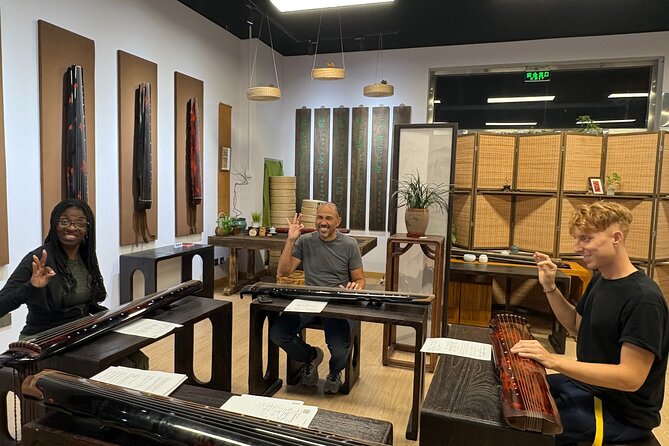
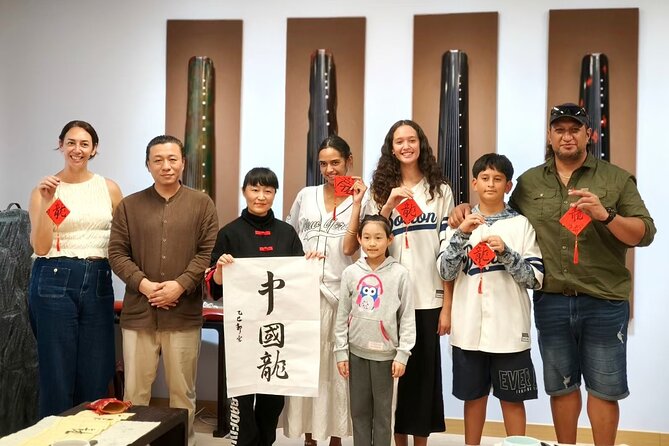
The calligraphy workshop gives you a brush, ink, and the chance to write real Chinese characters. The teacher explains the ancient roots of the characters, so the activity is more than copying attractive shapes.
For many people, this will be the most accessible part of the workshop. You can see your progress immediately, even if your first strokes wobble. The instructor helps you understand how the brush is held and how the character is formed. You may also write your Chinese name, then take the finished paper home.
That last detail gives the activity lasting value. A photograph of a performance disappears into your camera roll. A sheet of calligraphy can be framed, displayed, or used as a reminder of the day. It is also a better souvenir than another mass-produced trinket.
Calligraphy does require patience. Brush writing is not like using a pen, and the results depend on pressure, angle, and rhythm. Do not worry about producing museum-quality work. The value is in learning why the strokes have order and how the written form connects to language and history.
I would choose this workshop for anyone who enjoys making something while traveling. You leave with a skill, however basic, and a physical memento. Families with older children may also find it engaging, provided everyone is comfortable sitting quietly and following instruction.
Other tea to sit down with in Beijing:
- Traditional Chinese Tea Ceremony Experience
★ 4.7 · 74 reviews - Chinese Tea ceremony in Beijing Hutong courtyard
★ 4.7 · 26 reviews - Beijing: Temple Of Heaven+Tai Chi Class+Tea Ceremony
★ 5.0 · 8 reviews - Tea Tasting and Pairing Concept Workshop
★ 5.0 · 57 reviews
Traditional clothing and the setting
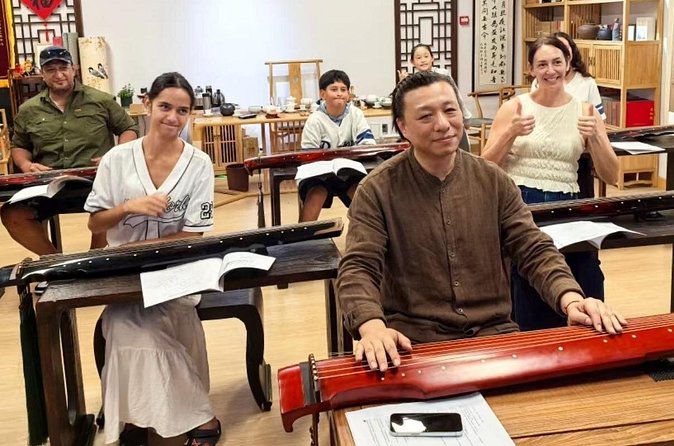
Traditional outfit rental is included for the ritual and photos. This is not the main reason to book the experience, but it adds context to the tea ceremony and gives you a way to mark the occasion. The photos can also help distinguish this workshop from a standard class held in a modern meeting room.
The venue is described as a private heritage space with air conditioning and traditional decoration. It is closed to the public, which should make the room feel more focused than a busy attraction. The calm atmosphere is especially useful during the tea and Guqin portions, when outside noise would undercut the experience.
Do not confuse private with grand. The supplied information does not describe a large historic mansion or a major architectural sight. The value is in the setting’s quiet purpose and in the access to instructors, not in touring a famous building.
The air conditioning is a practical advantage during Beijing’s warmer months. You can concentrate on the activities instead of coping with heat. The experience is also suitable for most people, and service animals are allowed.
How the 2.5 hours fit together
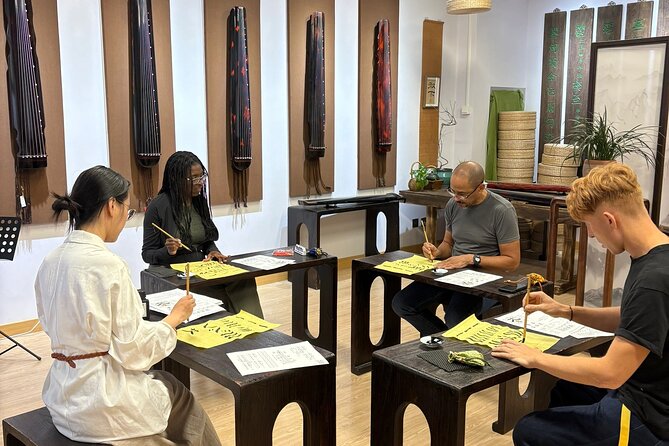
The exact minute-by-minute schedule is not provided, but the experience brings together four main elements: an introduction to the venue and traditions, tea preparation and tasting, a live Guqin performance followed by a lesson, and calligraphy instruction. Traditional clothing and photos are worked into the visit.
You should expect a guided workshop rather than three disconnected demonstrations. The tea explains ritual and attention. The Guqin shows those ideas through sound and touch. Calligraphy turns them into visible strokes. That combination gives the session a clear arc, even though each activity has its own teacher and method.
The bilingual guide provides the bridge between the specialists and the group. This matters because cultural activities can otherwise become a series of instructions without meaning. The guide’s background in history and sociology should help place the traditions in a broader setting, while the artists focus on teaching the practical movements.
With a maximum of eight participants, you should have a better chance to ask questions and receive individual help. Small groups also reduce the awkwardness of trying a new skill in front of a large audience. If you prefer anonymity, this intimate setup may feel more personal than you want.
Is $78.60 good value?
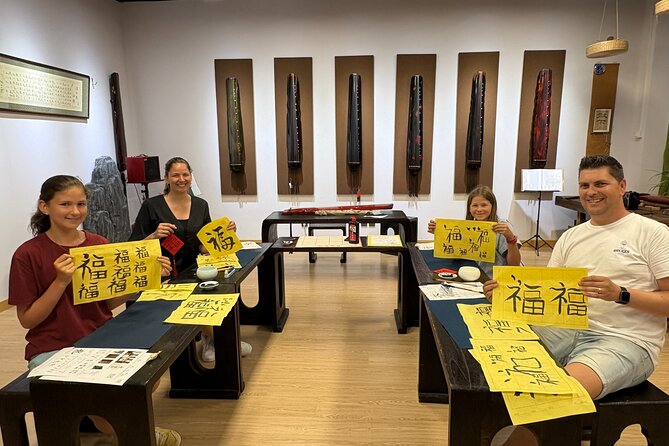
At $78.60 per person, this is a specialist cultural workshop, not a low-cost activity. I would judge the price against what is included: a tea ceremony and tasting with a certified tea master, a live Guqin performance, hands-on Guqin instruction, calligraphy teaching, traditional clothing, photos, tea snacks, and bilingual guidance.
That is a reasonable package if you value access and participation. You are paying for time with cultural practitioners, not just admission to a room. The small group also matters. An eight-person maximum can make the difference between receiving useful correction and simply watching someone else perform.
The value is weaker if you only want entertainment. Beijing has many shows, performances, and museums that cost less or occupy less time. This workshop earns its price through the chance to handle the materials and ask questions.
Booking patterns suggest that people reserve it well ahead, with an average lead time of 51 days. If your schedule is fixed, book early rather than assuming you can find a last-minute place. Confirmation is provided within 48 hours, subject to availability.
Free cancellation is available up to 24 hours before the start time. Changes or cancellations inside that window are not accepted for a refund. The provider also states that poor weather or failure to reach the minimum number of participants can lead to a new date, another experience, or a full refund.
Who will enjoy this most?
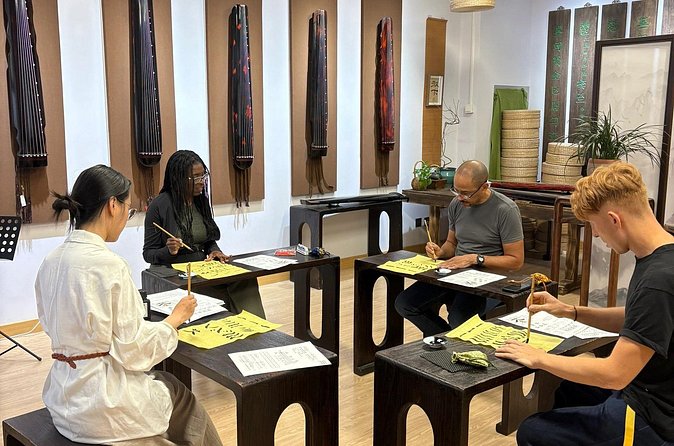
I would recommend this to you if you want to understand Chinese culture through your hands, not only through photographs and explanations. It suits curious first-time visitors, people interested in traditional arts, and anyone who needs a peaceful break from Beijing’s major sights.
It is also a good fit for repeat visitors. If you have already seen the headline attractions, this offers a different side of the city. The small group and direct contact with practitioners make it feel less like a standard sightseeing stop.
The workshop can work for beginners because no previous tea, music, or calligraphy experience is required. Most people can participate, and service animals are allowed. The main requirement is a willingness to slow down, listen, and try.
I would think twice if your itinerary is already packed with formal performances and cultural demonstrations. You may find the pace too quiet or the hands-on sections too brief. Likewise, if you want a full meal, hotel pickup, or a long concert, those are not included.
Final verdict: book it for participation, not spectacle
Book this experience if your idea of a good cultural activity includes doing something yourself. The combination of brewing tea, playing a Guqin melody, and writing Chinese characters gives you three distinct memories from one small-group session.
The strongest feature is the access to the instructors. You are not only watching a national-level artist perform. You are receiving help with the instrument, the brush, and the rituals. That makes the $78.60 easier to justify.
Skip it if you need transportation included, want a full meal, or prefer a fast-moving sightseeing tour. For everyone else, this is a thoughtful way to spend part of a Beijing day, especially when you want quiet, personal instruction and a souvenir you made yourself.
FAQ
Where does the experience begin?
It begins at 813 Creative Park, listed at VGP3+CCX, Chaoyang, Beijing, China, 100124. The activity ends back at the same meeting point.
How long does the workshop last?
The experience lasts approximately 2 hours and 30 minutes.
What activities are included?
You take part in a traditional tea ceremony and tasting, a Guqin performance and hands-on lesson, and a Chinese calligraphy workshop. Traditional outfit rental, tea snacks, photos, and bilingual guidance are also included.
Is transportation included?
No. You need to make your own way to and from 813 Creative Park. The venue is near public transportation.
How large is the group?
The experience accepts a maximum of eight participants.
Can I cancel for a full refund?
Yes. You can cancel at least 24 hours before the local start time for a full refund. Cancellations or changes made less than 24 hours before the start time are not refunded or accepted.
More history to see in Beijing
- Beijing Historical Tour II including Summer Palace, Lama Temple & Panda Garden
★ 4.0 · 187 reviews - Beijing Historical Tour I – Forbidden City, Tiananmen Square & Temple of Heaven
★ 4.0 · 120 reviews - Beijing: Bell and Drum Towers Entry Ticket—Historic Landmark
★ 4.6 · 23 reviews - Beijing:Tiananmen Square Entry Reservation – Iconic Landmark
★ 4.0 · 17 reviews
New reviews from Beijing
- Mutianyu Wall, Summer Palace & Old Summer Palace Day Tour★ 4.8 · 34 reviews
- Night Market Haggling Adventure with an English Guide!★ 4.8 · 7 reviews
- BusDa-Mutianyu Great Wall&Forbidden City Full-day Coach Tour★ 4.9 · 11 reviews
- Mutianyu Great Wall Ticket with Roundtrip Cable Car★ 5.0 · 20 reviews
- Mutianyu Great Wall Bus Trip+Ticket 7/8/9/10/13/13:30/15:30★ 4.7 · 24 reviews
- Mutianyu Great Wall Entry Ticket Chairlift Up Toboggan Slide★ 4.9 · 8 reviews
- Mutianyu Great Wall Admission Ticket★ 3.6 · 7 reviews
- Mutianyu Great Wall 5-KM Guided Hike with Uphill Cable Car★ 4.8 · 16 reviews
Calligraphy & Craft Classes, compared.
Beijing Historic City Guided Walking Tour + Calligraphy Creation
Read our review →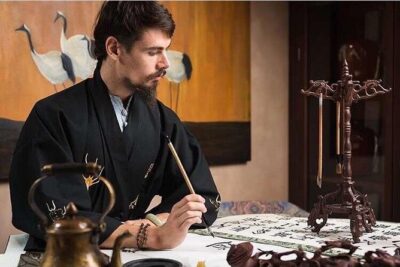
Beijing Wangfujing Calligraphy Class by Forbidden City
Read our review →
Discover Old Beijing: Hutong Walking Tour & Calligraphy
Read our review →
One Hour Chinese Calligraphy or Painting Lessons in Yangshuo
Read our review →
Beijing Hands-On Culture Tour: Tea, Instrument, Calligraphy
Read our review →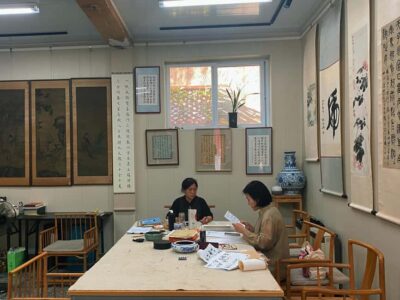
Beijing liulichang : Learn Calligraphy orCarving from Master
Read our review →Browse the lists this tour appears in