
Reviewed · CALLIGRAPHY & CRAFT CLASSES
Noon Calligraphy Class
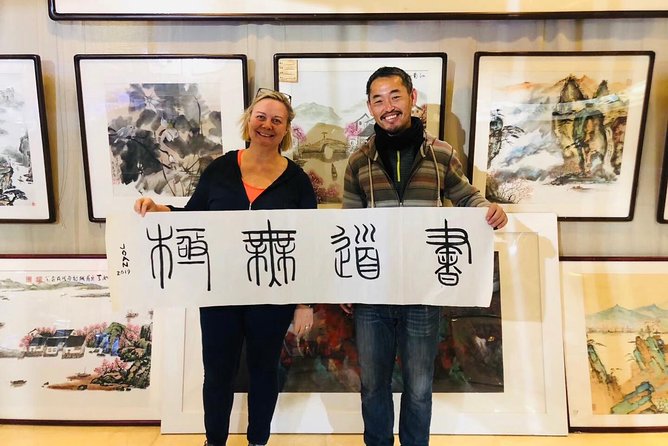
Chinese calligraphy turns a quiet hour in Beijing into a hands-on lesson in brush control, ink, and Chinese culture. At the downtown Hutong Calligraphy Class near Wangfujing, an art teacher guides you through the tools and basic strokes before you create a final piece to take home.
I like the calm pace and the chance to ask questions directly to teachers such as Richard and Li. I also like that you can choose a 30-minute, 1-hour, or 1.5-hour class, which makes this easy to fit around sightseeing. The main consideration is that one hour is enough for an introduction, not mastery, and the class may feel short if you want time for careful practice.
Key points to know before booking
- Practice comes before the final artwork: You get time to work on basic strokes before making a piece to keep.
- Richard and Li are named instructors: The teaching style is described as clear, practiced, patient, and lighthearted.
- Traditional materials are part of the lesson: Use brushes, ink, rice paper, ink stones, and learn about seal carvings.
- Three class lengths are available: Choose 30 minutes, 1 hour, or 1.5 hours when booking.
- The location is central: The class meets at No. 8 Wangfujing Dongjie, near the Hilton Beijing Wangfujing.
- It suits families and couples: Children can participate with an adult, and the maximum group size is 15.
Why this Beijing calligraphy class works well
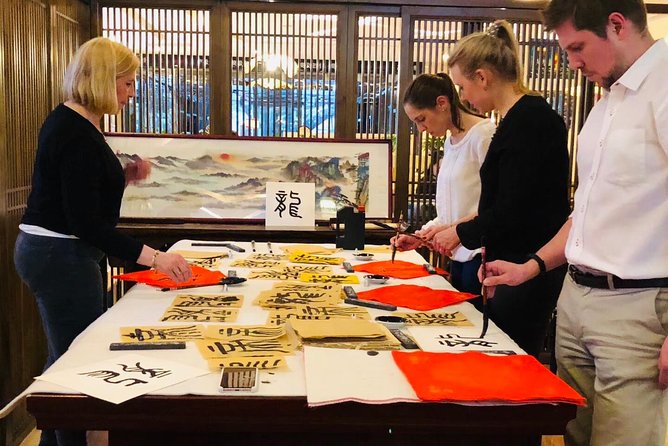
Beijing has no shortage of grand sights, but not every cultural activity asks you to slow down and make something with your hands. This class does. Instead of only looking at Chinese art, you handle the brush, control the ink, and feel how much movement goes into a single character.
That physical part matters. You quickly discover that calligraphy is not simply writing Chinese with a different pen. The angle of the brush, the pressure on the paper, the speed of each stroke, and the amount of ink all change the result. Even a simple character can look lively, stiff, heavy, or delicate depending on how you move.
The teachers explain the meaning behind the words and the place of calligraphy in Chinese culture. That gives the practice more purpose. You are not just copying shapes for an hour. You are learning why Chinese calligraphy is treated as an art form and why the movement of the brush matters as much as the finished mark.
I especially like the balance between instruction and quiet concentration. Richard is described as kind, practiced, and informative, while Li is praised for giving clear instruction in a short amount of time. The mood can begin with the usual excitement of trying something new, then settle into a more focused, almost meditative rhythm.
More Calligraphy and Craft Classes in Beijing
- Beijing Calligraphy Class
★ 4.9 · 112 reviews - Chinese Calligraphy Class for Small Group
★ 5.0 · 104 reviews - Beijing Historic City Guided Walking Tour + Calligraphy Creation
★ 5.0 · 59 reviews
Arriving at Wangfujing Dongjie
The class takes place at No. 8 Wangfujing Dongjie in Beijing’s Dongcheng District. The meeting point is listed as the Hilton Beijing Wangfujing, at the same address. This puts the activity in a central part of Beijing and near public transportation, which makes it practical to pair with sightseeing in the Wangfujing area.
Give yourself enough time to find the exact entrance and meeting point. The address is also written in Chinese as 北京东城区王府井东街8号. Having that Chinese address saved on your phone can help if you need to ask for directions.
The class ends back at the meeting point, so you do not need to arrange a separate return transfer. That is useful if you are planning a larger day around central Beijing. You can finish the lesson, collect your artwork, and continue with your plans without crossing the city.
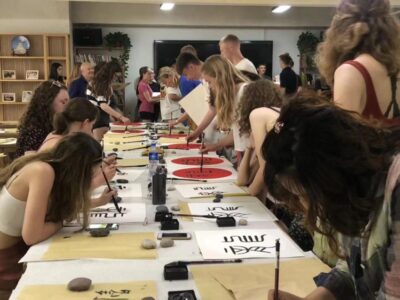
The activity is capped at 15 people. That is not a private lesson, but it is still a manageable group size for a short introduction. You should have a chance to follow along and ask questions, though the amount of one-to-one attention will depend on how many people attend your session.
What happens during the calligraphy lesson
The lesson begins with an introduction to the basic materials. You learn about Chinese brushes, ink, rice paper, and ink stones. These are not just decorative objects placed on a table. Each affects the way the ink moves and the way the finished character looks.
You also get an introduction to seal carvings. Seals are a traditional part of Chinese painting and calligraphy, often used to mark a finished work. Learning about them helps you understand why a small red stamp can be an important part of the composition rather than a random decoration.
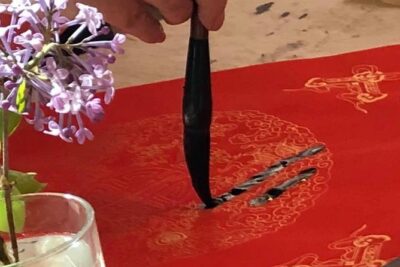
The teacher then demonstrates brush strokes and explains how to hold and move the brush. Expect the focus to be on control, rhythm, and form. You will likely start with practice marks and simple exercises before working toward a final piece.
That practice stage is one of the strongest parts of the class. It takes some pressure off. You do not have to produce something perfect on your first attempt, and you can see the difference between an early stroke and one made after a few corrections.
The teachers also explain the meaning of the characters or words you are writing. This gives the class a cultural and language component. One useful benefit is that you stay engaged with Mandarin and Chinese character forms without needing to sign up for a full language course.
At the end, you create a finished piece to take home. It may not look like the work of a trained calligrapher, and that is part of the fun. The final sheet gives you a physical reminder of the lesson and a better sense of how difficult professional calligraphy really is.
Choosing 30 minutes, one hour, or 1.5 hours
The class offers three time options: 30 minutes, 1 hour, and 1.5 hours. Check the exact choice carefully when booking, since the standard tour information also describes the experience as approximately one hour.
The 30-minute version is best for a tight schedule or a first taste. It should give you the basic idea of the materials and strokes, but you will have less time to settle into the technique and repeat exercises. I would choose it only if your Beijing itinerary is packed.
The 1-hour option is the sensible middle ground for most people. It gives you enough time to hear the cultural explanation, practice several strokes, ask questions, and work on a final piece. At $20 per person, this option offers a fair price for a guided cultural activity that includes supplies.
The 1.5-hour class is the better choice if you enjoy hands-on learning or want more time to improve your brush control. Calligraphy can feel awkward at first, so an extra 30 minutes gives you room to make mistakes without rushing toward the final artwork.
The price can be especially reasonable for couples, families, or small groups because the activity includes the materials you use in class. Group discounts are available, though the exact discount is not specified. No other expenses are included, so plan to pay separately for anything outside the lesson.
Other things to learn to make in Beijing:
- Beijing Wangfujing Calligraphy Class by Forbidden City
★ 5.0 · 58 reviews - Beijing Culture: Tea Ceremony, Heritage Instrument & Calligraphy
★ 5.0 · 57 reviews - Beijing Wangfujing Calligraphy Class Nearby Forbidden City
★ 5.0 · 56 reviews - Discover Old Beijing: Hutong Walking Tour & Calligraphy
★ 4.3 · 24 reviews
The value of using traditional tools
The materials make this more than a standard art workshop. Writing with a brush on rice paper creates a different experience from using a pencil or marker. Ink can spread, the brush can bend, and a small change in pressure can alter the shape of a stroke.
That can be frustrating for beginners, but it is also the point. You start to understand why calligraphy has such a strong place in Chinese art. The finished mark records the movement that created it. You can see hesitation, speed, confidence, and pressure in the shape of the line.
Rice paper also changes how you approach the work. It encourages care because you cannot casually erase every mistake. Instead, you learn to accept the imperfect parts and keep going. That makes the class suitable for people who want a calm activity rather than another fast-moving stop on a sightseeing schedule.
The lesson is also a good rainy-day option. It takes place indoors, does not depend on the weather, and gives you something meaningful to do when outdoor plans around Beijing become unpleasant.
A good choice for families and first-time learners
Children can attend, but they must be accompanied by an adult. The activity is designed for both adults and children, so it can work well as a family outing. Younger children may need help with brush handling and patience, especially during the quieter practice period.
Couples and friends also have a natural reason to choose this class. You can compare your first attempts, encourage each other, and leave with separate pieces of artwork. It gives you a shared activity without the pressure of a formal performance or a long cultural lecture.
You do not need previous calligraphy experience. The class is aimed at beginners, and the central task is learning how to use the brush. If you already practice Chinese calligraphy, you may find the introductory material basic, but you could still enjoy the cultural explanation and the chance to work with the supplied tools.
The class can also suit solo visitors who want a slower break from museums and crowded attractions. Since the group is limited to 15, it should be easier to ask the teacher a question than in a large demonstration. Still, this is a group lesson, not a private coaching session.
What the teaching style adds
The people leading the class make a big difference in an activity like this. Richard is described as warm, informative, and skilled at giving lots of practice before the final piece. Li is praised for practiced instructions and for helping students accomplish a good deal in a short time.
The teaching approach appears to combine explanation with encouragement. That matters because beginners often grip the brush too tightly or worry about making mistakes. A relaxed teacher can help you focus on the movement instead of judging every mark.
The class is also described as lighthearted before settling into a calmer mood. That sounds like the right balance. You get an accessible introduction, but the lesson still leaves room for concentration and quiet.
If you are hoping for a long academic talk about Chinese art, this may not be the right format. The emphasis is practical. You learn by watching, trying, correcting, and trying again. That makes the lesson useful for someone who prefers doing over listening.
Limitations to keep in mind
The biggest limitation is time. A 30-minute or 1-hour session can introduce you to calligraphy, but it cannot teach advanced technique. Your finished work may show uneven strokes, and that is normal for a first lesson.
The activity also depends on the specific teacher and group on the day. Richard and Li are named in the available information, but you should not assume that one particular instructor will lead every session. If meeting a certain teacher matters to you, confirm that before booking.
The $20 price is reasonable, but it does not cover unrelated expenses. The class includes supplies, yet anything not listed as part of the activity is separate. Group discounts are offered, but the amount is not stated, so ask for the current terms if you are booking for several people.
Finally, the activity is located near Wangfujing, not at every major Beijing attraction. It is convenient for central sightseeing, but you may need travel time if you are staying or touring far away. The nearby public transportation helps, but the address still deserves a little planning.
Booking, timing, and cancellation
Confirmation is provided at the time of booking, and a mobile ticket is available. You can choose from multiple daily class times, which makes it easier to place the lesson between major sightseeing stops.
The activity is often booked about nine days ahead. That does not guarantee that every session fills, but booking in advance is sensible if you need a particular time or want to attend with a group.
Free cancellation is available when you cancel at least 24 hours before the start time. Canceling or changing the booking less than 24 hours before the experience does not qualify for a refund, and the cut-off follows Beijing local time.
Is the Hutong Calligraphy Class worth booking?
I would book this if you want a short, affordable cultural activity that gives you something to do, not just something to see. The strongest reasons are the traditional tools, the teacher guidance, the explanation of Chinese characters, and the finished piece you take home.
Choose the 1-hour session for the best balance of cost and time. Pick 1.5 hours if you like careful practice, and choose 30 minutes only when your schedule is tight. Families, couples, first-time learners, and anyone needing a rainy-day plan are especially well suited to it.
Skip it if you want advanced calligraphy training, a private lesson, or a long workshop focused on perfect technique. For a first introduction in central Beijing, though, this is a thoughtful use of an hour and a pleasant change from sightseeing at a distance.
FAQ
Where does the calligraphy class take place?
The class meets at No. 8 Wangfujing Dongjie in Beijing’s Dongcheng District, at the Hilton Beijing Wangfujing. The Chinese address is 北京东城区王府井东街8号.
How long is the experience?
You can choose a 30-minute, 1-hour, or 1.5-hour class when booking. The general activity is described as approximately one hour.
What is included in the price?
The class includes instruction from an art teacher and the calligraphy supplies used during the lesson. Other expenses not specifically listed are excluded.
Can children participate?
Yes. Children can join, but they must be accompanied by an adult.
How many people can attend?
The activity has a maximum group size of 15 people.
Can I cancel for a full refund?
Yes, if you cancel at least 24 hours before the experience start time. Cancellations or changes made less than 24 hours before the start time are not refunded.
More classes and workshops in Beijing
- Beijing: Dumpling Making Workshop with Meal and Tea
★ 4.7 · 69 reviews - Online Cooking Class Beijing Dumplings and Cuisine by Sunflowerli Renowned Chef
★ 5.0 · 65 reviews - Chinese Kungfu class in old temple beside Forbidden Ci
★ 4.8 · 53 reviews - Din Tai Fung Dinner and VIP Class River Cruise Experience in Shanghai
★ 5.0 · 31 reviews
New reviews from Beijing
- Private Transfer to Mutianyu Great Wall with professional driver★ 5.0 · 19 reviews
- One day tour to downtown Tianjin from Beijing by high speed train★ 5.0 · 3 reviews
- camp on the Great Wall overnight with sunrise and sunset on the wall★ 5.0 · 11 reviews
- ZANBUS: Trip to the Jinshanling Great Wall Departing at 7:30 AM★ 5.0 · 5 reviews
- BusDa:Ancient Great Wall &Badaling Great Wall Full-day Bus Tour★ 4.5 · 6 reviews
- Yuxiandu Chinese Royal Cuisine Museum with Show and Royal Banquet★ 5.0 · 4 reviews
- Wild Great Wall Hikes★ 5.0 · 10 reviews
- Wild Great Wall Huanghuacheng Half Day Tour★ 5.0 · 15 reviews
Calligraphy & Craft Classes, compared.
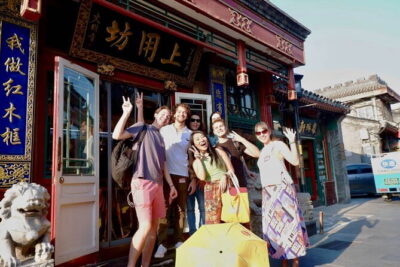
Beijing Historic City Guided Walking Tour + Calligraphy Creation
Read our review →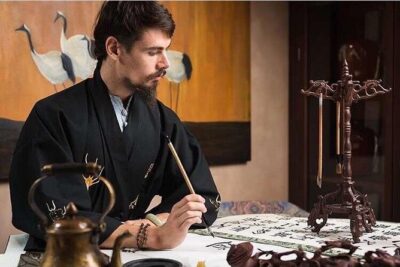
Beijing Wangfujing Calligraphy Class by Forbidden City
Read our review →
Beijing Culture: Tea Ceremony, Heritage Instrument & Calligraphy
Read our review →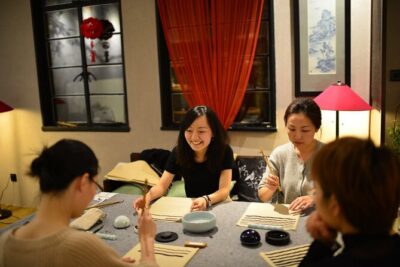
2-Hour Chinese Calligraphy with an Artist in Shanghai, China
Read our review →
Discover Old Beijing: Hutong Walking Tour & Calligraphy
Read our review →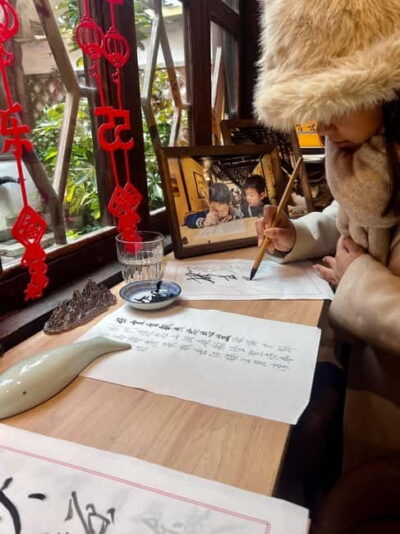
Zhujiajiao Water Town with Calligraphy Experience
Read our review →Browse the lists this tour appears in