
Reviewed · CHINESE FOOD TOURS
Shanghai Spicy Food Tour
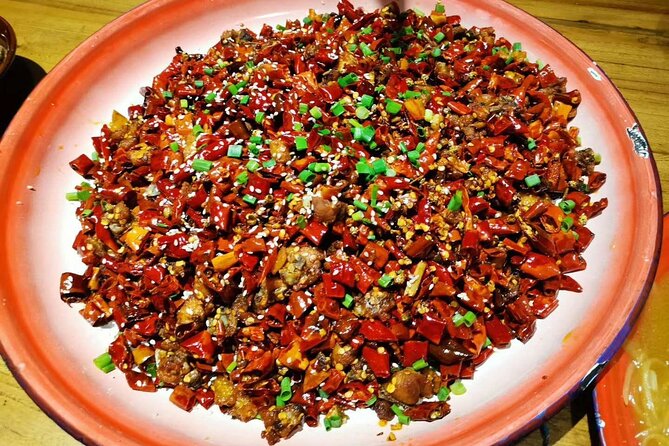
Shanghai’s spicy food is not one single style. Sichuan pepper can numb your lips, Hunan cooking brings direct heat, and dishes from Chongqing, Guizhou, and Yunnan add their own sharp, smoky, or fragrant notes. This private evening food tour lets you try several of those traditions in local restaurants rather than guessing from a menu.
I like the small-group format, which keeps the meal more personal, and I like the generous portions, a real help when the tour lasts three and a half hours. The operator also says it chooses restaurants the team visits themselves and does not accept commissions from them.
The main caution is simple: this is not a gentle introduction to Chinese food. If you cannot handle serious spice, or if you want a broad tour of Shanghai cuisine, this may not be your best match.
Key points to know before booking
- Seven o’clock start: Meet on South Shanxi Road in central Shanghai for an evening that ends near Jing’an Temple subway station.
- Private activity: Only your group takes part, so the guide can keep the pace and spice level more personal.
- Several regional traditions: Expect food connected with Sichuan, Hunan, Chongqing, Guizhou, and Yunnan cooking.
- Generous portions: This is designed as a full meal, not a few token samples.
- Guides with local restaurant knowledge: Jane and Libby have led the tour, taking diners to places they might not find alone.
- A serious spice warning: The experience is not ideal for anyone who cannot handle hot food.
A hot start on South Shanxi Road at 7:00 pm
The tour begins at 7:00 pm on South Shanxi Road, in Shanghai’s Huangpu District. That timing works well if you spend the afternoon sightseeing and want food to become the evening’s main event rather than squeezing in another formal attraction.
You meet the guide at the appointed point and then begin the food-focused route toward Jing’an. The exact restaurant sequence is not specified, so you should think of this as a guided tasting evening rather than a fixed sightseeing circuit with a published dish-by-dish menu.
That flexibility can be useful. A private tour allows the guide to focus on your group instead of keeping pace with strangers. It also gives you a chance to ask what you are eating, how hot it is, and how the food fits into China’s wider regional cooking traditions.
Guides named Jane and Libby have led this experience. Their role is especially important here because spicy food can be hard to judge from a menu. A dish that looks merely red may bring a slow burn, a prickly Sichuan pepper sensation, or both.
More Food Tours in Shanghai
- Authentic Local Food Tour in Central Shanghai
★ 5.0 · 1,382 reviews - Eat Like A Local: Shanghai Night Food Tour
★ 5.0 · 616 reviews - Late Night Food Tour in the Shanghai’s French Concession
★ 5.0 · 260 reviews
Why China’s regional spice matters
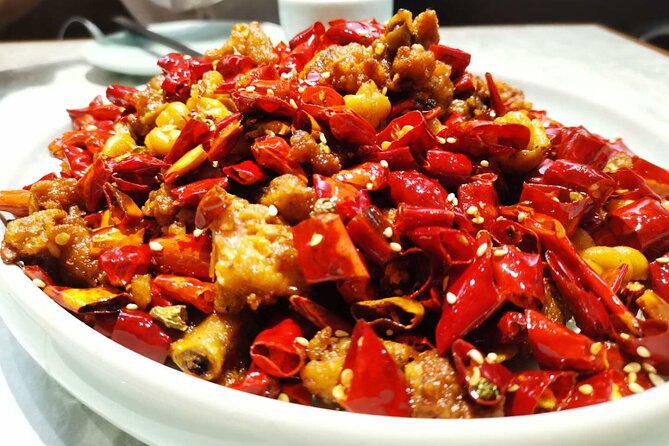
Shanghai is not usually the first Chinese city people associate with hot food. That is part of the appeal of this tour. It introduces you to cooking traditions from places where chili, peppercorn, herbs, and aromatic spices play a much larger role.
Sichuan food is known for the combination of chili heat and Sichuan pepper, which can create a tingling or numbing feeling. Hunan food is often more direct and chili-forward. Chongqing cooking is also associated with bold heat, while Guizhou and Yunnan bring different regional flavors to the table.
You should not expect every dish to taste alike. The useful part of a guided meal is learning that spicy does not simply mean hot. Heat can be sharp, fragrant, smoky, numbing, or slow to build.
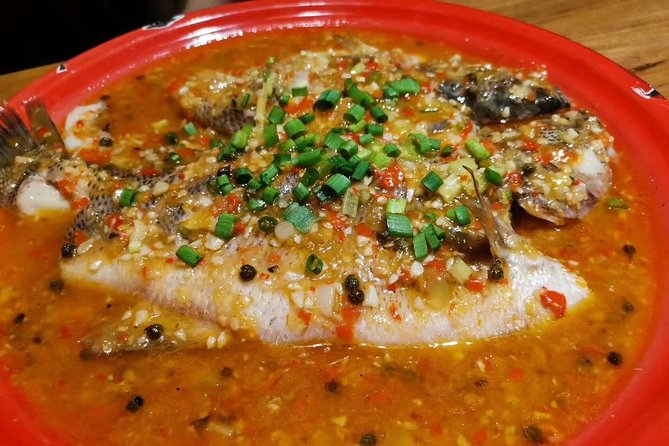
The tour description does not name the specific dishes served. That means you should book for the style of eating and the regional range, not for one famous plate you are determined to try. The upside is surprise. The downside is that you cannot plan around a precise menu in advance.
Generous food at restaurants chosen for regular use
The operator says the restaurants are places the team visits often and that it does not accept commissions or kickbacks from them. That matters because the selection is presented as personal rather than sales-driven.
You are also told to expect generous portions. This is more than a small crawl with one bite at each stop. Over roughly three and a half hours, the meal is intended to leave you full.
That makes the $79 price easier to assess. You are paying for a private guide, several food stops, and enough food to function as dinner. If you only want a quick taste of one spicy dish, the price may feel high. If you would otherwise struggle to find appropriate restaurants, order across several regional styles, and judge the spice safely, the cost has practical value.
The private format is another part of the equation. Only your group participates, rather than joining a large mixed party. For couples, families, or a few friends with a strong interest in food, that can be worth more than a lower-priced group tour.
Still, do not assume that every bite will suit you. Generous portions are useful, but they also mean you may spend much of the evening eating very hot food. If you are uncertain about your tolerance, tell the guide at the start.
Eating your way toward Jing’an
The route finishes in the Jing’an area, close to Jing’an Temple subway station. This gives the evening a clear endpoint and makes it easier to continue your night or return to your accommodation by public transportation.
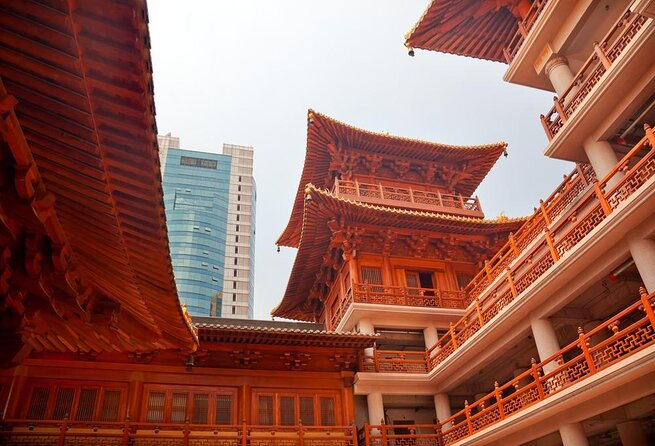
Jing’an Temple is the named sightseeing point connected with the experience. Located on West Nanjing Road, it is an old Buddhist temple with a history of more than 700 years. It is also described as dating back to AD 247, although you should not confuse it with Shanghai’s Jade Buddha Temple.
The temple’s name means Temple of Peace and Tranquility. Its setting near West Nanjing Road gives the food route a change of mood at the end of the evening, moving from hot dishes and restaurant tables to one of central Shanghai’s better-known religious landmarks.
The available details do not promise an inside visit, guided temple tour, or dedicated sightseeing stop. Treat Jing’an Temple mainly as a useful finishing landmark and transportation reference. If you want to explore the temple at length, plan extra time after the food tour rather than assuming the meal includes a formal visit.
Other eating walks in Shanghai:
- Shanghai: Half-Day Biking and Local Food Tour
★ 4.9 · 170 reviews - Private Shanghai Evening Street Food Walking and Cruise Tour
★ 5.0 · 123 reviews - Shanghai: Evening Walking Food Tour
★ 4.9 · 115 reviews - Shanghai-Cooking Dumpling & Meal in Local Family-w/Vegan
★ 4.9 · 36 reviews
What the private format changes
A private activity is a strong fit for a food tour built around spice. Your group can eat at its own pace, and the guide can explain unfamiliar flavors without competing with a large table of people.
It also makes the experience more personal. You can ask for clarification about ingredients, regional styles, or the sensation caused by Sichuan pepper. The information does not specify that every request can be accommodated, so do not treat the private format as a promise of a custom menu.
Small group size can also help with ordering. Chinese restaurant meals often work best when several people share dishes. A private party makes it easier to decide how much to order and which flavors to try next.
The tradeoff is that a private tour usually costs more per person than a large group outing. At $79, the value depends on how much you care about restaurant selection, guidance, and a full meal. For a serious spice fan, the format is likely more useful than a cheaper tour built around a few standard samples.
The spice level is the central issue
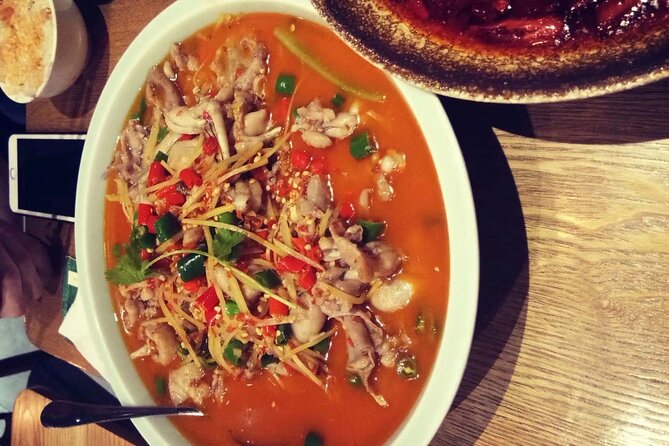
The strongest booking question is not the meeting point or the price. It is how well you handle spicy food.
The tour is specifically marked as unsuitable for people who cannot handle spicy dishes. Take that warning seriously. You should not book this expecting the guide to remove all heat or turn the experience into a mild introduction.
The phrase spice level was perfect appears in the available feedback, but that does not mean the same level will suit every person. One diner enjoyed encountering spices they had not felt before. That is an exciting prospect if you like new sensations, but it could be uncomfortable if you prefer familiar, mild flavors.
I would choose this experience if you already enjoy hot food and want to compare different kinds of heat. I would be more cautious if you only tolerate a little chili or dislike the numbing effect associated with some Sichuan cooking.
A practical approach is to arrive hungry but not exhausted, and to make your limits clear early. The supplied details do not confirm a set range of spice levels, so communication with your guide is important.
A good way to see another side of Shanghai
The food route may also take you through the Former French Concession, an area praised for combining neighborhood atmosphere with restaurants that are easy to miss when you explore alone. The exact path is not published, so you should not expect a formal architecture tour or a complete survey of that district.
What you do get is a reason to move through central Shanghai after dark with a food purpose. You are not simply eating near a famous attraction. You are being taken to restaurants selected for their food, including places you might not walk into on your own.
That is one of the clearest strengths of the experience. Restaurant menus can be difficult to read, and the best choice is not always the one with the most English signage. A guide can remove some of that guesswork.
The tour’s value is therefore tied to access and judgment rather than sightseeing volume. If you want temples, museums, and major city views, choose a different evening plan. If you want to eat food that feels less obvious and more regional, this format makes sense.
Timing, transport, and practical details
The tour lasts about three hours and 30 minutes. With a 7:00 pm start, you should expect to finish around 10:30 pm, although the exact ending time can vary.
The finish is near Jing’an Temple subway station, which is useful for getting around Shanghai after the meal. The starting point is on South Shanxi Road in Huangpu District, while the ending point is in Jing’an. Check the route between your accommodation and the meeting point before booking, especially if you are unfamiliar with Shanghai’s large central districts.
A mobile ticket is provided, and confirmation arrives when you book. The experience is near public transportation, and service animals are allowed. Most people can take part, but the spice warning is the important physical consideration.
Free cancellation is available if you cancel at least 24 hours before the 7:00 pm start. Within 24 hours, refunds are not provided and changes are not accepted. The experience also requires good weather. If poor weather forces cancellation, you are offered another date or a full refund.
Who will enjoy this spicy evening?
This is best for you if:
- You already enjoy hot food and want more than one style of spice.
- You like trying restaurants that are not obvious to find alone.
- You value a private guide and a flexible pace.
- You want a substantial evening meal rather than a few samples.
- You are curious about Sichuan, Hunan, Chongqing, Guizhou, and Yunnan cooking.
- You want to finish near a central subway station.
It is a weaker choice if you want mild food, a fixed list of famous dishes, or a formal tour of Jing’an Temple. It may also be a poor fit if you want a broad survey of all Shanghai cuisine, since the focus is firmly on spicy regional cooking.
Should you book the Shanghai Spicy Food Tour?
Book it if your idea of a good Shanghai evening includes sweating over generous portions, trying unfamiliar kinds of heat, and letting a guide lead you to restaurants you might not find alone. The private setup, local restaurant selection, and full-meal format give the $79 price a reasonable basis.
Skip it if spicy food is a challenge rather than a pleasure. The most important promise here is not a famous landmark. It is serious regional heat in a small, personal setting. For the right eater, that is exactly the point.
FAQ
Where does the Shanghai Spicy Food Tour start?
The tour starts on South Shanxi Road in Huangpu District, Shanghai.
What time does the tour begin?
The start time is 7:00 pm.
How long does the experience last?
It lasts approximately three hours and 30 minutes.
Where does the tour finish?
The tour finishes in Jing’an, close to Jing’an Temple subway station.
Is this a private tour?
Yes. Only your group participates in the activity.
How much does the tour cost?
The listed price is $79.
What types of spicy food are included?
The tour focuses on spicy cooking associated with Sichuan, Hunan, Chongqing, Guizhou, and Yunnan.
Is the tour suitable for someone who cannot handle spicy food?
No. The experience is specifically not ideal for people who cannot handle spicy food.
Is Jing’an Temple the same as the Jade Buddha Temple?
No. Jing’an Temple and the Jade Buddha Temple are different temples.
Can I cancel for a full refund?
Yes, if you cancel at least 24 hours before the experience start time. Cancellations made less than 24 hours before the start are not refunded.
New reviews from Shanghai
- Shanghai Uncommon Historic Sites Tour★ 5.0 · 3 reviews
- Shanghai To Beijing Bullet Train Ticket with Local Private Transfer★ 5.0 · 12 reviews
- Shanghai Pudong airport transfer to Disneyland:Private with Meet & Great service★ 5.0 · 3 reviews
- Shanghai Tower Observation Deck 118 floor Tickets Pre-booking.★ 5.0 · 4 reviews
- Pudong Airport to Hangzhou: Private with Meet and Greet Service★ 4.5 · 4 reviews
- Private Transfer: Hotel to Shanghai Wusongkou Cruise Terminal (Baoshan Port)★ 3.5 · 6 reviews
- Shanghai Pudong International Airport (PVG) to Shanghai Hotel★ 5.0 · 4 reviews
- Shanghai Pudong and Shanghai Hongqiao Airport to Hotels Transfer★ 5.0 · 4 reviews
Chinese Food Tours, compared.
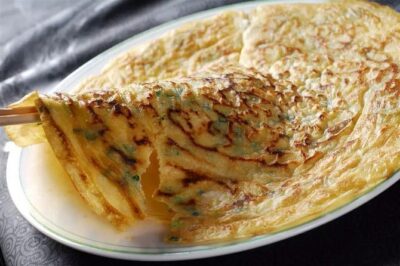
Authentic Local Food Tour in Central Shanghai
Read our review →
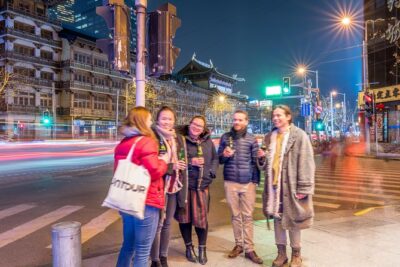
Temple Heaven, Lama Temple, Summer Palace & Peking Duck Bus Tour
Read our review →
Hong Kong’s Tin Hau Hidden Eats Food Tour with 7+ Local Tastings
Read our review →
Hong Kong Food Tour: Central and Sheung Wan Districts
Read our review →Browse the lists this tour appears in