
Reviewed · WALKING TOURS
Private 2-Hour Walking Tour of Shanghai’s Jewish Ghetto
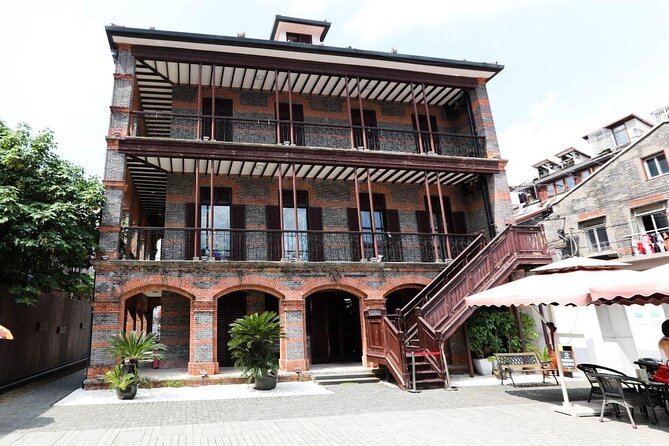
Shanghai’s former Jewish quarter is best understood on foot. In Hongkou, the Shanghai Jewish Refugees Museum occupies the old Ohel Moishe Synagogue, while nearby streets, parks, temples, and modest homes reveal how Jewish refugees lived alongside local residents during a dark period in European history. This private tour connects those places in about two hours.
I like the chance to see the museum and the surrounding neighborhood together, rather than treating the synagogue as an isolated attraction. I also like the personal touch some guides bring: Mason has shown guests rooms in his family home that were once rented to Jewish refugees, and guides such as Annie, Zoe, and Mary have helped visitors navigate the area and subway afterward.
The main caution is that this is not a specialist Jewish-history tour every time. Some guides offer thoughtful, well-informed commentary, while others seem less prepared, and several visitors felt the museum’s own free volunteer did much of the explaining. The stop at Xiahai Temple adds local Chinese context, but it may feel off-topic if your only goal is Jewish history.
Key points to know before you book
- Ohel Moishe Synagogue anchors the visit: The Jewish Refugees Museum is the tour’s main historical stop and admission is included.
- Hongkou is still a living neighborhood: You walk past local homes, shops, seafood stalls, and restaurants rather than visiting a preserved museum district.
- Guide quality matters: Annie, Mason, Zoe, Mary, and several other guides earned strong praise, but some guests found the historical commentary thin.
- Xiahai Temple changes the focus: The Buddhist temple helps explain local religious life, yet it is not directly part of the Jewish story.
- Two hours passes quickly: Some visitors wished for more time, especially for the museum, residential lanes, and former refugee housing.
- Private means only your party joins: This gives you room to ask questions and request a slower or more personal walk.
A Jewish quarter that is still part of Shanghai
The phrase Jewish Ghetto can sound as if you are heading to a preserved European-style quarter. That is not what you find here. Hongkou is a working part of Shanghai, and the old refugee district is woven into modern streets and ordinary residential blocks.
That is part of the appeal. You do not simply walk through a polished memorial site. You see the setting where people lived, shopped, worshiped, and tried to build a life after fleeing persecution in Europe. The tour places the museum within that wider setting, which gives the story more weight.
Your guide meets you at the arranged point on Changyang Road. The exact meeting instructions matter, since one visitor had trouble communicating in advance about when and where to meet. The company has also sent detailed directions in some cases, so check your confirmation closely and contact the operator before the day if anything is unclear.
The walk is private, with only your own party taking part. That is useful in a residential area, where a large group would make conversations harder and could feel intrusive. It also lets you ask about family connections, migration routes, or specific names and dates that catch your attention.
Other walks around Shanghai:
- Shanghai City Guided Walking Tour | China’s 1st and Best Rated
★ 5.0 · 285 reviews - Shanghai Highlights Walking Tour With A Real Local
★ 4.9 · 153 reviews - Shanghai Breakfast Walking Tour of Former French Concession
★ 5.0 · 139 reviews
Ohel Moishe Synagogue and the Jewish Refugees Museum
The museum is the heart of the experience. It is housed at Ohel Moishe Synagogue, a place that served Jewish refugees during years when Shanghai became a refuge for people escaping Nazi persecution and other dangers in Europe.
The visit gives you a chance to understand why Shanghai mattered. Refugees arrived from different parts of Europe, including communities from Eastern Europe, Russia, Iraq, and Iran. The museum explains the local Jewish presence and the later refugee period, with displays that connect the synagogue to the people who sought safety there.
This is also the point where expectations need adjusting. The museum itself has volunteer staff and exhibition material that can carry much of the visit. If you read comfortably on your own, you may feel that a guide is not essential inside the galleries. One visitor felt the museum was rushed, while another thought most of the explanation came from the free museum volunteer.
The guide’s value comes more from connecting the museum to the neighborhood and answering questions in context. Strong guides have explained the events that led refugees to Shanghai, the role of the synagogue, and how Jewish families lived under difficult conditions. Less prepared guides have relied on a set speech or offered information in an awkward order.
For that reason, I would ask early in the tour how much time you will spend in the museum and what the guide plans to explain. If Jewish history is your main reason for coming, say so clearly. A private tour should give you some ability to shape the pace.
The Joint Distribution Committee and the story of aid
The walk continues past the former American Jewish Joint Distribution Committee. This stop helps explain the practical support that refugees needed after arrival.
A synagogue tells you about worship and community. The Joint Distribution Committee points to food, shelter, social aid, and the work required to help people start over. The stop may be brief, but it gives the story a necessary second layer. Refuge was not only about finding a room. People needed organized help, contacts, and basic services.
Do not expect a large interior visit here. The tour description presents it as a place you pass while the guide explains its role. Its value lies in the story attached to the location, not in a major display or long admission stop.
This is one reason a good local guide can add value beyond a museum visit on your own. A guide who knows the district can connect the synagogue, aid work, park, homes, and streets into one account. A weaker guide may simply point out the building and move on.
Huoshan Park and a quiet memorial pause
Huoshan Park offers a change of pace. After the museum and street walk, you get a greener setting and a moment to consider the people remembered here.
The park includes a monument to Jewish immigrants. The stop is not large or theatrical, which suits the subject. It gives you a place to pause rather than rush from one fact to the next. The best guides use this moment to explain how a foreign community became part of Shanghai’s wartime story.
The park also helps you see the quarter as more than a collection of historical addresses. It is a public place used by local residents today, with the memorial forming one layer of its identity.
Weather can affect this part of the experience. One tour went ahead in heavy rain and still worked, but wet streets will make the walk less comfortable. Wear shoes with good grip and bring protection from sun or rain. Those are simple choices, but they matter on a walking tour with several outdoor stops.
Other two-hour trips in Shanghai:
- 2-Hour Chinese Calligraphy with an Artist in Shanghai, China
★ 5.0 · 46 reviews - 2-Hour Private Chinese Ink and Brush Painting Workshop in Shanghai
★ 5.0 · 15 reviews - Private 2-Hour Shanghai Lanes and Alleyways Walking Tour
★ 4.5 · 14 reviews - 2-Hour “Ancient & Modern” Beijing Sidecar Tour (Day /Night)
★ 5.0 · 36 reviews
Residential lanes and daily life in Hongkou
The most distinctive part of the walk may be the neighborhood itself. You leave the formal museum setting and pass through streets where people still live and work.
The route can include local homes, craft shops, fresh seafood stalls, and rustic restaurants. You might see older buildings and shared residential spaces rather than grand monuments. That contrast is useful. It shows the physical scale of refugee life and the way the old district has changed without becoming a staged historical attraction.
Some guides have taken guests into buildings or homes connected to the refugee story. Mason reportedly showed visitors rooms in his family home where Jewish refugees once rented space. Other visitors were invited inside by an elderly Chinese couple and used the guide to communicate. These moments are unusual and depend on local circumstances, so do not treat them as guaranteed inclusions. If they occur, be respectful and let your guide manage the interaction.
This portion also requires sensitivity. You are walking through a real neighborhood, not an open-air museum. Keep voices low, ask before taking photographs of people, and follow the guide’s lead when entering any private space.
For me, this is where the tour either earns its price or loses it. If the guide can explain what you are seeing, connect a building to the refugee period, and help you understand present-day life, the walk becomes personal and memorable. If the guide only leads you through lanes without much explanation, you may wonder why you did not explore the streets independently.
Xiahai Temple and the Chinese side of the story
The final stop is Xiahai Temple, a Buddhist temple also known in the past as the fish man’s temple. It is described as being off the usual tourist route and as a place to learn how a Buddhist temple functions within the neighborhood.
This stop broadens the tour beyond Jewish history. You get a glimpse of the local religious setting and the Chinese traditions that shaped the district long before and after the refugee years. Several visitors enjoyed having a guide explain the temple and Buddhist practice while walking through it.
Still, this is the tour’s most disputed element. If you want a tightly focused account of Jewish Shanghai, the temple may feel like a detour. Some people specifically preferred more time at refugee homes, Jewish sites, or other locations linked to the quarter. Others appreciated the chance to understand the neighborhood from a Chinese point of view.
You can help avoid disappointment by stating your priority at the start. If the Jewish story is the sole focus, ask whether the temple can be shortened or skipped in favor of more time around the museum and former refugee housing. The available information does not promise that every guide will be able to change the route, but a private format gives you a better chance than a fixed group tour.
Guide quality can make or break the experience
The strongest praise goes to the guides who combine clear English, warmth, and local access. Annie has been singled out for explicit meeting directions, excellent English, flexibility, and an extra effort to show visitors the area. She has also been described as taking people into homes where Jewish residents once lived.
Mason has received especially warm comments for his personal connection to the neighborhood and for showing family photographs and former rental rooms. Zoe has been praised for detailed explanations and for making sure the tour felt complete. Mary has helped people reach the correct subway afterward.
Those are meaningful strengths. A local guide can explain how an old building fits into current Shanghai, translate a brief conversation with residents, and give you a sense of the area that a self-guided museum visit cannot provide.
But the company does not appear to assign one single guide, and the experience can vary. Some guides have excellent English but less command of Jewish history. A few visitors felt that the information was not arranged in a clear sequence or that the guide did not understand the emotional importance of the subject.
I would book this tour for the access to a local guide, not simply for admission to the museum. Then I would prepare two or three questions in advance. Ask about the refugee arrivals, the role of the synagogue, the aid organizations, and the buildings where people lived. Specific questions can produce a better conversation than waiting for a general speech.
Is $131.28 per person a fair price?
The listed price is $131.28 per person, with group discounts available. That is a serious price for a two-hour walk, especially because the museum itself may be visited without a private guide.
The value depends on your party size and your guide. For a couple or a small family, the private format offers personal attention and the chance to adjust the walk. If your guide is like Annie or Mason, with strong local knowledge and access to personal stories or residential spaces, the price can feel reasonable for a rare, human-scale experience.
If you are mainly looking for the museum, the value is weaker. The admission is included, but the museum has its own displays and volunteer assistance. You could save money by going independently and taking your time with the exhibits.
The tour also does not include food, drinks, or hotel pickup and drop-off. You meet at Changyang Road and return to the meeting point at the end. Since you are paying for a private guide rather than transport or a full-day program, the quality of the commentary is the key issue.
For groups, ask about the discount before booking. The price should be judged against the total cost for your party, not only the per-person figure.
Who will enjoy this Hongkou walk?
I would recommend it most strongly to you if you have a real interest in refugee history, Jewish life in Shanghai, and ordinary neighborhoods that still carry traces of the past. It is also a good fit if you prefer conversation and local interpretation over a large organized tour.
Families and small groups can benefit from the private format, especially if people have different levels of interest. The walking distance is manageable for most participants, and the tour information says most people can take part. Service animals are allowed, and the route is near public transportation.
You should think twice if you want a long, academic account of Jewish Shanghai. Two hours is short, and the route includes the Buddhist temple and present-day neighborhood life. You may leave wishing for more detail, especially if your family has a direct connection to refugees who lived in Shanghai.
The tour can be moving for people with family ties. One visitor came to see the synagogue because a parent had gone there after fleeing the Nazis and had spent eight years in China. That kind of personal connection changes the experience completely, but you do not need family ties to find the subject important.
Practical advice for making the walk work
Meet early enough to locate Changyang Road without stress. The meeting point is public and close to transit, but advance communication has not always been perfect. Save the operator’s directions and confirm the guide’s name and phone details before the tour.
Wear comfortable walking shoes. The route includes streets, park paths, neighborhood lanes, and outdoor stops. Bring water, and plan for rain or heat since much of the experience takes place outside.
Allow extra time after the tour if you want to continue exploring Hongkou or get a meal nearby. Food and drinks are not included, and the tour ends back at the meeting point.
The activity has free cancellation up to 24 hours before the start time. Changes or cancellations inside that window are not accepted for a refund, so check local time carefully.
Should you book it?
Book this tour if you want the Jewish Refugees Museum placed within the real streets of Hongkou, and if you value a private guide who can explain local life, translate conversations, and possibly show you places tied to refugee housing. Request a guide with strong Jewish-history experience, and make your focus clear before walking.
Skip it, or visit the museum independently, if you want only the exhibits or if the price feels high for two hours. The temple may not suit your interests, and guide quality is not fully consistent.
My practical verdict: this is a worthwhile but guide-dependent tour. With Annie, Mason, Zoe, or another guide who brings personal knowledge and solid historical context, it can become one of Shanghai’s most affecting walks. With a less prepared guide, you may pay a premium for a museum visit you could have managed on your own.
FAQ
How long is the private Jewish Ghetto tour?
The tour lasts approximately two hours.
Where does the tour begin?
You meet your guide at Changyang Road, Chang Yang Lu, in Yangpu District, Shanghai.
Where does the tour end?
The activity ends back at the meeting point.
Is the Shanghai Jewish Refugees Museum included?
Yes. Admission to the Shanghai Jewish Refugees Museum is included.
Is the tour private?
Yes. Only your group participates in the private activity.
Is an English-speaking guide provided?
Yes. The tour includes a local English-speaking guide.
Does the tour include hotel pickup and drop-off?
No. Hotel pickup and drop-off are not included.
Is food or drink included?
No. Food and drinks are not included.
Can I cancel for a full refund?
Yes, if you cancel at least 24 hours before the experience start time. Cancellations made less than 24 hours in advance are not refunded.
New reviews from Shanghai
- Shanghai To Beijing Bullet Train Ticket with Local Private Transfer★ 5.0 · 12 reviews
- Shanghai Spicy Food Tour★ 5.0 · 3 reviews
- Shanghai Uncommon Historic Sites Tour★ 5.0 · 3 reviews
- Shanghai Pudong airport transfer to Disneyland:Private with Meet & Great service★ 5.0 · 3 reviews
- Shanghai Tower Observation Deck 118 floor Tickets Pre-booking.★ 5.0 · 4 reviews
- Pudong Airport to Hangzhou: Private with Meet and Greet Service★ 4.5 · 4 reviews
- Private Transfer: Hotel to Shanghai Wusongkou Cruise Terminal (Baoshan Port)★ 3.5 · 6 reviews
- Shanghai Pudong International Airport (PVG) to Shanghai Hotel★ 5.0 · 4 reviews
Walking Tours, compared.

Beijing Hutong Walking Food and Beer Tour at Hidden Restaurants
Read our review →
Private Beijing Walking Tour of the Forbidden City with 7 Options
Read our review →
Dark Side of Hong Kong – Kowloon Caged Homes Walking Tour
Read our review →
Forbidden City Private Walking Tour with Optional Sights
Read our review →
Shanghai City Guided Walking Tour | China’s 1st and Best Rated
Read our review →
Introduction to Hong Kong: Central Tip Based Walking Tour
Read our review →
Browse the lists this tour appears in