
Reviewed · WALKING TOURS
Introduction to Hong Kong: Central Tip Based Walking Tour
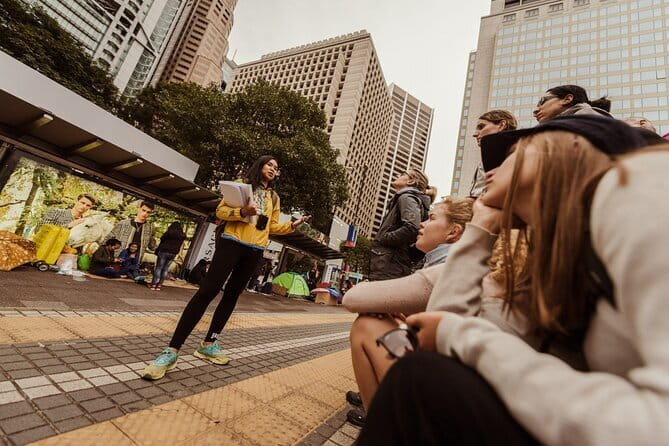
Hong Kong’s story is easiest to grasp on foot, where a British courthouse, a Chinese bank tower, a crowded food street, and a smoky temple sit within a few blocks. This two-hour Central walk links those pieces with politics, architecture, housing, religion, and personal stories from local guides such as Andy and Stephen.
I like the route for two clear reasons: it connects famous sights to daily life, and it ends with a hands-on visit to Man Mo Temple rather than stopping at a photo point. I also like the tiny upfront price, which makes this a low-risk way to get your bearings.
The main catch is that this is tip-based, so the $2.63 booking price is not the full picture of what you may choose to pay. The group can reach 30 people, and the tour requires good weather, so it may feel less personal or may be rescheduled if conditions turn poor.
Key things to know before you book
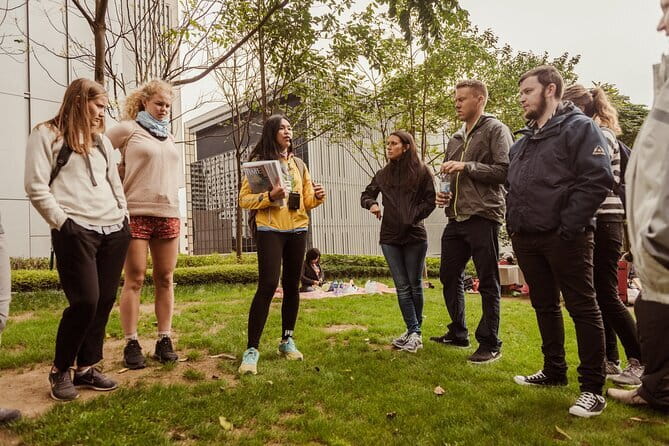
- The route crosses Hong Kong’s political divide: British Common Law, Chinese sovereignty, and the One Country, Two Systems arrangement all appear in the first half of the walk.
- The Central-Mid-Levels Escalators are part of the tour: you see how steep streets and expensive housing shaped the city’s transport system.
- Man Mo Temple provides a practical ending: you can offer incense, ring the bell, and strike the drum with guidance.
- Food is discussed, not served: Wellington Street introduces wonton noodles, egg tarts, and other local favorites, but tastings are not included.
- The walk moves from Central MTR to Sheung Wan: the meeting point is Central Station Exit K, and the final stop is Man Mo Temple on Hollywood Road.
- The value depends on your tip: the advertised price is remarkably low, but the experience is designed around supporting the guide afterward.
Starting at the Court of Final Appeal
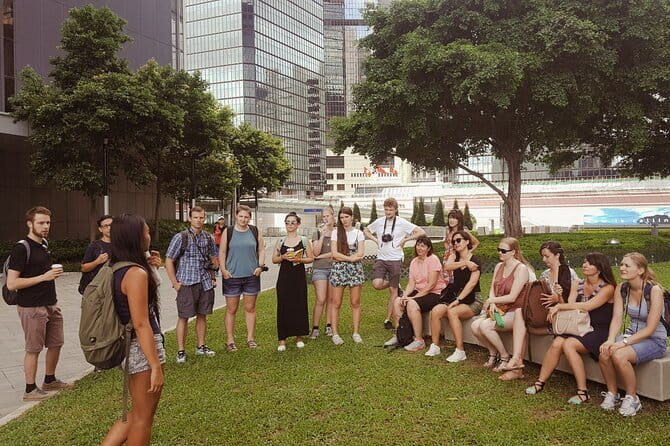
Meet at Central MTR Station, Exit K, at 11:00 a.m. The exact start point is practical for first-time visitors because Central is well connected by public transport, though you should allow time to find the right exit in the station’s maze of signs and underground passages.
The first stop is the Court of Final Appeal. In about 10 minutes, the guide explains how Hong Kong’s legal system grew from British Common Law while operating under Chinese sovereignty after the 1997 handover. This is a strong opening because it gives you a frame for the rest of the walk.
You are not simply looking at an old government building. You are being asked to notice how Hong Kong’s special political arrangement appears in ordinary institutions. The discussion of One Country, Two Systems is especially useful if you have heard the phrase but never understood how it relates to courts, business, and daily life.
The stop is outside, with no admission fee. It is short, so expect an explanation rather than an interior visit or a formal legal lecture.
Other walks around Hong Kong:
- Dark Side of Hong Kong – Kowloon Caged Homes Walking Tour
★ 5.0 · 418 reviews - Full-Day Private Customized Walking Tour of Hong Kong
★ 5.0 · 106 reviews - Hong Kong: Kowloon Street Market & Food Culture Walking Tour
★ 5.0 · 105 reviews
Statue Square and the architecture of power
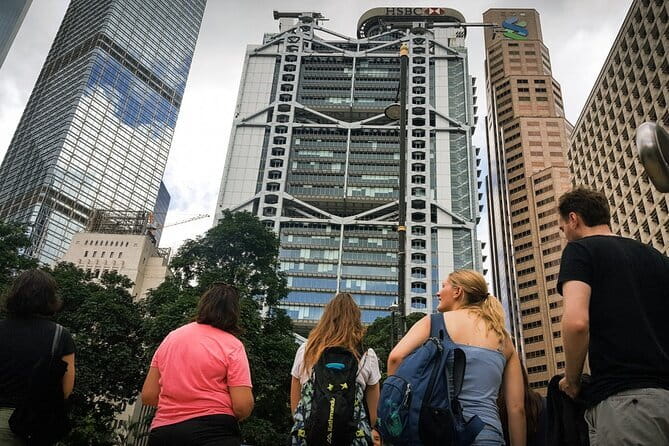
Statue Square brings the city’s financial story into view. Here, the guide compares HSBC with the Bank of China, two buildings that represent different eras of power and identity.
The architectural contrast is part of the fun. HSBC reflects Hong Kong’s British colonial and international banking past, while the Bank of China signals Chinese sovereignty and economic force. The guide also explains the feng shui contest between them, adding a distinctly Hong Kong layer to what might otherwise be a lesson in corporate architecture.
I like this stop because it lets you read the skyline as a political document. You may already know the towers from photographs, but their placement and symbolic tension make more sense when someone explains the ideas behind them.
The 10-minute stop is free and outdoors. Central can be busy, and the towers are large enough to make group positioning awkward, so staying close to the guide matters.
HSBC Main Building and the money behind the skyline
At the HSBC Main Building, the focus shifts from symbolism to monetary stability. The building’s guardian lions provide an easy visual anchor while the guide explains HSBC’s role in Hong Kong’s currency system and the city’s currency peg.
You also hear how the coastline has changed since 1842 through major land reclamation. That point matters because Central’s modern streets and towers can make the original shoreline impossible to imagine. Hong Kong’s financial center did not simply rise beside the harbor. Much of it was built outward over time.
This is one of the better places to ask questions about how Hong Kong developed into a global business center. The experience is not a museum tour, so the value comes from the guide’s ability to connect what you are seeing with the forces that shaped it.
Expect another 10-minute outdoor stop. The tour includes the building from the outside, not an interior banking visit.
St. John’s Cathedral and a personal view of 1997
St. John’s Cathedral brings a religious building into the political story. The guide covers British possession beginning in 1842 and the handover to China in 1997, then adds a personal account of growing up or living through Hong Kong’s changes.
That personal element can make the subject feel less distant. Andy and Stephen are two guide names associated with especially strong experiences, but the assigned guide can vary. You should expect a local perspective rather than a single official script, which is useful when discussing a city still shaped by political change.
The cathedral stop lasts about 10 minutes and is free. The supplied information does not promise an interior visit, so treat this as an exterior explanation unless your guide says otherwise.
Same city, a completely different day:
- Hong Kong: Dolphin Cruise, Big Buddha & Lantau Island Tour
★ 4.2 · 1,512 reviews - Ngong Ping 360: Cable Car Return Tickets & Combos
★ 4.6 · 1,431 reviews - Lantau Island Day Trip – Big Buddha & Tai O
★ 4.5 · 1,328 reviews - Big Bus Hong Kong Open Top Hop-On Hop-Off Sightseeing Tour
★ 4.0 · 1,077 reviews
Queen’s Road Central and the cost of living

Queen’s Road Central offers a sharp change of subject. Instead of focusing on grand buildings, the guide explains how extreme rental prices shape Hong Kong’s urban form, including subdivided living units.
This is an important part of the walk because it stops the city from becoming a postcard of banks and towers. Hong Kong’s high-value real estate affects how people live, how shops operate, and how much space a household can afford.
I appreciate this kind of discussion because it gives you a better way to look at the narrow streets and tall buildings around you. The tour does not provide a visit to a subdivided unit, and no interior housing experience is included. The point is context, not a staged display.
The stop lasts roughly 10 minutes. Keep your expectations realistic: you will hear about the housing problem, but you will not receive a full economic study or a property tour.
Riding the Central-Mid-Levels Escalators
The Central-Mid-Levels Escalators are one of the route’s most useful practical sights. They form the world’s longest outdoor escalator system, linking Central with the hillside neighborhoods above it.
The guide explains why the government built the system and the engineering problems involved in moving people up and down Hong Kong’s steep terrain. This turns a simple ride into a lesson in urban planning.
For you, the escalator also offers a welcome change of pace after several standing stops. It helps you understand how Hong Kong adapts when flat land is scarce and slopes dominate the city. The system is not a tourist attraction in isolation. It is part of the daily transport network and a direct response to the city’s geography and housing pattern.
The timing is about 10 minutes. Because the route uses a public escalator, movement may depend on crowding and the pace of the group. Wear comfortable shoes and keep your phone or bag secure while moving.
Wellington Street and Hong Kong on a plate

At Wellington Street, the guide introduces local food through dishes rather than a tasting session. Expect discussion of wonton noodles, egg tarts, and other parts of Hong Kong’s culinary identity.
This is a good place to write down suggestions. A short walking tour cannot sample every dish, but a focused food list can help you plan lunch or dinner afterward. The guide provides recommendations for the area, while food and drinks remain your own responsibility.
I like the way this stop fits the larger theme. Food is not treated as a separate entertainment break. It becomes another way to understand local habits, migration, business, and the way Hong Kong mixes older traditions with modern city life.
The stop takes about 10 minutes. If you are booking this because you want a food tour, choose carefully: tastings are not included, and the food discussion is only one part of a much broader city walk.
Man Mo Temple and a hands-on finish
The walk ends at Man Mo Temple, at 124 to 130 Hollywood Road in Sheung Wan. This is the most active part of the experience. With the guide’s help, you can offer incense, ring the bell, and strike the drum.
The temple’s smoky interior and popular neighborhood role show how religious practice remains part of ordinary city life. You are not simply told that the temple is important. You are shown a respectful way to take part in its customs.
The stop lasts about 15 minutes, making it the longest single section of the route. It is also a fitting ending because the walk has moved from courts and banks to food, housing, and belief. The city’s modern identity does not replace its older customs. Both occupy the same compact streets.
The information provided does not promise a private ceremony or special access. Think of this as a guided introduction to temple practice, not a formal religious event.
What the $2.63 price really means
At $2.63 per person, this is one of the least expensive ways to receive a structured introduction to Central and Sheung Wan. The price covers the professional local guide and the information shared during the walk. Admission fees are not an issue because the listed stops are free.
Still, this is not a standard prepaid sightseeing tour with every cost built in. It is tip-based. The low booking price gets you into the experience, but you should expect to decide what the guide’s time and work are worth.
That model can offer good value if you want orientation, local explanation, and a route you can later explore on your own. It is less suitable if you prefer a fixed total price with no additional decision at the end.
The tour has been booked more than five times in the past week, and its rating is 5 from 202 reviews, with 100 percent recommending it. The strongest praise centers on the guides’ clear explanations, patience, care, and the well-planned pace. Andy is described as especially helpful and bright, while Stephen is praised for explaining Hong Kong from a local point of view. Guide assignments can change, so I would treat those names as examples rather than a guarantee.
Pace, group size, and practical comfort
The advertised duration is about two hours, with ten minutes at most stops and 15 minutes at Man Mo Temple. That is enough time for a useful overview, but not enough for long interior visits, extended shopping, or a relaxed meal.
The group can include up to 30 people. A group that size keeps the price low, but it may make quiet conversation harder, especially near Central’s busy streets. If you want detailed personal discussion at every stop, arrive ready to stay close and ask questions when the guide pauses.
Most people can take part, and service animals are allowed. The route is near public transport, begins at Central MTR Station, and ends at Man Mo Temple. The supplied details do not give a precise walking distance or promise seating, so comfortable shoes and water are sensible choices, particularly in warm or humid weather.
The tour requires good weather. If poor weather cancels it, you are offered another date or a full refund. The same applies if the minimum number of participants is not reached. Otherwise, free cancellation is available up to 24 hours before the start time, while later cancellations and changes are not accepted.
Who will get the most from this walk
I would choose this tour early in a Hong Kong visit. It gives you a working map of Central and Sheung Wan, points out places you may want to revisit, and explains why the city looks and operates as it does.
It suits you especially well if you enjoy:
- Political and social context alongside major sights
- Short walking stops rather than long museum visits
- Local food advice without paying for a tasting package
- Architecture, finance, housing, and religion in one route
- A guide who adds personal stories to broad historical events
- A low-cost introduction before exploring on your own
You may want another type of experience if you need guaranteed interior access, a small private group, a full meal, or a fully fixed price. This walk is broad by design. It gives you many useful connections, but none of the subjects receives a long, specialist treatment.
Should you book it?
Book it if you want a smart first look at Hong Kong’s Central district and like the idea of learning through streets, buildings, transport, food, and temple customs. The route is well chosen, the price is low, and the strongest feature is the local explanation of how colonial rule, Chinese sovereignty, finance, housing, and daily life fit together.
Go in knowing that the $2.63 price is tip-based, food is not included, and a group of up to 30 may limit one-on-one time. If those points suit you, this is a practical introduction with real local texture, especially for first-time visitors who want more than a skyline photograph.
FAQ
How long does the Introduction to Hong Kong walk last?
The experience lasts approximately two hours.
Where does the tour begin?
It begins at Central MTR Station, Exit K, on Unnamed Road in Central, Hong Kong.
What time does the tour start?
The scheduled start time is 11:00 a.m.
Where does the tour end?
The walk ends at Man Mo Temple, 124 to 130 Hollywood Road, Sheung Wan, Hong Kong.
Is food included?
No. Food and beverages are not included, though Wellington Street includes an introduction to local dishes and food suggestions.
How many people can join the tour?
The maximum group size is 30 people.
What happens if the tour is canceled because of weather?
You will be offered a different date or a full refund if poor weather causes the cancellation.
New reviews from Hong Kong
- Lantau Island: Priority Cable Car, Tai O & Direct Transfer★ 4.0 · 11 reviews
- Hong Kong: Ngong Ping Private Cable Car Skip-the-Line Ticket★ 4.6 · 7 reviews
- Hong Kong: Lantau Private Coach, Tai O & Big Buddha Tour★ 4.8 · 8 reviews
- From Hong Kong: Macau Day Tour with R/T Ferry, Lunch, Pickup★ 4.6 · 39 reviews
- Monopoly Dreams Hong Kong★ 3.5 · 8 reviews
- 4-Hour Private Hong Kong Layover Tour★ 5.0 · 39 reviews
- A Perfect Hong Kong Layover – 5h private tour★ 5.0 · 10 reviews
- Private custom layover tour of Hong Kong – 7 hours★ 5.0 · 17 reviews
Walking Tours, compared.

Beijing Hutong Walking Food and Beer Tour at Hidden Restaurants
Read our review →
Private Beijing Walking Tour of the Forbidden City with 7 Options
Read our review →
Dark Side of Hong Kong – Kowloon Caged Homes Walking Tour
Read our review →
Forbidden City Private Walking Tour with Optional Sights
Read our review →
Shanghai Highlights Walking Tour With A Real Local
Read our review →
Beijing City Walk: Explore Hutongs Life and Old Beijing
Read our review →Browse the lists this tour appears in