
Reviewed · CALLIGRAPHY & CRAFT CLASSES
2-Hour Private Chinese Ink and Brush Painting Workshop in Shanghai
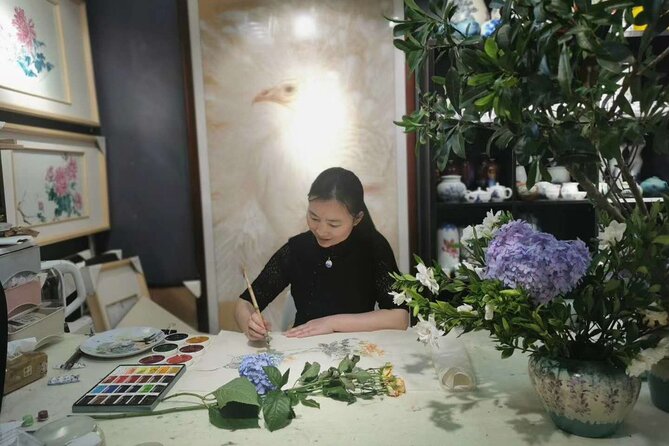
The best part of this Shanghai class is that you do not just watch someone paint. You sit down with genuine Chinese tools, learn how water and ink behave on rice paper, and create a piece of art of your own. The setting is a private artist workshop, not a large classroom, and the lesson is limited to your group.
I like the patient one-to-one instruction, especially for families and beginners. I also like the hotel pickup and translator service. Guides named Eric, Lucy, and Sunny have helped with the ride and interpretation, which matters when the art lesson depends on small details.
The main thing to check is the meeting area. The experience includes pickup from downtown Shanghai, while the workshop is described as being in Pudong. Another description refers to the French Concession, so confirm the exact studio location before booking. The activity is also non-refundable.
Key points to know before booking
- You create a real Chinese ink painting, rather than simply watching a demonstration.
- The class is private, so the teacher can adjust the pace for children, beginners, or a small group of friends.
- Hotel pickup is included from downtown Shanghai, with local Didi transport to the studio.
- A guide and translator may accompany you, with Eric, Lucy, and Sunny named in accounts of the experience.
- Tea, art instruction, and cultural context make this more than a basic craft session.
- The usual artwork choices include flowers, bamboo, and orchids, though the exact subject may depend on the class.
A quiet art lesson in a busy Shanghai city
Shanghai gives you plenty of fast-moving sightseeing: tall towers, crowded shopping streets, and grand colonial-era avenues. This class offers a useful change of pace. For about two hours, you sit with ink, brushes, paper, and a teacher who asks you to slow down.
Chinese ink painting is called shui mo, meaning water and ink. The effect depends on restraint. A brush loaded with different amounts of water and ink can make a sharp black line, a soft gray wash, or a mark that fades across the paper. You are not simply filling in a picture. You are learning how pressure, speed, moisture, and empty space affect the result.
The lesson introduces the traditional Four Treasures of the Chinese scholar’s studio: brush, ink, paper, and ink stone. That short introduction gives the activity some depth. You learn why the tools matter before trying them yourself.
This is a private activity for your own group, with space for as many as four people according to the description. That format is especially helpful if you are nervous about making a mistake. The teacher can give direct guidance instead of moving from table to table in a large class.
Other things to learn to make in Shanghai:
- 2-Hour Chinese Calligraphy with an Artist in Shanghai, China
★ 5.0 · 46 reviews - Shanghai: Zhujiajiao Water Town with Calligraphy Experience
★ 5.0 · 17 reviews - Private Qibao Ancient Town Walking Tour with Tea Tasting and Calligraphy Experience
★ 5.0 · 4 reviews
From downtown pickup to a local studio
Your guide collects you from a downtown Shanghai hotel and takes you to the workshop using a local Didi transfer. Hotel pickup saves you the trouble of finding an unfamiliar studio, and a guide can help with communication during the ride.
The workshop is described as being in a local community in Pudong. One part of the experience also refers to the French Concession, so I would confirm the exact neighborhood and expected transfer time when your booking is confirmed. This is not a serious flaw, but it is a practical point. Shanghai is a very large city, and the difference between central Shanghai and Pudong can affect your schedule.
The transport is one-way. Hotel drop-off is not included, so plan your return separately. After the lesson, your guide can leave you at the studio, and you will need to arrange your own transport back to your hotel or next stop.
The activity operates in all weather. Since much of the experience takes place indoors, rain should not ruin the class, but you should dress for the journey and wear something comfortable. Ink and water are part of the lesson, so old or easily washable clothing makes sense.
Meeting the teacher and learning the Four Treasures
Once you arrive, the lesson begins with the materials. The teacher explains the role of the brush, ink, paper, and ink stone, then shows you how to hold and use the brush.
This opening matters because Chinese brushwork feels different from ordinary drawing. You do not rest your hand on the paper in the same way, and the movement of the brush controls the character of each line. A light touch can produce a thin mark. More pressure creates a heavier stroke. Water changes the tone and spread of the ink.
The teacher also introduces basic brush strokes and the aesthetics of Chinese painting. The point is not to copy every mark perfectly. You learn to notice line quality, balance, spacing, and the relationship between painted areas and blank paper.
For complete beginners, the teacher’s pace is likely the biggest advantage. The class is designed around careful instruction, and children can participate when accompanied by an adult. Several accounts describe the teacher as kind and patient with children, which makes this a reasonable family activity if your children can focus for a two-hour class.
The guide’s role is important too. Eric is named as a translator who helped explain the lesson throughout the class. Lucy and Sunny are also named as guides who handled pickup and translation. Since the activity involves art terms and small physical movements, translation is not just a bonus. It helps you understand why the teacher is correcting your grip or changing the amount of water on your brush.
Painting flowers, bamboo, or orchids
After the practice work, you create a finished Chinese painting. Common choices include a flower, bamboo, or orchid. One account specifically describes painting a peony, while another mentions a Chinese flower taught step by step.
These subjects are useful for a beginner because they can be built from a small number of brush movements. You may practice leaves, petals, stems, and simple lines before combining them into a complete composition. The teacher’s guidance helps you understand how separate strokes become a recognizable image.
Do not expect a museum-quality masterpiece from your first attempt. That is not the point, and the paper will reveal every uncertain movement. The value is in learning how the medium works and leaving with something that carries your own hand marks.
The class lets you make a personal souvenir rather than buying a mass-produced decoration. Your finished painting may be uneven, but it will have a story behind it: the studio visit, the lesson, the guide who translated, and the first time you tried traditional ink work.
The class also gives you room to experiment. You may be encouraged to use different pressures, brush angles, and amounts of water. That freedom can be slightly intimidating at first, particularly if you are used to pencils or acrylic paint. The teacher’s demonstrations and corrections should make the process manageable.
Same city, a completely different day:
- Authentic Local Food Tour in Central Shanghai
★ 5.0 · 1,382 reviews - Zhujiajiao Water Town and Shanghai City Private Day Tour
★ 5.0 · 1,016 reviews - Private Shanghai Full Day City Tour with Old and New Highlights
★ 5.0 · 995 reviews - Shanghai: Hop-on Hop-off Bus Ticket and Optional Attractions
★ 3.4 · 692 reviews
Tea and conversation in a private artist setting
Tea is part of the experience and helps keep the mood relaxed. The combination of tea, quiet brushwork, and a small studio gives the class a calm feel that is hard to find during a packed sightseeing day.
The setting is described as a private artist workshop or artist residence. That makes the activity feel more personal than a standard commercial craft lesson. You have the chance to see where an artist works and to ask about traditional materials and techniques through the guide.
The class is also a cultural experience, not only an art exercise. You learn why ink, paper, and brush control matter in Chinese painting, and you get a small introduction to the ideas behind composition and aesthetics.
Still, the cultural background has limits. The class lasts about two hours, though the description also says two to three hours, so do not expect a full course in Chinese painting. You will receive a practical introduction and guided practice, not advanced training in the full tradition.
How much value do you get for $118?
At $118 per person, this is not a cheap casual activity. The price makes more sense if you value private instruction, hotel pickup, translation, and a finished painting. You are paying for the teaching and logistics as much as for the art supplies.
A couple or small family can share a focused lesson without being grouped with strangers. That can be good value for people who want personal attention or who find large group activities tiring. It is also useful if you have only one free afternoon and want a cultural activity that does not require a full-day commitment.
For a solo participant, the price deserves more thought. A private lesson with transport and translation may still suit you, especially if painting is a major interest. If you mainly want a quick souvenir, a cheaper calligraphy or craft session may be enough.
The class is usually booked about ten days ahead, so it is wise to reserve before your Shanghai visit if your schedule is tight. Confirmation is sent within 48 hours, subject to availability. Since the booking cannot be refunded or changed, wait until your dates and hotel are firm.
Group discounts are available, but the exact discount is not specified. If you are booking for several people, ask about the group rate before paying.
Who will enjoy this class most?
I would recommend this experience to:
- Couples looking for a quiet shared activity
- Families with children who enjoy hands-on lessons
- First-time visitors who want a cultural activity beyond major sights
- Solo visitors who value private instruction and a finished souvenir
- Anyone interested in Chinese art, tea, or traditional materials
- People who prefer a small local studio to a large organized class
It suits beginners particularly well. You do not need a background in drawing, and the teacher guides you through basic strokes and composition.
It may not suit you if you want a fast, highly structured sightseeing stop. The class asks you to slow down and concentrate. It may also disappoint if you expect to produce a polished professional painting in one sitting.
The private format can work well for children, but the activity is still a two-hour art lesson. Very young children may need close support from an adult, and children must be accompanied by one.
The practical points that matter most
Pickup is offered from anywhere in downtown Shanghai, but the activity does not include hotel drop-off. Confirm that your hotel falls within the downtown pickup area and ask where the studio is located.
The workshop is near public transportation, and the local Didi transfer is included from the pickup point. If you are arranging your own way to the studio, the exact address and neighborhood become especially important.
The class is private, and only your group participates. That gives you more freedom to ask questions, repeat a difficult stroke, or choose a slower pace. It also means you should not expect the social energy of a large class.
Mobile tickets are available. The experience operates in all weather, and most people can take part. The main physical requirement is the ability to sit, hold a brush, and follow the teacher’s instruction for the length of the class.
The activity has a perfect five-star score from 15 published ratings, with 100 percent recommending it. The strongest praise centers on the teacher’s patience, the quality of the private instruction, and the help provided by guides such as Eric. Those are the parts I would value most when deciding.
Should you book the Shanghai ink painting workshop?
Book it if you want to spend part of your Shanghai visit making something yourself. The class offers genuine instruction, a small-group setting, tea, local transport, and a painting you can take home. It is a good choice for a restful afternoon, a family activity, or a final-day experience when you want something meaningful but not exhausting.
I would be more cautious if your schedule is very tight, your hotel is far from central Shanghai, or you are uncomfortable with the non-refundable booking rule. Confirm the workshop neighborhood because the information refers to both Pudong and the French Concession, and remember to arrange your own return.
For most beginners, the appeal is simple: you leave with more than a purchased souvenir. You leave with a basic understanding of shui mo painting and a piece of paper marked by your own brush.
FAQ
How long does the Chinese ink painting workshop last?
The activity lasts approximately two hours. The description also notes that the class may run for two to three hours, so allow some extra time in your schedule.
Where does the workshop take place?
The workshop is described as a private artist studio in a local community in Pudong. Another description refers to the French Concession, so confirm the exact location after booking.
Is hotel pickup included?
Yes. Pickup is offered from hotels in downtown Shanghai, followed by a local Didi transfer to the workshop.
Is hotel drop-off included?
No. You need to arrange your own transportation after the class.
Is the class private?
Yes. Only your group participates in the activity, and the class is described as being for a small group of up to four people.
Do I need previous painting experience?
No previous experience is stated as a requirement. The teacher introduces the basic materials, brush strokes, and painting methods for beginners.
Can children join the class?
Yes. Children can participate, but they must be accompanied by an adult.
What do I take home?
You take home the Chinese ink painting you create during the class. The activity may include subjects such as flowers, bamboo, orchids, or peonies.
Is transportation to the workshop included?
Yes. Downtown hotel pickup and local Didi transportation to the workshop are included.
Can I cancel or change the booking?
No. The experience is non-refundable and cannot be changed for any reason.
New reviews from Shanghai
- Shanghai To Beijing Bullet Train Ticket with Local Private Transfer★ 5.0 · 12 reviews
- Shanghai Spicy Food Tour★ 5.0 · 3 reviews
- Shanghai Uncommon Historic Sites Tour★ 5.0 · 3 reviews
- Shanghai Pudong airport transfer to Disneyland:Private with Meet & Great service★ 5.0 · 3 reviews
- Shanghai Tower Observation Deck 118 floor Tickets Pre-booking.★ 5.0 · 4 reviews
- Pudong Airport to Hangzhou: Private with Meet and Greet Service★ 4.5 · 4 reviews
- Private Transfer: Hotel to Shanghai Wusongkou Cruise Terminal (Baoshan Port)★ 3.5 · 6 reviews
- Shanghai Pudong International Airport (PVG) to Shanghai Hotel★ 5.0 · 4 reviews
Calligraphy & Craft Classes, compared.
Beijing Historic City Guided Walking Tour + Calligraphy Creation
Read our review →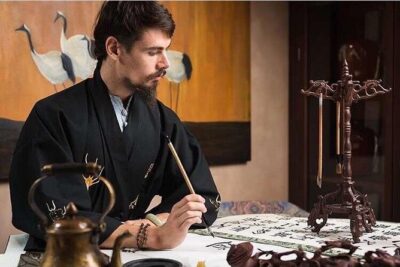
Beijing Wangfujing Calligraphy Class by Forbidden City
Read our review →
Beijing Culture: Tea Ceremony, Heritage Instrument & Calligraphy
Read our review →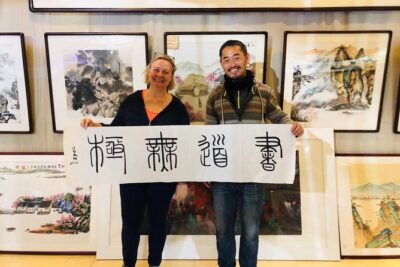
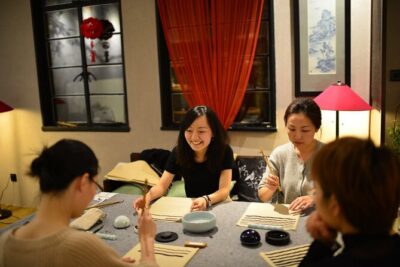
2-Hour Chinese Calligraphy with an Artist in Shanghai, China
Read our review →
Discover Old Beijing: Hutong Walking Tour & Calligraphy
Read our review →Browse the lists this tour appears in