
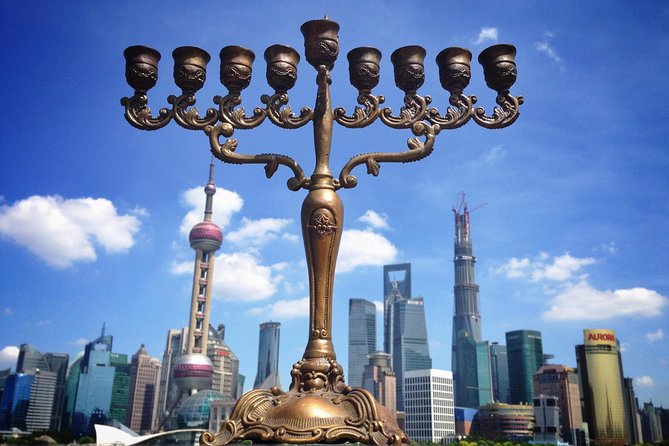
Reviewed · HISTORICAL TOURS
Tour of Jewish Shanghai led by a Jewish History Expert
Shanghai’s Jewish story is unusual: a city that became a refuge for thousands of European Jews during World War II, while Baghdadi Jewish businessmen had already shaped parts of its commercial life. This four-hour tour connects those stories through the Bund, Hongkou, the former Ohel Moishe Synagogue, and the lanes where refugees once lived.
I like the way the tour joins major landmarks with ordinary neighborhood streets, including a Chinese home once occupied by Jewish refugees. I also like the guide-led storytelling, especially with Dvir, whose dry humor, energy, and command of the subject have made him a memorable host for many groups. The main drawback is simple: this is primarily a history tour. If you want grand interiors, preserved buildings, or a large Jewish community still living in Shanghai, you may find the physical remains limited.
Key points at a glance
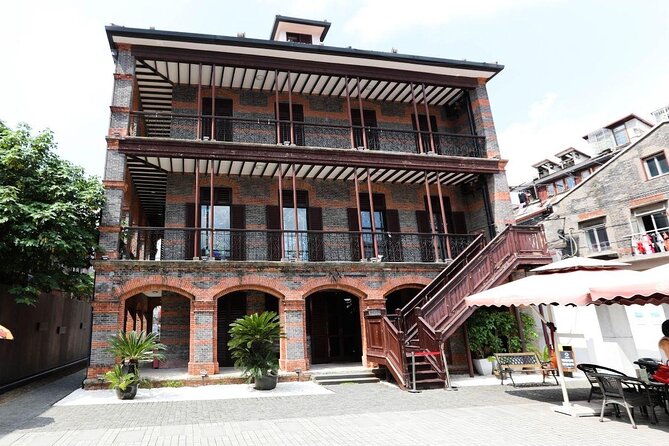
- Begin with Baghdadi Jewish Shanghai: Meet near the Bund and hear how figures such as Sir Victor Sassoon helped shape the city.
- Visit the former Ohel Moishe Synagogue: The Jewish Refugees Museum provides the tour’s main indoor stop and historical focus.
- Walk through former refugee territory: Hongkou, once called the Shanghai Ghetto, is now a lived-in neighborhood rather than a preserved museum district.
- See the Huoshan Park monument: This modest memorial helps mark the wartime refugee story in the place where it unfolded.
- Travel in a small or medium-sized group: The maximum group size is 22, with private, air-conditioned transportation included.
- Allow four hours and choose morning if possible: The operator recommends the morning departure because of tour length and daylight.
Why Jewish Shanghai matters
Shanghai offered a rare escape route for Jewish refugees fleeing war-torn Europe. Unlike many destinations that required difficult entry permits or large financial guarantees, Shanghai accepted refugees during a period when the gates elsewhere were closing.
That does not make the story simple or comfortable. Refugees arrived in a foreign city with unfamiliar customs, little money, and uncertain legal status. Many eventually lived in Hongkou, an area later known as the Shanghai Ghetto, where living conditions were difficult but survival was possible.
The tour also reaches further back than World War II. Your guide first explains the Baghdadi Jewish community, whose merchants and property developers helped shape Shanghai’s business world. Sir Victor Sassoon is part of that story, and the Peace Hotel, formerly the Cathay Hotel, gives the opening talk a fitting setting.
I like this wider frame. You are not given a single Holocaust story detached from Shanghai. Instead, you see how Jewish life developed in stages, alongside Chinese migration, international trade, colonial influence, and the city’s rapid growth.
Other history to see in Shanghai:
- Between Capitalism & Communism: Hong Kong History Tip Based Tour
★ 5.0 · 234 reviews - Beijing Historical Tour II including Summer Palace, Lama Temple & Panda Garden
★ 4.0 · 187 reviews - Beijing Historical Tour I – Forbidden City, Tiananmen Square & Temple of Heaven
★ 4.0 · 120 reviews
Starting near the Bund and the Peace Hotel
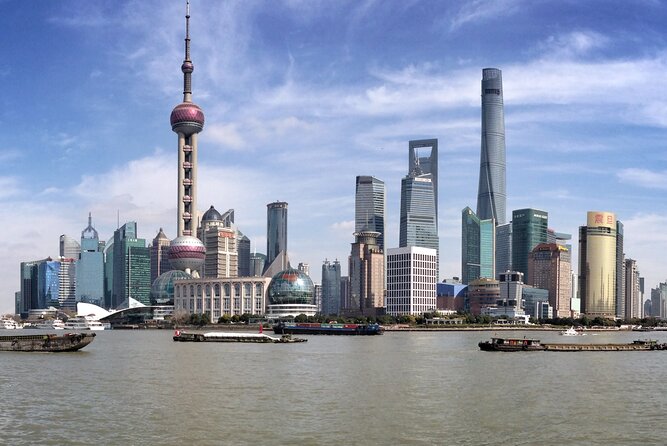
The tour begins near Nanjing Road East, with the detailed meeting instructions identifying the Peace Hotel area on the Bund. The Peace Hotel was formerly the Cathay Hotel, built by Sir Victor Sassoon, so the meeting place is tied directly to the first part of the story.
The Bund also gives you a striking visual introduction to Shanghai. Across the river, the modern skyline reminds you how quickly the city has changed. Behind you, the older waterfront buildings point to the international business world in which Baghdadi Jewish families played a part.
Your guide uses this opening to explain Jewish immigration to Shanghai before moving east toward Hongkou. This is not just a convenient meeting point. It sets up the contrast between wealthy commercial Shanghai and the far harder circumstances faced by refugees later in the city’s history.
The exact meeting information is worth checking carefully when you book. The tour description names the Peace Hotel, while the formal meeting point is listed on Nanjing Road East. Confirm the final instructions rather than relying only on the general description.
The Baghdadi Jewish chapter
The first section focuses on Jews who came to Shanghai from the Middle East, especially the Baghdadi Jewish community. Their story differs from that of the European refugees who arrived later, and understanding that difference makes the rest of the tour easier to follow.
Your guide connects Jewish merchants and property developers to Shanghai’s growth. Sir Victor Sassoon is the clearest example, and the former Cathay Hotel gives you a physical link to his role in the city.
I find this part valuable because it prevents a common misunderstanding. Jewish Shanghai did not begin in 1938 or 1939. A Jewish community had already built businesses, institutions, and social networks before the refugee wave transformed the city.
The opening talk can be detailed. That is good news if you enjoy context, but it may feel lecture-like if you prefer a quick walk from one sight to another. The guide’s personality matters here. Dvir is frequently identified as the tour leader, while Andy and Anfisa have also led departures. The strongest descriptions of the experience point to clear explanations, humor, and an ability to connect Jewish history with Shanghai’s wider story.
Entering Hongkou, the former Shanghai Ghetto
After the Bund, the tour moves to Hongkou, the district associated with the Jewish Ghetto during World War II. The name can sound misleading today. This is not a preserved historical site enclosed for tourists. It is an active urban neighborhood where people live, work, and go about daily life.
That is both the strength and the limitation of the stop. You do not get a polished reconstruction of refugee life. Instead, you walk through streets and back lanes where the past is mixed into the present, often in quiet and easily missed ways.
Your guide explains how Jewish refugees lived alongside Chinese residents and migrant workers. This shared urban story matters. The refugees were not living in a separate European colony. They were trying to survive in a Chinese city already coping with war, poverty, overcrowding, and political upheaval.
The tour includes a visit to a Chinese home where Jewish refugees once lived. This is one of the most personal parts of the route because it moves beyond museums and plaques. A building used as a home can make the refugee experience easier to picture, though you should expect the surroundings to be modest rather than grand.
Wear comfortable shoes. The tour includes walking through back lanes and neighborhood streets, even though transportation is provided for the longer transfers. It operates in all weather, so rain protection or sun protection may matter depending on the season.
Same city, a completely different day:
- Authentic Local Food Tour in Central Shanghai
★ 5.0 · 1,382 reviews - Zhujiajiao Water Town and Shanghai City Private Day Tour
★ 5.0 · 1,016 reviews - Private Shanghai Full Day City Tour with Old and New Highlights
★ 5.0 · 995 reviews - Shanghai: Hop-on Hop-off Bus Ticket and Optional Attractions
★ 3.4 · 692 reviews
Ohel Moishe Synagogue and the Jewish Refugees Museum
The Jewish Refugees Museum occupies the former Ohel Moishe Synagogue. This is the main indoor attraction and one of the clearest surviving links to Jewish religious life in Hongkou.
The building helps anchor the tour in a real institution. You are not only hearing about names and dates. You are entering a former synagogue that later became part of the refugee story and now presents that history as a museum.
Admission is included, so you do not need to budget a separate museum ticket. The museum stop also provides a break from the outdoor walking and gives the guide a place to explain the wartime period with supporting material.
The quality of this stop depends partly on your expectations. If you hope to find a large functioning Jewish community, you may be disappointed. The tour makes clear that the subject is largely historical, and the surviving Jewish presence in China is not the focus of the route.
For many people, though, the museum is the emotional center of the morning. It gives shape to a story that can otherwise seem too large: people leaving Europe, arriving in Shanghai, finding shelter in Hongkou, and building a temporary life under harsh conditions.
Huoshan Park and the refugee memorial
Huoshan Park contains a monument to Jewish refugees of World War II. It is not a huge monument or a grand ceremonial space. Its value comes from its location and from the way your guide places it within the surrounding neighborhood.
A stop here gives you time to consider the scale of the refugee experience. The memorial marks a community that survived in Shanghai but was often overlooked in wider accounts of the war.
I like the contrast between the quiet park and the weight of the subject. You are not being rushed through a major tourist attraction. The guide can explain what happened in the area and how memory of the refugees has been preserved.
This stop also shows why the tour works best with an expert guide. Without explanation, the monument could be easy to pass by. With context, it becomes part of a much larger account of migration, war, local hardship, and Jewish survival.
A walking tour with wheels between the stops
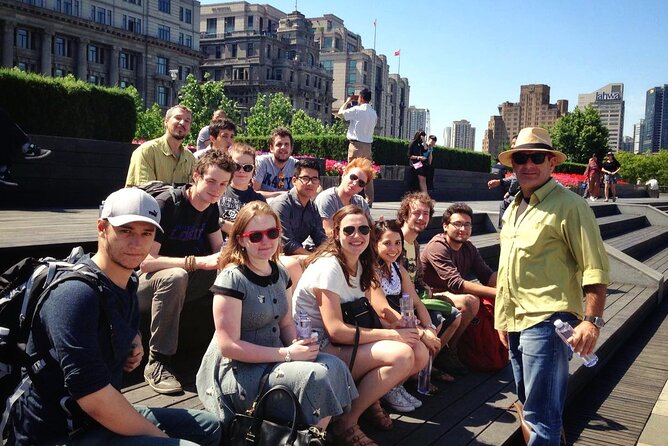
The experience is described as a walking tour, but it is not four straight hours on foot. Private transportation in an air-conditioned vehicle is included, helping connect the Bund with Hongkou and reducing the strain of Shanghai’s traffic and weather.
Once in Hongkou, you should expect walking through streets, back lanes, the museum, and the park. The group can include up to 22 people. That is not an intimate private tour, but it is still small enough for a guide to speak directly to the group in most situations.
Some groups are much smaller. A small group makes it easier to hear detailed explanations and ask questions, especially during the longer historical sections. If the maximum group size is reached, you may feel less connected to the guide in narrow lanes or busy outdoor areas.
The pace has been described as steady, with periodic chances to sit. That matters because the guide covers a large amount of material in roughly four hours. You are not expected to memorize every name, but the route rewards you if you enjoy listening and asking questions.
How the guide shapes the experience
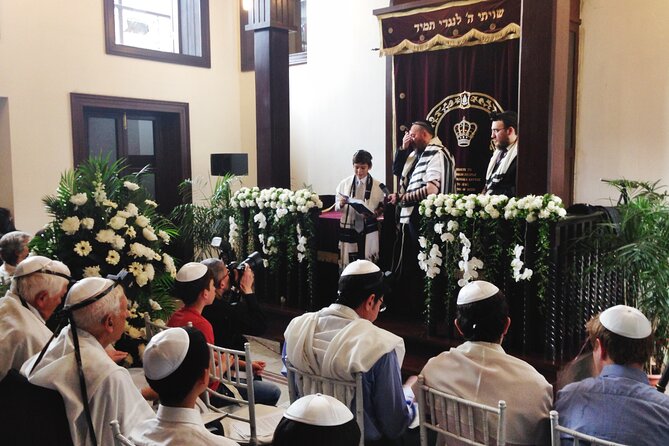
The tour’s greatest asset is the guide. Dvir is repeatedly associated with the experience and is described as having an encyclopedic command of the subject, a dry sense of humor, and strong energy. Andy and Anfisa are also named as guides on different departures.
The best part of this guiding style is the way personal stories are tied to larger forces. You may hear about a Baghdadi Jewish real estate developer, Chinese migrant workers, and European refugees in the same historical frame. That mix keeps the tour from becoming a narrow list of synagogue dates.
The subject also calls for care. This is a painful history involving persecution, displacement, and wartime survival. The guide is expected to handle it sympathetically without turning the tour into a solemn lecture from start to finish.
The tour has received a 4.9 rating from 106 reviews, with 99 percent recommending it. Those figures point to very strong satisfaction, but they should not hide the one clear mismatch: some people want more visible remains and less explanation. You should book this because you want the interpretation, not because Hongkou is filled with preserved Jewish buildings.
Is $96 a fair price?
At $96 per person, the tour is not the cheapest way to spend a morning in Shanghai. Its value comes from the combination of a specialist guide, private transportation, an air-conditioned vehicle, and admission to the Jewish Refugees Museum.
You are paying for a focused subject that would be difficult to reconstruct on your own. The Jewish story is spread across different parts of the city, and the meaning of the streets, memorial, synagogue, and Bund buildings depends heavily on context.
The price makes the most sense if you are traveling with family, have a strong interest in Jewish history, or want to understand Shanghai beyond its skyline and shopping streets. It is less compelling if you only want a quick photo stop or a general city tour.
Food and drinks are not included. Plan to eat before or after the tour rather than expecting refreshments along the way. The tour ends back at the meeting point, which can make it easier to continue sightseeing around the Bund or Nanjing Road afterward.
Timing, weather, and booking details
The standard start time is 9:30 a.m. The tour also operates in the afternoon, but the operator recommends the morning because four hours can run into daylight limits later in the day.
The tour runs in all weather. Since you will spend part of the experience outdoors, carry suitable clothing, comfortable shoes, and whatever rain or sun protection the forecast calls for.
Confirmation is sent within 48 hours of booking, subject to availability. The experience requires a minimum number of participants, so a cancellation for that reason may result in another date, another experience, or a full refund.
You can cancel for a full refund up to 24 hours before the start time. Changes or cancellations inside that window are not accepted for a refund.
Who should book this tour?
I would recommend it to you if you want a serious introduction to Jewish life in Shanghai, especially the connection between earlier Baghdadi Jewish settlement and the wartime refugee community.
It also suits anyone interested in World War II, migration, urban history, or the way a city absorbs people from very different backgrounds. You do not need to be Jewish to find the subject meaningful. The tour also explains parts of Shanghai’s social and economic development that a standard sightseeing route may skip.
You may want to choose another activity if you need a highly visual attraction at every stop. Much of Hongkou’s story is no longer obvious from the street, and the tour depends on listening. One critical assessment described it as mainly a history lesson, which is a fair warning for anyone expecting a large number of preserved sites.
Should you book the Jewish Shanghai tour?
Book it if you want the story behind the buildings. The former Ohel Moishe Synagogue, Huoshan Park memorial, former refugee home, and Bund landmarks become far more meaningful when a guide connects them.
I would choose the morning departure, confirm the Peace Hotel and Nanjing Road East meeting details, and allow the full four hours. For $96, you get a specialized history experience rather than a general city sampler. That is a good deal if Jewish Shanghai is a priority, and a poor fit if you are looking only for grand architecture or a fast-paced sightseeing loop.
FAQ
How long does the Jewish Shanghai tour last?
The tour lasts approximately four hours.
Where does the tour begin?
The listed meeting point is on Nanjing Road East in Shanghai. The tour instructions also identify the Peace Hotel near the Bund as the meeting location, so confirm the exact meeting details after booking.
What time does the tour start?
The standard start time is 9:30 a.m.
Is an afternoon departure available?
Yes. The tour operates in both the morning and afternoon, but the morning option is recommended because of the tour length and daylight.
What places are visited?
The route includes the Bund area, Hongkou, the former Shanghai Ghetto, the Jewish Refugees Museum in the former Ohel Moishe Synagogue, Huoshan Park, back lanes, and a Chinese home where Jewish refugees once lived.
Is transportation included?
Yes. Private transportation in an air-conditioned vehicle is included.
Is museum admission included?
Yes. Admission to the Jewish Refugees Museum is included.
Are food and drinks included?
No. Food and drinks are not included.
How large can the group be?
The maximum group size is 22 people.
Can I cancel for a full refund?
Yes, if you cancel at least 24 hours before the experience start time. Cancellations or changes made less than 24 hours before the start time are not refunded.
New reviews from Shanghai
- Shanghai: 3-Hour Old Shanghai City Tour★ 4.9 · 45 reviews
- Make Soup Dumpling: Vegan or Pork in Shanghai Shikumen★ 4.9 · 6 reviews
- Immerse in Suzhou & Tongli: Private Day Trip★ 5.0 · 10 reviews
- Wuzhen Private Full-Day Tour from Shanghai★ 5.0 · 4 reviews
- Half-Day Zhujiajiao Water Town Wonders Small Group Tour★ 4.5 · 10 reviews
- Half-Day Zhujiajiao Water Town Wonders Private Tour★ 4.7 · 14 reviews
- Hangzhou Private Day Trip by Bullet Train from Shanghai★ 4.5 · 5 reviews
- From Shanghai: Hangzhou Private Day Trip by Bullet Train★ 4.6 · 15 reviews
Historical Tours, compared.
Between Capitalism & Communism: Hong Kong History Tip Based Tour
Read our review →
Beijing Historical Tour II including Summer Palace, Lama Temple & Panda Garden
Read our review →
Beijing Historical Tour I – Forbidden City, Tiananmen Square & Temple of Heaven
Read our review →
Beijing Historic City Guided Walking Tour + Calligraphy Creation
Read our review →
Beijing Culture: Tea Ceremony, Heritage Instrument & Calligraphy
Read our review →
Xi’an Full Day Sightseeing Tour – Shaanxi History Museum, Big Wild Goose Pagoda, Ancient City Wall
Read our review →
Private Historical Tour: Guangzhou City Sightseeing Including Lunch
Read our review →
Bell and Drum Towers Entry Ticket—Historic Landmark
Read our review →Browse the lists this tour appears in