
Reviewed · CALLIGRAPHY & CRAFT CLASSES
Introduction to Watchmaking
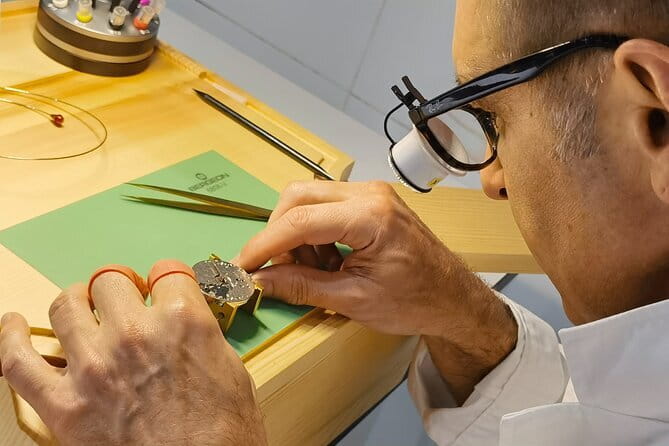
A Swiss watch movement fits on your workbench, yet it contains a small world of springs, wheels, screws, and precise decisions. In this private Hong Kong workshop, you learn by handling the parts yourself, taking apart and rebuilding a manual-wind ETA 6497 movement with screwdrivers and tweezers.
I like the practical format and the one-to-one feel of a group reserved just for you. I also like that Renaud focuses on the dos and don’ts of reassembly, a useful lesson if you own or plan to buy a mechanical watch. The main consideration is the price: at $236.16 per person, this is a specialist experience, not a casual sightseeing stop.
Key details before you book
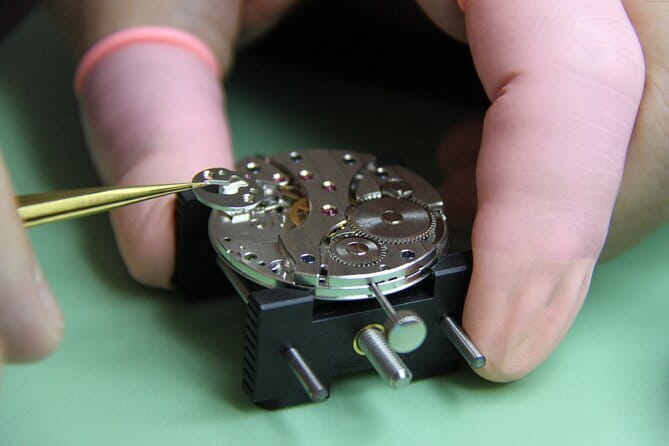
- A real Swiss ETA 6497 movement: You work with a manual-wind movement rather than a model made only for demonstration.
- Renaud’s hands-on guidance: The instruction centers on careful reassembly, including the mistakes that can damage or disrupt the mechanism.
- About two and a half hours: You have enough time for explanation, disassembly, and rebuilding without turning the session into a rushed photo stop.
- Private participation: Only your group takes part, which suits anyone who wants to ask detailed questions.
- Sheung Wan setting: The meeting point is Amplitude – Watch Experience at 64 Bonham Strand, near public transportation.
- A specialist price: The cost makes the most sense for watch fans, curious mechanics, and people who value practical instruction over a broad city tour.
Why this small movement makes a good lesson
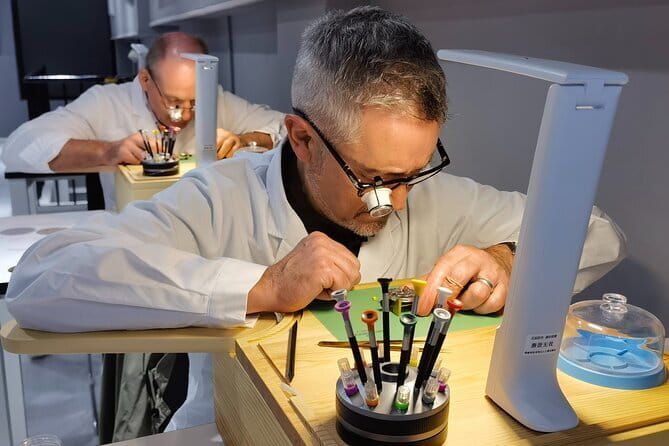
The ETA 6497 is a manual-wind Swiss movement, and that matters. A mechanical watch does not rely on a battery to keep time. Instead, a wound spring stores energy, and a series of wheels and regulating parts releases it in controlled steps.
You are not simply looking at a watch through glass. You are learning how its parts relate to one another. The point of the session is to see the mechanism as a working system, not a pile of tiny metal pieces.
That makes the workshop useful even if you are new to horology. You do not need to arrive knowing the names of every wheel or screw. The course begins with the history of timepieces and an explanation of watch movements, then moves toward the workbench.
I like this order. It gives the fiddly work a reason. When you later handle a component, you have some sense of what it does and why its position matters.
Other things to learn to make in Hong Kong:
- Brush calligraphy class / Chinese ink painting class
★ 4.0 · 4 reviews - Beijing Calligraphy Class
★ 4.9 · 112 reviews - Chinese Calligraphy Class for Small Group
★ 5.0 · 104 reviews
Arriving at 64 Bonham Strand in Sheung Wan
The workshop begins at Amplitude – Watch Experience, located at 64 Bonham Strand in Sheung Wan. The meeting point is near public transportation, so you can reach it without arranging a separate transfer as part of the activity.
The supplied details do not specify a particular transit line, exit, or walking route. Give yourself enough time to locate the address, especially if you are unfamiliar with Sheung Wan. Your mobile ticket is accepted for the booking, and confirmation is provided at the time of reservation.
The location also gives the experience a useful sense of place. Hong Kong has long been associated with the trade and servicing of watches, so this is not a generic craft class dropped into a hotel ballroom. You are visiting a city with a strong connection to watches and timepieces, then focusing on the machinery behind them.
The activity returns to the same meeting point. That keeps the plan simple, especially if you have another appointment later in the day.
The opening lesson on timepieces and watch movements
The first part sets up the practical work. You explore the history of timepieces and learn the basic mechanics behind watch movements before touching the tools.
This introduction is important because the movement can look confusing at first. Small gears and springs have specific jobs, and the order of assembly matters. A good explanation helps you understand that the parts are not interchangeable decorations. They form a chain in which one component affects the next.
The workshop is intended to suit both watch enthusiasts and newcomers. That does not mean the subject becomes shallow. It means the guide can build a foundation before asking you to work with the movement.
I would pay close attention here and ask questions early. Once the tiny components are in front of you, clear explanations about function and placement will make the hands-on part much easier.
Taking apart the manual-wind ETA 6497

The central task is disassembling a manual-wind ETA 6497 Swiss movement. You use a set of screwdrivers and tweezers, tools that demand a light touch and careful control.
This is where the experience becomes more than a talk about watches. You have to observe how the parts are positioned and handle them without force. The work rewards patience rather than speed.
The provided details do not promise that you will dismantle every part of a complete watch, and they do not specify a finished watch for you to take home. The clear focus is the movement itself, along with the skill of taking it apart and putting it back together.
That distinction helps set expectations. Book this to learn how a mechanical movement works, not as a watch-shopping session or a repair appointment for your own timepiece.
A private format is especially useful during this stage. If you are unsure where a screwdriver should go or how a part should be handled, you can stop and ask. There is no larger public group competing for the guide’s attention.
Same city, a completely different day:
- Hong Kong: Dolphin Cruise, Big Buddha & Lantau Island Tour
★ 4.2 · 1,512 reviews - Ngong Ping 360: Cable Car Return Tickets & Combos
★ 4.6 · 1,431 reviews - Lantau Island Day Trip – Big Buddha & Tai O
★ 4.5 · 1,328 reviews - Big Bus Hong Kong Open Top Hop-On Hop-Off Sightseeing Tour
★ 4.0 · 1,077 reviews
Reassembling the mechanism, one careful step at a time

The reassembly is the part that tests your understanding. It is also where Renaud’s instruction becomes most useful.
A practical lesson in watchmaking needs to cover more than the correct order. It must also explain what not to do. The strongest detail available about this workshop is Renaud’s focus on crucial dos and don’ts during reassembly. That is the kind of information you can use later, even if you never work on another movement yourself.
You may find that putting the mechanism back together requires more concentration than taking it apart. During disassembly, you can observe where parts came from. During reassembly, you must remember how they fit and how delicate the process is.
The course gives you a closer look at the discipline behind a mechanical watch. A finished watch can seem effortless from the outside. At the workbench, you see the care required to keep the system functioning.
This is also the point where the workshop earns its educational value. You are not merely shown a mechanism and told that it is complicated. You handle it, make decisions under supervision, and gain a clearer sense of why watchmaking demands precision.
What makes the private format worth considering

This is a private activity, so only your group participates. That can make a significant difference in a technical workshop.
In a large class, you might spend much of the session watching someone else manipulate the movement. Here, the structure is better suited to questions and individual pacing. You can ask for an explanation of a specific component or request help when a step feels uncertain.
The format is also a good match for pairs or small groups with different levels of interest. One person may already collect mechanical watches, while another is simply curious about how they work. The guide can address both without turning the session into a lecture aimed at a single type of participant.
The tradeoff is cost. The $236.16 per-person price is high compared with a standard museum visit or general Hong Kong activity. You are paying for specialist instruction, private participation, tools, and sustained attention over roughly two and a half hours.
I would book it only if the subject genuinely interests you. If you want a broad introduction to Hong Kong culture, this is too narrow. If you enjoy mechanical objects and prefer learning by doing, the price is easier to justify.
Who will get the most from this workshop
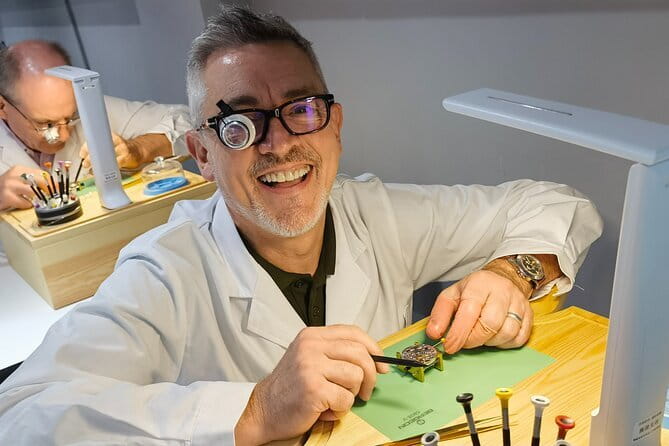
This activity suits an established watch enthusiast who wants a better grasp of what happens inside a mechanical watch. It also works for a curious newcomer who likes detailed, hands-on lessons.
You do not need to arrive as a trained technician. The session is designed to introduce the parts and functions of a movement before you work with them. The presence of an expert guide also makes the activity less intimidating than trying to study a movement alone.
It may be a good choice for:
- Someone who owns a manual-wind or mechanical watch and wants to understand it better
- A visitor interested in Swiss watch movements
- A couple or small private group looking for a focused activity in Sheung Wan
- A person who prefers a practical workshop to a sightseeing tour
- A watch collector who wants clearer language for discussing movement parts and functions
It is less suitable if you dislike delicate handwork or want a quick, low-effort attraction. Two and a half hours is a long time to spend concentrating on small components.
The course also does not appear to include a broad tour of Hong Kong’s watch shops or a city walk. Its value is in the workshop itself.
Timing, price, and the booking decision
The experience lasts approximately 2 hours and 30 minutes. That is enough time for an introduction, tool work, disassembly, reassembly, and questions, though the exact pace may depend on your group.
It is booked, on average, 27 days ahead. That suggests you should plan early if the workshop needs to fit a fixed Hong Kong itinerary. A mobile ticket makes the booking easy to carry, and confirmation arrives at the time of booking.
At $236.16 per person, the workshop belongs in the special-interest category. You should compare it with what else you value in your trip. The price may feel reasonable for several hours of private expert instruction, but it will not make sense if you are only mildly curious about watches.
The experience has a current 5 out of 5 rating based on three ratings. The most useful praise concerns the clarity of the instruction, especially the way Renaud guides the reassembly and explains the key mistakes to avoid. That is a more meaningful strength than simple enthusiasm because it points to the part of the course where expert guidance matters most.
Practical details that can affect your plans
The activity ends back at the meeting point, so you do not need to arrange a separate return transfer. It is near public transportation, and most people can participate.
Service animals are allowed. The available information does not specify wheelchair access, exact seating arrangements, or any physical requirements for the workbench, so you should check with the provider if those details matter for your group.
The experience requires good weather under its operating policy. If poor weather causes a cancellation, you are offered another date or a full refund. The provider also requires a minimum number of participants, and if that condition is not met, you are offered another date or experience, or a full refund.
You can cancel for a full refund up to 24 hours before the start time. Cancellations or changes made less than 24 hours before the start are not accepted for a refund, and the cut-off uses local Hong Kong time.
Those rules are worth noting because a private appointment can be harder to replace at the last minute. Keep the meeting time clear, and avoid treating the session as a flexible filler between unrelated plans.
Should you book the Introduction to Watchmaking?
Book this workshop if you want a focused, private lesson in how a mechanical movement works. The real attraction is not a souvenir or a quick demonstration. It is the chance to take apart and rebuild a Swiss ETA 6497 movement under expert guidance, with special attention to the errors that can spoil reassembly.
I especially like the combination of history, explanation, and handwork. Renaud’s practical advice gives the session a clear purpose, and the private format makes it easier to ask questions and work at a sensible pace.
Skip it if your interest in watches is casual or if $236.16 feels too steep for a narrow subject. Hong Kong offers plenty of broader cultural activities, and this one asks you to spend two and a half hours concentrating on small mechanical parts.
For the right person, though, this is a memorable way to understand what sits inside a watch. You leave with a better sense of the patience, order, and precision that make a mechanical timepiece work.
FAQ
Where does the watchmaking activity begin?
It begins at Amplitude – Watch Experience, 64 Bonham Strand, Sheung Wan, Hong Kong.
Where does the activity end?
The activity ends back at the meeting point at Amplitude – Watch Experience.
How long does the workshop last?
The workshop lasts approximately 2 hours and 30 minutes.
What movement will I work with?
You will work with a manual-wind ETA 6497 Swiss movement.
Is this a private activity?
Yes. Only your group participates in the private tour or activity.
Is a mobile ticket available?
Yes. The experience includes a mobile ticket, and booking confirmation is provided at the time of booking.
What is the cancellation policy?
You can cancel up to 24 hours before the start time for a full refund. Cancellations or changes made less than 24 hours before the start time are not accepted for a refund.
New reviews from Hong Kong
- Victoria Peak Tram and Sky Terrace 428 Admission Hong Kong★ 4.5 · 33 reviews
- Walking Tour in Hong Kong – Local Experience (New & Best)★ 4.5 · 33 reviews
- Full Day Private Trip in Hong Kong( impeccable local )walk tour★ 5.0 · 11 reviews
- Hong Kong Guided Dinner + Laser Show Lounge Entry (2023) | 200+ booked★ 3.5 · 7 reviews
- Group Vegetarian Food & Cultural Tour★ 5.0 · 16 reviews
- Hong Kong Victoria Harbour Sightseeing Cruise Tickets★ 4.5 · 8 reviews
- The Legendary Bruce Lee Experience Tour★ 4.5 · 9 reviews
- STARLIGHT: Victoria Harbour Night Yacht Tour★ 4.5 · 38 reviews
Calligraphy & Craft Classes, compared.

Beijing Historic City Guided Walking Tour + Calligraphy Creation
Read our review →
Beijing Wangfujing Calligraphy Class by Forbidden City
Read our review →
Beijing Culture: Tea Ceremony, Heritage Instrument & Calligraphy
Read our review →
2-Hour Chinese Calligraphy with an Artist in Shanghai, China
Read our review →
Discover Old Beijing: Hutong Walking Tour & Calligraphy
Read our review →Browse the lists this tour appears in