
Reviewed · CALLIGRAPHY & CRAFT CLASSES
Beijing Hands-On Culture Tour: Tea, Instrument, Calligraphy
The most unusual part of this Beijing activity is that you do not simply watch a tea ceremony or listen to a Guqin recital. You brew the tea, pluck the strings, hold the brush, and put on Hanfu for photographs. I especially like the small group of up to 10 people and the way several Chinese arts fit into one calm, air-conditioned visit.
I also like that the instruction is in English and that the Guqin lesson is taught by a practicing master, not just a guide reading from a script. The main consideration is time: this is a compact introduction, not a full course in tea, music, or calligraphy. You will sample several traditions, but you will not become an expert in three hours.
Key points at a glance
- Play a complete Guqin melody: You receive step-by-step help instead of sitting through only a performance.
- Brew three Chinese teas: The session covers red, green, and floral teas through a six-step ritual.
- Write with brush and ink: Create your name or a meaningful word such as peace or blessing.
- Try Hanfu and take photos: Traditional clothing is included, along with a photo session.
- Meet a guide at the metro: Sylvia can help you find the private art center if you arrange this in advance.
- Pay $15 for a three-hour visit: Tea, water, instruction, Hanfu rental, photos, and souvenirs are included.
A hands-on introduction to Beijing culture
This activity is best understood as a cultural sampler with real participation. In about three hours, you move through tea, music, writing, clothing, ritual, and conversation. The pace is organized so that no single section takes over the whole visit.
That matters in Beijing. You can spend days visiting palaces and museums while still feeling that Chinese culture remains behind glass. Here, you use your hands. You taste tea, make sounds on an ancient instrument, and leave with something you created.
The setting is a certified private art center rather than a crowded public attraction. The room is air-conditioned, and the group is limited to 10 people. I would choose this kind of setting after a hot day at the Forbidden City, or for a first afternoon in Beijing when you want cultural context without another large site.
The experience is also friendly to mixed-age groups. One family brought children aged 9 and 14, while another included children and adults from 11 to 40. That range makes sense: the activities are practical, visual, and short enough to hold a child’s attention.
More Calligraphy and Craft Classes in Beijing
- Beijing Calligraphy Class
★ 4.9 · 112 reviews - Chinese Calligraphy Class for Small Group
★ 5.0 · 104 reviews - Beijing Historic City Guided Walking Tour + Calligraphy Creation
★ 5.0 · 59 reviews
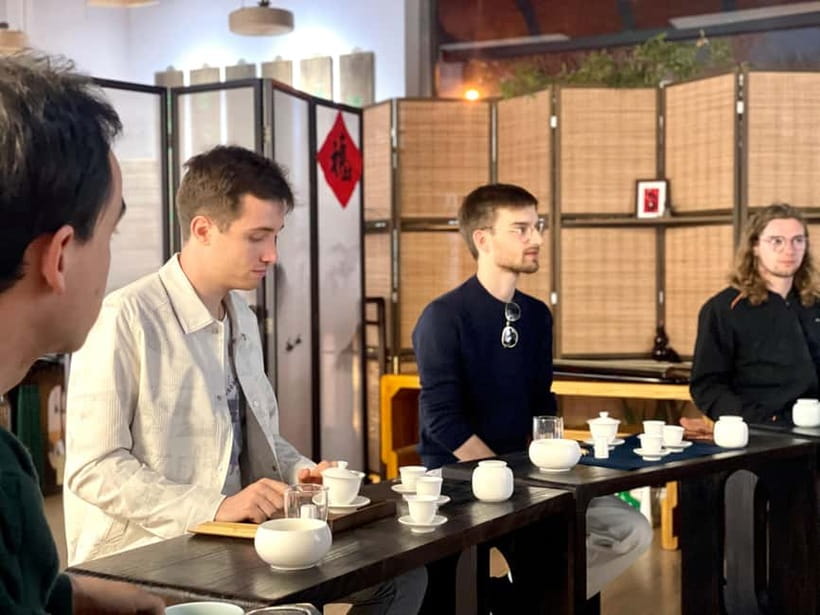
Tea ceremony with three distinct flavors
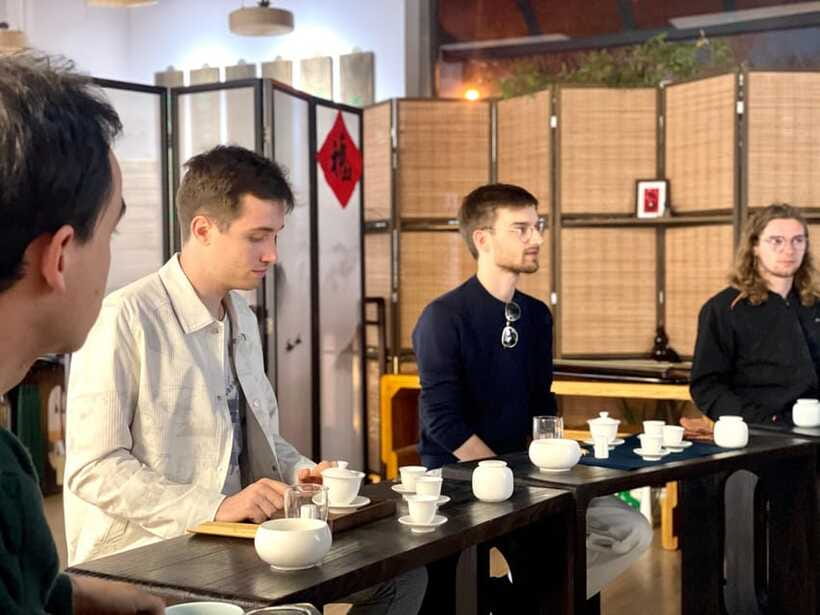
The tea section begins with a six-step Chinese tea ritual taught by a tea master. You brew three kinds of tea: red, green, and floral. The value is not just in drinking three cups. You are shown how aroma, taste, and tradition change from one tea to the next.
Tea ceremonies can feel passive when you sit quietly while someone else handles every pot and cup. This one asks you to take part. You get a clearer sense of the care behind the ritual, including the deliberate movements and the social meaning of serving tea.
I would pay close attention to the explanations here, especially if you are new to Chinese tea. The guide connects the procedure with symbolism and cultural habits, so the ritual does not feel like a string of decorative gestures.
Do not expect a full tea tasting course. The session gives you a useful first look at three styles rather than an advanced lesson in production regions, brewing temperatures, or tea equipment. Still, for the price, the chance to handle the process yourself is unusually good value.
Water and tea are included. Meals and other drinks are not, so eat before or after the activity if you need more than a tasting.
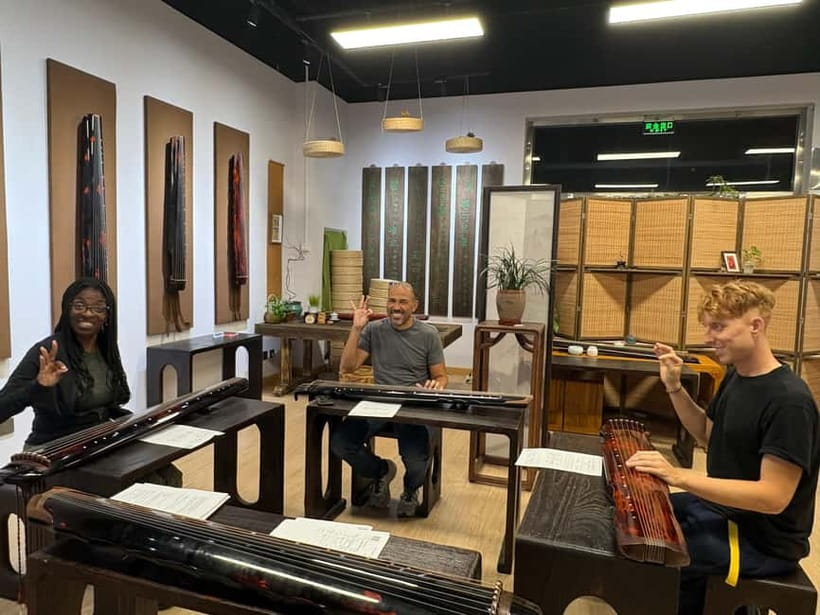
Learning a full melody on the Guqin
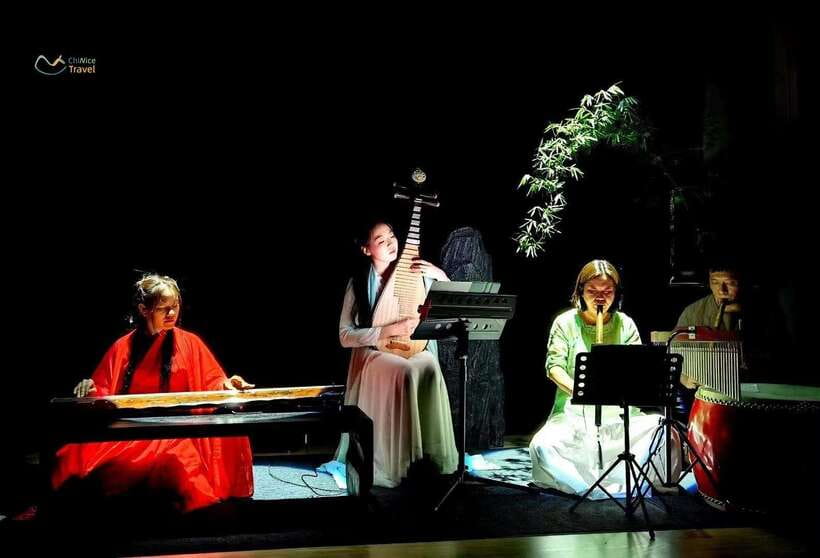
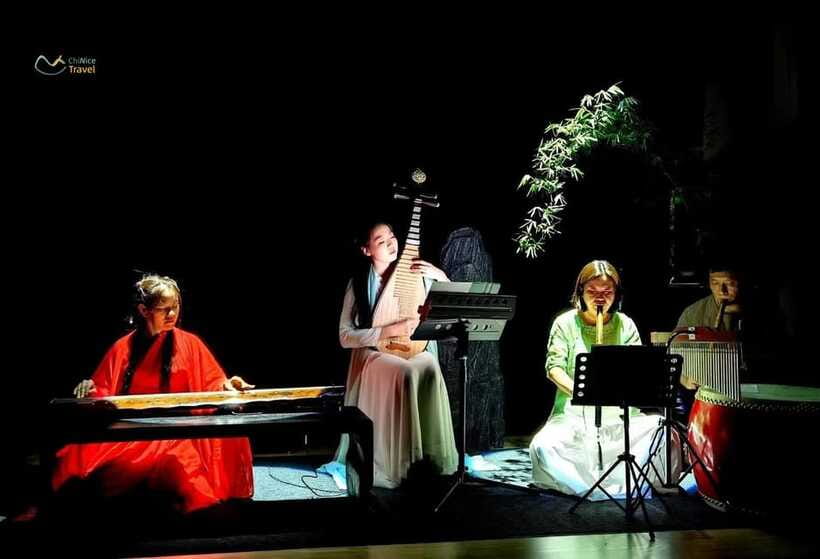
The Guqin is the musical heart of the visit. It is one of China’s oldest and most respected instruments, with a tradition reaching back thousands of years. Its sound is quiet, spare, and mellow, quite different from the louder instruments you may hear in a stage show.
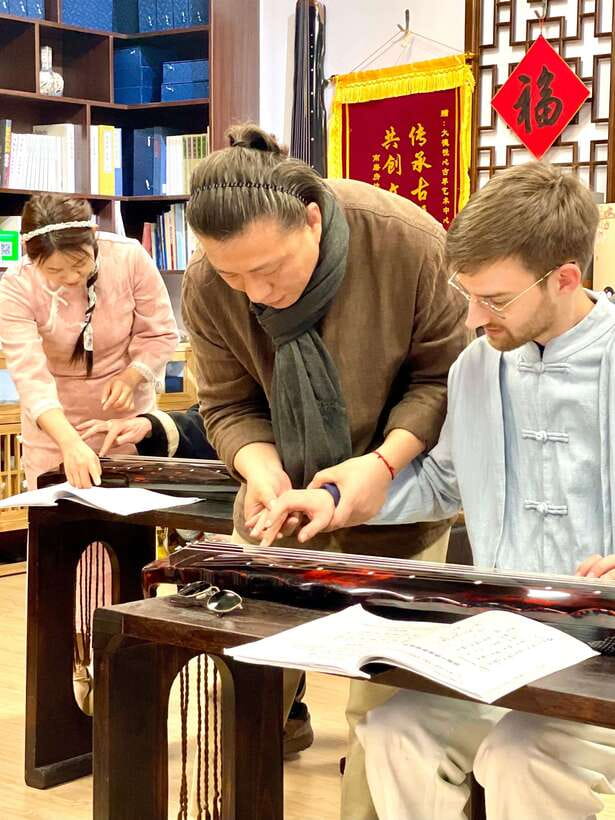
First, a master performs or demonstrates the instrument. Then you take your turn. The important promise here is a full ancient melody, not a single plucked note for a photograph. Your instructor guides your fingers until you can find the rhythm.
That makes this section more memorable than a standard concert. You hear the instrument in skilled hands, then feel how much control is required to produce even a simple musical phrase. The contrast between expert playing and your first attempt is part of the fun.
The Guqin class is taught by one of the masters in Guqin performance, with English support available. This is useful because the instrument’s gestures and finger positions are not always easy to understand through translation alone.
You should keep your expectations sensible. A short class cannot teach the full vocabulary of Guqin technique. You will not leave ready for a concert career, but you can play a complete melody and understand why the instrument has such a special place in Chinese culture.
For many people, this will be the most distinctive part of the day. Tea ceremonies and calligraphy workshops are found in many cities. Sitting at a Guqin and producing a traditional melody yourself is less common.
Brush, ink, and the meaning of your name
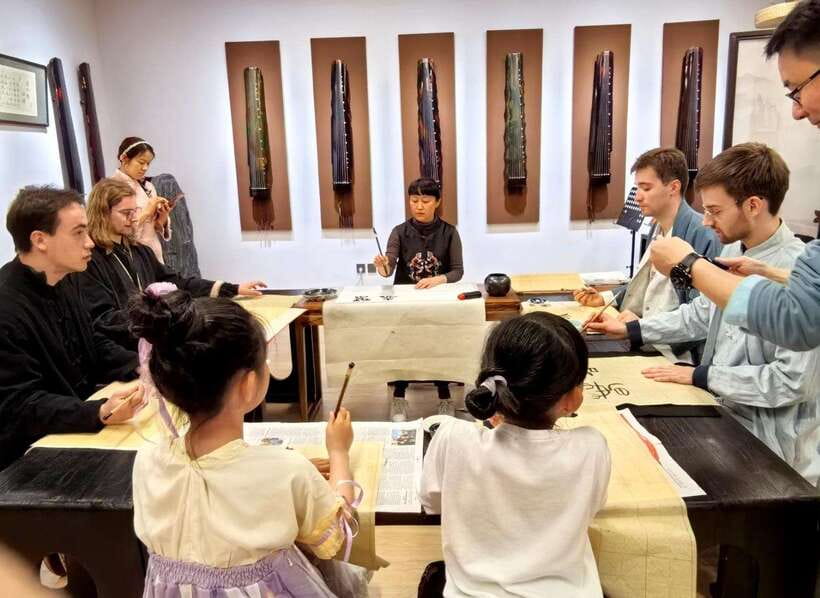
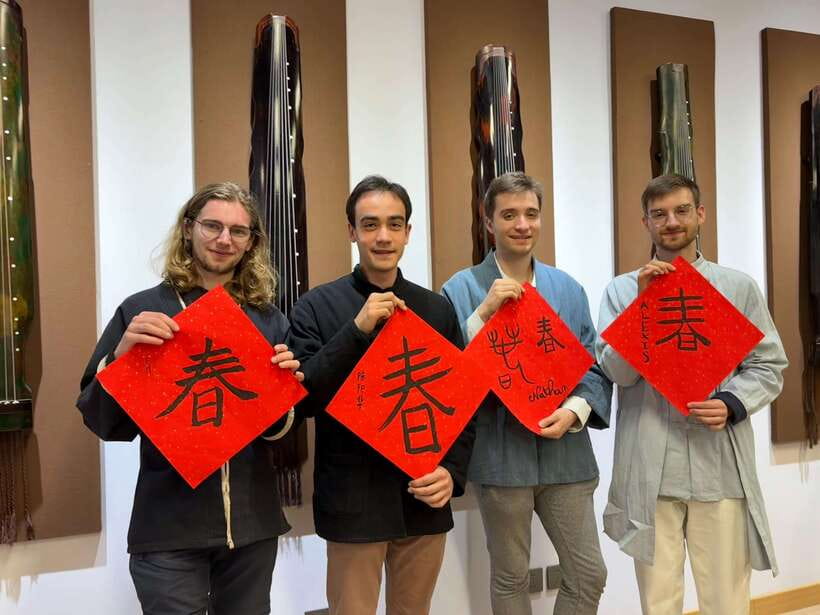
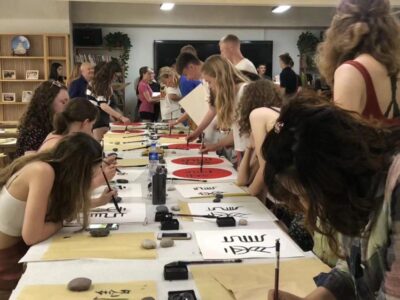
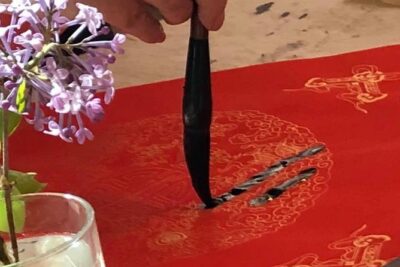
The calligraphy session moves from looking at Chinese characters to making them. You learn something about how Chinese writing developed, then use a real brush and ink to write your name or a meaningful word.
The suggested choices include peace and blessing. That gives you a useful way to connect the exercise with your own trip. You are not just copying a random character from a worksheet. You are creating a piece with personal meaning.
Calligraphy is often presented as a matter of beautiful handwriting, but the guide also explains the ideas behind the forms. The order and shape of the strokes matter. The writing becomes a small lesson in patience, balance, and visual design.
I like this section for families because everyone can produce a finished piece, even if the first attempt is uneven. The activity is calming, and the result gives you a small souvenir that costs nothing extra.
It is worth remembering that traditional calligraphy takes years to master. Your finished work may look more like a first lesson than a museum piece. That is not a problem. The point is to understand the movement of the brush and the care required to make a character.
Other things to learn to make in Beijing:
- Beijing Wangfujing Calligraphy Class by Forbidden City
★ 5.0 · 58 reviews - Beijing Culture: Tea Ceremony, Heritage Instrument & Calligraphy
★ 5.0 · 57 reviews - Beijing Wangfujing Calligraphy Class Nearby Forbidden City
★ 5.0 · 56 reviews - Discover Old Beijing: Hutong Walking Tour & Calligraphy
★ 4.3 · 24 reviews
Hanfu dressing and a simple photo session
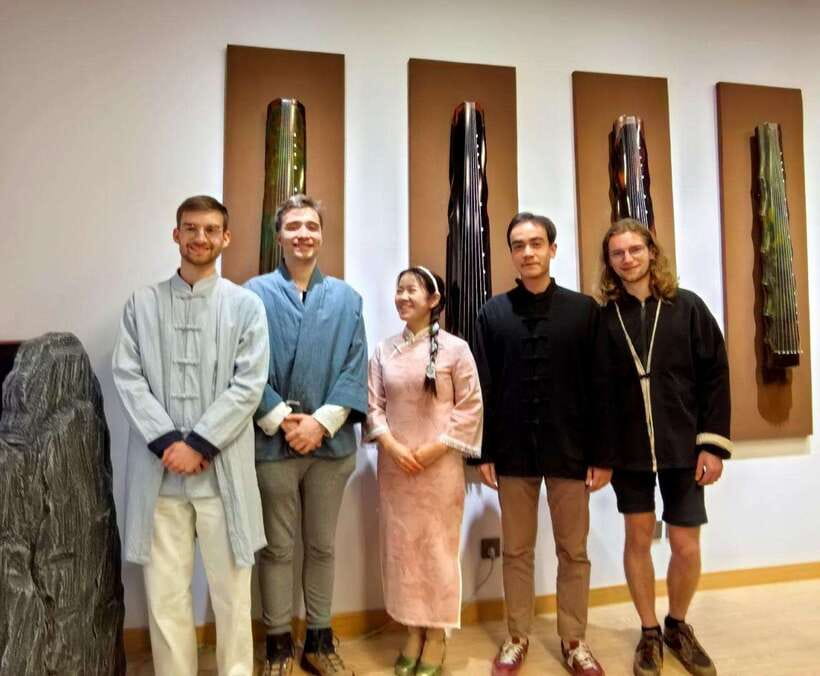
Hanfu rental adds a visual element to the cultural lesson. You can put on traditional Chinese clothing and take photographs during the visit. Bring your own camera if you want extra images beyond the arranged photo session.
This is more than a costume stop when it is paired with the tea, music, and calligraphy. You see how clothing fits into the wider presentation of Chinese culture, then get a personal record of the afternoon.
Wear comfortable clothes underneath. The instructions specifically recommend comfortable clothing for the dressing session, which is practical advice for anyone who plans to spend time adjusting layers or posing for photographs.
The photos are included, along with the Hanfu rental. The available details do not promise a particular number of pictures or a formal studio setup, so I would treat this as a pleasant extra rather than the main reason to book.
If you are traveling with children or parents, the clothing session can help keep the day varied. A child who has less patience for tea may enjoy Hanfu, while an adult who is unsure about dressing up may prefer the quiet Guqin or calligraphy sections.
A guide who connects the activities
The guide is not only there to translate. The experience is designed around stories, history, philosophy, and symbolism. That makes a difference because these activities can otherwise feel disconnected.
Sylvia, also identified as Sylvi in the experience details, has helped visitors find the art center from the metro entrance. One family staying at the Kerry hotel found the train ride easy once they had sorted out their tickets, then met her at the station entrance. If you want this kind of help, arrange it before you arrive rather than assuming every guide will meet you automatically.
The guide also checks practical needs in advance. One family was asked about allergies so suitable arrangements could be made. That is a thoughtful touch, especially during a tea session, though you should still state any dietary or allergy concerns when booking.
Instruction is offered in Chinese and English. The English support is especially important during the Guqin lesson and the explanations of calligraphy, where a few translated words would not be enough.
Because the group is capped at 10, you should have a better chance to ask questions and receive help with your brush or instrument. A larger group would make the hands-on parts less useful.
What the three-hour schedule feels like
The advertised duration is three hours, while the main cultural program is described as about two and a half hours. The extra time likely allows for arrival, preparation, dressing, photographs, and movement between activities.
Arrive 10 minutes early. That gives you time to settle in and prepare for Hanfu without cutting into the tea or Guqin instruction.
The exact order can vary, but you should expect a sequence built around:
- Tea ritual and tasting
- Guqin performance and personal instruction
- Calligraphy with brush and ink
- Cultural explanations and rituals
- Hanfu rental and photographs
- Original souvenirs and personal creations
The timing is one of the strengths. Each activity has enough room to feel real, but the session keeps moving. You are unlikely to spend an entire afternoon on one narrow craft.
The tradeoff is that the experience can feel full. If you want long, quiet meditation over tea or an extended music lesson, choose a specialist class instead. If you want a broad first look at several Chinese traditions, the compact format works well.
What is included for $15
At $15 per person, this is a strong value if you take part in all the sections. The price includes tea and water, the Guqin class, a professional guide and tutor, Hanfu rental, the photo session, a show or performance, and original souvenirs.
The Guqin instruction alone gives the price much of its appeal. Add the tea tasting, calligraphy materials, clothing, photos, and small take-home items, and you are getting several separate activities in one booking.
You still need to pay for your own transport to and from the venue, meals, extra drinks, and personal purchases. The activity does not include a meal, so plan it between breakfast and lunch or lunch and dinner.
The low cost also makes this a sensible choice for a family. A group of five can sample several parts of Chinese culture without paying for separate private lessons. Just remember that the price reflects an introduction, not a long professional workshop.
Getting there and planning the visit
Transportation is not included. The exact venue address and meeting instructions should be checked when you book. The metro is a practical option based on the experience details, and Sylvia may meet you at the metro entrance to help you locate the art center.
Allow extra time for finding the right exit and buying or using your train tickets. The family staying at the Kerry hotel found the train manageable after sorting out their tickets, but that small warning is useful: Beijing stations can take time to navigate.
The art center is described as wheelchair accessible. If you need specific assistance, confirm the arrangements before arrival, since accessibility can involve more than the entrance alone.
Book with comfortable clothing in mind, and bring a camera. If you have allergies, tell the provider ahead of time. Free cancellation is available up to 24 hours before the activity, and you can reserve now and pay later, which helps if your Beijing schedule is still changing.
Who should book this activity
I would recommend it most strongly to first-time visitors who want cultural background before or after the city’s major sights. It gives you enough context to notice tea rituals, calligraphy, music, and clothing elsewhere in China.
Families are another good match. The activities change often, the group is small, and children can make things rather than sit through a lecture. The 9 and 14-year-old age range is a useful guide, though interest will vary from child to child.
It also suits adults who want a gentle indoor break from Beijing’s long walks and crowded attractions. The air-conditioned room and small group make the afternoon easier on hot or tiring days.
You may want a different activity if your main goal is advanced tea study, a long Guqin course, or serious calligraphy training. This is a broad cultural workshop. Its strength is the range and personal contact, not technical depth in one art.
Should you book it?
Book this experience if you want to do more than photograph Chinese culture from the outside. For $15, you can brew three teas, play a complete Guqin melody, write with brush and ink, wear Hanfu, take photos, and leave with personal souvenirs.
I would be especially comfortable recommending it to families, mixed-age groups, and visitors who prefer a calm indoor activity with English guidance. Skip it only if you dislike short introductions or want a specialist class devoted to one tradition.
The best reason to go is simple: you get to use your hands. That turns a pleasant cultural afternoon into something you are more likely to remember after leaving Beijing.
FAQ
How long does the Beijing culture tour last?
The activity lasts three hours, with the main cultural program taking about two and a half hours.
What activities are included?
You take part in a Chinese tea ceremony, Guqin music instruction, calligraphy, cultural rituals, Hanfu dressing, and a photo session.
Can I play the Guqin myself?
Yes. The instructor teaches you step by step so you can play a full ancient Chinese melody.
Which teas will I try?
The tea session includes red tea, green tea, and floral tea.
Is the activity taught in English?
Yes. Instruction and guidance are available in Chinese and English.
What is the maximum group size?
The activity is offered as a small group with a maximum of 10 participants.
Is Hanfu rental included?
Yes. Hanfu rental is included, along with the photo session.
Should I bring a camera?
Yes. You are advised to bring your camera for the photo shoot.
Is transportation included?
No. Transportation to and from the venue is not included. Sylvia may meet you at the metro entrance if arranged in advance.
Is the activity wheelchair accessible?
Yes. The activity is listed as wheelchair accessible.
More classes and workshops in Beijing
- Beijing: Dumpling Making Workshop with Meal and Tea
★ 4.7 · 69 reviews - Online Cooking Class Beijing Dumplings and Cuisine by Sunflowerli Renowned Chef
★ 5.0 · 65 reviews - Chinese Kungfu class in old temple beside Forbidden Ci
★ 4.8 · 53 reviews - Beijing Private Tai Chi Class
★ 5.0 · 16 reviews
New reviews from Beijing
- Jinshangling Great Wall Of Beijing Tickets And Other Option★ 4.0 · 4 reviews
- Hutong Walking Tour: Discover Real Beijing without Crowds★ 5.0 · 47 reviews
- Beijing: Best Great Wall Sunset Tour★ 5.0 · 7 reviews
- Gubei Water Town Simatai Great Wall Ticket And Options★ 4.5 · 8 reviews
- Great Wall Jinshanling To Simatai West Hiking Private Tour★ 5.0 · 13 reviews
- From Beijing: Mutianyu Great Wall Private Tour with Lunch★ 5.0 · 9 reviews
- From Beijing: Badaling Great Wall Bus Group Tour★ 4.4 · 41 reviews
- Beijing: All-Inclusive 3-Day Private Tour of Must-See Sights★ 5.0 · 35 reviews
Calligraphy & Craft Classes, compared.
Beijing Historic City Guided Walking Tour + Calligraphy Creation
Read our review →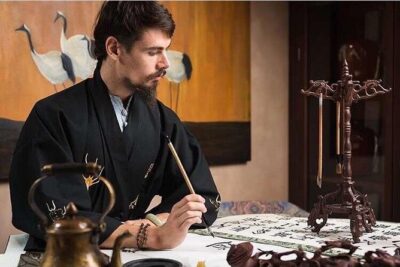
Beijing Wangfujing Calligraphy Class by Forbidden City
Read our review →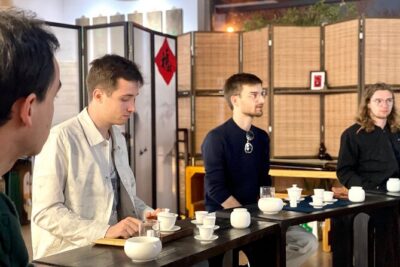
Beijing Culture: Tea Ceremony, Heritage Instrument & Calligraphy
Read our review →
Discover Old Beijing: Hutong Walking Tour & Calligraphy
Read our review →
One Hour Chinese Calligraphy or Painting Lessons in Yangshuo
Read our review →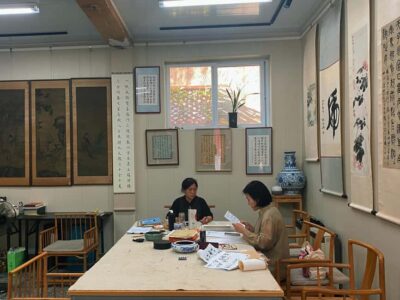
Beijing liulichang : Learn Calligraphy orCarving from Master
Read our review →Browse the lists this tour appears in