
Reviewed · HISTORICAL TOURS
Chongqing: Historical Blocks, Temple, and Mountain Tour
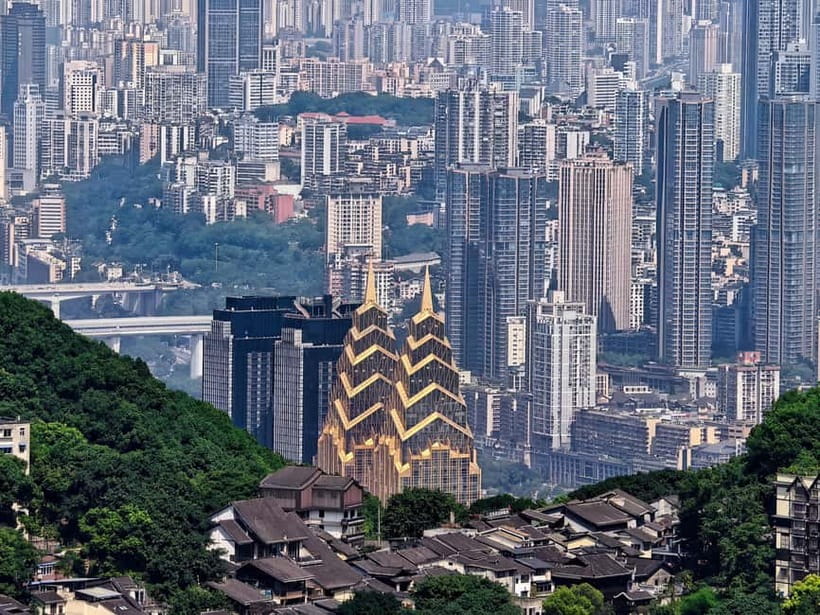
Chongqing’s best surprise may be how quickly its dense city streets give way to mountain air. This four-hour private tour links Longmenhao Old Street with the wooded slopes of Nanshan, where old lanes, a Taoist temple, local snacks, and broad views of the city fit into one outing. I like the mix of city life and quiet nature, and I like that your guide can shape the walk around your interests. The main catch is the pace: stone stairs and hiking shoes are part of the deal.
I also like the small-group format. You are not being pushed through a large coach group, and guides such as Tiian have been singled out for being friendly, fun, and attentive. Just remember that transport, food, drinks, and hotel drop-off cost extra, so the $88 price is strongest if you value personal guiding more than an all-inclusive day out.
Key points at a glance
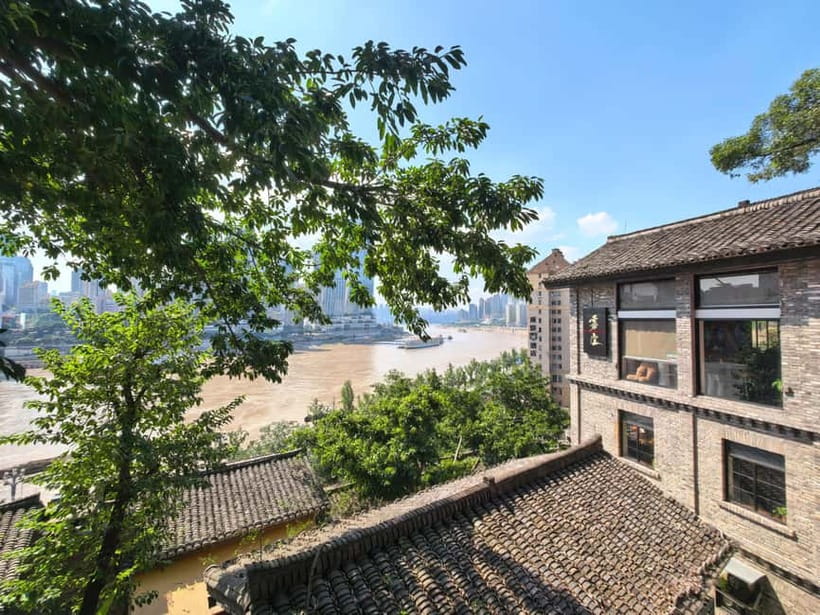
- Longmenhao begins the story: Walk old lanes, renewed buildings, traditional architecture, and stylish small shops.
- Nanshan changes the mood: The tour moves from city streets into forest, mountain air, stone stairs, and wide views.
- The Taoist temple adds depth: See Chongqing’s largest and most famous Taoist temple in a quiet natural setting.
- You get a private guide: English, French, Italian, and Spanish guiding is available, with room to ask questions and adjust the focus.
- Local food is part of the outing: There is a 30-minute stop for street food, local snacks, or a simple meal, but food is not included.
- Plan for extra transport costs: Subway and public transport are used during the route, while fares are paid separately.
Why this tour works as a Chongqing introduction
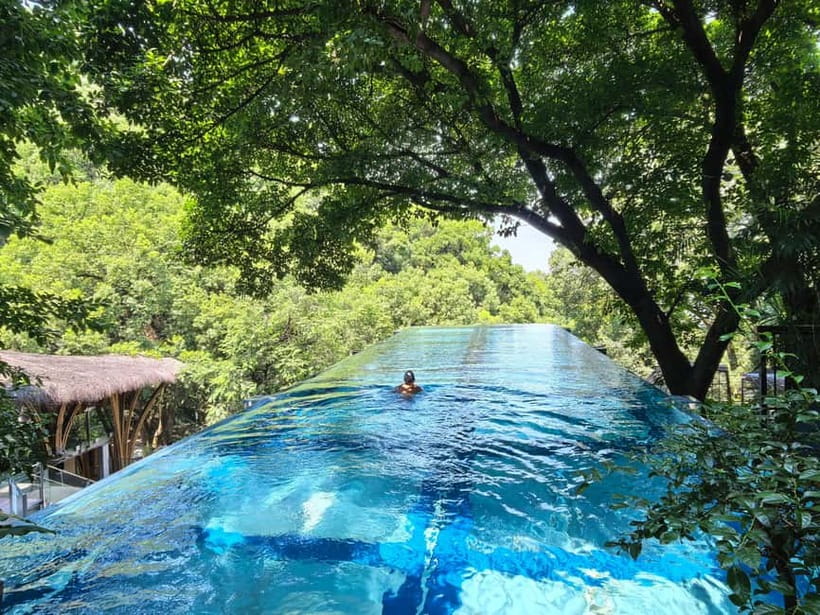
Chongqing can feel like several cities stacked on top of one another. One moment you are in a busy urban district, and soon after you are walking among trees on a mountain slope. This tour makes that contrast the main event rather than treating it as a side trip.
The outing begins in the Longmenhao area, continues by subway toward Nanshan, and finishes back near the starting point. The route takes about four hours, including a 30-minute food stop. That is long enough to see a useful slice of Chongqing without giving up an entire day.
I would choose this experience early in a Chongqing stay. Your guide can explain the city’s geography, local life, and historical changes while you are seeing them in front of you. The private format also gives you a chance to ask practical questions about food, neighborhoods, transport, and what to see next.
This is not a tour for someone who wants only a bus window and a list of photo stops. You will walk, climb stone stairs, and use public transport. In return, you get a closer look at how Chongqing’s old districts connect with its hills and green spaces.
Other history to see in Chongqing:
- Between Capitalism & Communism: Hong Kong History Tip Based Tour
★ 5.0 · 234 reviews - Beijing Historical Tour II including Summer Palace, Lama Temple & Panda Garden
★ 4.0 · 187 reviews - Beijing Historical Tour I – Forbidden City, Tiananmen Square & Temple of Heaven
★ 4.0 · 120 reviews
Longmenhao Old Street: old lanes with a modern edge
Longmenhao Old Street receives about an hour and a half, making it the longest single stop on the route. Expect a guided walk through renewed historical streets, old alleyways, traditional buildings, small stylish shops, and lively street scenes.
The appeal is the balance between preservation and present-day use. This is not simply a row of old facades behind a barrier. You can stroll through the lanes, look into chic stores, and see how a historic neighborhood is being used again. Your guide can help connect the architecture to Chongqing’s past and explain details that are easy to miss when walking alone.
The area is also a practical place to get a feel for the city’s character. Chongqing is known for steep terrain and crowded urban districts, but Longmenhao gives you a more walkable introduction. You can take photographs, pause for explanations, and get your bearings before the mountain section begins.
Do not expect a silent heritage quarter. Renewed districts often have shops and foot traffic, and the appeal here comes partly from that street life. If your main interest is untouched old buildings, you may find the commercial touches less appealing. If you like historic areas with places to browse and signs of daily use, this portion should suit you well.
The meeting point is at Exit 2 of Shangxinjie Station. Your guide waits there and greets you before the walk. Confirming the meeting point and station exit in advance is wise, especially in a large city where station areas can be confusing.
The short subway ride changes the setting
After Longmenhao, the route uses the subway for about 15 minutes. Transport is not included, so you pay the subway fare yourself. The same applies to taxis, Didi rides, or other public transport used during the outing.
That detail matters less than it might sound. Public transport places you inside ordinary city life and avoids making the entire tour feel like a sealed sightseeing bubble. Still, carry enough local payment options for the fares, and allow a little patience for station transfers or waiting time.
The move from old urban streets to Nanshan is one of the strongest parts of the experience. The tour does not merely describe Chongqing’s geography. It lets you feel the shift from built-up neighborhoods to wooded mountain space.
Nanshan: forest paths, stairs, and open views

The Nanshan section takes about two hours, including guided sightseeing, walking, hiking, and photo stops. This is where the tour earns its reputation as a city-and-nature outing.
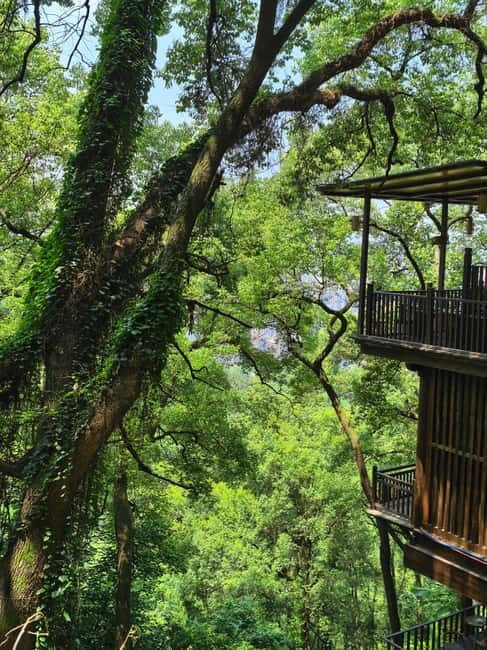
Expect emerald forest, fresher mountain air, quiet paths, and scenic viewpoints. The natural setting gives you a break from Chongqing’s heavy urban rhythm. It also creates better conditions for a slower conversation with your guide, who can explain the area’s geography and local role while you walk.
The route is not described as a difficult mountain expedition, but you should take the stone stairs seriously. Comfortable shoes are essential. If stairs are hard for you, this may not be the right tour, because the walk is a central part of the experience rather than an optional add-on.
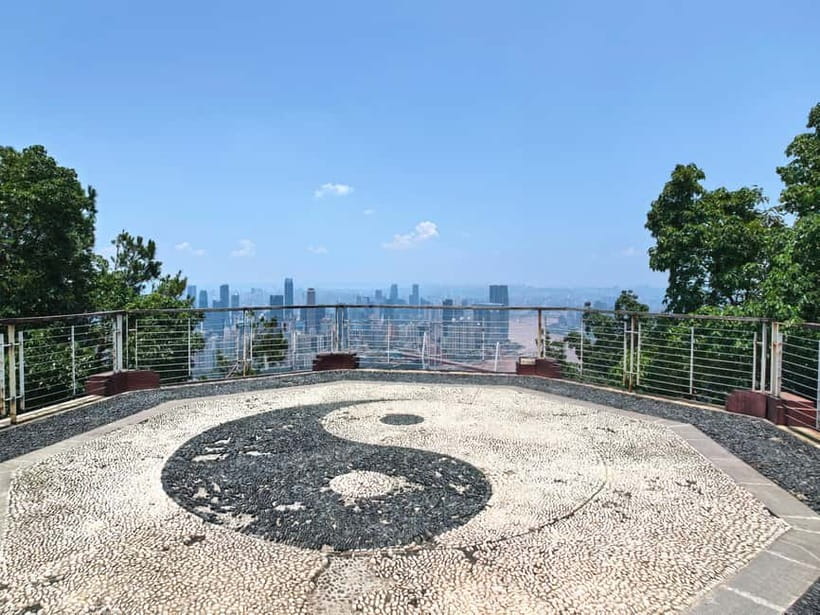
The views are another reason to choose Nanshan. From the higher ground, you can see Chongqing from a broad angle, gaining a clearer sense of its hills, rivers, and dense development. The tour presents this as a God’s-eye view, which is a fair way to describe the change in scale. Streets that felt crowded below become part of a much larger pattern.
Weather can affect this portion. On a clear day, the views should be the star. On a hazier day, the forest and temple may matter more than the distant panorama. I would book this outing with an open mind rather than treating it as a guaranteed perfect-view excursion.
Same city, a completely different day:
- Chongqing Wulong National Park Private Tour
★ 5.0 · 87 reviews - Chongqing: Two Rivers Night Cruise- Yangtze & Jialing Rivers
★ 4.5 · 64 reviews - Chongqing deep explore & private car service including meals
★ 4.9 · 51 reviews - Chongqing: 1-day Essential Guided City Tour without Car
★ 5.0 · 44 reviews
A Taoist temple in the middle of nature
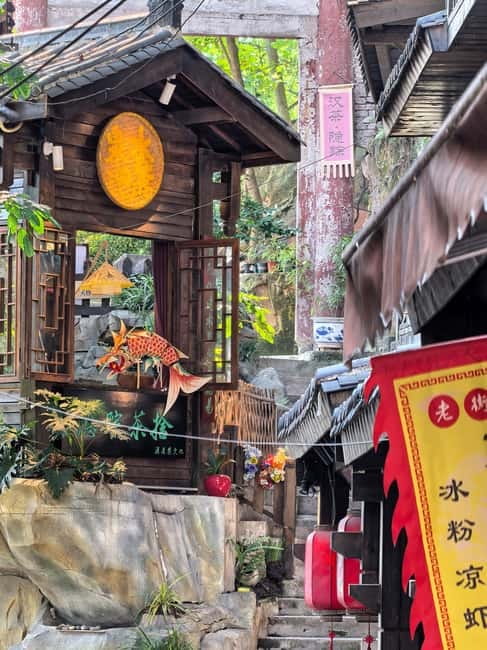
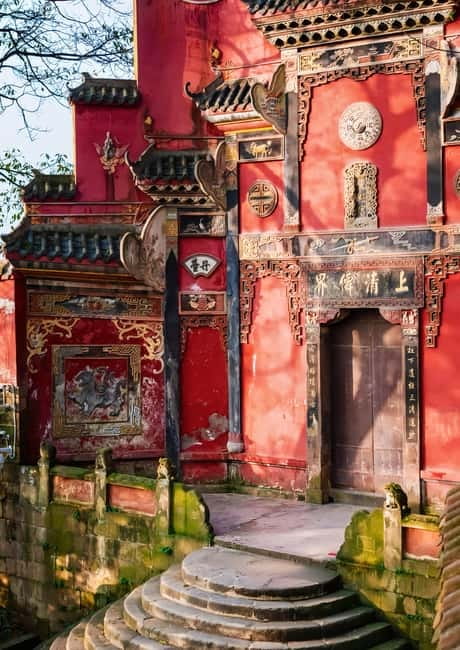
One of the tour’s main stops is Chongqing’s largest and most famous Taoist temple. The temple sits within Nanshan’s natural setting, giving the visit a calmer tone than a city-center attraction.
The value here is not only the building itself. Taoist thought often links human life, nature, balance, and harmony, and this setting makes those ideas easier to understand than a quick visit to an isolated urban temple. Your guide can provide context about the site and explain how spirituality fits into local culture.
The temple also gives the walk a useful pause. After the streets and stairs, you have a place associated with quiet reflection and a different side of Chongqing. The supplied information does not name the temple, so you should not expect a detailed specialist lecture on a specific institution. What you can expect is a guided visit to an important Taoist site with time for scenery and photographs.
Temple etiquette is simple: keep your voice low, follow posted rules, and dress and behave respectfully. The tour description emphasizes peace and harmony, so this is not meant to be a rushed photo stop.
Old mountain streets away from the main tourist path
The Nanshan area also includes less commercialized old streets with traditional architecture. This is a useful contrast with Longmenhao. The first district shows a renewed historic quarter with shops and urban energy, while the mountain streets offer a quieter look at older local life.
I like this pairing because it gives you two versions of historical Chongqing. One is polished and easy to browse. The other feels less shaped around shopping and more connected to the mountain setting. The exact shops and buildings can vary, but you should have time to walk, look closely, and ask your guide what you are seeing.
The phrase less commercialized should not be read as completely untouched. You may still find food sellers or small businesses. That is part of the point. The tour is designed to show a lived-in district, not a museum display.
This is also where a private guide helps most. You can stop when a doorway, building detail, or local custom catches your eye. If you have a particular interest in architecture, local routines, or Chongqing’s development, tell your guide early.
A short food stop with local flavor
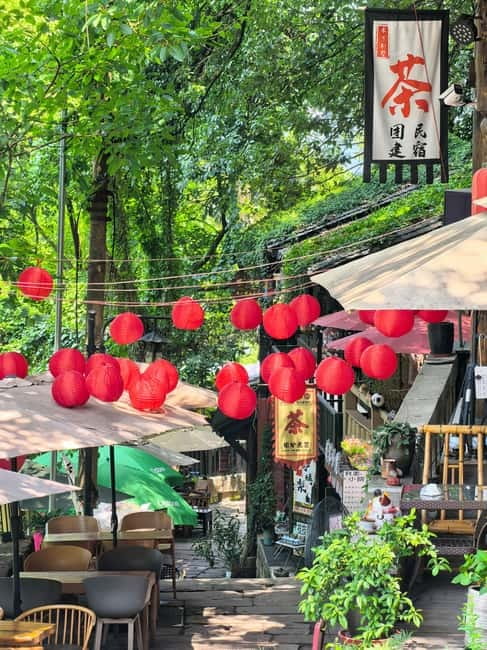
The food stop lasts about 30 minutes and may include lunch, street food, or local snacks. Food and drinks are not included in the $88 price, so budget separately.
Thirty minutes is enough for a taste, not a full meal. If you need a substantial lunch, say so at the start and ask your guide what fits the route. If you prefer sampling, this is a good chance to try something local without committing to a long restaurant visit.
The supplied details do not identify a particular dish or restaurant. That is useful to know before booking. You are paying for the guided route and cultural setting, not a promised food menu. The private format may let you explain preferences, but do not assume that every dietary need can be handled unless you confirm it in advance.
I see the food stop as a pleasant extra rather than the reason to book. The strongest parts are the old neighborhoods, temple, forest, and views. Food simply helps break up the walking.
What the $88 price really covers
At $88 per person, this is not the cheapest way to see Chongqing’s hills. The price includes a private multilingual guide and the guided visits to two renewed historical neighborhoods, Nanshan’s natural areas, the Taoist temple, old mountain streets, and viewpoints.
It does not include subway or other transport fares, food, drinks, travel insurance, or hotel drop-off. Those exclusions are normal for a short private walking tour, but they affect the final cost. You should think of the price as payment for time, local explanation, route planning, and private attention.
The value is best for two or more people who want a flexible outing and prefer a guide to going alone. A solo visitor may find the per-person cost harder to justify unless personal guidance is especially important. A couple, family, or small private group can get more from the format because questions and interests can shape the experience.
The strongest evidence for the guide service comes from the feedback attached to the experience. Romain from Belgium described a kind guide who asked about his interests and linked the visit to them, then continued offering Chongqing tips afterward. A United States customer specifically praised Tiian as friendly, informed, and fun. Matilde from Italy gave the guides top marks as well. Those details point to attentive guiding rather than a memorized speech.
Guide assignments can change, so Tiian may not be your guide. The available languages are English, French, Italian, and Spanish. If language is important, select the right option when booking and confirm it before setting out.
Who should book this four-hour outing?
I would recommend it to you if you want several sides of Chongqing in one compact experience. It suits first-time visitors, people who enjoy walking, and anyone who wants a quieter break from the city without spending a full day outside it.
It is also a good choice for visitors who like to ask questions. A private guide can focus on local history, geography, architecture, food, or daily life rather than delivering the same speech to a large group.
You should think twice if you dislike stairs, want a fully inclusive price, or prefer a slow restaurant-based tour. The route includes hiking on stone steps, public transport, and a short food break rather than a long sit-down meal.
Families may enjoy the change of scenery, but the description does not provide age guidance or accessibility details. If someone in your group has limited mobility, ask the provider before booking. The stone stairs alone make this an important question.
The tour offers free cancellation up to 24 hours before departure, and you can reserve now and pay later. Starting times vary, so check availability for the date you want.
Should you book it?
Book this tour if you want Chongqing explained through movement: old lanes first, mountain forest next, then a Taoist temple, traditional streets, snacks, and a high view over the city. The private format and guide-led conversation are the main reasons to pay the $88 rate.
Skip it if you want a cheap, effortless overview or if stairs are a problem. For the right person, though, this is a smart four-hour balance of culture, nature, and local life, with enough flexibility to feel personal rather than packaged.
FAQ
Where does the tour meet?
Meet your guide at Exit 2 of Shangxinjie Station. The guide will wait there and greet you.
How long does the tour last?
The tour lasts four hours. Check the available starting times for your chosen date.
Is this a private tour?
Yes. The experience is arranged for a private group rather than a large shared group.
Which languages are available?
Guiding is available in English, French, Italian, and Spanish.
Does the price include transportation?
No. Subway, taxi, Didi, and other public transport costs are not included.
Is food included?
No. Food and drinks are not included. The route includes a 30-minute stop for lunch, street food, or local snacks.
Do I need to be prepared for hiking?
Yes. You should wear comfortable shoes and be ready to walk on stone stairs during the Nanshan section.
Can I cancel for a full refund?
Yes. You can cancel up to 24 hours in advance for a full refund.
New reviews from Chongqing
- Chongqing: Trendy Spots, Cableway & Ferry Private Tour★ 5.0 · 7 reviews
- Chongqing:One-day Wulong HikeTrip(GeoPark+Fairy Mt)car incld★ 5.0 · 3 reviews
- Chongqing: Qingyu Banquet Experience with Show and Dinner★ 4.8 · 6 reviews
- Chongqing: Wulong Private Day Exploration Tour★ 4.6 · 10 reviews
- Chongqing: Surreal Urban, Ancient Town, and Secret Viewpoint★ 5.0 · 8 reviews
- Chongqing: Private Day Tour to Wulong Karst Geological Park★ 5.0 · 7 reviews
- Chongqing: Wulong 2 Spots All-inclusive Luxury Private Trip★ 5.0 · 8 reviews
- Chongqing: One-Day Extravaganza: Hit All the Must-See Spots!★ 4.7 · 9 reviews
Historical Tours, compared.
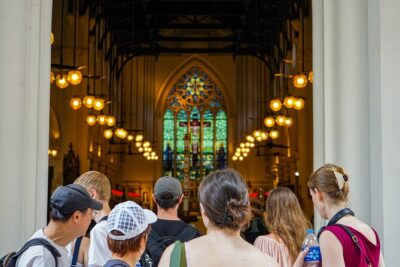
Between Capitalism & Communism: Hong Kong History Tip Based Tour
Read our review →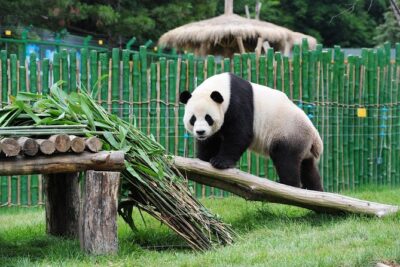
Beijing Historical Tour II including Summer Palace, Lama Temple & Panda Garden
Read our review →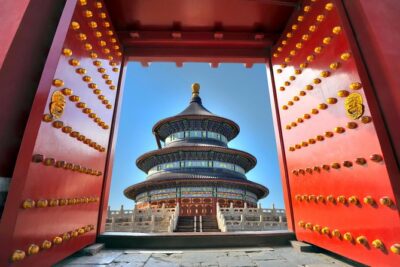
Beijing Historical Tour I – Forbidden City, Tiananmen Square & Temple of Heaven
Read our review →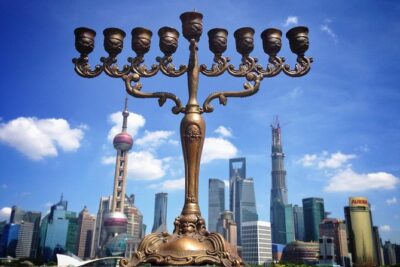
Tour of Jewish Shanghai led by a Jewish History Expert
Read our review →
Beijing Historic City Guided Walking Tour + Calligraphy Creation
Read our review →
Beijing Culture: Tea Ceremony, Heritage Instrument & Calligraphy
Read our review →
Xi’an Full Day Sightseeing Tour – Shaanxi History Museum, Big Wild Goose Pagoda, Ancient City Wall
Read our review →
Private Historical Tour: Guangzhou City Sightseeing Including Lunch
Read our review →Browse the lists this tour appears in