
Reviewed · CALLIGRAPHY & CRAFT CLASSES
Beijing liulichang : Learn Calligraphy orCarving from Master
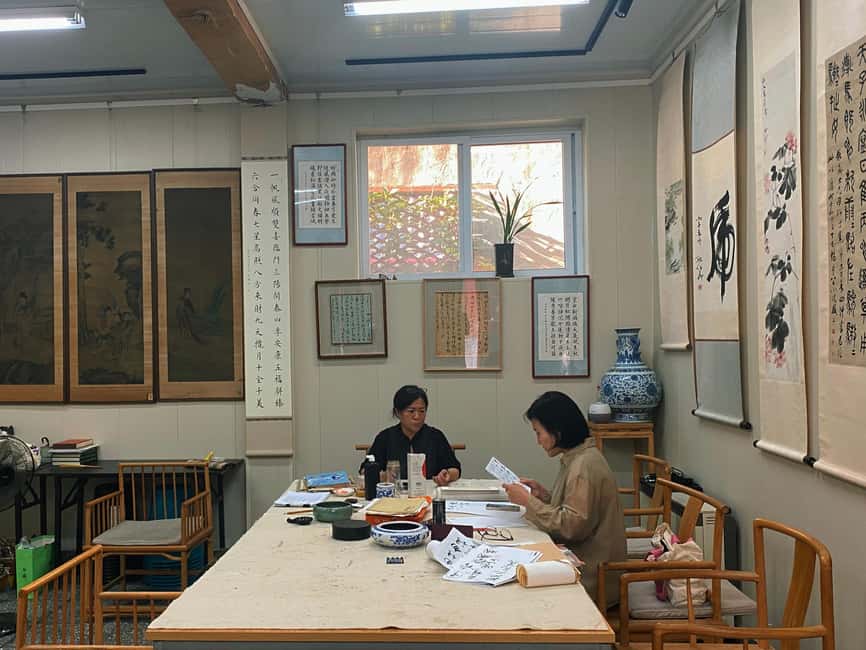
A small workshop in Beijing’s old Liulichang district lets you do more than look at Chinese art. You choose between calligraphy, fan painting, or seal carving, then work with an artisan to make something you can carry home. I like the personal choice here, and I like that the session begins with a short walk through Liulichang rather than sending you straight into a classroom.
I also like the patient teaching. Bruce Gao and his team give you time to practice, and seal-carving participants can work on spare stones before touching the final piece. The main drawback is simple: at $75 per person, this costs more than a quick cultural demonstration, and the best results depend on your patience and hand control.
Key points to know before you book
- Choose your own art form: Pick Chinese brush calligraphy, painting on a silk round fan, or carving a personal name seal.
- Start at Liulichang East Street: Meet at the small square entrance, look for the guide holding a Sino-Voyages sign, and take a brief neighborhood walk before class.
- Practice comes before the final piece: Seal-carving participants can try several stones first, which takes pressure off the permanent work.
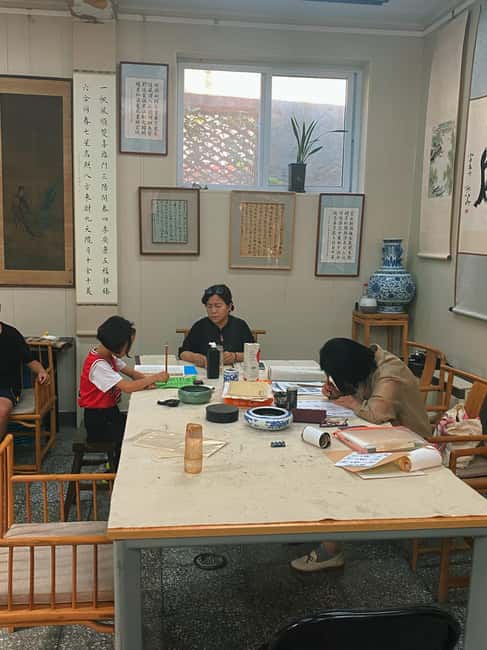
- Work with a small group: The format allows more direct help from the artisan than a large tour or museum demonstration.
- Take home a real handmade souvenir: Your rice-paper calligraphy, painted fan, or carved chop is made by you, not bought from a shop.
- Plan for two to two and a half hours: The activity is long enough for instruction and practice but short enough to fit into a Beijing sightseeing day.
Why Liulichang is the right place for this class
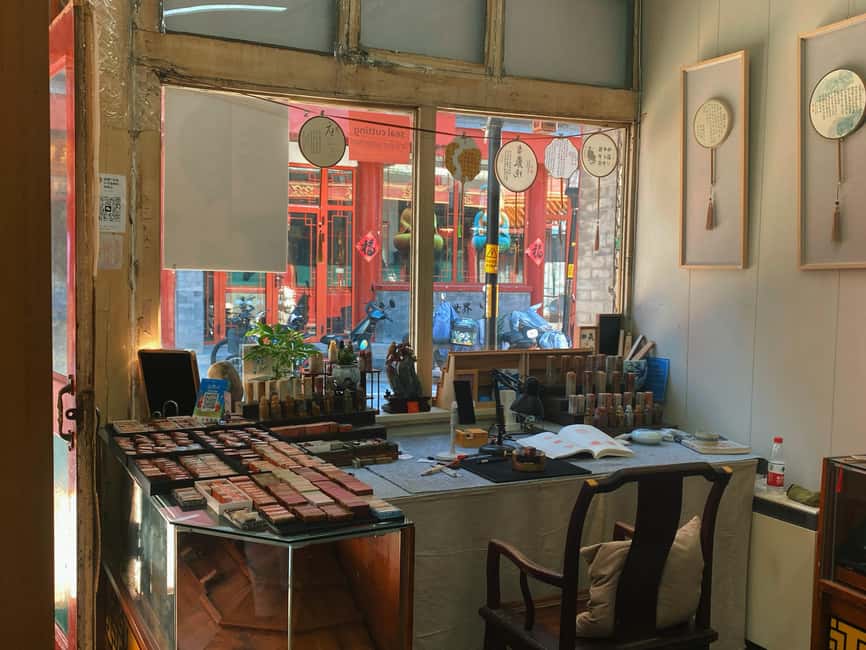
Liulichang is one of Beijing’s traditional cultural districts, known for its old streets, studios, and connection to Chinese art and calligraphy. You meet at the small square entrance of Liulichang East Street, where a guide holds a Sino-Voyages sign.
The first few minutes are not simply a transfer to the workshop. Your guide takes you on a short walk through the district, helping you get a feel for the setting before the hands-on work begins. That matters because the class feels less like an isolated craft lesson and more like one part of a cultural neighborhood.
You should not expect a long sightseeing tour. The walk is brief, and the main purpose is to introduce the district and its atmosphere. If you want an extended tour of Liulichang’s shops and streets, you will need to allow extra time before or after the workshop.
The meeting point is easy to understand, but Beijing’s busy streets can make any first meeting less relaxed than it sounds. Arrive with enough time to find the small square and the Sino-Voyages sign. Transportation is not included, so you arrange your own way to Liulichang East Street.
More Calligraphy and Craft Classes in Beijing
- Beijing Calligraphy Class
★ 4.9 · 112 reviews - Chinese Calligraphy Class for Small Group
★ 5.0 · 104 reviews - Beijing Historic City Guided Walking Tour + Calligraphy Creation
★ 5.0 · 59 reviews
Three art forms, three very different experiences
The most important choice comes at the beginning. You select one of three activities, and each one suits a different kind of creative mood.
Calligraphy: slow brushwork and personal meaning
Calligraphy is the most direct introduction to traditional Chinese writing. You learn basic brush movements, then practice writing a meaningful Chinese proverb or your own name on rice paper.
The appeal is not simply the finished sheet. Brush calligraphy asks you to slow down, control your pressure, and accept that each stroke has a shape and rhythm. You may find the process calming, though it can also feel demanding if you are used to writing quickly with a pen.
This is a good choice if you want a souvenir that feels connected to language and symbolism. You do not need prior experience. The instructor guides you through the strokes, and your practice sheets give you a chance to become familiar with the brush before working on the piece you take home.
If you choose seal carving, calligraphy may still be part of your preparation. One participant used writing practice to work out the characters that would later appear on the stone. That makes the writing lesson useful even if the seal is your main goal.
Fan painting: a practical piece of art
Fan painting gives you a more visual project. You paint a design on a delicate silk round fan, with classic subjects such as bamboo or orchids available as choices.
This option may suit you if you want to make something colorful and useful rather than a flat sheet of writing. The fan is both a souvenir and a functional object, though the delicate silk means you should handle it carefully when packing it for the trip home.
The activity is still guided, so you are not expected to arrive with painting skills. The instructor helps you work with the motif and the materials. The finished fan will reflect your own hand, which is part of its charm. Do not expect factory-level perfection. The point is to make a personal object while learning why these familiar Chinese images appear so often in traditional art.
Other things to learn to make in Beijing:
- Beijing Wangfujing Calligraphy Class by Forbidden City
★ 5.0 · 58 reviews - Beijing Culture: Tea Ceremony, Heritage Instrument & Calligraphy
★ 5.0 · 57 reviews - Beijing Wangfujing Calligraphy Class Nearby Forbidden City
★ 5.0 · 56 reviews - Discover Old Beijing: Hutong Walking Tour & Calligraphy
★ 4.3 · 24 reviews
Seal carving: the most hands-on choice
Seal carving is likely the most distinctive option. You create a Chinese name chop, a small carved stamp traditionally used as a personal signature.
The process begins with character selection and practice. You may first write the characters in calligraphy, then test your hand on other stones before carving the final seal. That practice stage is valuable because it lets you learn how the tool feels without risking the piece you plan to keep.
A seal looks small, but the work is precise. You need to pay attention to the characters, the pressure of the carving tool, and the direction of each cut. The finished stamp can be used on paper and makes a compact souvenir with a strong personal connection.
This is the choice for you if you enjoy careful work and want something less common than a purchased scroll or standard souvenir. It is not the best choice if you dislike fine motor tasks or want a quick result.
What the two-hour schedule feels like
The full experience lasts about two to two and a half hours. The exact pace depends on the activity you select, your group, and how much practice you need.
You begin at Liulichang East Street with the short neighborhood introduction. From there, the guide leads you to a traditional studio. The setting is described as quiet and away from the largest crowds, which gives the class a calmer rhythm than many central Beijing attractions.
Once inside, you choose or begin your selected workshop. Materials are provided, and the artisan explains the cultural meaning of the art form as well as the practical techniques. You then spend most of the time making your piece.
The timing is well suited to a sightseeing day. You can place it between visits to other Beijing attractions without giving up an entire morning or afternoon. Still, do not schedule your next activity too tightly. The advertised duration is a range, and creative work can take longer when you want to finish carefully.
The small-group format is a major part of the value. You get a better chance to ask questions, show your work, and receive corrections than you would in a large demonstration. Private groups are also available for people who want a more personal arrangement.
Patient instruction makes the difference
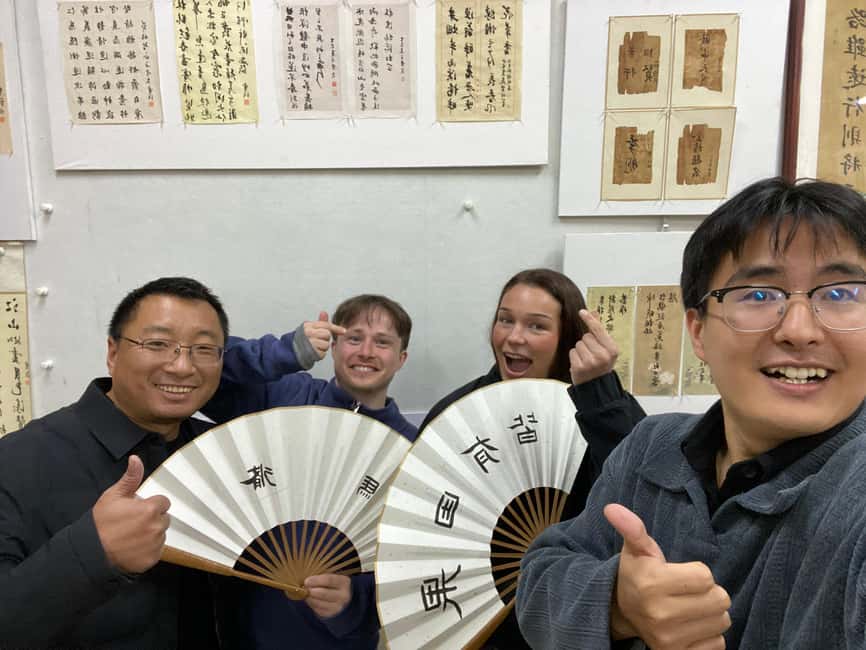
The instructors teach in English and Chinese. Bruce Gao is named as one of the people involved, and the teaching style is patient and encouraging.
That patience matters most for seal carving and calligraphy. Both forms can look simple when an expert performs them, but the tools and movements are unfamiliar to most visitors. A good instructor needs to show you the motion, let you try, and correct you without taking over the work.
The available feedback points to helpful support during the class. One participant worked with a master and three interpreters during seal making, which provided extra help with communication. That does not mean every session will have the same number of interpreters, so you should think of it as a sign that communication support is taken seriously rather than as a guaranteed staffing arrangement.
You may also have the chance to try more than one related skill during your session. For example, seal-carving practice can include calligraphy work before the characters are transferred to stone. The activity is sold as a choice of one workshop, so do not book expecting three complete classes in one visit.
What makes the souvenir worth keeping
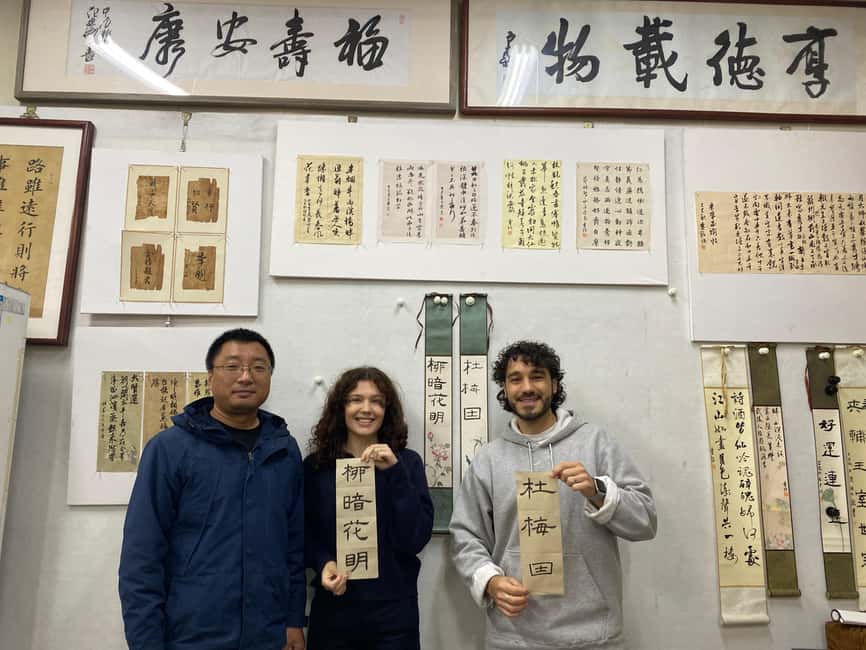
A handmade souvenir carries more memory than a shop purchase because you remember the decisions and mistakes behind it. The calligraphy sheet records your first attempt at controlled brushwork. The fan shows the design you selected and the way you handled the silk. The seal carries your chosen Chinese name or characters in a form associated with personal signatures.
The objects are also easy to connect to the place. You are not making a generic craft in a hotel meeting room. You are working in Liulichang, a Beijing district associated with traditional arts, with an artisan explaining the meaning behind the form.
That connection gives the $75 price more weight. You are paying for materials, instruction, the studio setting, a short cultural introduction, and a finished piece. Compared with simply buying a seal or painted fan, the class offers a process and a personal story.
The value is lower if you only want a polished souvenir with no interest in making it yourself. In that case, browsing Liulichang’s shops may suit you better. This activity earns its price through participation, not through the size or market value of the object you take home.
Who will enjoy this most
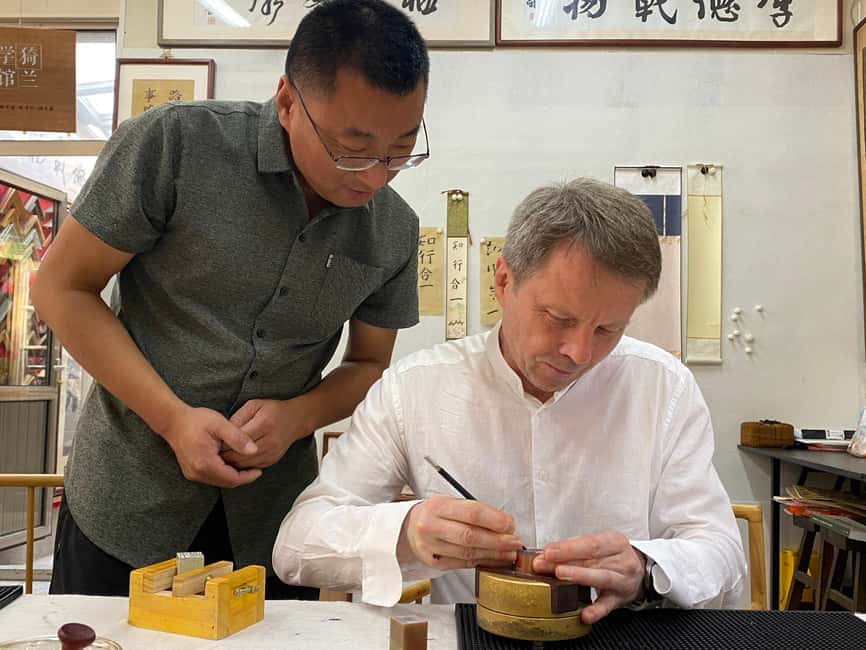
I would recommend this workshop to you if you want a quieter cultural activity between major Beijing sights. It is especially suited to people who enjoy making things, asking questions, and learning through practice.
Calligraphy is a strong choice for first-time visitors who want a direct connection to Chinese writing. Fan painting works well for someone who prefers color and a decorative object. Seal carving is the best fit for anyone who likes detailed handwork and wants the most unusual souvenir.
The activity also suits couples, families with older children, and small private groups. Children under five are not permitted, and younger children may need close help even when they meet the age requirement because the tools and materials require care.
You do not need previous experience. Curiosity is enough, but patience helps. Your work may not look like the master’s, and that is not a flaw in the experience. The point is to learn enough to make a personal piece under expert guidance.
Practical details that shape the day
The price is $75 per person. Transportation is not included, so you must reach Liulichang East Street on your own. The meeting point is the small square entrance, and the guide carries a Sino-Voyages sign.
English and Chinese are available. The activity is wheelchair accessible, and you can book a private or small-group format. If plans change, cancellation is free up to 24 hours before the activity for a full refund. A reserve-now, pay-later option is also available.
Check the available starting times before booking because the schedule can affect how easily the workshop fits with your other plans. Allow a little extra time for the walk to the studio and for the possibility that your work takes longer than expected.
Wear something that allows you to sit and work comfortably. The provided information does not specify a dress code or special equipment, so you do not need to bring art supplies. All high-quality materials for your chosen activity are included.
My verdict: book it for the making, not just the souvenir
I would book this if you want a personal, hands-on look at Chinese art and would rather make one meaningful object than collect several ordinary souvenirs. The short Liulichang walk, small-group setting, and careful practice make the session more than a quick demonstration.
Choose calligraphy for a thoughtful and compact keepsake, fan painting for a decorative object, or seal carving for the most unusual project. The seal option deserves extra time and concentration, but the chance to practice on spare stones first makes it less intimidating.
Skip it if your Beijing schedule is packed, you dislike craft activities, or you mainly want a finished item made by a professional. For everyone else, $75 is a fair price for two hours of instruction, materials, cultural context, and a handmade reminder of your time in Beijing.
FAQ
Where does the activity begin?
Meet at the small square entrance of Liulichang East Street. Look for a guide holding a Sino-Voyages sign.
Is transportation included?
No. You are responsible for getting to the Liulichang East Street meeting point.
How long does the workshop last?
The experience lasts about two to two and a half hours, including the short introduction to Liulichang and the workshop.
Which art forms can I choose from?
You can choose one of three activities: Chinese calligraphy, painting on a silk round fan, or Chinese seal carving.
Do I need previous artistic experience?
No. Prior experience is not needed, and curiosity is encouraged.
What languages are available?
Instruction is available in English and Chinese.
Are children allowed to participate?
Children under five are not suitable for this activity.
Can I cancel my booking?
Yes. You can cancel up to 24 hours in advance for a full refund. A reserve-now, pay-later option is also available.
New reviews from Beijing
- Mutianyu Wall, Summer Palace & Old Summer Palace Day Tour★ 4.8 · 34 reviews
- Night Market Haggling Adventure with an English Guide!★ 4.8 · 7 reviews
- BusDa-Mutianyu Great Wall&Forbidden City Full-day Coach Tour★ 4.9 · 11 reviews
- Mutianyu Great Wall Ticket with Roundtrip Cable Car★ 5.0 · 20 reviews
- Mutianyu Great Wall Entry Ticket Chairlift Up Toboggan Slide★ 4.9 · 8 reviews
- Mutianyu Great Wall Bus Trip+Ticket 7/8/9/10/13/13:30/15:30★ 4.7 · 24 reviews
- Mutianyu Great Wall 5-KM Guided Hike with Uphill Cable Car★ 4.8 · 16 reviews
- Mutianyu Great Wall Admission Ticket★ 3.6 · 7 reviews
Calligraphy & Craft Classes, compared.
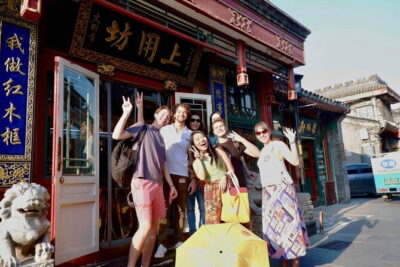
Beijing Historic City Guided Walking Tour + Calligraphy Creation
Read our review →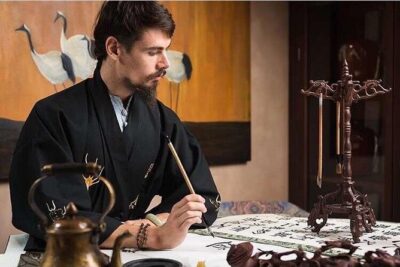
Beijing Wangfujing Calligraphy Class by Forbidden City
Read our review →
Beijing Culture: Tea Ceremony, Heritage Instrument & Calligraphy
Read our review →
Discover Old Beijing: Hutong Walking Tour & Calligraphy
Read our review →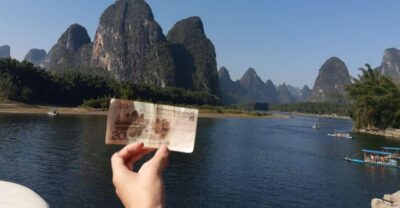
One Hour Chinese Calligraphy or Painting Lessons in Yangshuo
Read our review →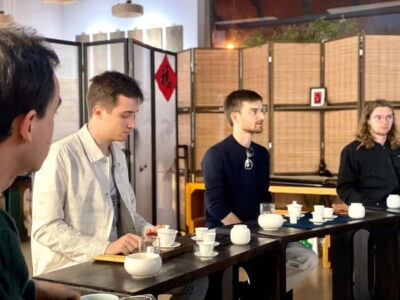
Beijing Hands-On Culture Tour: Tea, Instrument, Calligraphy
Read our review →Browse the lists this tour appears in