
Reviewed · HUTONG TOURS
Beijing Hutong Walking Tour History, Architecture and Local Life
Beijing’s old hutongs are not just picturesque lanes. They are the framework of the city’s daily life, with homes, temples, shops, and courtyards packed into a walkable historic district. This three-hour tour connects that local world with churches, imperial buildings, a Yuan Dynasty pagoda, and the modern financial center.
I like two things right away. The route gives you variety, moving from Chinese temple architecture to a church with local design touches, then into narrow residential lanes. I also like the practical side: guides such as Lori and Dee explain door styles and courtyard layouts, answer questions, and offer restaurant and travel suggestions. The main consideration is pace. Six stops in about three hours means some visits are brief, and the Temple of Previous Dynasties is only visited if it is open.
Key points to know before you book
- Six very different historic stops: See a church, Buddhist temple, pagoda, hutong, imperial temple, and White Stupa.
- A small group of no more than 10 people: This makes questions and conversation easier than on a large city tour.
- A useful route for first-time visitors: Start at Xisi Subway Station and finish near Fuchengmen on Line 2.
- A close look at Beijing’s old courtyards: At Zhengyang Shuju, you see a Siheyuan and old images of Beijing beside the Wansong Brick Pagoda.
- Practical extras included: You receive bottled water and a traditional Beijing drink, plus food and sightseeing advice.
- A compact introduction, not a full-day archaeological tour: The three-hour schedule gives you a broad taste of western central Beijing.
Why this route works for understanding old Beijing
Many city walks show you a hutong and call it authentic. This one gives the lanes a wider setting. You see how religion, imperial traditions, neighborhood life, and modern business districts occupy the same part of Beijing.
The starting point is Xisi Subway Station in Xicheng District. That matters because you can reach the meeting area by public transport rather than arranging a private car. The tour ends at Exit C of Fuchengmen Station on Line 2, near Financial Street. You begin in an older part of the city and finish close to a modern commercial center, making the contrast part of the experience.
The group limit is 10 people. That is small enough for a guide to explain details without shouting, and small enough for you to ask about architecture, food, or getting around Beijing. Guides Lori and Dee are specifically associated with a friendly, helpful approach, with Dee also offering lunch suggestions and answering plenty of questions.
You should expect walking and transfers between stops. The advertised three hours includes the time spent moving from one place to the next, so the actual time inside each site is limited. This is best viewed as a brisk introduction with several strong snapshots, not a slow study of every building.
Other old-lane walks in Beijing:
- Beijing Hutong Walking Food and Beer Tour at Hidden Restaurants
★ 5.0 · 1,132 reviews - Temple Heaven, Summer Palace, Lama Temple, Hutong Bus Tour
★ 4.7 · 319 reviews - Temple of Heaven, Summer Palace, Lama Temple, Hutong Tours
★ 5.0 · 311 reviews
Xishiku Church and Beijing’s Chinese Catholic story
The first stop is Xishiku Church, described as Beijing’s earliest church. Its interest comes from the way a Christian building sits within the city’s Chinese setting.
You spend about 10 minutes here. That is enough for an introduction to the church and its story, but not enough for a long architectural inspection. The guide helps explain the local connection and the church’s place in Beijing’s past.
This is a good opening stop because it breaks the usual idea that Beijing’s historic buildings are only palaces, temples, and imperial gates. The route begins with a religious site that adds another layer to the city’s story.
Admission is free. Since the stop is short, you should not book this tour expecting extended interior access or a long church history lecture. Think of it as a sharp starting point before the route turns toward traditional Chinese religious architecture.
Guangji Temple and old Chinese religious design
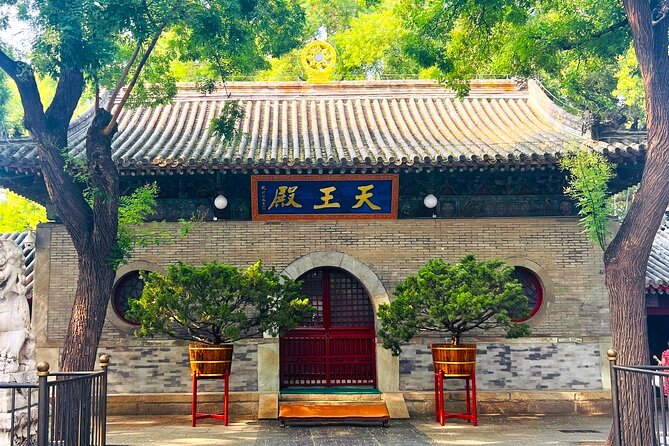
At Beijing Guangji Temple, you spend about 20 minutes looking at traditional Chinese temple architecture and ancient finger paintings. This is one of the more focused cultural stops, with time to notice the details rather than simply pass by for a photograph.
The temple gives your guide a chance to explain how Chinese religious buildings differ from the church you have just seen. The contrast is useful. Instead of treating architecture as decoration, you begin to see how buildings express belief, ritual, and local custom.
The mention of ancient finger paintings makes this stop especially appealing if you care about art as well as buildings. You should keep expectations measured, since 20 minutes is still a short visit and the tour’s purpose is broad coverage.
Admission is free. The temple is also close to public transport and sits naturally within a walk through western central Beijing, so the stop does not require a separate vehicle transfer.
Zhengyang Shuju and the Wansong Brick Pagoda
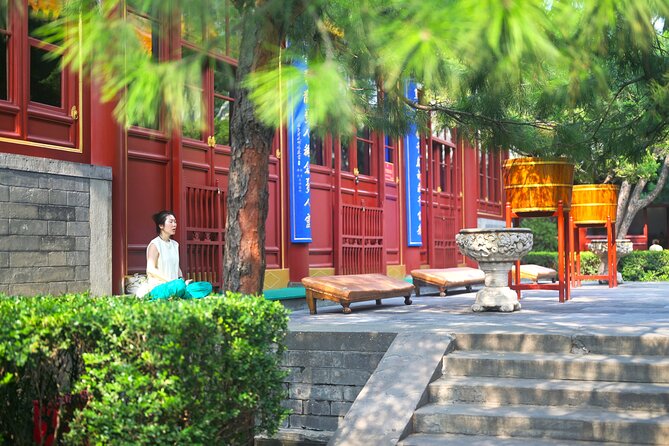
Zhengyang Shuju combines two unusual pieces of old Beijing. You see the Wansong Brick Pagoda, dating from the Yuan Dynasty, and explore a collection of old Beijing images in a Siheyuan.
The pagoda is a strong reason to value this tour. A Yuan Dynasty structure gives you a physical link to a much earlier Beijing, while the courtyard setting shows how history can survive within an ordinary neighborhood pattern. The guide can connect the brick pagoda to the architectural forms you see elsewhere.
The Siheyuan is equally important. These traditional courtyard homes are central to the character of Beijing’s hutongs. Their arrangement helps explain how homes were organized around shared space, entrances, and social boundaries. A guide who points out the meaning of doors and layouts can turn a simple walk through a lane into a lesson in how the city worked.
You have about 20 minutes here. That is enough to see the key elements and examine the old images, but you will not have time for a long museum-style visit. If historical photographs interest you, this may feel like one of the most rewarding stops on the route.
Other trips that stay off the main sights in Beijing:
- Beijing: Hidden Gems Guided Food Tour with Beer and Tastings
★ 4.9 · 306 reviews - Beijing: Great Wall Layover Tour with a Native
★ 4.8 · 96 reviews - Imperial Secret-Forbidden City and Jingshan Park Small Group Tour
★ 5.0 · 16 reviews - Lama Temple Tour with Tickets: Beijing’s Hidden Mystical World
★ 5.0 · 5 reviews
Zhuanta Lane and the everyday hutong
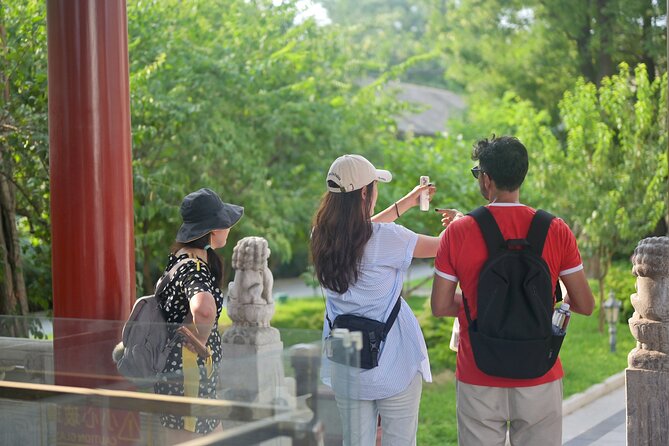
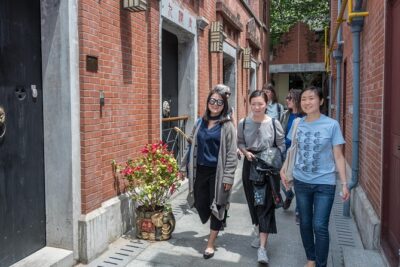
Beijing Zhuanta Lane is described as one of the oldest hutongs in the city. You spend roughly 15 minutes walking through it and looking at daily neighborhood life.
This is where the tour shifts from formal sites to the lived city. The lane is not presented only as a preserved monument. It is a place where you can glimpse how old Beijing’s residential fabric still functions.
The guide’s explanation of door styles is especially useful here. In a hutong, a doorway can tell you more than a row of restored facades. Its scale, position, and design can suggest the status or use of a home, giving you something concrete to watch for as you walk.
Fifteen minutes passes quickly. You may wish the walk were longer, especially if you enjoy street photography or want time to observe local routines. Still, the short stop fits the tour’s purpose: it gives you a clear sense of the hutong before moving to a much grander imperial setting.
Please remember that this is a residential environment, not a themed park. A respectful pace and quiet attention are appropriate. The value is in seeing the relationship between homes, lanes, and neighborhood life rather than treating the area as a backdrop.
The Temple of Previous Dynasties and imperial tradition
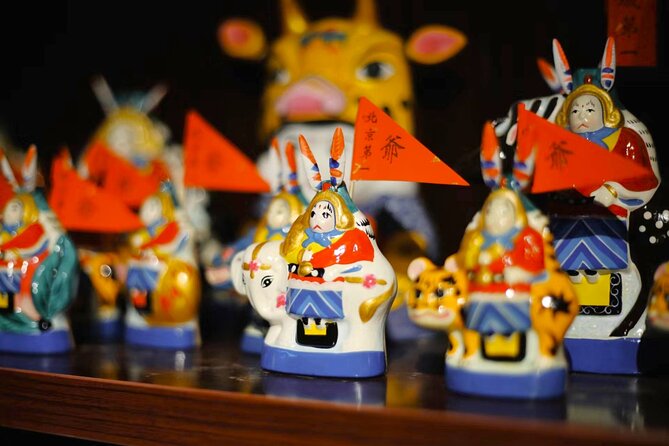
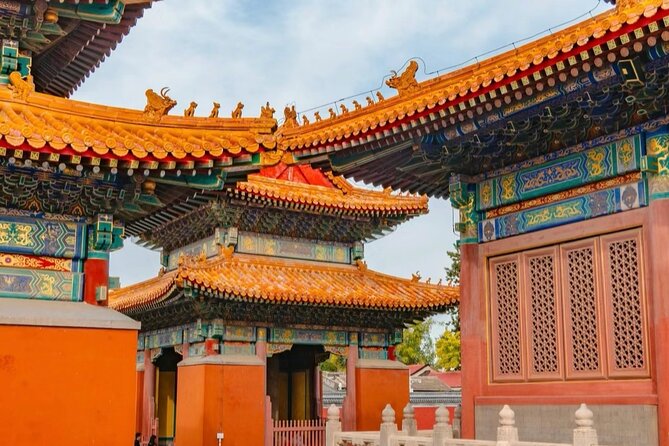
The Temple of Previous Dynasties, also called Lidai Diwang Miao, brings imperial history into the route. Here you can see grand palatial structures and learn how Chinese traditions honor earlier rulers and ancestors.
The visit lasts about 20 minutes, but it depends on the site being open. That condition is important. If this temple is a major reason you want to book, you should treat it as a possible highlight rather than a guaranteed part of the day.
Architecturally, the contrast with Zhuanta Lane is striking. The hutong shows compact residential life, while the temple uses a more formal and spacious arrangement associated with state ritual and imperial memory. That shift helps you understand that old Beijing was not one single architectural style. It contained private homes, religious institutions, and official ceremonial spaces side by side.
Admission is included. The guide’s role here is particularly helpful because the meaning of honoring successive emperors may not be obvious from the buildings alone. You get context rather than just a series of names and dates.
Seeing the White Stupa from above
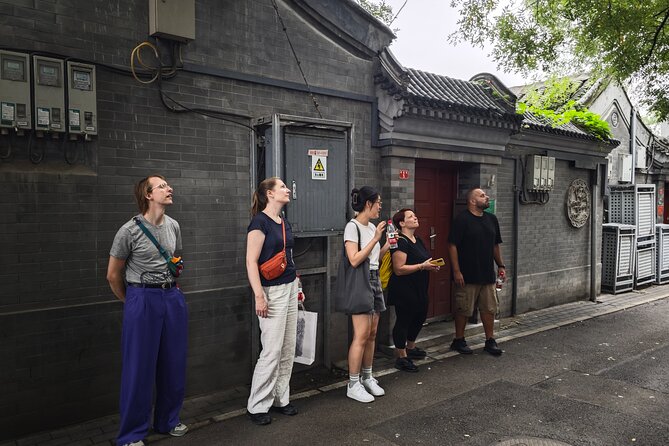
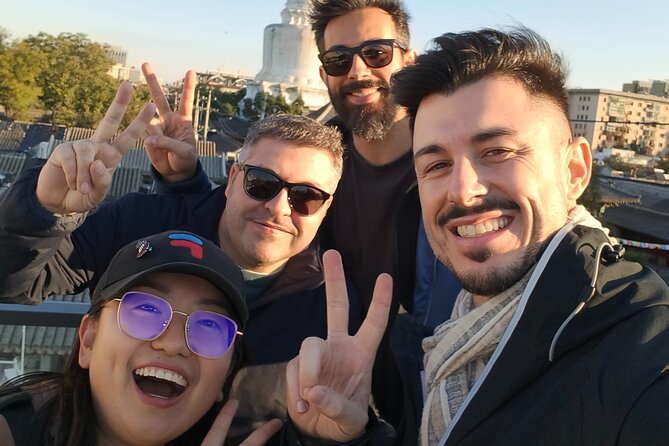
The final sightseeing stop is Miaoying Temple, commonly called White Stupa Temple or Baita Si. The tour does not promise a long interior visit to the temple. Instead, the guide shows you the exterior design of the White Stupa from a nearby cafe balcony and explains different types of Chinese pagodas.
This viewpoint gives the stop a different character. You are not simply standing in front of a monument at street level. From above, you can study the shape and placement of the stupa, while the guide explains how pagodas vary in Chinese architecture.
The stop lasts about 15 minutes. It is a smart way to include an important landmark without adding a long cross-city transfer. It also provides a pause near the end of the walk, when a seated viewpoint can be welcome.
The tradeoff is clear: if you want an extensive visit inside the temple grounds, this route may feel limited. If you want a concise architectural explanation and a useful view of the White Stupa, the cafe balcony approach makes sense.
What the three-hour schedule feels like
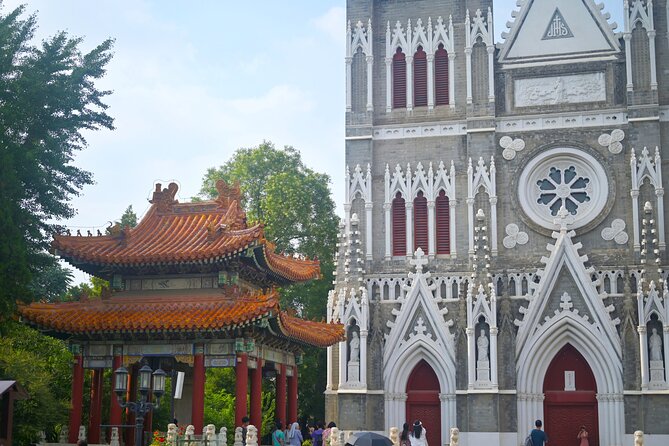
The tour lasts about three hours, including travel time between locations. The timing is efficient, but it is not leisurely. Stops range from about 10 to 20 minutes, so you should be ready to keep moving.
I would plan for comfortable walking shoes and a small day bag. That advice is practical rather than dramatic: the tour connects several places on foot and does not include private transportation. Bottled water is provided, and a traditional Beijing drink is included, but you should not expect a full meal during the experience.
The route begins at Xisi Subway Station and ends at Fuchengmen Subway Station, Exit C, on Line 2. This makes it useful for building the tour into a larger day of sightseeing. You can continue from the financial district or use the subway to reach another part of Beijing without arranging a pickup.
Mobile tickets make entry and meeting information easy to carry. Confirmation is provided at booking. The tour is also near public transportation, and service animals are allowed. Most people can take part, though the walking format and quick pace are worth considering if you need frequent breaks.
Is $49 a fair price?
At $49 per person, this is not the cheapest way to wander through a hutong. You could walk through some historic lanes independently for little or no cost. The price becomes easier to justify if you want several different sites connected by a guide who explains what you are seeing.
You are paying for more than admission. The fee includes the guide, all listed taxes and fees, bottled water, and a traditional Beijing drink. More importantly, you get interpretation of courtyard design, temple architecture, pagodas, doors, and local history in one compact route.
The group limit of 10 also improves the value. A small group gives you a better chance to ask about restaurants, subway routes, and other places to visit. The practical advice may be particularly useful early in your Beijing stay, when you are still learning how the city fits together.
The value is weaker if you prefer long visits at fewer attractions. A self-guided day could give you more time inside one temple or hutong. This tour earns its price through variety, structure, and local explanation rather than through lengthy admissions or luxury transportation.
Who will get the most from this walk?
I would recommend this experience to a first-time Beijing visitor who wants a fast orientation to the city’s older districts. It is also useful if you have already seen the major imperial sights and want a closer look at neighborhood architecture and daily life.
It suits you especially well if you enjoy:
- Small groups instead of large coach tours
- Architecture explained in plain language
- Religious and imperial history in the same walk
- Local food recommendations
- Public transportation and independent sightseeing
- Short stops that cover several kinds of places
It may be less suitable if you want a slow photographic walk, a private tour, or guaranteed access to every site. The Temple of Previous Dynasties may be closed, and the White Stupa visit focuses on an exterior view from a cafe balcony.
Weather also matters. The experience requires good weather, and poor conditions can lead to a different date or a full refund. You can cancel for a full refund up to 24 hours before the start time, but changes or cancellations inside that window are not accepted.
Should you book the Beijing hutong walk?
Book it if you want a compact, well-connected introduction to Beijing beyond the usual palace circuit. The combination of Xishiku Church, Guangji Temple, the Yuan Dynasty pagoda, Zhuanta Lane, the imperial temple, and the White Stupa gives you a useful range of subjects in a single morning or afternoon.
I especially like the balance between grand history and ordinary streets. You see palatial architecture, then learn to read a courtyard doorway. You examine a pagoda, then walk through a lane where local life continues around you.
Skip it if your priority is spending an hour or more at each site, or if the possibility of a closed temple would disappoint you. For most visitors who want context, practical advice, and a small-group walk through old Beijing, $49 is a reasonable price for three focused hours.
FAQ
Where does the tour start?
The tour starts at Xisi Subway Station in Xicheng District, Beijing.
Where does the tour end?
It ends at Exit C of Fuchengmen Subway Station on Line 2, near Financial Street in Xicheng District.
How long does the experience last?
The tour lasts approximately three hours, including travel time between the locations.
How many people can join the tour?
The group has a maximum of 10 travelers.
Is transportation included?
Private transportation is not included. The route connects the locations on foot and through travel time between stops.
What refreshments are included?
You receive bottled water and a complimentary traditional Beijing drink.
Is admission included?
All listed fees and taxes are included. Admission is free at Xishiku Church, Guangji Temple, Zhengyang Shuju, Zhuanta Lane, and the White Stupa viewing stop. Admission to the Temple of Previous Dynasties is included if the site is open.
Can I cancel for a full refund?
Yes. You can cancel at least 24 hours before the experience starts for a full refund. Cancellations or changes made less than 24 hours before the start time are not accepted.
What happens if the weather is poor or the minimum group size is not reached?
If poor weather or an insufficient number of participants causes cancellation, you are offered a different date or experience, or a full refund.
More walking tours in Beijing
- Private Beijing Walking Tour of the Forbidden City with 7 Options
★ 5.0 · 675 reviews - Forbidden City Private Walking Tour with Optional Sights
★ 5.0 · 400 reviews - Beijing Private Hutong Food Walking Tour
★ 5.0 · 299 reviews - Beijing: Hutong Culinary Walking Tour with 15+ Tastings
★ 5.0 · 162 reviews
More history to see in Beijing
- Beijing Historical Tour II including Summer Palace, Lama Temple & Panda Garden
★ 4.0 · 187 reviews - Beijing Historical Tour I – Forbidden City, Tiananmen Square & Temple of Heaven
★ 4.0 · 120 reviews - Beijing Historic City Guided Walking Tour + Calligraphy Creation
★ 5.0 · 59 reviews - Beijing Culture: Tea Ceremony, Heritage Instrument & Calligraphy
★ 5.0 · 57 reviews
New reviews from Beijing
- Private Transfer to Mutianyu Great Wall with professional driver★ 5.0 · 19 reviews
- One day tour to downtown Tianjin from Beijing by high speed train★ 5.0 · 3 reviews
- camp on the Great Wall overnight with sunrise and sunset on the wall★ 5.0 · 11 reviews
- ZANBUS: Trip to the Jinshanling Great Wall Departing at 7:30 AM★ 5.0 · 5 reviews
- BusDa:Ancient Great Wall &Badaling Great Wall Full-day Bus Tour★ 4.5 · 6 reviews
- Yuxiandu Chinese Royal Cuisine Museum with Show and Royal Banquet★ 5.0 · 4 reviews
- Wild Great Wall Hikes★ 5.0 · 10 reviews
- Wild Great Wall Huanghuacheng Half Day Tour★ 5.0 · 15 reviews
Hutong Tours, compared.

Beijing Hutong Walking Food and Beer Tour at Hidden Restaurants
Read our review →
Temple Heaven, Summer Palace, Lama Temple, Hutong Bus Tour
Read our review →
Temple of Heaven, Summer Palace, Lama Temple, Hutong Tours
Read our review →

Beijing City Walk: Explore Hutongs Life and Old Beijing
Read our review →Browse the lists this tour appears in