
Reviewed · CHINESE FOOD TOURS
Beijing: Hidden Gems Guided Food Tour with Beer and Tastings
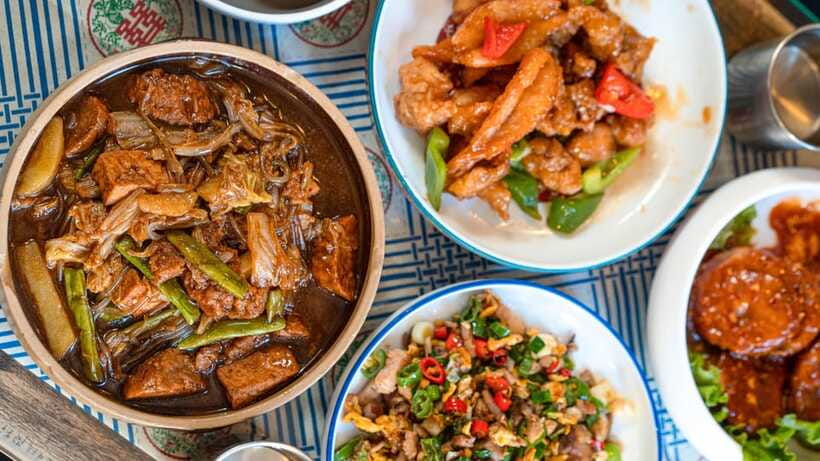
Beijing’s best food discoveries often sit behind an unmarked doorway or down a lane too narrow for a tour bus. This evening walk takes you through 2.5 kilometers of hutongs to four local eateries, where dinner means copper-pot hotpot, handmade noodles, spring pancakes, and a rare Muslim dish tied to Empress Cixi. I like the clever mix of food and neighborhood history, and I like that the meal is substantial rather than a parade of tiny samples. The main drawback is the walking: uneven hutong lanes and a three-and-a-half-hour evening can be tiring if you have mobility limits.
I also like the practical start at Shichahai Subway Station, which makes the meeting point easy to reach on Line 8. Guides including Janice, Tony, Winnie, Yoyo, and Haitao have been praised for clear English, food knowledge, and useful Beijing tips. Just arrive hungry, wear sensible shoes, and allow extra time around rush hour.
Key details before you book
- Four full food stops: The tastings add up to the equivalent of dinner, not just a few bites.
- Copper-pot hotpot with a view: Thin-sliced mutton and beef cook in clear broth, then go into sesame sauce beside a pint of local craft beer.
- A real hutong walk: You cover about 1.5 miles through old residential lanes near Shichahai.
- Rare local dishes: The route includes a Muslim specialty associated with Empress Cixi and a family-run spring pancake restaurant.
- English-speaking guides: Janice, Tony, Winnie, Haitao, Yoyo, Joe, and other guides have led the experience.
- Useful timing: The tour begins at 6:30 PM, and you should meet your guide 10 minutes early.
Why this food walk works so well in Beijing
Beijing cuisine is easy to misunderstand if you stay with the dishes most familiar to international visitors. Peking duck has its place, but the city’s everyday food is also about noodles, lamb, pancakes, dipping sauces, strong spirits, and small neighborhood restaurants.
This tour gives you a useful first taste of that wider food culture. You are not simply driven from restaurant to restaurant. You walk between stops through the hutongs, the old lanes formed between rows of courtyard homes. Along the way, your guide explains how these lanes developed, what the word hutong means, and how old residential areas have changed as Beijing grew.
I especially like the format for a first or second night in the city. You get a meal, a neighborhood walk, and an introduction to foods you might not know how to order alone. Guides such as Janice and Winnie are also able to explain the cultural side of each dish, not just its ingredients.
The tour has earned a 4.9 rating from 306 bookings, with repeated praise for the food, the guides, and the hard-to-find restaurant locations. That high score matters here because the quality of a food walk depends heavily on the guide. The named guides have varied, but the pattern is consistent: clear English, a friendly manner, and plenty of information about both food and place.
More Food Tours in Beijing
- Temple Heaven, Lama Temple, Summer Palace & Peking Duck Bus Tour
★ 5.0 · 377 reviews - Beijing Hutong Breakfast Food Tour
★ 5.0 · 155 reviews - Beijing Hutong Breakfast Food Tour
★ 5.0 · 120 reviews
Meeting at Shichahai at 6:20 PM
The tour begins at 6:30 PM, with a requested arrival 10 minutes early. Meet your guide at Shichahai Subway Station, Exit C, at street level. Shichahai is on Line 8, and using the subway is strongly recommended.
If you need to show a taxi or Didi driver the destination, use the Chinese address provided for Shichahai Subway Station Exit C, southeast side. Traffic can be heavy in this part of Beijing during the evening rush, so a subway arrival is much less stressful than relying on a car.
This is a good meeting point for the evening because Shichahai sits beside some of Beijing’s best-known old lanes and historic waterways. The route then moves into quieter hutong streets, where the experience feels more local than a standard sightseeing circuit.
The walking distance is about 1.5 miles, or 2.5 kilometers. That is not a punishing distance, but the route includes older lanes and stops where you may stand, sit, or move through compact restaurant spaces. The experience is not suitable for people with mobility impairments.
First stop: hotpot, mutton, and a rooftop view
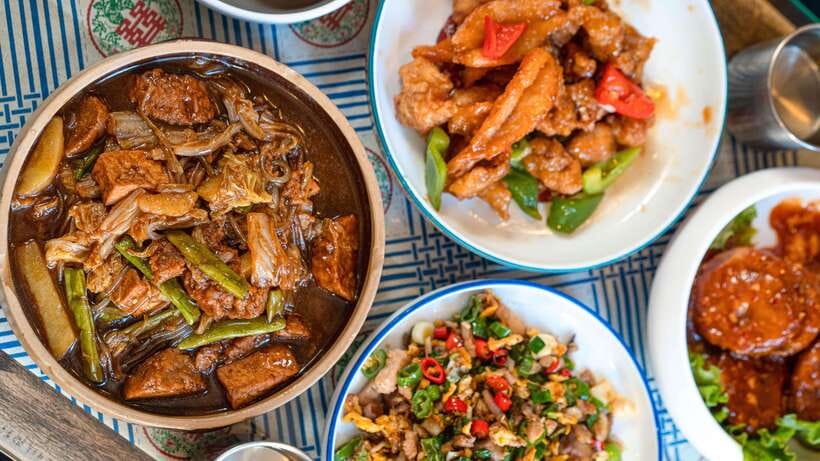
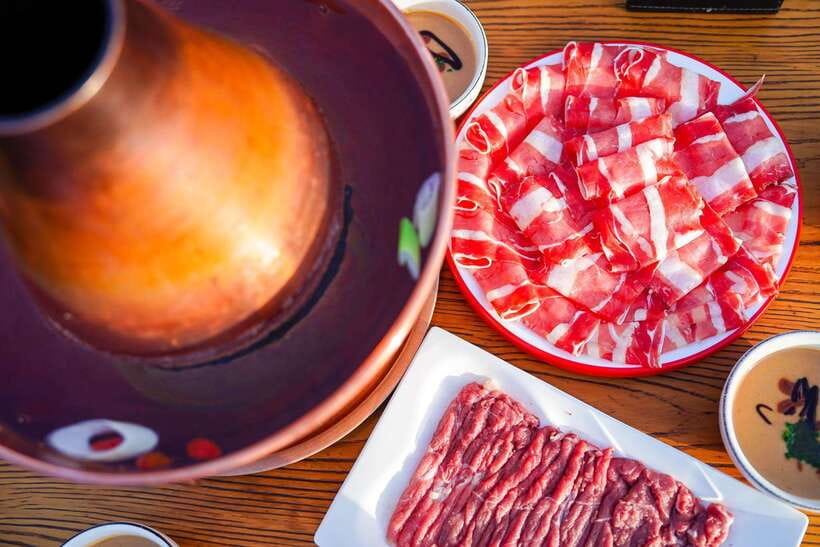
The hotpot stop gives the evening a strong start. You eat from a traditional copper pot filled with clear broth. Rather than masking the ingredients with a heavy soup base, this style lets the quality of the meat and the dipping sauce do most of the work.
Thin slices of mutton and beef cook quickly in the simmering broth. You then dip them into a sauce made with sesame paste. That nutty, creamy sauce is a key part of the meal, and your guide can explain how to combine the cooked meat with the other items at the table.
The restaurant also offers a view toward Beijing’s historic bell tower. The combination is useful: you get a classic northern Chinese meal while looking across an older part of the city. It gives the hotpot stop more character than an ordinary restaurant dinner.
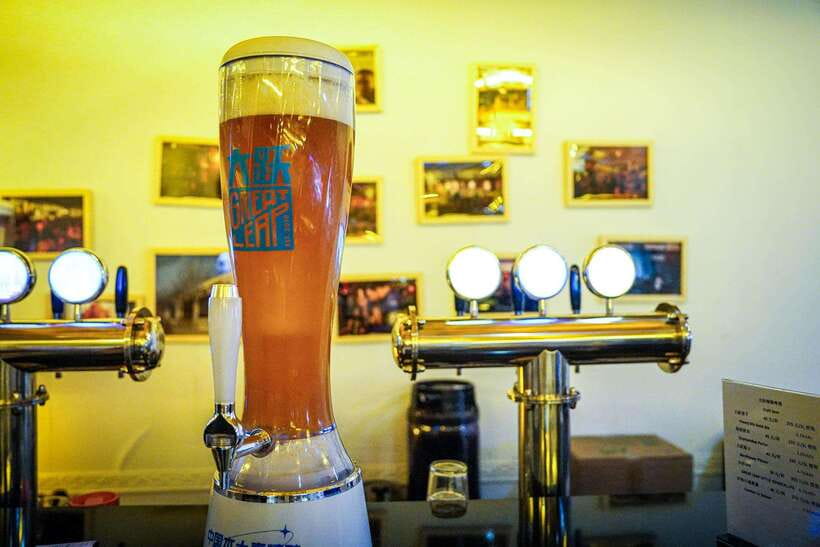
A pint of locally brewed craft beer is included, and the tour information also lists unlimited beer and sodas. The exact drinks served can depend on the restaurant and the day, so I would treat the beer as part of the experience rather than expect a full tasting session.
Hotpot is a social meal. It takes time, encourages conversation, and works well in a small group. If you are not used to mutton, the sesame dipping sauce helps make the flavor approachable. You should still advise the operator of dietary requirements when booking, since this menu is meat-focused.
Second stop: Beijing noodles in a courtyard
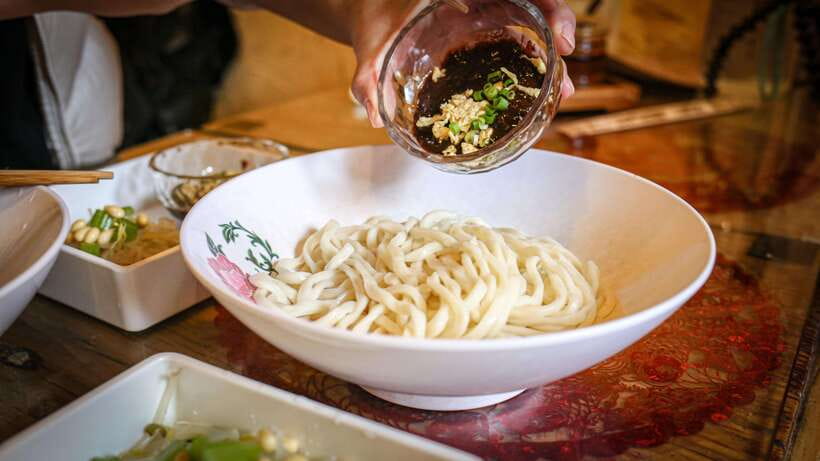
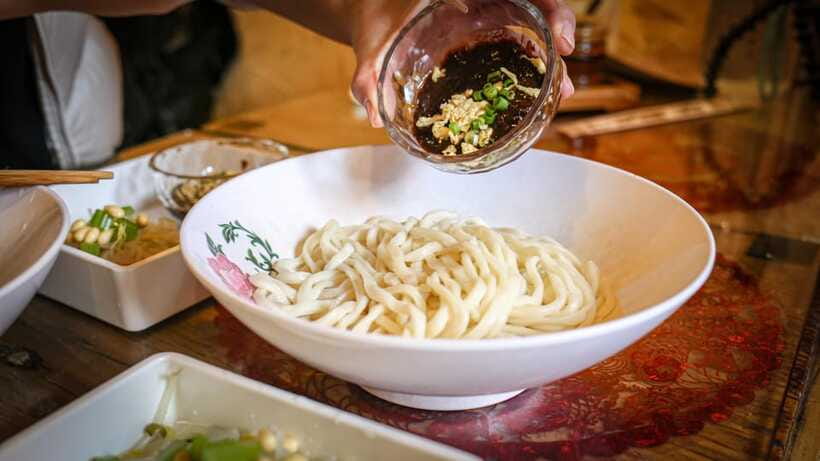
Beijing-style noodles are presented as a local essential, and the stop takes you to a small noodle restaurant tucked inside a hutong courtyard. The appeal is not fancy decor. It is the chance to eat a dish Beijingers often treat as a defining comfort food.
The restaurant prepares its own recipe, described as a secret made-from-scratch preparation. You can expect a hearty bowl rather than a delicate tasting portion. The stop also shows why a guide helps: a small noodle shop in a residential courtyard may be difficult to find, especially if the signs are only in Chinese.
This is one of the strongest parts of the route for anyone interested in everyday food. Hotpot can feel like a special dinner, but noodles show what people eat when they want something filling and familiar. The contrast between the two stops gives the meal a better sense of Beijing than four versions of the same dish would.
The main thing to remember is appetite. The noodles come after the hotpot, not before it, and the rest of the evening still includes two more food stops.
Other eating walks in Beijing:
- Boutique Tour: Four Must-sees of Beijing and Peking Duck
★ 5.0 · 104 reviews - Beijing Walking Food Tour with a Local Friend
★ 5.0 · 73 reviews - Beijing: Dumpling Making Workshop with Meal and Tea
★ 4.7 · 69 reviews - Online Cooking Class Beijing Dumplings and Cuisine by Sunflowerli Renowned Chef
★ 5.0 · 65 reviews
The hutongs between meals
The walking sections are not filler. They connect the food to the city around it.
Beijing’s hutongs date back to the 12th century. They developed between courtyard houses associated with officials and wealthy residents, with lanes spreading out from the area around the Forbidden City. Today, these streets show a mix of older homes, local businesses, renovations, and changing city life.
Your guide explains how the lanes were arranged and how their role has changed. The route is not a formal architectural tour, but it gives you context that you would miss if you only entered restaurants by car.
Evening is a useful time to walk here. You can see the neighborhood after the working day, and the food stops make it easier to explore without planning a separate hutong outing. Just remember that a historic lane is not the same as a smooth modern pavement. Wear shoes with good grip, and dress for the weather. The tour operates in all weather conditions.
Third stop: a rare Muslim Beijing specialty
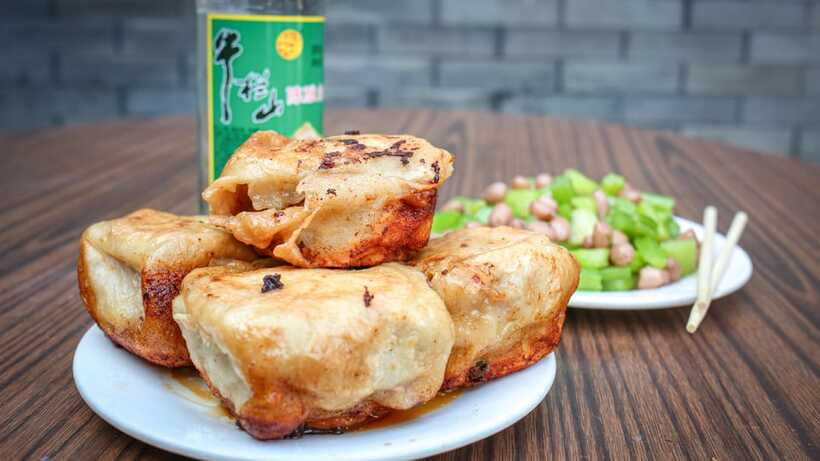
The third restaurant offers one of the most unusual dishes on the route. It is a Muslim eatery used mainly by neighborhood men, and the specialty is described as an endangered Beijing dish once favored by Empress Cixi.
That background makes the stop valuable even before you taste the food. Beijing cooking is not one single tradition. It reflects imperial kitchens, northern Chinese staples, and Muslim communities that have shaped the city’s food culture. This restaurant gives you a look at a less familiar part of that story.
The setting may feel more local and plain than the first hotpot stop. That is part of the point. You are not being taken only to polished restaurants designed for sightseeing. The dish has survived in a small number of places, and your guide provides the context needed to appreciate why it matters.
The restaurant keeps bottles of baijiu behind the counter for its regular customers. Baijiu is a strong Chinese spirit, and the tour may give you a chance to try local alcohol alongside the food. If you do not drink, tell the guide. Food requirements and drink preferences should be raised when you book.
This stop may appeal most to adventurous eaters who want something beyond the standard Beijing menu. If you prefer familiar dishes and dislike trying food with limited explanation, you may find it less comfortable. The guide’s role is important here, and guides such as Haitao, Winnie, and Joe have been praised for explaining dishes in clear English.
Fourth stop: spring pancakes and family tradition
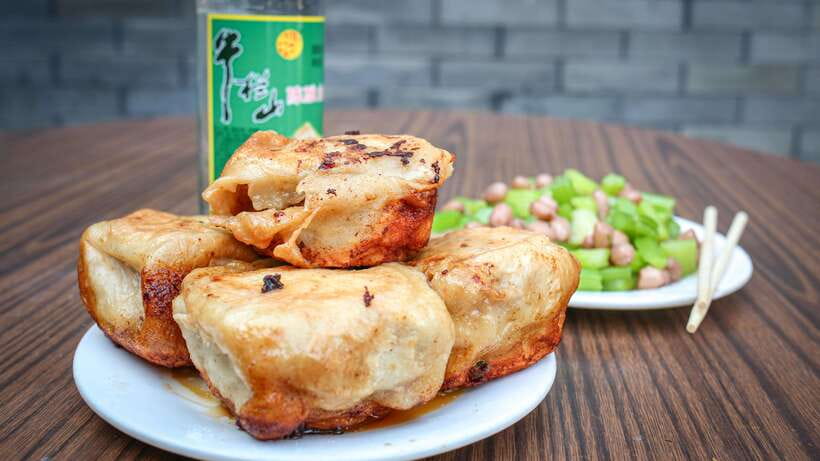
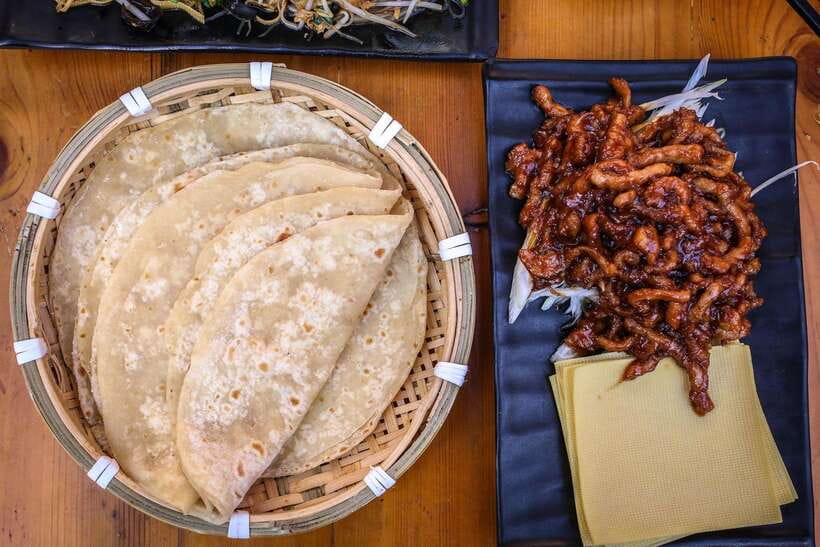
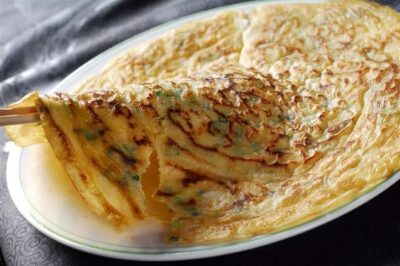
The final restaurant is run by a husband-and-wife team and specializes in spring pancakes. These thin pancakes are traditionally eaten with family during Chinese New Year to mark the arrival of spring and hope for a good harvest.
You eat them like a burrito, wrapping the fillings inside the pancake. The format is easy to enjoy, but the meaning gives the dish extra weight. It is tied to family reunion and togetherness, not just convenience.
This is a pleasant way to end the route because it feels homely and hands-on. You get another style of Beijing food, another small restaurant, and another piece of seasonal tradition. The meal is made fresh to order, so this stop also reinforces the tour’s focus on food prepared for local diners rather than generic restaurant fare.
Several guides have been praised for keeping the pace relaxed while fitting in all four stops. That matters because a four-stop dinner can easily become rushed. The best version of this experience gives you time to eat, ask questions, and notice the streets between restaurants.
How much food do you actually get?
The four tastings are described as the equivalent of dinner, and you should take that seriously. The hotpot and noodles are filling on their own, while the spring pancakes add another substantial course. You are unlikely to finish the route looking for a second meal.
The price is $75 per person. I consider that reasonable if you value the guide, the neighborhood access, the four food stops, and the included drinks. You are paying for more than ingredients. The price also covers the work of selecting restaurants, arranging the tastings, translating unfamiliar dishes, and leading you through lanes you might not locate alone.
It is less attractive if you only want the cheapest possible dinner. You could certainly eat noodles or hotpot for less on your own, but you would not get the same range of dishes or the food history between stops.
The tour’s value is strongest for short stays. If you have only a few nights in Beijing, this gives you a ready-made food introduction and may help you decide what to seek out later. Guides also offer general suggestions for other foods and places, according to the experience of several participants.
Guides, group mood, and language
The tour is conducted in English. Guides named in the supplied information include Janice, Tony, Winnie, Haitao, Yoyo, Joe, Tara, Uyi, Zoey, Teagan, Carmen, and others.
The strongest praise focuses on guide manner. Janice is described as especially clear and considerate, Tony as lively and friendly, Winnie as strong on food and wider social context, and Haitao as warm and well informed about his home city. Yoyo has been praised for her passion for local food and the relaxed pace she brings to the evening.
Guide quality can vary from one departure to another, but the repeated pattern is encouraging. You should expect explanations about dishes, buildings, hutongs, and Beijing life rather than a silent escort from restaurant to restaurant.
The group size is not specified. One booking described a small and enjoyable group, but you should not assume every departure will have the same number of people.
Who should book this experience?
I would choose this tour if you:
- Want a strong first-night introduction to Beijing food
- Enjoy walking through old neighborhoods
- Prefer local eateries to polished tourist restaurants
- Like trying dishes with historical and cultural context
- Want dinner and drinks arranged in one evening
- Have enough appetite for four substantial stops
I would think twice if you:
- Have difficulty walking 2.5 kilometers through older lanes
- Need a fully vegetarian or highly restricted menu
- Prefer to choose each dish yourself
- Want a quiet, formal restaurant meal
- Are not comfortable with meat, mutton, Muslim cuisine, or strong Chinese alcohol
Dietary requirements should be shared at booking. The tour operates in all weather, so Beijing’s temperature and rain should influence your clothing choice.
Should you book the Beijing food walk?
Book it if you want to understand Beijing through its neighborhood food rather than only through its major sights. The strongest features are the unusual restaurant choices, the full meal, and the walk through hutongs between courses.
I would especially recommend it early in your stay. You get practical food guidance, a look at old residential Beijing, and a chance to ask an English-speaking guide what else to eat during your trip.
At $75, it is not a bargain dinner, but it is a fair package for four stops, a 3.5-hour guided walk, local beer, soft drinks, and dishes you might never locate on your own. Arrive at Shichahai before 6:20 PM, wear comfortable shoes, and come genuinely hungry.
FAQ
Where does the Beijing food tour begin?
It begins at Shichahai Subway Station, Exit C, at street level. The station is on Line 8.
What time should I arrive?
The tour starts at 6:30 PM. You should meet your guide 10 minutes early, at about 6:20 PM.
How long does the tour last?
The experience lasts 3.5 hours.
How far do you walk?
You walk about 1.5 miles, or 2.5 kilometers, through Beijing’s historic hutong lanes.
How many food stops are included?
Four food stops are included, with tastings described as the equivalent of dinner.
Is beer included?
Yes. The package includes a pint of locally brewed craft beer, along with beer and sodas listed as unlimited inclusions.
Is the tour conducted in English?
Yes. It includes a live English-speaking guide.
Can I request dietary accommodations?
You should advise the operator of any dietary requirements when booking.
Is the tour suitable for people with mobility impairments?
No. The experience is listed as unsuitable for people with mobility impairments because it includes a 2.5-kilometer walk through hutong lanes.
What happens if I need to cancel?
You can cancel up to 24 hours in advance for a full refund. The reserve-now, pay-later option lets you book without paying immediately. A minimum of two people is required for the tour to operate, and if that minimum is not met, you may be offered another date or a full refund.
More bars and drinks in Beijing
- Authentic Old Beijing Hutong Food and Beer Private Tour
★ 5.0 · 49 reviews - Beijing Hutong Dinner and Beer Walking Private Tour
★ 5.0 · 9 reviews - 4-Hour Shanghai Pub Crawl (bars & nightclub hopping)
★ 4.8 · 190 reviews
More local-life tours in Beijing
- Beijing Hutong Walking Food and Beer Tour at Hidden Restaurants
★ 5.0 · 1,132 reviews - Beijing: Great Wall Layover Tour with a Native
★ 4.8 · 96 reviews - Eat Like A Local: Shanghai Night Food Tour
★ 5.0 · 616 reviews - Private Hong Kong Tour with a Local, Highlights & Hidden Gems 100% Personalised
★ 5.0 · 490 reviews
New reviews from Beijing
- Mutianyu Wall, Summer Palace & Old Summer Palace Day Tour★ 4.8 · 34 reviews
- Night Market Haggling Adventure with an English Guide!★ 4.8 · 7 reviews
- BusDa-Mutianyu Great Wall&Forbidden City Full-day Coach Tour★ 4.9 · 11 reviews
- Mutianyu Great Wall Ticket with Roundtrip Cable Car★ 5.0 · 20 reviews
- Mutianyu Great Wall Bus Trip+Ticket 7/8/9/10/13/13:30/15:30★ 4.7 · 24 reviews
- Mutianyu Great Wall Entry Ticket Chairlift Up Toboggan Slide★ 4.9 · 8 reviews
- Mutianyu Great Wall 5-KM Guided Hike with Uphill Cable Car★ 4.8 · 16 reviews
- Mutianyu Great Wall Admission Ticket★ 3.6 · 7 reviews
Chinese Food Tours, compared.
Authentic Local Food Tour in Central Shanghai
Read our review →
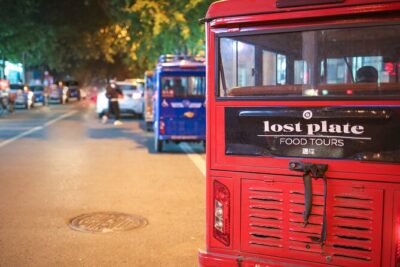

Temple Heaven, Lama Temple, Summer Palace & Peking Duck Bus Tour
Read our review →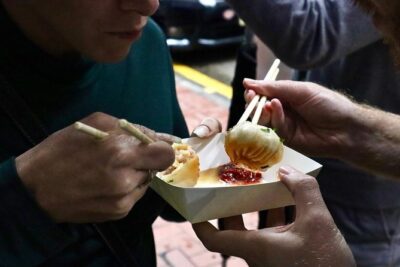
Hong Kong’s Tin Hau Hidden Eats Food Tour with 7+ Local Tastings
Read our review →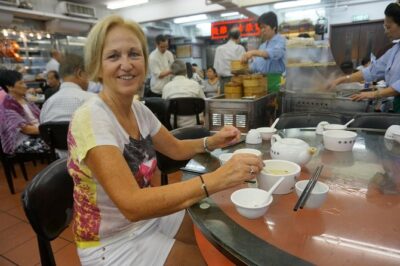
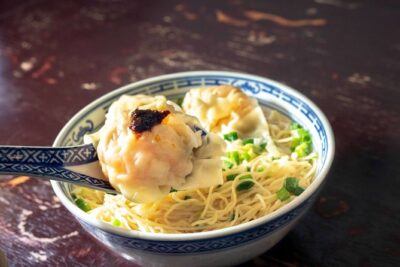
Hong Kong Food Tour: Central and Sheung Wan Districts
Read our review →Browse the lists this tour appears in