
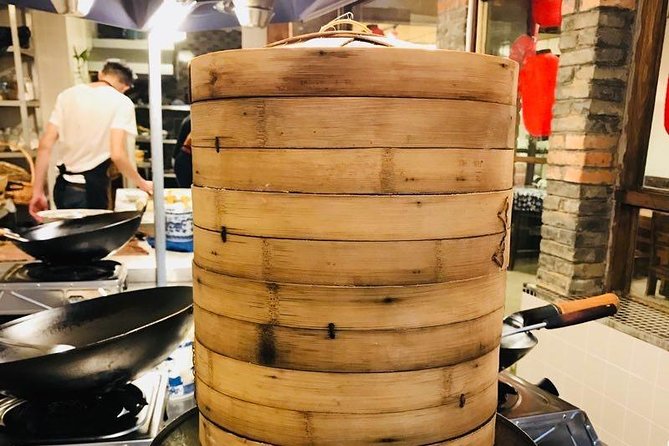
Reviewed · COOKING CLASSES
Half-Day steamed Buns Cooking Class with a Local Market Visit
Chengdu’s best cooking lesson may begin before you reach the kitchen. You first visit a local spice market, learn how Sichuan ingredients are used, then make Baozi, soft steamed buns with a savory filling. The class takes place in a traditional courtyard setting and ends with a meal of your own work.
I like the smart two-part format: the market gives meaning to the ingredients, while the hands-on class gives you a skill to take home. I also like the friendly guide service, with Lance praised for helping guests use a little Chinese and taking photos during the cooking session. The main drawback is time: four hours can feel long if you only want a quick recipe lesson, and the market visit involves walking.
Key points to know before booking
- A market visit comes first: Learn about Sichuan spices and ingredients before cooking with them.
- Baozi is the main lesson: You prepare filled Chinese steamed buns, then eat what you make.
- The setting is traditional: The class takes place in a Sichuan-style courtyard kitchen.
- Tea is part of the welcome: Sichuan tea is served in keeping with local hospitality.
- Food and drinks are included: Your handmade buns come with beer or other beverages and a light meal.
- Small groups help: The maximum group size is 15 people, and group discounts are available.
Why this Chengdu cooking class works so well
I like cooking classes that explain the food before placing a knife in your hand. This one begins at a local spice market, so you get a better sense of the ingredients that shape Sichuan cooking. You are not simply handed a prepared bowl of filling and told to copy the chef.
The market visit also gives you a look at daily food shopping in Chengdu. You may see unfamiliar vegetables, dried spices, chilies, and other ingredients used in local kitchens. The guide explains what you are seeing and helps connect those ingredients to the Baozi you will later prepare.
That connection is the heart of the experience. You learn what goes into the food, how it is handled, and how it becomes a finished dish. For me, that makes the class more useful than a short demonstration where you only watch someone else work.
More Cooking Classes in Chengdu
- Half-Day Chengdu Cooking Class with a Local Market Visit
★ 5.0 · 465 reviews - Chengdu: Cooking Class with Fresh Market Half Day Experience
★ 5.0 · 42 reviews - Half-Day Sichuan Cooking Class Experience in Chengdu
★ 4.0 · 17 reviews
Stop 1: Exploring Chilli Cool China’s local spice market
The first stop is Chilli Cool China, where the market visit sets the tone for the rest of the morning or afternoon. You are guided through an authentic local spice market and given fun challenges to complete along the way.
Those challenges add a practical twist. Instead of walking through the stalls as a passive observer, you have reasons to look closely, ask questions, and use a little Chinese. One past session included help from Lance, who explained unfamiliar vegetables, answered questions patiently, and took photographs so the group could focus on the activity.
You should expect the market to be more about ingredients and food culture than sightseeing. The guide’s job is to explain what you are looking at and how local cooks use it. That is useful in Chengdu, where Sichuan cuisine depends heavily on the balance of chilies, spices, aromatics, and fresh produce.
The market can also be the most unpredictable part of the class. It is a working food market, not a polished attraction. You will need comfortable walking shoes, and the tour operates in all weather, so dress for the forecast. If you prefer a quiet, highly controlled setting, this opening section may feel busy or less structured than the kitchen lesson.
Still, I would not skip it. The market makes the later cooking feel grounded in place. You are not making generic dumplings in a room that could be anywhere in the world. You are learning about ingredients in Chengdu and then using that setting as a starting point for the food.
Stop 2: Tea and Baozi in a Sichuan courtyard
After the market, the class moves to Chilli Cool’s Kitchen. The cooking takes place in a traditional Sichuan-style courtyard, which gives the lesson a sense of place without requiring a full-day excursion outside Chengdu.
You are welcomed with Sichuan tea, a local custom used when receiving friends and visitors. It is a small detail, but it helps the class feel social rather than purely instructional. You have a chance to settle in before the cooking starts, and the tea offers a simple introduction to local hospitality.
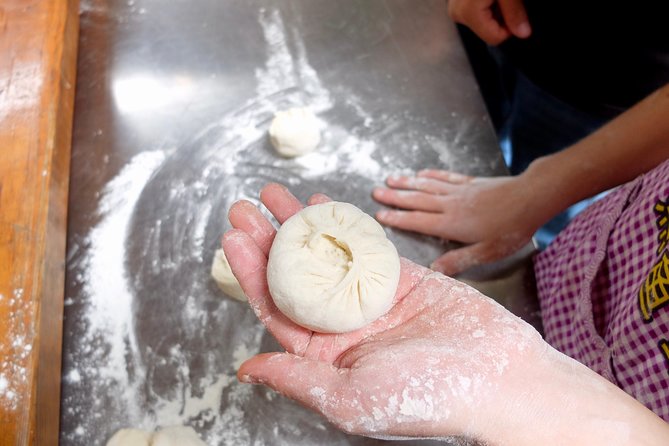
The main lesson focuses on Baozi, filled steamed buns that are a familiar part of Chinese food culture. A professional chef guides you through the cooking process in a cozy kitchen. The supplied details do not specify the exact filling or the number of buns you will make, so you should expect instruction centered on the class recipe rather than a choice of several dishes.
Baozi making is a good fit for a hands-on class because the process includes several stages. You work with the ingredients, shape the dough, add the filling, and prepare the buns for steaming. The finished result depends on technique, not just on following a printed recipe.
That also means your buns may not look perfect. This is part of the fun. Baozi takes practice, and the cooking class gives you a chance to try the process with a chef nearby. If you want a polished restaurant-style meal with no work, choose a food tour instead. If you want to understand how the dish is made, this class offers better value.
What you actually eat at the end
The final meal is simple and satisfying: you eat the Baozi you made yourself, along with beer or other beverages. Lunch or dinner is provided depending on the class schedule, and light refreshments are included.
I like this ending because it completes the lesson. You do not make food, take a quick photograph, and leave before tasting it. You sit down with your results and experience the dish as food, not just as a classroom exercise.
The meal is unlikely to suit someone expecting a large banquet. The experience is built around steamed buns, with drinks and refreshments supporting the main dish. Think of it as a substantial cooking experience rather than an all-day Chengdu food feast.
Vegetarian food is available, but you need to request it when booking. The same applies to other dietary requirements. Do not wait until you arrive, since the ingredients need to be arranged in advance.
Other classes where you do the cooking in Chengdu:
- Beijing: Dumpling Making Workshop with Meal and Tea
★ 4.7 · 69 reviews - Online Cooking Class Beijing Dumplings and Cuisine by Sunflowerli Renowned Chef
★ 5.0 · 65 reviews - Lijiang Naxi Cuisine Cooking Class & Market Visit
★ 5.0 · 48 reviews - Yangshuo Cooking Class with Market Trip
★ 5.0 · 40 reviews
The guide can shape the whole experience
The tour includes an English-speaking guide, and the guide is important here. A market visit works best when someone can explain unfamiliar produce, translate labels or food names, and help you interact with the setting.
Lance received especially warm praise for guiding the group from the market through the cooking class. His help with basic Chinese and his willingness to take photographs were useful touches. Jerry was also praised for patience and for explaining unfamiliar vegetables during the market visit.
Guide assignments can change, so you should not assume that Lance or Jerry will lead your particular class. Still, these details show what to value: clear explanations, patience at the market, and a guide who stays involved through both parts of the experience.
The group limit is 15 people. That is not a private class, but it is small enough to keep the lesson manageable. A larger group could mean more waiting while the chef demonstrates, especially during the shaping stage. If you are booking with friends or family, ask about the available group discount.
Is $80 a fair price in Chengdu?
At $80 per person, this is not the cheapest way to eat Baozi in Chengdu. You could buy steamed buns from a local shop for very little. That comparison misses the point, though.
The price covers roughly four hours of guided activity, the market visit, the English-speaking guide, ingredients, the cooking lesson, tea, refreshments, beer or other drinks, and a light meal. You are paying for access, instruction, and context, not just for the finished food.
I see the strongest value in the combination of market and kitchen. Many cooking classes begin with ingredients already measured and arranged. Here, the market adds a local food experience before you start cooking. That makes the fee easier to justify for visitors who want more than a recipe.
The value is also stronger for people who enjoy active holidays. You are involved throughout the class, and the food you eat at the end is linked directly to the work you have done. If you are mainly looking for a cheap meal, $80 is high. If you want a guided food activity with cultural context, the price is reasonable.
The tour is booked, on average, about 14 days ahead. That suggests you should reserve early if your Chengdu schedule is fixed, particularly if you want a specific class time or need a vegetarian version.
Who should book this experience?
This class suits food-focused visitors who want to learn a local dish instead of only photographing it. It is also a good choice for first-time visitors to Chengdu who want a gentle introduction to Sichuan ingredients and food customs.
Families can consider it too, since the minimum age is five. Younger children may need close help with dough and shaping, but the market challenges and hands-on cooking provide more variety than a long restaurant meal.
It also works well for small groups of friends. You can share the market activity, compare your Baozi shapes, and eat together at the end. Group discounts may improve the value for a larger booking.
You may want to choose another activity if you dislike walking, have strict dietary needs that were not discussed in advance, or want a class focused on several different dishes. This experience has a clear focus: Sichuan ingredients, market discovery, and Baozi.
Practical details that matter
The class lasts about four hours, though the supplied schedule also describes it as four to five hours. Allow a little flexibility around the start and finish. The activity begins and ends at 167 Yi Huan Lu Bei San Duan in Jin Niu District, Chengdu.
You receive a mobile ticket, and confirmation is provided when you book. A passport name, passport number, expiry date, and country are required for every participant.
Wear comfortable walking shoes. The market comes before the kitchen, and the tour runs in all weather. Light, practical clothing is the sensible choice, especially if you are taking the class during hot or wet weather.
The tour includes free cancellation up to 24 hours before the start time. Within 24 hours, you cannot receive a refund, and changes are not accepted. Check the local cut-off time carefully if your plans are still moving around.
Should you book the Chengdu Baozi class?
I would book this if you want a personal food experience with a clear local connection. The market visit gives the class more depth, the courtyard kitchen adds character, and the final Baozi meal rewards your effort. The English-speaking guide and small maximum group also make it approachable for visitors who do not speak Chinese.
I would skip it if your main goal is a low-cost meal or a broad survey of Chengdu cuisine. This is not a restaurant crawl, and it does not promise several dishes. It is a focused half-day lesson built around one traditional steamed bun.
For most food lovers, the market-to-kitchen format is the reason to choose it. You learn what the ingredients are, how they fit into Sichuan cooking, and how to turn them into food you can eat at the table. That is a fair return for four hours and $80, especially if you want a memory that lasts longer than a meal.
FAQ
How long does the Baozi cooking class last?
The experience lasts about four hours, with the full activity described as taking approximately four to five hours.
Where does the tour start and finish?
It starts at 167 Yi Huan Lu Bei San Duan, Jin Niu District, Chengdu, Sichuan, China. The activity ends back at the same meeting point.
What food will I learn to make?
The class focuses on Baozi, traditional Chinese steamed buns with a filling.
Is the market visit included?
Yes. The experience includes a guided visit to a local spice market before the cooking class.
Is a vegetarian option available?
Yes. A vegetarian option is available, but you must request it when booking. You should also provide any other dietary requirements at that time.
What is the maximum group size?
The activity accepts a maximum of 15 participants.
Can I cancel for a full refund?
Yes. You can receive a full refund if you cancel at least 24 hours before the experience start time. Cancellations or changes made within 24 hours are not refunded or accepted.
More shopping in Chengdu
- Xi’an: Terracotta Army, Lunch, City Wall, Pagoda, Bazaar
★ 5.0 · 72 reviews - Private Shanghai Shopping Tour with Local Shopping Guru
★ 5.0 · 68 reviews - Organic Xiao Long Bao Soup Dumpling Class & Market Walk
★ 5.0 · 62 reviews - Beijing: Dumpling-Making Class with wet Market visit
★ 5.0 · 9 reviews
More markets in Chengdu
- Mini Group Xian Day Tour to Terracotta Army, City Wall, Pagoda and Muslim Bazaar
★ 5.0 · 1,320 reviews - Shanghai Day Tour to Zhujiajiao Water Town, Yu Garden, Bazaar, Bund
★ 5.0 · 162 reviews - Hong Kong: Kowloon Street Market & Food Culture Walking Tour
★ 5.0 · 105 reviews - Organic Chinese Dumpling Class with Market Walk
★ 5.0 · 88 reviews
New reviews from Chengdu
- Sichuan: Big Panda Volunteer Day tour★ 4.4 · 10 reviews
- Mount Qingcheng Tour: Explore Serene and Sacred Taoist Site★ 5.0 · 12 reviews
- Leshan Buddha boat and food half day trip★ 3.1 · 3 reviews
- Leshan Giant Buddha Tour: Discover Ancient Stone Masterpiece★ 4.3 · 3 reviews
- Leshan Giant Buddha & Huanglongxi/Buddha Temple Day Trip★ 5.0 · 18 reviews
- Jiuzhai Valley National Park:Visit Colorful Fairy Tale World★ 5.0 · 3 reviews
- Jinsha&Sanxingdui archaeological site private day tour★ 4.8 · 4 reviews
- Huanglong Scenic Area: Explore Stunning Five-Colored Ponds★ 5.0 · 6 reviews
Cooking Classes, compared.
Half-Day Chengdu Cooking Class with a Local Market Visit
Read our review →
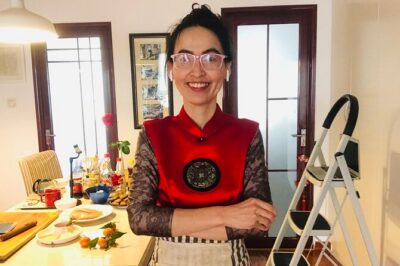
Online Cooking Class Beijing Dumplings and Cuisine by Sunflowerli Renowned Chef
Read our review →
Lijiang Naxi Cuisine Cooking Class & Market Visit
Read our review →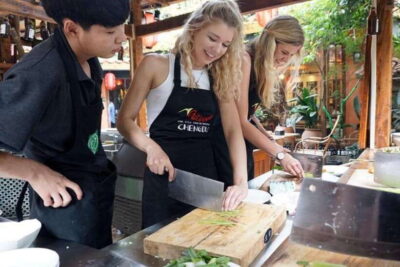
Cooking Class with Fresh Market Half Day Experience
Read our review →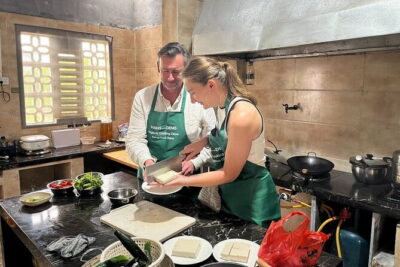
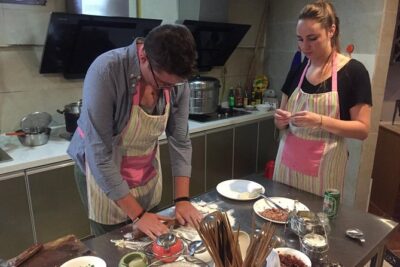
Half-Day Sichuan Cooking Class Experience in Chengdu
Read our review →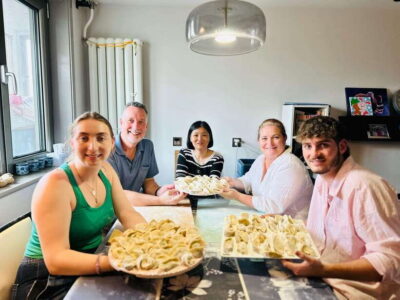
Browse the lists this tour appears in