
Reviewed · COOKING CLASSES
Half-Day Sichuan Cooking Class Experience in Chengdu
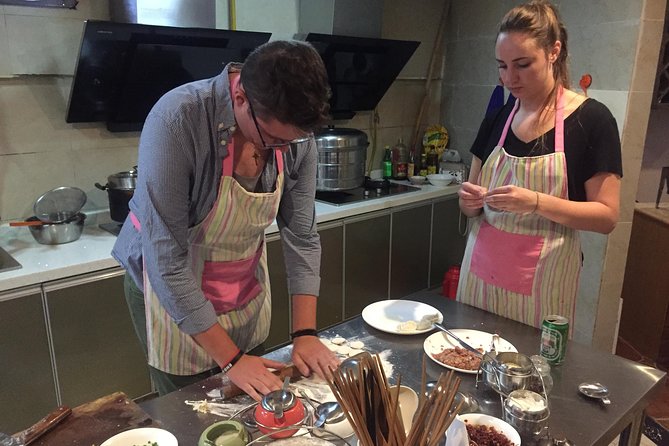
Chengdu’s food is not shy. This small-group Sichuan cooking class puts you close to the heat, the chopping board, and the famous Sichuan peppercorn. You prepare about four local dishes, then sit down to eat them while they are fresh. It is a better way to understand the food than simply ordering a plate and guessing what went into it.
I like the hands-on format and the tiny group size, limited to five people. I also like the chance to request a different dish, since the chef has adjusted menus for guests who had already learned Kung Pao chicken or wanted to try something else. The main caution is communication: some chefs speak good English, while others use only a few words, so this is more about watching, cooking, and tasting than receiving a long food lecture.
Key points at a glance
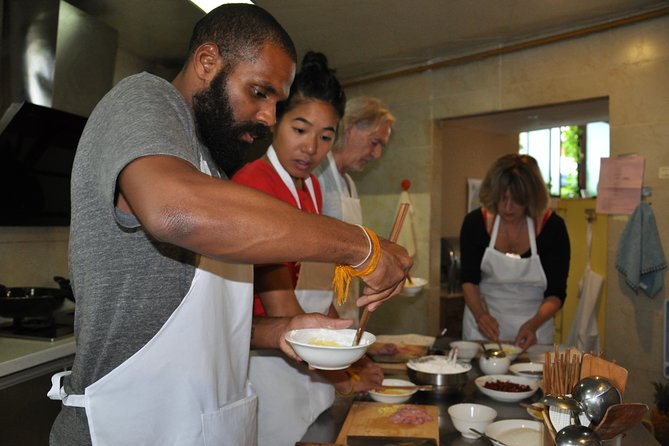
- Four dishes in roughly four hours: You may prepare Kung Pao chicken, sweet and sour pork, Sichuan-style eggplant, and pork dumplings.
- Maximum of five people: The small kitchen allows plenty of hands-on time and direct help from the chef.
- Pickup and dinner included: A guide or driver collects you from your Chengdu hotel and returns you afterward.
- Recipes go home with you: The English recipe cards give you a real chance to repeat the dishes in your own kitchen.
- Menu changes may be possible: Request another Sichuan dish when booking, but the chef cannot guarantee it.
- English instruction varies: Some sessions have a fluent chef or translator, while others rely on demonstrations and simple cooking terms.
Starting with Chengdu’s Sichuan flavors
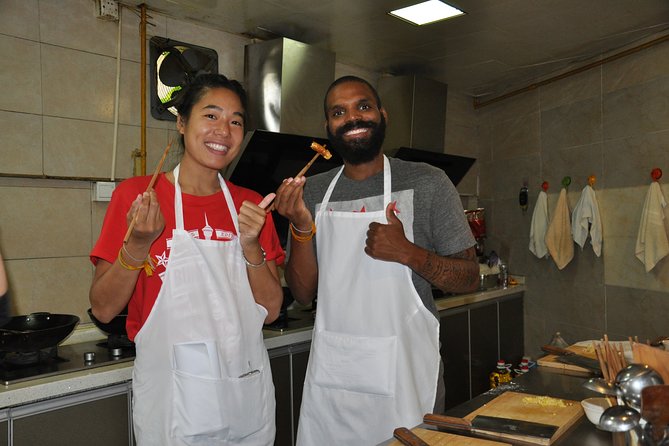
The class begins with hotel pickup, usually for the published 4:00 pm start. From there, you head to the cooking venue with a local guide or driver. The setting has varied: past classes have taken place in a hostel kitchen, a family-run cafe, a guesthouse kitchen, or the chef’s own home.
That variety matters. You are not signing up for a polished culinary school with a large teaching kitchen. You are entering a working local space, often small and simple but reported as clean and friendly. If you want a formal demonstration kitchen with printed background notes and a professional lecture, this may feel basic. If you want to see how everyday Sichuan food is prepared in a compact kitchen, the setting works in your favor.
The experience provider is Samtour of Chengdu OTC Travel. Pickup is included, which is useful in Chengdu, especially if you are still getting used to the city’s size and traffic. One practical point: the driver may not speak much English, so have the hotel address and booking details ready on your phone.
The class is often booked well ahead, with the average booking made about 31 days before the date. That suggests you should reserve early if you are visiting during a busy season or have only a few nights in Chengdu. The group limit is five, though a small booking can become a private lesson. Several sessions have had only one or two students.
More Cooking Classes in Chengdu
- Half-Day Chengdu Cooking Class with a Local Market Visit
★ 5.0 · 465 reviews - Chengdu: Cooking Class with Fresh Market Half Day Experience
★ 5.0 · 42 reviews - Half-Day steamed Buns Cooking Class with a Local Market Visit
★ 5.0 · 26 reviews
Learning why Sichuan food tastes so bold
Before you start cooking, the chef introduces the spices and flavor combinations used in Sichuan dishes. The useful part here is practical rather than academic. You learn how different ingredients work together, then use them at the stove instead of simply hearing a list of names.
Sichuan cooking is known for more than heat. A dish can combine chili, salt, sweetness, sourness, garlic, fermented flavors, and the tingling effect of Sichuan pepper. The class gives you a chance to notice those contrasts as you prepare the food yourself.
The amount of explanation depends heavily on the chef. One session had a chef with very good English and an assistant called an ayi helping with the food. Other classes had a chef with limited English and a helper who translated. In at least one case, the chef spoke no English, but the cooking still worked because the demonstration was clear and the chef was attentive.
I would book this for the cooking, not for a detailed lesson in Chinese culinary history. You should expect to learn by watching the chef’s movements, repeating them, asking short questions, and tasting as you go. That can be surprisingly effective. It also keeps the class moving.
Four dishes, with plenty of hands-on work
The standard menu features four traditional dishes. The exact selection can vary, but the advertised examples are Kung Pao chicken, sweet and sour pork, Sichuan-style fish-flavored eggplant, and steamed dumplings.
Kung Pao chicken
Kung Pao chicken is a useful first dish because it shows how a Sichuan sauce comes together. You work with the balance of savory, sweet, spicy, and aromatic flavors rather than treating the sauce as one bottled ingredient.
Some people already know this dish from Chinese restaurants at home. If you do, request a substitution in advance. A past class replaced it with mapo tofu, twice-cooked pork, dandan noodles, or pork ribs with potatoes. The chef may agree to your request, but it is not guaranteed.
Other classes where you do the cooking in Chengdu:
- Beijing: Dumpling Making Workshop with Meal and Tea
★ 4.7 · 69 reviews - Online Cooking Class Beijing Dumplings and Cuisine by Sunflowerli Renowned Chef
★ 5.0 · 65 reviews - Lijiang Naxi Cuisine Cooking Class & Market Visit
★ 5.0 · 48 reviews - Yangshuo Cooking Class with Market Trip
★ 5.0 · 40 reviews
Sweet and sour pork
The class version of sweet and sour pork may be different from the heavily sweetened restaurant style familiar in many countries. One past menu used a more balanced version, which makes this dish a good reminder that familiar Chinese takeout names do not always describe the food you will eat in China.
You prepare it yourself, so you can pay attention to the sauce and adjust your understanding of what gives the dish its character. The recipe card is especially useful here, since sauces are easy to forget once you leave the kitchen.
Sichuan-style eggplant
The eggplant brings a softer texture and a different way to carry Sichuan seasoning. It is a helpful contrast to the meat dishes, and it gives you a vegetable preparation that can be repeated at home.
The advertised description calls this fish-flavored eggplant. Despite the name, that style refers to a seasoning profile rather than a plate of fish. The dish is part of the class’s lesson in layered flavor, with the chef showing how a few strongly flavored ingredients can transform a simple vegetable.
Dumplings
Dumplings are the most tactile part of the class. You mix or handle the filling, shape the wrappers, and learn the folding method from the chef. One family class especially enjoyed progressing from easier dishes to dumpling folding, with the chef providing close help.
Do not expect to become a dumpling expert in a few minutes. The value is in trying the technique and seeing how much handwork goes into a dish that can arrive at a restaurant looking effortless. The result is dinner, not just a sample.
A menu that can change for the better
The listed menu is a starting point rather than an absolute script. You can put a preferred dish in the Special Requirements box when you book. The chef will try to accommodate it, but you should not assume the request will be accepted.
This flexibility has worked well for people who had taken another cooking class or wanted to focus on a favorite Sichuan dish. Past alternatives included mapo tofu, dandan noodles, twice-cooked pork, and pork ribs with potatoes. Another class prepared shrimp dumplings and bean curd in XO sauce.
That range also explains why the written menu and your actual class may not match perfectly. The number of participants, the chef’s strengths, available ingredients, and your request can all shape the session. I see that as a benefit if you are flexible, but a drawback if you want one fixed, carefully standardized menu.
Eating your own work at the end
This is not a demonstration where you watch someone else cook and receive a few bites. Dinner is included, and you eat the dishes you helped prepare. The meal gives you time to compare the flavors, ask final questions, and chat with the other people in the group.
The cooking may happen dish by dish, with food eaten as it is ready. That is useful because you taste each preparation close to its best, but it also means you should arrive hungry. A past morning class produced food as soon as cooking began, so anyone choosing a morning arrangement was advised not to eat a large breakfast.
The current published start time is 4:00 pm, making the meal a natural early dinner. Since some past bookings used a morning slot, confirm the time when you reserve rather than relying on an old schedule. The course can also run longer or shorter depending on the number of participants.
What the small group really gives you
A maximum of five people is one of the strongest features here. In a large class, you might chop one ingredient and then wait while someone else handles the important step. In this small format, you have a better chance to repeat the chef’s technique and ask for help when a sauce, fold, or cooking time is unclear.
A booking for one or two people may become a private or nearly private lesson. That happened to several participants, including one solo student who received direct answers to questions and menu adjustments. A couple also found themselves cooking in a family-run cafe with no other students present.
The tradeoff is that a tiny kitchen can feel informal. You may work in a cafe, hostel, guesthouse, or home rather than a dedicated school. I would consider that part of the local character, but it will not suit you if you need a polished classroom or a fixed professional setup.
English instruction: useful, but not always extensive
The tour information describes a local English-speaking chef, and some classes have had very good English instruction. You may also have a helper translating. Still, the experience is not consistent in this area. Several sessions involved a chef who spoke only limited English, and one had no English from the instructor.
That does not automatically spoil the class. Cooking is visual, and the chef can demonstrate cutting, folding, stirring, and timing. Short words and gestures often cover the practical steps. But you will miss some of the cultural and ingredient background if the chef cannot explain much.
I recommend keeping your questions simple and specific. Ask about the name of an ingredient, the cooking time, the heat level, or the sauce ratio. If the food background matters as much to you as the cooking, a session with a fluent English-speaking chef or translator will be the better fit.
Is $83.99 a fair price?
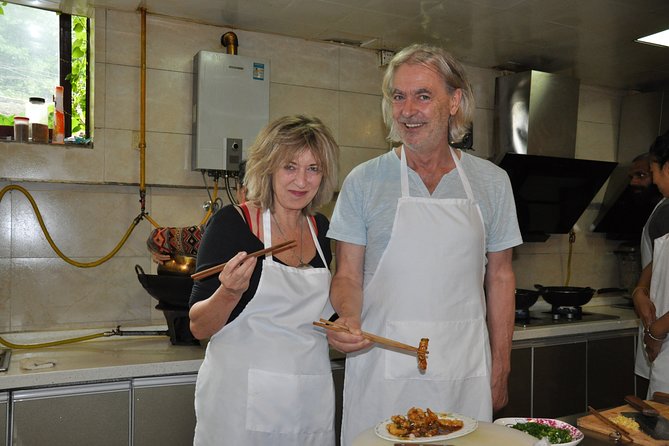
At $83.99 per person, this is not the cheapest meal or cooking lesson in Chengdu. The price includes hotel pickup and drop-off, a local chef, dinner, the cooking instruction, and recipe cards. It also buys you a small group, with the possibility of a private class when demand is low.
The value is strongest if you would otherwise pay for a meal, a taxi, and a separate food activity. You get several dishes rather than a single demonstration, and you leave with recipes you can use. The hands-on time also makes the cost easier to justify for serious food lovers, couples, and families with older children.
The value is weaker if you mainly want a cultural lecture, a professional teaching kitchen, or advanced technique. Some classes are basic home cooking, and the English explanation may be limited. You are paying for access, participation, and a meal, not for a chef-training course.
Who should book this Chengdu class?
I would recommend it to you if you like to cook, want a local meal with a practical purpose, or are traveling with a small family group. Teenagers can take part without needing advanced skills, and the class offers enough variety to keep different ability levels busy.
It also suits solo visitors. With a group limit of five, you are less likely to disappear into a crowd, and a quiet booking can become a one-on-one lesson. Couples who want an evening activity beyond sightseeing will also find the format easy to fit into a Chengdu itinerary.
I would hesitate if you need guaranteed fluent English or a precise menu. I would also think twice if you dislike informal kitchens or are looking for restaurant-level presentation. The food is home-style and practical, which is exactly its appeal, but it is not a luxury cooking studio.
The provider offers free cancellation if you cancel at least 24 hours before the 4:00 pm start time. Changes or cancellations made later are not refundable, so check your Chengdu plans before the deadline.
Should you book it?
Book this class if you want to understand Sichuan food by handling the ingredients, shaping dumplings, and eating the results. The small group, hotel pickup, flexible menu, and recipes make it a useful half-day activity, especially for families, couples, and curious cooks.
Skip it if your priority is a long English lecture, advanced technique, or a polished culinary school setting. Before booking, request any menu change, confirm the start time, and ask about English instruction if that is important to you. With those expectations set, this is a friendly and practical way to turn Chengdu’s famous food into something you can make again at home.
FAQ
How long does the Sichuan cooking class last?
The experience lasts about four hours, although the course duration can depend on the number of participants.
What time does the class start?
The listed start time is 4:00 pm. Some past arrangements used a morning class, so confirm your session time when booking.
How many people can join the class?
The activity has a maximum of five travelers. Smaller bookings may become a private or nearly private lesson.
Is hotel pickup and drop-off included?
Yes. Hotel pickup and drop-off are included in the experience.
What dishes might I cook?
The standard examples include Kung Pao chicken, sweet and sour pork, Sichuan-style fish-flavored eggplant, and steamed dumplings. Menus can vary.
Can I request a different Sichuan dish?
Yes. You can request another dish in the Special Requirements box when booking. The chef will try to accommodate the request, but it cannot be guaranteed.
Are recipes provided after the class?
Yes. You receive recipe cards so you can try making the dishes at home.
More classes and workshops in Chengdu
- Beijing Calligraphy Class
★ 4.9 · 112 reviews - Chinese Calligraphy Class for Small Group
★ 5.0 · 104 reviews - Organic Chinese Dumpling Class with Market Walk
★ 5.0 · 88 reviews - Organic Xiao Long Bao Soup Dumpling Class & Market Walk
★ 5.0 · 62 reviews
New reviews from Chengdu
- Sichuan: Big Panda Volunteer Day tour★ 4.4 · 10 reviews
- Mount Qingcheng Tour: Explore Serene and Sacred Taoist Site★ 5.0 · 12 reviews
- Leshan Giant Buddha Tour: Discover Ancient Stone Masterpiece★ 4.3 · 3 reviews
- Leshan Buddha boat and food half day trip★ 3.1 · 3 reviews
- Leshan Giant Buddha & Huanglongxi/Buddha Temple Day Trip★ 5.0 · 18 reviews
- Jiuzhai Valley National Park:Visit Colorful Fairy Tale World★ 5.0 · 3 reviews
- Jinsha&Sanxingdui archaeological site private day tour★ 4.8 · 4 reviews
- Huanglong Scenic Area: Explore Stunning Five-Colored Ponds★ 5.0 · 6 reviews
Cooking Classes, compared.
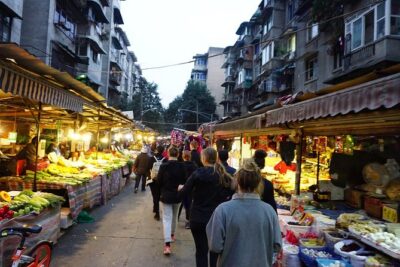
Half-Day Chengdu Cooking Class with a Local Market Visit
Read our review →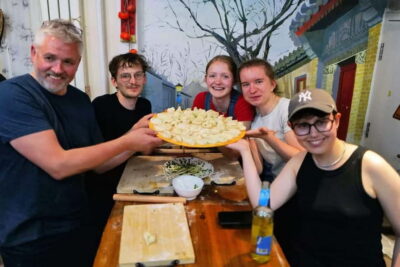
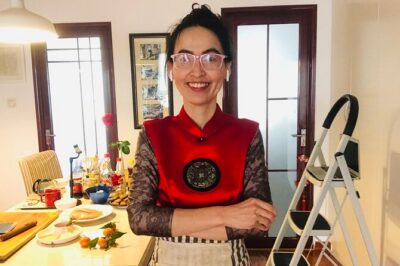
Online Cooking Class Beijing Dumplings and Cuisine by Sunflowerli Renowned Chef
Read our review →
Lijiang Naxi Cuisine Cooking Class & Market Visit
Read our review →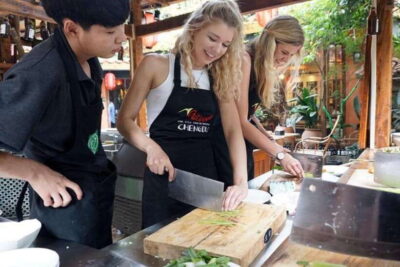
Cooking Class with Fresh Market Half Day Experience
Read our review →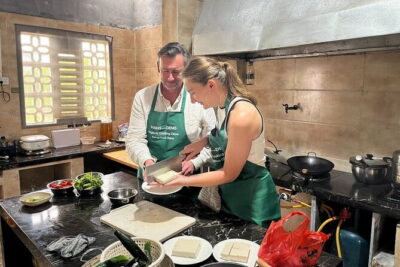
Half-Day steamed Buns Cooking Class with a Local Market Visit
Read our review →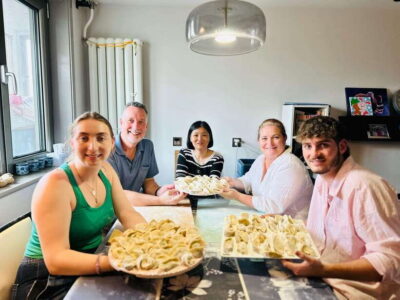
Browse the lists this tour appears in