
Reviewed · HUTONG TOURS
Discover Old Beijing: Hutong Walking Tour & Calligraphy
Beijing’s old neighborhoods are best understood on foot, and this tour takes you from an opera theatre through narrow hutongs, old shopping streets, Qianmen, and the area outside Tiananmen Square. The most memorable stop is the courtyard visit and calligraphy session, where you get more than a passing view of local culture: you make something yourself.
I like the way the walk mixes famous places with everyday streets, and I like that local guides explain how old Beijing neighborhoods have changed. The snack break, photo stops, and small welcome gifts add practical value. The main thing to consider is the price: at $25, this is not a bargain basement walk, and one published comment described the experience as tip-based, so confirm exactly how payment works before booking.
Key points at a glance
- Make your own calligraphy: Create Chinese artwork at a local studio and take it home.
- See old Beijing in one walk: Cover hutongs, Dashilar, Qianmen Street, Yangmeizhu Byway, and Zhengyang Gate.
- Hear local stories: Guides explain how residents have lived through the changes affecting Beijing’s old neighborhoods.
- Visit Huguang Guild Opera Theatre: Begin with a 30-minute look at one of the city’s traditional performance venues.
- Plan for a full half-day: The walk lasts 3.5 hours and includes snacks, drinks, and several stops.
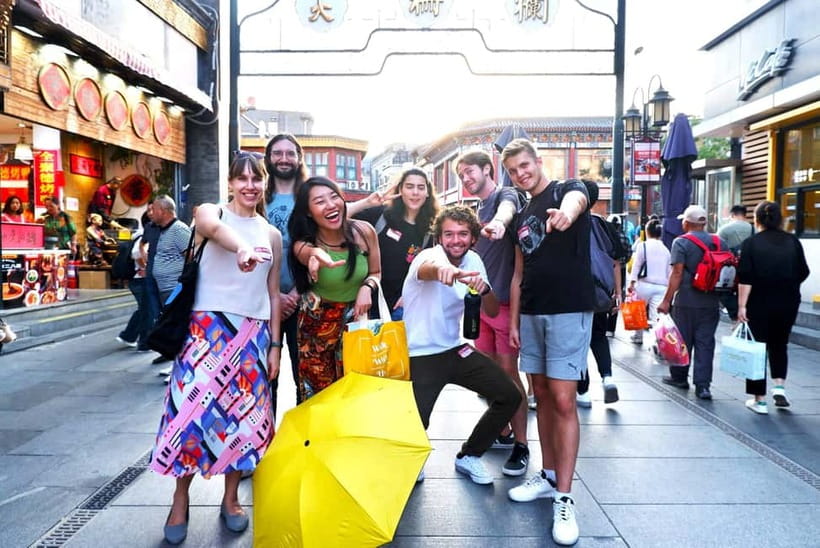
- Meet at the yellow umbrella: Find the group beside Hufangqiao Metro Station, Exit D, not by relying on Google Maps.
Why this walk gives you a useful first look at Beijing
Beijing can feel enormous and hard to read. Monumental avenues, imperial landmarks, shopping streets, and low-rise residential lanes all sit close together, but the connections are not always clear when you explore alone. This walk helps you see how the city’s old center fits together.
The route is not only about taking photographs. It deals with Beijing’s urban changes, the pressures facing hutongs, and the way daily life continues in older districts. That makes it a good first or second activity in the city, especially if you want context before visiting more formal sights.
I would not treat this as a substitute for a full tour of the Forbidden City or Tiananmen Square. The square is viewed from outside, and the focus is the surrounding neighborhood rather than long museum visits. Instead, think of this as a walking introduction to central Beijing, with a few hands-on cultural moments.
The activity has a 4.3 rating from 24 published ratings. The strongest praise centers on the guides and the amount of information packed into the walk. Guides named Shery and Carrie received particular credit for explaining both the past and the future plans for Beijing’s hutongs. One person found the experience less exciting than expected, so your enjoyment will depend partly on how much you like history, city walking, and local detail.
More Calligraphy and Craft Classes in Beijing
- Beijing Calligraphy Class
★ 4.9 · 112 reviews - Chinese Calligraphy Class for Small Group
★ 5.0 · 104 reviews - Beijing Historic City Guided Walking Tour + Calligraphy Creation
★ 5.0 · 59 reviews
Starting at Huguang Guild Opera Theatre
The meeting point is Hufangqiao Metro Station on Line 7, Exit D, the southwest exit. Once outside, walk straight to the main road, turn right, and continue about 60 meters east to the green space at the intersection. The group gathers near the east side of Huguang Guild Opera Theatre under a yellow umbrella.
Allow extra time. The directions warn that the station is large and that traffic can slow you down. Arrive five to ten minutes early. The guide can wait up to 20 minutes while giving the opening talk, but the walk cannot be held for late arrivals.
Google Maps is not reliable in China, so use the written directions. If you take a taxi, give the driver the corner of Hufang Road and Luomashi Avenue, or Huguang Guild Opera Theatre. The Chinese address is also provided for your convenience.
The first formal stop is Huguang Guild Opera Theatre, with about 30 minutes for a guided visit. This gives the tour a useful cultural opening rather than dropping you straight into a shopping district. The theatre connects Beijing’s modern streets with older performance traditions, and the guide sets up the larger story of how the city grew around imperial and commercial centers.
Reading Beijing through its hutongs
From the theatre, the walk moves into Beijing’s hutongs. These lanes are more revealing than grand avenues because they show how homes, shops, courtyards, and public life fit together at a human scale.
Your guide discusses the people who have lived through the city’s changes. The wording of the experience points to stories from locals who have survived in old neighborhoods, which suggests a focus on real social change rather than a polished postcard version of Beijing. You’ll hear about the tension between preserving traditional lanes and making room for modern development.
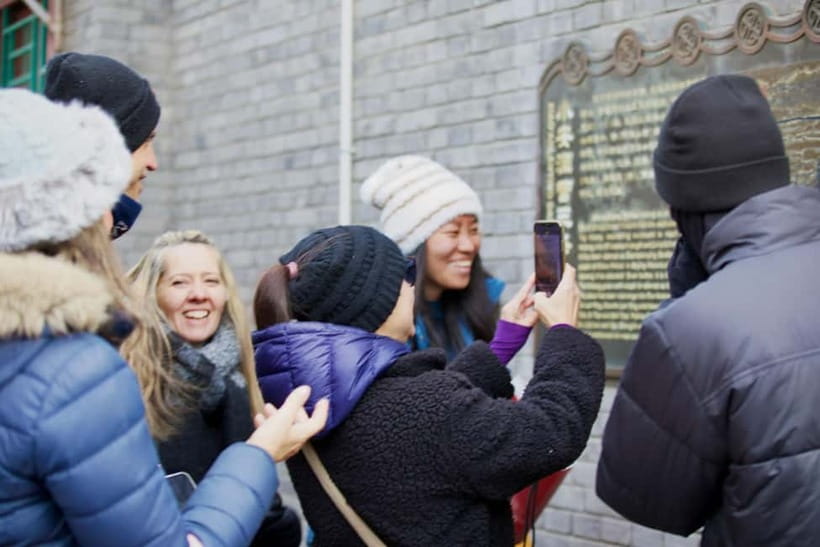
The route includes a visit to an authentic hutong courtyard. This is one of the most valuable stops for anyone who wants more than street views. A courtyard lets you see the type of shared residential space that gives hutongs their character, even if the visit itself is relatively short.
Keep your expectations sensible. The tour does not promise an extended home visit or a full architectural lecture. It offers about 20 minutes at the special stop, so the value comes from the guide’s explanation and the chance to see a less public side of the neighborhood.
Making calligraphy at the local studio
The calligraphy activity is the tour’s clearest hands-on feature. Rather than simply watching a demonstration, you create your own Chinese calligraphy artwork and take it home at no extra charge.
This matters because calligraphy is a practical way to remember the visual structure of written Chinese. You may not leave able to write fluently, but you will have a personal souvenir tied to the place and the activity. It also breaks up the walking with something quiet and focused.
The exact length of the calligraphy session is not listed separately, but it is included as part of the secret stop. If you especially want a long lesson, ask the guide what to expect on your chosen date. The activity is designed as an accessible introduction, not a specialist workshop.
The included China Survival Guide and welcome gifts add a little more usefulness. The snacks and drinks are also included, though the specific food is not guaranteed. Expect a short break with local street food rather than a sit-down meal.
Other old-lane walks in Beijing:
- Beijing Hutong Walking Food and Beer Tour at Hidden Restaurants
★ 5.0 · 1,132 reviews - Temple Heaven, Summer Palace, Lama Temple, Hutong Bus Tour
★ 4.7 · 319 reviews - Temple of Heaven, Summer Palace, Lama Temple, Hutong Tours
★ 5.0 · 311 reviews - Beijing Private Hutong Food Walking Tour
★ 5.0 · 299 reviews
Yangmeizhu Byway and Beijing’s old commercial streets
The route continues along Yangmeizhu Byway for roughly 30 minutes of guided walking. This is a good stretch for noticing the contrast between restored facades, traditional lanes, small businesses, and the pressure of modern redevelopment.
You’ll also pass a local antique shopping street. The tour is not advertised as an antique-buying excursion, so treat this as a chance to look around and hear the guide explain the area. If you shop, use normal caution and do not assume an attractive old-looking item is genuinely old.
Next comes Daguanlou Cinema, with about 20 minutes of guided attention. The stop is billed as the birthplace of Chinese cinema, giving the walk a different angle on Beijing’s cultural life. It is a short visit, so expect an exterior or focused explanation rather than a long cinema program.
These smaller stops are where a good guide makes the difference. Carrie was specifically praised for explaining Beijing’s past, present, and future planning, and that kind of comparison is useful here. You are not just seeing old buildings; you are being asked to consider what happens to them next.
Dashilar, snacks, and the narrowest hutong
The walk spends about 30 minutes in the Dashilar residential district. Dashilar combines old commercial traditions with daily residential life, making it a natural place for the tour’s local snack break.
The food stop is simple but helpful. Beijing sightseeing can become tiring, especially if you have been out since breakfast, and a snack with a local drink gives you a pause without taking time for a full restaurant meal. Specific snacks are not promised, so do not book this expecting a particular dish.
The route also includes a local hutong market and the narrowest hutong in Beijing. The narrow lane is a quick but memorable reminder that Beijing’s old neighborhoods were built around tight passages and shared spaces rather than wide modern roads.
Dashilar can be commercial and busy. That is part of its appeal, but it also means this section may feel less quiet than the residential hutongs earlier in the walk. If you prefer calm streets, enjoy the courtyard and smaller lanes most. If you want a mix of shopping, people-watching, and history, Dashilar gives the tour useful variety.
Qianmen Street and Zhengyang Gate
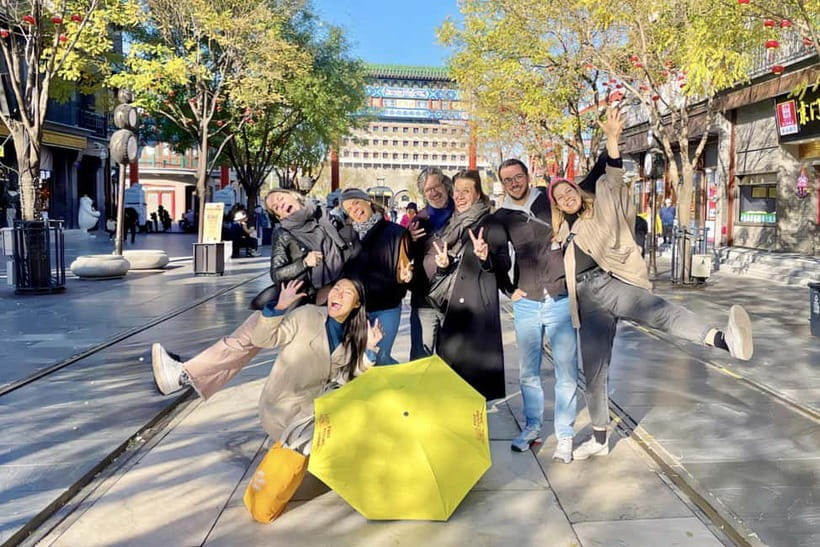
The final major section covers Qianmen Pedestrian Street for about 40 minutes. This is the longest individual stop, and it brings the route into one of central Beijing’s best-known public areas.
Qianmen shows a more polished, commercial side of the old city. The pedestrian street connects historic references with shops and heavy sightseeing traffic. Your guide can help explain what you are looking at, which is useful because the area can otherwise blur into a series of storefronts and photo stops.
The route also includes Zhengyang Gate and its Arrow Tower. These structures help explain the old city’s defensive layout and the importance of the southern approach to central Beijing. They provide a strong closing point because you can connect the narrow hutongs and market streets with the larger walled-city story.
You’ll finish with a view of Tiananmen Square from outside. This is an important distinction. The tour does not include entry into the square or a dedicated visit inside the major monuments. You get an exterior view and historical context, then the walk ends around the Qianmen area.
How much value do you get for $25?
The advertised cost is $25 per person. For 3.5 hours with an English-speaking guide, snacks and drinks, a courtyard stop, calligraphy artwork, and several central Beijing sights, the price can be reasonable if you want an organized introduction.
The value depends on what you would otherwise do. If you are comfortable navigating Beijing independently and already understand the hutong areas, you may prefer to explore on your own. You would save money, but you would also lose the local explanations and the planned calligraphy activity.
There is one point to clarify before paying. A published comment described the walk as effectively a free walking tour based on tips and felt that the platform price was too high. That does not match the stated $25 price, so ask the provider whether the booking fee covers the full experience and whether tipping is expected. Do not assume the advertised amount tells the whole story.
The strongest value comes from the guide, not from the number of landmarks. A good guide turns a simple walk into a lesson in urban change. If your guide is as engaging as Shery or Carrie were described, the price looks more convincing. If you want a private tour, a formal museum visit, or a long calligraphy class, this is probably not the right format.
Who should book this Beijing walking tour?
I would recommend it for first-time visitors who want to understand central Beijing before tackling the major imperial sights. It also suits solo visitors and couples who like meeting other people, since the walk is designed as a social group experience.
Families with older children may enjoy the mix of short stops, snacks, and calligraphy. The hands-on activity gives younger participants something to do besides listen. Still, the walk lasts 3.5 hours, so anyone who dislikes extended walking should plan accordingly.
This is especially useful if you want:
- A local English-speaking guide
- A quick introduction to Beijing’s hutongs
- A view of old and modern city planning
- A personal calligraphy souvenir
- A route combining famous streets and less formal neighborhood stops
It is less suitable if you want entry to Tiananmen Square, a full-day sightseeing program, a private group, or a detailed food tour. The experience covers many places, but most stops are guided visits of 20 to 40 minutes rather than long stays.
Wear comfortable shoes and bring water, even though snacks and drinks are included. Beijing traffic and the size of the metro station make an early arrival important. For the meeting point, trust the written directions and the yellow umbrella rather than a map pin.
Should you book it?
Book this walk if you want a friendly, story-led introduction to old Beijing with a calligraphy activity and a chance to see how hutongs fit into the modern city. The mix of Huguang Guild Opera Theatre, courtyard lanes, Yangmeizhu Byway, Dashilar, Qianmen, and the outside view of Tiananmen Square gives you a strong first orientation.
Before booking, confirm the payment and tipping arrangement. At $25, it is fair value when the guide is strong and you take part in the calligraphy and snack stops. I would choose it early in a Beijing visit, when the city still feels hard to decode and local context will improve the rest of your sightseeing.
FAQ
How long does the Beijing hutong and calligraphy tour last?
The tour lasts 3.5 hours.
What language is the tour conducted in?
The live tour is conducted in English by a local English-speaking guide.
Where does the tour begin?
It begins at Hufangqiao Metro Station on Line 7, Exit D, the southwest exit. Look for the yellow umbrella at the green space near Huguang Guild Opera Theatre.
How early should I arrive?
Arrive 5 to 10 minutes early. The metro station is large, and traffic may slow your journey.
Is Tiananmen Square visited?
The tour includes a view of Tiananmen Square from outside. Entry into the square is not listed as part of the activity.
Is calligraphy included?
Yes. You create Chinese calligraphy artwork at a local studio and take it home.
Are food and drinks included?
Yes. Snack breaks with local street food and drinks are included.
Does the tour visit a hutong courtyard?
Yes. The route includes a special visit to an authentic hutong courtyard.
Can I cancel the booking?
You can cancel up to 24 hours in advance for a full refund. Reserve now and pay later is also available.
More walking tours in Beijing
- Private Beijing Walking Tour of the Forbidden City with 7 Options
★ 5.0 · 675 reviews - Forbidden City Private Walking Tour with Optional Sights
★ 5.0 · 400 reviews - Beijing: Hutong Culinary Walking Tour with 15+ Tastings
★ 5.0 · 162 reviews - Beijing City Walk: Explore Hutongs Life and Old Beijing
★ 5.0 · 146 reviews
New reviews from Beijing
- Mutianyu Wall, Summer Palace & Old Summer Palace Day Tour★ 4.8 · 34 reviews
- Night Market Haggling Adventure with an English Guide!★ 4.8 · 7 reviews
- BusDa-Mutianyu Great Wall&Forbidden City Full-day Coach Tour★ 4.9 · 11 reviews
- Mutianyu Great Wall Ticket with Roundtrip Cable Car★ 5.0 · 20 reviews
- Mutianyu Great Wall Bus Trip+Ticket 7/8/9/10/13/13:30/15:30★ 4.7 · 24 reviews
- Mutianyu Great Wall Entry Ticket Chairlift Up Toboggan Slide★ 4.9 · 8 reviews
- Mutianyu Great Wall 5-KM Guided Hike with Uphill Cable Car★ 4.8 · 16 reviews
- Mutianyu Great Wall Admission Ticket★ 3.6 · 7 reviews
Hutong Tours, compared.

Beijing Hutong Walking Food and Beer Tour at Hidden Restaurants
Read our review →
Temple Heaven, Summer Palace, Lama Temple, Hutong Bus Tour
Read our review →
Temple of Heaven, Summer Palace, Lama Temple, Hutong Tours
Read our review →

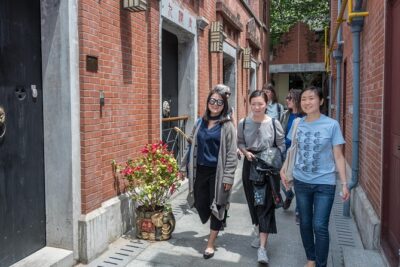
Beijing City Walk: Explore Hutongs Life and Old Beijing
Read our review →Browse the lists this tour appears in