
Reviewed · TOURS IN LHASA
Panorama Multi Day Tour in Tibet
Everest Base Camp is only one part of this 11-day Tibetan circuit. You also get Potala Palace and Jokhang Temple in Lhasa, high passes, glacier views, sacred lakes, monasteries, and forested valleys near Nyingchi. I like the small maximum of 10 people, and I like that the price includes hotels, attraction tickets, the Tibet Travel Permit, breakfast, and licensed transport.
The main concern is the pace. You cross several very high passes, spend long hours on rough roads, and move between Lhasa, Nyingchi, Shigatse, Tingri, and back again. Altitude and road conditions matter here, so this suits you best if you have moderate fitness and can handle early starts, long drives, and a tightly packed schedule.
Key points to know before booking
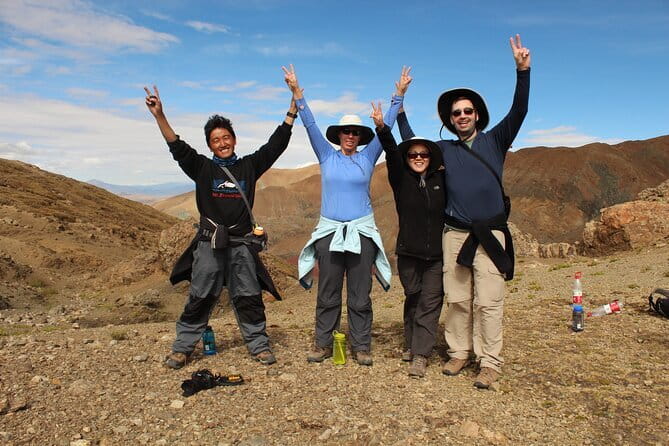
- Small group of up to 10: The VIP plan aims to leave more than 30 percent of bus seats empty, giving you more room on long drives.
- Everest is paired with major Tibetan sights: Potala Palace, Jokhang Temple, Yamdrok Lake, Karola Glacier, Tashilunpo Monastery, and Namtso Lake all appear on the route.
- High-altitude travel is built in: The route crosses passes at 4,515, 4,960, 5,013, and 5,190 meters.
- Four-star city-center hotels: Lodging is described as being within 1 to 3 kilometers of Potala Palace and Jokhang Temple.
- Permit and medical support are included: The agency arranges the Tibet Travel Permit and provides an exclusive team doctor.
- Check the meal wording carefully: Breakfast is included, but the package details conflict on dinner, so confirm exactly what is covered before paying.
Why this route works for a first Tibet trip
This tour packs a great deal into 11 days. You start with Lhasa’s spiritual core, travel east through river valleys and forests, then turn west toward Shigatse and Everest. The final stretch returns you to Lhasa through northern Tibet and Namtso Lake.
That broad route is the strongest reason to consider it. You are not spending the whole trip in one city or seeing only the standard Lhasa sights. You get several very different parts of Tibet: urban religious centers, open grassland, mountain passes, glaciers, forests, and the high plateau around Everest.
The tradeoff is time in the vehicle. Some days list six hours of touring, but the actual experience includes transfers between distant places. Day 7 is especially demanding, with a rough road from Tingri toward Rongbuk and road construction noted along part of the way. This is not a relaxed hotel-and-sightseeing holiday.
The group limit helps. A maximum of 10 people is small enough to make loading the bus, handling permits, and stopping for photos less awkward than on a large coach. The promise of more than 30 percent of seats remaining empty also matters on the long drives, though you should confirm how that seating plan is applied to your departure.
What else travellers book in China:
- From Beijing: Mutianyu Great Wall Tours with Options
★ 4.9 · 9,216 reviews - Beijing: Forbidden City Tour(Group/Private)-Tickets Included
★ 4.8 · 7,974 reviews - Beijing: T-Square & Forbidden City Group or Private Tour
★ 4.8 · 4,446 reviews
Lhasa begins with a gentle landing
On arrival in Lhasa, your guide meets you in the airport arrival hall and transfers you to the hotel. You buy your own flight, but the agency can recommend suitable flights and help with international transportation arrangements.
The first day is mainly for arrival and settling in. That is useful in a high-altitude destination. You are not thrown straight into a full sightseeing schedule, although the itinerary lists about six hours for the arrival day.
Your hotel is described as a standard four-star property in the city center, within 1 to 3 kilometers of Potala Palace and Jokhang Temple. That location should make independent walks easier during free time, but the exact hotel is not named, so ask before booking if room location or hotel facilities are important to you.
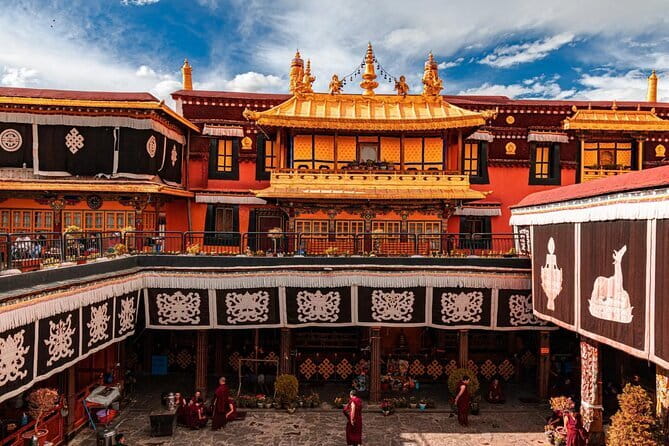
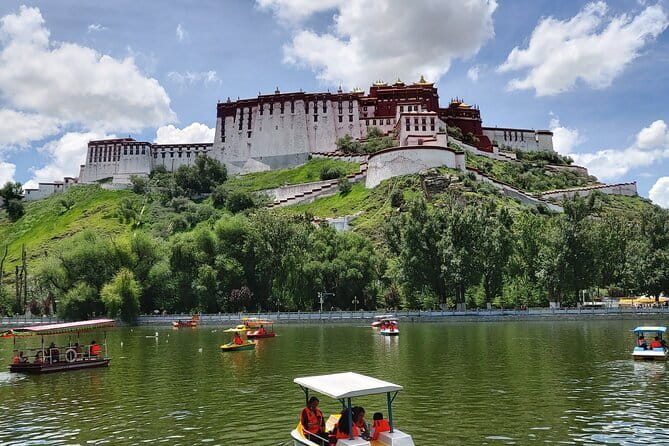
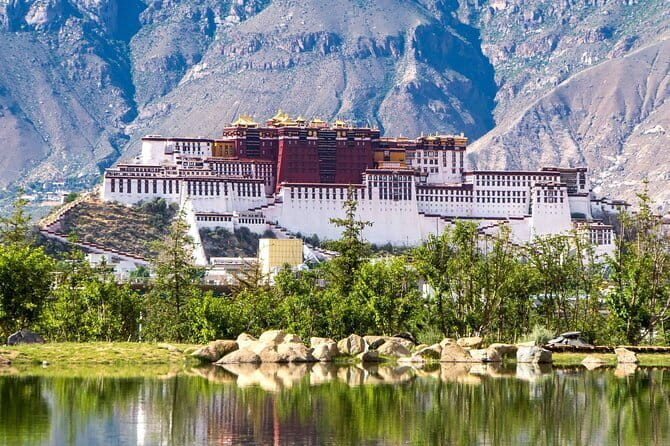
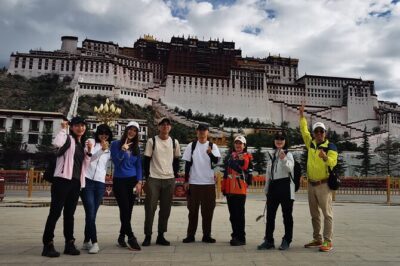
Day 2 brings the tour’s essential Lhasa sights. Potala Palace takes about three hours and includes admission. This enormous palace complex was the residence of the Dalai Lamas and a center of religious and political authority in Tibet. The visit is a major highlight, but expect stairs, altitude, and a structured visit rather than a casual stroll.
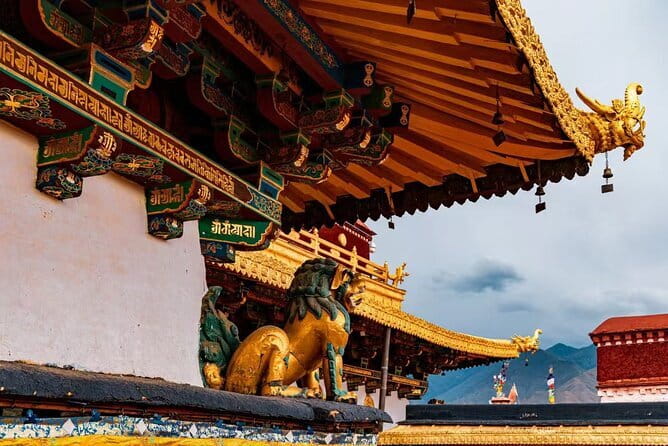
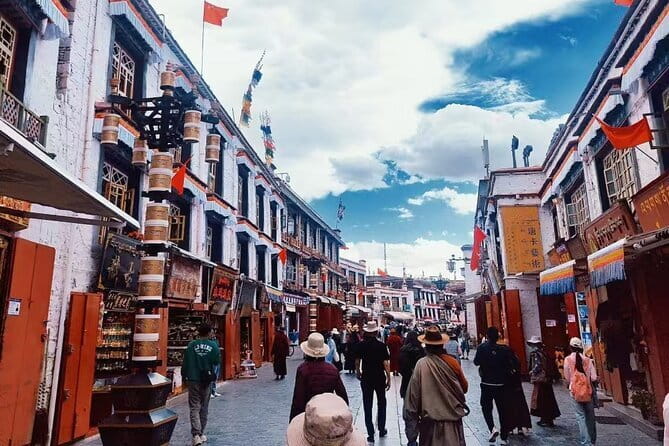
In the afternoon, you visit Jokhang Temple, another three-hour stop. Its design reflects Tibetan, Tang, Nepalese, and Indian influences. Afterward, Barkhor Street gives you time to walk clockwise around the temple, browse local handicrafts, or simply watch the flow of pilgrims and daily city life.
I like this day because it balances famous architecture with time on foot. You should avoid treating Barkhor Street as just a shopping stop. The walking route around Jokhang is part of the religious experience, and the guide can help you understand what you are seeing.
Eastern Tibet brings forests and high passes
Day 3 takes you east from Lhasa along the Nyang River toward Basomtso Lake, also written as Cuogao Lake in the schedule. You cross Mila Mountain Pass at 5,013 meters before descending toward the Nyingchi area.
The lake stop is paired with a drive through the Nyang River Valley. You then continue to Nyingchi, called the Throne of the Sun in Tibetan. This section changes the feel of the trip. Instead of the dry, open plateau around Lhasa, you see river country and forest.
Day 4 moves toward Lulang and Nnamjagbarwa Mountain. The drive from Nyingchi to Lulang is about 100 kilometers and takes roughly two hours, with a crossing of Segrila Mountain at 4,515 meters.
The mountain view depends heavily on weather, so keep expectations sensible. You may get a clear look at Nnamjagbarwa, or clouds may hide it. The same applies to many of the grand views on this route. The tour gives you access to the right places, but mountain weather controls the final picture.
Lulang Forest and Lulang Pasture offer a softer contrast to the high passes. The schedule describes pristine forest, mountain meadows, and a place associated with gods. The appeal here is the change in scenery and pace, although the day still involves considerable driving.
Day 5 focuses on Kadinggou Scenic Spot, also called Kadanggou Waterfall. The area has gorge scenery, steep mountains, deep valleys, and primitive forest. The stop is listed at about six hours, making it one of the longer nature days.
This eastern section is a good reason to choose the full circuit instead of a simple Lhasa and Everest trip. You see a side of Tibet that is easy to miss if you rush straight to the west. The drawback is that you spend several consecutive days moving through the region, with less free time than you would have on a slower custom itinerary.
Yamdrok Lake and Shigatse turn the route west
Day 6 heads west through the Nyangchu Valley toward Yamdrok Lake, Karola Glacier, and Shigatse. Yamdrok is one of Tibet’s best-known sacred lakes, while Karola Glacier appears as a roadside stop at about 4,960 meters.
The high elevation makes this a photo-rich but physically demanding day. Even if you are not hiking far, altitude can affect you while getting on and off the bus. Take the guide’s instructions seriously, move slowly, drink water, and do not mistake a short walk for an easy one.
Shigatse is Tibet’s second-largest city and an important religious center associated with the Panchen Lama. You spend the night in the area before continuing toward Everest. That overnight break also divides the Lhasa sightseeing portion from the remote western section.
Same city, a completely different day:
- Beijing: Mutianyu Great Wall Daily Tour with Ticket & Lunch
★ 5.0 · 3,056 reviews - All-Inclusive Tour: Tiananmen Square, Forbidden City, Great Wall
★ 5.0 · 2,873 reviews - MuBus: Mutianyu Great Wall ENG/ESP/RUS Guided Bus Tour
★ 5.0 · 2,361 reviews - 4-Hour Small Group Tour to Forbidden City with Entry Tickets
★ 5.0 · 1,863 reviews
Tingri and Everest require realistic expectations
Day 7 takes you west on the Friendship route to Tingri, then toward the Qomolangma National Nature Preserve and Rongbuk. The schedule warns of a rough stretch of about 90 kilometers and road construction between Tingri and Rongbuk.
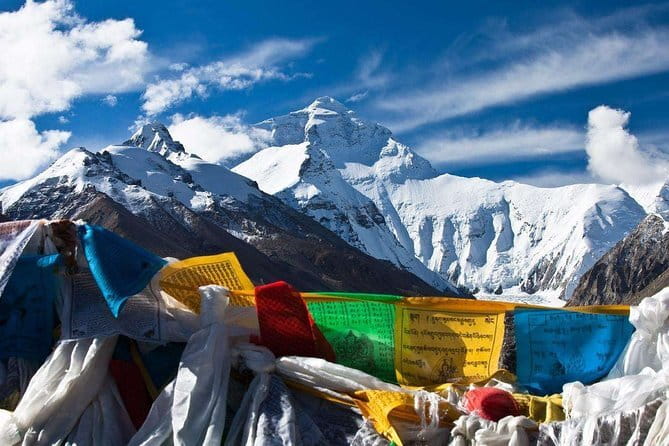
This is the tour’s toughest road day. You cross grassland, rivers, and high mountain country, and clear weather may reveal several peaks above 8,000 meters. You should bring patience, warm layers, snacks, and any personal medication you need during a long transfer.
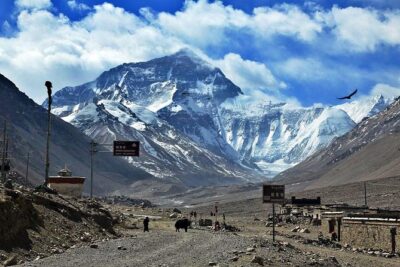
The base camp area is not a polished resort. The access road is rough, and the final approach uses a local bus for about half an hour. That detail is useful because it sets the right expectation: you are coming for the mountain setting and the scale of Everest, not for comfort at the end of the road.
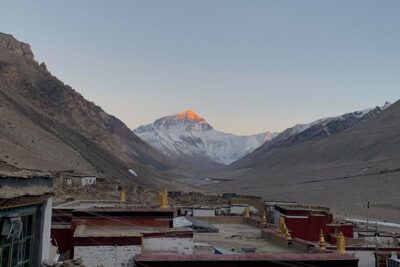
Day 8 begins early for sunrise views from Rongbuk and another look at Mount Everest. You then travel by local bus to Everest Base Camp. The experience can be extraordinary in clear weather, but clouds and wind may limit the view.
This is also where the itinerary feels most compressed. You reach Everest after a hard approach, spend time in the area, and then continue with the wider circuit. If Everest is your one absolute priority, ask how much time is available at the base camp on your departure date. If you want a broad introduction to Tibet, the balance is more appealing.
Monasteries and northern grassland close the loop
Day 9 includes Tashilunpo Monastery before the roughly four-hour drive back toward Lhasa from Shigatse. Tashilunpo is one of western Tibet’s largest monasteries and an important historic site.
The monastery helps keep the final stretch from becoming only a return transfer. You get one more major religious site after the intensity of Everest. Allow time for the scale of the complex and for the visit to feel different from Jokhang Temple in central Lhasa.
Day 10 turns north to Namtso Lake. The route crosses wide grassland and follows the Qinghai-Tibet Highway, with a pass reaching 5,190 meters. Prayer flags and open plateau views define the day.
Namtso is another major scenic stop, but the elevation is serious. This is not the place to plan an energetic hike unless your guide says conditions are suitable. The value lies in the setting, the journey across northern Tibet, and the contrast with the forests near Nyingchi.
On Day 11, you check out after breakfast and transfer to Lhasa Airport or the train station. If you are continuing by train, the agency can help with arrangements, but transportation tickets are not included in the tour price.
What the $1,679 price really covers
At $1,679 per person, the price is easiest to judge as a package rather than as a daily sightseeing rate. It includes 10 nights of four-star accommodation, attraction tickets, licensed tourist-bus transport, breakfast, travel agency liability insurance, vehicle seat insurance, and the Tibet Travel Permit.
The permit is especially important because independent access to Tibet involves extra arrangements. Having the local agency handle it removes a major planning task. The stated team doctor is another useful feature for a route that reaches several extreme elevations, though you should still carry your own prescribed medication and tell the agency about medical needs before departure.
There are extra costs. Lunches and dinners are generally listed as excluded, and the agency can recommend places to eat. However, the inclusion section also lists dinner, so ask for a written meal breakdown. A single-room supplement is about $25 per day, and your international transportation or flight to Lhasa is not included.
Early booking may reduce the price, and group bookings may qualify for additional discounts. Since the tour requires a minimum number of people, confirm the departure status before making nonrefundable travel plans.
Who should book this Tibet circuit
I would choose this tour if you want a wide first look at Tibet and prefer having permits, transport, hotels, and major admissions arranged in one package. It is particularly useful if Everest Base Camp matters to you but you also want Lhasa, Shigatse, Namtso, and eastern Tibet.
It is less suitable if you want slow mornings, long independent walks, luxury hotels, or a custom pace. The four-star lodging is a practical middle ground, not a promise of high-end resort service. The route also demands moderate fitness and tolerance for high passes, early departures, rough roads, and changing weather.
The agency’s handling of complicated private arrangements has drawn specific praise for Gloria, also known as Xue Yang, who was described as patient with repeated itinerary, hotel, and special-arrangement changes. That is encouraging if you need help before departure, though confirm who will manage your particular booking and who your on-road guide will be.
Should you book it?
Book this tour if you want the major Tibetan sights in one well-organized route and can accept long drives and high altitude. The combination of a small group, permit support, a doctor, four-star hotels, and a broad itinerary gives the price real value.
Skip it if your priority is a slow, deeply personal stay in one region. Before paying, confirm the dinner policy, exact hotels, departure minimum, Everest Base Camp timing, and the amount of free time in Lhasa. Those details will tell you if this ambitious route matches your travel style.
FAQ
How long is the Panorama Multi Day Tour in Tibet?
The tour lasts approximately 11 days, beginning and ending in Lhasa.
What is the maximum group size?
The group has a maximum of 10 people. The VIP plan also states that more than 30 percent of seats remain empty.
Is the Tibet Travel Permit included?
Yes. The Tibet Travel Permit is included in the tour price.
Are flights or international transportation included?
No. International transportation is not included. You buy your flight to Lhasa yourself, although the agency can recommend flights and help with bookings.
Which major attractions are included?
The route includes Potala Palace, Jokhang Temple, Barkhor Street, Basomtso or Cuogao Lake, Nyingchi, Nnamjagbarwa Mountain, Lulang Forest, Kadinggou, Yamdrok Lake, Karola Glacier, Shigatse, Everest Base Camp, Tashilunpo Monastery, and Namtso Lake.
What type of accommodation is provided?
The package includes four-star hotels throughout the tour. The city-center hotels are described as being within 1 to 3 kilometers of Potala Palace and Jokhang Temple.
Are meals included?
Breakfast is included for eight days. The supplied package information also lists dinner as included but separately says lunches and dinners are excluded, so confirm the exact meal plan before booking.
What is the cancellation policy?
You receive a full refund if you cancel at least six full days before the start time. Cancellation two to six full days ahead receives a 50 percent refund, while cancellation within two days is nonrefundable. If the operator cancels because the minimum number of people is not reached, you can receive a full refund or choose another option.
New reviews from China
- Shanghai To Beijing Bullet Train Ticket with Local Private Transfer★ 5.0 · 12 reviews
- Shanghai Spicy Food Tour★ 5.0 · 3 reviews
- Shanghai Uncommon Historic Sites Tour★ 5.0 · 3 reviews
- Shanghai Pudong airport transfer to Disneyland:Private with Meet & Great service★ 5.0 · 3 reviews
- Shanghai Tower Observation Deck 118 floor Tickets Pre-booking.★ 5.0 · 4 reviews
- Pudong Airport to Hangzhou: Private with Meet and Greet Service★ 4.5 · 4 reviews
- Private Transfer: Hotel to Shanghai Wusongkou Cruise Terminal (Baoshan Port)★ 3.5 · 6 reviews
- Shanghai Pudong International Airport (PVG) to Shanghai Hotel★ 5.0 · 4 reviews
Tours in Lhasa, compared.
Tibet Tour 8 Days Lhasa to Everest Base Camp Small Group Tour
Read our review →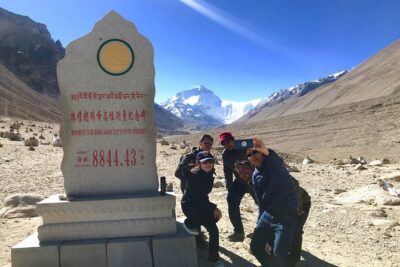
7 Days Lhasa to Kathmandu Overland Small Group Tibet Tour via EBC
Read our review →
8 Days Lhasa Gyantse Shigatse Mt Everest Group Tour
Read our review →
Private Guided Day Tour Potala Palace and Sera Monastery
Read our review →
15 Days Mt Everest and Mt Kailash Kora Pilgrimage Group Tour
Read our review →Browse the lists this tour appears in