
Reviewed · TOURS IN LHASA
15 Days Mt Everest and Mt Kailash Kora Pilgrimage Group Tour
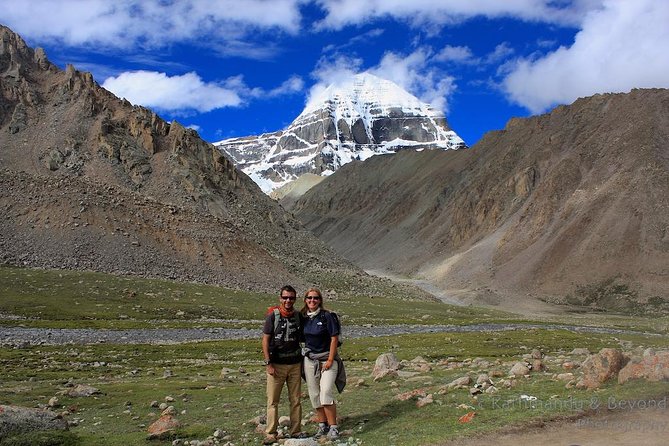
The big draw here is the rare combination of Everest Base Camp and the three-day Mt Kailash kora in one organized route. You begin among Lhasa’s great monasteries and palaces, then cross high passes, sleep in remote areas, and walk around one of Tibet’s most sacred mountains.
I like two things right away: the tour handles the hard paperwork and transport, and the group size is limited to 12 people. The price of $2,280 also covers a surprising amount, including accommodation, entrance fees, permits, emergency oxygen, a sleeping bag, and the Kailash shuttle buses. The main catch is serious: this is a high-altitude trip with long road days and a strenuous trek over the 5,630-meter Dromala Pass.
Key points to know before booking
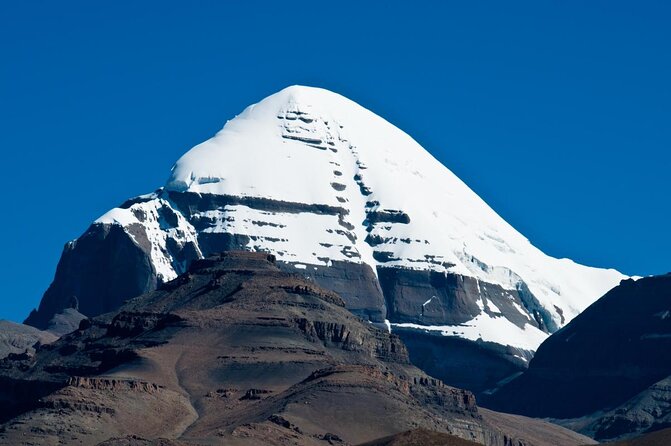
- Everest and Kailash in one trip: You reach Everest Base Camp, then continue west for the three-day kora around Mt Kailash.
- Lhasa is more than a starting point: Potala Palace, Jokhang Temple, Drepung Monastery, Sera Monastery, Norbulingka, and the Tibet Museum fill the opening days.
- Altitude is the real test: The route crosses passes above 5,000 meters, including Dromala Pass at 5,630 meters.
- Small-group logistics: A maximum of 12 people, an English-speaking local guide, licensed vehicle, driver, permits, and airport transfers are included.
- Accommodation changes often: Expect hotels, guesthouses, and nomad tents rather than one standard level of comfort.
- Plan early: Tibet permits take about 12 working days, and solo bookings should be made more than 50 days ahead.
Why this Tibet route is such a big undertaking
This is not a relaxed sightseeing holiday with a few mountain views added on. It is a long overland journey through Tibet, designed around two major goals: seeing Mt Everest and completing the Kailash pilgrimage walk.
The route begins in Lhasa and heads through Shigatse, Gyantse, Tingri, Everest country, Saga, and the Kailash region before returning to Lhasa. You spend many hours in the vehicle, often on high roads with few services. That travel time is not wasted, but you need to be comfortable with slow progress and basic conditions.
The price is strong for what is included. At $2,280 per person, you get 14 nights of organized transport and lodging, entrance fees, an English-speaking guide, the required Tibet permits, airport or railway transfers, daily bottled water, emergency oxygen, and a sleeping bag. Breakfast is included on 10 mornings. Flights or trains to Tibet, insurance, personal spending, optional sights, and anything not listed remain your responsibility.
The tour has a maximum of 12 people, which matters here. A large coach would make the remote sections harder, while a small group gives you a better chance of keeping the route together when conditions change. It also lets you share the cost of an expensive and complicated journey.
What else travellers book in China:
- From Beijing: Mutianyu Great Wall Tours with Options
★ 4.9 · 9,216 reviews - Beijing: Forbidden City Tour(Group/Private)-Tickets Included
★ 4.8 · 7,974 reviews - Beijing: T-Square & Forbidden City Group or Private Tour
★ 4.8 · 4,446 reviews
Lhasa gives you three useful days to adjust
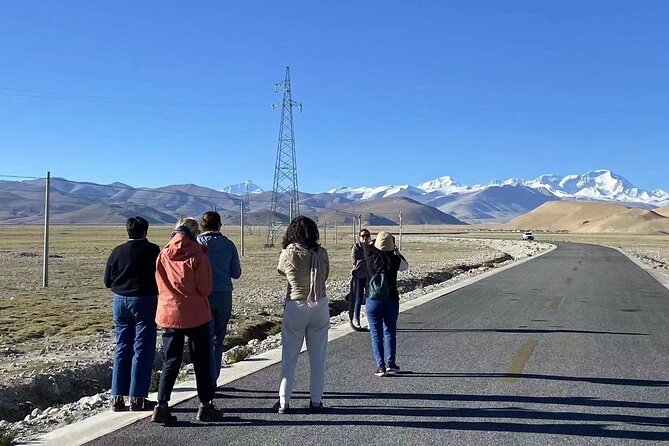
Your first day is intentionally simple. You are collected at Lhasa Gonggar Airport and transferred to your hotel. Pickup times are listed at 9:30 a.m., 1 p.m., and 4 p.m., so check your arrival carefully before booking flights.
The quiet first day matters because Lhasa sits at high altitude. No sightseeing is scheduled, giving you time to rest, drink water, and get used to the air before the route becomes more demanding.
Day two starts with Drepung Monastery, one of the great Gelug monasteries of Tibet. Allow about two hours here. The visit gives you an early look at Tibetan Buddhist religious life before the route moves to the Tibet Museum.
The museum focuses on daily life, clothing, house design, festivals, and local customs. It is a useful stop because it provides context for the places you will see later. Norbulingka follows in the afternoon. This Tibetan-style royal garden served as the Dalai Lama’s summer residence and offers a change from the heavy stone and religious interiors of the monasteries.
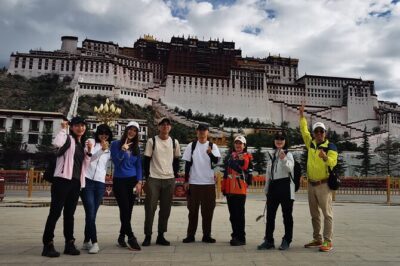
Day three brings Lhasa’s best-known sights. You spend about two hours at Potala Palace, the former winter palace of the Dalai Lama and the city’s defining landmark. Expect stairs and a formal visit schedule, though the supplied details do not specify the exact entry time.
After lunch, you visit Jokhang Temple. Built in the seventh century, it is considered the most sacred temple in Tibet. The temple is especially known for its statue of Buddha at age twelve. You then have time on Barkhor Street, where pilgrims circle the temple and shops sell Tibetan souvenirs.
The Lhasa program is well judged, but the schedule is full. Drepung, the museum, and Norbulingka on one day, followed by Potala Palace, Jokhang Temple, and Barkhor Street the next, gives you plenty to absorb. You should not expect much unplanned time during these sightseeing days.
Yamdrok Lake and Gyantse begin the long road west
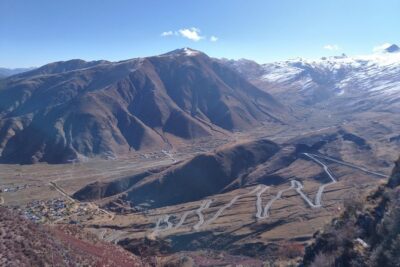
Day four is your first major road day. You leave Lhasa for Shigatse and stop at Yamdrok Lake, a sacred body of water known for its striking mountain setting. The stop lasts about an hour, enough for views and photographs rather than a long lakeside visit.
You also pass the Karola Glacier, seen from the roadside about 300 meters from the main highway on the way to Gyantse. This is a good example of how the route works: some sights are visited on foot, while others appear as part of the drive.
In Gyantse, Pelkor Chode Monastery is the main stop. Its architecture, murals, and statues are the reason to spend two hours here. This visit adds variety after the major Lhasa sites, with a more remote setting and a different sense of scale.
The day ends in Shigatse, one of the route’s major towns. You should expect a long transfer day, not a leisurely excursion. The reward is the gradual change from the city environment of Lhasa to the open high-country route ahead.
Day five starts at Tashilhunpo Monastery, the home of the Panchen Lama. You then drive through Lhatse and on toward Tingri. The schedule includes Tsola Pass at 4,600 meters and Gyatsola Pass at 5,248 meters before you enter Mt Everest National Nature Reserve.
This is one of the longest days, listed at about 10 hours. You reach the Everest area in the late afternoon, when weather and visibility will determine how much of the mountain you see. Keep your expectations sensible. Everest views are never guaranteed, even with a carefully planned route.
Everest Base Camp is a highlight, not a comfort stop
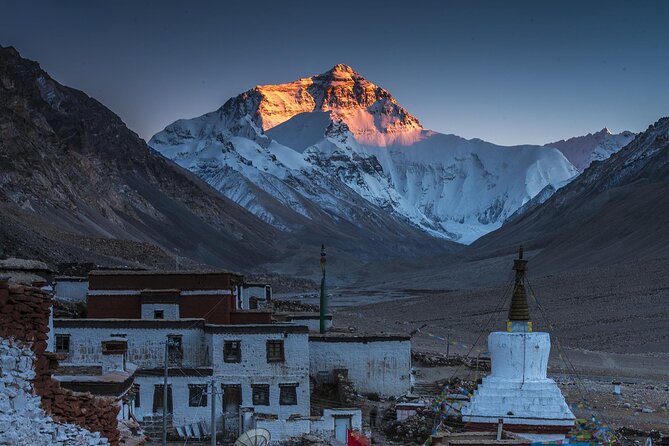
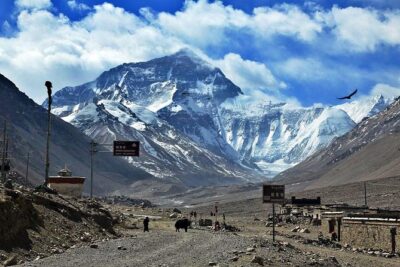
The Everest section is one of the tour’s strongest features. You camp at Everest Base Camp, with accommodation that may be in a nomad tent rather than a conventional hotel. The setting is the point, but comfort will be basic.
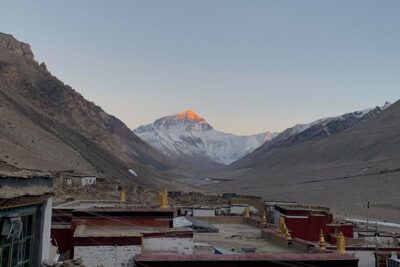
If the weather is clear, you can get up early for sunrise views at Everest Base Camp. Early light can be the best time for mountain visibility, but this is also a cold and demanding start at high altitude. Bring warm layers and keep your camera ready, since conditions may change quickly.
Day six continues toward Saga. Along the way, you may see Shishapangma, one of the world’s fourteen highest peaks, at 8,012 meters. You also stop at Peikucuo Lake, with about two hours listed for the stop.
This road section is visually important, but it is not packed with formal attractions. Much of your day is spent watching the scenery change through the vehicle window. If you prefer a trip with frequent short stops, this route may feel slow. If you enjoy remote roads and huge mountain views, the long drives are part of the experience.
Same city, a completely different day:
- Beijing: Mutianyu Great Wall Daily Tour with Ticket & Lunch
★ 5.0 · 3,056 reviews - All-Inclusive Tour: Tiananmen Square, Forbidden City, Great Wall
★ 5.0 · 2,873 reviews - MuBus: Mutianyu Great Wall ENG/ESP/RUS Guided Bus Tour
★ 5.0 · 2,361 reviews - 4-Hour Small Group Tour to Forbidden City with Entry Tickets
★ 5.0 · 1,863 reviews
The three-day Kailash kora is the demanding centerpiece
Day seven takes you toward Mt Kailash. The program warns that you will spend a lot of time on the road, with views of the Himalayas to the south and the Trans-Himalayan range to the north.
That long approach is useful preparation for the kora. Mt Kailash is sacred to several religions, and the walk around it is not presented as an ordinary mountain hike. The religious meaning is central, even if you join mainly for the scenery or physical challenge.
On day eight, an included eco-bus takes you to Sarshung Valley. From there, you begin the trek and meet porters and yaks. The cost of hiring yaks and horses is not included, so confirm current charges and decide what support you may need before the walking begins.
The first day of the kora is already a serious test because of the altitude. The route information does not give a total distance for this day, so you should ask the operator for the daily walking distance and expected walking hours before you commit.
Day nine is the hardest day. You climb to Dromala Pass at 5,630 meters, take a short break at the top, then descend into a long valley and stop for lunch. The height is the key fact here. Strong physical fitness is required, and even fit people may find the pass difficult.
You should not treat the kora as a casual guided walk. The itinerary includes support from porters and yaks, but it does not remove the effects of altitude, cold, uneven ground, or a long ascent. Ask your doctor about high-altitude travel if you have any health concerns.
Day ten is easier by comparison. You walk about 9 kilometers to complete the kora, then take the eco-bus back to Darchen. Buddhist tradition holds that one circuit around a holy mountain can remove sins, so the walk has a spiritual purpose as well as a physical one.
The route then turns back toward the east. Lake Manasarovar is listed as the day’s stop, adding another major sacred site to the pilgrimage portion of the tour.
The return route adds monasteries and open country
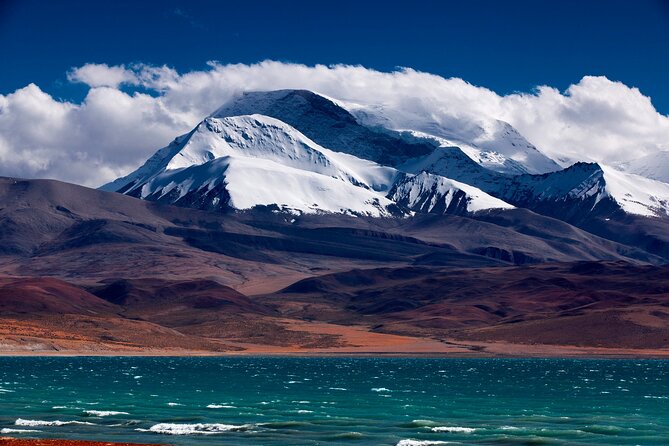
Day eleven includes a long drive from the Zhongba area toward Lhatse. There are no major named attractions on this stretch, but you cross seven high mountain passes and pass unnamed lakes and rivers.
This is another day when the road itself is the experience. The schedule uses Mt Kailash as the stop heading, but the practical focus is the return drive. You should be ready for a full vehicle day with fewer formal visits.
Day twelve takes you through Sakya County to Sakya Monastery. The monastery is associated with the Sakyapa school of Tibetan Buddhism and was built in the 1360s. Its enclosing walls and historic setting make it a worthwhile stop on the return route.
You then continue toward Shigatse. This breaks up the long return and gives you another substantial monastery visit after the physical effort of the kora.
On day thirteen, you drive from Shigatse to Lhasa by the northern route. The road follows the Yarlung Tsangpo valley, and in Nyemo you may visit a Tibetan incense workshop.
The workshop is a small but useful detail in the program. It shifts attention from grand religious buildings to a traditional craft. Tunba Town is listed as the day’s stop, but this remains mainly a return journey.
Day fourteen is free time in Lhasa. No fixed sightseeing is planned, which is welcome after so many road days. You can use the time for rest, shopping, or a final walk around the city, though any additional group activity needs approval from the other members and the guide.
Your final day includes transfer to Lhasa Gonggar Airport or the railway station. Drop-off times are listed at 8:30 a.m., 12:30 p.m., and 2:30 p.m. The route also provides Lhasa railway station transfers on the first and last day, so this can work for either a flight or train departure.
Accommodation changes with the terrain
You should read the accommodation promise correctly. It covers hotels, guesthouses, and nomad tents, not one uniform hotel standard for the full 15 days.
Hotels are likely to be most useful in Lhasa and larger towns. Remote areas require simpler lodging, and the Everest section includes camping. A sleeping bag is supplied, which helps, but you should still pack warm clothing and personal sleep items you rely on.
The tour supplies two bottles of mineral water per person per day. That is useful, but you should not assume it covers every drink or personal need during long road days. Breakfast is included on 10 days, while other meals are not specified as included, so budget for lunches and dinners.
A licensed vehicle covers the route, with parking and fuel included. The driver’s food and lodging are also covered. Emergency oxygen is provided, but that should be viewed as a safety measure, not as a solution to altitude sickness.
Permits and timing can make or break the trip
You need to provide passport copies and a China visa in advance, unless you enter Tibet from Kathmandu under the Tibet Group Visa process arranged through the Chinese Embassy in Kathmandu.
The Tibet Tourism Bureau permit often takes about 12 working days. If documents arrive late, an extra fee of $50 to $80 per permit may apply. Book at least 12 working days before departure if you are joining an existing group, and solo visitors should book more than 50 days ahead.
If you fly into Tibet from mainland China, the original permit must be sent to your hotel in China. If you take a train into Tibet, a printed copy is needed and can be sent by email. These details matter, so do not leave transport and paperwork until the last minute.
The tour is non-refundable and cannot be changed after booking. That is a major financial risk for a route affected by permits, weather, health, and possible force majeure changes. Read the conditions carefully and arrange suitable insurance, since insurance is not included.
Who should book this $2,280 tour?
I would consider this tour if you want Everest and Kailash in one organized trip and do not want to manage Tibet permits, remote transport, lodging, and border-region planning yourself.
It suits you best if you are physically fit, comfortable with basic accommodation, patient during long drives, and willing to follow a group schedule. It is also a good match if you value major cultural sites, remote mountain scenery, and pilgrimage routes more than comfort or free time.
I would hesitate if you dislike high altitude, camping, shared group decisions, or long days in a vehicle. The Dromala Pass is not a minor detail, and the route offers no easy way to turn the Kailash walk into a simple sightseeing stop.
At $2,280, the value is strong because the price gathers together permits, transport, entrance fees, guide services, accommodation, emergency oxygen, a sleeping bag, and airport transfers. You still need to add international or domestic transport, meals not covered, insurance, personal expenses, and possible single-room charges.
Book it if the Kailash kora is your main goal and you accept the physical demands. Skip it if you want a soft introduction to Tibet. This is a serious high-altitude pilgrimage and mountain journey, with Lhasa’s cultural sights providing the opening chapter rather than the whole story.
FAQ
How long is the tour?
The tour lasts approximately 15 days, beginning with pickup at Lhasa Gonggar Airport and ending with transfer to Lhasa airport or the railway station.
What is the maximum group size?
The group can include a maximum of 12 people.
Is airport pickup included?
Yes. Pickup from Lhasa Gonggar Airport is included, with listed pickup times at 9:30 a.m., 1 p.m., and 4 p.m. on the first day.
Is the return transfer included?
Yes. Transfers to Lhasa Gonggar Airport are listed at 8:30 a.m., 12:30 p.m., and 2:30 p.m. on the final day. Transfers to and from Lhasa Railway Station are also included on the first and last day.
Are Tibet permits included?
Yes. The necessary Tibet permits and express delivery of the Tibet Travel Permit are included, subject to receiving the required documents on time.
What documents must I provide?
You need to provide copies of your passport and China visa in advance. If you enter Tibet from Kathmandu, the operator can help arrange the Tibet Group Visa process.
Is the Mt Kailash eco-bus included?
Yes. The shuttle bus to Kailash and the return shuttle are included. The listed cost is $10 per person each way.
Are horses and yaks included?
No. The cost of hiring yaks, horses, and related support is not included.
Is food included?
Breakfast is included on 10 days. Other meals are not listed as included, so you need to budget for personal meals.
Do I need to be physically fit?
Yes. The tour specifies that you need a strong level of physical fitness. The most demanding section is the climb over Dromala Pass at 5,630 meters during the Kailash kora.
New reviews from China
- Shanghai To Beijing Bullet Train Ticket with Local Private Transfer★ 5.0 · 12 reviews
- Shanghai Spicy Food Tour★ 5.0 · 3 reviews
- Shanghai Uncommon Historic Sites Tour★ 5.0 · 3 reviews
- Shanghai Pudong airport transfer to Disneyland:Private with Meet & Great service★ 5.0 · 3 reviews
- Shanghai Tower Observation Deck 118 floor Tickets Pre-booking.★ 5.0 · 4 reviews
- Shanghai Pudong International Airport (PVG) to Shanghai Hotel★ 5.0 · 4 reviews
- Pudong Airport to Hangzhou: Private with Meet and Greet Service★ 4.5 · 4 reviews
- Private Transfer: Hotel to Shanghai Wusongkou Cruise Terminal (Baoshan Port)★ 3.5 · 6 reviews
Tours in Lhasa, compared.
Tibet Tour 8 Days Lhasa to Everest Base Camp Small Group Tour
Read our review →
7 Days Lhasa to Kathmandu Overland Small Group Tibet Tour via EBC
Read our review →
8 Days Lhasa Gyantse Shigatse Mt Everest Group Tour
Read our review →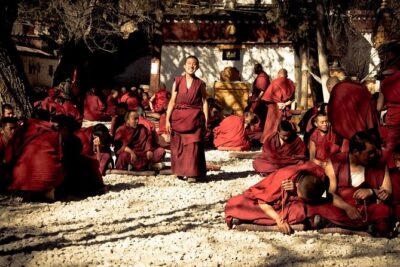
Private Guided Day Tour Potala Palace and Sera Monastery
Read our review →
Browse the lists this tour appears in