
Reviewed · TOURS IN LHASA
6 Days Central Tibet Culture Small Group Tour
The most compelling part of this trip is the change of pace: one day you are walking the prayer circuit around Jokhang Temple in Lhasa, and a few days later you are crossing high passes toward Yamdrok Lake and Gyantse. This is a compact introduction to Tibetan culture, mountain scenery, and monastery life, with the difficult travel paperwork handled for you.
I like the small group of no more than 12 and the included airport pickup, hotel, breakfast, permits, and private group transport. I also like the human side of the operation. Guides named Lhakdon, Lobsang, Ngawang, Tserina, Tseyang, and Ladsong are praised for clear English, patience, and care with mixed-age groups.
The main caution is that the description contains a few mismatches. It mentions an eight-day trip and Namtso Lake, but the schedule supplied here lasts six days and does not visit Namtso. Several daily entries say admission is not included, while the inclusions say entrance fees for listed sights are covered. Confirm both points in writing before paying.
Key points to know before booking
- Lhasa comes first: The first two full sightseeing days focus on the Potala Palace, Jokhang Temple, Barkhor Street, Drepung Monastery, a Tibetan village, and Sera Monastery.
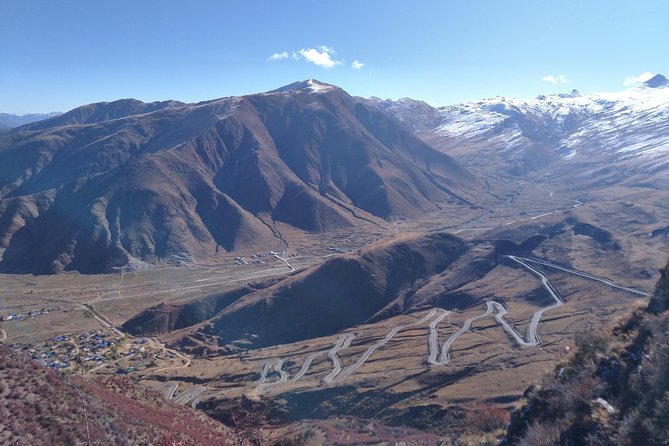
- High-altitude roads are part of the plan: Yamdrok Lake sits at about 4,400 meters, Gampala Pass at 4,790 meters, and Karo La Glacier is reached by road.
- You travel by minibus: Transport is provided with an experienced local driver, gasoline, drinking water, and a group size capped at 12.
- Permits are central to the trip: You must provide passport and visa copies at least 20 days before departure, and the operator arranges the Tibet travel permits.
- The package covers plenty: Hotels on a twin-sharing basis, five breakfasts, airport transfers, a welcome dinner, guide service, transport, and listed entry fees are included.
- Check the advertised route: Namtso Lake and the eight-day wording do not match the six-day schedule supplied here.
What this six-day Tibet trip is really offering
At $799 per person, this is best understood as a guided introduction to central Tibet rather than a free-form independent trip. You get a structured route, a local English-speaking guide, a driver, hotels, breakfast, permits, and airport transfers. For a place where entry documents and transport arrangements are complicated, that package has real value.
The route gives you three different kinds of Tibet. Lhasa provides major religious sites and everyday street life. The road toward Gyantse brings high mountain passes, lakes, glaciers, and broad views. Shigatse adds one of Tibet’s most important monasteries, Tashilhunpo.
You should also know what this tour does not give you. It does not provide a long stay in each place, and lunch and dinner are generally your responsibility apart from the welcome dinner. The schedule is sightseeing-focused, with early starts and long road sections. That is a fair trade for covering Lhasa, Gyantse, and Shigatse in six days, but it will not suit you if you prefer slow mornings and open-ended wandering.
Other six-day trips from China:
- 6-Day Private Tour: Guilin Terraces, Fenghuang & Zhangjiajie
★ 5.0 · 7 reviews
Day 1: Arrive in Lhasa and take it easy
Your first day is mainly a transfer day. You arrive in Lhasa by air or train, then transfer to Gang Gyan Lhasa Hotel or your reserved hotel. You are asked to report once you have checked in.
That simple first day matters. Lhasa sits at high altitude, and the schedule gives you time to rest and begin adjusting before the main sightseeing starts. Do not treat arrival day as a chance to cram in extra activities. The most sensible plan is to settle into the hotel, drink water, eat lightly, and follow the guide’s advice.
Airport pickup is included, but the supplier must arrange it. This is important because you should not assume that a taxi or driver will simply be waiting without prior coordination. Confirm your arrival details after booking.
The package includes hotels on a twin-sharing basis and breakfast. If you want a private room, a single supplement is available subject to availability and costs extra. The welcome dinner is held at a local restaurant when the group meets in Lhasa, giving you an easy first meal and a chance to meet the rest of the group.
Day 2: Potala Palace, Jokhang Temple, and Barkhor Street
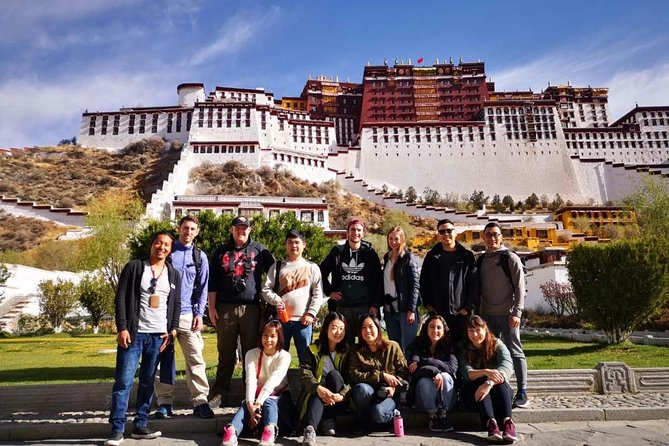
The Potala Palace is the big opening sight. It served as the winter palace of the Dalai Lama and has been in use since the seventh century, during the reign of Tibet’s 33rd great king. The visit is scheduled for about 90 minutes.
The palace is not just a photo stop. It is the place where Tibet’s religious and political story comes together, and the guide’s explanations will help you understand why the building matters. The visit is fairly short, so stay focused and listen carefully rather than expecting unlimited time in every room.
After lunch, you visit Jokhang Temple, also linked with the 33rd great king of Tibet. The temple is especially important for its statue of Buddha Sakyamuni shown at age 12. The visit lasts about 90 minutes.
Jokhang is best approached as a working religious site, not simply a museum. Pilgrims and local worshippers give the surrounding streets their purpose, and you will see people making the kora, a devotional circuit around the temple.
Barkhor Street surrounds Jokhang and gives you your most direct look at daily Lhasa. You can walk with pilgrims and local people, browse the old market, and taste Tibetan tea in a local tea house. The scheduled visit is only about 30 minutes, so ask your guide how much independent time you will have.
This is one of the strongest days of the tour because it combines monumental architecture with ordinary street life. You get the formal sight at Potala, the sacred interior of Jokhang, and the social setting around Barkhor. Wear comfortable shoes, keep your pace measured, and do not rush the prayer circuit.
Day 3: A Tibetan village, Drepung, and Sera’s monk debates
The morning schedule includes Dadong Village, about 25 kilometers southwest of central Lhasa. It is described as a well-protected ancient Tibetan village surrounded by countryside, with roughly four hours allocated to the stop.
The village visit gives the day a useful change of tone. Instead of moving from one grand monastery to another, you get a closer look at a traditional settlement. Since the provided schedule labels this stop under Drepung Monastery, confirm the exact order and whether both the village and Drepung are included in the four-hour block. The wording is not fully clear.
Sera Monastery comes in the afternoon and receives about two hours. It is one of the three great Gelug monasteries of Tibet. The main draw is the monk debate, usually held from about 3 to 5 p.m.
The debate is energetic and visual. Monks use gestures, claps, and quick exchanges as they test points of Buddhist philosophy. Your guide can explain what is happening, which makes this more than a performance watched from the edge of a courtyard.
Several guides receive special praise for taking care of mixed-age groups and keeping everyone together. Ngawang is described as punctual and good at making monastery visits approachable, while Lhakdon is praised for looking after the group and speaking English well. Guides such as Lobsang and Tserina are also singled out for friendly, capable service.
That personal care matters on a day with several moving parts. You are not simply being dropped at a gate and left to work things out. Still, the high altitude and four-hour morning visit can make this a tiring day, especially if you have not adjusted well.
Same city, a completely different day:
- From Beijing: Mutianyu Great Wall Tours with Options
★ 4.9 · 9,216 reviews - Beijing: Forbidden City Tour(Group/Private)-Tickets Included
★ 4.8 · 7,974 reviews - Beijing: T-Square & Forbidden City Group or Private Tour
★ 4.8 · 4,446 reviews - Beijing: Mutianyu Great Wall Daily Tour with Ticket & Lunch
★ 5.0 · 3,056 reviews
Day 4: Yamdrok Lake, Gampala Pass, Karo La Glacier, and Gyantse
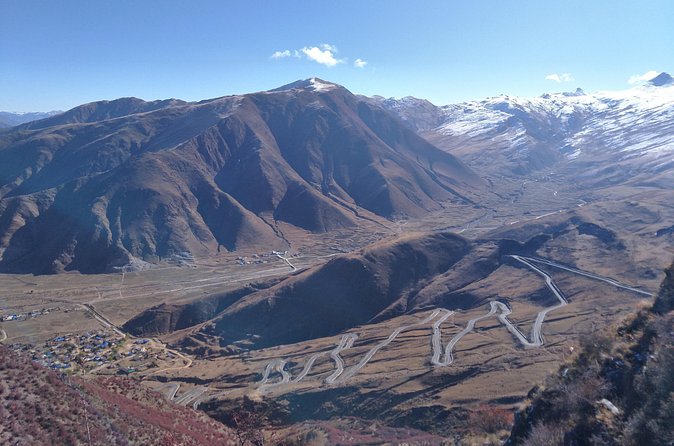
Day 4 is the road day, and it is likely to be the most scenic part of the trip. You drive from Lhasa toward Shigatse, crossing Gampala Pass at about 4,790 meters. From the pass, you get a view of Yamdrok Lake, listed at approximately 4,400 meters.
Yamdrok is surrounded by snow-covered mountains, and the one-hour stop gives you time to take in the setting and take photographs. The high elevation is not a minor detail. Walk slowly, avoid unnecessary exertion, and tell your guide if you feel unwell.
The route continues past Karo La Glacier, visible from the roadside. You also pass Manak Dam Lake and can hang prayer flags at Simila Mountain Pass. These quick roadside stops are part of the appeal of traveling by minibus. You can cover a large stretch of central Tibet without arranging separate transport at every turn.
The day ends in Gyantse, historically Tibet’s third-largest city after Lhasa and Shigatse. You visit Pelkor Monastery and the Gyantse Kumbum, then get a distant view of Gyantse Fortress.
Pelkor Monastery and the Kumbum are especially valuable for visitors who want Buddhist art and architecture, not only mountain views. The Kumbum is a distinctive stupa structure, and the stop adds detail to a day that could otherwise become a string of scenic viewpoints.
The provided schedule gives about one minute to the Pelkor and Kumbum stop, which is almost certainly a display error rather than a realistic visit length. Ask the operator to confirm how much time is planned. Also clarify the admission fees. Individual day entries mark Yamdrok, Karo La, and Pelkor as not included, while the package inclusions say entrance fees for all listed tourist sites are covered.
Day 5: Tashilhunpo Monastery in Shigatse
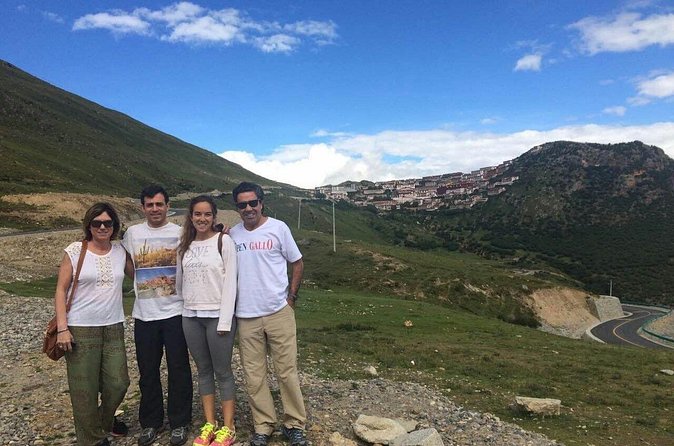
The fifth day centers on Tashilhunpo Monastery, the home of the Panchen Lama. The visit lasts about two hours.
The monastery is known for its large statue of Jampa, the future Buddha, described as the largest of its kind in the world. You should allow time to take in the scale of the statue, the monastery buildings, and the religious setting rather than treating this as a quick stop.
Tashilhunpo gives the route a strong final cultural note. After the imperial symbolism of Potala and the devotional life around Jokhang, this monastery shows another major center of Tibetan Buddhism. Your guide’s explanations are particularly useful here because the site’s role involves religious figures and traditions that can be difficult to understand from signs alone.
The supplied schedule does not give a detailed hotel description for Shigatse, so confirm the exact overnight arrangements and departure time. The tour includes hotels and breakfast, but the day-by-day information is not clear about every property.
Day 6: Departure and the permit time limit
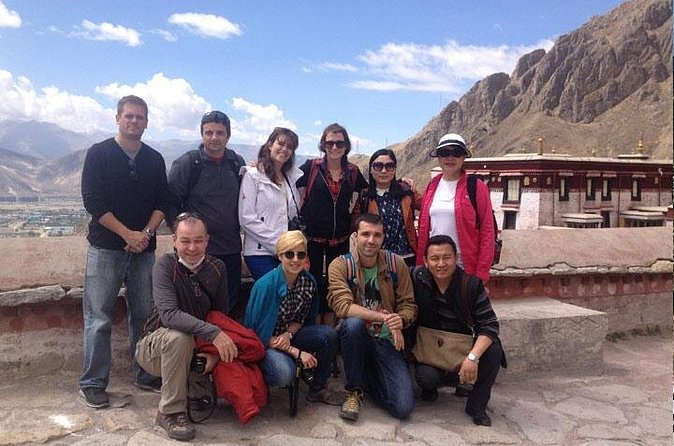
The last day is your departure from Tibet by air or train. The operator says the Tibet Permit is limited to this tour, so you must leave unless you arrange another Tibet tour in advance.
Airport and railway drop-off service can be arranged if you contact the operator. Do not wait until the last morning to sort this out. Confirm your departure transfer, especially if you are leaving early.
The route is designed to end after the main sightseeing, not to give you a spare day in Lhasa. If you want more time in Tibet, ask about extending the trip before booking. The operator may be able to arrange another tour and new travel documents.
What the $799 price includes, and what it does not
The price is based on two people sharing a room. For the right traveler, $799 is a solid package price because it includes several expensive or complicated pieces:
- Tibet travel permits and other required permits
- Minibus or van transport with an experienced local driver
- Gasoline
- English-speaking Tibetan guide
- Five breakfasts
- Twin-sharing hotels
- Airport pickup and drop-off
- Welcome dinner
- Drinking water during the trip
- Liability travel insurance
- Tibet map
- Listed entrance fees, according to the inclusion section
Lunches and most dinners are not included, and flights or trains to Lhasa are extra. Tips for the guide and driver are also separate.
The biggest value is convenience. You are not left to arrange a vehicle, a permit, a hotel, and site visits one by one. The package also gives you a small group, which is a better setup than a large coach for monastery visits and high-altitude road stops.
The biggest pricing question is the admission-fee wording. Because the daily schedule marks some sites as not included while the inclusion list says otherwise, get a written breakdown before booking. This is a small step that can prevent awkward cash requests during the trip.
Permits, visas, and booking timing
Book at least 20 days before departure. You must provide a passport photocopy and China L visa information at least 20 days before the travel date so the operator can arrange the Tibet Permit.
If you enter Tibet from Kathmandu, do not apply for a China L Visa in advance according to the supplied instructions. You need a Tibet Group Visa through the China Embassy in Kathmandu, arranged with the travel agency, and you first need an invitation letter from the supplier.
If you enter from another city in China by air or train, you need to apply for the China L Visa through the Chinese Embassy in your country. The operator contacts you after booking with the next steps.
Confirmation is issued within 48 hours, subject to availability. Since the tour is often booked well ahead, planning early is sensible, particularly if you have fixed international flights.
Who should choose this tour?
I would choose this trip if you want a managed first visit to Tibet, prefer cultural sites to independent trekking, and are comfortable with high-altitude road travel. It suits you if you want Lhasa’s major sights but also want to see Yamdrok Lake, Gyantse, and Shigatse without arranging transport yourself.
It is also a good fit if you value a guide who stays close to the group. The strongest pattern in the guide feedback is personal care: Lhakdon is praised for looking after the group, Ngawang for handling mixed ages, and Lobsang, Tserina, Tseyang, Ladsong, and TenWang for clear explanations and friendly service.
I would hesitate if you need a slow itinerary, private rooms at no extra cost, or a guaranteed visit to Namtso Lake. The current six-day schedule does not include Namtso, despite the broader description mentioning it. I would also avoid booking until the operator confirms the exact route, hotel names, entrance fees, and whether the trip is six or eight days.
Should you book it?
Book this tour if you want a practical, reasonably priced route through Lhasa, Gyantse, and Shigatse, with permits and transport handled by a local agency. Its best features are the small group, the careful guides, and the mix of sacred sites, villages, mountain passes, lakes, and glaciers.
Before you commit, send four questions: Is this the six-day route or an eight-day route? Is Namtso Lake included? Are all listed entrance fees covered? What are the exact hotels and departure transfers? If the answers match your plans, the $799 package offers a useful and well-supported introduction to central Tibet.
FAQ
How long is the tour?
The supplied schedule lasts six days, including arrival in Lhasa on Day 1 and departure on Day 6.
What places are visited?
The route includes Lhasa, the Potala Palace, Jokhang Temple, Barkhor Street, Dadong Village, Sera Monastery, Yamdrok Lake, Karo La Glacier, Gyantse, Pelkor Monastery, the Gyantse Kumbum, and Tashilhunpo Monastery in Shigatse.
Is Namtso Lake included?
The broader description mentions Namtso Lake, but the six-day schedule provided here does not include it. Confirm this directly with the operator before booking.
What is the maximum group size?
The tour has a maximum of 12 participants.
Are airport transfers included?
Yes. Airport pickup and drop-off in Lhasa are included, but the supplier must arrange them. Railway drop-off can be arranged separately if needed.
Are meals included?
Five breakfasts and one welcome dinner are included. Lunches and other dinners are not included.
What documents are needed for the Tibet Permit?
You must provide photocopies of your passport and China L visa at least 20 days before the travel date. Entry from Kathmandu follows a different Tibet Group Visa process than entry from another Chinese city.
What is the cancellation policy?
You can receive a full refund if you cancel at least six full days before the start time. Cancelling two to six full days ahead may result in a 50 percent refund, while cancellation less than two full days before departure is nonrefundable.
New reviews from China
- Shanghai: 3-Hour Old Shanghai City Tour★ 4.9 · 45 reviews
- Sichuan: Big Panda Volunteer Day tour★ 4.4 · 10 reviews
- Nanjing:Must-See Attractions in One Day+Customized Itinerary★ 5.0 · 3 reviews
- Mutianyu Wall, Summer Palace & Old Summer Palace Day Tour★ 4.8 · 34 reviews
- Night Market Haggling Adventure with an English Guide!★ 4.8 · 7 reviews
- BusDa-Mutianyu Great Wall&Forbidden City Full-day Coach Tour★ 4.9 · 11 reviews
- Mutianyu Great Wall Ticket with Roundtrip Cable Car★ 5.0 · 20 reviews
- Nanjing: Night Cruise on Outer Qinhuai River for Adults★ 4.0 · 4 reviews
Tours in Lhasa, compared.
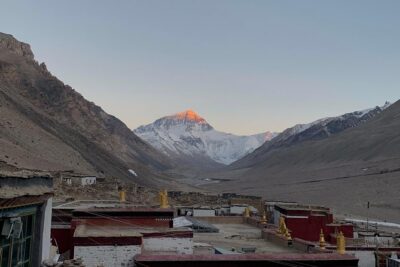
Tibet Tour 8 Days Lhasa to Everest Base Camp Small Group Tour
Read our review →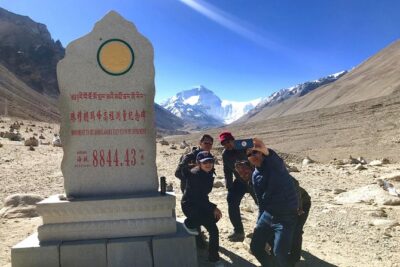
7 Days Lhasa to Kathmandu Overland Small Group Tibet Tour via EBC
Read our review →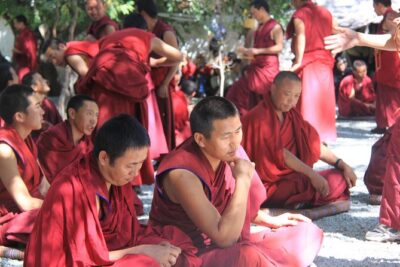
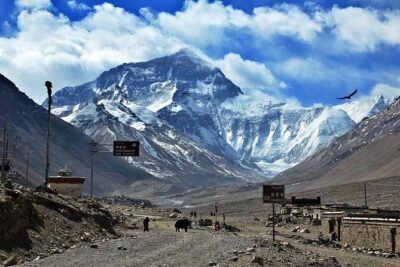
8 Days Lhasa Gyantse Shigatse Mt Everest Group Tour
Read our review →Browse the lists this tour appears in