
Reviewed · HISTORICAL TOURS
Between Capitalism & Communism: Hong Kong History Tip Based Tour
Hong Kong’s history is written into its streets, banks, churches, courts, and hills. This two-hour walk connects those pieces, showing how British rule, the 1997 handover, Chinese sovereignty, money, religion, and current politics all meet in a compact part of Central and Sheung Wan. I especially like the personal stories from guides such as Alice, Andy, Armie, and Wingman, which give the political discussion a human voice.
I also like the way the walk links famous sights to ideas you might otherwise miss, from the feng shui rivalry between banks to the legal meaning of the Court of Final Appeal. The $2.63 price is remarkably low for a guided introduction that includes a street food tasting, though the group may include as many as 30 people and the political material will suit curious adults more than families seeking a light sightseeing stroll.
Key points before you book
- Hong Kong’s politics come first: The tour explains the handover, One Country, Two Systems, and the territory’s changing relationship with China.
- Eight compact stops: You walk from Central MTR Station to Man Mo Temple, passing courts, banks, a cathedral, markets, escalators, and historic streets.
- The guides add a personal angle: Alice, Andy, Armie, and Wingman are among the guides named in the tour’s feedback, with personal stories forming an important part of the experience.
- A low-cost introduction: At $2.63 per person, the tour offers unusually strong value if you want context before exploring Hong Kong alone.
- Street food is included: The tasting adds a small local food element, while lunch recommendations help you continue the experience afterward.
- Plan for city walking: You need moderate physical fitness, and good weather is required.
Why this walk changes the way Central looks
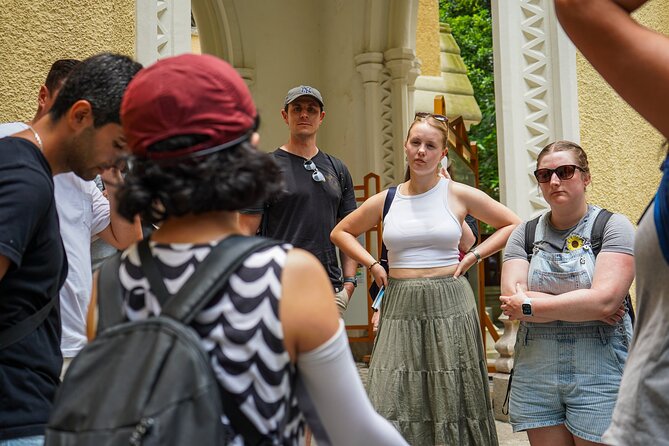
Central can seem like a wall of glass, steel, and expensive shops. This tour asks you to look past the office towers and read the district as a record of power. British colonial rule, Chinese sovereignty, international finance, Christianity, local religion, and public protest all appear within a short walk.
That is the real value here. You are not simply ticking off St. John’s Cathedral or taking a photo of HSBC. You are learning why these places were built, what they represented, and how their meaning has shifted.
The tone is political, but not narrowly academic. The tour deals with how Hong Kong became a British colony, how Britain returned it to China, and how the promise of One Country, Two Systems works in daily life. Personal accounts from guides such as Alice and Wingman are especially useful because they bring the subject down from official language to lived experience.
The schedule allows about 10 minutes at most stops, with 20 minutes at St. John’s Cathedral. That means the walk moves at a firm pace. You get a connected story rather than long museum-style talks, but you will not receive an exhaustive account of every building or event.
Other history to see in Hong Kong:
- Beijing Historical Tour II including Summer Palace, Lama Temple & Panda Garden
★ 4.0 · 187 reviews - Beijing Historical Tour I – Forbidden City, Tiananmen Square & Temple of Heaven
★ 4.0 · 120 reviews - Tour of Jewish Shanghai led by a Jewish History Expert
★ 5.0 · 106 reviews
Starting at the Court of Final Appeal
The meeting point is near Central MTR Station, Exit K, at 11:00 am. That makes the tour easy to reach by public transport and places you right in the center of Hong Kong’s business district.
The first stop is the Court of Final Appeal. The subject here is how Hong Kong functions as part of China while keeping a separate legal and administrative system. The court gives that discussion a clear setting. Instead of starting with a general political lecture, the guide can point to an actual institution where the tension between local legal practice and national authority matters.
You spend about 10 minutes here. That is enough for an introduction, though anyone wanting a detailed legal explanation will find the treatment brief. I would listen carefully at this stop, since it sets up many of the questions that return later in the walk.
Statue Square and Hong Kong’s feng shui stories
From the court, the route reaches Statue Square, a public space surrounded by major financial institutions. Here the guide turns to one of the more unusual Hong Kong subjects: feng shui battles between banks.
This is not just a quirky tale added for entertainment. It helps explain how modern finance in Hong Kong can exist beside older Chinese beliefs and practices. Buildings, entrances, shapes, and symbols may carry meaning beyond their practical use. The story gives you a fresh way to look at a district that can otherwise feel anonymous.
The stop lasts around 10 minutes. You will not come away with a full guide to feng shui, but you will have a memorable detail to watch for as you continue around the city. It is also a good example of the tour’s method: take a familiar place and show the less obvious forces behind it.
HSBC’s lions and the business of building Hong Kong
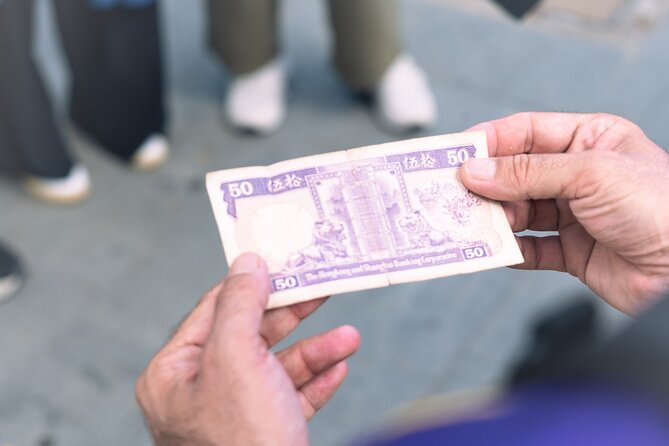
At the HSBC Main Building, the guide discusses the famous lions guarding the bank and the unusual financial story behind Hong Kong’s growth. The tour description points to a city where no central bank prints money and where development has pushed outward into the sea.
The HSBC stop works best if you enjoy seeing how money shapes a city. Hong Kong’s financial identity is not treated as a dry subject. The building becomes a way to discuss banking power, city expansion, and the symbols institutions use to present strength and security.
You spend about 10 minutes here. The guide’s explanation will likely stay at the level of a sharp overview rather than a technical banking lesson. That is suitable for a first visit, especially if you want a story you can remember when you pass the building again.
Same city, a completely different day:
- Hong Kong: Dolphin Cruise, Big Buddha & Lantau Island Tour
★ 4.2 · 1,512 reviews - Ngong Ping 360: Cable Car Return Tickets & Combos
★ 4.6 · 1,431 reviews - Lantau Island Day Trip – Big Buddha & Tai O
★ 4.5 · 1,328 reviews - Big Bus Hong Kong Open Top Hop-On Hop-Off Sightseeing Tour
★ 4.0 · 1,077 reviews
A quiet pause at St. John’s Cathedral
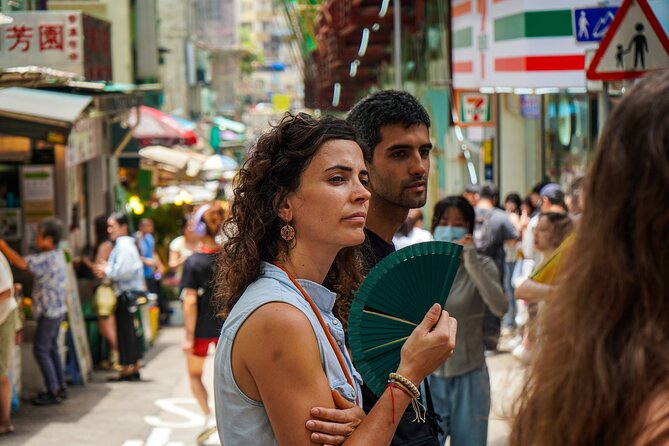
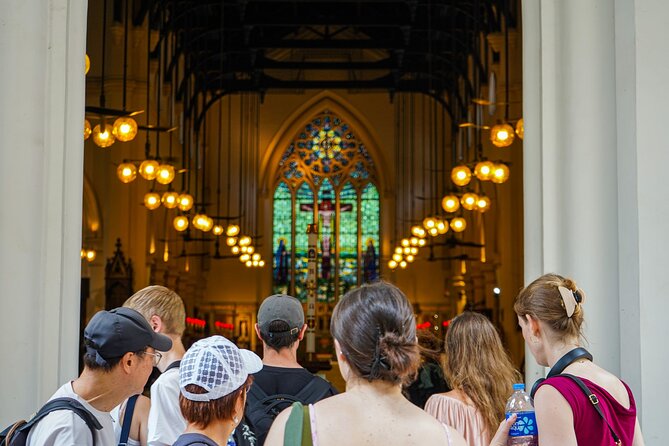
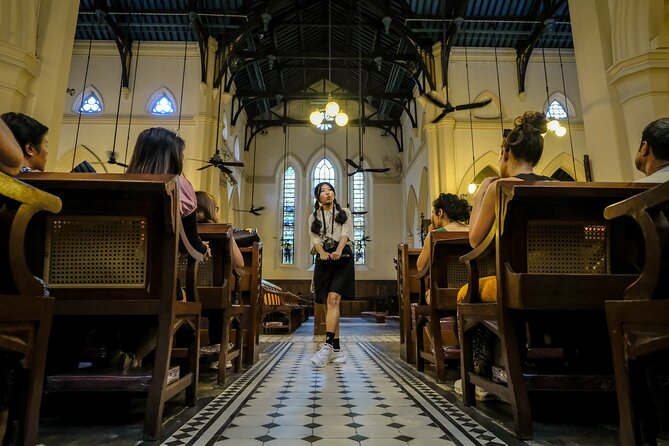
St. John’s Cathedral brings a very different mood. It is Hong Kong’s oldest church, and the tour allows 20 minutes here, longer than at the other scheduled stops.
The cathedral is useful for understanding the British presence in Hong Kong beyond government offices and trading companies. Its setting also gives the group a pause from the traffic and towers of Central. The guide connects the church to colonial history, personal stories, and what the tour description calls quiet miracles.
This is one of the stronger stops for anyone who wants more than political facts. The building gives human scale to the colonial period, while the guide’s own story can show how official history and private memory overlap. The longer stop also helps break up the city walking.
Keep your expectations realistic. This is a guided visit from the outside and surrounding area as part of a walking route, not a long architectural tour or worship service. The information provided does not promise a special interior access arrangement.
Queen’s Road Central and the daily pressure of the city
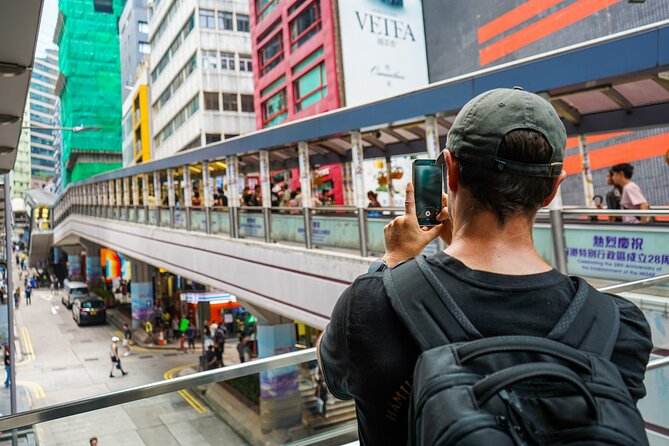
Queen’s Road Central brings you back into the city’s working rhythm. Here the themes are high rents, business power, office workers, and the constant pressure of Hong Kong’s commercial life.
I like this stop because it connects the big political story to ordinary urban experience. Colonial rule and international finance may sound distant, but they helped create the crowded, expensive, fast-moving Central district you see today. The guide uses the street itself to explain that process.
The stop takes about 10 minutes. You should expect traffic, people moving between buildings, and a fair amount of street noise. That is part of the point, but it can make it harder to hear. Stay close to the guide and listen for the specific examples that link the street to Hong Kong’s economy.
The Central-Mid-Levels Escalators
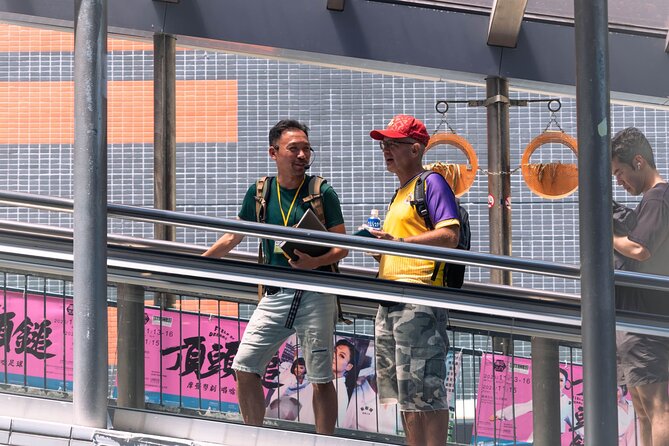
The Central-Mid-Levels Escalators provide one of the walk’s most recognizable pieces of infrastructure. The route uses this 800-meter outdoor escalator system to explain how Hong Kong adapted to steep hills and dense development.
This is not a quiet scenic ride. It is a practical part of city life, carrying people through a built-up area where walking uphill can be tiring. The guide presents it as an engineering answer to Hong Kong’s difficult terrain, and the ride helps you understand how the city functions beyond its postcard views.
The scheduled stop is about 10 minutes. Since this is a public escalator, the group may need to keep moving and make room for other users. Do not expect to linger in one place for a long talk. The practical tip is simple: wear comfortable shoes, keep your balance, and be ready for a walking pace that includes hills and stairs around the route.
Hollywood Road, from colonial divide to creative street
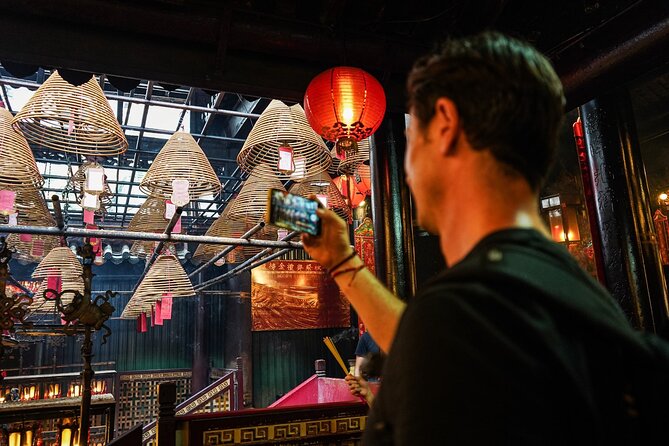
Hollywood Road marks the route’s shift toward old streets, art, food, and neighborhood life. The tour explains how the area moved from a colonial-era divide to a creative center with galleries, restaurants, and street character.
This is where the walk may feel less like a civics lesson and more like a guide to the city you can explore after the tour. You will gain context for the old road instead of seeing it only as a shopping or photo stop.
The walk does not promise time for browsing galleries or eating a full meal here. The point is orientation. Your guide can help you understand why the area matters, then you can return later if you want to explore at a slower pace.
The tour also includes a street food tasting. No specific food is guaranteed in the information provided, so treat it as a small sample rather than a full food tour. It adds a welcome local flavor, but anyone booking mainly for eating should choose a longer food-focused experience.
Man Mo Temple and the walk’s final idea
The final stop is Man Mo Temple on Hollywood Road in Sheung Wan. The temple gives the tour a strong ending because it brings together traditional belief, scholarship, justice, and modern Hong Kong.
The tour frames the temple as a place where ancient gods witness the territory’s legal development. That contrast is central to the whole walk. Hong Kong is not presented as simply British, simply Chinese, or simply modern. Its public life has been shaped by several systems at once.
The route ends at 124 to 130 Hollywood Road, so you finish in a useful part of town rather than returning to the starting point. The guide can also recommend a local restaurant for lunch. That matters because the 11:00 am start places you near mealtime when the two-hour walk ends.
What the $2.63 price really gets you
At $2.63 per person, this is an unusually inexpensive way to get a guided introduction to Hong Kong. The price includes a professional local guide and a street food tasting. Hotel pickup and drop-off are not included, but the central MTR meeting point makes private transport unnecessary for most people using public transportation.
The value is strongest if you want orientation and context. A guide can show you why Central looks the way it does, then you can revisit the places that interest you. The price is less meaningful if you prefer a small private tour, long stops, or a relaxed pace.
The group can reach 30 people. That is not a tiny walk, and a larger group may make personal questions or hearing every word more difficult. Still, the compact route and short stops should keep the group moving. The strongest feedback consistently centers on the guides’ clear explanations, constant stream of information, and personal stories.
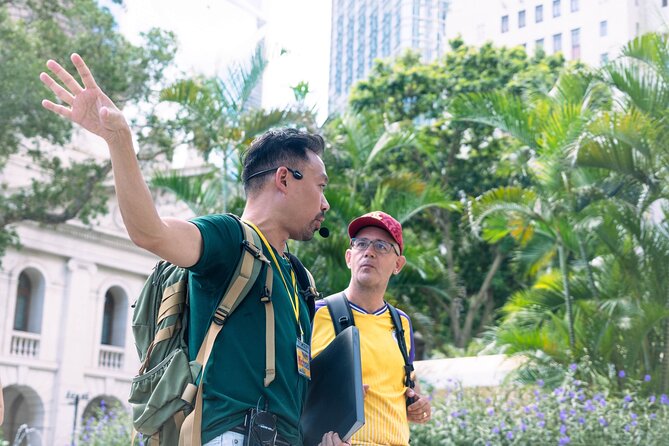
Guide names connected with particularly positive comments include Alice, Andy, Armie, and Wingman. Guide assignments can vary, so you should not book expecting one specific person unless the provider confirms it. What you can reasonably expect is a guide-led experience shaped around Hong Kong’s history, politics, and current identity.
Who should take this tour
I would choose this walk early in a Hong Kong visit. It gives you a framework for Central, Admiralty, Hollywood Road, and Sheung Wan, so later sightseeing has more meaning.
It suits you if you:
- Want a plain-language introduction to Hong Kong’s colonial past and current politics
- Like hearing local and personal perspectives
- Prefer walking through real city districts to sitting in a museum
- Want to understand the financial center beyond its buildings
- Have moderate physical fitness and can keep up with an urban route
- Need a low-cost activity near public transportation
It may not suit you if you want a gentle sightseeing stroll with little political discussion. It is also not the best choice for someone who wants a full meal, extended temple time, or a private guide. The two-hour format favors range and connections over long visits.
Wear comfortable shoes and allow for city noise, public crowds, and changing weather. The tour requires good weather. If poor weather cancels it, you are offered another date or a full refund. Cancellation is free up to 24 hours before the start time, while cancellations or changes inside that window are not refunded or accepted.
Should you book Between Capitalism & Communism?
Yes, if you want Hong Kong to make more sense after you arrive. The tour’s strongest feature is not any single stop. It is the way a court, bank, church, escalator, old road, and temple become parts of one political and social story.
Book it near the beginning of your stay, especially if you want restaurant advice and a useful introduction before exploring alone. The low price makes the risk small, but remember that the group may be large, the pace is active, and the subject is serious.
Skip it if you are looking only for views or a food outing. Choose it if you want a local guide to explain why Hong Kong feels caught between systems, eras, and identities, all within a couple of city blocks.
FAQ
How long does the tour last?
The tour lasts approximately two hours.
Where does the tour start?
It starts at Central MTR Station, Exit K, on an unnamed road in Central, Hong Kong.
Where does the tour end?
It ends at Man Mo Temple, 124 to 130 Hollywood Road, Sheung Wan, Hong Kong.
What time does the tour start?
The listed start time is 11:00 am.
Is food included?
Yes. A street food tasting is included.
Is hotel pickup included?
No. Hotel pickup and drop-off are not included.
What happens if the tour is canceled because of bad weather?
You will be offered a different date or a full refund.
New reviews from Hong Kong
- Lantau Island: Priority Cable Car, Tai O & Direct Transfer★ 4.0 · 11 reviews
- Hong Kong: Ngong Ping Private Cable Car Skip-the-Line Ticket★ 4.6 · 7 reviews
- Hong Kong: Lantau Private Coach, Tai O & Big Buddha Tour★ 4.8 · 8 reviews
- From Hong Kong: Macau Day Tour with R/T Ferry, Lunch, Pickup★ 4.6 · 39 reviews
- Monopoly Dreams Hong Kong★ 3.5 · 8 reviews
- Hong Kong Disneyland: Non-Stop 2-Day Fun Ticket★ 4.5 · 13 reviews
- 4-Hour Private Hong Kong Layover Tour★ 5.0 · 39 reviews
- Private custom layover tour of Hong Kong – 7 hours★ 5.0 · 17 reviews
Historical Tours, compared.

Beijing Historical Tour II including Summer Palace, Lama Temple & Panda Garden
Read our review →
Beijing Historical Tour I – Forbidden City, Tiananmen Square & Temple of Heaven
Read our review →
Tour of Jewish Shanghai led by a Jewish History Expert
Read our review →
Beijing Historic City Guided Walking Tour + Calligraphy Creation
Read our review →
Beijing Culture: Tea Ceremony, Heritage Instrument & Calligraphy
Read our review →
Xi’an Full Day Sightseeing Tour – Shaanxi History Museum, Big Wild Goose Pagoda, Ancient City Wall
Read our review →
Private Historical Tour: Guangzhou City Sightseeing Including Lunch
Read our review →
Bell and Drum Towers Entry Ticket—Historic Landmark
Read our review →Browse the lists this tour appears in