
Reviewed · COOKING CLASSES
Learn cold noodle and wolf-teeth potato at local home
Zigong’s most beloved school-day snacks take center stage in this small Chengdu cooking class. Karen teaches you to make cold noodles and wolf-teeth potato, using the methods she learned from her mother, who once sold both dishes from a popular food stall.
I like the personal link to Zigong salt, where Karen’s parents worked in a salt factory and her grandfather was a boiler man. I also like that you do the cooking yourself, including a home-style chili oil, rather than simply watching a demonstration.
The main limitation is the short format. In roughly two hours, you can learn and eat two snacks, but this is not a broad Sichuan cooking course. Transportation to the meeting point is also up to you.
Key points to know
- A family recipe from Zigong: Karen learned these dishes from her mother, not from a restaurant school.
- Two classic snacks in one sitting: You prepare cold noodles and wolf-teeth potato, then eat what you make.
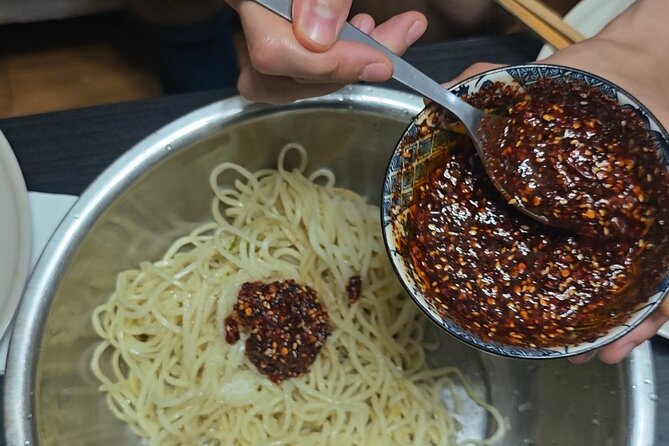
- Chili oil is part of the lesson: You learn Karen’s family recipe and can request no chili if needed.
- A very small group: The class accepts a maximum of six people, which allows for direct guidance.
- Good value at $31: Ingredients, equipment, an apron, water, snacks, and recipes are included.
- A simple Chengdu meeting point: The activity starts and ends on Zhongxin Road in Jinniu District, near public transportation.
Zigong flavor in a Chengdu home kitchen
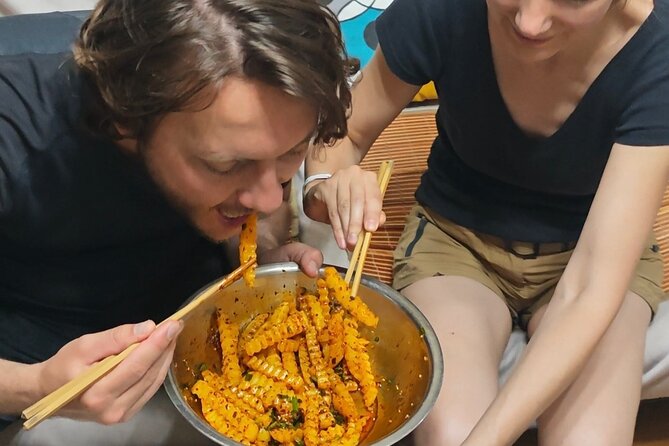
This class is less about formal culinary technique and more about learning what a family actually eats. Karen grew up in Zigong, a Sichuan city known for well salt. Her connection to food runs through her family: both parents worked in the local salt factory, her grandfather worked there as a boiler man, and her mother sold cold noodles and wolf-teeth potato for years.
That background gives the class a clear sense of place. Salt is not just a seasoning here. It connects Karen’s family, her hometown, and the flavor she is trying to pass on. If you are curious about Sichuan food beyond the famous restaurant dishes, this personal angle is the strongest reason to book.
Karen also explains that she is not a professional chef. She learned these methods from her mother and cooks them as home food. That matters because you should expect a relaxed family lesson, not a polished cooking-school production with formal culinary terminology.
I like that distinction. Many classes teach a standardized recipe. This one aims for her mother’s flavor, including the particular balance of salt and chili associated with Zigong. The result should feel more personal, though it also means the class may be less structured than a professional chef-led course.
More Cooking Classes in Chengdu
- Half-Day Chengdu Cooking Class with a Local Market Visit
★ 5.0 · 465 reviews - Chengdu: Cooking Class with Fresh Market Half Day Experience
★ 5.0 · 42 reviews - Half-Day steamed Buns Cooking Class with a Local Market Visit
★ 5.0 · 26 reviews
What you cook: cold noodles and wolf-teeth potato
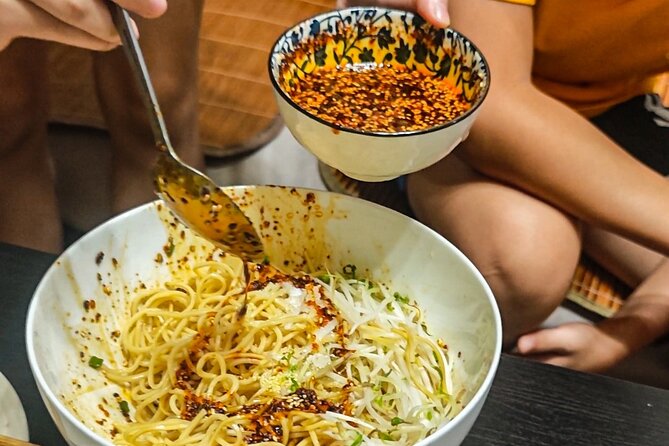
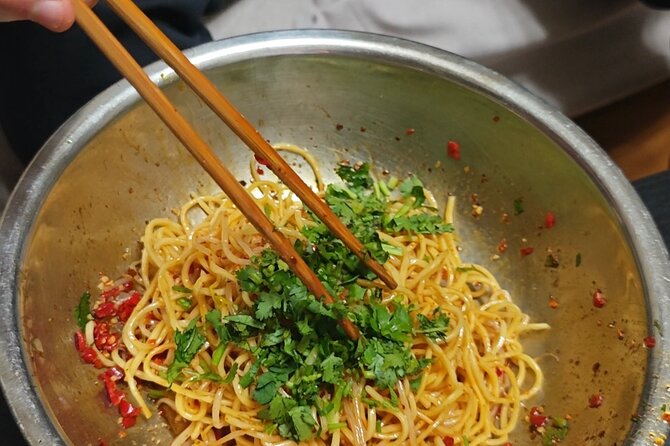
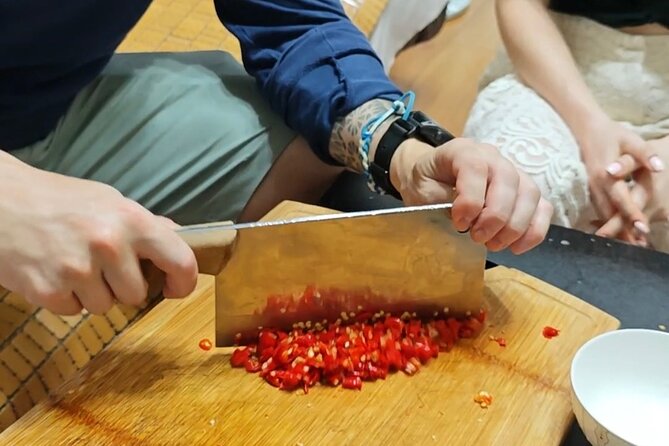
The two dishes are popular snacks in Zigong, and both fit neatly into a short class. The cold noodles involve steaming and cooling noodles before seasoning them. The wolf-teeth potato requires cutting and frying potato, followed by the additions that give it its Sichuan character.
You begin by meeting Karen and getting familiar with one another. She then introduces the ingredients and explains how each dish is made. After that, you work under her direction rather than simply standing back and taking notes.
The pace should suit beginners. One past participant specifically praised Karen for explaining each step clearly and guiding the cooking from start to finish. The dishes were described as quick and simple to make, which is useful if you want recipes you can repeat at home rather than a complicated restaurant project.
The name wolf-teeth potato refers to the cut used for the potato, but the supplied details do not spell out the exact cutting tool or shape. You can expect to cut and fry the potato as part of the process. Ask Karen for close guidance if knife work makes you uneasy, especially if you are cooking with children.
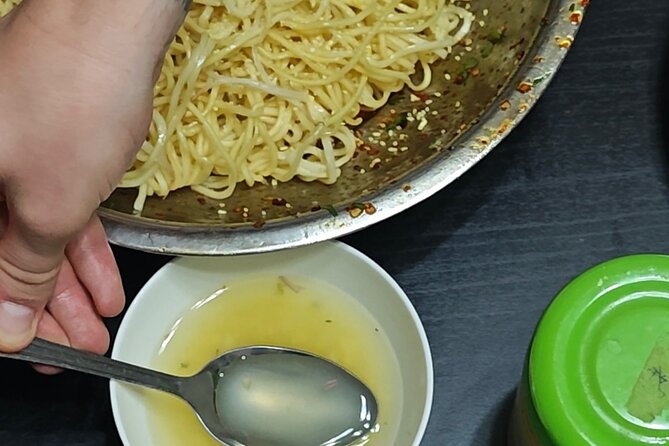
The cold noodles offer a different lesson. Instead of serving noodles hot, you learn how to steam and cool them, then season them in the Zigong style. The contrast between the two dishes makes the class more interesting than preparing two versions of the same snack.
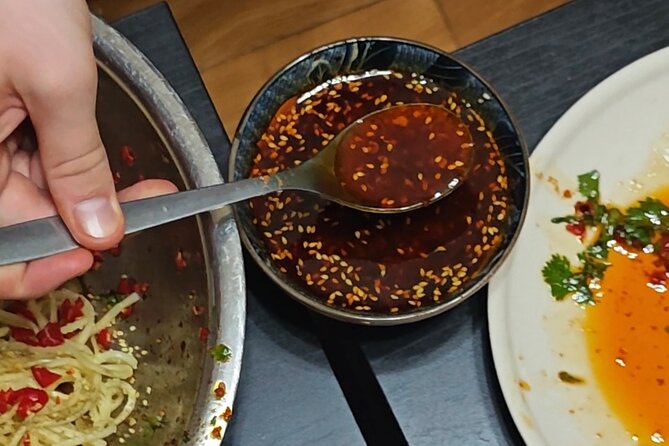
Karen’s homemade chili oil is the real extra
The most useful bonus is the chili oil lesson. Karen teaches her family recipe, giving you a flavor component you can use again with noodles, potatoes, and other simple dishes at home.
Sichuan food is often reduced to heat, but chili is only one part of the balance. The class also gives you a look at how salt and chili are used together in Zigong cooking. Karen’s family connection to local well salt adds a meaningful detail to that explanation.
You do not need to eat spicy food to take part. If you cannot handle chili, Karen says she will leave it out. You should still tell her about your preference when booking or before the class starts, so the seasoning can be adjusted from the beginning.
The same applies to allergies and dietary restrictions. The host asks you to share these in advance. The available information does not list specific substitutions, so contact Karen before arrival if your diet requires more than simply removing chili.
A hands-on lesson, not a cooking show
You receive the ingredients, equipment, apron, and water, so you do not need to bring cooking supplies. The class is designed for participation. You cook under Karen’s instruction, then taste the finished dishes and discuss what you made.
That hands-on format is valuable for a short class. Watching someone make noodles can be entertaining, but it does not always help you repeat the recipe. Here, the act of cutting, frying, steaming, cooling, and seasoning should make the process easier to remember.
The experience also includes snacks, though the details do not specify exactly what those snacks are or when they are served. The main food you will prepare is the cold noodle and wolf-teeth potato combination.
At the end, Karen talks about Sichuan and Zigong cuisine and asks you to share your thoughts on the food. That closing conversation helps connect the recipe to the region, rather than treating it as an isolated kitchen exercise.
Other classes where you do the cooking in Chengdu:
- Half-Day Sichuan Cooking Class Experience in Chengdu
★ 4.0 · 17 reviews - Private Panda Tour with Cooking Class One-day Trip
★ 5.0 · 11 reviews - Half-day Dandan Noodles Cooking Class with a Local Market Visit
★ 5.0 · 8 reviews - Half-day Chengdu Handmade Tofu Making and Mapo Tofu Cooking Class
★ 5.0 · 3 reviews
Why the group size matters
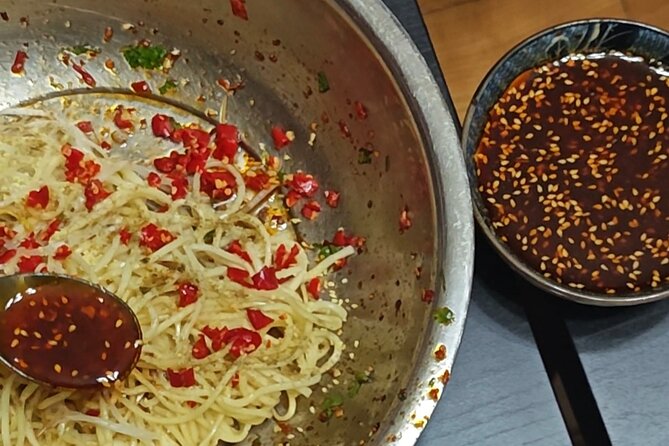
The maximum group size is six people. That is small enough for Karen to watch your work and correct you directly. It also makes the session better suited to questions about seasoning, cooking order, and technique than a large demonstration.
A small group can also make the experience feel more like visiting a local cook than attending a commercial class. The tradeoff is that the atmosphere may depend on the mix of people who book that day. The information does not promise a private class, so you should expect to share the lesson if others have reserved places.
The one available rating is five out of five from six reviews, and the clearest praise focuses on Karen’s instruction. One participant described the dishes as simple and delicious and planned to make them at home. That is the right measure for this experience: not how many dishes you cover, but whether you leave able to repeat two of them.
The two-hour schedule and meeting point
Plan for about one hour and 40 minutes to two hours. The session starts with introductions, moves through ingredient and method explanations, then gives you time to cook, eat, and talk about Sichuan and Zigong food.
The activity starts and ends at Zhongxin Road, Zhong Xin Lu, in Chengdu’s Jinniu District, Sichuan Province, postal code 610032. It is near public transportation, but transportation to and from the experience is not included. Check your route before the day of the class and allow enough time to arrive promptly.
The host asks you to come on time. That is especially important in a cooking lesson, where ingredients and preparation steps are arranged around a fixed schedule. Arriving late could mean missing the introduction or part of the preparation, even though the exact late-arrival policy is not specified.
The ticket is mobile, which keeps the booking simple. Confirmation is provided at booking. If your preferred date does not appear on the calendar, you can message the host and ask for the date to be opened.
Is $31 fair for this Chengdu food experience?
At $31, the price is reasonable if you want a small, participatory class rather than a long restaurant-focused food tour. The fee covers the food ingredients, cooking equipment, apron, water, snacks, and recipe. It also pays for direct instruction from Karen and access to a family method that she says is specific to her Zigong background.
The value is strongest for people who will actually cook the recipes again. If you only want to taste Sichuan snacks, a food stall or restaurant will probably cost less and take less time. If you want a personal story, practical instruction, and two recipes to carry home, the class offers more.
You should also remember that transportation is not covered. Since the class takes place at one meeting point and returns there, the extra cost is simply getting yourself to and from Zhongxin Road. No attraction admission is involved, and the experience itself lists no separate admission charge.
Who will enjoy this class most?
I would recommend it to food-focused visitors who want a personal connection to Chengdu cooking. It is especially suitable if you enjoy learning the backstory behind a dish and prefer home cooking to a formal restaurant kitchen.
It also fits first-time cooks. The class is short, the dishes are described as simple, and Karen guides you through each step. You do not need to arrive with professional skills.
Families can consider it too, but children must be accompanied by an adult. The information does not give a minimum child age, so ask before booking if you are traveling with a young child. Anyone drinking alcohol must be at least 18, though the class description does not suggest that alcohol is part of the activity.
This is less suitable for someone seeking a full Sichuan menu, advanced knife skills, or a long market visit. You will not be touring food sites or learning several restaurant dishes. The focus stays on two snacks and the seasoning that brings them together.
Practical booking advice before you go
Tell Karen about allergies, dietary restrictions, or your tolerance for chili before the class. She can omit chili, but the available details do not promise replacements for every allergy or special diet.
Wear something comfortable for a kitchen setting, though an apron is supplied. Bring your phone if you want to keep the recipe or take notes, but the class includes a written recipe, so you should have a way to store it safely after the session.
Free cancellation is available when you cancel at least 24 hours before the start time. Cancellations within 24 hours are not refunded, and changes in that final 24-hour period are not accepted. The cut-off uses local Chengdu time.
Should you book this Zigong snack class?
Book it if you want a small, personal food lesson with a clear family story behind it. Karen’s connection to her mother’s food stall, Zigong salt, and childhood snack runs gives the class a stronger identity than a generic noodle workshop.
The best reason to choose it is the chance to make two dishes yourself and learn a homemade chili oil recipe. The main caution is the narrow scope: you get about two hours, two snacks, and a home-style lesson, not a full survey of Sichuan cuisine.
At $31, I consider it a good choice for a curious eater who values participation and recipes to use later. Skip it if you only want to sample food quickly or need a class with a larger menu and professional-chef format.
FAQ
How long does the cooking experience last?
The class lasts approximately one hour and 40 minutes to two hours.
Where does the experience start and finish?
It starts and ends at Zhongxin Road, Zhong Xin Lu, in Chengdu’s Jinniu District, Sichuan Province, postal code 610032.
What dishes will I learn to make?
You will learn to prepare cold noodles and wolf-teeth potato, two popular snacks from Zigong. The lesson also includes Karen’s home recipe for chili oil.
Is the class suitable if I cannot eat spicy food?
Yes. You should tell Karen about your preference, and she can prepare the dishes without chili.
What is included in the $31 price?
The price includes snacks, all food ingredients, a recipe, an apron, water, and cooking equipment.
How many people can join the class?
The activity accepts a maximum of six people. Children must be accompanied by an adult, and the minimum drinking age is 18.
New reviews from Chengdu
- Classic 3-Day Jiuzhaigou Private Tour(Transportation+Tickets)★ 5.0 · 8 reviews
- Jiuzhaigou National Park Tickets Booking★ 4.5 · 4 reviews
- Classsic sichuan Opera at sichuan Provincial Theater★ 5.0 · 4 reviews
- Panda, Leshan, and Emei Mountain 2-day tour★ 5.0 · 4 reviews
- Visiting Chengdu Panda Base in a Half Day★ 5.0 · 4 reviews
- Mini Group: Half-Day Chengdu Pandas Guided Tour★ 5.0 · 3 reviews
- Sichuan Opera with face-changing at Sichuan opera theater★ 4.5 · 6 reviews
- Tea Village in lost Town and Buddha 1 day tour★ 5.0 · 32 reviews
Cooking Classes, compared.
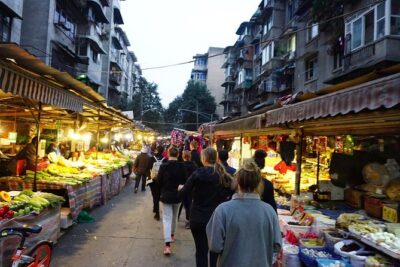
Half-Day Chengdu Cooking Class with a Local Market Visit
Read our review →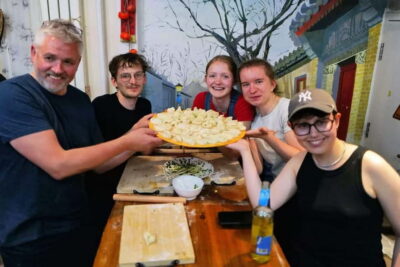
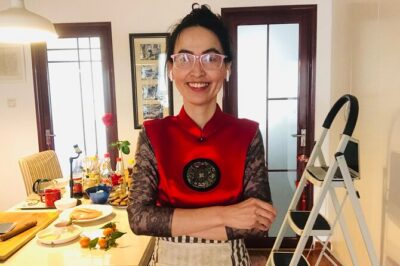
Online Cooking Class Beijing Dumplings and Cuisine by Sunflowerli Renowned Chef
Read our review →
Lijiang Naxi Cuisine Cooking Class & Market Visit
Read our review →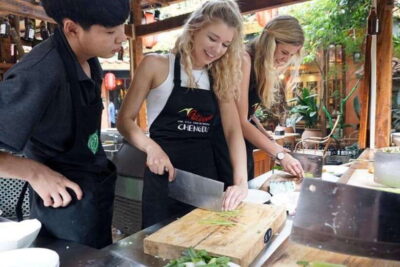
Cooking Class with Fresh Market Half Day Experience
Read our review →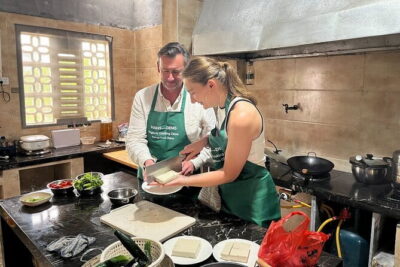
Half-Day steamed Buns Cooking Class with a Local Market Visit
Read our review →
Hong Kong Market Walking Tour & Chinese Cooking Class
Read our review →Browse the lists this tour appears in