

Reviewed · HISTORICAL TOURS
Beijing: Bell and Drum Towers Entry Ticket—Historic Landmark
The main reason to visit Beijing’s Bell and Drum Towers is simple: you can see how the imperial city once kept time. The Drum Tower held 25 drums, while the nearby Bell Tower housed a 63-ton bell known as the King of Ancient Bells. I like that this visit turns an ordinary history lesson into a physical climb through two grand old buildings.
I also like the self-guided freedom and the included English PDF, which lets you set your own pace without being tied to a guide. The possible drawback is that the drum performance schedule can change, and there is no live guide, so you need to read the material and plan your visit with some independence.
Key points at a glance
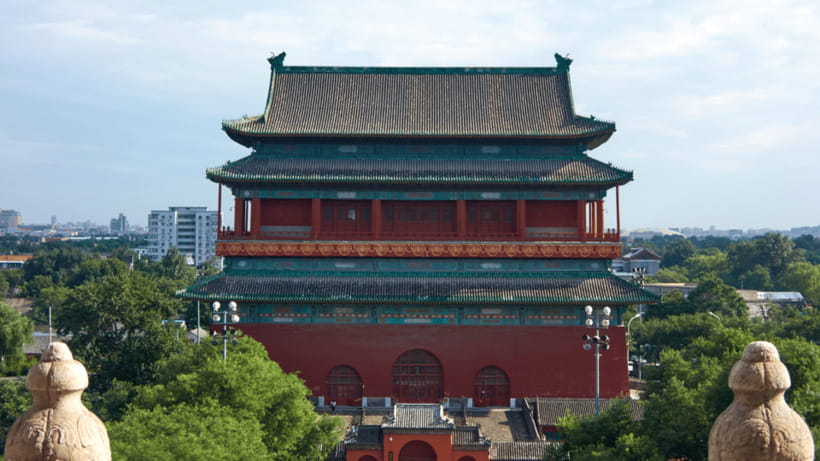
- See the 63-ton Yongle-era bell: The Bell Tower houses one of China’s largest ancient bells and gives the visit a strong imperial connection.
- Climb the Drum Tower: The upper level offers a chance to see the historic drums and possibly a five-minute performance.
- Understand ancient city timekeeping: Learn how a dusk drum and morning bell organized daily life in old Beijing.
- Explore two connected landmarks: Your ticket covers both the Bell Tower and Drum Tower at the northern end of Beijing’s central axis.
- Use the English PDF guidebook: It adds background to a visit that otherwise has no live guide.
- Allow up to four hours: You can move slowly, study the architecture, wait for a performance, and take photographs.
Why Beijing’s Bell and Drum Towers matter
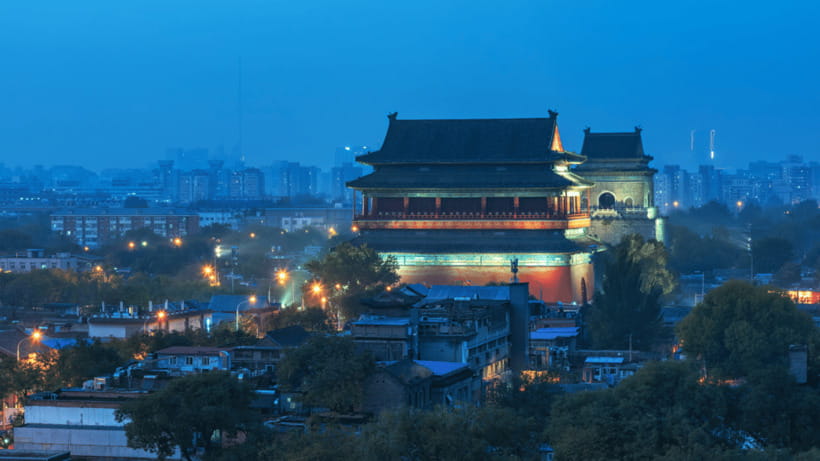
The Bell and Drum Towers were not built as decorative monuments alone. They were working timekeepers for Beijing, helping set the rhythm of life in the imperial city.
The tradition was known as a dusk drum and a morning bell. The drums marked the evening, while the bell announced the morning. Before modern clocks and electric signals, such sounds helped people understand when the city day was closing and when it was beginning again.
The towers were originally built during the Yuan Dynasty. The present complex reflects later construction and repair, including the Ming Dynasty period. Its north-south arrangement is unusual among old Chinese bell towers and gives the two buildings a clear visual relationship.
I find this context more useful than simply knowing that the towers are old. Once you understand their job, the large structures make sense. These were public instruments on a city scale, designed to carry sound across Beijing and regulate daily life.
The complex covers 12,597 square meters and is protected as an important historic site. That does not mean you need to spend four hours reading every panel. It means you are visiting a substantial part of Beijing’s old civic system, not a small display tucked inside a modern attraction.
Other history to see in Beijing:
- Beijing Historical Tour II including Summer Palace, Lama Temple & Panda Garden
★ 4.0 · 187 reviews - Beijing Historical Tour I – Forbidden City, Tiananmen Square & Temple of Heaven
★ 4.0 · 120 reviews - Beijing Historic City Guided Walking Tour + Calligraphy Creation
★ 5.0 · 59 reviews
Starting with the Drum Tower and its 25 drums
The Drum Tower is the more active and dramatic half of the visit. Its upper level once contained 25 drums, and the building remains the place where you are most likely to feel the old timekeeping system in action.
Climbing to the top is part of the point. The stairs give you a sense of the tower’s height and purpose, while the upper floor brings you close to the drums themselves. The climb is not just a route to a view. It helps you understand why these buildings were designed to rise above the surrounding city.
Look carefully at the drums and their arrangement. The emphasis here is not on small personal objects or quiet rooms. The instruments are large, bold, and made to be heard. They show how imperial craftsmanship could serve a practical civic purpose.
A short drum performance may take place during your visit. It lasts about five minutes, but it is the moment many people most want to catch. The exact time can vary according to the onsite schedule, so do not assume that arriving at any random moment will guarantee a performance.
If the drums are your main reason for booking, build some flexibility into your visit. The activity is described as lasting four hours, but that is best understood as the amount of time available rather than a fixed performance program. Use the extra time to see both towers instead of treating the drum show as the entire attraction.
The performance can also change the mood of the visit. Quiet displays explain what the drums were for, while the live sound makes that purpose immediate. You do not need a long concert to grasp the effect. A few minutes of coordinated drumming can make the building feel like a working time station rather than a preserved shell.
The Bell Tower and the 63-ton King of Ancient Bells
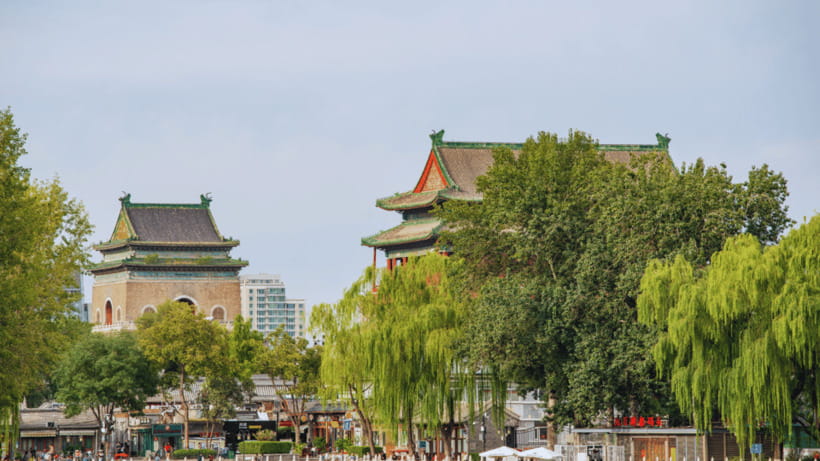
The Bell Tower provides the quieter counterpoint. Its main object is the enormous Ming Dynasty bell from the Yongle era, weighing 63 tons.
That scale is difficult to understand from a written description alone. When you see the bell inside its tower, its size becomes the central fact of the room. It was built to carry a sound across the city, not simply to be admired at close range.
The title King of Ancient Bells points to both its size and its place in Chinese bell-making history. You can take time to study its surface, structure, and setting, then compare the bell’s quiet presence with the force of the drums in the other tower.
I recommend visiting both towers even if one object interests you more. The Bell Tower explains the morning side of the old city’s daily rhythm, while the Drum Tower represents the evening. Together, they work as one timekeeping system.
The Bell Tower may feel less lively if you arrive hoping for a performance. Its value lies in the bell itself, the building’s design, and the chance to picture how sound once traveled through imperial Beijing. This is a place for looking closely and using the guidebook to fill in the details.
The architectural layout at Beijing’s northern axis

The towers sit at the northern end of Beijing’s central axis, an important position in the city’s historic plan. Their north-south layout makes the relationship between them easy to understand as you move from one building to the other.
The architecture is part of the appeal. These are large timber and masonry structures built for a practical purpose, but they also had to match the order and formality of the imperial capital. From the outside, the towers have the presence of city landmarks. Inside, the instruments explain why they were built so high and so carefully.
Take a moment to look back at the building after climbing. The design is easier to appreciate when you connect the upper levels with the need to project sound. The height, open position, and large instruments were all linked.
The complex is also useful for understanding Beijing beyond its best-known palace and temple sites. The Bell and Drum Towers show the machinery of daily city life. They tell you less about court ceremony and more about how the wider city was organized.
For photographers, the towers offer several kinds of subjects. You can frame the large instruments, focus on architectural details, and capture the contrast between the two structures. The most rewarding photographs will come from slowing down rather than rushing from ticket entrance to exit.
A few more days out in Beijing worth the ticket
- Beijing: Forbidden City Tour(Group/Private)-Tickets Included
★ 4.8 · 7,974 reviews - 4-Hour Small Group Tour to Forbidden City with Entry Tickets
★ 5.0 · 1,863 reviews - Beijing: Tiananmen Square Registration Service(Ticket)
★ 4.5 · 1,704 reviews - Beijing: The Temple of Heaven or Summer Palace Entry Ticket
★ 4.6 · 1,286 reviews
How the four-hour visit works

This is not a guided walking tour with a leader moving a group from point to point. Your ticket gives you entry to both towers, and the English PDF guidebook supplies background for a self-guided visit.
I would begin with the Drum Tower if the performance matters most to you. Check the onsite schedule when you arrive, then decide how to divide your time. After the Drum Tower, continue to the Bell Tower for the large bell and a calmer look at the complex.
A practical order looks like this:
- Enter the Drum Tower and check the performance timing.
- Climb to the upper level and view the 25 drums.
- Watch the five-minute performance if the schedule fits.
- Move to the Bell Tower and see the 63-ton bell.
- Use the PDF guidebook to connect the objects with the dusk drum and morning bell tradition.
- Leave extra time for architecture and photographs.
The exact rhythm is up to you. That flexibility is valuable if you dislike rushed sightseeing, but it also means you need to take responsibility for your own visit. There is no live tour guide included, and no named guide is provided for this experience.
The ticket is promoted as allowing you to skip the ticket line. That can make the entry process easier, especially if you have a full day of sightseeing planned in central Beijing. You still need to bring your passport or ID card, so keep the required identification ready.
The stated duration is four hours, but you do not need to force yourself to stay that long. Some people will understand the complex in less time. Others will want to wait for the drum performance, study the architecture, and take photographs. The flexible format works best when you see the four hours as an available window, not a strict schedule.
What the English PDF adds
The PDF guidebook matters because the ticket is not a guided tour. It gives you a way to put the bell, drums, architecture, and timekeeping tradition into context as you walk.
Without background, you might see two large old buildings and a collection of instruments. With the guidebook, you can connect the sights to the Yuan Dynasty origins, the Ming Dynasty bell, the 25 drums, and the old morning and evening signals.
I would read the relevant section before entering, then use the guide as a reference rather than trying to read everything while standing in a crowded display area. The guide is in English, which helps if you do not read Chinese, but it does not replace a person who can answer questions or adjust the explanation to your interests.
This format suits independent visitors. I like being able to linger over the bell or move quickly through a less important section. If you prefer a storyteller leading you through each room, the lack of a live guide may feel limiting.
The online information uses both included and optional language for the PDF guidebook, so confirm the delivery details when booking. The key point is that the experience is designed around entry to both towers with English written support, not a spoken tour.
Is the $13 price good value?
At $13 per person, this is a reasonably priced way to visit two major historic buildings in central Beijing. The value depends on what you want from a landmark.
The price works well if you care about architecture, ancient technology, and the daily workings of the imperial city. You are not paying for transport, a meal, or a long guided program. You are paying for access to both towers, the chance to see the bell and drums, and the possibility of a short live performance.
That makes the ticket more useful for people who already have their own way to reach central Beijing. Since no transportation or live guide is included, the low price should not be compared with a full-day guided excursion. It is best viewed as a focused cultural stop.
I would consider the ticket good value if you plan to spend at least enough time to visit both buildings. If you only want a quick photograph from outside, it is less convincing. The interior instruments and climb are what justify the entry fee.
The free cancellation option up to 24 hours in advance also helps if your Beijing schedule is uncertain. You can reserve and pay later, which gives you some flexibility when planning around other city sights.
Who will enjoy this visit most?
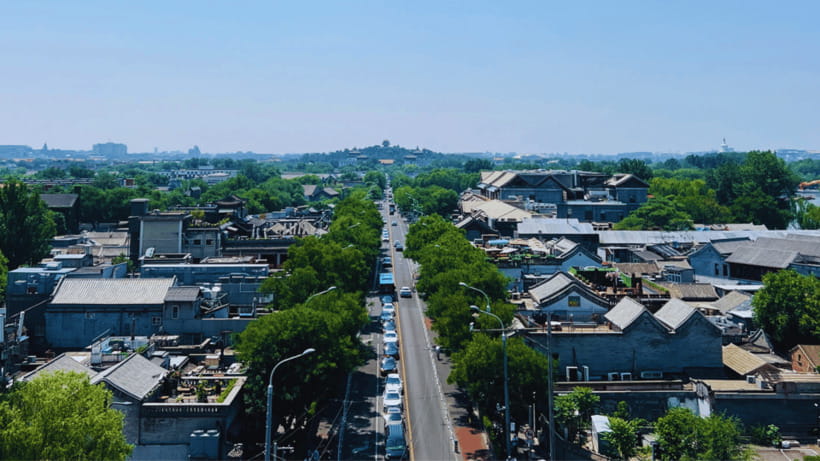
I would recommend the Bell and Drum Towers to people who like history that can be seen at full scale. The enormous bell and drums are easier to remember than a room of small artifacts, and the climb gives the visit a physical element.
It is especially well suited to:
- History and culture enthusiasts
- Photographers interested in traditional architecture
- Visitors who enjoy independent sightseeing
- People curious about imperial city routines
- Anyone looking for a central Beijing landmark with a short performance option
Families and mixed-interest groups may also find the towers useful because the visit can be kept short or expanded. The drums provide a clear visual focus, while the climb gives younger visitors something active to do.
I would be more cautious if you need a guaranteed performance, a detailed spoken explanation, or a fully managed itinerary. The drum show is not guaranteed at a particular time, and the ticket does not include a live guide or audio guide.
Language may require some patience. The English PDF helps, but direct communication onsite may not always be easy. The experience works best when you are comfortable with a self-guided format and a little advance preparation.
Small practical details that make a difference

Bring your passport or ID card. This is specifically required, and forgetting it could create an avoidable problem at entry.
Check the performance schedule as soon as you arrive. If the five-minute drum display is important to you, organize the rest of your visit around that time rather than assuming it will happen on demand.
Wear footwear suitable for climbing. The towers are historic structures, and the Drum Tower visit includes reaching the top. The provided information does not give detailed accessibility guidance, so anyone concerned about stairs or mobility should confirm conditions before booking.
Download or open the English PDF before you begin. A self-guided visit is easier when the information is ready, especially if you want to read about the Yuan Dynasty origins and the Yongle-era bell while you are looking at the buildings.
Allow room in your schedule. The activity lists a four-hour duration, but the performance time can vary and the best pace is not a rushed one. The towers are central, so this visit can fit well into a wider day of sightseeing, though the exact transport arrangements are not included.
Should you book the Bell and Drum Towers?
I would book this experience if you want a modestly priced, independent look at Beijing’s old civic life. The 63-ton bell, the 25 drums, and the chance to hear a short performance give the visit more substance than a simple exterior photo stop.
Book it with realistic expectations. You will not have a live guide, a private explanation, or a guaranteed drum show at a chosen hour. You will have entry to both historic towers, an English PDF, room to explore, and a direct look at the instruments that once set the pace of the city.
For history lovers and photographers, that is a fair trade. If your schedule is already full of major palaces and temples, this may feel less urgent, as one Spanish visitor put it, an optional stop after the main sights. But if you want to understand how ordinary time was announced in imperial Beijing, these towers make that idea wonderfully concrete.
FAQ
What does the ticket include?
The ticket includes entry to both the Bell Tower and Drum Tower, along with an English PDF guidebook for the site.
Is a live tour guide included?
No. The experience does not include a live tour guide or an audio guide. It is designed for independent exploration with the English PDF.
Can I see a drum performance?
You may see a five-minute drum performance at the Drum Tower. The exact time can vary according to the onsite schedule, so it is not guaranteed at a specific hour.
How long does the visit last?
The stated duration is four hours. You can use that time to visit both towers, wait for the performance, read the guidebook, and take photographs at your own pace.
What identification should I bring?
Bring your passport or ID card, as identification is required for the visit.
Can I cancel the booking?
Yes. You can cancel up to 24 hours in advance for a full refund. The reserve now and pay later option also lets you keep your plans flexible.
New reviews from Beijing
- Mutianyu Wall, Summer Palace & Old Summer Palace Day Tour★ 4.8 · 34 reviews
- Night Market Haggling Adventure with an English Guide!★ 4.8 · 7 reviews
- BusDa-Mutianyu Great Wall&Forbidden City Full-day Coach Tour★ 4.9 · 11 reviews
- Mutianyu Great Wall Ticket with Roundtrip Cable Car★ 5.0 · 20 reviews
- Mutianyu Great Wall Bus Trip+Ticket 7/8/9/10/13/13:30/15:30★ 4.7 · 24 reviews
- Mutianyu Great Wall Entry Ticket Chairlift Up Toboggan Slide★ 4.9 · 8 reviews
- Mutianyu Great Wall 5-KM Guided Hike with Uphill Cable Car★ 4.8 · 16 reviews
- Mutianyu Great Wall Admission Ticket★ 3.6 · 7 reviews
Historical Tours, compared.
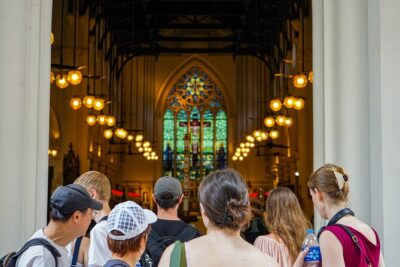
Between Capitalism & Communism: Hong Kong History Tip Based Tour
Read our review →
Beijing Historical Tour II including Summer Palace, Lama Temple & Panda Garden
Read our review →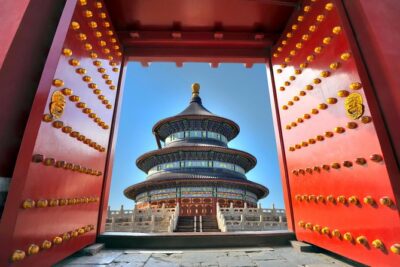
Beijing Historical Tour I – Forbidden City, Tiananmen Square & Temple of Heaven
Read our review →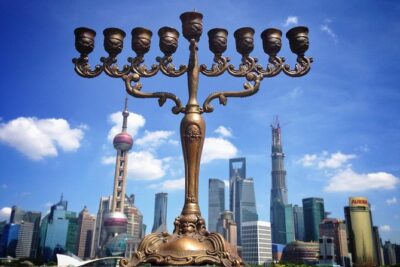
Tour of Jewish Shanghai led by a Jewish History Expert
Read our review →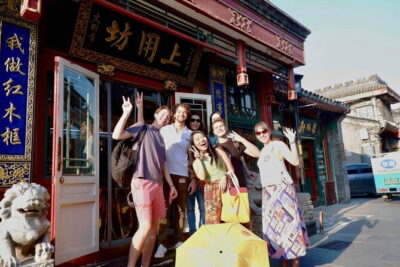
Beijing Historic City Guided Walking Tour + Calligraphy Creation
Read our review →
Beijing Culture: Tea Ceremony, Heritage Instrument & Calligraphy
Read our review →
Xi’an Full Day Sightseeing Tour – Shaanxi History Museum, Big Wild Goose Pagoda, Ancient City Wall
Read our review →
Private Historical Tour: Guangzhou City Sightseeing Including Lunch
Read our review →Browse the lists this tour appears in