
Reviewed · TOURS IN LHASA
10 Days Tibet Everest Base Camp and Namtso Small Group Tour
Everest Base Camp is the headline, but Tibet’s high-altitude journey is the real experience. In 10 days, you move from Lhasa’s temples and markets to glacier passes, Yamdrok Lake, Rongbuk Monastery, and the broad blue basin of Namtso. I like the way this trip combines major sights with smaller places such as Dadong Village, rather than keeping you inside the usual city circuit. I also like that permits, hotels, transport, breakfasts, and an English-speaking Tibetan guide are arranged in advance.
The catch is the altitude and the long drives. Day 5 can run for about 12 hours, and the route crosses passes above 5,000 meters. The schedule also contains a confusing reference to a 15-day journey on Day 10, although the advertised experience lasts 10 days, so you should confirm the final plan before paying.
The essential details at a glance
- Everest and Namtso in one trip: Reach Rongbuk Monastery for views toward Everest, then continue to Namtso, one of Tibet’s holy lakes.
- A small minibus group: The maximum group size is 12, a practical size for long road days and monastery visits.
- A strong Lhasa opening: Potala Palace, Jokhang Temple, Barkhor Street, Drepung, Sera, and a Tibetan village fill the first three days.
- High passes require care: The route reaches Gampala at 4,790 meters and Gyatsola at 5,248 meters.
- Most core costs are covered: Hotels, nine breakfasts, listed entrance fees, permits, transport, airport or train pickup, and an oxygen cylinder in the vehicle are included.
- Plan well ahead: You need to provide passport and China visa copies at least 20 days before departure, and the tour is commonly booked well in advance.
Why this route works so well
I like the order of this tour. You begin in Lhasa, where you can spend several days seeing temples and getting used to the altitude before heading toward Everest. Then the route moves through the central Tibetan countryside, reaches the highest point of the trip, and returns toward Lhasa for Namtso.
That structure does not remove the altitude challenge, but it is more sensible than rushing straight from the airport to Everest. You still need a moderate level of fitness. Walking inside monasteries, climbing steps, sleeping at high elevation, and sitting in a minibus for hours can wear you down.
The English-speaking guide is central to the experience. Several guides are praised by name, including Lobsang, Tseyang, Ga Rong, Tenzin, and Bai. The strongest descriptions focus on guides who explain Tibetan history, religion, and daily life, help with difficult temple steps, and handle practical needs with patience. One account also describes poor organization and safety concerns, so I would treat guide quality and day-to-day coordination as important parts of the booking decision, not minor details.
Your group can include up to 12 people. That is small enough to keep monastery visits manageable, but not so small that the trip feels private. The minibus is a useful tradeoff. You get shared transport and lower cost, but the long road sections will feel long, especially on the Everest and return days.
What else travellers book in China:
- From Beijing: Mutianyu Great Wall Tours with Options
★ 4.9 · 9,216 reviews - Beijing: Forbidden City Tour(Group/Private)-Tickets Included
★ 4.8 · 7,974 reviews - Beijing: T-Square & Forbidden City Group or Private Tour
★ 4.8 · 4,446 reviews
Lhasa begins with palaces, pilgrims, and old streets
Arrival day is simple. A Tibetan guide meets you at Lhasa airport or railway station and takes you to a downtown hotel. The drive includes views of the Yarlung Tsangpo River and the approach to Lhasa, giving you time to settle in before the sightseeing starts.
A welcome dinner is included when the group meets in Lhasa. Lunches and other dinners are not included, so budget for meals beyond that first group dinner. Breakfast is included each morning, and drinking water is provided during the trip.
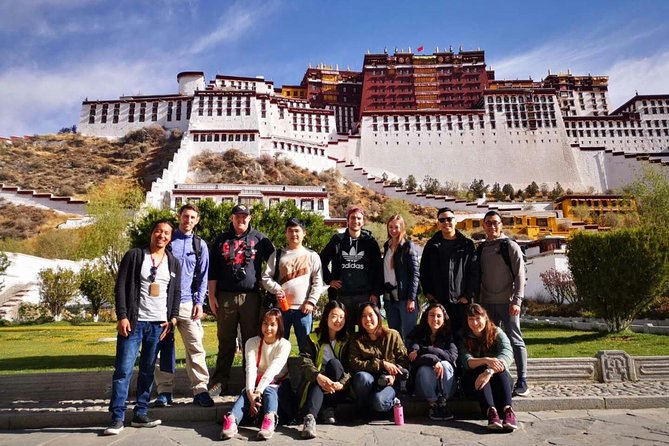
Day 2 starts with Potala Palace, the former winter palace of the Dalai Lama. The visit is scheduled for about 90 minutes. That is enough for a focused visit, but not enough to linger over every room and collection. The palace is both an architectural landmark and a religious site, so expect a structured visit rather than a relaxed wander.
After lunch, you visit Jokhang Temple, also for about 90 minutes. Its central image is a statue of Buddha Sakyamuni said to date from the time of Tibet’s 33rd great king. This is one of the places where a good guide adds real value, since the religious meaning of the building and the rituals taking place around it are not always clear to a first-time visitor.
Barkhor Street circles Jokhang Temple. You have about an hour here to walk with pilgrims performing kora, the clockwise religious circuit, and to explore the old market. The plan also includes a chance to taste Tibetan tea with local people in a tea house. This is one of the day’s best elements because it gets you away from sightseeing as a checklist and into a living part of Lhasa.
Day 3 adds a village and Sera’s famous debates
Day 3 begins with Dadong Village, about 25 kilometers southwest of central Lhasa. It is described as a preserved old Tibetan village surrounded by mountains, with several hours allocated to the visit. This gives the trip a different rhythm from the grand religious sites. You can see a more local setting and get a sense of traditional village life without leaving the Lhasa area.
The schedule calls this stop Drepung Monastery in one place and Dadong Village in another, another detail worth confirming with the operator. The itinerary may include both, or the naming may be inconsistent. Ask for the final day-by-day schedule before departure.
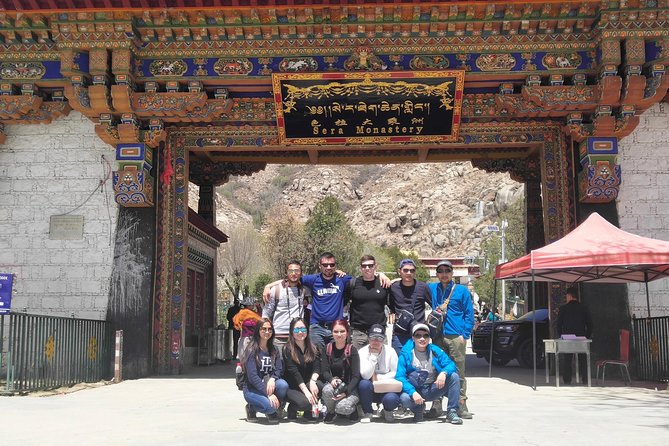
In the afternoon, you visit Sera Monastery, one of the great Gelug monasteries. The main attraction is the monks’ debate, usually held between about 3 and 5 p.m. The debates are energetic and physical, with gestures and quick exchanges, and they give you a memorable view of Tibetan Buddhist training. Two hours is a useful amount of time here.
This is also where the guide’s role matters. A guide such as Ga Rong or Tseyang can explain what the debate means rather than leaving you to watch a lively performance without context. At the same time, the debate schedule can change, so do not treat the stated time as a guarantee.
Yamdrok and Gyantse bring the first big road day
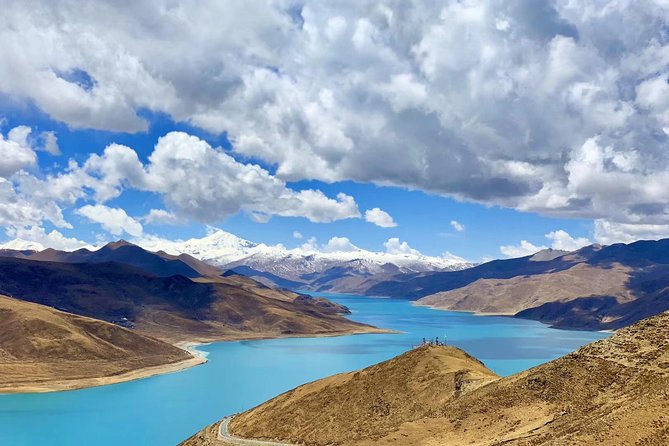
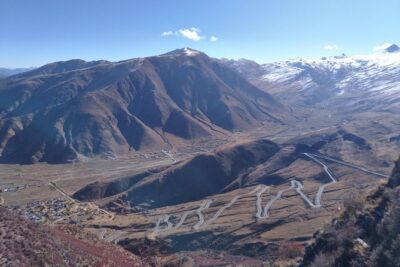
On Day 4, the minibus leaves Lhasa for Shigatse. The first major stop is Yamdrok Yumtso, reached after crossing Gampala Pass at 4,790 meters. The lake sits around 4,400 meters and is surrounded by snow-covered mountains.
The planned stop at Yamdrok is only about 30 minutes. That is enough to step out, take in the view, and photograph the lake, but not enough for a long walk. At this altitude, a short stop may be welcome. Move slowly, drink water, and do not expect your usual energy.
The road continues past Karola Glacier, visible from the roadside, and Manak Dam Lake. At Simila Mountain Pass, you can hang prayer flags. These stops are brief, but they break up the drive and add cultural meaning to the scenery.
You then reach Gyantse, historically Tibet’s third-largest city after Lhasa and Shigatse. The day is less about extended sightseeing and more about the transition from city temples to high mountain travel. If you prefer slow travel with long stays in each place, this schedule may feel rushed. If you want to cover the main sights across central Tibet, it uses the available time well.
Same city, a completely different day:
- Beijing: Mutianyu Great Wall Daily Tour with Ticket & Lunch
★ 5.0 · 3,056 reviews - All-Inclusive Tour: Tiananmen Square, Forbidden City, Great Wall
★ 5.0 · 2,873 reviews - MuBus: Mutianyu Great Wall ENG/ESP/RUS Guided Bus Tour
★ 5.0 · 2,361 reviews - 4-Hour Small Group Tour to Forbidden City with Entry Tickets
★ 5.0 · 1,863 reviews
The Everest road is spectacular and demanding
Day 5 is the toughest day on paper. After obtaining the Alien’s travel permit, you drive toward Lhatse for lunch, then cross Tsola Pass at about 4,600 meters and Gyatsola Pass at 5,248 meters. After that, the route enters the Qomolangma National Nature Preserve, the protected area around Mount Everest.
The day can last roughly 12 hours. That matters more than the mileage. You are not simply riding through the countryside for a few pleasant hours. You are spending most of a day in a vehicle, at high altitude, with short stops and a late arrival possible.
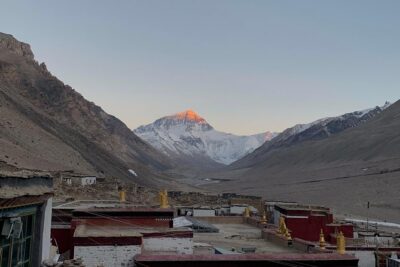
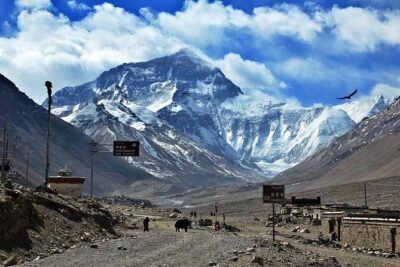
The reward is the approach to Everest. The mountain can appear as a snow-covered pyramid beyond the plateau and passes. Weather controls the view, and the operator specifically notes that bad weather or other conditions can force changes or cancellations. Keep expectations flexible. You may get a perfect view, a partial view, or cloud cover.
The vehicle carries a 4-liter or 7-liter oxygen cylinder. That is a useful safety provision, but it is not a substitute for medical advice or a slow pace. You should be honest about your health and fitness before booking. The tour asks for moderate physical fitness, and this is not a low-altitude sightseeing holiday.
Rongbuk Monastery puts Everest in context
Day 6 begins with sunrise views from Rongbuk Monastery. The monastery is the vantage point for the Everest area, and the schedule allows about an hour. This is the emotional high point of the trip for many people because the mountain is not a distant shape on a map. It fills the view above a Tibetan religious site.
The night at Rongbuk is in a dormitory bed at Rongbuk Guest House. That is a major practical detail. Do not expect the same hotel comfort you had in Lhasa. A dorm bed and high-altitude conditions make this one of the more basic nights, but staying near the mountain is part of what makes the route possible.
The package includes the Everest Base Camp shuttle bus, platform service fee, and listed entrance fees. The exact sightseeing sequence can be affected by local access rules and weather. Confirm how far the vehicle goes and what portion of the final approach uses the shuttle.
Tashilhunpo gives the return journey purpose
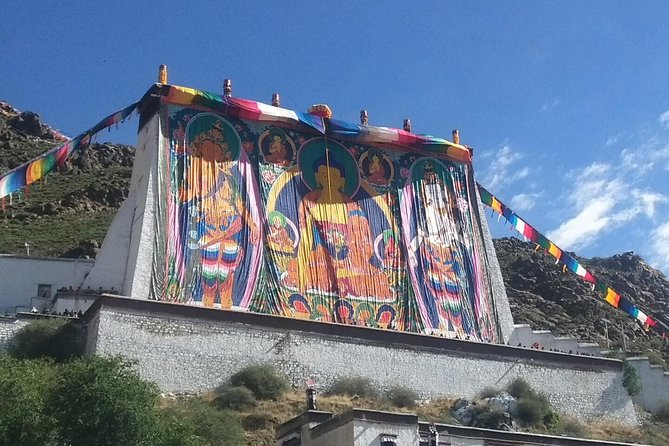
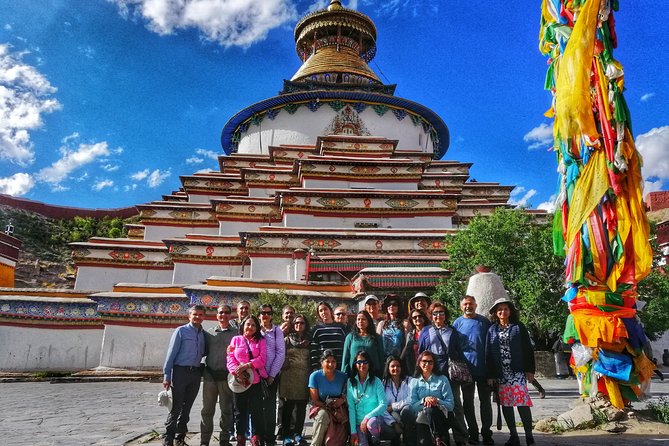
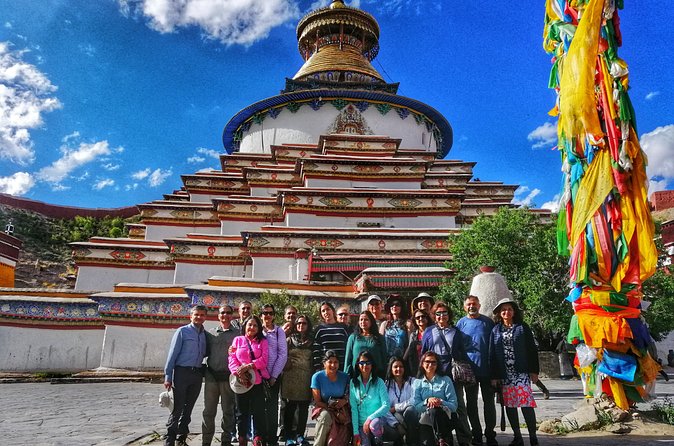
On Day 7, you visit Tashilhunpo Monastery, the seat of Tibet’s second-highest incarnation, the Panchen Lama. The visit lasts about two hours. It is an important religious site and helps balance the trip, which might otherwise become too focused on scenery and Everest photographs.
Afterward, the group drives about 280 kilometers back toward Lhasa. This is another road-heavy day, though it should feel easier than the push to Everest. If you are tired, use the drive to rest rather than trying to fill every minute with photographs.
The itinerary does not clearly state the overnight arrangement for every night in the return section, although it says accommodation and twin-sharing hotels are included. Ask for the hotel list, especially for the nights outside Lhasa. A single room supplement is available if space allows and costs extra.
Namtso offers a different kind of high-altitude view
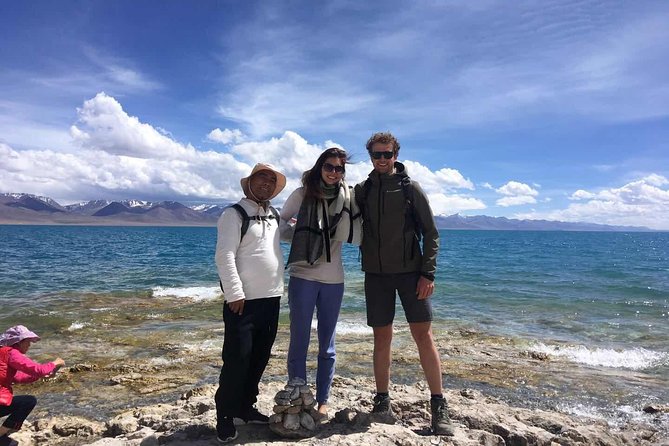
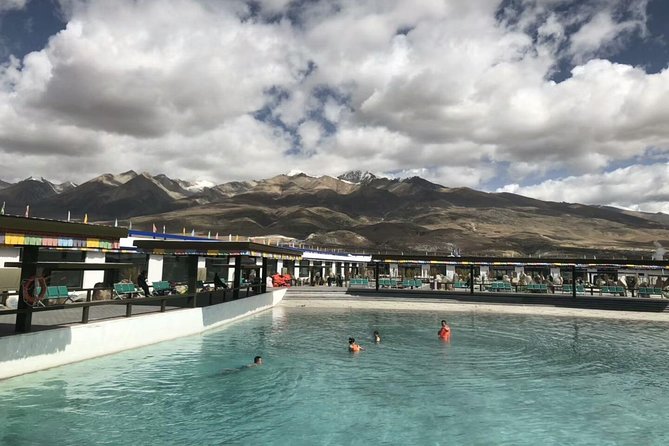
Day 8 takes you from Lhasa to Namtso, one of Tibet’s four holy lakes and described here as the world’s highest saline lake. The route includes views of the snow-covered Nyenchen Thanglha mountain range.
At Zhaxi Peninsula, you visit the largest of five holy islets within Namtso. The islets are connected with the Five Buddhas, and Tashi Island gives a wide view across the lake. The planned visit lasts about two hours, enough to appreciate the setting without turning the day into a long hike.
Namtso is not simply a second version of Everest. Everest gives you one towering peak and a powerful sense of height. Namtso spreads out in a broad, open setting, with water, mountain ranges, and religious symbolism shaping the experience. The lake is also high, so the cold and thin air remain part of the day.
On Day 9, you take an off-road vehicle and tourist shuttle bus to Stone Elephant Gate on the lake’s northern shore. The stated stop time is only one minute, which appears to be a schedule error. Confirm how much time you actually have there. The site is described as one of Namtso’s most striking viewpoints, so a one-minute visit would make little practical sense.
What the $1,329 price really covers
At $1,329 per person, based on double occupancy, the price is strongest if you value having the paperwork and major transport handled for you. Tibet travel requires permits, and the package includes the Tibet Travel Permit plus other necessary permits, though not the Chinese L visa itself.
The price also includes:
- Airport or train station pickup and drop-off in Lhasa
- Transportation by minibus with an experienced local driver
- English-speaking Tibetan guide
- Twin-share accommodation and breakfasts
- Rongbuk dormitory accommodation
- Entrance fees for listed sights
- Everest Base Camp shuttle and platform fee
- Oxygen in the vehicle
- Drinking water
- Liability travel insurance
- Tibet map
- Welcome dinner
You still pay for your flight or train to Lhasa, lunches, most dinners, guide and driver tips, and any single-room supplement. The package is not all-inclusive in the usual resort sense, but it covers the expensive and difficult pieces: permits, long-distance transport, accommodation, and access fees.
You need to submit passport and China L visa copies at least 20 days before departure. If you enter Tibet from Kathmandu, the visa process differs. You should not apply for a China L visa in advance in that case, because the Tibet Group Visa is arranged through a travel agency in Kathmandu using the operator’s invitation letter. If you enter from another Chinese city, you need the China L visa from the Chinese embassy in your own country.
Who should book this Tibet tour?
I would choose this trip if you want the main Tibetan sights in one organized route and accept long road days. It suits you if Everest, Lhasa’s major temples, and Namtso all matter more than free time or luxury accommodation.
It is also a good fit if you want a local English-speaking guide. Strong guides such as Lobsang, Tseyang, Ga Rong, Tenzin, and Bai have been singled out for warmth, religious and cultural explanations, practical help, and a good sense of responsibility. Ask whether a named guide is available for your departure, since guide assignments can change.
I would hesitate if you dislike shared transport, dormitory rooms, high passes, or fixed schedules. I would also ask detailed questions before booking because of the 10-day versus 15-day wording, the unclear Drepung and Dadong listing, and the one-minute Namtso stop.
The cancellation terms are fairly strict near departure: full refunds are available up to six full days before the start, with partial refunds possible two to six days before. Last-minute cancellations are not refunded.
FAQ
How long is the Tibet Everest Base Camp and Namtso tour?
The experience is advertised as a 10-day tour. One itinerary note refers to a 15-day journey, so you should confirm the final duration and schedule with Tibet Vista before booking.
What is included in the price?
The price includes Tibet permits other than the Chinese L visa, accommodation, nine breakfasts, transport, an English-speaking Tibetan guide, listed entrance fees, Everest shuttle and platform fees, airport or train station transfers in Lhasa, drinking water, oxygen in the vehicle, a welcome dinner, and liability travel insurance.
Are meals included?
Nine breakfasts and one welcome dinner are included. Lunches and other dinners are not included.
How large is the group?
The tour has a maximum of 12 people and uses a minibus or van with a local driver.
Do I need a visa or permits?
You need the appropriate China or Tibet travel documentation. Passport and China L visa copies must be provided at least 20 days before departure so the operator can arrange the Tibet Permit. Entry from Kathmandu follows a different Tibet Group Visa process.
Is the tour suitable for every fitness level?
No. A moderate level of physical fitness is required. The itinerary includes monastery walking, high-altitude stops, long minibus journeys, passes above 5,000 meters, and a basic dormitory night near Rongbuk.
Should you book it?
Book this tour if you want a practical way to connect Lhasa, Everest, and Namtso without arranging permits, mountain transport, hotels, and entrance fees yourself. Its best features are the strong cultural opening in Lhasa, the chance to sleep near Everest, the small group size, and the guides who bring real warmth and explanation to the temples.
Before committing, confirm the exact number of days, hotel list, guide assignment, Namtso schedule, and what happens if weather blocks Everest views. If you can handle thin air, long drives, and a few basic nights, this is a valuable route for seeing Tibet’s major spiritual and natural sights in one concentrated trip.
New reviews from China
- Shanghai: 3-Hour Old Shanghai City Tour★ 4.9 · 45 reviews
- Sichuan: Big Panda Volunteer Day tour★ 4.4 · 10 reviews
- Nanjing:Must-See Attractions in One Day+Customized Itinerary★ 5.0 · 3 reviews
- Mutianyu Wall, Summer Palace & Old Summer Palace Day Tour★ 4.8 · 34 reviews
- Night Market Haggling Adventure with an English Guide!★ 4.8 · 7 reviews
- BusDa-Mutianyu Great Wall&Forbidden City Full-day Coach Tour★ 4.9 · 11 reviews
- Mutianyu Great Wall Ticket with Roundtrip Cable Car★ 5.0 · 20 reviews
- Nanjing: Night Cruise on Outer Qinhuai River for Adults★ 4.0 · 4 reviews
Tours in Lhasa, compared.
Tibet Tour 8 Days Lhasa to Everest Base Camp Small Group Tour
Read our review →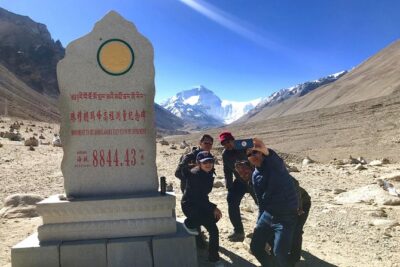
7 Days Lhasa to Kathmandu Overland Small Group Tibet Tour via EBC
Read our review →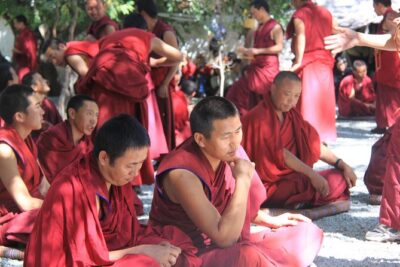
8 Days Lhasa Gyantse Shigatse Mt Everest Group Tour
Read our review →Browse the lists this tour appears in