
Reviewed · YU GARDEN & THE BUND TOURS
Shanghai Hidden Histories Walking Tour: Suzhou Creek to The Bund
Shanghai’s most revealing stories often sit away from its biggest landmarks. This small-group walk from Suzhou Creek to The Bund links a wartime memorial, old steel bridges, renovated lanes, and treaty-port buildings into one clear story about how Shanghai changed.
I like the maximum of six people, which leaves room for real questions, and I like Charlotte’s habit of connecting architecture with everyday food and city life. The main drawback is the price: at $120 per person, this is not a casual bargain walk, and the museum admission, transport, food, and snacks cost extra.
Key points to know
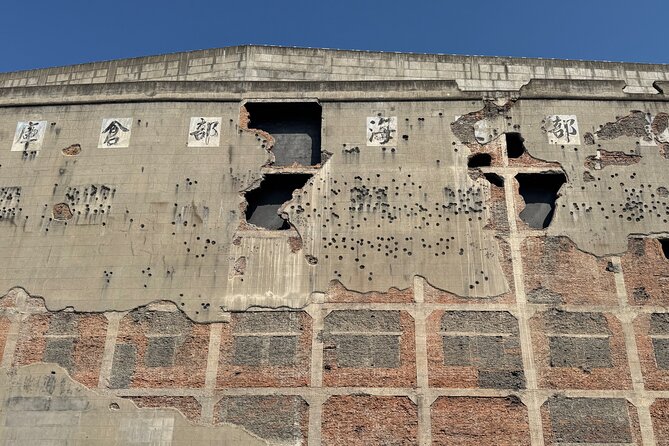
- Sihang Warehouse sets a serious tone, with bullet-scarred walls and the story of 400 Chinese soldiers in 1937.
- Suzhou Creek gives the walk a working-city feel, linking Shanghai’s industrial and commercial past to its modern waterfront.
- Charlotte brings architecture to life, with special attention to the stories behind The Bund’s grand buildings.
- The group is capped at six people, useful for conversation and questions.
- The route ends on The Bund near East Nanjing Road, well placed for an evening stroll or dinner.
- One coffee or bottled water, a digital map, and a photo are included, while museum entry and food are not.
Why this Suzhou Creek walk feels different
This is not a quick parade of famous sights. It is a three to four-hour walk built around connections: war to rebuilding, industry to finance, old bridges to new city life, and foreign-run institutions to modern Shanghai.
You begin at 245 Xin Zha Lu in Huangpu at 3:00 p.m. The afternoon start is practical. It avoids the hottest part of the day better than a midday walk, and the route finishes along The Bund, where the riverfront takes on a different mood later in the day.
I like the pace promised here. You are not being pushed from one photo stop to the next. The guide has time to explain why a bridge matters, what a building once did, or how a quiet lane fits into the larger story.
The group limit matters, too. With no more than six people, Charlotte can speak in a natural way rather than project to a crowd. You can ask about architecture, wartime Shanghai, local food, or the buildings along the river without waiting for a long line of people to move on.
Other old and new Shanghai on one trip:
- Best of Shanghai Day Tour, including Jade Buddha Temple & Bund & Yuyuan Garden
★ 4.0 · 338 reviews - Shanghai: Yu Garden Admission Ticket
★ 4.6 · 260 reviews - Yu Garden, Old Street, Bund & Zhujiajiao Water Town Bus Tour
★ 4.7 · 244 reviews
Sihang Warehouse and Shanghai’s wartime memory
The first major stop is Sihang Warehouse Memorial Museum, a solemn riverside site with a direct connection to the fighting in 1937. The warehouse was the scene where 400 Chinese soldiers held their position, and the bullet-scarred walls give the story a physical force that a general history lesson cannot match.
You have about 20 minutes here. That is enough for an exterior look and an explanation of the site, but it is not a long museum visit. Admission is not included, so you should budget separately if you want to enter.
This stop gives the walk its moral and historical center. Shanghai is often presented through its skyline, shopping streets, and grand hotels. Sihang Warehouse reminds you that the city’s modern story also includes invasion, resistance, and loss.
The setting beside Suzhou Creek adds another layer. The waterway was not simply a pretty line through the city. It was tied to movement, trade, industry, and the growth of Shanghai as a port. Starting here helps you read the rest of the route as a story about a city under pressure and constant change.
Yanqingli and the useful afterlife of old spaces
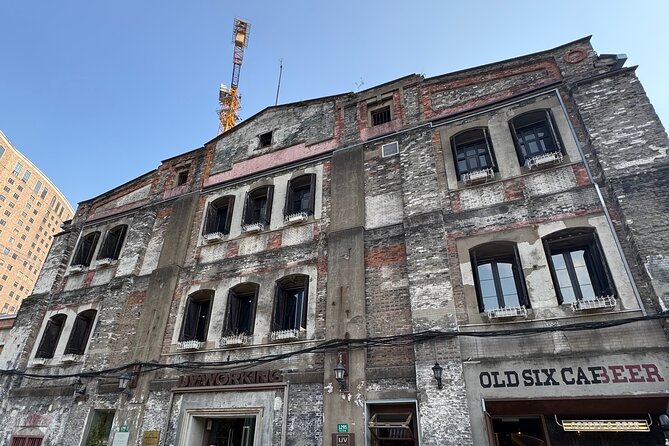
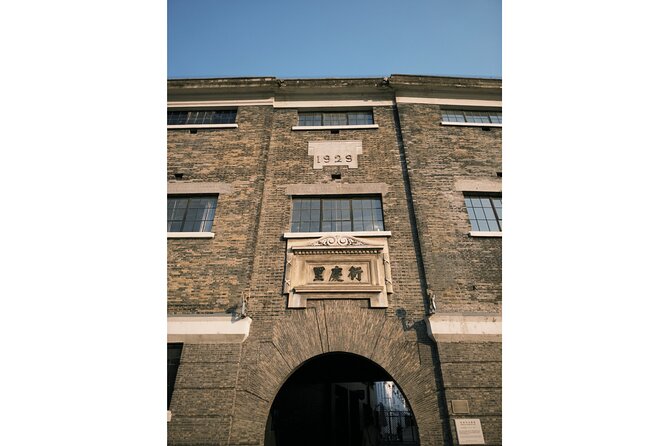
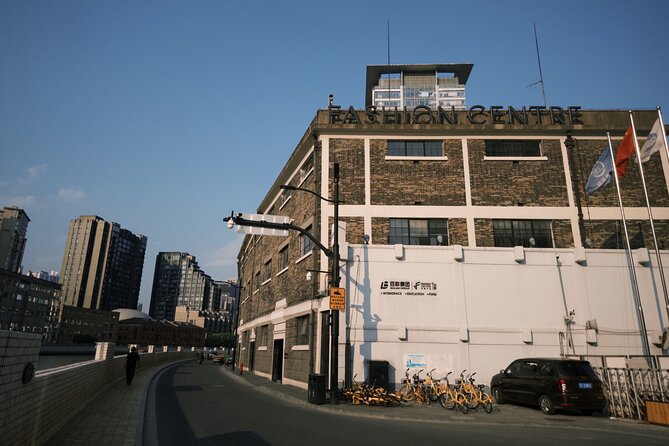
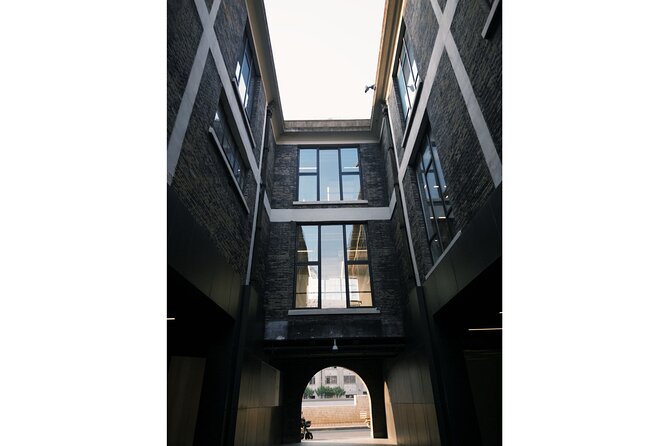
Yanqingli is a much shorter stop, listed at about five minutes, but it supplies a helpful contrast to Sihang Warehouse. Here, older spaces have been renovated for cafés, galleries, and studios.
I would not expect a long tour of the interiors. The value is in seeing how Shanghai handles older neighborhoods when the city is still growing fast. Preservation here is not presented as freezing a district in the past. The buildings are being used again.
That makes Yanqingli a good place to ask Charlotte about the balance between old fabric and new business. A café or studio may look modern inside, yet the lane itself can preserve clues to an earlier Shanghai.
The stop is brief, so keep your expectations in check. This is a visual and interpretive pause, not a full cultural venue visit. Its importance becomes clearer when Charlotte places it beside the wartime warehouse and the formal architecture near The Bund.
The communication hub and Shanghai’s treaty-port era
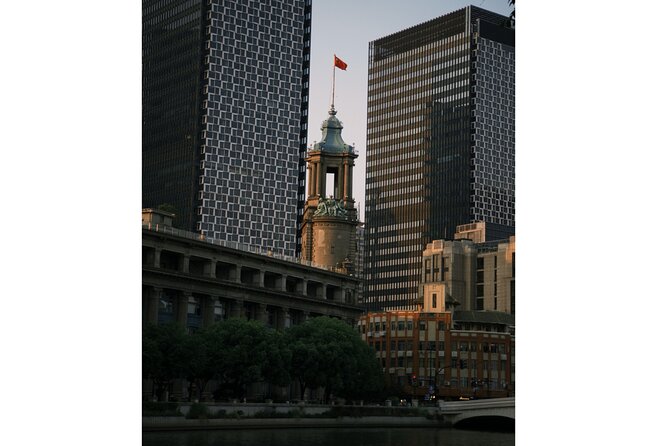
One stop on the route focuses on a building that served as an international communication center during Shanghai’s treaty-port period. The building represented the city’s role as a gateway for commerce, ideas, and people.
The supplied details do not identify the building by name, so I would treat this as a guided architectural explanation rather than a promised interior visit. Its value is in learning how a building can reveal the city’s international connections.
This is where a good guide makes a real difference. On your own, you may notice a grand façade. Charlotte can help explain what that institution did and why its location mattered. That turns decorative detail into evidence of Shanghai’s former role as an open port shaped by foreign trade and communication.
I especially like this part of the route for visitors who enjoy buildings but do not want architecture reduced to dates and styles. The walk asks what happened inside these places and who used them.
Other trips that stay off the main sights in Shanghai:
- Eat Like A Local: Shanghai Night Food Tour
★ 5.0 · 616 reviews - Eat Like a Local Through Shanghai’s French Concession
★ 5.0 · 353 reviews - Eat Like a Local: Street Breakfast Tour in Shanghai
★ 5.0 · 231 reviews - Secret Noodle and Wonton in Shanghai Alleyways with Local Beer
★ 5.0 · 19 reviews
Zhapu Road Bridge and the working side of the creek
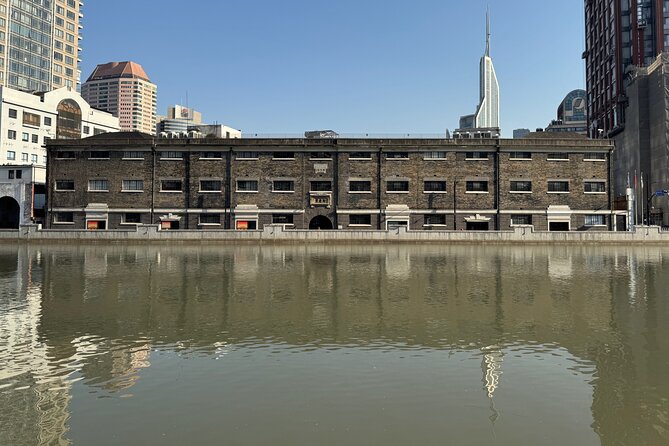
Zhapu Road Bridge, also called Zhapulu Bridge, dates from 1907 and is one of the oldest surviving steel bridges across Suzhou Creek. It connected commercial areas in Hongkou and Huangpu, making it more than a piece of old engineering.
You spend about 20 minutes here. That is enough time to look at the structure, take photographs, and hear how the bridge helped tie two important parts of the city together.
Steel bridges can seem ordinary until you understand the problem they solved. This one reflects a Shanghai that needed reliable connections for business and daily movement as the port expanded. It also gives you a break from grand façades. The city’s growth depended on practical infrastructure as much as banks, hotels, and trading houses.
I like the change of scale here. The Bund can make Shanghai’s past look polished and ceremonial. Zhapu Road Bridge points to the systems underneath that image: transport, commerce, and the need to move people and goods across the creek.
The route is still an active city walk, not a quiet museum circuit. Traffic, pedestrians, and street noise are part of the setting. If you want a completely calm stroll, this may feel busy at times. If you want to see how historic structures remain part of present-day Shanghai, that activity is part of the point.
Waibaidu Bridge at the meeting of two waterways
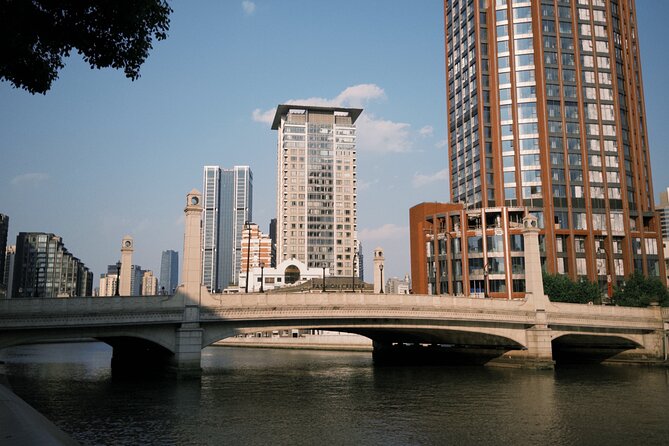
Waibaidu Bridge was built in 1908 and is Shanghai’s first all-steel bridge. It is also the oldest surviving bridge of its kind in the city, spanning the mouth of Suzhou Creek where the creek meets the Huangpu River.
You spend about 15 minutes here. The stop is short, but the location is one of the route’s strongest visual moments. Water, steel, historic buildings, and the broader riverfront come together in one view.
Waibaidu Bridge once marked a threshold between different parts of the city. That makes it useful for understanding Shanghai as a place shaped by boundaries, trade, and movement. It is not just an old bridge to photograph. It helped define how people entered and crossed important parts of the city.
The bridge also prepares you for The Bund. By this point, you have seen the city’s wartime memory, neighborhood renewal, communication networks, and transport links. The grand riverfront buildings will make more sense because you have already considered the infrastructure and institutions that supported them.
The Bund, read as a city rather than a postcard
The final stop is The Bund, or Wai Tan, on the west bank of the Huangpu River. You spend about 15 minutes at the official stop, ending on the riverside promenade near East Nanjing Road at the Swatch Art Peace Hotel.
Most people come here for the skyline and photographs. Those are good reasons, but this walk asks you to look at the buildings as records of Shanghai’s modern history. Banks, trading houses, and other institutions once occupied the grand structures along the waterfront.
Charlotte’s architectural background is especially useful here. A review of the route’s guiding highlights her ability to explain the stories behind the Bund buildings, and that is likely to be one of the strongest parts for anyone interested in design, interiors, or city planning.
You should not expect a full interior tour of the Bund buildings. The focus is on the exterior setting, the architecture, and the historical meaning of the riverfront. Still, the earlier stops give this final section more weight than a simple promenade walk.
The ending is also practical. You can stay on the Bund for photographs, continue along the waterfront, or make your own way toward East Nanjing Road. Since the tour does not include return transport, the central finish gives you plenty of options after the guide says goodbye.
Charlotte’s guiding style and the food connections
Charlotte is the named guide associated with the experience, and her approach appears to be personal rather than scripted. She brings architectural knowledge to the route and connects buildings with the food traditions of Shanghai.
That food element is useful even though meals are not included. Along the way, she can introduce you to local specialties such as xiaolongbao and crab noodles. You should think of this as food guidance and conversation, not a tasting tour. Any café stop or meal is at your own cost.
One complimentary coffee at a selected café, or one bottled water on request, is included. This is a small benefit, but it suits the walk. You have several hours on foot, and a short pause can help you keep your energy up.
A digital citywalk map is also included. I like that feature because it lets you revisit the route later instead of losing the places in a blur of names and photographs. A group photo or self-portrait can be arranged on request using an iPhone, with a digital copy provided.
Is $120 a fair price?
At $120 per person, this costs more than a basic city walk. The price makes the most sense if you value a licensed English-speaking guide, a very small group, and a route built around interpretation rather than simple orientation.
You are paying for roughly three to four hours with a maximum of six people. The price also includes coffee or water, the digital map, and a photo option. It does not include transport, meals, snacks, or museum admission.
I would book it for a first or second visit when you want Shanghai’s history explained clearly. I would skip it if your main goal is a low-cost introduction to The Bund or a quick list of famous sights. You can see the waterfront without paying for a guided walk, but you will not get the same connected story from Sihang Warehouse to the riverfront.
Group discounts may be available, which could improve the value for people booking together. The experience is booked about nine days ahead on average, so planning a little early is sensible if your dates are fixed.
Timing, walking effort, and practical planning
The tour begins at 3:00 p.m. and finishes at The Bund. Transportation to the starting point and return transportation are not included, so allow time to reach 245 Xin Zha Lu before the meeting time.
You need moderate physical fitness. The route covers several hours on foot, with urban surfaces, bridge approaches, and time spent standing at outdoor stops. Wear comfortable shoes and bring water, even though bottled water can be requested.
The tour is near public transportation, and service animals are allowed. Confirmation arrives when you book. If you cancel at least 24 hours before the start time, you can receive a full refund. Cancellations or changes within 24 hours are not accepted for a refund.
The walk is suitable for people who enjoy conversation and close observation. It is less suitable for anyone who wants a bus ride, a long museum visit, or a tightly packed list of indoor attractions.
Who should book this walk?
I would choose this experience if you like architecture, urban history, wartime stories, and the small clues that explain how a city works. It also suits you if you prefer a guide who can answer questions instead of delivering a fixed speech to a large crowd.
Architecture enthusiasts should pay particular attention to the Bund section. History lovers will get the most from Sihang Warehouse and the wartime context. Food-minded visitors can use Charlotte’s suggestions for xiaolongbao and crab noodles to shape a later meal, though food is not part of the tour price.
Families with older children may find the route useful if everyone can manage several hours of walking and serious historical discussion. It is not designed as a children’s activity, and the tone at Sihang Warehouse is solemn.
Should you book it?
Book this walk if you want to understand Shanghai rather than simply photograph it. The combination of Sihang Warehouse, Suzhou Creek, two historic steel bridges, renovated Yanqingli, and The Bund gives you a clear path through the city’s wartime, industrial, commercial, and architectural past.
The strongest reasons to choose it are the six-person limit, Charlotte’s architectural focus, and the thoughtful pace. The main reason to pass is the $120 price, especially if you only want a short look at The Bund.
For a curious visitor who values context, conversation, and a well-connected route, this is a strong use of an afternoon. For a budget-minded sightseer, it is probably more tour than you need.
FAQ
How long does the Shanghai Hidden Histories Walking Tour last?
The experience lasts approximately three to four hours.
Where does the tour start?
The meeting point is 245 Xin Zha Lu, Huangpu District, Shanghai, 200071. The start time is 3:00 p.m.
Where does the tour finish?
The walk ends at the Swatch Art Peace Hotel on The Bund, near the Riverside Promenade and East Nanjing Road.
What is included in the tour price?
The price includes a licensed local English-speaking guide, one complimentary coffee at a selected café or one bottled water on request, a digital citywalk map, and a group photo or self-portrait on request.
Is museum admission included?
No. Admission to Sihang Warehouse Memorial Museum is not included.
How large is the group?
The tour has a maximum of six people.
More walking tours in Shanghai
- Shanghai City Guided Walking Tour | China’s 1st and Best Rated
★ 5.0 · 285 reviews - Shanghai Highlights Walking Tour With A Real Local
★ 4.9 · 153 reviews - Shanghai Breakfast Walking Tour of Former French Concession
★ 5.0 · 139 reviews - Private Shanghai Evening Street Food Walking and Cruise Tour
★ 5.0 · 123 reviews
New reviews from Shanghai
- Shanghai To Beijing Bullet Train Ticket with Local Private Transfer★ 5.0 · 12 reviews
- Shanghai Spicy Food Tour★ 5.0 · 3 reviews
- Shanghai Uncommon Historic Sites Tour★ 5.0 · 3 reviews
- Shanghai Pudong airport transfer to Disneyland:Private with Meet & Great service★ 5.0 · 3 reviews
- Shanghai Tower Observation Deck 118 floor Tickets Pre-booking.★ 5.0 · 4 reviews
- Pudong Airport to Hangzhou: Private with Meet and Greet Service★ 4.5 · 4 reviews
- Private Transfer: Hotel to Shanghai Wusongkou Cruise Terminal (Baoshan Port)★ 3.5 · 6 reviews
- Shanghai Pudong International Airport (PVG) to Shanghai Hotel★ 5.0 · 4 reviews
Yu Garden & the Bund Tours, compared.
Best of Shanghai Day Tour, including Jade Buddha Temple & Bund & Yuyuan Garden
Read our review →
Yu Garden, Old Street, Bund & Zhujiajiao Water Town Bus Tour
Read our review →
Shanghai Day Tour to Zhujiajiao Water Town, Yu Garden, Bazaar, Bund
Read our review →
Huangpu River Cruise and Bund City Lights Evening Tour of Shanghai
Read our review →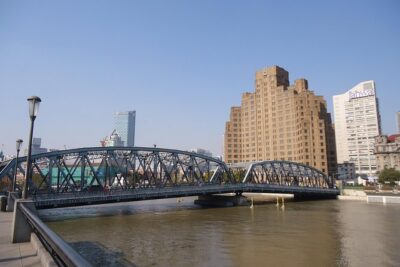
3-Hour Private Tour to Jewish Ghetto and Shanghai Bund
Read our review →
Private Yu Garden, The Bund, French Concession, Pudong Half-Day Tour
Read our review →
Browse the lists this tour appears in