
Reviewed · WORKSHOPS
Mahjong 101 Class for Beginners Workshop
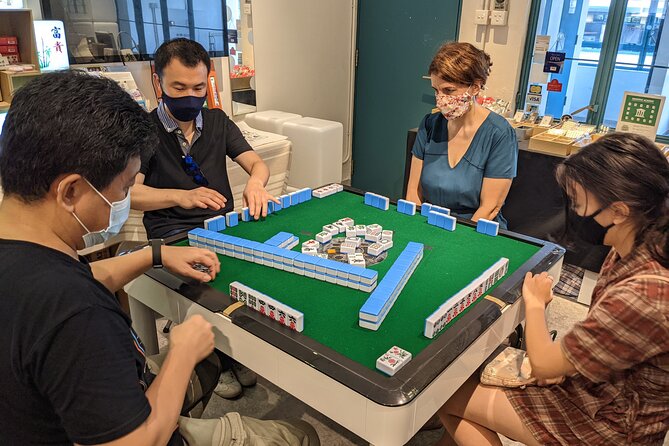
Mahjong becomes much less mysterious once you sit at the table and learn what those decorated tiles mean. At Glocal Mahjong, inside the restored PMQ complex, you spend about two hours learning Cantonese mahjong with a guide named Marco, who also explains how the game developed and why it remains important in Hong Kong life.
I like two things right away: the private format keeps the lesson focused on your group, and the electronic mahjong table makes practice easier for complete beginners. I also like that this is not just a rules lesson. The shop doubles as a small mahjong museum, so you get cultural context along with the play.
The main drawback is the price, $85.28 per person, for a two-hour class. That is a serious outlay for an introduction, though the value improves if you care about local culture, want personal guidance, or can use a group discount.
Key points at a glance
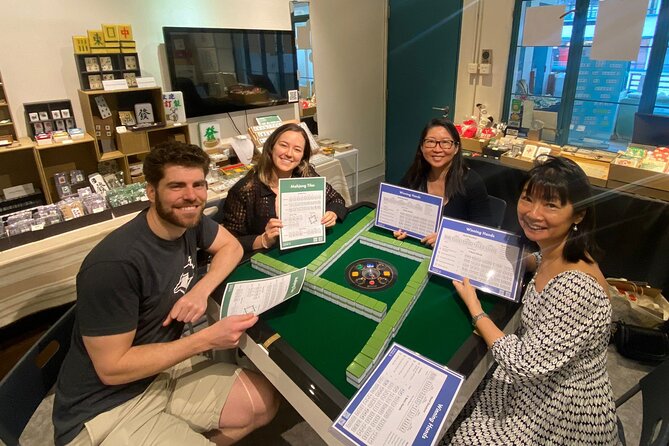
- Cantonese mahjong basics: Learn to identify tiles, understand winning patterns, and follow basic scoring rules.
- Marco’s historical explanations: The lesson includes background on how mahjong began and its place in Hong Kong culture.
- Electronic mahjong table: Practice on equipment supplied by Glocal Mahjong, which helps keep the lesson orderly and hands-on.
- PMQ setting: The class takes place at a restored historic site in Central, inside a shop that also functions as a mini mahjong museum.
- Private group format: Only your group takes part, making this a better choice than a large public lesson if you want to ask questions.
- Flexible booking terms: You can cancel for a full refund up to 24 hours before the start time, subject to the stated weather policy.
Why this two-hour class is worth considering
Mahjong is one of those games that can look impossible from across the room. There are many tiles, several ways to build a hand, and rules that vary from place to place. Cantonese mahjong has its own habits and scoring system, so watching a local game is not the same as knowing how to join one.
This class gives you a starting point. You learn the tile families, how a winning hand works, the basics of scoring, and the etiquette that keeps play friendly. You are not expected to arrive with any knowledge of the game.
I see the class as a cultural activity with a game attached. You get to play, but you also learn why mahjong has such a strong social role in Hong Kong. The lesson can help you recognize what is happening if you later see a mahjong table in a local setting, though you should not expect to become an expert in two hours.
The private format matters. The activity is reserved for your group, rather than mixed with a large public class. That gives you room to ask simple questions without feeling you are slowing down the lesson. It also makes the class a practical choice for families, couples, or friends who want to learn together.
Other things to learn to make in Hong Kong:
- Organic Chinese Dumpling Class with Market Walk
★ 5.0 · 88 reviews - Organic Xiao Long Bao Soup Dumpling Class & Market Walk
★ 5.0 · 62 reviews - Tea Tasting and Pairing Concept Workshop
★ 5.0 · 57 reviews
Starting at PMQ in Central
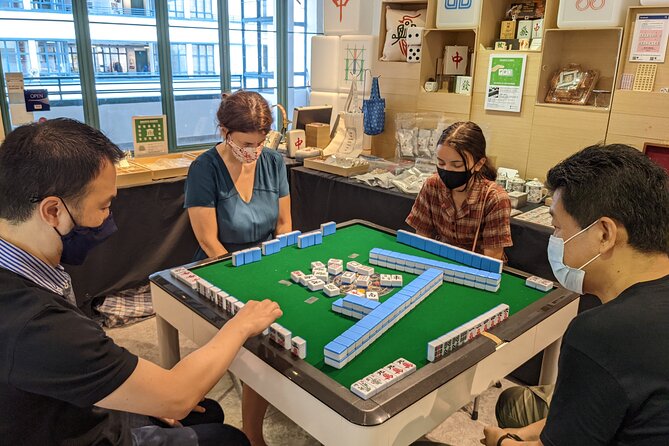
You meet at Glocal Mahjong, listed as 一筒 麻雀, at S405 on the fourth floor of PMQ, 35 Aberdeen Street in Central. PMQ is a restored historic landmark and a cultural center, so the setting gives the activity more character than a plain classroom.
Allow yourself enough time to find the unit inside the complex. The meeting point is specific, but PMQ has several buildings and levels. The exact duration is about two hours, and the activity ends back at the same spot.
The location is also useful if you are planning a wider Central itinerary. You can pair the class with other stops around PMQ and Aberdeen Street, but keep the mahjong appointment as the fixed part of your schedule. A class built around table practice is not something you want to rush into after arriving late.
The shop itself adds to the visit. Glocal Mahjong is a mahjong-themed store and a small museum as well as the teaching space. That means the tiles and objects around you help set the subject before the formal lesson begins. The supplied information does not promise a separate museum tour, so think of the displays as part of the setting rather than a second scheduled attraction.
Learning the tiles before the tactics
The first hurdle is simply recognizing what you are holding. The class covers the tiles, which is essential because mahjong is difficult to follow when every piece looks like a symbol without meaning.
You will learn the basic groups and how they relate to one another. The lesson is aimed at beginners, so this is the point where the table should start to feel less intimidating. I would pay close attention here and ask questions early. A small misunderstanding about a tile can affect every later step.
The class is not limited to memorizing names. You also begin to see how tiles can be combined into a useful hand. That shift, from identifying pieces to seeing possible patterns, is where the game starts to make sense.
Because the session uses an electronic mahjong table supplied by Glocal Mahjong, the practical work takes place with proper equipment. The electronic setup is a useful teaching tool for a first class. It gives the group a clear place to handle the tiles and practice the flow of the game.
Understanding how to win a hand
The next step is learning what counts as a win. Mahjong is not simply a race to collect matching tiles. You need to build a legal hand, watch what is available, and make choices based on both your own tiles and the developing game.
The class introduces winning patterns and basic strategy. You should come away with a sense of why one discard can be better than another and why luck is only part of the result. You will still need plenty of practice before you can play quickly, but you should understand the main objective.
This is where the private setup earns its keep. Beginners often need a rule explained more than once, especially when the same tile can matter in different ways. With only your group at the table, the instructor can adjust the pace and deal with the questions that come up during play.
Do not judge the class by how many complete games you manage to finish. The useful result is learning how a game is organized and recognizing the decisions that shape a hand. If you leave knowing what you are trying to build, the lesson has done its job.
Same city, a completely different day:
- Hong Kong: Dolphin Cruise, Big Buddha & Lantau Island Tour
★ 4.2 · 1,512 reviews - Ngong Ping 360: Cable Car Return Tickets & Combos
★ 4.6 · 1,431 reviews - Lantau Island Day Trip – Big Buddha & Tai O
★ 4.5 · 1,328 reviews - Big Bus Hong Kong Open Top Hop-On Hop-Off Sightseeing Tour
★ 4.0 · 1,077 reviews
Basic scoring without drowning in numbers
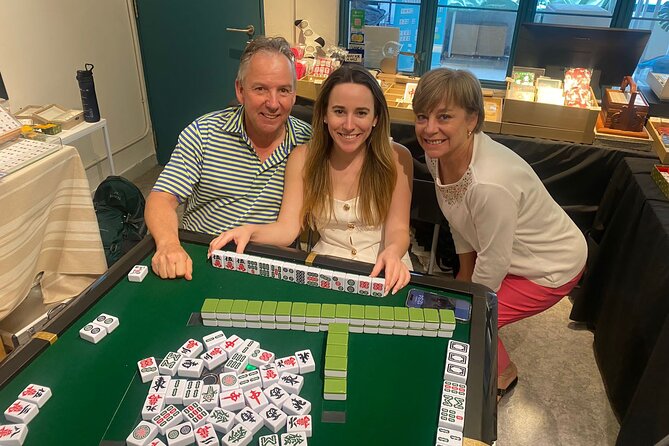
Scoring is often the part that makes mahjong seem forbidding. Cantonese mahjong has rules that go beyond simply declaring a winner, and the class covers the basic scoring system.
That does not mean you will master every scoring detail in one sitting. It means you get the foundation needed to understand why some winning hands are worth more than others. Scoring gives the game its competitive edge, and it also explains why experienced players think several moves ahead.
I appreciate that scoring is included rather than left for a later class. A lesson that teaches only tile recognition and turn-taking would give you a simplified version of mahjong, not a useful introduction to the real game.
Expect to spend some mental energy here. Two hours is enough for an introduction, but it is not a long course. If you are comparing this with a casual cultural demonstration, this class asks more of you. That is also its benefit: you get an actual foundation instead of only a look at the equipment.
Etiquette and the social side of mahjong
Mahjong is a social game, and basic etiquette matters. The class explains how to behave at the table, not just how to arrange tiles. That can include the rhythm of play, respect for other players, and the habits that make a competitive game enjoyable.
This part has real value for visitors. You may never enter a local mahjong game, but understanding the social rules helps you see the activity as more than a puzzle. Mahjong brings people together, and its meaning in Hong Kong is tied to conversation, routine, competition, and family life.
The class also gives you a feel for the tension between luck and decision-making. You cannot control every tile you draw, but you can choose how to respond. That balance is a big part of the game’s appeal.
The social element may be especially useful if you are booking with friends or family. You learn the rules together, then have a common activity to discuss afterward. A private booking also removes the awkwardness of joining strangers at a table when everyone is new.
Marco’s historical context
One especially useful detail is the guide’s name: Marco. His role is not limited to moving the lesson along. He also explains how mahjong began and places the game in a wider cultural setting.
That history makes the playing lesson more meaningful. Without context, mahjong can look like a set of symbols and scoring rules. With some background, you begin to see why the game has lasted and why it remains familiar to so many people.
The historical portion should be treated as a supporting part of the class, not a separate lecture. The central activity is still learning to play. If you want a long formal history of mahjong, this is probably too short. If you want enough context to understand what you are doing at the table, it fits well.
Marco’s explanations are also one reason this class has earned such strong feedback. The available rating is five out of five from 18 reviews, with 100 percent recommending it. That is a small sample, so I would not treat it as proof that every learner will have the same response. Still, the consistent praise for the class and Marco’s historical guidance is worth noting.
The electronic table and the hands-on lesson
The electronic mahjong table is a practical feature, not a decorative extra. The table is provided by Glocal Mahjong, so you do not need to bring equipment or know how to set up a game before arriving.
For beginners, an electronic table can reduce some of the fiddly work involved in managing tiles. That leaves more attention for the rules, patterns, and decisions. It also supports the structure of the lesson, since the instructor can demonstrate the playing process at the same table where you practice.
You should still expect the game to feel complicated at first. Technology does not remove the need to watch the tiles or remember the rules. It simply makes the physical side of the lesson easier to follow.
The hands-on format is important. Mahjong is not a good subject for a lecture alone. You need to handle the tiles, see how a hand develops, and make choices. The class gives you that practical contact in a controlled setting.
Price, timing, and overall value
The listed price is $85.28 per person for approximately two hours. That is not an inexpensive introduction, especially for a short activity. You are paying for a private lesson, the use of the electronic table, instruction, and the cultural setting at PMQ.
I would compare it with the cost of other private cultural workshops rather than with a free museum visit. The value is strongest if you want direct instruction and plan to remember what you learn. It is weaker if you only want to see mahjong tiles or take a quick look at the game.
Group discounts may improve the price for a larger booking. Since only your group participates, splitting the cost among friends can make the private format more attractive. Check the available discount when booking, because the exact savings are not provided here.
The class is typically booked about 14 days in advance. That suggests you should reserve before your Hong Kong schedule is full, especially if you need a particular date. Confirmation arrives within 48 hours, subject to availability, so do not assume the booking is final until you receive it.
The activity is near public transportation, which helps with access in Central. Exact transport directions are not provided, so plan to use the listed PMQ address and allow time to locate the fourth-floor unit.
Who will enjoy this class most
I would recommend the class to anyone curious about Hong Kong culture who prefers learning by doing. It suits first-time players, small groups of friends, couples, and families looking for an activity that is more distinctive than a standard sightseeing stop.
It is also a good pick if you already know a little mahjong but want to understand the Cantonese style. The description welcomes both beginners and experienced players, though the stated learning goals focus on basic skills. Advanced players should confirm in advance how much the instructor can adapt the lesson.
The class may not suit you if you dislike rules-heavy activities or want a relaxed demonstration with little participation. Mahjong rewards attention, and even the beginner material requires concentration. The price is also a concern for anyone looking for a low-cost cultural stop.
Most people can take part, and the activity is private. Specific accessibility details are not provided, so you should contact Glocal Mahjong if you have mobility or other access needs that might affect the fourth-floor meeting point or the table setup.
Cancellation and weather details
Free cancellation is available if you cancel at least 24 hours before the local start time. Cancellations made less than 24 hours ahead are not refunded, and changes inside that period are not accepted.
The activity also requires good weather. If poor weather causes cancellation, you will be offered another date or a full refund. The class takes place indoors, but the weather policy still applies, so keep that condition in mind when planning around a tight Hong Kong itinerary.
Should you book the Mahjong 101 class?
Book this class if you want more than a photograph of mahjong tiles. You will learn the basic Cantonese rules, practice at an electronic table, hear cultural background from Marco, and spend time in a shop devoted to the game.
I would be more cautious if your budget is tight or if you prefer short, passive sightseeing stops. At $85.28 per person, the class needs to deliver real value through participation, and it does. The private format and focused instruction make the cost easier to justify for a group that genuinely wants to learn.
For curious beginners, this is a practical way to meet a central part of Hong Kong culture at the table rather than behind glass. Reserve ahead, arrive with time to find Glocal Mahjong at PMQ, and treat the two hours as a first lesson, not a final exam.
FAQ
Where does the Mahjong 101 class take place?
The class takes place at Glocal Mahjong, listed as 一筒 麻雀, unit S405 on the fourth floor of PMQ, 35 Aberdeen Street, Central, Hong Kong.
How long does the class last?
The activity lasts approximately two hours.
What type of mahjong will I learn?
You will learn Cantonese mahjong, including tile recognition, winning a game, basic etiquette, and basic scoring rules.
Is the class suitable for complete beginners?
Yes. The class is designed to teach beginners the basic rules and techniques of Cantonese mahjong.
Who teaches the class?
The supplied information identifies a guide named Marco, who explains the game and its history.
Is the activity private?
Yes. Only your group will participate in the activity.
What equipment is provided?
Glocal Mahjong provides an electronic mahjong table for the lesson.
What is the cancellation policy?
You can cancel for a full refund if you cancel at least 24 hours before the experience start time. Cancellations or changes made less than 24 hours before the start are not accepted for a refund.
What happens if poor weather cancels the activity?
You will be offered a different date or a full refund if the activity is canceled because of poor weather.
New reviews from Hong Kong
- Victoria Peak Tram and Sky Terrace 428 Admission Hong Kong★ 4.5 · 33 reviews
- Walking Tour in Hong Kong – Local Experience (New & Best)★ 4.5 · 33 reviews
- Full Day Private Trip in Hong Kong( impeccable local )walk tour★ 5.0 · 11 reviews
- Hong Kong Guided Dinner + Laser Show Lounge Entry (2023) | 200+ booked★ 3.5 · 7 reviews
- Group Vegetarian Food & Cultural Tour★ 5.0 · 16 reviews
- Hong Kong Victoria Harbour Sightseeing Cruise Tickets★ 4.5 · 8 reviews
- The Legendary Bruce Lee Experience Tour★ 4.5 · 9 reviews
- STARLIGHT: Victoria Harbour Night Yacht Tour★ 4.5 · 38 reviews
Workshops, compared.

Half-Day Chengdu Cooking Class with a Local Market Visit
Read our review →
Organic Chinese Dumpling Class with Market Walk
Read our review →

Online Cooking Class Beijing Dumplings and Cuisine by Sunflowerli Renowned Chef
Read our review →
Organic Xiao Long Bao Soup Dumpling Class & Market Walk
Read our review →
Beijing Wangfujing Calligraphy Class by Forbidden City
Read our review →Browse the lists this tour appears in