
Reviewed · LAMA TEMPLE TOURS
Beijing: Yonghe Lama Temple Tickets with guide (optional)
Yonghe Lama Temple gives you a close look at Beijing’s religious architecture without sending you far from the city center. The complex combines Tibetan Buddhist design with Chinese imperial planning, and its courtyards grow narrower as the halls rise toward the north. I like the pre-booked ticket because it removes one small chore from a busy sightseeing day, and I like the chance to add an English-speaking guide if you want help reading the site.
The main point to watch is timing. The temple closes earlier in the colder months, and the supplied opening information gives slightly different last-entry details, so I would arrive well before 4 p.m. This visit is also not suitable for wheelchair users.
Key points before you book
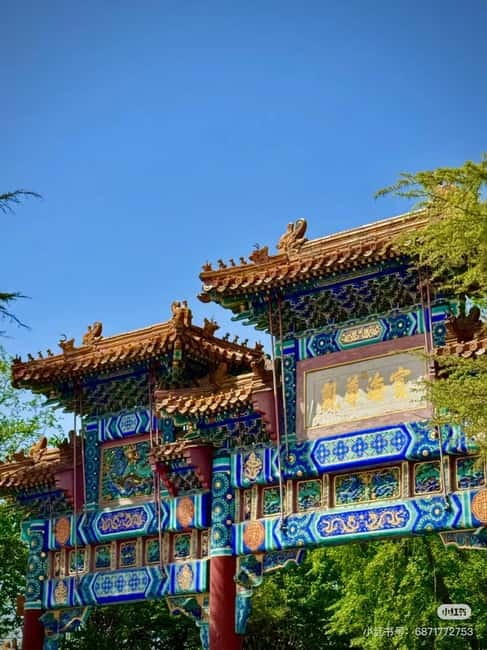
- Three archways lead into a large temple complex: The grounds cover 66,400 square meters and contain more than 1,000 rooms.
- Five main halls form the backbone of the visit: Look for Yonghe Gate, the Grand Hall, Yongyou Hall, the Hall of the Wheel of the Dharma, and the Pavilion of Ten Thousand Blessings.
- Tibetan and Chinese styles meet here: The building plan follows traditional Chinese forms while serving Tibetan Buddhist worship.
- Line 5 makes arrival simple: Get off at Yonghe Lama Temple station and continue to No. 12 Yonghegong Street.
- The $12 price is mainly about convenience: It covers temple admission and an information service fee, with an English guide and small-group option available.
- Plan around the closing time: Summer and autumn hours are 9 a.m. to 5 p.m.; winter and spring hours are 9 a.m. to 4:30 p.m.
Why Yonghe Lama Temple deserves your time
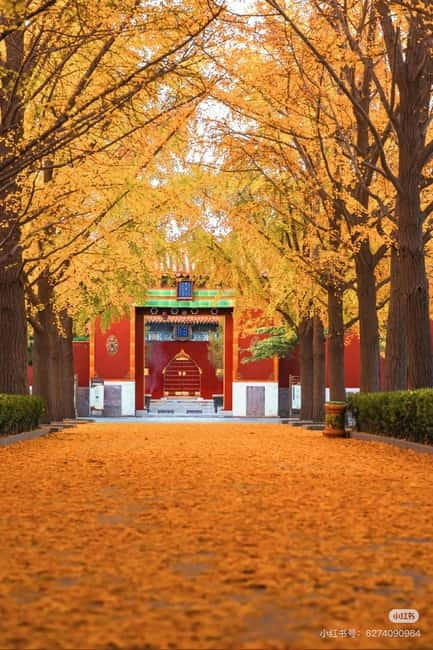
Yonghe Lama Temple, also called Yonghegong Lama Temple, occupies the northeastern part of Beijing. It began in 1694 during the reign of Qing Emperor Kangxi, and later became the highest-ranking Buddhist temple in the late Qing period.
That background matters because this is not simply a collection of attractive halls. The site reflects several cultural traditions at once: Han, Manchu, Mongolian, and Tibetan influences appear in its design and religious role. You can read the complex as both a Buddhist temple and a carefully planned imperial-era architectural space.
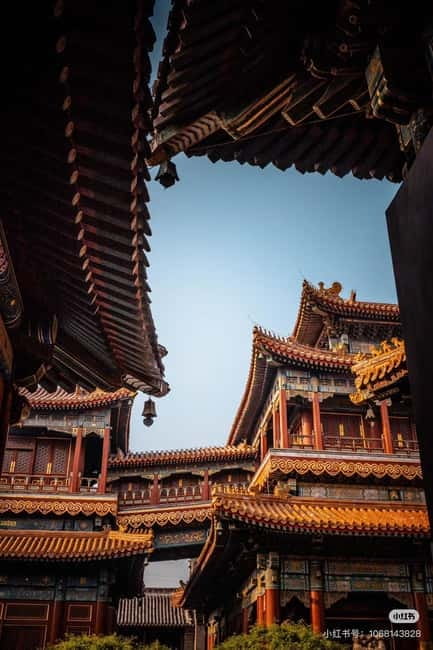
I find the layout especially useful for understanding the place. The courtyards gradually narrow as you move from south to north, while the halls become taller. The result is a deliberate sense of increasing scale. You begin with gateways and supporting buildings, then move toward larger and more imposing religious spaces.
The experience suits you best if you enjoy architecture, religious sites, and places where a city’s history is visible in the buildings themselves. If you want a fast photo stop with no cultural context, the temple may feel more involved than necessary. The complex is large enough that you should allow time to look carefully rather than rush from gate to gate.
Other temples to walk round in Beijing:
- Temple Heaven, Lama Temple, Summer Palace & Peking Duck Bus Tour
★ 5.0 · 377 reviews - Temple Heaven, Summer Palace, Lama Temple, Hutong Bus Tour
★ 4.7 · 319 reviews - Temple of Heaven, Summer Palace, Lama Temple, Hutong Tours
★ 5.0 · 311 reviews
Getting there on Beijing’s Line 5
The temple is at No. 12 Yonghegong Street in Dongcheng District. The simplest transport detail is also the most useful: take Metro Line 5 and get off at Yonghe Lama Temple station.
That makes this an easy addition to a day of sightseeing in Beijing. You do not need to arrange a private transfer, and the metro connection gives you a clear starting point for the visit. Once you arrive in the area, keep your passport ready for admission and follow the directions connected with your booking.
A pre-booked ticket is helpful if you prefer to settle entry before you arrive. It does not turn the temple into a skip-every-line attraction by itself, but it can save you the uncertainty of buying admission on the spot. At $12 per person, the value comes from that convenience, plus the information service fee included in the booking.
If you are watching every dollar, you may decide to visit without a guide and focus on the buildings at your own pace. If you want the religious and architectural details explained as you go, the optional English guide can make the extra cost worthwhile. Small-group availability is another useful middle ground between wandering alone and joining a large tour.
Passing through the three archways
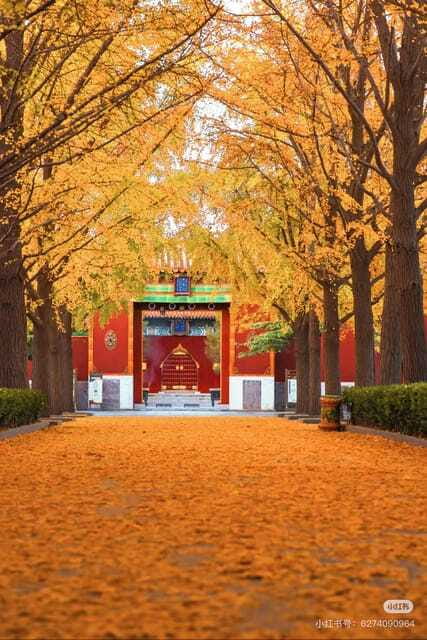
The visit begins with the temple’s three archways. These gateways introduce the formal character of Yonghe Lama Temple and help you understand the transition from ordinary city streets into a structured religious compound.
Do not treat the archways as background scenery. They are part of the site’s planned sequence, guiding you into a series of courtyards and halls. The approach is one reason the temple feels grander than a single building would suggest.
Your ticket gives you access to the temple grounds for one day. That matters because you can move at a measured pace instead of trying to see everything in a hurried burst. The complex contains over 1,000 rooms, although the public visit naturally focuses on its principal structures rather than every room.
The first courtyards are also a good place to get your bearings. Look at the relationship between the gate buildings, towers, and main halls. The temple’s layout is orderly, with each part contributing to a longer northward progression.
Five main halls and the changing scale
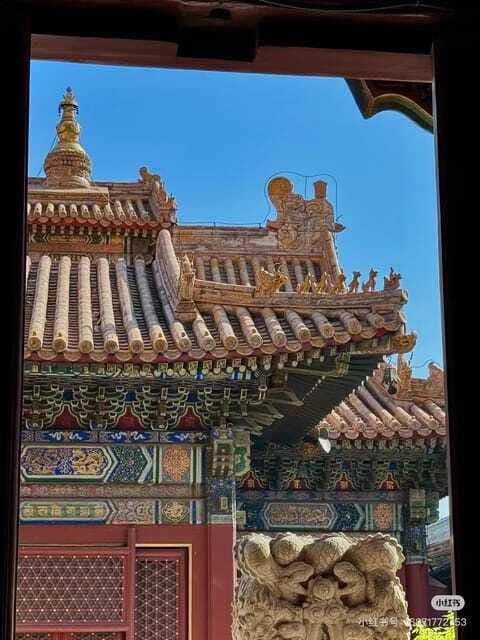
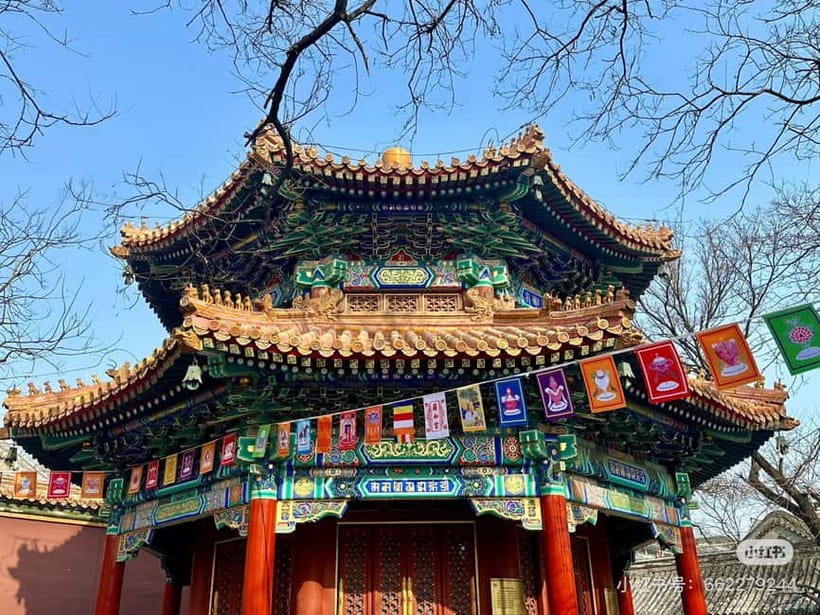
The five main halls provide the clearest structure for your visit. They include Yonghe Gate, the Grand Hall, Yongyou Hall, the Hall of the Wheel of the Dharma, and the Pavilion of Ten Thousand Blessings.
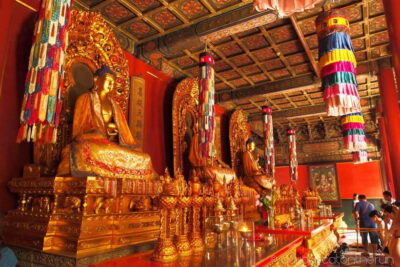
The Grand Hall is also described as the Hall of Great Buddha. Its name signals its importance within the complex, but the larger point is how the halls work together. Each successive space adds weight to the route, and the rising height of the buildings creates a strong visual finish.
Yongyou Hall forms another important stop in the sequence. The name and position are worth noting even if you are not familiar with Buddhist architecture, since the hall helps connect the earlier courtyards with the more imposing structures farther north.
The Hall of the Wheel of the Dharma brings the Tibetan Buddhist character into sharper focus. The temple is valued for the way it joins Tibetan religious traditions with Chinese architectural forms, rather than presenting either style in isolation.
At the northern end, the Pavilion of Ten Thousand Blessings completes the main progression. The names of the buildings can blur together if you visit without preparation, so an English-speaking guide may be useful here. You can also save the names on your phone and use them as a simple checklist during a self-guided visit.
A few more days out in Beijing worth the ticket
- Beijing: Forbidden City Tour(Group/Private)-Tickets Included
★ 4.8 · 7,974 reviews - 4-Hour Small Group Tour to Forbidden City with Entry Tickets
★ 5.0 · 1,863 reviews - Beijing: Tiananmen Square Registration Service(Ticket)
★ 4.5 · 1,704 reviews - Beijing: The Temple of Heaven or Summer Palace Entry Ticket
★ 4.6 · 1,286 reviews
Tibetan Buddhist details within Chinese architecture
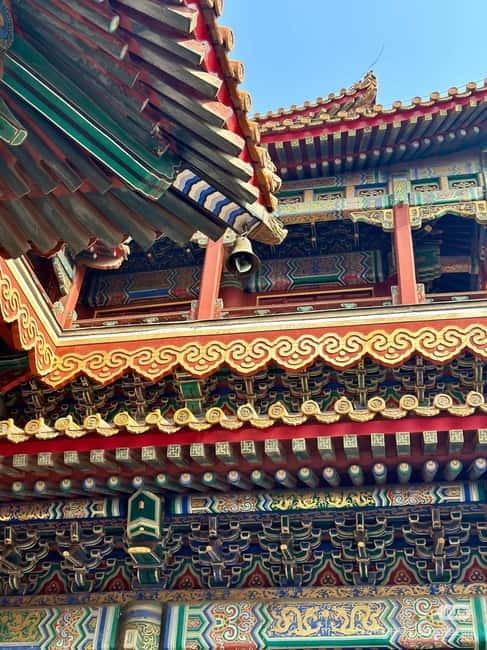
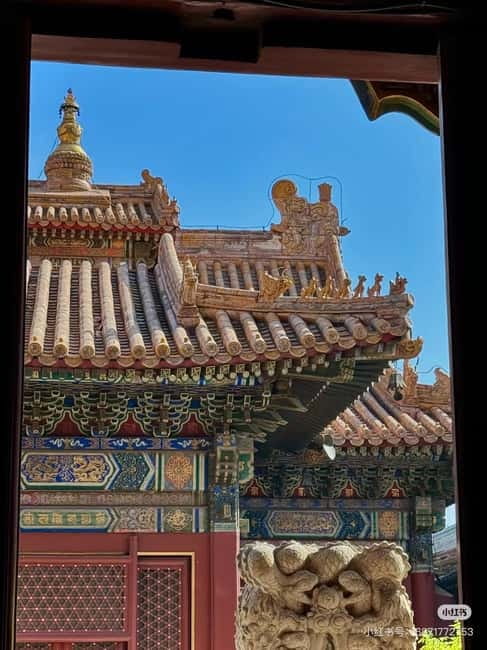
The most interesting feature of Yonghe Lama Temple is the mixture of styles. The temple follows the measured courtyards and axial planning associated with traditional Chinese architecture, yet its religious identity is strongly connected to Tibetan Buddhism.
You may notice that the complex feels formal and carefully ordered, but not visually uniform. That balance reflects its links with Han, Manchu, Mongolian, and Tibetan cultures. The buildings are not presented as a modern reconstruction or a themed attraction. They belong to a long-running religious and architectural setting with several layers of influence.
This is where the optional guide can add real value. An English explanation can help you understand why certain halls matter and how the layout reflects the temple’s role. Without a guide, you will still see the buildings, courtyards, archways, and overall design, but some of the meaning may remain less clear.
I would not expect a guide to turn the visit into a long academic lecture. The supplied information describes a live English guide and small-group availability, but it does not name a particular guide or promise a fixed commentary style. Confirm the option when booking if personal explanation is important to you.
How long to spend and when to go
The booking is valid for one day, while the activity itself is listed as a one-day experience. That does not mean you need to spend an entire calendar day inside the temple. It means you have a day to use the admission rather than a narrow timed session, subject to the temple’s daily hours.
The published schedule is:
- April 1 through October 31: 9 a.m. to 5 p.m.
- November 1 through March 31: 9 a.m. to 4:30 p.m.
The detailed information gives last admission as 4:30 p.m. in summer and autumn, and 4 p.m. in winter and spring. Another booking note says entry stops at 4 p.m. Because these details do not match perfectly, I would not plan a late arrival. Get there early enough to enter comfortably and allow time for the halls.
The seasonal difference is important in Beijing, where winter daylight is shorter and the temple closes earlier. A morning or early afternoon visit gives you more breathing room. It also leaves time to pause in the courtyards, read any available information, and look at the changing height of the halls instead of rushing toward the exit.
Is the guide worth adding?
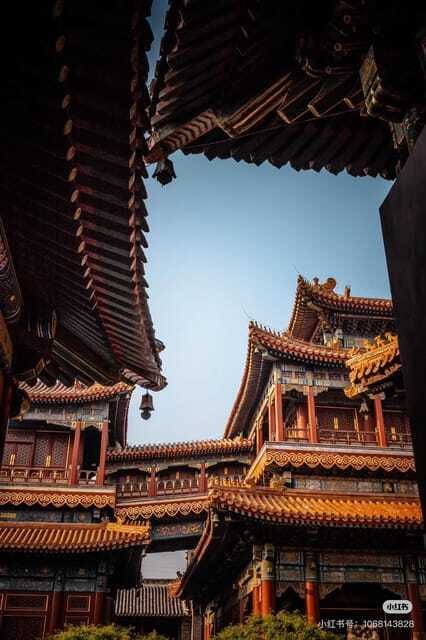
The guide is optional, which gives you some control over both price and pace. The basic booking includes Yonghegong Lama Temple admission and an information service fee. English-language guiding and small-group service are available.
I would choose the guide if you want help with three things: identifying the principal halls, understanding the Tibetan Buddhist connection, and placing the temple in its Qing Dynasty setting. Those details are easy to miss when you focus only on architecture.
I would skip the guide if you already enjoy reading signs, prefer silence at religious sites, or want to move at your own speed. The pre-booked ticket still gives you the main practical benefit, namely a planned entry rather than an on-the-spot purchase.
The phrase small group is useful, but the exact group size is not provided. Do not assume a private tour. If you need one-to-one attention, check the booking details before paying.
Practical rules and access
Bring your passport. It is listed as required, so do not rely on a different form of identification.
Alcohol and drugs are not allowed, and making fires is prohibited. These rules are straightforward, but they matter at a religious site. Dress and behave with the same restraint you would use in any active place of worship, even though specific clothing rules are not provided here.
The experience is not suitable for wheelchair users. The supplied information does not give a detailed accessibility assessment, so anyone with mobility concerns should not assume that every part of the complex will be manageable.
The temple is an active religious and cultural setting, not simply an open-air museum. Keep your movements calm, avoid interfering with worship, and give yourself enough time to observe rather than treating the courtyards as a quick photo backdrop.
What the $12 price really buys you
At $12 per person, this is a modestly priced way to visit one of Beijing’s major temple complexes. The ticket covers admission, and the information service fee is included. That makes the price easy to understand, especially if you value advance planning.
The main value is not luxury transport or a packed itinerary. There is no transfer, meal, or extra attraction listed. You are paying for entry to Yonghe Lama Temple, the convenience of booking ahead, and the option of English-language assistance.
That can be good value for independent visitors who are already using Beijing’s metro. You get a major cultural site without paying for a full-day private tour. Families and couples may also like the flexibility of reserving now and paying later, while keeping free cancellation up to 24 hours in advance.
The cost is less compelling if you only want a short exterior look or already have another temple tour that includes admission and detailed guiding. In that case, compare what the other tour includes before booking this separately.
Who should book this experience?
I would recommend it for you if you want a focused Beijing visit built around architecture, Buddhism, and Qing Dynasty history. It works particularly well for independent visitors who want transport to remain simple, admission arranged in advance, and an English guide available without committing to a large tour.
It is also a good choice if you appreciate sites that reward slow observation. Three archways, five main halls, more than 1,000 rooms, and a 66,400-square-meter complex give you plenty to examine, even though only the principal route is likely to be part of a normal visit.
I would think twice if you use a wheelchair, need a fully accessible route, or plan to arrive near closing time. I would also skip the guide if your main goal is a quick, self-directed look and you are comfortable finding your way through the complex on your own.
Should you book Yonghe Lama Temple with a guide?
Book it if you want one of Beijing’s most distinctive religious sites with the basic logistics handled for you. The $12 price is sensible for admission and booking convenience, and the optional English guide gives you a way to understand the temple’s Tibetan and Chinese influences rather than simply photographing the halls.
Choose your timing carefully, bring your passport, and arrive early. If you want context, select the small-group English option. If you prefer quiet exploration, keep the pre-booked ticket and visit independently. Either way, Yonghe Lama Temple offers a substantial cultural stop with easy Line 5 access and a clear architectural story.
FAQ
Where is Yonghe Lama Temple located?
It is at No. 12 Yonghegong Street in Beijing’s Dongcheng District.
How do I reach the temple by metro?
Take Metro Line 5 and get off at Yonghe Lama Temple station.
What are the temple’s opening hours?
From April 1 through October 31, it is open from 9 a.m. to 5 p.m. From November 1 through March 31, it is open from 9 a.m. to 4:30 p.m.
What is included in the $12 price?
The price includes Yonghegong Lama Temple admission and an information service fee.
Is an English-speaking guide included?
An English live guide is available, and the activity also offers a small-group option. The guide is described as optional in the experience summary, so check the selected booking option.
What should I bring, and who may not be able to join?
Bring your passport. The experience is not suitable for wheelchair users, and alcohol, drugs, and making fires are not allowed.
New reviews from Beijing
- Mutianyu Wall, Summer Palace & Old Summer Palace Day Tour★ 4.8 · 34 reviews
- Night Market Haggling Adventure with an English Guide!★ 4.8 · 7 reviews
- BusDa-Mutianyu Great Wall&Forbidden City Full-day Coach Tour★ 4.9 · 11 reviews
- Mutianyu Great Wall Ticket with Roundtrip Cable Car★ 5.0 · 20 reviews
- Mutianyu Great Wall Bus Trip+Ticket 7/8/9/10/13/13:30/15:30★ 4.7 · 24 reviews
- Mutianyu Great Wall Entry Ticket Chairlift Up Toboggan Slide★ 4.9 · 8 reviews
- Mutianyu Great Wall 5-KM Guided Hike with Uphill Cable Car★ 4.8 · 16 reviews
- Mutianyu Great Wall Admission Ticket★ 3.6 · 7 reviews
Lama Temple Tours, compared.
Temple Heaven, Lama Temple, Summer Palace & Peking Duck Bus Tour
Read our review →
Temple Heaven, Summer Palace, Lama Temple, Hutong Bus Tour
Read our review →
Temple of Heaven, Summer Palace, Lama Temple, Hutong Tours
Read our review →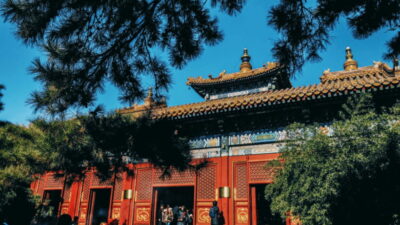

Beijing Historical Tour II including Summer Palace, Lama Temple & Panda Garden
Read our review →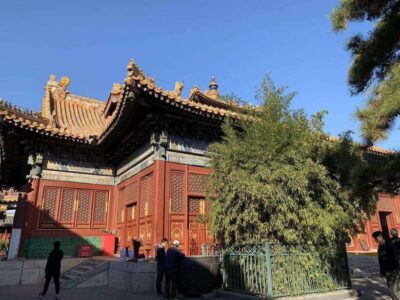
Beijing Lama temple ticket; #1 efficacious; limited Discount
Read our review →
Panda House, Temple of Heaven, Lama Temple, Summer Palace & Lunch
Read our review →Browse the lists this tour appears in