
Reviewed · LAMA TEMPLE TOURS
Beijing: Lama Temple (Yonghe Temple) Admission Ticket
Beijing’s Lama Temple is more than a pretty collection of red halls and tiled roofs. It is a working Tibetan Buddhist temple, where people come to burn incense, bow, and pray. I especially like the chance to see daily worship in progress, along with the remarkable 18-meter sandalwood Buddha carved from one piece of wood. The blend of Han, Manchu, Tibetan, and Mongolian design gives the complex a character all its own.
I also like the simple format. You receive admission in advance, then explore at your own pace without being tied to a guide or group. The main drawback is that the booking requires your exact passport name and number, and the QR code from GetYourGuide alone is not the ticket. You must wait for the provider’s confirmation.
Key points to know before you go
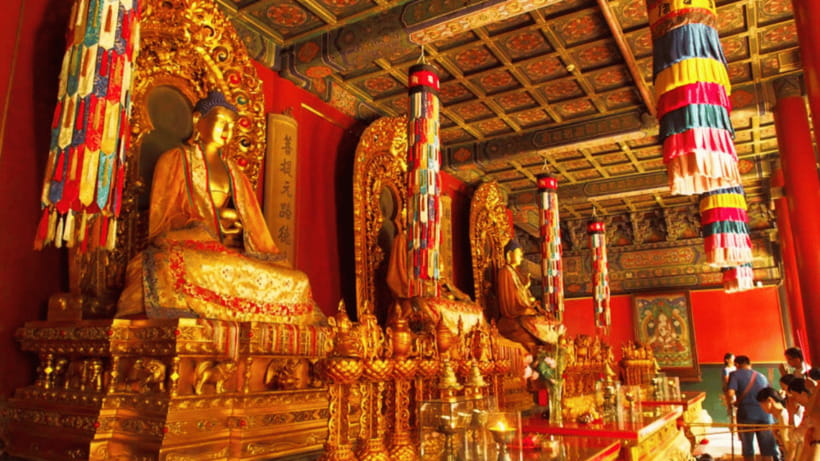
- The 18-meter sandalwood Buddha: See the towering Maitreya figure, carved from a single piece of sandalwood and listed in Guinness World Records since 1990.
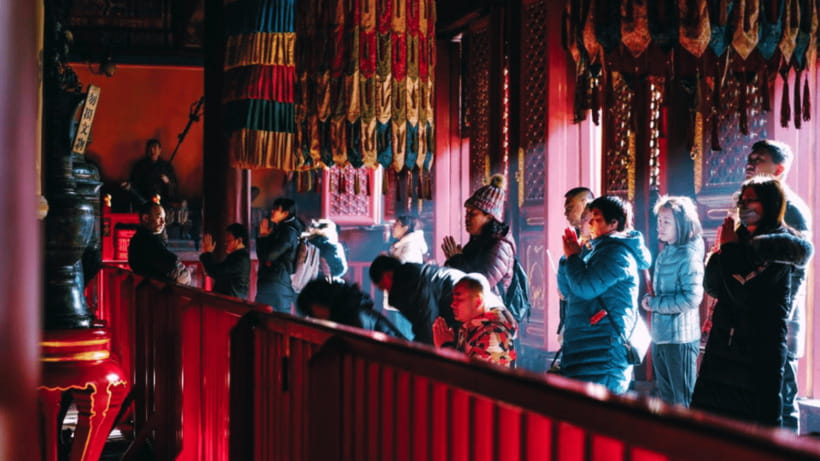
- A living place of worship: Incense, prayers, and religious activity give the temple a genuine spiritual atmosphere.
- Four architectural traditions in one complex: Han, Manchu, Tibetan, and Mongolian influences appear in the buildings and decoration.
- Independent visit, no guide included: You can explore freely, but you will need to read the halls and displays for yourself.
- Advance real-name booking is required: Send your full passport name and passport number in time, then use the confirmed ticket at the entrance.
- Security still takes time: The ticket skips the ticket line, not the security check.
Why Lama Temple deserves a place in your Beijing plans
Yonghe Temple, better known in English as Lama Temple, offers a different kind of Beijing experience. The Forbidden City presents imperial power on a grand scale. Lama Temple feels more intimate and active. It is still a historic site, but it also functions as a place where people come to pray in the present day.
That difference matters. You are not simply walking through empty rooms filled with old objects. You might see worshippers holding incense, making offerings, or moving quietly through the courtyards. The smoke from the incense fires can soften the view of the buildings and give the visit a solemn, almost dreamlike quality.
The admission ticket is designed for an independent visit. There is no guided tour or audio guide included, so you set your own pace. That suits me here. The temple is compact enough to explore without transportation between buildings, and you can spend extra time in the halls that interest you most.
The experience has a high rating of 4.8 from 297 reviews, and the strongest praise centers on three things: the temple’s beauty, the chance to see people worshipping, and the efficient ticket service. Those are also the main reasons I would recommend it.
Other temples to walk round in Beijing:
- Temple Heaven, Lama Temple, Summer Palace & Peking Duck Bus Tour
★ 5.0 · 377 reviews - Temple Heaven, Summer Palace, Lama Temple, Hutong Bus Tour
★ 4.7 · 319 reviews - Temple of Heaven, Summer Palace, Lama Temple, Hutong Tours
★ 5.0 · 311 reviews
From imperial residence to Tibetan Buddhist temple
The site was built in 1694, during the 33rd year of Emperor Kangxi’s reign. It began as the residence of the future Emperor Yongzheng. After he became emperor, the complex was converted into an imperial palace in 1725.
In 1744, during the reign of Emperor Qianlong, it became a Tibetan Buddhist temple. That sequence gives the buildings an unusual double identity. They belong to the world of China’s imperial court, yet their later purpose is religious and distinctly Tibetan Buddhist.
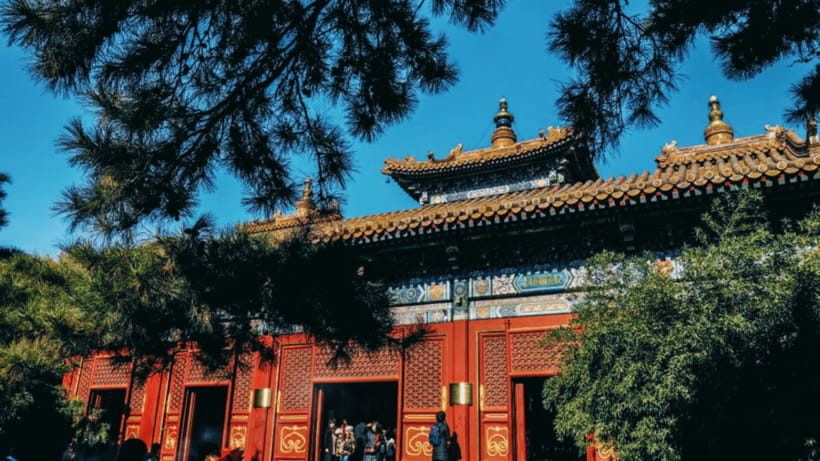
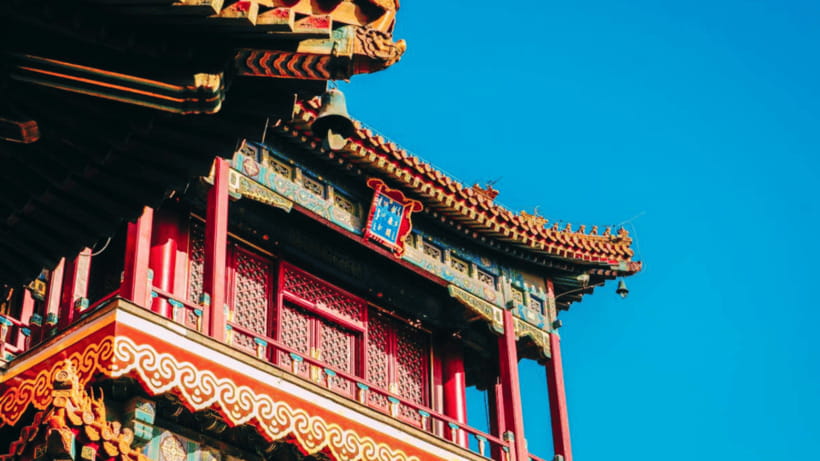
As you walk through the complex, look for the way different traditions meet. The layout and rooflines reflect Chinese imperial architecture, while the religious decoration and halls point toward Tibetan Buddhism. Manchu and Mongolian influences are also part of the design.
You do not need to know every architectural term to appreciate the effect. Notice the painted surfaces, carved details, roof ornaments, courtyards, and carefully framed entrances. The complex rewards slow looking more than a quick photograph at the gate.
Entering through the three archways
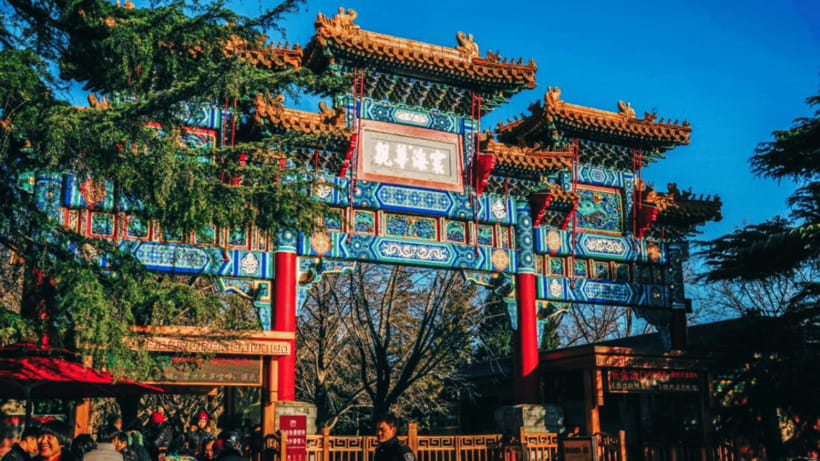
The route through Lama Temple includes three intricately designed archways. These entrances help create a gradual shift from Beijing’s busy streets into the quieter temple grounds.
The first impression is architectural. The colors, timberwork, and roof decoration set the tone before you reach the main halls. Once inside, you move through a series of courtyards and buildings rather than one enormous open space.
The Yonghe Gate is one of the key points along the route. From there, the Yonghe Palace Hall leads you farther into the complex. Each section adds another layer to the visit, so it is worth resisting the urge to hurry straight toward the famous Buddha.
The ticket is meant to make this entry easier by reserving your admission in advance. At the designated entrance channel, you show the confirmed ticket and then go through security. The fast-track benefit applies to ticket collection or the ticket line, not to security checks, so leave room for that process.
The Yonghe Palace Hall and the four learning halls
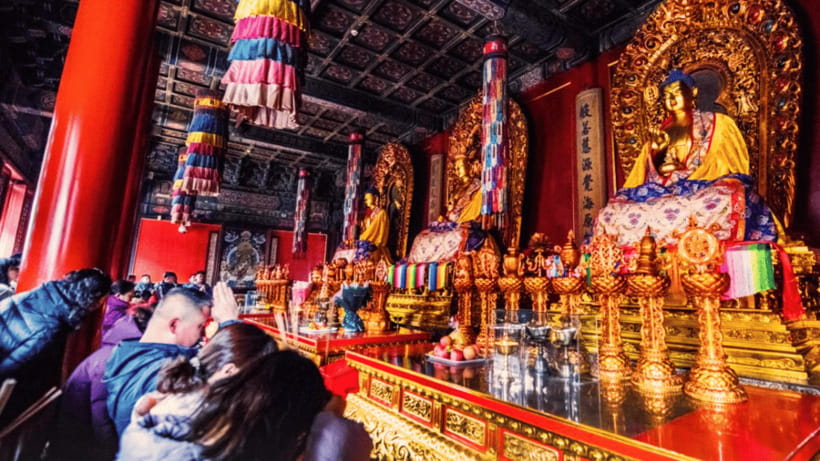
The Yonghe Palace Hall is one of the central buildings in the complex. It gives you a sense of the temple’s scale and purpose, with religious architecture set within an imperial-style layout.
The temple also includes the Four Learning Halls:
- Hall of Medicine Buddha
- Mathematics Hall
- Tantric Hall
- Lecture Hall
These names hint at the broad scope of Tibetan Buddhist study and practice represented here. The halls are not simply decorative stops. Together, they show that the temple has served as a place of teaching, ritual, and religious life.
Three exhibition rooms add another layer. They are useful if you want more context about the temple and its objects, though the ticket does not include a guide or audio commentary. If you prefer a fully explained visit, you will need to prepare beforehand or read the available information as you go.
I would allow time for all the main buildings rather than treating the temple as a quick photo stop. The complex is described as small, but that does not mean it is empty of detail. A slower walk lets you notice the carved surfaces, painted decoration, statues, and patterns that disappear when you rush.
A few more days out in Beijing worth the ticket
- Beijing: Forbidden City Tour(Group/Private)-Tickets Included
★ 4.8 · 7,974 reviews - 4-Hour Small Group Tour to Forbidden City with Entry Tickets
★ 5.0 · 1,863 reviews - Beijing: Tiananmen Square Registration Service(Ticket)
★ 4.5 · 1,704 reviews - Beijing: The Temple of Heaven or Summer Palace Entry Ticket
★ 4.6 · 1,286 reviews
The sandalwood Buddha is the main event
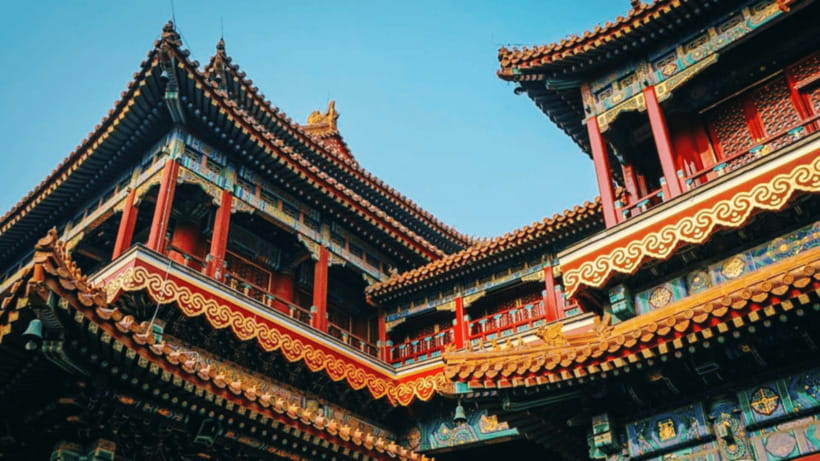
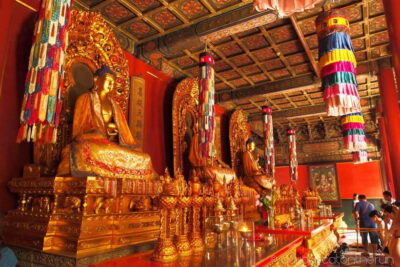
The most famous object at Lama Temple is the 18-meter-tall Buddha carved from a single piece of sandalwood. It is identified as a Maitreya Buddha and has held a Guinness World Records place since 1990.
The scale is hard to grasp until you stand inside the hall and look upward. The statue is not just another figure in a room full of religious objects. It changes the proportions of the entire hall and gives the visit a memorable focal point.
This is the point where a little patience helps. The hall can attract many people, especially during busy periods and important holidays. Step aside when possible, look up, and take in how the Buddha is fitted into the building. The connection between statue and hall is part of the experience.
Photography and visitor behavior should always follow the rules posted at the temple. More important, remember that this is a place of worship, not only a sightseeing attraction. Keep your voice low and give people space as they pray.
Incense, prayer, and the temple’s living character
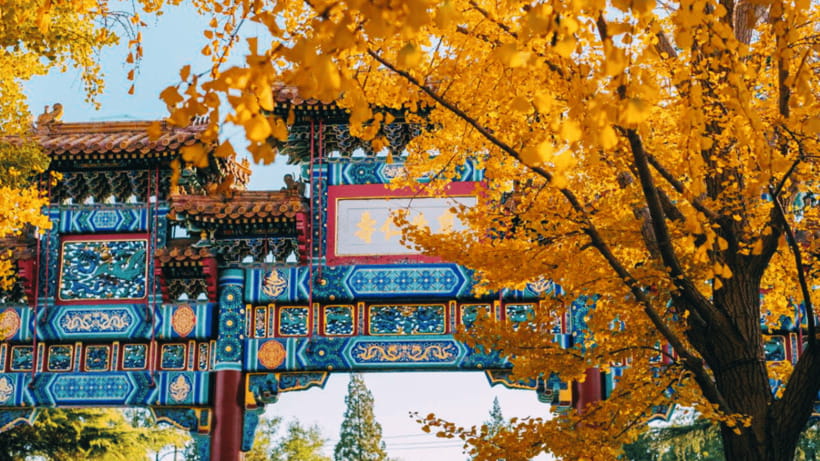
The most affecting part of the visit may be outside the halls. Incense smoke, prayer, and quiet movement show that Lama Temple remains part of everyday religious life.
You may see people lighting incense and offering prayers in the courtyards. The experience can feel especially powerful when the temple is busy with worshippers. That activity also means the site may not feel perfectly quiet at every moment.
New Year’s Day, in particular, can be crowded. The first day of January brought large numbers of people who came to pray, and the temple’s peaceful mood was mixed with heavy foot traffic. If you want a calmer visit, avoid major prayer days when possible and check the available entry times before booking.
Still, I would not treat crowds as a reason to skip the temple. They show why the site matters. The atmosphere comes partly from seeing the buildings used for their intended purpose.
What the ticket service actually does
The admission costs $10 per person. For a major Beijing cultural site, that is a reasonable price if you value independent sightseeing and want to avoid dealing with on-site ticket arrangements.
The ticket includes fast-track entry, access to the major temple buildings and cultural exhibitions, and the reservation fee. It does not include transportation, a guided tour, or an audio guide.
The main convenience is the advance booking. The provider has sent tickets and practical instructions by WhatsApp or email, sometimes on the morning of the visit. That can be useful if you are a first-time visitor to Beijing and want the entry process handled before you arrive.
There is an important catch. The GetYourGuide QR code is not itself a valid admission ticket. You must communicate through WhatsApp or wait for the confirmation email. The confirmed ticket is what you show at the designated entrance.
Real-name booking is mandatory. Send your full name exactly as it appears on your passport, plus your passport number. If those details do not arrive in time, the booking can be canceled and a cancellation fee may apply. Bring the same passport used for the reservation.
This is a small task, but it is the one part of the booking you should not overlook. Do not assume that buying the activity automatically completes the ticket process.
Timing, access, and practical limits
The activity is listed as lasting one day, which means you have a full day validity window rather than a fixed guided itinerary. Check the available starting times when you book.
Final entry is one hour before closing, and you must leave 30 minutes before closing. These rules matter if you plan to visit late in the day. Do not arrive at the last possible minute, especially because the security check is not skipped.
The temple is wheelchair accessible. Pets, weapons, sharp objects, and explosive substances are not allowed. Your passport is the required item to bring.
There is no skip-the-line service for security. The ticket helps with the admission queue, but everyone still passes through the necessary checks. Pack lightly and keep the process simple.
Free cancellation is available up to 24 hours in advance for a full refund. That gives you some flexibility if your Beijing schedule changes, but the passport information requirement still applies while the booking is being arranged.
Who will enjoy this visit most
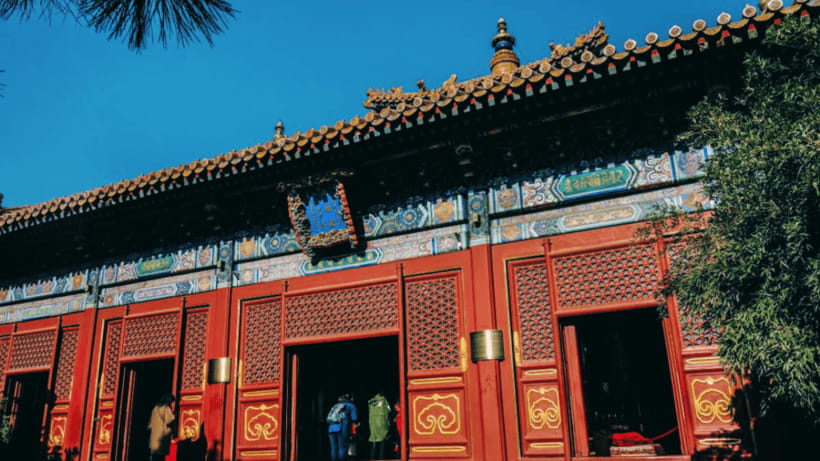
I would recommend Lama Temple to anyone interested in Chinese religious architecture, Tibetan Buddhism, imperial history, or everyday worship. It also works well for independent sightseers who dislike being hurried through a major attraction.
Families can appreciate the short walking distances between the main buildings, though young children may need help understanding why the halls require quiet and respect. Photographers will find plenty of details in the gates, rooflines, carvings, and courtyards, but the temple’s religious function should come before the perfect picture.
This is less suitable if you want a fully narrated tour. No guide or audio guide is included, so you will get the most from it if you are happy to read signs, prepare a little, and observe carefully.
It is also not the best choice for someone who wants a guaranteed empty, silent temple. Worshippers and sightseeing crowds are part of the setting. That is a limitation, but also one of the site’s strengths.
Should you book the Lama Temple ticket?
Yes, if you want a straightforward independent visit to one of Beijing’s most important Buddhist sites. The $10 price is fair, and the advance arrangement can save time and reduce uncertainty at the entrance.
Book it if you want to see the sandalwood Buddha, study the mix of architectural styles, and witness incense and prayer in a functioning temple. Just send your passport details promptly, wait for the actual confirmation, and remember that security still takes place on arrival.
Skip this option if you need a guide to explain every hall or if your schedule allows only a late arrival. For everyone else, Lama Temple offers a compact, meaningful stop where grand imperial design and everyday religious life meet.
FAQ
How much does admission to Lama Temple cost?
The listed price is $10 per person. The ticket includes the reservation fee, fast-track entry, access to the main temple buildings, and access to the cultural exhibitions.
Is the GetYourGuide QR code the admission ticket?
No. The GetYourGuide QR code is not a valid ticket by itself. You must communicate through WhatsApp or wait for the confirmation email containing the ticket information.
What passport information is needed for booking?
You must provide your full name exactly as it appears on your passport and your passport number. Real-name booking is required, and only genuine identification details are accepted at the entrance.
Does the ticket skip the security check?
No. It skips the ticket line, but you still need to complete the security check before entering the temple grounds.
Is a guided tour included?
No. A guided tour and audio guide are not included. You explore the complex independently.
What is the most famous object inside Lama Temple?
The temple’s best-known object is an 18-meter Maitreya Buddha carved from a single piece of sandalwood. It has held a Guinness World Records place since 1990.
Can I cancel the booking for a refund?
Yes. You can cancel up to 24 hours in advance for a full refund.
Is Lama Temple wheelchair accessible?
Yes. The activity information lists the temple as wheelchair accessible.
New reviews from Beijing
- Mutianyu Wall, Summer Palace & Old Summer Palace Day Tour★ 4.8 · 34 reviews
- Night Market Haggling Adventure with an English Guide!★ 4.8 · 7 reviews
- BusDa-Mutianyu Great Wall&Forbidden City Full-day Coach Tour★ 4.9 · 11 reviews
- Mutianyu Great Wall Ticket with Roundtrip Cable Car★ 5.0 · 20 reviews
- Mutianyu Great Wall Bus Trip+Ticket 7/8/9/10/13/13:30/15:30★ 4.7 · 24 reviews
- Mutianyu Great Wall Entry Ticket Chairlift Up Toboggan Slide★ 4.9 · 8 reviews
- Mutianyu Great Wall 5-KM Guided Hike with Uphill Cable Car★ 4.8 · 16 reviews
- Mutianyu Great Wall Admission Ticket★ 3.6 · 7 reviews
Lama Temple Tours, compared.
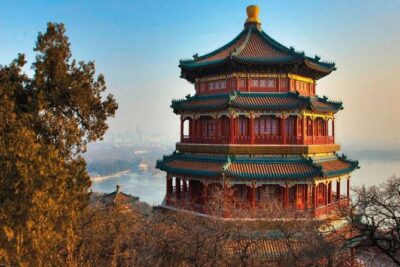
Temple Heaven, Lama Temple, Summer Palace & Peking Duck Bus Tour
Read our review →
Temple Heaven, Summer Palace, Lama Temple, Hutong Bus Tour
Read our review →
Temple of Heaven, Summer Palace, Lama Temple, Hutong Tours
Read our review →
Beijing Historical Tour II including Summer Palace, Lama Temple & Panda Garden
Read our review →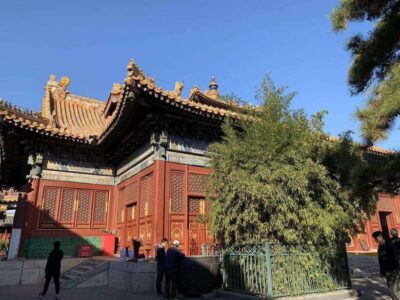
Beijing Lama temple ticket; #1 efficacious; limited Discount
Read our review →
Panda House, Temple of Heaven, Lama Temple, Summer Palace & Lunch
Read our review →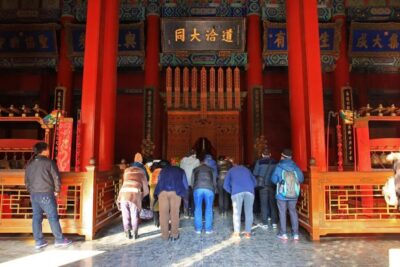
Lama Temple, Confucius Temple and Guozijian Museum
Read our review →Browse the lists this tour appears in