
Reviewed · TAI CHI CLASSES
Beijing Tai Chi and Tea Ceremony Experience
Tai Chi and tea make a thoughtful pair in Beijing. First, you slow your body with Eric’s gentle lesson in basic forms, relaxation, and self-massage. Then Alice introduces four or five Chinese teas through a traditional Kungfu ceremony. It is a morning built around attention rather than rushing from one sight to the next.
I like the private format, since Eric can adjust the lesson to your experience level. I also like the clear link between movement and tea: both are presented as everyday practices tied to calm, balance, and Taoist ideas. The main consideration is the price, $95 per person, which is a serious sum for three hours and does not include private transport or a full meal.
Key points to know before booking
- Eric teaches the one-hour Tai Chi session in English, with beginners welcome and the pace adjusted to your experience.
- The lesson includes more than slow movements, covering Taoist ideas, relaxation forms, typical Tai Chi actions, and self-massage.
- Alice leads the tea portion, with four or five Chinese teas, three to five snacks, and a Kungfu tea ceremony.
- Your group has the activity to itself, making it easier to ask questions and work at a comfortable pace.
- The 9:00 am start works well for a calm Beijing morning, though you should plan your route to Jixiaolan Former Residence in advance.
- The experience lasts about three hours, begins and ends at the meeting point, and offers free cancellation until 24 hours before the start.
Beginning at Jixiaolan Former Residence at 9:00 am
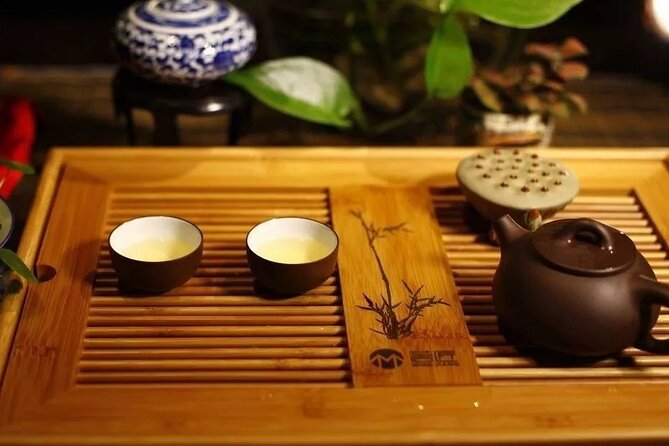
Your morning begins at Jixiaolan Former Residence in the Xicheng area of Beijing. The listed meeting point is near public transportation, but private transport is not included, so you will need to make your own way there.
A 9:00 am start is useful if you want a quieter beginning to the day. You can take the Tai Chi session before a busy sightseeing schedule, then continue with museums, historic streets, or other plans afterward. Wear comfortable walking shoes, even though the experience is centered on movement and tea rather than a long walking tour.
The meeting point matters because the experience is not a hotel pickup service. You should allow time to find Jixiaolan Former Residence and arrive ready to begin. Confirmation is provided when you book, so keep the meeting details available on your phone.
The activity is private for your group. That does not necessarily mean a fully customized private lesson in every detail, but it does mean you will not be practicing alongside a large mixed tour group. For a hands-on class, that is a useful advantage.
Other tea to sit down with in Beijing:
- Traditional Chinese Tea Ceremony Experience
★ 4.7 · 74 reviews - Beijing Culture: Tea Ceremony, Heritage Instrument & Calligraphy
★ 5.0 · 57 reviews - Chinese Tea ceremony in Beijing Hutong courtyard
★ 4.7 · 26 reviews
Eric’s one-hour introduction to Tai Chi
Eric leads the Tai Chi portion in English. His teaching begins with context about Tai Chi and Taoism, then moves into physical practice. The aim is not to train you for a martial arts competition. You are learning how the movements use relaxation, balance, attention, and controlled motion.
The lesson includes basic relaxation forms and typical Tai Chi movements. If you are a beginner, this gives you a practical introduction without requiring previous study. If you already know a little Tai Chi, Eric can check your experience and shape the lesson around your level.
That adjustment is important. Tai Chi can look simple when you watch an experienced practitioner, but slow movement still requires concentration. A patient teacher can help you understand where to place your attention rather than simply asking you to copy a sequence.
The session also covers self-massage methods. This adds a practical element to the lesson. You are not only learning a set of graceful movements, but also some ways to connect the ideas of relaxation and body awareness to daily life.
Eric explains why Tai Chi has become popular around the world and how its traditional ideas relate to health. The language around Qi, Taoism, and harmony with nature is part of the cultural setting of the class. You can appreciate that background as a traditional Chinese way of thinking without treating every health claim as a medical promise.
That distinction is worth keeping in mind. The experience presents Tai Chi as a practice that may support relaxation and general well-being. It is not a medical consultation, and the activity should not replace professional health advice.
The strongest feature here is the combination of explanation and movement. You are not simply told that Tai Chi is important. You get a short lesson in its ideas, followed by a chance to test the slow forms with your own body.
Why the private class helps beginners
A private group setting makes this activity more comfortable for people who feel awkward trying Tai Chi in public. You can ask Eric to repeat a movement, clarify a term, or slow down the sequence without worrying about holding up a large class.
The arrangement also suits mixed-age or mixed-experience groups. One person may be a complete beginner, while another has seen Tai Chi before. The lesson can respond to that difference more easily than a fixed group demonstration.
The tone described by the experience is calm and patient. Eric checks your experience level and organizes the lesson accordingly. That is especially helpful if you are curious about Tai Chi but have never taken a formal class.
Still, you should set your expectations correctly. One hour is enough for an introduction, not a full course. You will learn basic forms and ideas, but you will not leave with mastery of Tai Chi. The value lies in trying the practice with guidance and gaining enough context to understand what you are seeing in parks and public spaces across China.
From movement to tea at Alice’s tea house
After Tai Chi, the experience moves to a tea house for the second part of the morning. Alice leads the tea session, introducing Chinese tea culture and showing you how a Kungfu tea ceremony works.
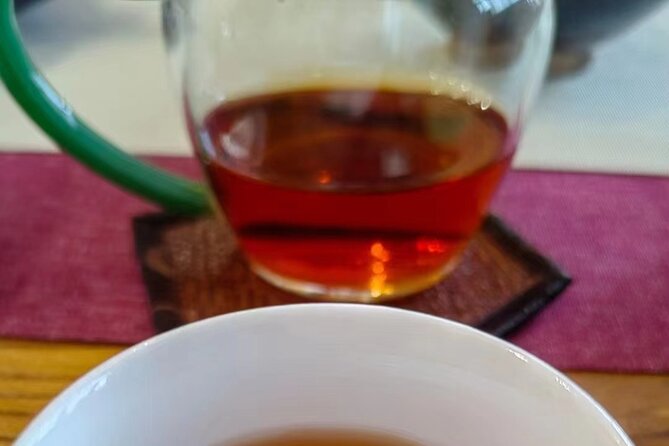
You taste four or five different Chinese teas. That number gives you a useful range for comparison, since you can notice differences in aroma, flavor, strength, and preparation. The purpose is not just to drink several cups. Alice helps you learn how to distinguish tea quality for yourself.
The tea portion also includes three to five snacks. These give you something small to eat while tasting, but the activity does not include a full meal. The listing separately excludes food, so you should plan another meal if you expect breakfast or lunch.
The ceremony is a highlight for anyone interested in the details of Chinese daily life. Tea is presented here as more than a beverage. It is connected to calm, reflection, and personal conduct, with Taoist ideas running through the explanation.
You will learn how tea is prepared and how to pay attention while drinking it. That slower pace is the point. In a city where sightseeing can become a race between major attractions, sitting down with tea gives you a welcome change of rhythm.
Alice’s role complements Eric’s well. Eric focuses on body movement and attention, while Alice turns those ideas toward taste, ritual, and conversation. The change from Tai Chi to tea feels natural because both parts ask you to slow down and notice small details.
Other slow mornings in Beijing:
- Beijing Private Tai Chi Class
★ 5.0 · 16 reviews - Beijing Private Tai Chi Class
★ 5.0 · 10 reviews - Beijing: Temple Of Heaven+Tai Chi Class+Tea Ceremony
★ 5.0 · 8 reviews - Temple of Heaven and Tai Chi Tour
★ 5.0 · 5 reviews
What a Kungfu tea ceremony adds
A Kungfu tea ceremony is not a martial arts display. In this setting, Kungfu refers to the careful skill and method used in preparing tea. Alice demonstrates the process and explains the customs around it.
You get more from the ceremony if you resist the urge to rush through each tasting. Notice how the teas differ, ask which qualities indicate good tea, and pay attention to the preparation. The session is designed to help you become more confident in judging tea rather than simply accepting a host’s description.
This is also a useful chance to ask practical questions about Chinese tea. You can learn how tea fits into daily life and why it has such a strong place in traditional culture. The experience presents tea as both an ordinary drink and a tool for quiet reflection.
The tea tasting may appeal most to people who enjoy cultural activities with a small sensory element. You smell, taste, watch, and listen. It does not demand the physical effort of a long walking tour, but it still gives you something active to do.
Because the group is private, you can take your time with questions. That is a better setting for a ceremony than a crowded room where you might only watch from the back.
The cultural thread connecting Tai Chi and tea
The two parts are not random activities placed together. The experience links Tai Chi and tea through Taoist ideas about relaxation, balance, Qi, and the relationship between people and nature.
You do not need prior knowledge of Taoism to follow the lesson. Eric introduces the concepts as part of Tai Chi, while Alice connects tea with calmness, meditation, and stable temperament. The explanations give the physical movements and tea ritual a wider cultural setting.
Some of the language around Qi and internal cultivation may feel unfamiliar if you are used to modern fitness classes. That is part of the experience. You are hearing traditional Chinese ideas in their own cultural frame, not taking a standard gym lesson with Chinese names attached.
I would approach this as a cultural introduction rather than a scientific health program. You can enjoy the emphasis on relaxation and self-reflection while keeping your own judgment about claims related to health. That balanced approach lets you appreciate the tradition without expecting a cure for any condition.
Is $95 a fair price for three hours?
At $95 per person, this is not a bargain activity. The price includes the Tai Chi instruction, the tea tasting, the ceremony, snacks served during the tea portion, and all listed fees and taxes. It does not include private transportation or a full meal.
The price makes more sense for a private group than for a basic drop-in class. You are paying for an English-speaking instructor, a dedicated tea session, cultural explanation, and the convenience of combining two activities in one morning.
For one person on a tight budget, $95 may feel high for an introduction. A group may find the value easier to justify, particularly if the private format allows everyone to take part and ask questions. Group discounts are available, so it is worth checking the final price for your party.
The value also depends on what you want from Beijing. If your priority is to cover as many major sights as possible, three hours in a Tai Chi class and tea house may feel like time away from the usual checklist. If you want a slower activity that gives you contact with local traditions, the price is more defensible.
I would not book this expecting a full breakfast, a temple visit, or transportation between sights. Book it for the instruction, the cultural setting, and the chance to practice something rather than only look at it.
Who will enjoy this Beijing morning?
This experience suits first-time Tai Chi students especially well. Eric’s lesson is built around basic forms and can be adjusted to your level, so you do not need to arrive with prior training.
It also works for couples, families, and small private groups who want a shared activity that is quieter than a standard sightseeing tour. The private setting can make the practice feel less self-conscious.
Tea lovers will find plenty to interest them in the second half. You taste several types, learn to compare quality, and see how a Kungfu tea ceremony is conducted.
The activity may be less suitable if you want intense exercise. Tai Chi is slow and controlled, and the lesson is designed around relaxation rather than a hard workout. It may also disappoint you if you expect a long guided tour of Beijing’s major landmarks.
You should be comfortable with a cultural presentation that includes traditional concepts such as Qi and Taoist internal cultivation. You do not need to accept every idea literally, but an open and respectful attitude will make the session more rewarding.
Practical details that affect your morning
The activity lasts about three hours and begins at 9:00 am. It ends back at the meeting point, so you can plan the rest of your day from there.
Bring a mobile phone for your ticket and booking confirmation. Comfortable walking shoes are recommended, and they are sensible for reaching the meeting point and moving between the Tai Chi and tea portions.
The experience is near public transportation, but no private transportation is included. Build in extra time for the journey, especially if you are unfamiliar with the area around Jixiaolan Former Residence.
The booking is confirmed at the time of purchase. You can cancel for a full refund up to 24 hours before the local start time. Changes or cancellations made within 24 hours are not accepted for a refund.
The experience is typically booked about 22 days ahead. That suggests you should reserve before your Beijing visit if the date matters, especially since the activity is private and operates for one group at a time.
Should you book the Tai Chi and tea experience?
Book it if you want a personal, calm introduction to two important Chinese traditions. Eric’s adaptable English-language Tai Chi lesson and Alice’s tea ceremony provide the most value, especially for beginners who want explanation along with practice.
I would also recommend it for a private group that prefers cultural participation to another bus tour. You will move, taste, listen, and ask questions, all within a manageable three-hour morning.
Skip it if your budget is tight, you want a substantial meal, or you are mainly looking for famous Beijing sights. At $95, this is a specialized experience, not a low-cost filler activity.
For the right visitor, it offers something many sightseeing schedules miss: time to slow down and pay attention. That is a worthwhile way to begin a day in Beijing.
FAQ
How long does the Beijing Tai Chi and tea experience last?
The activity lasts approximately three hours. The Tai Chi portion takes about one hour, followed by the tea house visit and ceremony.
What time does the experience begin?
The scheduled start time is 9:00 am.
Where does the activity start and end?
It starts at Jixiaolan Former Residence in Xicheng, Beijing. The activity ends back at the meeting point.
Is the experience private?
Yes. Only your group participates in the activity.
How many teas and snacks are included?
You can taste four to five types of Chinese tea and receive three to five snacks during the tea portion. A full meal is not included.
Can I cancel for a full refund?
Yes. You can cancel at least 24 hours before the experience start time for a full refund. Cancellations or changes made less than 24 hours before the start time are not refunded.
New reviews from Beijing
- Private Transfer to Mutianyu Great Wall with professional driver★ 5.0 · 19 reviews
- One day tour to downtown Tianjin from Beijing by high speed train★ 5.0 · 3 reviews
- camp on the Great Wall overnight with sunrise and sunset on the wall★ 5.0 · 11 reviews
- ZANBUS: Trip to the Jinshanling Great Wall Departing at 7:30 AM★ 5.0 · 5 reviews
- BusDa:Ancient Great Wall &Badaling Great Wall Full-day Bus Tour★ 4.5 · 6 reviews
- Yuxiandu Chinese Royal Cuisine Museum with Show and Royal Banquet★ 5.0 · 4 reviews
- Wild Great Wall Hikes★ 5.0 · 10 reviews
- Wild Great Wall Huanghuacheng Half Day Tour★ 5.0 · 15 reviews
Tai Chi Classes, compared.
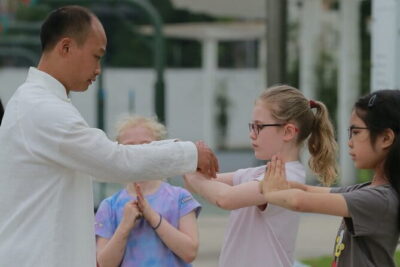
Chengdu Kung Fu Panda Tour Tai Chi, Martial Arts and Panda Base
Read our review →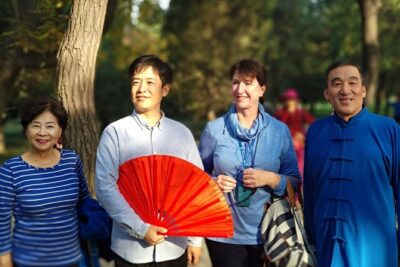

3-Day Beijing Tour Tai Chi, Peking Duck, Hotpot and Spa
Read our review →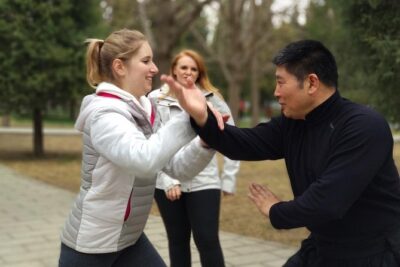
Tai Chi or Kung Fu plus Chinese Calligraphy Learning Class
Read our review →Browse the lists this tour appears in