
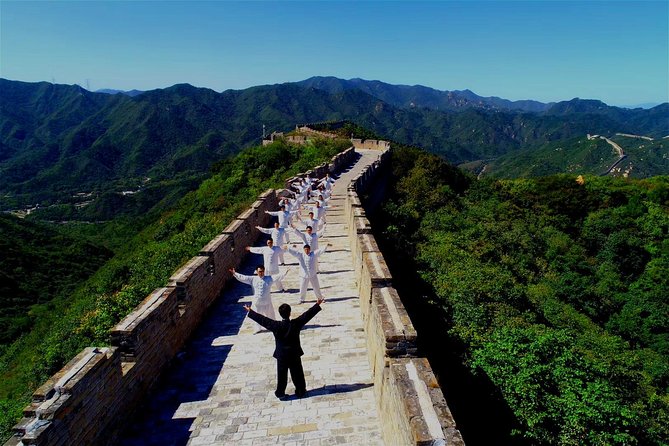
Reviewed · TAI CHI CLASSES
Beijing Private Tai Chi Class
The most useful thing about this Beijing class is its private, beginner-friendly format. You get direct guidance rather than trying to copy movements in a large group, and the lesson goes beyond slow arm motions to explain Taoism, yin and yang, breathing, focus, and the idea of Qi.
I like the choice of a morning or afternoon start, and I like the mix of physical and cultural instruction. You may learn a short nine-step form, standing meditation, push hands, and self-massage techniques in one 90-minute session. The main consideration is that this is an introduction, not a full martial arts course, so experienced tai chi students may find the pace basic.
Key points to know before booking
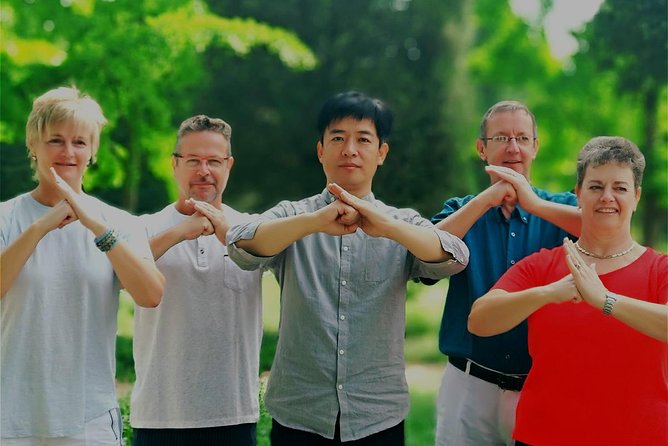
- Private attention: Only your group takes part, so the instructor can adjust the lesson to your pace.
- English-speaking instruction: Masters explain both the movements and the Chinese ideas behind tai chi.
- Several activities in 90 minutes: Expect form practice, breathing and meditation, push hands, and self-massage.
- Beginner focus: The class uses a simple, step-by-step approach for people with little or no experience.
- Flexible timing: You can choose a morning or afternoon class.
- Central cultural setting: The meeting point is at 旻园1 Tian Tan Dong Lu in Dong Cheng District, Beijing, with Temple of Heaven mentioned as a possible class setting.
What the 90-minute Beijing tai chi class is really like
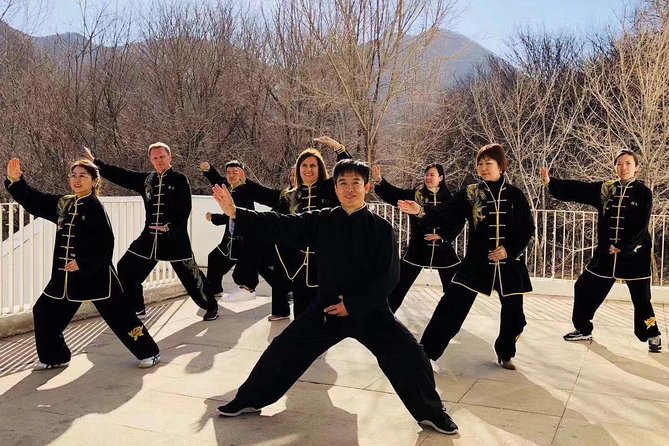
This experience is built for first-timers. You are not expected to know a stance, memorize a sequence, or understand Chinese martial arts before you arrive. The instructor starts with the basic ideas and then guides you through movements at a controlled pace.
That matters because tai chi can look simple from a distance. The motions are slow, but the details involve posture, weight shifting, breathing, balance, and concentration. In a public park, it is easy to copy the general shape while missing the point. A private teacher can watch your movement and offer repeated corrections.
The lesson is also more than exercise. You learn how tai chi connects with Taoist thought, yin and yang, and the concept of Qi, or internal energy. The class presents these ideas as part of the practice, not as a separate lecture. You move, breathe, pause, and then connect those actions to the cultural background.
If you are looking for a fast sightseeing stop, this may feel slow. If you want a calmer activity that gives you a small window into Chinese culture, the pace is part of the appeal.
Other slow mornings in Beijing:
- Beijing Private Tai Chi Class
★ 5.0 · 10 reviews - Beijing: Temple Of Heaven+Tai Chi Class+Tea Ceremony
★ 5.0 · 8 reviews - Chengdu Kung Fu Panda Tour Tai Chi, Martial Arts and Panda Base
★ 5.0 · 8 reviews
Meeting an English-speaking master
The class is taught by a qualified English-speaking tai chi master. Eric Liu is identified as one of the instructors, and his teaching style comes through clearly in the feedback connected with this experience. He is described as patient, friendly, and willing to explain the benefits and philosophy behind the movements.
That kind of communication is important in tai chi. A teacher needs to show a movement, explain it in plain language, and then watch you try it. You may not perform every position perfectly on the first attempt, but the private format gives you room to ask questions without slowing down a larger class.
Eric is also described as helpful with complete beginners. If you feel awkward or uncoordinated, that is normal for this lesson. The aim is not to judge your form. It is to help you understand the basic pattern and feel how the movements connect.
Because the experience is private, the class can focus on your group’s needs. A family, couple, or small group of friends can learn together. Children must be accompanied by an adult, and comfortable shoes are recommended.
Beginning with tai chi culture and yin and yang
The first part of the lesson introduces tai chi and its cultural setting. You learn about Taoism and yin and yang, ideas that help explain why tai chi uses balance, softness, control, and continuous movement.
This background makes the physical practice easier to understand. Tai chi is not presented simply as stretching or a gentle form of exercise. It is described as an internal martial art, where attention, breath, posture, and controlled movement work together.
You should keep your expectations sensible. A single class cannot explain every part of Taoist thought or give you a full understanding of Qi. It can, however, give you a useful starting point and help you see why the movements are performed slowly instead of with force.
I like this cultural layer because it gives the class a sense of place. You are not only learning a short exercise routine. You are learning why the routine has the shape it does.
Learning the nine-step tai chi form
The core physical section is a study of a nine-step tai chi form. The instructor breaks the sequence into manageable parts and demonstrates the movements before you try them.
A short form is a good choice for a first lesson. A long sequence would be difficult to remember and could turn the session into a test of memory. Nine steps give you enough structure to feel genuine progress without making the class frustrating.
Expect slow, deliberate actions combined with breathing and focus. You may work on the position of your feet, the direction of your hands, and the way your weight moves from one side to another. The instructor’s demonstrations are especially useful here because tai chi is easier to understand when you see the whole body working together.
You should not expect to leave performing the form with polished technique. The value is in learning the foundation and having a sequence you can continue to practice. The class gives you a beginning, not a finished skill.
Other things to learn to make in Beijing:
- Beijing Calligraphy Class
★ 4.9 · 112 reviews - Chinese Calligraphy Class for Small Group
★ 5.0 · 104 reviews - Beijing: Dumpling Making Workshop with Meal and Tea
★ 4.7 · 69 reviews - Online Cooking Class Beijing Dumplings and Cuisine by Sunflowerli Renowned Chef
★ 5.0 · 65 reviews
Standing meditation and the quiet side of practice
Standing meditation is included in the lesson. This may sound easy, but remaining still with proper posture and attention can be more demanding than moving through the form.
The exercise gives you time to notice your breathing and body position. It also shows why tai chi asks for concentration. You are not rushing from one movement to the next. You are learning to stay aware while holding a stable position.
This part may appeal to you if you want a peaceful activity during a busy Beijing itinerary. It offers a pause from sightseeing and traffic. At the same time, people who prefer constant movement may find standing meditation less engaging.
The class presents meditation in a practical way. You do not need previous experience, special clothing, or a background in spiritual practice. You simply follow the teacher’s instructions and try to maintain focus.
Trying push hands with personal guidance
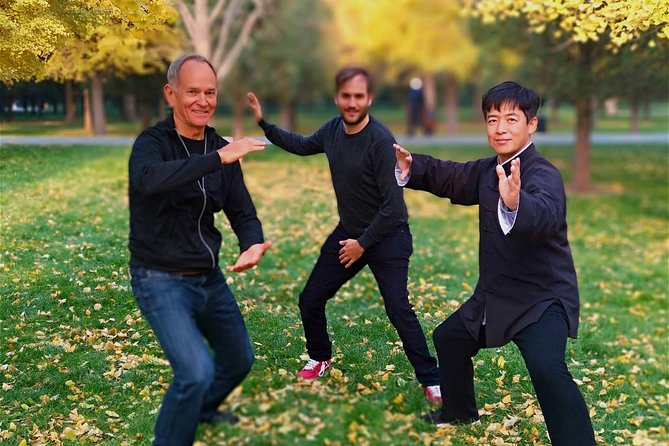
The class also includes a push hands experience. This is a partner exercise connected with tai chi’s martial arts side. It helps you explore sensitivity, balance, timing, and response rather than relying on strength alone.
Push hands can be hard to understand from a written explanation, so direct instruction is useful. The teacher can show how to position yourself and how to respond to gentle pressure. In a private class, you can ask for another demonstration if the exercise feels unfamiliar.
This section gives the lesson some variety. The nine-step form and standing meditation are mostly about your own movement and concentration. Push hands adds interaction and shows that tai chi has a martial purpose beneath its calm appearance.
Do not expect a sparring session or a strenuous fight. The activity is described as an experience, not combat training. It is best understood as a guided introduction to one aspect of tai chi practice.
Self-massage for daily tension
Self-massage techniques round out the lesson. The aim is to show simple methods that may help relieve everyday pain and stress.
This is a useful addition because it connects the class with daily life. You can practice a form during the lesson, but self-massage may be easier to remember and use after you return home. It also makes the experience accessible if you are less interested in martial arts.
The instruction should be treated as general wellness guidance, not medical treatment. The provided details do not promise to diagnose or cure a condition. If you have an injury or health concern, you should use your own judgment before taking part in any physical activity.
Why the private format matters
The $58 price is easiest to justify if you value one-on-one attention. This is not the cheapest way to watch or sample tai chi, but it is different from joining a large public demonstration. Only your group participates, and the instructor can spend the session teaching rather than managing a crowd.
For a couple or small group, the price may feel reasonable because you receive a full 90-minute lesson with an English-speaking master. Group discounts are available, so check the final rate if you are booking for several people.
The private setup also suits different ability levels. One person may need extra help with balance, while another may want more explanation of the cultural side. A shared class has less room for that flexibility.
The limitation is that the value depends on your interest. If you only want a short photo opportunity or a quick look at tai chi, this class may be more instruction than you need. If you want to understand the practice and try several techniques, the private structure makes more sense.
Choosing between a morning and afternoon class
You can choose a morning or afternoon session. That flexibility helps you fit the class around a Beijing sightseeing plan, especially if you are visiting the Temple of Heaven area or arranging other activities in Dong Cheng District.
A morning class may suit you if you like starting the day quietly and want a gentle physical activity before sightseeing. An afternoon class can work well if you prefer a slower break after visiting other sites.
The exact atmosphere can depend on the setting and time. The experience details identify the meeting point at 旻园1 Tian Tan Dong Lu, Dong Cheng Qu, Beijing, and one class account refers to practicing in a park and possibly at the Temple of Heaven. Confirm the meeting instructions when you book, since the class may be arranged at different places in Beijing.
Wear comfortable shoes. You do not need to arrive as an athlete, but you should be able to stand and move for the length of the class.
Who will get the most from this class
This is a strong match for first-time students, couples, families with older children, and small groups looking for an activity that feels connected to Chinese culture.
You may especially enjoy it if you:
- Want direct instruction instead of a large group lesson
- Prefer calm, low-impact movement
- Are curious about Taoism, yin and yang, and Qi
- Want to learn a short form you can practice later
- Like activities that combine exercise with cultural explanation
- Need a morning or afternoon option
The class is also suitable for people who are nervous about trying martial arts. It does not begin with strenuous drills or complicated combat work. The movements are slow and deliberate, and the teacher guides you through the basics.
It may be less suitable if you want advanced technique, intense exercise, or a long training session. The format is specifically designed for beginners, so experienced practitioners may prefer a more specialized class.
Practical details, weather, and cancellation
The activity lasts about one hour and 30 minutes and ends back at the meeting point. Hotel pickup and drop-off are not included, and neither are food or drinks, so you need to arrange your own transport and refreshments.
Confirmation is provided when you book, and the experience is available with a mobile ticket. Most people can participate, but children must be with an adult.
The class requires good weather. If poor weather forces a cancellation, you can choose another date or receive a full refund. You can also cancel for a full refund up to 24 hours before the start time. Changes or cancellations made less than 24 hours before the start time are not accepted for a refund, and the cut-off follows Beijing local time.
The activity is recommended by 94 percent of purchasers and has a 4.8 rating from 16 ratings. Those figures suggest strong satisfaction, but the sample is small. I would use them as a helpful signal, not the only reason to book.
Should you book the Beijing private tai chi class?
Book this class if you want a personal introduction to tai chi with clear English instruction, cultural context, and several hands-on activities in one session. The combination of a nine-step form, standing meditation, push hands, and self-massage gives you more than a brief demonstration.
The best reason to choose it is the private attention. Eric Liu and the other English-speaking masters can slow down, demonstrate movements, and explain the ideas behind them. That makes the class especially useful if you are starting from zero.
Skip it if you want a full martial arts course, a high-energy workout, or a purely sightseeing-focused activity. For everyone else, $58 buys a thoughtful 90-minute introduction and a calm break from Beijing’s busy streets.
FAQ
How long does the Beijing private tai chi class last?
The class lasts approximately one hour and 30 minutes.
Where does the class start?
The listed meeting point is 旻园1 Tian Tan Dong Lu, Dong Cheng Qu, Bei Jing Shi, China, 100061.
Where does the activity end?
The activity ends back at the meeting point.
Is the class private?
Yes. Only your group participates in the private activity.
Is the class suitable for beginners?
Yes. The class is specifically designed for beginners and uses a simple, step-by-step method.
Is the instruction in English?
Yes. The class is taught by qualified English-speaking tai chi masters.
What will I learn during the class?
You will learn about tai chi and its culture, a nine-step tai chi form, standing meditation, push hands, and self-massage methods intended to help relieve daily pain and stress.
Can I choose the class time?
Yes. You can choose a morning or afternoon class.
What happens if the weather is poor?
The experience requires good weather. If it is canceled because of poor weather, you will be offered another date or a full refund.
New reviews from Beijing
- Mutianyu Wall, Summer Palace & Old Summer Palace Day Tour★ 4.8 · 34 reviews
- Night Market Haggling Adventure with an English Guide!★ 4.8 · 7 reviews
- BusDa-Mutianyu Great Wall&Forbidden City Full-day Coach Tour★ 4.9 · 11 reviews
- Mutianyu Great Wall Ticket with Roundtrip Cable Car★ 5.0 · 20 reviews
- Mutianyu Great Wall Bus Trip+Ticket 7/8/9/10/13/13:30/15:30★ 4.7 · 24 reviews
- Mutianyu Great Wall Entry Ticket Chairlift Up Toboggan Slide★ 4.9 · 8 reviews
- Mutianyu Great Wall 5-KM Guided Hike with Uphill Cable Car★ 4.8 · 16 reviews
- Mutianyu Great Wall Admission Ticket★ 3.6 · 7 reviews
Tai Chi Classes, compared.
Chengdu Kung Fu Panda Tour Tai Chi, Martial Arts and Panda Base
Read our review →Browse the lists this tour appears in