
Reviewed · LAMA TEMPLE TOURS
Beijing Private Religious Tour: White Cloud Temple, Lama Temple, Niujie Mosque
Beijing’s religious story is best understood one tradition at a time, and this private tour gives you four very different windows into it. You’ll visit Buddhist, Confucian, Daoist, and Islamic sites in one day, with a private car linking them instead of losing time on public transport.
I like the door-to-door pickup and the included Chinese lunch, which make a full eight-hour day much easier. I also like the flexibility: the schedule can be adjusted for your interests, the weather, or unexpected delays. The main drawback is the pace. With roughly one hour at each stop, you’ll see the key areas but may want more time at the larger temples.
Four faiths, one Beijing day
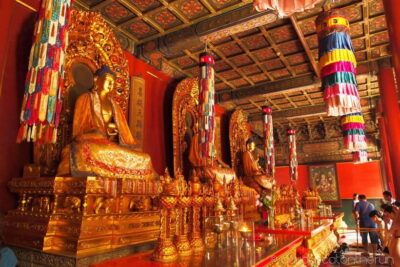
- Lama Temple first: Begin with Beijing’s best-known Buddhist temple, known for its colorful halls and important religious role.
- Confucius Temple and Guozijian together: See the place of worship beside the former imperial school for scholar-officials.
- White Cloud Temple: Visit one of the major ancestral courts of Quanzhen Daoism, a tradition with deep roots in China.
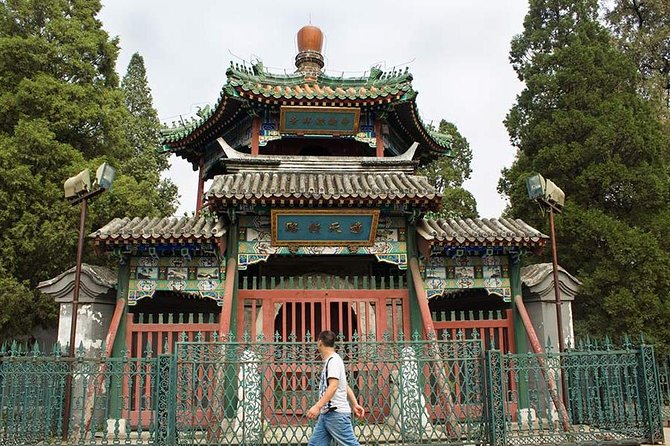
- Niujie Mosque: End at Beijing’s largest mosque and one of China’s oldest and most important Islamic sites.
- Private transport throughout: Your guide and driver meet you at your hotel, handle the roads and parking, and return you afterward.
- Clear English matters: Peter and Stephen are specifically noted for easy-to-follow explanations, Chinese fables, and folklore.
Why this private religious tour is worth your day
Beijing has no shortage of famous palaces, walls, and imperial landmarks. Religious sites can be harder to fit into a first visit, especially when you want context rather than a quick photograph. This tour solves that problem by grouping four major places from different traditions into one route.
The value is not only in the number of stops. It is in the contrast between them. At the Lama Temple, you encounter active Buddhist worship and ornate temple art. At the Confucius Temple, the focus shifts toward education, ritual, and the civil service system that shaped imperial China. White Cloud Temple introduces Daoism, while Niujie Mosque shows the long presence of Islam in Beijing.
You receive an English-speaking guide, a private air-conditioned vehicle, admission tickets, parking, tolls, gas, hotel pickup, hotel drop-off, and lunch. At $144 per person, the price makes the most sense for a small group that wants a full day without managing transport or paying separate entrance fees.
The private format is important. Only your own group participates, so you can ask questions without holding up strangers. The itinerary is also flexible, although you should not expect unlimited time at every site. Four stops, lunch, driving, and hotel transfers fill an eight-hour day quickly.
Other temples to walk round in Beijing:
- Temple Heaven, Lama Temple, Summer Palace & Peking Duck Bus Tour
★ 5.0 · 377 reviews - Temple Heaven, Summer Palace, Lama Temple, Hutong Bus Tour
★ 4.7 · 319 reviews - Temple of Heaven, Summer Palace, Lama Temple, Hutong Tours
★ 5.0 · 311 reviews
Starting at Yonghegong, Beijing’s Lama Temple
The day begins at 8:30 am, when the guide and driver meet you in your hotel lobby. The first stop is Lama Temple, also called Yonghegong, described as Beijing’s most celebrated Buddhist temple and one of its largest and most influential.
This is a smart opening stop. It gives you an immediate introduction to Chinese Buddhist practice, temple design, and religious art before the day moves into other traditions. Expect colorful halls and a site that feels more significant than a simple historic building. It remains a place of worship, so respectful behavior and a quiet approach are sensible.
You have about one hour here. That is enough for an introduction and a guided walk through the main areas, but it is not an unhurried study visit. If Buddhist art or religious architecture is your main interest, tell your guide at the start. The flexible schedule may allow the emphasis to shift, though the overall eight-hour limit still applies.
The prepaid admission is a small but useful convenience. You do not need to stop at a ticket booth, and the guide can keep the morning moving. That matters in Beijing, where a few small delays can grow into a lost hour.
Confucius Temple and the old imperial school
Next, you walk into a very different part of China’s past at the Temple of Confucius and the Guozijian Museum. These sites are next to each other, and together they explain how Confucian ideas shaped education and government.
The Confucius Temple was a place for worship and ceremonial respect. The Guozijian was the ancient university complex where scholar-officials were trained. Those officials helped run imperial China, so this stop is about much more than a temple. It connects philosophy, education, examinations, and government administration.
I find this pairing especially useful because it gives the day an intellectual center. The Lama Temple shows religious devotion through Buddhist practice. The Confucius Temple and Guozijian show how ideas about learning, duty, and public service influenced everyday government.
Plan on about one hour here. The guide’s explanation makes a difference because the connection between the two sites can otherwise be easy to miss. Peter is praised for clear English and complete explanations, while Stephen is noted for telling Chinese fables and folklore. If your guide is Peter or Stephen, ask for stories that connect Confucian teaching with ordinary life and Chinese culture.
This stop may appeal most to people who enjoy social history and old institutions. If you want only grand religious artwork, it may feel quieter than the Lama Temple. That is not a weakness, but it is worth knowing before you book.
White Cloud Temple and the Daoist tradition
The next destination is White Cloud Temple, also known as Baiyunguan. It is one of the Three Great Ancestral Courts of the Quanzhen School of Daoism and carries the traditional title First Temple under Heaven. The site was first founded in the mid-eighth century.
Those details give White Cloud Temple a different weight from the earlier stops. You are not simply adding another old building to the day. You are visiting a major center connected with Daoist religious life and the Quanzhen tradition.
The supplied schedule labels this stop Baiyunguan Taoist Temple Fair, but the stated visit is to White Cloud Temple itself. You should expect a guided temple visit, not assume that a special fair or festival will be taking place on your date.
Again, the planned time is about one hour. Your guide can explain the role of the temple and point out what separates Daoism from Buddhism and Confucianism. This is where a good storyteller helps. Stephen, in particular, is praised for his store of Chinese fables and folklore, a useful addition when religious ideas are unfamiliar.
I would treat this as one of the day’s most distinctive stops. The Lama Temple is likely to be the most immediately familiar to first-time visitors, but White Cloud Temple gives you a chance to see a major Daoist institution within a carefully arranged religious route.
A few more days out in Beijing worth the ticket
- Beijing: Forbidden City Tour(Group/Private)-Tickets Included
★ 4.8 · 7,974 reviews - Beijing: T-Square & Forbidden City Group or Private Tour
★ 4.8 · 4,446 reviews - Beijing:Mutianyu Great Wall Private Trip with English Driver
★ 5.0 · 1,263 reviews - Private Mutianyu Great Wall Trip with English-Speaking Driver
★ 5.0 · 927 reviews
Niujie Mosque and Beijing’s Muslim community
The final major stop is Niujie Mosque, described as one of the oldest and most important mosques in China and the largest mosque in Beijing. It is also an important place for the city’s Muslim community.
This visit broadens the day in a valuable way. A tour focused only on temples could leave you with a narrow picture of Chinese religious life. Niujie Mosque shows that Islam has a long and important place in China, including in the capital.
The mosque is not simply a final item to check off. It gives the guide a chance to explain how Chinese and Islamic traditions meet in Beijing. Pay attention to the building’s character and to the way the site functions as a religious center. The experience is likely to feel different from the Buddhist and Daoist temples, which is precisely why it belongs on this route.
You have about one hour here. Dress and behave respectfully at every religious site, but be especially attentive at the mosque. The tour data does not specify a dress code or prayer schedule, so ask your guide on the day if you need practical guidance.
Lunch at a local Chinese restaurant
A Chinese lunch at a local restaurant is included. This keeps the day moving and means you do not need to plan a separate meal between sites.
The meal is a practical benefit, not a dining tour. The available information does not specify the restaurant, menu, or dietary arrangements, so tell the provider about food needs when you book or confirm with the guide at pickup. Do not assume dinner is included, because it is not.
Lunch also gives you a natural pause after several hours of temple visits and historical explanation. Since the schedule is full, the meal helps prevent the day from turning into a string of rushed stops with no break.
Private car, hotel pickup, and the value of convenience
Your private driver handles transportation between the four destinations and the ride to and from your hotel. The vehicle is air-conditioned, and gas, tolls, and parking fees are included.
That arrangement is worth real money in Beijing. You avoid figuring out separate routes, finding parking, or trying to explain the next destination after a long morning. The driver and guide meet you in the hotel lobby, so the start is simple.
The trade-off is that the tour is built around driving between sites. You are not spending the day wandering from one neighborhood to the next on foot. If you prefer a slow walking tour with long café breaks, this is not the right format. If you want to cover a broad subject in one day, the private vehicle is a strong advantage.
The tour is for your group alone, which also helps with timing. You can ask for clarification, spend a little longer at a favorite stop if possible, or adjust the order when weather or other conditions make that sensible. An extra fee is requested after eight hours, so raise any major timing change before the day runs long.
What the guide adds to the experience
Religious sites can be difficult to read without context. A courtyard, statue, school building, or ceremonial hall may look attractive, but the reason it matters is not always obvious. The guide’s role here is to connect each place to a larger story.
Peter is specifically praised for clear English and complete explanations. Stephen is praised for his clear communication and for bringing Chinese fables and folklore into the day. Those details matter because the tour covers four traditions in a short period. You need explanations that are easy to follow, not a flood of names and dates.
At the start, tell your guide what interests you most. You might want more on Buddhist practice, imperial education, Daoist history, Islam in China, architecture, or folklore. The itinerary can be adjusted for personal interests, weather, and unexpected conditions, so speaking up is worthwhile.
The tour is not designed as a silent, self-guided visit. You are paying for interpretation as well as transport and tickets. If you prefer to read plaques at your own pace, one hour per stop may feel restrictive. If you want a clear introduction to several traditions, the guide-led format is the better fit.
Price, timing, and who should book
At $144 per person, the cost includes the guide, private driver, air-conditioned vehicle, hotel pickup and drop-off, entrance tickets, parking, tolls, fuel, and lunch. The more people in your own group, the easier it is to see the value of private transport and a dedicated guide. Group discounts are offered, though the exact discount is not specified.
The tour runs about eight hours and starts at 8:30 am. Booking about ten days ahead is the normal pattern, so do not leave it until the last minute if your Beijing schedule is tight.
I would recommend this day to:
- First-time visitors who want a clear introduction to several Chinese religious traditions
- Families or small groups that prefer a private vehicle
- Anyone who wants hotel pickup and does not want to organize four separate visits
- Visitors interested in history, folklore, education, and religious practice
- People who value an English-speaking guide over independent exploration
I would be more cautious if you want extended time at each site, a relaxed walking day, or a specialized study of only one faith. The one-hour stops are useful for orientation, but they cannot cover every hall, story, and detail.
Free cancellation is available up to 24 hours before the start time for a full refund. Children must be accompanied by an adult, and the child rate applies only when sharing with two paying adults. Most people can participate, but the supplied information does not give more specific mobility details, so ask the provider if your group has special needs.
Should you book this Beijing religious tour?
Book it if you want four major religious and cultural sites explained in plain English, with the work of transport, tickets, parking, and lunch handled for you. The strongest reasons are the contrast between the stops, the private format, and the guide’s reported ability to explain clearly and add Chinese folklore.
Skip it if you want to linger for several hours at one temple or build the day around independent wandering. For most visitors with one open day in Beijing, though, this is a practical way to see Buddhist, Confucian, Daoist, and Islamic landmarks without reducing the city’s religious story to a single tradition.
FAQ
What time does the tour start?
The tour starts at 8:30 am. The guide and driver meet you in your hotel lobby.
How long does the tour last?
The experience lasts about eight hours. An extra fee is requested if the tour continues beyond eight hours.
Which sites are included?
The route includes Lama Temple, the Temple of Confucius and Guozijian Museum, White Cloud Temple, and Niujie Mosque.
Is transportation included?
Yes. A private driver and air-conditioned vehicle provide transport between the sites and to and from your hotel. Gas, tolls, and parking fees are included.
Is lunch included?
Yes. Lunch at a local Chinese restaurant is included. Dinner is not included.
Can the itinerary be changed?
Yes. The itinerary is flexible and can be adjusted for your personal interests, the weather, or unexpected conditions.
New reviews from Beijing
- Private Transfer to Mutianyu Great Wall with professional driver★ 5.0 · 19 reviews
- One day tour to downtown Tianjin from Beijing by high speed train★ 5.0 · 3 reviews
- camp on the Great Wall overnight with sunrise and sunset on the wall★ 5.0 · 11 reviews
- ZANBUS: Trip to the Jinshanling Great Wall Departing at 7:30 AM★ 5.0 · 5 reviews
- BusDa:Ancient Great Wall &Badaling Great Wall Full-day Bus Tour★ 4.5 · 6 reviews
- Yuxiandu Chinese Royal Cuisine Museum with Show and Royal Banquet★ 5.0 · 4 reviews
- Wild Great Wall Hikes★ 5.0 · 10 reviews
- Wild Great Wall Huanghuacheng Half Day Tour★ 5.0 · 15 reviews
Lama Temple Tours, compared.
Temple Heaven, Lama Temple, Summer Palace & Peking Duck Bus Tour
Read our review →
Temple Heaven, Summer Palace, Lama Temple, Hutong Bus Tour
Read our review →
Temple of Heaven, Summer Palace, Lama Temple, Hutong Tours
Read our review →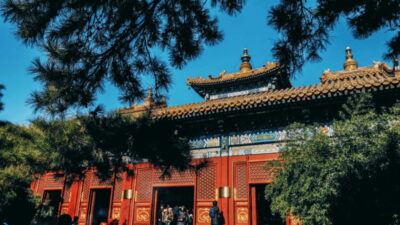
Beijing Historical Tour II including Summer Palace, Lama Temple & Panda Garden
Read our review →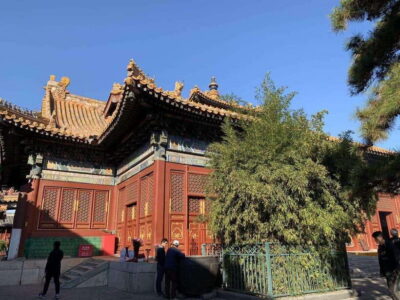
Beijing Lama temple ticket; #1 efficacious; limited Discount
Read our review →
Panda House, Temple of Heaven, Lama Temple, Summer Palace & Lunch
Read our review →Browse the lists this tour appears in