
Reviewed · COOKING CLASSES
2.5hrs Chinese Kitchen Cooking Class: Xiaolongbao Soup Dumplings
Shanghai’s famous xiaolongbao are not ordinary dumplings. Each delicate parcel holds hot soup, so the real trick is getting broth inside without tearing the wrapper. This class takes you through that process from flour and filling to cooking and eating, with an English-speaking chef at your side.
I like the small maximum of 15 people, which gives the class a personal feel, and I like that you cook the dumplings in two ways: steamed and pan-fried. Chef Cici and Chef Yin are both praised for patience, humor, and clear instruction. The main caution is the meeting point. The information gives Changshu Road as the easy landmark but lists Guangyuan Road as the exact address, so confirm the map pin before setting out.
Key points to know before booking
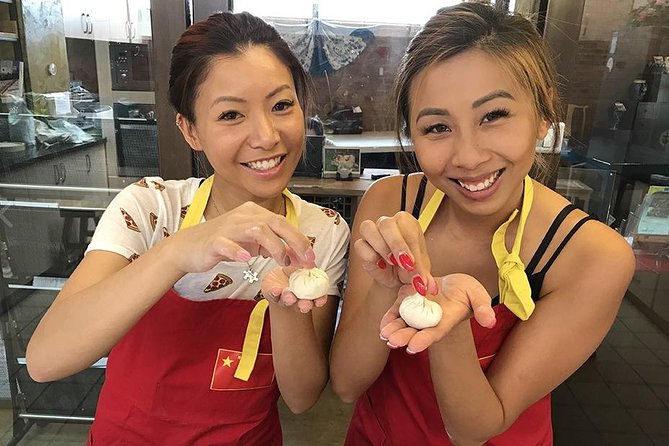
- You make the entire dumpling: Learn the dough, filling, wrapping, sauce, and cooking rather than simply watching a demonstration.
- Soup goes inside the wrapper: The class explains the special technique that gives xiaolongbao their famous burst of broth.
- Two cooking methods: Your dumplings are prepared both steamed and pan-fried, giving you different textures to compare.
- English-speaking instruction: Cici and Yin are named instructors known for patience, humor, and hands-on help.
- Family-friendly format: Children are welcome, and children under 3 can join free.
- Food preferences are possible: Vegetarian and vegan versions can be arranged if you state your preference when booking.
Why xiaolongbao make such a good Shanghai cooking class
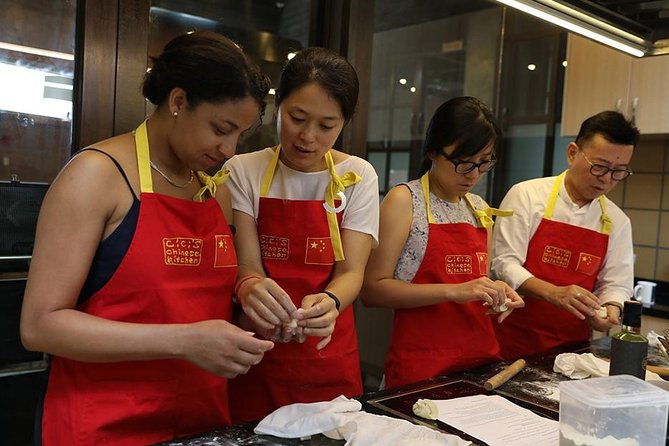
Xiaolongbao look simple until you try to make them. The dough must be thin but sturdy, the filling must hold together, and the soup must stay inside until the dumpling reaches your plate.
That small puzzle makes this a better class subject than a basic stir-fry. You are learning a technique that is closely tied to Shanghai food culture, not just following a recipe with easy-to-find ingredients. The final reward is also immediate: you eat the dumplings you shaped yourself.
The class explains how soup can be wrapped inside a dumpling. That is the part many people want to understand, since the broth is usually added in a way that is not obvious from looking at the finished dumpling. You also work with fragrant Chinese spices and prepare a sauce to serve alongside the dumplings.
I would not book this expecting a polished restaurant demonstration where you sit back and take photos. You should expect flour, filling, repeated attempts at pleating, and plenty of hands-on work. That is exactly where the value lies.
More Food Tours in Shanghai
- Authentic Local Food Tour in Central Shanghai
★ 5.0 · 1,382 reviews - Eat Like A Local: Shanghai Night Food Tour
★ 5.0 · 616 reviews - Late Night Food Tour in the Shanghai’s French Concession
★ 5.0 · 260 reviews
Meeting near Shanghai’s Changshu Road
The class begins at 10:00 am and ends around 12:30 pm. The meeting information points to Guangyuan Road in Xuhui District, while the overview refers to Changshu Road as the accessible meeting area. Those details may describe the nearby transport landmark and the studio address, but you should still check the exact location after booking.
This matters because the cooking studio is in an older lane rather than a grand commercial venue. One participant found the entrance confusing and described the approach as an old, somewhat abandoned kitchen area. The studio itself was reported as small, clean, and functional, but the entrance did not immediately look like a cooking school.
My practical advice is simple: allow extra time, keep your phone ready, and do not assume the first doorway is the correct one. The teacher may meet you outside or guide you through the lane. The less rushed you are, the better your first few minutes will feel.
The class is near public transportation, and there is no hotel pickup or drop-off. You are responsible for reaching the meeting point and for personal expenses outside the class.
10:00 am: A short introduction to Shanghai cooking
The first part begins with an introduction to local cooking culture and ingredients. This gives the dumpling some context before you start handling dough.
That short explanation is useful because xiaolongbao are more than a generic stuffed bun. In English, they are often called soup dumplings or soup buns, but their thin skin and liquid center give them a very different character from ordinary baozi.
The instructors bring a personal touch to this section. Cici is described as fluent in English, organized, funny, and patient. Yin is also praised for being welcoming, easy to talk to, and good at explaining dough technique. You may have one of these instructors, so the exact tone of the class can vary, but both names are associated with a hands-on teaching style.
The cooking culture portion is not likely to be a long lecture. It is there to help you understand what you are making before the practical work begins. If you enjoy food stories but do not want to lose half the class to history, that balance should suit you.
11:00 am: Making dough, filling, and soup
The main cooking session starts at about 11:00 am. You learn to make the dough and filling, then work through the method for putting soup inside the dumpling.
This is the class’s most useful section. The ingredients matter, but the real challenge is control. You need to form a wrapper that is thin enough to be delicate, yet strong enough to contain the filling and broth. The class also shows how to shape the top of the dumpling, where the folds help close the parcel.
Do not worry if your first dumplings look uneven. One instructor, Cici, is specifically praised for working at each person’s pace and skill level. That is important here because experienced cooks and complete beginners will produce very different results at the start.
You will likely make several attempts, and the instructor can correct your technique as you work. That personal help is more valuable than receiving a recipe alone. A recipe can tell you the ingredients, but it cannot easily show you how thin the wrapper should be or how tightly to close the top.
The filling uses Chinese spices, and you also prepare a sauce for the finished dumplings. Vegetarian and vegan options are available on request, but you need to write down your preference at booking. Do not wait until you arrive if you have dietary requirements.
Other eating walks in Shanghai:
- Shanghai: Half-Day Biking and Local Food Tour
★ 4.9 · 170 reviews - Private Shanghai Evening Street Food Walking and Cruise Tour
★ 5.0 · 123 reviews - Shanghai: Evening Walking Food Tour
★ 4.9 · 115 reviews - Shanghai-Cooking Dumpling & Meal in Local Family-w/Vegan
★ 4.9 · 36 reviews
Steamed or pan-fried: Two ways to cook the dumplings
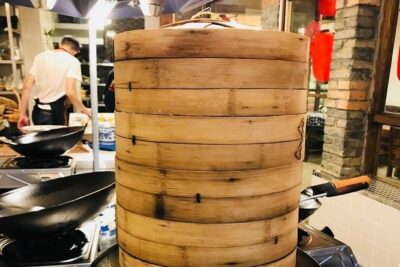
One of the best features is cooking the xiaolongbao in two ways. Steaming gives you the traditional soft wrapper and delicate texture. Pan-frying adds a browned base and a different bite.
Cooking both versions helps you see how much the method changes the finished dish. It also gives the class a satisfying rhythm: make the dumplings, cook them, compare them, and then sit down to eat.
The pan-fried option is especially helpful for anyone who likes a crisp base, while the steamed version keeps the focus on the tender wrapper and soup inside. The class does not ask you to choose one style and miss the other.
You should remember that soup dumplings are hot when they come out of the steamer or pan. The point is to enjoy the broth, but it is wise to handle the first bite carefully. The delicate skin can release hot liquid quickly.
12:00 pm: Sit down and eat what you made
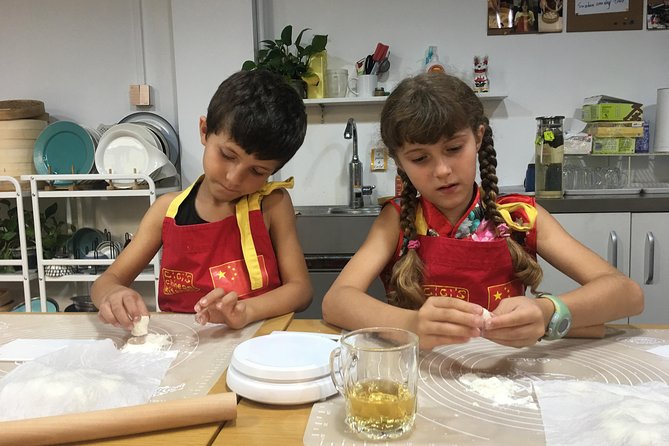
At noon, you eat the dumplings with the class. Complimentary tea is included, and the sauce you prepared is served with the xiaolongbao.
This shared meal is an important part of the value. You are not leaving with a demonstration and a few notes. You have made the food, cooked it, and can taste what worked. Even imperfect dumplings tend to become more interesting when you know exactly how they were shaped.
Several participants describe the dumplings as delicious, but the strongest praise is aimed at the teaching. That distinction matters. The meal is the reward, while the instruction is the reason to book.
The setting is intimate and local rather than formal. If you want a stylish restaurant room, this may feel basic. If you prefer a small studio that offers a glimpse of everyday Shanghai surroundings, the old lane and compact kitchen add character.
The class ends around 12:30 pm, with the recipe provided. That timing works well before an afternoon of sightseeing, though you should not schedule a tight appointment immediately afterward in case the meal or final instructions run a little long.
What the $98.88 price includes
At $98.88 per person, this is not a cheap meal. You can buy xiaolongbao for far less in Shanghai. The price makes sense only if you want the instruction, the ingredients, the cooking space, the meal, and the cultural introduction as one package.
You receive the class, tea, the meal you prepare, an English-speaking chef, and the recipe. The small group size also matters. A maximum of 15 is not private, but it is much more manageable than a large workshop where the instructor cannot see what each person is doing.
I see the best value for couples, families, and friends who would otherwise pay for a meal and a separate activity. You get a practical skill and a food experience that can shape the rest of your time in Shanghai. If you only want to eat excellent dumplings, spend the money at a restaurant instead.
Group discounts are available, so the per-person cost may work better for a larger party. Children are welcome, and children under 3 can join free, though very young children may get more from watching and tasting than from carefully pleating wrappers.
A good family activity, with a few limits
The class is listed for ages 3 to 100, and families with children have found it fun and educational. The hands-on format gives older children a clear task, while the shared meal makes the lesson feel like a family outing rather than a formal cooking course.
Younger children may need help with hot food, dough, and the soup inside the dumplings. The class is not described as a childcare activity, so adults should stay involved throughout.
The small setting helps families receive direct guidance. It also means the room may feel close if everyone is working at once. The studio is functional rather than spacious, and that is worth considering if anyone in your group needs a lot of room to move.
What the class does especially well
The strongest part is the teaching. Cici is praised for fluent English, humor, organization, and patience. Yin is described as an experienced cook who explains dough clearly and gives useful local recommendations, including a nearby tea shop.
The instructors also seem comfortable with beginners. You do not need advanced cooking skills to take part. The class is designed to show you each step, and the pace can be adjusted to your ability.
I also like the balance between explanation and action. You hear about the ingredients and local food culture, then move quickly into making dough, preparing filling, wrapping dumplings, and cooking them. There is enough background to add meaning without turning the morning into a lecture.
Finally, the recipe gives the class life after Shanghai. Recreating soup dumplings at home will take practice, but you leave with a clear starting point rather than only a memory.
Points to consider before you book
The studio entrance may be hard to recognize, particularly if you expect a conventional cooking school. Confirm the location and allow extra time for the old lane approach.
The class is non-refundable and cannot be changed after booking. If the minimum number of participants is not met and the provider cancels, you are offered another date or experience, or a full refund. For your own cancellation, there is no refund, so book only when your schedule is firm.
The meeting details also deserve attention. Changshu Road is named as the accessible area, while Guangyuan Road is given as the meeting address. Ask for clarification if your confirmation does not make the exact point clear.
Vegetarian and vegan cooking is possible, but you must request it in advance. The class includes no hotel transport, and personal expenses are not covered.
Should you book the xiaolongbao class?
I would book this if you want a practical Shanghai food experience rather than another sightseeing stop. It suits curious beginners, families with school-age children, couples, and anyone who wants to understand why soup dumplings are so difficult to make.
The class is particularly good for people who value a patient teacher. Cici and Yin receive the strongest praise for their clear instruction, friendly manner, humor, and ability to work with different skill levels.
I would skip it if you only want the lowest-cost dumpling meal, dislike small informal studios, or need flexible cancellation terms. For everyone else, the mix of local setting, direct cooking, two cooking methods, tea, a shared meal, and a take-home recipe gives the $98.88 price a reasonable purpose.
FAQ
How long does the cooking class last?
The class lasts approximately 2 hours and 30 minutes, from 10:00 am until about 12:30 pm.
Where does the class meet?
The meeting information gives Guangyuan Road in Xuhui District as the starting point and refers to Changshu Road as an accessible nearby area. Confirm the exact map pin before arrival.
Can children join the class?
Yes. The activity welcomes children and is listed for ages 3 to 100. Children under 3 can join free.
Are vegetarian or vegan options available?
Yes. Vegetarian and vegan options can be arranged, but you need to state your food preference when booking.
What is included in the price?
The price includes the cooking class, complimentary tea, an English-speaking chef, the meal you prepare, and the recipe at the end. Hotel transport and personal expenses are not included.
What happens if I cancel?
The experience is non-refundable and cannot be changed for any reason. If the provider cancels because the minimum number of participants is not reached, you are offered another date or experience, or a full refund.
More classes and workshops in Shanghai
- 2-Hour Private Chinese Ink and Brush Painting Workshop in Shanghai
★ 5.0 · 15 reviews - Unlock Chinese Tea: Culture, Science, Tasting & Hands-on Brewing
★ 5.0 · 12 reviews - Private Wet Market Visit with Cooking Class in Shanghai
★ 3.0 · 4 reviews - Shanghai: Hands-on Incense Tablet Making Class
★ 5.0 · 3 reviews
More cooking classes in Shanghai
- Secret Noodle and Wonton in Shanghai Alleyways with Local Beer
★ 5.0 · 19 reviews - Private Home Cooking Class with Shanghai Mama
★ 5.0 · 14 reviews - Online Cooking Class Fried Rice by Sunflower Li
★ 4.5 · 5 reviews - 2.5hrs Chinese Kitchen Cooking Class: Art Steamed Dumplings
★ 4.5 · 5 reviews
New reviews from Shanghai
- Shanghai To Beijing Bullet Train Ticket with Local Private Transfer★ 5.0 · 12 reviews
- Shanghai Spicy Food Tour★ 5.0 · 3 reviews
- Shanghai Uncommon Historic Sites Tour★ 5.0 · 3 reviews
- Shanghai Pudong airport transfer to Disneyland:Private with Meet & Great service★ 5.0 · 3 reviews
- Shanghai Tower Observation Deck 118 floor Tickets Pre-booking.★ 5.0 · 4 reviews
- Shanghai Pudong International Airport (PVG) to Shanghai Hotel★ 5.0 · 4 reviews
- Pudong Airport to Hangzhou: Private with Meet and Greet Service★ 4.5 · 4 reviews
- Private Transfer: Hotel to Shanghai Wusongkou Cruise Terminal (Baoshan Port)★ 3.5 · 6 reviews
Cooking Classes, compared.
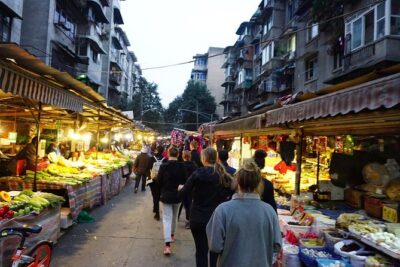
Half-Day Chengdu Cooking Class with a Local Market Visit
Read our review →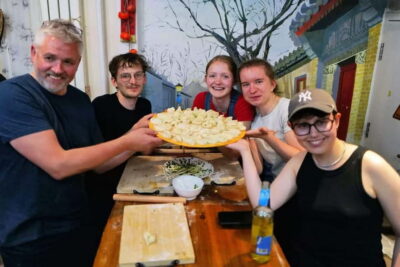
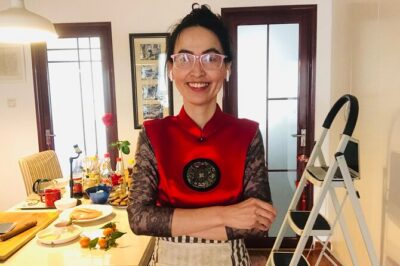
Online Cooking Class Beijing Dumplings and Cuisine by Sunflowerli Renowned Chef
Read our review →
Lijiang Naxi Cuisine Cooking Class & Market Visit
Read our review →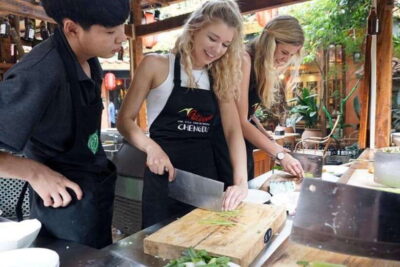
Cooking Class with Fresh Market Half Day Experience
Read our review →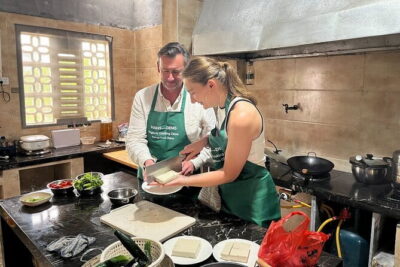
Half-Day steamed Buns Cooking Class with a Local Market Visit
Read our review →
Hong Kong Market Walking Tour & Chinese Cooking Class
Read our review →Browse the lists this tour appears in