
Reviewed · SILK ROAD TOURS
7 Days Silk Road Adventure with Desert Feast and Historical Sites
The best part of this seven-day journey is its steady march west along the Hexi Corridor, the old Silk Road route through Gansu. You move from Lanzhou’s Yellow River to Buddhist cave temples, Zhangye’s striped rock formations, Jiayuguan’s frontier walls, and Dunhuang’s great Mogao Caves. It feels like a proper journey, not a string of disconnected day trips.
I especially like two things here: the private transport, which saves you from piecing together long rail and road transfers, and the mix of serious history with hands-on fun. You see ancient murals and fortresses, then copy a Dunhuang painting or ride a camel at a desert camp. The main consideration is pace. Six days of sightseeing cover a lot of ground, and several days combine two or three major stops.
- Follow the Silk Road west: Travel from Lanzhou through Wuwei, Zhangye, Jiayuguan, and Dunhuang.
- See the Mogao Caves: Spend four hours at China’s most important Buddhist art site, with its murals and cliff-carved sculptures.
- Travel privately: Vehicle size ranges from a five-seat SUV for two people to a minibus or coach for larger groups.
- Add desert action: The planned camp dinner includes camel rides, ATVs, a bonfire, and fireworks.
- Taste Gansu along the way: Five lunches, six dinners, and six breakfasts are included, with the Dunhuang night market adding a casual food stop.
- Stay in local four-star hotels: Six nights are included, along with attraction tickets, insurance, and an English-speaking guide.
Why This Silk Road Route Works
At $2,499 per person, this is not a budget jaunt. But the price covers six hotel nights, a private vehicle, an English-speaking guide, attraction tickets, five lunches, six dinners, six breakfasts, and insurance coverage. For a private trip across several cities, that package gives you a clear value, especially if you prefer not to arrange each transfer and ticket yourself.
You also get a route with real variety. Lanzhou introduces the Yellow River and provincial history. Wuwei brings early Buddhist caves and Confucian tradition. Zhangye adds one of China’s most striking natural sights. Jiayuguan brings military history, while Dunhuang finishes the trip with Silk Road art and desert culture.
The trade-off is that this is a packed route. You are not staying several nights in each city. The schedule is designed for people who want to see the major sights in one sweep, not for those who prefer long, unplanned afternoons.
Day One: Yellow River Light at Zhongshan Bridge
The tour begins at Lanzhou Airport at 9:00 a.m., but the first listed sightseeing stop is in the evening at the Iron Bridge of Yellow River, commonly known as Zhongshan Bridge. This gives you a gentle first look at the city after arrival and transfer arrangements.
Plan on about an hour by the river. You can watch the lights come on, feel the evening breeze, and order Sanpao Tai tea, a local Lanzhou drink traditionally served in a covered bowl. The visit is free, relaxed, and easy on the legs after a travel day.
Because breakfast and lunch are not included on the arrival day, keep that in mind when planning your flight and food. Dinner is included, but personal drinks and other extras are not.
Other Silk Road trips from China:
- Xi’an Silk Road: Legend of Camel Bell Show Ticket w/Transfer
★ 4.9 · 45 reviews - Private Customized the Silk Road Tour
★ 5.0 · 20 reviews - 8-Day Silk Road Trip of Dunhuang, Jiayuguan, Zhangye with Accommodation
★ 5.0 · 16 reviews
Day Two: Museum Pieces and Early Buddhist Art
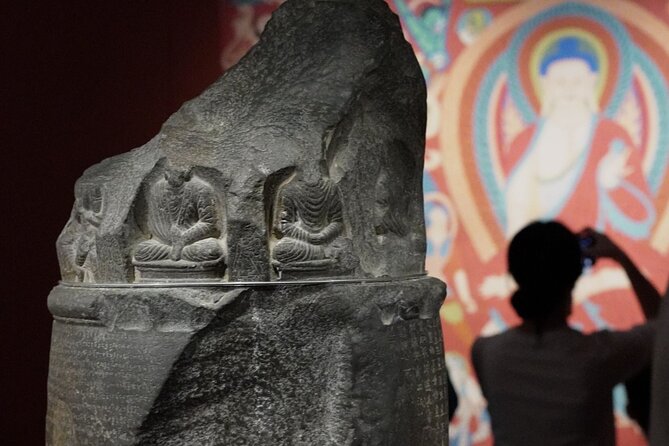
The Gansu Provincial Museum is a strong opening to the region’s past. Give it the full three hours listed. Its collection includes more than 350,000 cultural objects, with Silk Road material, Buddhist statues, ancient fossils, and other displays from across Gansu.
I like this stop because it gives you a map in your head before the road carries you farther west. After seeing objects from the region in a museum setting, the grottoes later in the trip make more sense. You are not simply looking at old walls. You begin to see how religion, trade, and travel shaped this corridor.
The Tianti Grottoes near Wuwei follow with two hours of cave art and Buddhist sculpture. They date to the late fourth century and are among the earliest Buddhist cave temples in China. The site is important for its place in the development of Buddhist art in Gansu.
This is one of the more specialized stops. If your main interest is grand scenery, it may feel quieter than Zhangye or Jiayuguan. If you care about art and early Chinese Buddhism, it gives the trip useful depth before the larger sites ahead.
Day Three: Wuwei’s Temple and Mati’s Cliffs
The Wuwei Confucian Temple offers a change of mood. Instead of Buddhist caves, you see traditional buildings, old stone inscriptions, and a temple complex tied to Confucian learning. The two-hour visit gives you time to look closely at the architecture rather than rushing through a single photo stop.
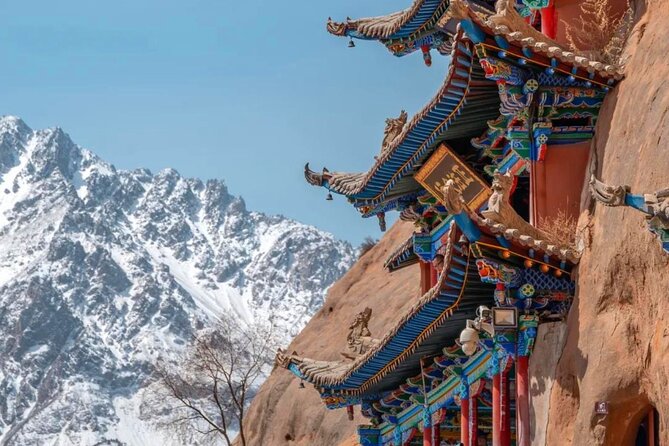
Mati Temple, visited for about three hours, returns you to Buddhist art. The grottoes sit along steep cliffs near Wuwei, with caves, sculptures, and murals built into the rock. The setting matters here. The art is not placed in a modern gallery. It is part of a mountain site shaped by worship and travel.
You should expect some walking and uneven surfaces at historic cave sites. The tour notes say most people can take part, but they do not promise step-free access. If stairs or rough paths are a concern, ask Tangola Travels for current site details before booking.
Day Four: Zhangye’s Reclining Buddha and Rainbow Rock
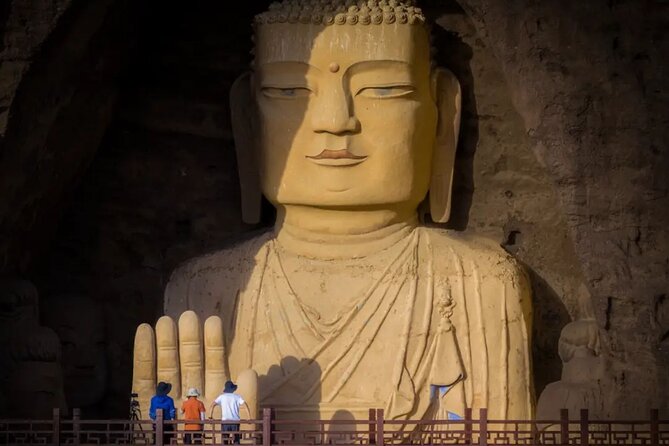
The Dafo Temple in Zhangye is known for a 35-meter-long reclining Buddha. Two hours lets you see the main figure, temple buildings, old murals, and sculpture without treating the visit as a quick stop.
This is a good place to slow down visually. The scale of the Buddha is impressive, but the smaller details in the surrounding halls can be just as rewarding. Your guide can also help explain how the site fits into the Buddhist route you have been following since Tianti and Mati.
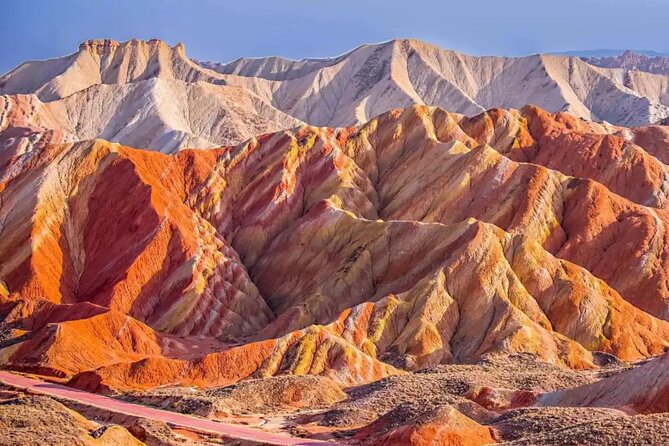
Later, Zhangye Qicai Danxia Scenic Spot changes the subject entirely. Here, layers of red, orange, yellow, and green rock stretch across the horizon. The colors come from geological layers formed over millions of years, so this is a natural history stop rather than a cultural monument.
The visit lasts about three hours. Bring patience for viewpoints and walking between them. The colors depend on light and weather, and no photograph can guarantee the exact shades you may have seen in travel images. Still, this is one of the trip’s most visually memorable stops.
Other history to see in China:
- Between Capitalism & Communism: Hong Kong History Tip Based Tour
★ 5.0 · 234 reviews - Beijing Historical Tour II including Summer Palace, Lama Temple & Panda Garden
★ 4.0 · 187 reviews - Beijing Historical Tour I – Forbidden City, Tiananmen Square & Temple of Heaven
★ 4.0 · 120 reviews - Tour of Jewish Shanghai led by a Jewish History Expert
★ 5.0 · 106 reviews
Day Five: Frontier Walls at Jiayuguan
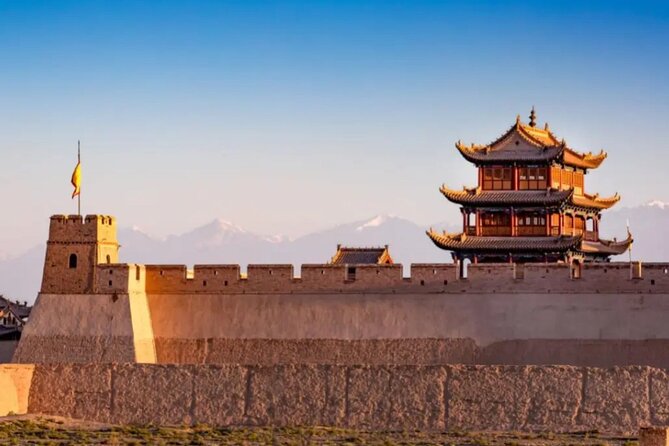
Jiayuguan Fortress was the western end of the Ming-era Great Wall system and is often called the First Pass Under Heaven. Two hours lets you walk the large walls, inspect watchtowers, and picture the fortress as a controlled gateway between China and the lands farther west.
This stop gives the Silk Road route a military edge. The corridor was not only a trade road. It was also a border zone where officials, soldiers, merchants, and religious travelers passed through.
The nearby Xuanbi Great Wall adds an hour of walking along a steep section built on dramatic slopes. It is shorter than the fortress visit but can feel more exposed and physically demanding. Wear shoes suited to walking, and do not judge the stop by its one-hour duration. The views are part of the point.
The day finishes at Dunhuang Night Market for about two hours. This is your chance to try local snacks, browse handicrafts, and see the city after the formal monuments close. Since the market is free to enter, you pay only for food, drinks, and shopping. It is a useful contrast to the daytime ruins and temples.
Day Six: The Mogao Caves and Your Own Mural
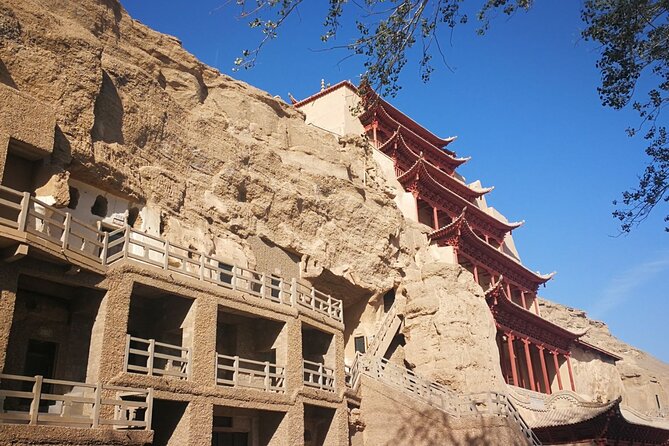
The Mogao Caves are the centerpiece of the trip. You have four hours here, which is appropriate for a site containing more than a thousand years of Buddhist murals and sculpture carved into cliffs near Dunhuang.
The caves are not a place to rush. Their value lies in the painted surfaces, changing artistic styles, religious stories, and small details that are easy to miss without guidance. An English-speaking guide can help you connect what you see to the broader Silk Road route, though the exact caves open during your visit may vary.
Photography rules and access arrangements at major cave sites can be strict, so follow local instructions. The important thing is to look closely rather than treating the visit as a photo session.
Afterward, the 90-minute Dunhuang Mural Copying Experience lets you work with traditional painting methods under an instructor’s direction. This is a smart addition because it changes your role. You are no longer only looking at ancient art. You get a small sense of the patience and control needed to build a mural pattern.
The activity will not turn you into a cave painter in one afternoon, but it gives the art a more personal meaning. It is also a calmer counterpoint to the crowded visual impact of the caves.
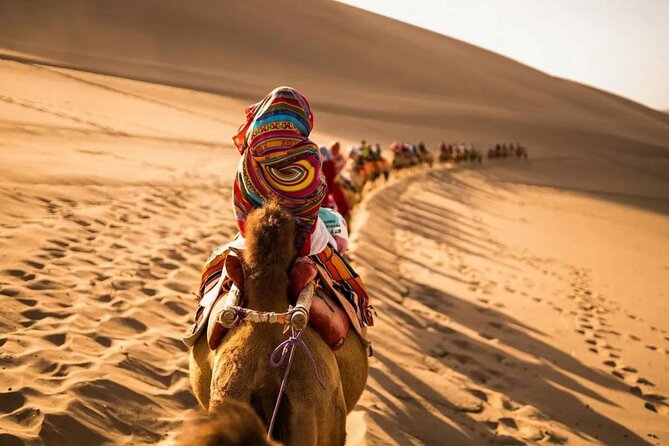
The tour description also includes a desert camp dinner with camel rides, ATVs, a bonfire, and fireworks. That combination supplies the trip’s most playful evening and breaks up the museum-and-monument rhythm. The supplied day-by-day schedule does not clearly assign this desert event to a specific day, so confirm its exact timing and what is included before you pay. The six included dinners suggest that dinner arrangements are part of the package, but optional activities may still need clarification.
The Private Vehicle and Hotel Setup
Transport is one of the strongest practical features. For two people, the company provides a five-seat SUV. Groups of three to five use a seven-seat minivan, groups of six to seven use a nine-seat van, and groups of eight or more use a 15-seat minivan or tourist coach.
That matters on a route with repeated long road sections. You are not sharing a large coach with strangers, and the vehicle is arranged around your group size. Air conditioning is included, an important comfort point for Gansu’s dry climate and desert sections.
Six nights in local four-star hotels are included. The information does not name the hotels, so ask for the properties and room arrangements if that affects your decision. Hotel quality can vary from city to city even when the star category is similar.
Meals cover most of the trip, but not every meal. Breakfast and lunch are not included on arrival day, and lunch and dinner are not included on the final day. Drinks, laundry, and personal purchases are also outside the price.
Who Will Get the Most from This Trip
I would choose this tour if you want the main Silk Road sights but do not want to manage separate trains, drivers, hotel bookings, and admission tickets. It suits couples, families, and small private groups that value a guide and a vehicle reserved for their own party.
It is also a good fit if your interests are broad. You get Buddhist art, Confucian architecture, geology, military history, street food, desert activities, and traditional painting in one route.
I would hesitate if you want a slow cultural stay with free time every day. The schedule has several full sightseeing days, and the route covers a large section of Gansu. The private format reduces some stress, but it does not shorten the distances.
Value, Booking Terms, and Practical Checks
The $2,499 price makes the most sense when you use the included services. A private vehicle, guide, six hotel nights, attraction tickets, and most meals would be costly and time-consuming to arrange independently. Group discounts may improve the per-person value for larger parties, though the exact discount is not provided.
The trip begins with pickup at Lanzhou Airport. The final transfer goes to Dunhuang Airport based on your flight schedule. That open-ended final transfer is helpful, but you should choose a departure time that leaves room for the last morning’s airport journey.
Confirmation is provided at booking. Most people can participate, and the activity is private. Cancellation allows a full refund when you cancel at least six full days before the start time. Cancel two to six full days ahead and the refund is 50 percent. Less than two full days brings no refund, so do not leave changes until the last minute.
Should You Book It?
Book this trip if you want a well-organized first look at Gansu’s Silk Road corridor, especially if Mogao Caves, Buddhist art, Jiayuguan, and desert scenery are high on your list. The route has strong variety, the private transport is practical, and the mural session and desert evening keep the history from feeling like homework.
Think twice if your priority is low cost, slow pacing, or independent travel. You will spend substantial time on the road and follow a fixed schedule. Before booking, confirm the hotel names, the exact desert camp arrangements, and how the guide assignment works. If Li wa is available, you can ask whether that guide will accompany your group.
FAQ
Where does the tour start?
The tour starts at Lanzhou Airport in China, with a listed start time of 9:00 a.m.
Where does the tour finish?
The tour ends with a transfer to Dunhuang Airport, arranged according to your flight schedule.
How long is the tour?
The tour lasts approximately seven days and includes six hotel nights.
Is this a private tour?
Yes. Only your group participates in the private tour or activity.
What type of vehicle is provided?
Two guests receive a five-seat SUV. Groups of three to five use a seven-seat minivan, groups of six to seven use a nine-seat van, and groups of eight or more use a 15-seat minivan or tourist coach.
Are meals included?
Five lunches, six dinners, and six breakfasts are included. Breakfast and lunch are not included on arrival day, while lunch and dinner are not included on the final day. Drinks and personal expenses are extra.
Is an English-speaking guide included?
Yes. An English-speaking tour guide is included.
What is the cancellation policy?
You receive a full refund if you cancel at least six full days before the start time. A cancellation two to six full days ahead receives a 50 percent refund. Cancellations less than two full days before the start time are not refunded.
New reviews from China
- Shanghai To Beijing Bullet Train Ticket with Local Private Transfer★ 5.0 · 12 reviews
- Shanghai Spicy Food Tour★ 5.0 · 3 reviews
- Shanghai Uncommon Historic Sites Tour★ 5.0 · 3 reviews
- Shanghai Pudong airport transfer to Disneyland:Private with Meet & Great service★ 5.0 · 3 reviews
- Shanghai Tower Observation Deck 118 floor Tickets Pre-booking.★ 5.0 · 4 reviews
- Pudong Airport to Hangzhou: Private with Meet and Greet Service★ 4.5 · 4 reviews
- Private Transfer: Hotel to Shanghai Wusongkou Cruise Terminal (Baoshan Port)★ 3.5 · 6 reviews
- Shanghai Pudong International Airport (PVG) to Shanghai Hotel★ 5.0 · 4 reviews
Silk Road Tours, compared.
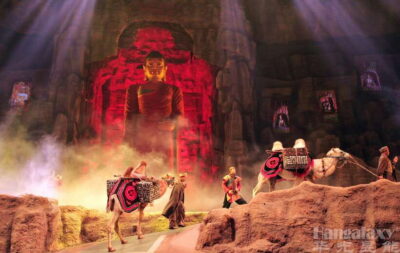
Xi’an Silk Road: Legend of Camel Bell Show Ticket w/Transfer
Read our review →
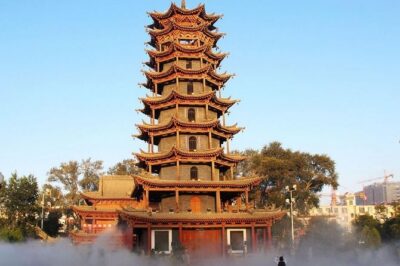
8-Day Silk Road Trip of Dunhuang, Jiayuguan, Zhangye with Accommodation
Read our review →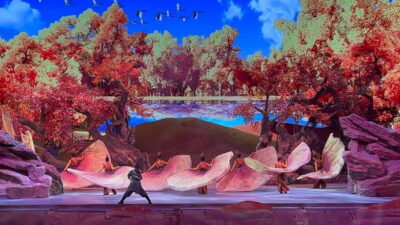
Silk Road(Camel Bell) Legend with Roundtrip Transfer
Read our review →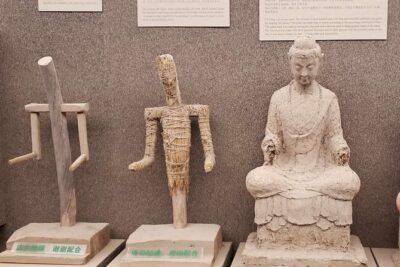
3-Day Private Silk Road Tour of Dunhuang: Mogao Grottoes, Yulin Grottoes, Crescent Moon Pool
Read our review →
Dunhuang Private Silk Road Day Tour: Mogao Caves, Crescent Spring
Read our review →
Dunhuang Day Tour: Mogao Grottoes, Singing Sand Dunes and The Silk Road Show
Read our review →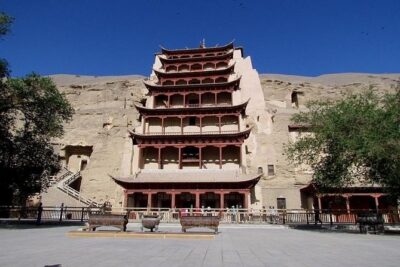
Classic The Silk Road Half Day Tour: The World Heritage –Mogao Grottoes
Read our review →Browse the lists this tour appears in