
Reviewed · CHINESE FOOD TOURS
Hong Kong Street Food Tour with Locals – Dim Sum, Wonton & more
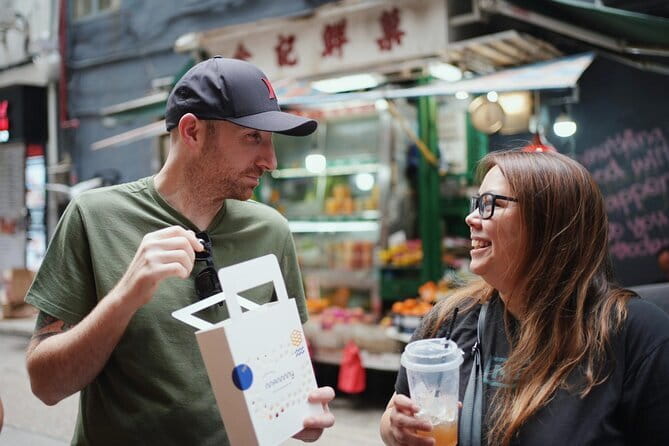
Hong Kong’s best food stories are often found between the big sights. This three-hour walk takes you through Central and Sheung Wan for dim sum, char siu, egg tarts, wonton noodles, herbal tea, and more, with a local guide explaining how each bite fits into the city’s past. The food is only half the tour. The other half is the neighborhood itself: dried seafood shops, old markets, narrow streets, and traces of British Hong Kong.
I like the large range of tastings, which turns this into a filling afternoon rather than a token snack crawl. I also like the guides’ personal touch. Names appearing in guest feedback include Summer, Michael, Alice, Stephen, Wind, Andy, Jasmine, Isaac, and others, so the exact style will vary, but the strongest guides add food knowledge, local stories, and practical help with allergies.
The main drawback is clear: this is not a good choice for vegetarians, and seafood and pork are central to many stops. Water is not listed as provided, and one guest found the food order a little uneven, with sweets arriving before savory dishes. Bring your own water and arrive hungry, but not completely empty-stomached.
Key points to know before you book
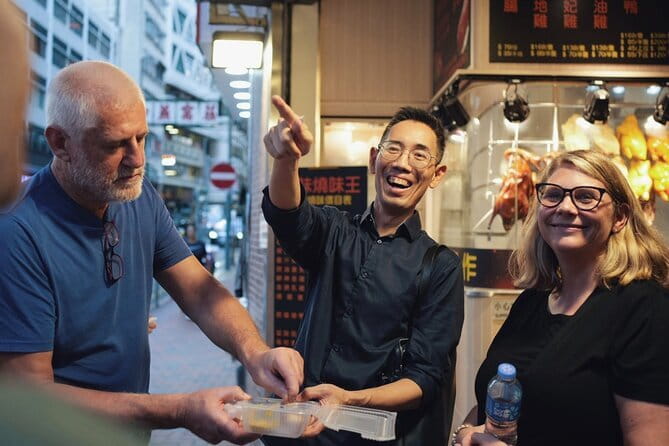
- Ten food and culture stops: The route covers dim sum, dried seafood, milk tea, French toast, char siu, egg tarts, herbal tea, wonton noodles, pu-erh, and egg waffles.
- A real walking route: You move through Central and Sheung Wan, with a moderate amount of walking and frequent tasting stops.
- Strong local guide element: Guides such as Summer, Michael, Alice, Stephen, Wind, and Andy are praised for clear explanations, humor, and personal stories.
- Best for adventurous eaters: Seafood, pork, dairy, eggs, and traditional teas shape much of the menu. Vegetarian and halal meals are not provided.
- Good value at $52.51: Tastings are included, and the number of dishes and drinks can replace several small meals.
- Easy afternoon timing: The tour starts at 3:00 pm at Grand Millennium Plaza and ends at Central Market, making it useful for an afternoon in town.
A food walk through Sheung Wan and Central
The route begins at Grand Millennium Plaza Garden on Queen’s Road Central, near the edge of Sheung Wan. From there, you enter an older side of Hong Kong, where food shops and markets sit close to office towers and modern retail streets.
This is useful if you are new to Hong Kong. You do not need to spend your first day sorting through online restaurant lists or trying to guess which doorway leads to a local favorite. Your guide handles the route and translation, while you concentrate on what is in front of you.
The group can reach up to 20 people. That is not a private tour, but it is still small enough for a guide to explain dishes and help with ordering. Some guides also ask everyone to introduce themselves, which gives the group a more social feel.
More Food Tours in Hong Kong
- Hong Kong’s Tin Hau Hidden Eats Food Tour with 7+ Local Tastings
★ 5.0 · 352 reviews - Small-Group Hong Kong Island Food Tour
★ 5.0 · 343 reviews - Hong Kong Food Tour: Central and Sheung Wan Districts
★ 5.0 · 333 reviews
Dim sum on Wing Lok Street
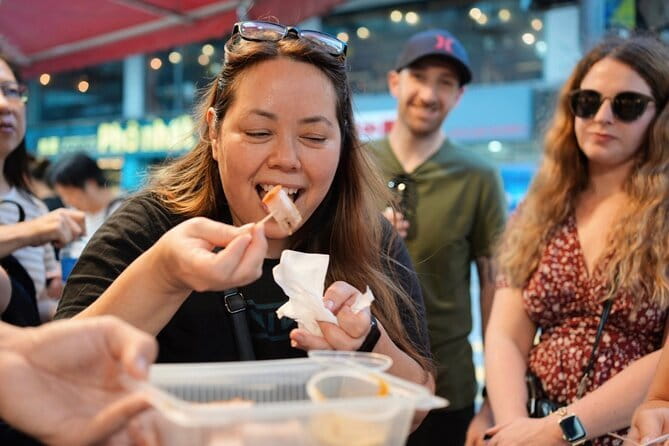
The first tasting is har gow, the translucent shrimp dumpling that arrives in a bamboo steamer. This is a smart opening dish because it introduces dim sum in a familiar form while giving your guide a chance to explain how these small dishes changed over time.
The food story reaches back to imperial-era and Silk Road traditions, then forward to modern Hong Kong, where dim sum can be a full meal or a quick stop near an MTR station. You get more than a dumpling. You get a short lesson in how Cantonese food moved from tea-house culture into everyday city life.
The 20-minute stop is not meant to teach every detail of dim sum. It gives you a useful starting point, especially if you have never learned the difference between steamed, baked, and fried dim sum.
Dried seafood and the symbols of prosperity
A short walk brings you to Wing Lok Street’s dried seafood market. The shops display dried fish, shark fin, bird’s nest, cordyceps, and other ingredients associated with Cantonese cooking and traditional health beliefs.
This part is more about looking and listening than eating. Your guide explains why certain ingredients became linked with wealth, celebrations, and social status. It also shows a side of Hong Kong food culture that you might miss if you stay only with dim sum and noodles.
Some visitors may find the displays confronting, especially around shark fin. The stop does not turn into a meal, but it helps explain the customs and commercial forces behind ingredients that have long held a place in Cantonese cuisine.
Sheung Wan Market and the Cha Chaan Teng stop
At Sheung Wan Market and Cooked Food Centre, the route shifts to everyday comfort food. You taste silky milk tea and crispy peanut butter French toast, two examples of Hong Kong’s postwar adaptation of Western-style food.
Cha chaan teng cuisine is practical and distinctly local. It borrows from British and other Western influences, then adjusts them to local tastes and budgets. Milk tea becomes stronger and smoother, while French toast turns into a sweet, crisp snack that feels far removed from its original form.
This is one of the more accessible stops for first-time visitors. The flavors are not as unusual as dried seafood or herbal tea, but the cultural story is excellent. One small caution: the tour includes several breads, pastries, noodles, and other filling foods, so the overall meal can feel carbohydrate-heavy.
Other eating walks in Hong Kong:
- Small Group Kowloon Michelin Rated Street Food and Culture Tour
★ 5.0 · 170 reviews - Hong Kong Food Tour: Sham Shui Po District
★ 5.0 · 167 reviews - The 10 Tastings of Hong Kong With Locals: Private Street Food Tour
★ 4.5 · 124 reviews - Top-Rated Hong Kong Tour: Peak Tram, Dim Sum & Cultural Sights
★ 4.5 · 99 reviews
Bonham Strand West and Hong Kong’s trading past
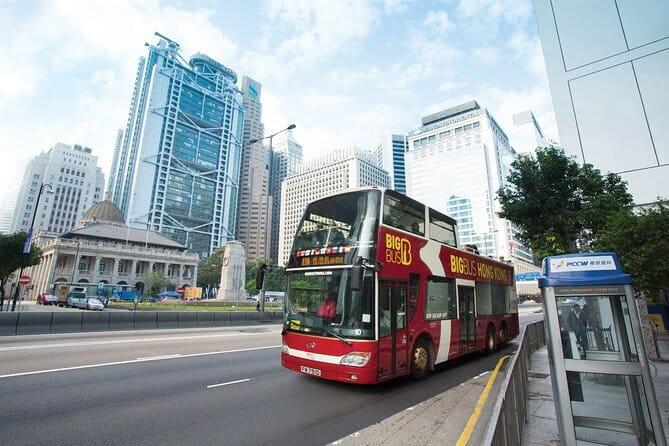
The walk continues along Bonham Strand West, where the guide explains how trade pressures reshaped Hong Kong. The 1953 Korean War trade embargo on China badly damaged the city’s existing trade economy, forcing merchants to adapt.
The point is not to give you a full political history lesson. Instead, it connects the streets around you with the city’s economic rise. Hong Kong’s merchants learned to shift from one form of business to another, helping the city move toward manufacturing, finance, and international commerce.
This is where the tour becomes more than a succession of snacks. You begin to see food shops, old commercial streets, and financial towers as parts of the same story.
Char siu near Possession Point
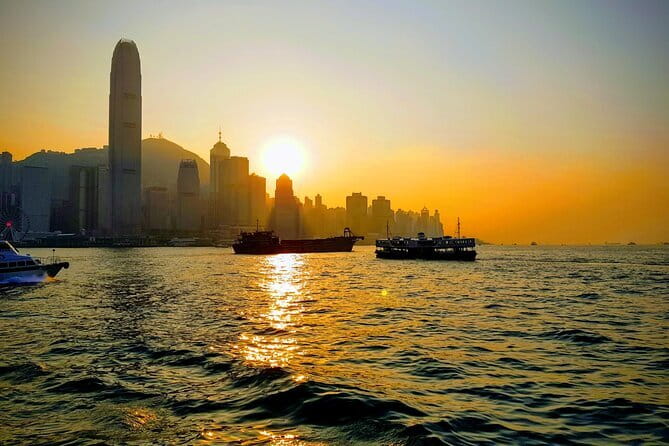
On Queen’s Road West, you stop to see Cantonese barbecue, including char siu. The version described here has a glossy, glass-like exterior, with the cooking method and seasoning doing most of the work.
Char siu is one of the most useful dishes for understanding local food. It is recognizable, easy to eat, and deeply tied to Cantonese cooking. Your guide can explain how the meat is prepared and how barbecue shops fit into daily life.
The stop also connects with Possession Point, the area associated with British forces claiming Hong Kong in 1842. That link between colonial history and food is typical of the tour. A dish is rarely treated as an isolated recipe. It is placed within the city’s changing population, economy, and outside influences.
Egg tarts and the difference from Portuguese pastry
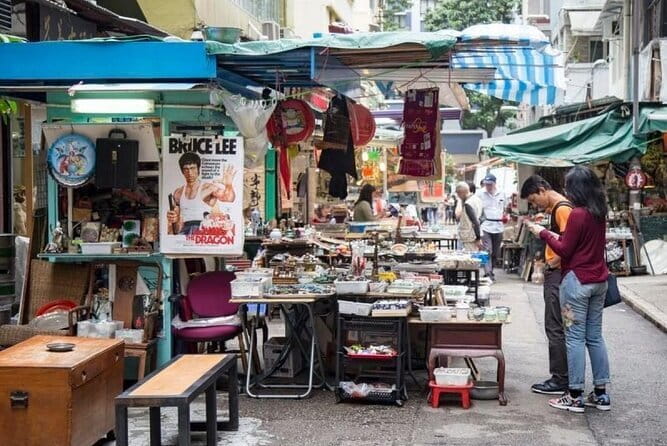
Next comes an egg tart near Possession Street. Hong Kong’s version uses a pastry shell and smooth custard, but it is not simply a copy of the Portuguese pastry found in Macau.
The tour presents the egg tart as a Cantonese innovation that took shape in the 1920s, including the use of lard-based pastry. It is a small detail, but it helps you understand how Hong Kong cooks borrowed ideas and made them their own.
This is also a useful point in the route to pace yourself. The egg tart is compact, but the pastry and custard add to an already generous food intake. If you are eating everything, you will be glad you did not have a large lunch.
Herbal tea and Hong Kong’s hot-weather traditions
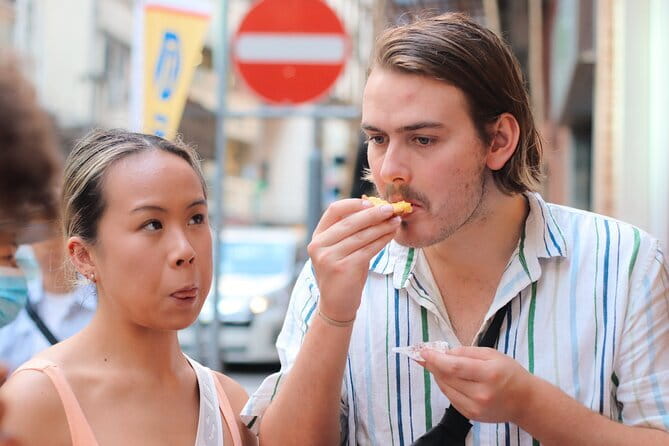
The herbal tea stop introduces drinks linked with Traditional Chinese Medicine. Five Flowers tea is presented as a traditional brew used in ideas about clearing internal heat and keeping the body in balance during Hong Kong’s climate.
You do not need to accept every health claim to appreciate the cultural role of the drink. Herbal tea shops are part of the city’s everyday food world, and the tasting gives you a chance to try something far removed from milk tea or soft drinks.
This is one of the stops where translation matters. The names, ingredients, and traditional uses may not be obvious from a menu. A guide can explain the basic idea without leaving you to guess what is in the cup.
Wonton noodles on Queen’s Road Central
The wonton noodle stop is one of the substantial points of the afternoon. The dish combines shrimp-filled wontons with noodles and a clear, amber broth associated here with monkfish.
Your guide explains how wonton noodles developed from smaller dumpling snacks into the hearty bowl served across Hong Kong. The story also includes the role of refugee cooks and the way older dumpling traditions were adapted to a new city.
This is likely to be one of the most satisfying tastings, particularly after several small portions and sweets. It also gives the food walk a proper meal-like center. If you have concerns about strong flavors, wonton noodles are generally an approachable choice, although the seafood focus remains important.
Pu-erh tea in a Chinese tea house
At Gilman’s Bazaar, the group visits a Chinese tea house for a look at aged pu-erh. You may see tea cakes valued at as much as HK$80,000 and learn how the leaves are brewed in unglazed clay pots over several infusions.
The value of this stop is not simply the tasting. It introduces tea as an object of craft, storage, status, and ritual. The guide explains how flavor changes across repeated infusions and why aged tea can command such high prices.
This can be one of the slower, calmer parts of the walk. After the noise and movement of food stalls and markets, sitting with tea gives the afternoon a different rhythm. It is also a good example of the route’s range: you are not only eating street snacks, you are seeing how food and drink carry social meaning.
Central Market and the egg waffle finish
The final stop is Central Market, where you try a Hong Kong egg waffle. Its crisp, rounded lattice shell and softer center make it one of the city’s most recognizable street foods.
The snack is linked with 1950s ingenuity, when cooks used available ingredients such as leftover lard and cracked eggs to create something inexpensive and appealing. Like French toast and milk tea, it shows how Hong Kong food often comes from adaptation rather than strict culinary rules.
Ending at Central Market is practical. The tour finishes at 93 Queen’s Road Central, between Queen’s Road and Cochrane Street, so you can continue exploring Central afterward. You may also want a short break before deciding on dinner. By this point, the food should have added up to a full meal.
How much food do you actually get?
The tasting list is unusually broad for a three-hour walk. Depending on portions and the guide’s arrangements, you may sample:
- Har gow and other dim sum
- Milk tea
- Peanut butter French toast
- Char siu
- Egg tart
- Five Flowers herbal tea
- Wonton noodles
- Pu-erh tea
- Egg waffle
That is why I would not eat a full meal before starting. One person found the food order less logical because desserts and herbal tea appeared before later savory dishes. That is a fair point, but the route is built around available shops and neighborhoods, not a formal restaurant tasting menu.
Bring water. The tour information does not include bottled water, and Hong Kong’s heat can make a three-hour walk feel longer. Comfortable shoes are also sensible, since the route includes streets, markets, and repeated movement between stops.
Guide quality and the personal side of the tour
The guide can make or break a food walk, and this experience appears to rely heavily on the person leading your group. Guides named in guest feedback include Summer, Michael, Alice, Stephen, Wind, Andy, Jasmine, Isaac, and Simeone.
The strongest descriptions consistently point to clear explanations, humor, enthusiasm, and personal stories about Hong Kong life. Stephen is praised for making the route easy to follow and explaining both the food and the area. Summer is noted for her energy and for adding useful local context. Wind is described as attentive to dietary needs, including helping one person with a tree-nut and peanut allergy.
That last point is helpful, but you should still state allergies clearly at booking and again at the meeting point. The tour is not designed for vegetarians, and halal food is not provided.
Price, group size, and who gets the best value
At $52.51 per person, the price makes sense if you want several tastings plus a guided walk through Central and Sheung Wan. You are not paying only for snacks. The fee covers a local guide, translation, route planning, and enough food and drink to function as a substantial afternoon meal.
The value is strongest for first-time visitors who want a broad introduction without spending hours choosing restaurants. It is also useful during a short Hong Kong stop. One guest used the tour during a nine-hour layover, taking the Airport Express and a short taxi ride to the meeting area.
The value is weaker if you are vegetarian, avoid seafood and pork, or prefer to choose every dish yourself. It may also feel less polished than a sit-down tasting menu because the route follows working shops and street-food locations.
The start time is 3:00 pm, and the experience lasts about three hours. Hotel pickup and drop-off are not included. The tour requires a moderate level of fitness, though the walking pace is described as easy, with frequent stops.
Weather, cancellation, and practical planning
The tour runs outdoors and depends on suitable weather. If poor weather cancels it, you can choose another date or receive a full refund.
For your own cancellation, you can cancel at least 24 hours before the local start time for a full refund. Cancellations or changes made within 24 hours are not accepted for a refund.
The meeting point is Grand Millennium Plaza Garden at Grand Millennium Plaza, Queen’s Road Central, Sheung Wan. The route ends at Central Market, so you are not returned to the start. That is useful if you plan to continue sightseeing in Central, but plan your onward route before the final egg waffle.
Should you book this Hong Kong food tour?
I would book it if you want a broad first taste of Hong Kong food, especially if you enjoy hearing the story behind a dish. The combination of dim sum, dried seafood, milk tea, char siu, egg tarts, herbal tea, wonton noodles, pu-erh, and egg waffles gives you a better sense of the city than a single restaurant meal.
I would also choose it early in a Hong Kong visit. The route gives you basic food vocabulary, neighborhood bearings, and ideas for dishes to seek out later. Guides such as Michael, Summer, Stephen, Alice, and Wind are repeatedly praised for making the experience friendly and informative.
I would skip it if you need vegetarian or halal food, dislike seafood and pork, or want a carefully sequenced fine-dining-style tasting. For everyone else, $52.51 is a reasonable price for three hours, a full set of tastings, and a guided look at the food traditions that helped shape Hong Kong.
FAQ
How long is the Hong Kong Street Food Tour with Locals?
The tour lasts approximately three hours.
Where does the tour start?
It starts at Grand Millennium Plaza Garden, at Grand Millennium Plaza on Queen’s Road Central in Sheung Wan, Hong Kong.
Where does the tour end?
The tour ends at Central Market, 93 Queen’s Road Central, Central, between Queen’s Road and Cochrane Street.
What foods and drinks are included?
Tastings include dim sum, milk tea, peanut butter French toast, char siu, egg tarts, herbal tea, wonton noodles, pu-erh tea, and egg waffles. The exact serving order may vary.
Is the tour suitable for vegetarians or halal diners?
No. The tour is not suitable for vegetarians, and halal food is not provided. Seafood and pork are important parts of the tasting route.
What happens if the weather is poor?
If the experience is canceled because of poor weather, you will be offered an alternative date or a full refund. You can also cancel at least 24 hours before the start time for a full refund.
New reviews from Hong Kong
- Lantau Island: Priority Cable Car, Tai O & Direct Transfer★ 4.0 · 11 reviews
- Hong Kong: Ngong Ping Private Cable Car Skip-the-Line Ticket★ 4.6 · 7 reviews
- Hong Kong: Lantau Private Coach, Tai O & Big Buddha Tour★ 4.8 · 8 reviews
- From Hong Kong: Macau Day Tour with R/T Ferry, Lunch, Pickup★ 4.6 · 39 reviews
- Monopoly Dreams Hong Kong★ 3.5 · 8 reviews
- 4-Hour Private Hong Kong Layover Tour★ 5.0 · 39 reviews
- 6-Hour Private Hong Kong Layover Tour★ 5.0 · 18 reviews
- A Perfect Hong Kong Layover – 5h private tour★ 5.0 · 10 reviews
Chinese Food Tours, compared.
Authentic Local Food Tour in Central Shanghai
Read our review →

Temple Heaven, Lama Temple, Summer Palace & Peking Duck Bus Tour
Read our review →
Hong Kong’s Tin Hau Hidden Eats Food Tour with 7+ Local Tastings
Read our review →
Hong Kong Food Tour: Central and Sheung Wan Districts
Read our review →Browse the lists this tour appears in