
Reviewed · WALKING TOURS
Guangzhou Walking Tour To Explore The Old Xiguan Area
Guangzhou’s old Xiguan district gives you something modern Guangzhou often hides: quiet lanes, old Cantonese homes, neighborhood parks, market streets, and daily life unfolding around you. This tour links those scenes on foot, ending on the elegant riverside streets of Shamian Island.
I like the mix of places, especially Lychee Bay and Yong Qing Fang, where old Xiguan houses and restored lanes help explain how local families once lived. I also like the human touch: guides such as Sunny, Stoney, and Mango have helped visitors with questions, transport, and even a phone hotspot during a short layover.
The main drawback is simple: you walk for about three and a half hours, and the route finishes in a different district from where it starts. Pickup is optional, but there is no drop-off, so you need to plan your onward journey from Shamian Island.
Key points to know before booking
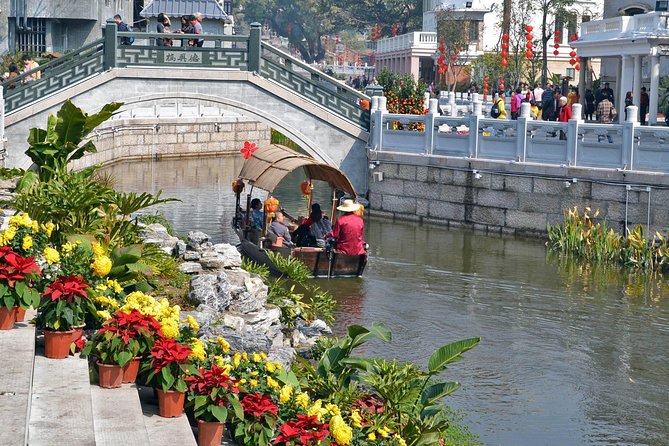
- Old Xiguan in one walk: See Renwen Temple, Liwanhu Park, Lychee Bay, Yong Qing Fang, local streets, and Shamian Island.
- A useful introduction to Cantonese culture: The route focuses on homes, food, markets, temples, parks, and neighborhood life rather than only major landmarks.
- Small group size: The tour accepts a maximum of 15 people, which should make it easier to hear the guide and ask questions.
- A local snack is included: You stop at a local restaurant during the walking route.
- Two daily start times: Choose 9 a.m. or 2 p.m., meeting outside Exit A at Zhongshanba Station on Metro Line 5.
- Good for a layover: The tour lasts about 3.5 hours and ends at Shamian Island, but you must arrange your own transport afterward.
Why old Xiguan is a smart place to explore
Guangzhou is a large, fast-moving city, but Xiguan preserves a more intimate side of it. The district is tied to traditional Cantonese homes, food, worship, shopping, and neighborhood customs. You are not simply checking off monuments. You are walking through streets where the useful parts of daily life remain central.
The route also makes sense geographically. It begins around Zhongshanba Station and gradually moves through Liwan’s older quarters before reaching Shamian Island. That progression gives you a change of mood: temple and park, old homes and market lanes, restored cultural streets, then colonial-era buildings beside the Pearl River.
A local guide matters here because many of the most interesting details are not obvious. A doorway, a narrow lane, or a courtyard house can look ordinary if you do not know what it tells you about Xiguan life. Guides named Sunny, Stoney, and Mango have led this experience, though you should not assume a particular guide will be assigned to your departure.
Other walks around Guangzhou:
- Old Guangzhou Backstreet Alley Local Market Walking Private Tour
★ 5.0 · 18 reviews - 5-Hour Sai Kwan Walking Tour with Unique Food Tasting
★ 5.0 · 17 reviews - Beijing Hutong Walking Food and Beer Tour at Hidden Restaurants
★ 5.0 · 1,132 reviews
Meeting at Zhongshanba Station
The tour begins outside Exit A at Zhongshanba Station on Metro Line 5. Look for the guide holding a nameplate. This is a practical meeting point, since the metro avoids the uncertainty of city traffic and places you close to the first part of the route.
The meeting point is on Zhongshanba Road in Liwan District. If you are staying in Liwan, Yuexiu, Tianhe, or Haizhu, an optional hotel pickup may be available. Pickup is not included as a standard part of the tour, and drop-off is not provided.
The tour runs at 9 a.m. and 2 p.m. The morning departure leaves more time afterward for Shamian Island or another Guangzhou sight. The afternoon option can work well if you prefer a slower start, though you should allow time for your plans after the 3.5-hour walk.
Renwen Temple and a gentle start
The first stop is Renwen Temple, described as a typical Taoist temple. It offers a calm opening to the tour and gives your guide a chance to explain local religious traditions before the route becomes busier.
The temple visit is not presented as a long formal lecture or a separate ticketed attraction. It is part of the walking route, with entrance fees included. That makes it a useful introduction rather than the main event.
Your guide can help you notice details that are easy to miss when visiting independently. This is also where a private question can set the tone for the rest of the walk. The guides have been praised for patience, humor, clear English, and willingness to answer basic questions, so do not hesitate to ask for context as you go.
Liwanhu Park and everyday Guangzhou
From the temple, the route continues to Liwanhu Park. This is one of the best parts of the tour for seeing ordinary local activity. People come here to dance, sing, play games, and spend time outdoors.
The park adds balance to the old-house and market sections. Instead of looking only at buildings, you see how public space is used. The scene may change from one visit to the next, but the point is the same: this is a neighborhood park, not just a photo stop.
I like this part because it helps you read the city as a place where different generations share public space. If your main interest is daily Cantonese life, rather than grand architecture, Liwanhu Park may be one of the most rewarding stops.
Same city, a completely different day:
- Guided Cycle Tour of Guangzhou
★ 5.0 · 164 reviews - Customised Private Guangzhou City Tour with Flexible Itinerary
★ 5.0 · 107 reviews - Gulong Gorge Skywalk Glass Bridge and Waterfall View Private Tour
★ 5.0 · 103 reviews - Private Guangzhou Full Day City Tour with Old and New Highlights
★ 5.0 · 62 reviews
Lychee Bay and the old Xiguan houses
Lychee Bay is a central reason to choose this walk. The area is known for well-preserved old Xiguan houses, which once served as homes for wealthy families. These buildings give the tour its strongest architectural focus.
You will see how the route shifts from open park space to older residential surroundings. Your guide provides the background that connects the houses to the people who lived in them and to the wider development of Xiguan.
Do not expect a museum-style visit with long indoor displays. The appeal is in walking through the area and seeing the homes in their setting. Some visitors may prefer a tour with more formal attractions or interior access. This experience is better for reading the district from the street and learning how the parts fit together.
Duobao Road, En’ning Road, and local food
The walk then follows Duobao Road and En’ning Road. These streets bring in the practical side of Xiguan: busy markets, old shops, snack stalls, and the small details of neighborhood commerce.
This is where the tour feels least polished and most connected to local routine. You might find shopfronts, food activity, and street scenes that are more revealing than a set of isolated landmarks. The route is designed to show a traditional Cantonese lifestyle through the places people use.
A local snack at a restaurant is included. The exact snack is not specified, so you should not book this expecting a particular dish. Still, the food stop adds value because it gives you a taste of the area without requiring you to choose a restaurant on your own.
If you have dietary restrictions, ask the provider before booking. The supplied information does not explain the snack menu or whether substitutions are available.
Yong Qing Fang and restored old Guangzhou
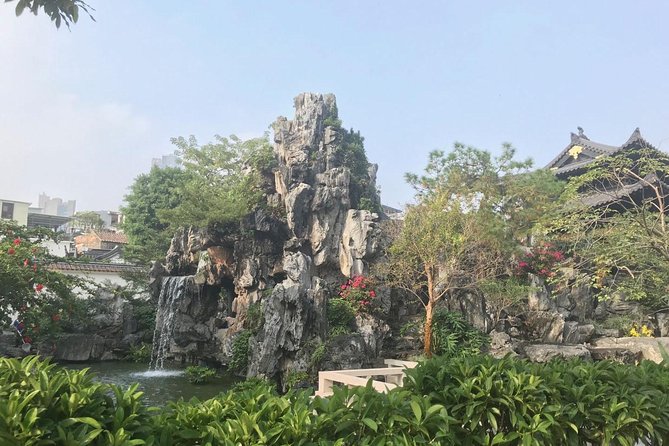
Yong Qing Fang is one of the most recognizable parts of the route. It brings together old lanes, traditional buildings, shops, and newer efforts to present Xiguan culture to visitors.
This area can appeal to two kinds of people. If you like architecture and older neighborhoods, you get another look at Xiguan design. If you prefer food, shopping, and street activity, Yong Qing Fang provides a livelier pause in the walking route.
The useful thing is that Yong Qing Fang is not treated as the whole story. It appears alongside Liwanhu Park, Lychee Bay, Duobao Road, and En’ning Road. That broader route helps you compare restored streets with working neighborhood areas.
The tour also includes the Shangxiajiu Pedestrian Street. The supplied details do not assign a separate timed stop to it, so think of it as part of the connected street experience rather than a long independent visit. It adds another look at Guangzhou’s shopping and food culture.
Finishing on Shamian Island
The final stop is Shamian Island, where the tour ends. The island is known for old houses beside the Pearl River and has a different visual character from Xiguan’s market lanes and residential streets.
This change makes the ending feel deliberate. After several hours among temples, parks, old homes, and local shops, you reach a quieter district with historic buildings and river views. The listed time here is about 30 minutes, so expect an introduction and some time to look around, not an extensive island tour.
Because there is no drop-off, Shamian Island becomes your responsibility once the walk ends. That is not a major problem if you are comfortable using Guangzhou transport or arranging a ride, but it matters during a short layover. One guide helped a visitor wait for a Didi pickup, but that kind of extra assistance should be viewed as a courtesy, not a guaranteed service.
What the $89 price gets you
At $89 per person, this is not the cheapest way to walk through Guangzhou. The value depends on how much help you want with the city’s older districts.
The price includes a local guide, bottled water, entrance fees, and a local snack. You are also paying for a planned route that connects several areas that might be confusing to combine independently. For a first visit, the guide’s explanations can make the old homes, temple, park, and street scenes more meaningful.
The tour is less attractive if you already know Liwan well, speak enough Chinese to navigate comfortably, and mainly want a self-guided stroll. In that case, the price may feel high for a walking route with no major paid attraction.
For a first-time visit or a short stop in Guangzhou, the calculation changes. You get a focused introduction in half a day, and the small maximum group of 15 is more manageable than a large bus tour. The guide’s local knowledge is the part of the price that matters most.
Guides, group size, and the pace of the walk
The tour is capped at 15 people. That is not a private tour, but it is small enough for the guide to keep the group together and answer questions more easily than on a large sightseeing circuit.
The named guides connected with this experience include Sunny, Stoney, and Mango. The strongest praise has focused on patience, good English, humor, kindness, and a genuine interest in explaining Guangzhou. Mango has also helped visitors during solo layovers and with onward transport, while Sunny and Stoney were described as clear and helpful companions on the route.
You should still allow for differences between guides. A walking tour depends on the person leading it, and the guide assigned to your date may not be one of these three. The consistent aim is a local introduction, not a scripted performance.
Plan for three and a half hours on foot. Wear comfortable shoes, carry water beyond the included bottle if needed, and avoid scheduling something immediately afterward that requires you to arrive at a precise time.
Who should book this Guangzhou walk?
I would choose this tour if you want a guided introduction to old Guangzhou and prefer streets, neighborhoods, food, and local routines over a list of major city monuments.
It suits:
- First-time visitors who want help understanding Xiguan
- People on a short Guangzhou layover
- Solo visitors who prefer company and local guidance
- Anyone interested in Cantonese homes, markets, temples, parks, and food
- Visitors who want a small group rather than a large coach tour
It may not suit young children well. The experience is not recommended for children aged 8 and under. It may also disappoint if you want extensive indoor sightseeing, a relaxed vehicle-based tour, or hotel drop-off.
The tour is mobile-ticketed, and confirmation is received at booking. Free cancellation is available up to 24 hours before the start time. Changes or cancellations within 24 hours are not accepted for a refund.
Should you book the Xiguan walking tour?
Book it if you want Guangzhou explained through its older streets rather than viewed from a car window. The strongest parts are Lychee Bay, the Xiguan houses, the everyday scenes in Liwanhu Park, and the food-and-market stretch around Duobao Road and En’ning Road.
The tour offers good value for a first visit, especially if you have only a few hours and want a local guide to connect the places. Just remember that it is a real walking tour, the snack is not specified, and you finish on Shamian Island without included transport onward.
If those conditions suit your plans, this is a practical way to meet Guangzhou’s older, more personal side.
FAQ
How long does the Guangzhou walking tour last?
The tour lasts approximately 3 hours and 30 minutes.
Where does the tour begin?
It begins outside Exit A at Zhongshanba Station on Metro Line 5, on Zhongshanba Road in Liwan District.
Where does the tour finish?
The tour finishes on Shamian Island in Liwan District.
What departure times are available?
You can choose a 9 a.m. or 2 p.m. departure.
Is hotel pickup available?
Optional pickup is available from centrally located hotels in Liwan, Yuexiu, Tianhe, and Haizhu districts. Drop-off is not included.
What places are visited?
The route includes Renwen Temple, Liwanhu Park, Lychee Bay, Yong Qing Fang, Duobao Road, En’ning Road, Shangxiajiu Pedestrian Street, and Shamian Island.
Is food included?
Yes. One local snack at a local restaurant is included.
What else is included?
The tour includes a local guide, bottled water, and entrance fees.
How large is the group?
The tour has a maximum of 15 people.
Is the tour suitable for children?
The experience is not recommended for children aged 8 and under. Most other people can participate.
What is the cancellation policy?
You can cancel up to 24 hours before the start time for a full refund. Cancellations or changes made less than 24 hours before the tour are not accepted for a refund.
New reviews from Guangzhou
- Big Buddha Mountain Martial Art Culture Countryside Private Tour★ 5.0 · 31 reviews
- Hong Kong One Day Private Tour from Guangzhou by Bullet Train★ 5.0 · 3 reviews
- Seven Star Crag and Dinghu Mountain private day tour from Guangzhou★ 5.0 · 5 reviews
- Day Tour learning Kung Fu and Lion Dance in Bruce Lee’s Hometown★ 5.0 · 7 reviews
- Private flexible Guangzhou City Sightseeing Tour with Dim-Sum Tasting★ 5.0 · 5 reviews
- Seven Star Crags Karst Cave Mirror Lake Bird Islands Private Tour★ 5.0 · 30 reviews
- Private Tour to Gulong Canyon with Glass Bridge and Water Falls from Guangzhou★ 5.0 · 20 reviews
- Private Tour: Guangzhou City Sightseeing Including Yuexiu Park★ 3.5 · 3 reviews
Walking Tours, compared.

Beijing Hutong Walking Food and Beer Tour at Hidden Restaurants
Read our review →
Private Beijing Walking Tour of the Forbidden City with 7 Options
Read our review →
Dark Side of Hong Kong – Kowloon Caged Homes Walking Tour
Read our review →
Forbidden City Private Walking Tour with Optional Sights
Read our review →
Shanghai City Guided Walking Tour | China’s 1st and Best Rated
Read our review →
Introduction to Hong Kong: Central Tip Based Walking Tour
Read our review →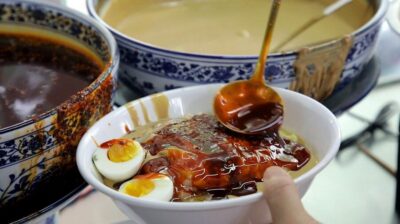
Browse the lists this tour appears in