
Reviewed · CHINESE FOOD TOURS
Chongqing: Private Food Tour and Magical Night Views
Chongqing serves up its best surprises in small places: a family dumpling shop, a pan-fried bun stall, a decades-old noodle counter, and an unassuming dessert stop. This four-hour private tour links those food stops with old lanes and a grand river view, so you get a useful first look at the city instead of only a meal.
I like the varied tasting menu, which moves from sweet fermented rice pudding and cold jelly to dumplings, buns, noodles, and tea. I also like the guide-led walk through central Chongqing, especially the chance to see Shibati and Shancheng Alley before the lights come on. The main drawback is the walking: steep or uneven city routes may be tiring, and the tour is not suitable for people with mobility impairments or gluten intolerance.
Key points to know before booking
- The food route covers both old and new Chongqing: Expect traditional desserts, handmade dumplings, pan-fried mini buns, spicy and sour sweet potato noodles, and modern tea drinks.
- The tour is private: You can discuss local food customs, spice levels, and cultural differences directly with your English, Spanish, Italian, or French-speaking guide.
- Tian has shown unusual flexibility: One late-arriving couple found that he waited through a major traffic jam and extended their tour by 1.5 hours.
- The night view comes at the end: A taxi or Didi transfer takes you toward Chongqing Grand Theatre and views across the rivers and Yuzhong Peninsula.
- Non-spicy eaters have options: The experience is designed to accommodate spice-sensitive palates, with special choices for halal and flexitarian diets.
- Comfortable shoes matter: You will walk through commercial streets, quiet alleys, and historic neighborhoods, then take in the skyline on foot.
Why this Chongqing food tour works so well
Chongqing can feel hard to read at first. The city rises and drops, its streets change character quickly, and food stalls often hide behind plain doors rather than bright tourist signs. This tour gives you a local guide and a clear route through that maze.
You begin near Linjiangmen metro station, close to the Liberation Monument in the heart of the city. That location is practical. It is easy to reach by Line 2, and it puts you within walking distance of Jiefangbei’s commercial center.
The food is the main thread, but the tour is not simply a four-hour eating session. You also get a look at how Chongqing shifts from polished shopping streets to older lanes and then to a modern riverfront skyline. I see that mix as the real value here. You sample the city, then place those flavors in their urban setting.
The private format helps. You can ask why one noodle dish is sour as well as spicy, how local desserts differ from familiar Chinese sweets, or what makes Chongqing tea drinks so modern. A shared group tour usually has to keep moving. Here, the guide can adjust the pace and explain the food in a more personal way.
More Food Tours in Chongqing
- Chongqing: Local Flavors Food Tour
★ 5.0 · 7 reviews - Chongqing: Illuminated Night Tour with Cruise or Hot Pot
★ 4.8 · 7 reviews - True Taste of Chongqing: Offbeat Walks & Hotpot in One Day
★ 5.0 · 6 reviews
Starting with fermented rice pudding and cold jelly
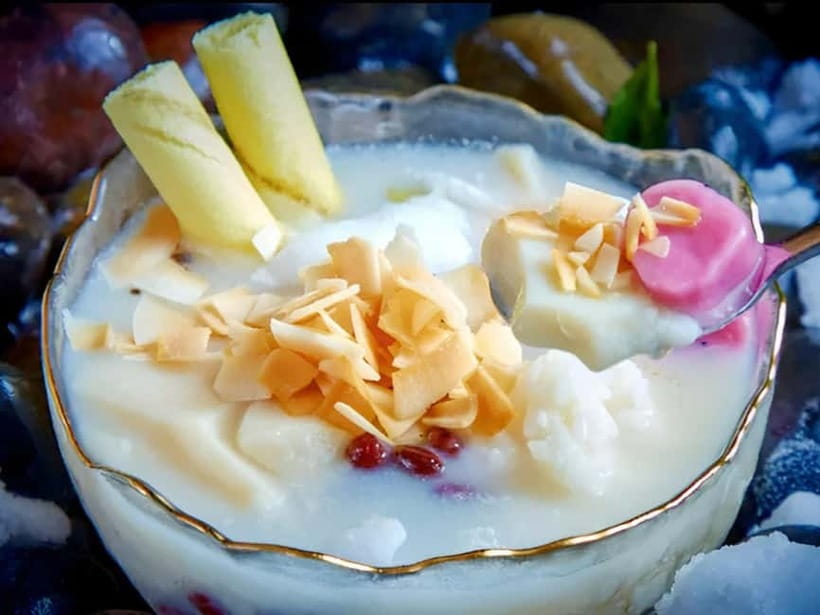
The first food stop introduces Chongqing through dessert rather than heat. You may try fermented rice pudding, cold jelly, or coconut bean curd, depending on the selection available that day.
Fermented rice pudding has a gentle sweetness and a soft, almost melting texture. It is a useful counterpoint to the stronger flavors that follow. Cold jelly offers a smooth, cooling bite, while coconut bean curd is fuller and creamier. These are not elaborate restaurant desserts. Their appeal comes from their everyday place in local food culture.
I like beginning here because it gives your palate a quiet start. Chongqing is famous for spicy food, but this opening makes clear that the city’s cooking is not one-note. If you are worried that the tour will begin with an aggressive mouthful of chili, this is reassuring.
The exact dessert choice may vary, so you should treat this as a tasting rather than a guaranteed single dish. Anyone with a very strict dietary requirement should confirm the available ingredients with the guide before eating.
Finding the small food shops around Jiefangbei
From the dessert stop, the route moves through the busy commercial district near Jiefangbei. This is central Chongqing at its most active, with shopping streets and heavy foot traffic. The guide then turns into less obvious lanes to find local food shops without prominent tourist signs.
That change in setting is one of the tour’s strongest features. You see how a major city center can contain modest family businesses just a few steps from large commercial streets. The experience is less about checking off famous restaurants and more about learning how ordinary food fits into city life.
The walk also gives you a chance to ask practical questions. You can discuss differences among regional Chinese cuisines, how Chongqing food compares with other local traditions, and how spice is used in daily meals. Since the tour is private, the conversation can follow your interests instead of a fixed script.
Wear shoes with good support. Chongqing is known for its hills and changes in elevation, and the route includes walking through active streets and old neighborhoods. The supplied information does not promise a flat route, so anyone concerned about stairs or slopes should consider that before booking.
Handmade dumplings in a family restaurant
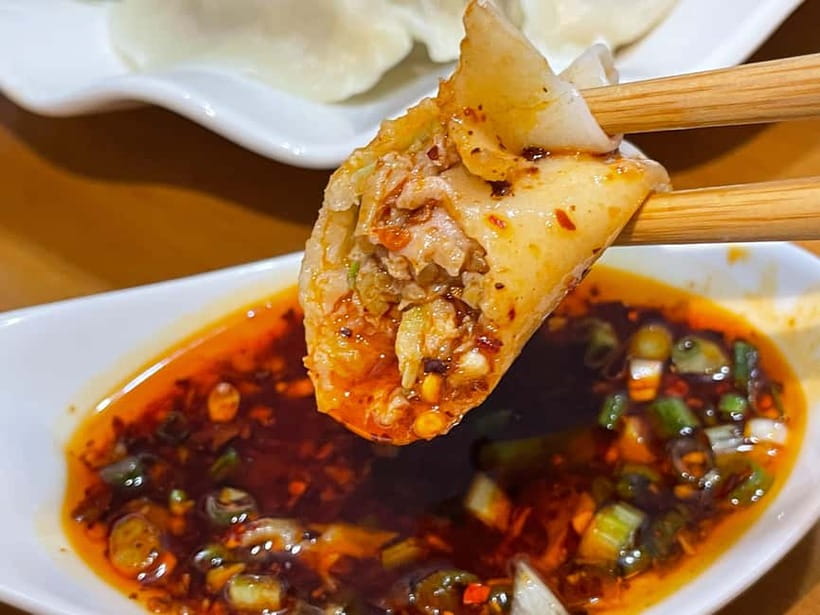
At a small dumpling house, you can watch the craft behind the meal before tasting handmade dumplings. The thin skins and generous fillings matter here. This is different from simply ordering a plate and moving on, because you get to see the care involved in shaping the food.
Dumplings are a useful stop for first-time visitors. They are familiar enough to feel approachable, yet the texture and filling can show you what makes a local shop worth seeking out. The thin wrapper keeps the bite light, while the filling supplies the main flavor.
This is also one of the better points for a spice-sensitive eater. Dumplings need not be fiery, and the guide can help explain which choices suit your palate. Still, you should say clearly at the start that you prefer mild food. Chongqing’s food culture often treats chili as part of the dish rather than an optional extra.
The family-restaurant setting is likely to feel more personal than a large dining room. The tradeoff is that small local places may be simple and busy. If you want polished service, this may not be your ideal food tour. If you want to see where locals actually eat, it is a strong fit.
Other eating walks in Chongqing:
- Chongqing Local Food Tour Adventure
★ 5.0 · 5 reviews - Authentic Local Food Tour in Central Shanghai
★ 5.0 · 1,382 reviews - Xi’an Evening Food Tour by TukTuk
★ 5.0 · 715 reviews - Eat Like A Local: Shanghai Night Food Tour
★ 5.0 · 616 reviews
Crispy mini buns and Chongqing’s sweet and savory range
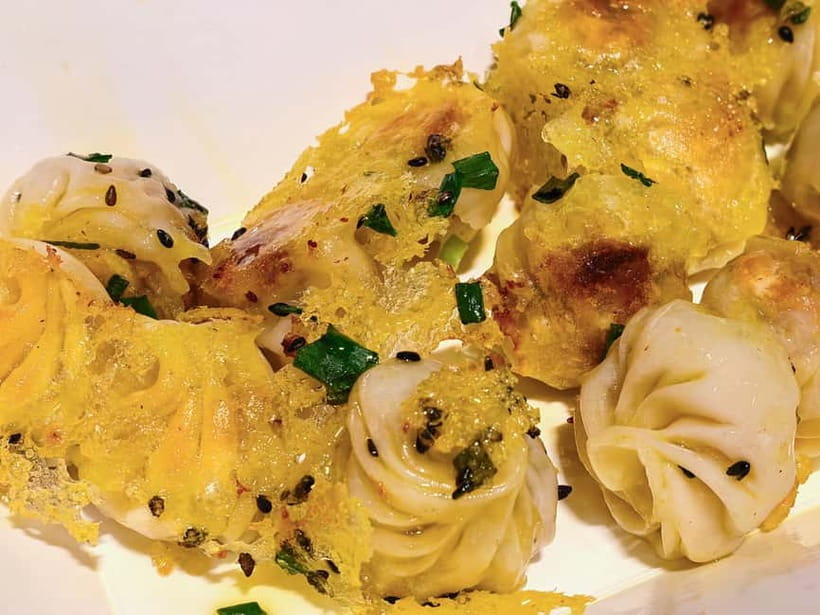
The next tasting brings pan-fried mini buns with a crisp outside and juicy filling. Their small size makes sense on a food tour. You can enjoy one or two without using up your appetite before the noodles and drinks.
The contrast is the point. The bottom or exterior gives you a fried crunch, while the filling stays moist. After a soft dessert and delicate dumplings, the buns add a more forceful texture without relying only on chili.
Portion sizes are not specified, so do not assume this replaces a full dinner for a large appetite. The tour is designed around several tastings, and the pleasure comes from variety. You should pace yourself instead of filling up at the first stop.
The route’s food choices also make it easier to compare cooking methods. You move from chilled or soft sweets to steamed or handmade dumplings, then to pan-fried buns. That progression tells you more about local eating than a single large dish would.
Spicy and sour sweet potato noodles
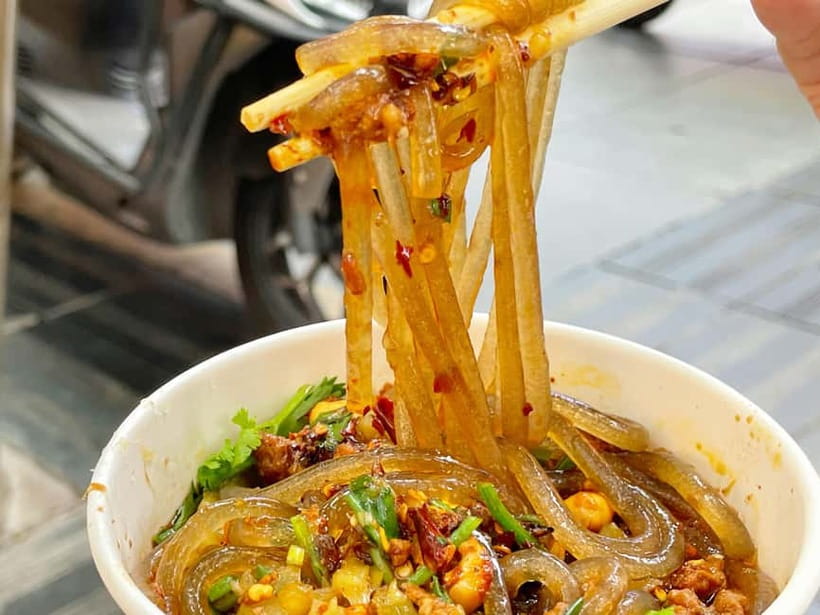
A shop with decades of history serves classic spicy and sour sweet potato noodles. This is the most unmistakably Chongqing-style course in the food sequence, with chewy noodles in a broth that balances heat and sourness.
Sweet potato noodles have a springy texture that sets them apart from wheat noodles. The broth brings the stronger seasoning, and the combination can be lively without being heavy. If you enjoy bold flavors, this may be the dish you remember most clearly.
Spice-sensitive diners should not assume that every bowl will be mild simply because the tour welcomes non-spicy palates. Tell your guide what you can handle, and ask about a suitable version. The tour specifically includes choices for people who prefer less heat, but the classic noodle stop is built around a spicy and sour flavor profile.
People with gluten intolerance should not book this tour. The experience is listed as unsuitable for them, and the food sequence is not presented as gluten-free.
Modern tea drinks after the traditional dishes
Creative hot or cold tea beverages provide a modern break from the older foods. These drinks show how Chongqing’s food scene keeps changing while still using familiar tea traditions.
You might find this stop especially useful if you do not drink alcohol or want something refreshing between tastings. It also keeps the meal from becoming a parade of heavy, salty dishes. A cold drink can reset your palate after the noodles, while a hot tea offers a calmer finish to the food portion.
The drink stop is less about a single classic recipe and more about the contrast between old and new. You start with time-honored desserts and handmade dumplings, then try a stylish tea drink made for today’s city crowd.
As with the desserts, the exact beverage selection is not fixed in the information provided. If you have dietary concerns, ask what goes into the drink, especially if you avoid dairy or added sugar.
Shibati and Shancheng Alley after dark
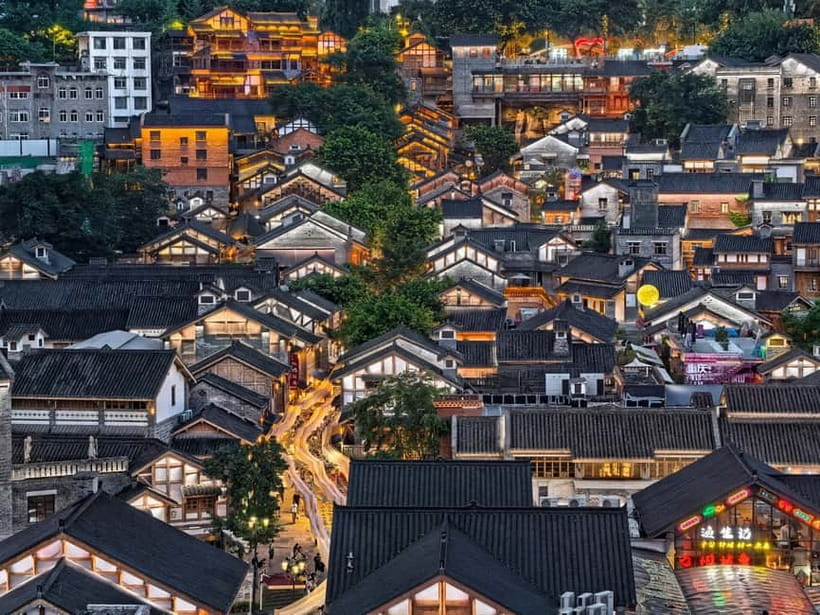
The walking portion continues into two historic areas, identified in the route as Shibati and Shancheng Alley. These neighborhoods give the tour a different rhythm from Jiefangbei’s commercial center.
You can expect a mix of active streets and quieter lanes. That contrast matters in Chongqing, where the city’s modern face and older residential passages can sit close together. Your guide can help explain what you are seeing and connect the food stops with local daily life.
The route is not only for photographs. It lets you see the physical character of the city, including narrow streets and changes in level. If you enjoy wandering without needing every stop to be a formal attraction, you will likely appreciate this part most.
Again, comfortable clothes and shoes are important. The tour is not suitable for people with mobility impairments, and the information does not promise step-free access. Anyone who finds hills, stairs, or long walks difficult should think carefully before booking.
The skyline from Chongqing Grand Theatre
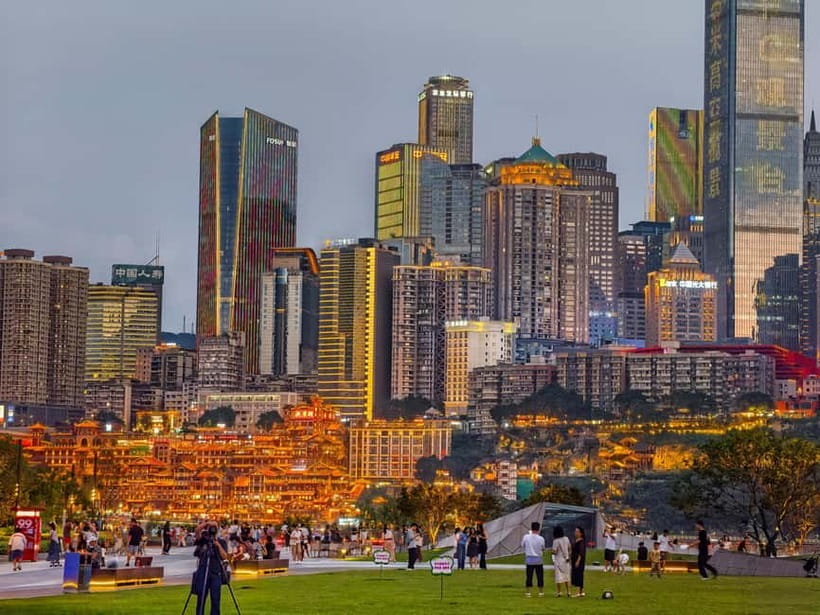
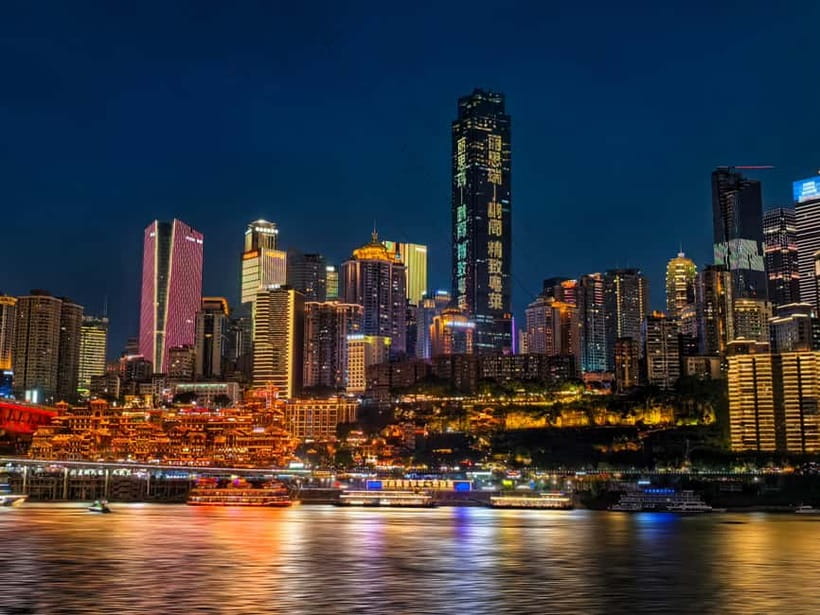
As night settles in, the tour moves toward Chongqing Grand Theatre for a photo stop and city view. Taxi or Didi transport during the tour is included, which is useful in a city where a short distance on the map can take effort on foot.
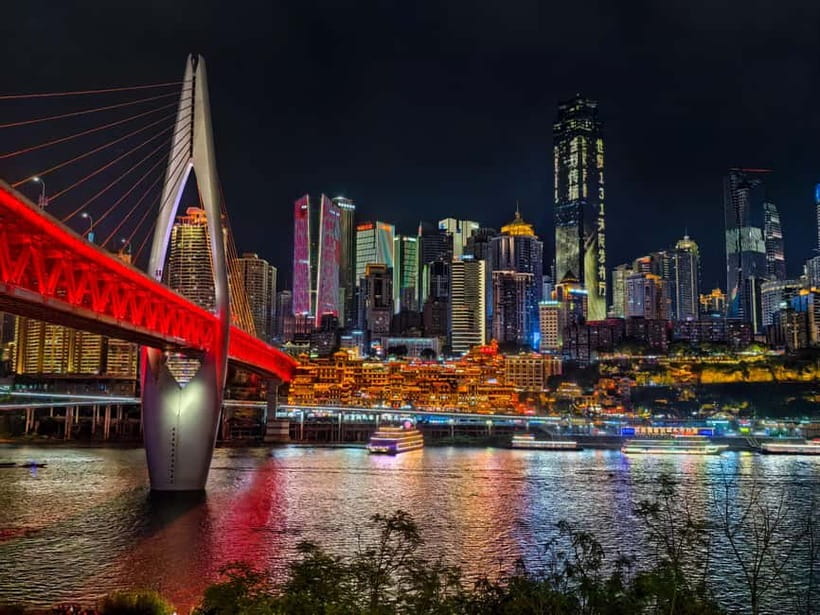
From the riverfront area, you can see the Yuzhong Peninsula glowing between the Yangtze and Jialing rivers. The city lights reflect across the water, creating the broad night scene that Chongqing is known for. It is a strong ending because the view makes sense after you have spent the evening walking through the city center.
The final stop also gives you time to slow down. After several tastings and busy streets, the river view provides a quieter close. Bring your phone or camera, but keep your attention on the scene itself. The best part is the scale: layers of buildings, water, bridges, and lights gathered into one panorama.
The listed timing gives about an hour for the Grand Theatre portion, including walking, sightseeing, and photographs. That is enough for a proper look without turning the tour into a long late-night outing.
Is $108 a fair price for four hours?
At $108 per person, this is not a budget street-food crawl. The value depends on what you want included in the evening.
You are paying for a private guide, several food tastings, drinks, local transportation by taxi or Didi, a walk through two historic neighborhoods, and a skyline stop. You also get a guide who can adjust the food conversation and spice choices to your group. For two people or a small private party, that can be worthwhile in a city that is difficult to navigate quickly.
The price is less attractive if your main goal is simply to eat as much as possible. Portions are tastings rather than a guaranteed large dinner, and personal spending is not included. You should also budget for your own route to and from the meeting point, since hotel pickup and drop-off are excluded.
A four-hour evening is a good length for a first introduction. It gives you enough food to compare several local specialties without taking an entire day. The private structure and included transfers make the price easier to justify for visitors who value convenience and direct explanation.
Who should book this experience?
I would choose this tour for a first evening in Chongqing, especially if you want help getting oriented around Jiefangbei and the central neighborhoods. It suits curious eaters who prefer several small tastings to one formal meal.
It is also a good match for people who want food and city views in the same outing. The route does not force you to choose between a night market-style experience and a scenic overlook. You get both, along with a guide who can explain the cultural differences among the dishes.
The tour works for non-spicy diners, halal diners, and flexitarians because special tasty options are available. You still need to communicate your needs clearly, since the classic noodle course has a spicy and sour character.
I would skip it if you have gluten intolerance, limited mobility, or no interest in walking through old lanes. I would also skip it if you want a fixed fine-dining menu, guaranteed exact dishes, or a large sit-down dinner.
The tour has a flexible cancellation policy, with a full refund available when you cancel at least 24 hours ahead. You can also reserve now and pay later, which helps if your Chongqing schedule is still changing.
Should you book the Chongqing night food tour?
Book it if you want a compact, private introduction to Chongqing’s food and city life, with a memorable river view at the end. The strongest reasons are the range of tastings, the chance to reach small local shops, and the easy link between Jiefangbei, historic lanes, and the Yuzhong skyline.
The main caution is physical and culinary. You need to be comfortable walking, and you should not book if you cannot eat gluten. For everyone else, the $108 price makes the most sense when you value personal guiding, included local rides, and a fuller evening than a simple restaurant meal.
FAQ
Where does the Chongqing food tour begin?
The meeting point is at the entrance or exit 1 of Linjiangmen metro station on Line 2, near the Jiefangbei Monument in central Chongqing.
How long does the experience last?
The tour lasts four hours. Availability should be checked for the starting times offered on your selected date.
Is this a private tour?
Yes. The experience is arranged for a private group rather than a shared group.
Which languages are available?
Live guiding is available in English, Spanish, Italian, and French.
What food will I taste?
The food sequence includes traditional desserts, handmade dumplings at a family restaurant, pan-fried mini buns, spicy and sour sweet potato noodles, and creative hot or cold tea drinks.
Can I join if I do not like spicy food?
Yes. The tour is described as friendly to spice-sensitive diners. Tell your guide about your preference so suitable options can be arranged.
Are halal and flexitarian options available?
Yes. Special tasty options are available for halal and flexitarian diets.
Is transportation included during the tour?
Taxi or Didi transportation during the tour is included. Hotel pickup and drop-off are not included.
Is the tour suitable for people with gluten intolerance or mobility impairments?
No. The experience is listed as unsuitable for people with gluten intolerance and people with mobility impairments. Comfortable shoes are recommended because the tour includes walking through city streets and historic neighborhoods.
New reviews from Chongqing
- Chongqing: Trendy Spots, Cableway & Ferry Private Tour★ 5.0 · 7 reviews
- Chongqing:One-day Wulong HikeTrip(GeoPark+Fairy Mt)car incld★ 5.0 · 3 reviews
- Chongqing: Qingyu Banquet Experience with Show and Dinner★ 4.8 · 6 reviews
- Chongqing: Wulong Private Day Exploration Tour★ 4.6 · 10 reviews
- Chongqing: Surreal Urban, Ancient Town, and Secret Viewpoint★ 5.0 · 8 reviews
- Chongqing: Private Day Tour to Wulong Karst Geological Park★ 5.0 · 7 reviews
- Chongqing: Wulong 2 Spots All-inclusive Luxury Private Trip★ 5.0 · 8 reviews
- Chongqing One-Day Trip: Wulong’s 3 Essentials★ 4.6 · 3 reviews
Chinese Food Tours, compared.
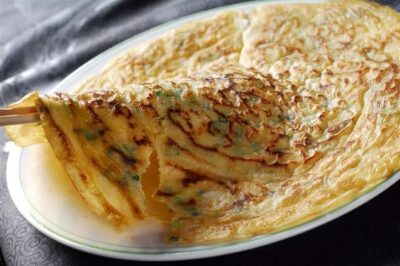
Authentic Local Food Tour in Central Shanghai
Read our review →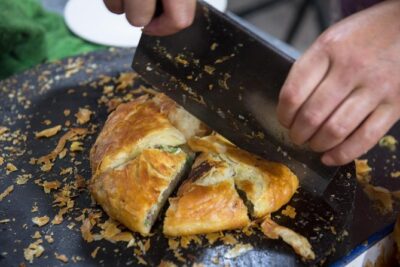
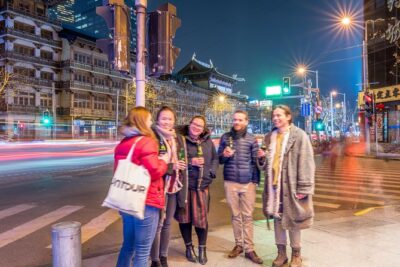

Temple Heaven, Lama Temple, Summer Palace & Peking Duck Bus Tour
Read our review →
Hong Kong’s Tin Hau Hidden Eats Food Tour with 7+ Local Tastings
Read our review →
Hong Kong Food Tour: Central and Sheung Wan Districts
Read our review →Browse the lists this tour appears in