
Reviewed · WALKING TOURS
Beijing: Peking University Campus Guided Walking Tour
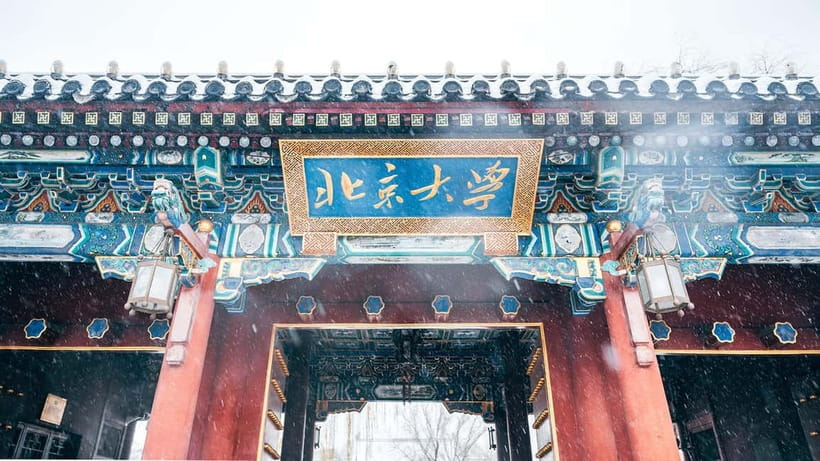
Peking University is not simply a university visit. It is a walk through old gardens, political history, academic tradition, and everyday student life. The route takes you from the East Gate to the West Gate, with stops at Boya Pagoda, Weiming Lake, the Bell Pavilion, the library, and the statue of Cai Yuanpei.
I like the small-group format, limited to 10 people, and the chance to walk with a current student guide. I also like the clear historical thread, from Yenching University and the Old Summer Palace to modern PKU. The main consideration is time: two hours gives you a focused introduction, not a full tour of this large campus.
Key points at a glance
- Boya Pagoda and Weiming Lake: See the campus landmarks that give PKU much of its visual character.
- A student’s point of view: An English-speaking guide explains campus customs, study life, and famous alumni.
- Yenching University connections: Learn how the earlier institution shaped today’s Peking University.
- Traditional design with meaning: Gardens, courtyards, water, pillars, and statues are explained as part of a larger idea of harmony.
- A practical two-hour route: Begin at the East Gate and finish at the West Gate, with comfortable shoes essential.
- A personal guide can make the difference: Henry received repeated praise for his patience, clear explanations, and friendly manner.
Why Peking University is worth two hours

Many university campuses are pleasant places to stroll, but PKU offers more than attractive buildings and leafy paths. The university has been tied to major changes in Chinese education and public life, so its grounds carry political, cultural, and academic meaning.
The tour gives you a way to connect those ideas to physical places. A pagoda is not just a photo stop. A lake is not only a quiet patch of water. A statue is not merely something to pass on the way to the next building. Your guide explains how these features fit into the university’s identity.
That makes the tour especially useful if you are interested in Chinese history, architecture, education, or the experience of studying in China. You also get a look at PKU as a working campus, rather than as a collection of monuments. The focus is on the relationship between the university’s past and its present student culture.
The format is simple. You meet at the Peking University East Gate, specifically at the stone lion on the right side when you face the entrance. From there, you walk for two hours and finish at the West Gate. Transportation to and from the university is not included, so you arrange that part yourself.
Other walks around Beijing:
- Beijing Hutong Walking Food and Beer Tour at Hidden Restaurants
★ 5.0 · 1,132 reviews - Private Beijing Walking Tour of the Forbidden City with 7 Options
★ 5.0 · 675 reviews - Forbidden City Private Walking Tour with Optional Sights
★ 5.0 · 400 reviews
Starting at the East Gate and finding the stone lion
The meeting point is precise, which matters at a major city university. Go to the East Gate and look for the stone lion on the right side when facing the entrance. You do not need to spend the first part of the tour trying to locate a general meeting area.
The walk begins with the campus itself as the setting. Your guide introduces PKU’s place in Chinese education and explains how the university developed from its roots as Yenching University. That background gives the later stops more weight. You begin to see the grounds as an institution shaped by several periods, not as one uniform complex.
The current student perspective is one of the strongest reasons to choose this tour. A guide who knows campus life can connect formal history with the practical side of being a student. That might include traditions, academic culture, and the way famous alumni continue to shape the university’s public image.
The group limit of 10 people is useful here. You can hear the guide more easily than you would in a large walking group, and there is more room for questions. Families may also appreciate the smaller setting. Henry was specifically praised for being patient with four children and for making the tour easy to follow.
Boya Pagoda and Weiming Lake
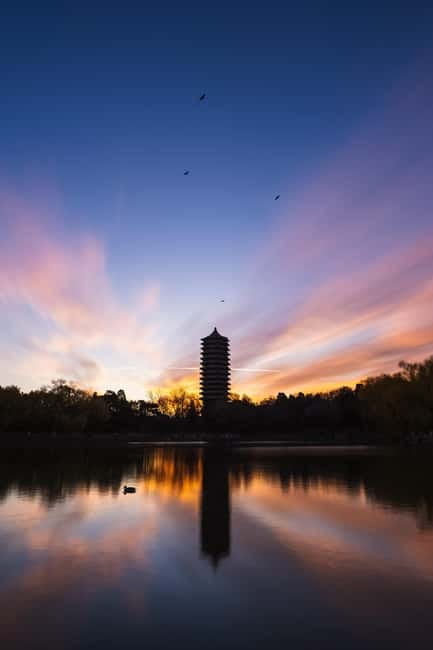
Boya Pagoda is one of the tour’s main visual highlights. The century-old structure gives you a clear sense of the campus’s older character and provides a natural point for discussing tradition, architecture, and PKU’s public image.
Weiming Lake adds a different mood. The water and surrounding gardens show how the university uses nature as part of its campus design. Here, the tour moves beyond dates and names. You learn why water, open views, planting, courtyards, and buildings are arranged to support a sense of balance between study and the natural world.
I like this part of the route because it gives you time to notice details. You are not only racing from one famous object to another. The guide helps you read the setting, including the ideas behind traditional Chinese gardens and the way they frame movement and reflection.
Bring a camera if you enjoy architectural and garden photographs. Still, the tour is not designed as a dedicated photo walk. The guide’s explanations remain the main point, and the amount of time available at each stop depends on the walking pace and group interest.
Bell Pavilion, Hua Biao, and Qilin statues
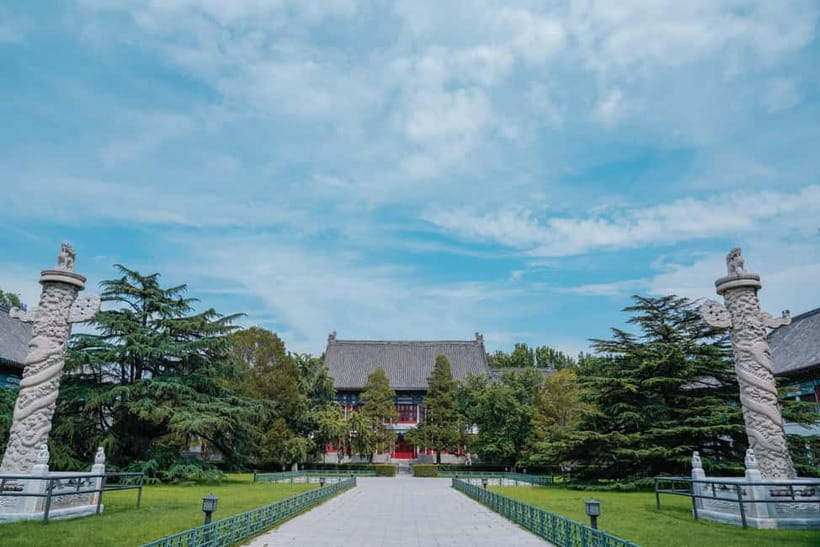
The Bell Pavilion introduces another layer of campus symbolism. Along with the Hua Biao, or ornamental pillars, and Qilin statues, it gives the tour a chance to explain how familiar Chinese forms can carry messages about learning, status, protection, and tradition.
These stops are useful for visitors who might otherwise see campus decorations only as attractive objects. A guide can point out why they were placed there and how they relate to the university’s ideals. The experience becomes less about collecting landmarks and more about understanding what the university wants its spaces to communicate.
The Hua Biao and Qilin statues also help break up the historical narrative. You move between education, architecture, folklore, and institutional symbolism. That mix keeps the walk from feeling like a lecture about one narrow subject.
You should expect interpretation rather than an elaborate performance. The value comes from the guide’s explanations and the connections between places. Henry was repeatedly praised for speaking clearly, answering questions, and making the tour interesting without losing its professional structure.
A few more days out in Beijing worth the ticket
- MuBus: Mutianyu Great Wall ENG/ESP/RUS Guided Bus Tour
★ 5.0 · 2,361 reviews - Beijing Forbidden City Ticket Booking (Optional: guide service)
★ 5.0 · 1,263 reviews - Forbidden City&T-Square Small GroupTours w/ ticket(Eng/Esp Guide)
★ 5.0 · 995 reviews - Beijing: Summer Palace Entry Ticket and Optional Guided Tour
★ 4.7 · 810 reviews
The Peking University Library and Cai Yuanpei
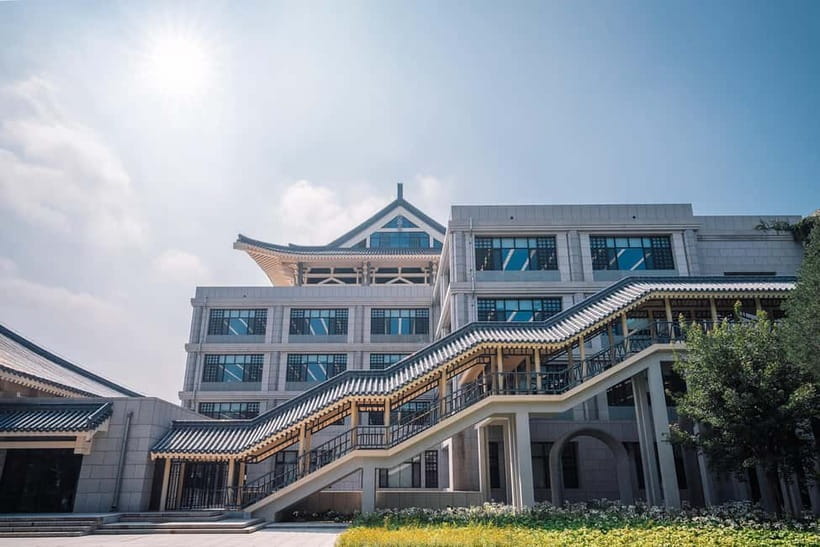
The Peking University Library is one of the route’s major academic landmarks. Its presence makes the university’s purpose plain: this is a place built around study, research, and the exchange of ideas.
The tour also visits the statue of Cai Yuanpei, a revolutionary former president of PKU. This stop connects the physical campus to the university’s leadership and intellectual tradition. Cai Yuanpei’s place in the tour helps explain why PKU is associated with educational reform and wider changes in Chinese public life.
I find this combination particularly effective. The library represents the daily work of students and scholars, while the statue points to the people who shaped the institution. Together, they give you both the practical and symbolic sides of the university.
Do not expect a long interior visit to every library space. The information provided describes an exploration of the grand library, but the tour remains a two-hour walking experience. The main benefit is learning how the library fits into the campus and its academic identity.
From Yenching University to modern PKU
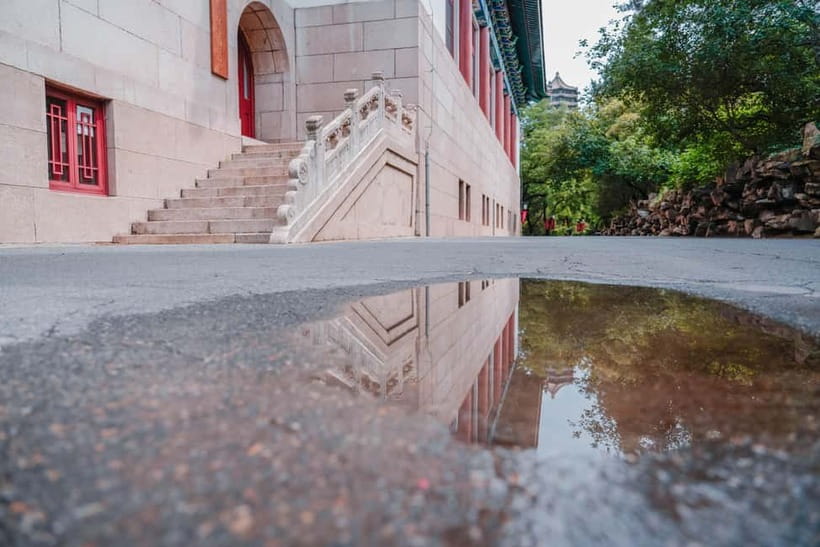
The historical thread begins with Yenching University and continues through the development of Peking University. You hear how earlier institutional connections still matter when you look at the campus today.
The tour also links PKU with the Old Summer Palace, known as Yuanmingyuan, and with Heshen, the infamous Qing Dynasty official. These subjects broaden the story beyond the university gates. They show how PKU’s location and past are connected to larger chapters of Beijing’s political and cultural life.
This is where a guide adds real value. A map or sign can identify a building, but it cannot easily explain why a university is tied to an imperial garden, a Qing official, and changing ideas about education. Your guide provides the links in a form you can follow while walking.
The history is presented through specific places, so you are less likely to lose the thread. Each stop gives the background a physical anchor. That approach suits you if you want context but do not want to spend the entire morning inside a museum.
Traditional gardens and the meaning of campus space
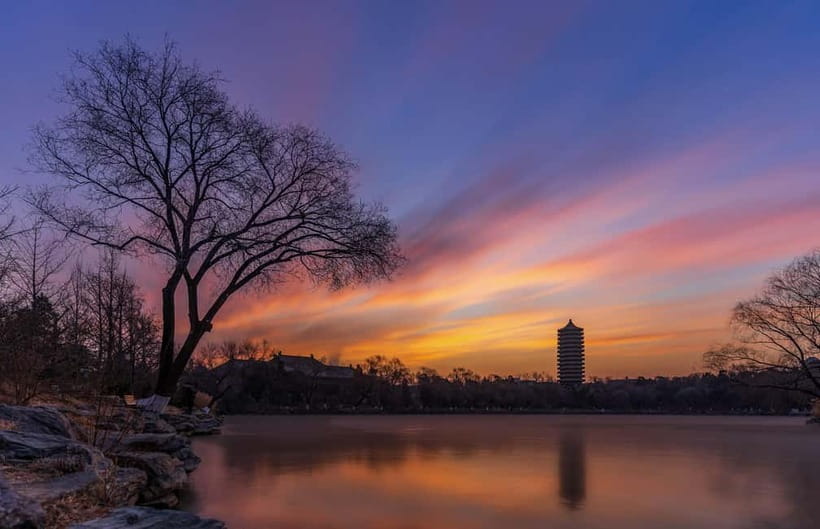
The gardens and courtyards are not treated as decoration alone. You learn about the thinking behind their layout and the goal of creating harmony between nature and scholarship.
That idea changes how you look at the route. A courtyard can guide movement and create quiet. A line of trees can frame a building. Water can open up a view and give the campus a place for pause. The tour explains these choices in cultural terms, helping you notice design decisions that you might otherwise miss.
This section should appeal to anyone interested in Chinese garden design or architecture. It also gives the walking pace some variety. You are not only listening to institutional history. You are looking at paths, water, open spaces, and buildings as parts of one setting.
I would keep your expectations measured. The tour promises insight into the gardens, courtyards, and layouts, not a specialist architecture course. If you want technical details about construction dates or every building on campus, two hours will feel short. If you want a readable introduction to the ideas behind the setting, the format works well.
What the student guide adds
The guide is the human center of the experience. The tour is conducted in English, and the supplied feedback gives special attention to Henry. He was praised for being friendly, clear, patient with children, and easy to communicate with.
One particularly useful touch was Henry inviting a participant to eat in the school cafeteria after the tour. That is not listed as a guaranteed part of the experience, so you should not book expecting a meal or cafeteria visit. Still, it shows how the student-led format can open a door to everyday campus life beyond the formal landmarks.
You also get direct insight into student traditions, academic culture, and present-day PKU. That can be more useful than a purely historical tour if you are considering Chinese universities, visiting with a student, or simply curious about how a top university functions.
The guide’s personal perspective matters most when you ask questions. A small group makes it easier to ask about campus life, famous alumni, or the meaning of a particular building. With only two hours, come prepared with the subjects you most want to discuss.
Is $39 a fair price?
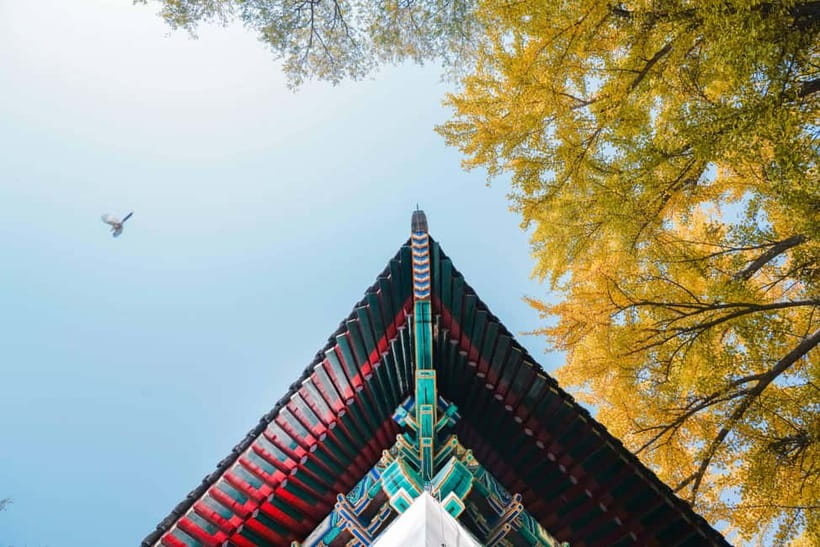
At $39 per person, the tour is not the cheapest way to walk around a university. You are paying for an English-speaking guide, a planned route, historical interpretation, and access to a student view of PKU’s academic culture.
The value is strongest if you would otherwise walk through the campus without understanding what you are seeing. Boya Pagoda, Weiming Lake, the Bell Pavilion, the Hua Biao pillars, the Qilin statues, the library, and Cai Yuanpei’s statue could make a satisfying self-guided circuit, but their meaning would be harder to connect.
The price also includes the benefit of a small group limited to 10 people. That is important if you want to ask questions or are traveling with children. It is less compelling if you only want photographs and prefer to explore at your own speed.
Food, drinks, and transportation are not included. Allow for those costs separately, and wear comfortable shoes. The tour lasts two hours, so it is a manageable addition to a Beijing sightseeing day, but the walking means you should not treat it as a sit-down lecture.
You can cancel up to 24 hours in advance for a full refund, and the reserve-now, pay-later option gives you some flexibility. Starting times vary, so check availability when planning your day.
Who should book this PKU walking tour?
I would recommend it to first-time visitors who want a more thoughtful campus visit, families with school-age children, architecture fans, and anyone curious about Chinese higher education. It is also a good choice for a future student who wants to see PKU through a student guide’s eyes.
History fans will enjoy the connections to Yenching University, Yuanmingyuan, and Heshen. Garden and design enthusiasts will get more from the courtyards, water, and symbolic details than they would from a simple landmark walk.
The tour may be less suitable if you want a long, slow photographic session, a full campus survey, or a specialist lecture. The route is focused, and two hours passes quickly. You should also be comfortable walking outdoors and following a set route from the East Gate to the West Gate.
The perfect 5 rating across nine reviews reflects strong satisfaction, with Henry receiving repeated personal praise. I would treat that as a sign that the guide’s manner is central to the experience, not as a guarantee that every tour will feel identical.
Should you book it?
Book this tour if you want PKU to make sense, not just look attractive. For $39, you get a compact introduction to the university’s landmarks, past, design, and student culture, led in English by a guide such as Henry.
Skip it if you already know the campus well or would rather wander alone. For most visitors with two free hours in Haidian District, though, the combination of Boya Pagoda, Weiming Lake, the library, Cai Yuanpei, and student perspective makes this a useful and distinctive Beijing experience.
FAQ
Where does the Peking University walking tour begin?
The tour begins at Peking University East Gate. Meet at the stone lion on the right side when facing the gate entrance.
Where does the tour finish?
The walk finishes at Peking University West Gate.
How long does the tour last?
The guided walking tour lasts two hours.
What language is the tour conducted in?
The tour is conducted in English with a live English-speaking guide.
How many people are in the group?
The group is limited to 10 participants.
What landmarks are included?
The route includes Boya Pagoda, Weiming Lake, the Bell Pavilion, Hua Biao ornamental pillars, Qilin statues, the Peking University Library, and the statue of Cai Yuanpei.
Does the tour include food or drinks?
No. Food and drinks are not included.
Is transportation to Peking University included?
No. Transportation to and from the university is not included.
What should I bring?
Wear comfortable shoes for walking and bring a camera if you want to take photographs.
New reviews from Beijing
- Mutianyu Wall, Summer Palace & Old Summer Palace Day Tour★ 4.8 · 34 reviews
- Night Market Haggling Adventure with an English Guide!★ 4.8 · 7 reviews
- BusDa-Mutianyu Great Wall&Forbidden City Full-day Coach Tour★ 4.9 · 11 reviews
- Mutianyu Great Wall Ticket with Roundtrip Cable Car★ 5.0 · 20 reviews
- Mutianyu Great Wall Bus Trip+Ticket 7/8/9/10/13/13:30/15:30★ 4.7 · 24 reviews
- Mutianyu Great Wall Entry Ticket Chairlift Up Toboggan Slide★ 4.9 · 8 reviews
- Mutianyu Great Wall 5-KM Guided Hike with Uphill Cable Car★ 4.8 · 16 reviews
- Mutianyu Great Wall Admission Ticket★ 3.6 · 7 reviews
Walking Tours, compared.

Beijing Hutong Walking Food and Beer Tour at Hidden Restaurants
Read our review →
Private Beijing Walking Tour of the Forbidden City with 7 Options
Read our review →
Dark Side of Hong Kong – Kowloon Caged Homes Walking Tour
Read our review →
Forbidden City Private Walking Tour with Optional Sights
Read our review →
Introduction to Hong Kong: Central Tip Based Walking Tour
Read our review →
Shanghai Highlights Walking Tour With A Real Local
Read our review →Browse the lists this tour appears in