
Reviewed · HUTONG TOURS
Beijing Hutongs Walking Tour
Beyond Beijing’s imperial gates, the hutongs offer a closer look at ordinary city life and old courtyard neighborhoods. This walk takes you through Nanluoguxiang and Mao’er Hutong, then toward the lakes around Qianhai and Houhai, with stories about Chinese timekeeping and the last emperor along the way.
I like the relaxed pace and the chance to see homes connected with figures from China’s past. I also like the small-group format, which gives you a better chance to ask questions than a large bus tour. The main concern is meeting-point precision: one booking ended badly after the guide and the guest disagreed about whether the guest was late, so arrive early and confirm that you are at Exit E.
Key points
- Old Beijing in a short walk: Cover Nanluoguxiang, Mao’er Hutong, the lakeside waterway, and the Drum Tower area in about 90 minutes to two hours.
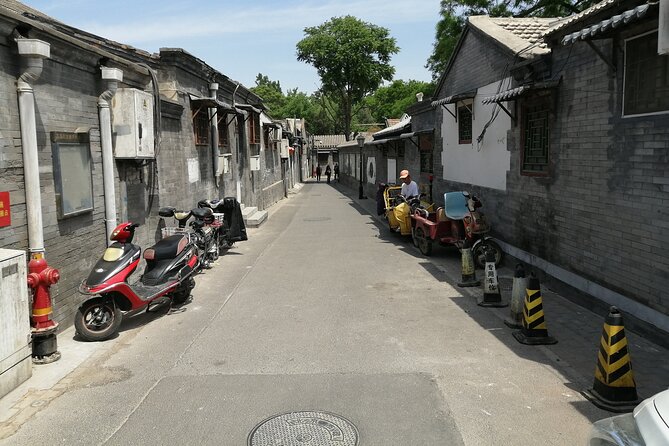
- Courtyard architecture: See grey, traditional courtyard homes and old trees in a historic residential setting.
- Personal stories: Learn about Empress Wanrong’s former residence and the fate of China’s last emperor.
- English-speaking guide: Roy Li leads the walk, and one especially positive review praised his clear English and preparation.
- Easy transit access: Meet at Nanluoguxiang metro station, Line 6 or Line 8, Exit E.
- Good short-tour value: At $30 per person, the tour is priced for visitors who want context and orientation without giving up half a day.
Why Beijing’s hutongs are worth your morning

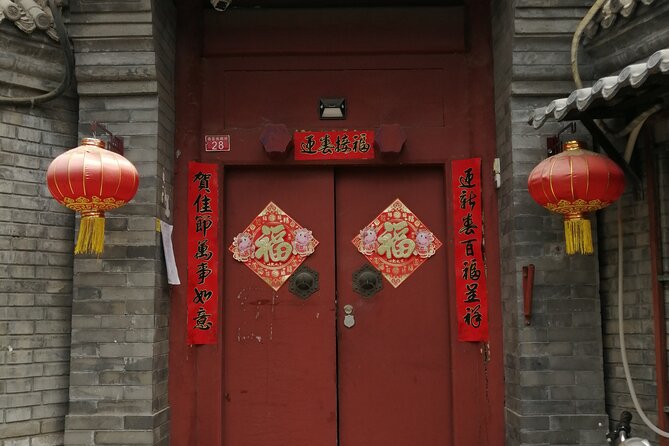
Beijing is often presented through grand imperial structures, wide avenues, and monumental public spaces. The hutongs show another side of the city. These narrow lanes run between traditional courtyard homes, where the street itself becomes part of daily life.
I like this tour because it puts the city’s past at walking speed. Instead of looking at old architecture from behind a vehicle window, you move through the lanes and notice their shape, grey walls, trees, entrances, and changing connection to the modern city.
The walk is short enough to fit into a busy Beijing schedule. It lasts roughly one and a half to two hours, with a 10:00 am start. That makes it a useful first activity in Beijing, especially if you want an introduction before visiting larger sights.
The tour has a maximum of 15 people. That is not a private walk, but it is still small enough for the guide to speak with the group rather than address a crowd. One positive assessment specifically praised Roy for speaking good English and explaining the hutongs well.
Other old-lane walks in Beijing:
- Beijing Hutong Walking Food and Beer Tour at Hidden Restaurants
★ 5.0 · 1,132 reviews - Temple Heaven, Summer Palace, Lama Temple, Hutong Bus Tour
★ 4.7 · 319 reviews - Temple of Heaven, Summer Palace, Lama Temple, Hutong Tours
★ 5.0 · 311 reviews
Meeting at Nanluoguxiang metro station
The tour begins near the south end of Nanluoguxiang, at Nanluoguxiang metro station. Use Line 6 or Line 8 and exit at Exit E. The meeting point is identified in Chinese as 南锣鼓巷南口 or 南锣鼓巷地铁站E出口.
This detail matters. Beijing’s metro stations can have several exits, and a few minutes of confusion can quickly become a missed start. I would arrive early, keep the Chinese meeting information on your phone, and check that you are standing at Exit E rather than simply somewhere along Nanluoguxiang.
The only serious negative account connected with this walk involved the start. The participant waited about 25 minutes and said the guide did not appear. The guide’s response was that he had been at the meeting point with four other people, but the participant was very late, so the group left. Since the accounts conflict, the sensible lesson is simple: arrive early, confirm the exact exit, and contact the operator before the 10:00 am start if you are delayed.
The experience uses a mobile ticket, and confirmation is provided when you book. You do not need to print a paper ticket based on the information provided.
Nanluoguxiang and the return to Yuan-era Beijing
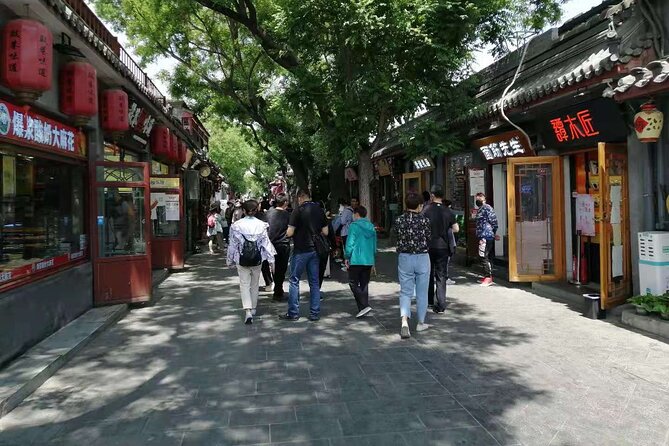
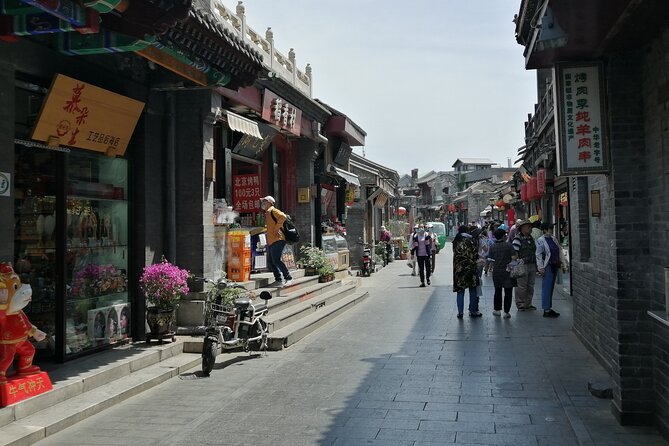
Nanluoguxiang is the first major setting. The lane is connected with Beijing’s Yuan Dynasty period and is lined with the grey courtyard architecture associated with old Beijing.
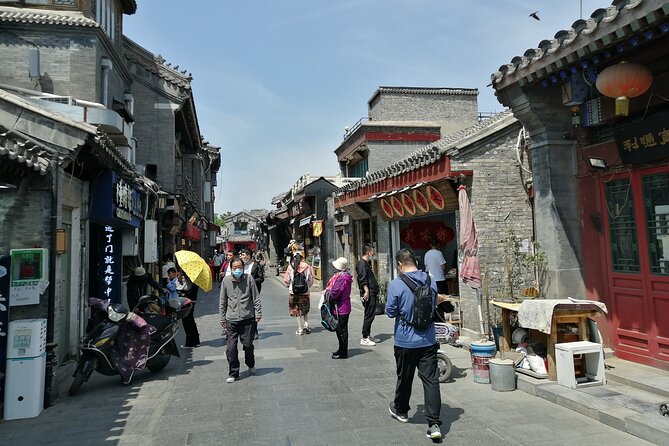
The appeal here is not a single grand building. It is the overall pattern of the neighborhood: lanes, walls, doorways, courtyard compounds, and mature trees. The architecture is vernacular rather than imperial, which means it helps explain how the city worked beyond palaces and government halls.
Your guide can add the missing context. Without explanation, a hutong may look like a narrow street with old houses. With context, you begin to see the courtyard form as a clue to family life, social structure, and the way Beijing developed over time.
Nanluoguxiang is also a useful place to compare old and new Beijing. The lane is well known, and the walk does not promise an untouched neighborhood. Instead, you get a chance to see how an old district fits into the present city.
I would keep your expectations practical. This is a walking tour through a historic area, not a house-by-house interior tour. The description focuses on views of courtyard homes and historic lanes, and admission tickets are not included.
Mao’er Hutong and Empress Wanrong’s former home
From Nanluoguxiang, the route continues along Mao’er Hutong. This lane brings more specific stories into the walk, including accounts connected with notable buildings and people.
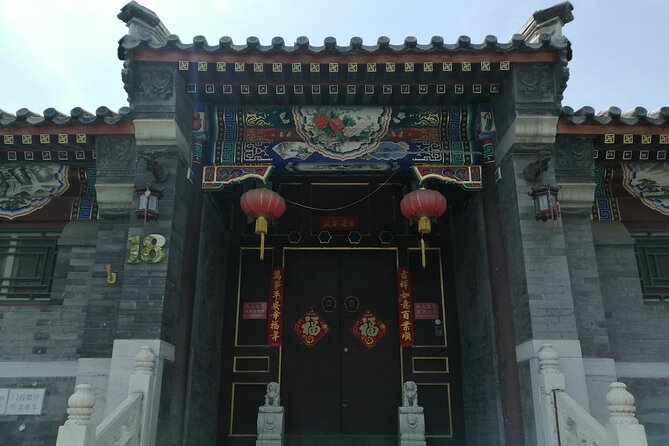
A key stop is known as Empress’s Mansion, the former residence of Wanrong, the empress of China’s last emperor, Puyi. The stop is listed as a picture opportunity, so you should expect to see the former residence from the route rather than assume that an interior visit is part of the tour.
This is one of the strongest parts of the walk for anyone interested in the final years of imperial China. Puyi’s story can seem distant when encountered only in a palace or museum. Seeing a residence tied to Wanrong places that story within an actual Beijing neighborhood.
The guide also discusses the fate of China’s last emperor. That gives the walk a human thread. You are not just collecting old street names. You are connecting the lanes with people and political changes that shaped modern China.
One positive account described a guide who engaged the group by asking questions. That style can make a short walk more active than a simple lecture. If Roy is leading your group, expect a guide who may involve you in the story rather than speak continuously while you follow.
Other walks around Beijing:
- Private Beijing Walking Tour of the Forbidden City with 7 Options
★ 5.0 · 675 reviews - Forbidden City Private Walking Tour with Optional Sights
★ 5.0 · 400 reviews - Beijing Private Hutong Food Walking Tour
★ 5.0 · 299 reviews - Beijing: Hutong Culinary Walking Tour with 15+ Tastings
★ 5.0 · 162 reviews
The waterway between Qianhai and Houhai
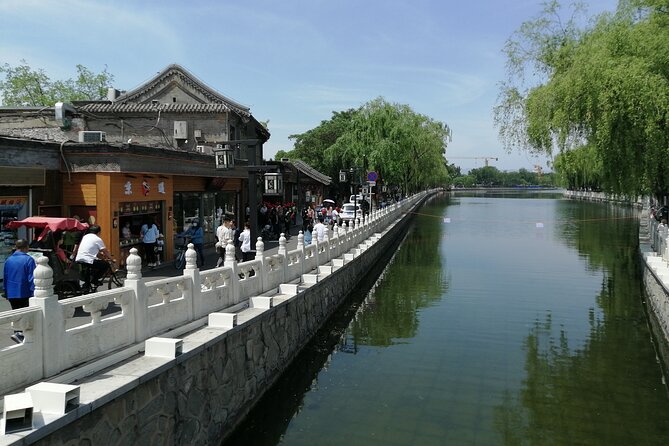
The route then reaches a narrow channel linking Qianhai Lake and Houhai Lake. This changes the feel of the walk. The early sections focus on lanes and courtyard homes, while the waterway adds open space and a different view of the district.
The route information is a little inconsistent about the endpoint. It identifies Houhai in Xicheng District as the end location, while also saying the tour finishes at the Drum Tower. Treat the Drum Tower area as the practical finish, with the walk passing near the Qianhai and Houhai waterway on the way.
That is useful for planning the rest of your day. You can arrange your next stop from the Drum Tower area, but you should ask the guide at the start where the group will finish that day. A short route can change in its final few minutes, and the listed end points are not perfectly aligned.
The lakeside section also helps you understand why the hutongs are more than a collection of old buildings. The district connects lanes, courtyards, water, and public landmarks. You get a sense of Beijing as a lived-in neighborhood rather than a sequence of isolated attractions.
What the guide adds to the walk
The English-speaking guide is the main reason to choose this tour instead of walking through Nanluoguxiang alone. You can find the lanes without a guide, but the stories require interpretation.
The experience promises discussion of Chinese timekeeping as well as the last emperor. The timekeeping topic is a useful detail because it shows the guide is not limited to famous buildings. It points toward everyday systems and ideas that may not be obvious as you walk.
Roy is named in one especially positive account. That assessment described his English as good and his explanations of the hutongs as strong. Another positive account praised a guide who was prepared, involved the group, and used questions to keep people engaged.
Guide quality can vary by the person assigned on the day, so I would treat Roy’s name as useful information rather than a guarantee that he will lead every departure. Still, the strongest praise is aimed at the human part of the experience: clear English, preparation, and a willingness to explain life in Beijing, past and present.
The group limit of 15 supports this style. You may not get a fully private conversation, but you should have a better chance to hear the guide and ask a question than on a large sightseeing excursion.
How $30 compares with the experience
The price is $30 per person. For a guided walk lasting about 90 minutes to two hours, that is reasonable if you value local explanation and a simple introduction to Beijing’s old neighborhoods.
You are paying mainly for the guide’s time and interpretation. The walk does not list meals, private transportation, or admission tickets as included, and the itinerary does not center on paid interiors. That keeps the cost clear, but it also means the value depends on how much you want guidance.
I would choose this tour if you are new to Beijing, enjoy city walks, or want historical context before exploring on your own. It is less useful if you already know the hutongs well or want a long, highly detailed architecture tour.
The short duration is part of the value. You can still visit other sights the same day, and the 10:00 am start leaves the afternoon open. A longer tour might offer more depth, but this one works as an orientation walk rather than a full-day commitment.
Who will get the most from this walk
This tour suits first-time visitors who want to see a side of Beijing beyond the major imperial sites. It is also a good match for anyone who prefers walking through a neighborhood to moving between landmarks by vehicle.
I would recommend it to people who enjoy stories about places and people. The former residence of Empress Wanrong, the account of Puyi, Chinese timekeeping, and the traditional courtyard homes give the route several different subjects.
It can also work well near the beginning of a Beijing stay. One positive account described it as a good way to start a Beijing trip because it explained both past and present life in the city. That is a sound use of the tour: take the walk early, then return to the area or use the guide’s explanations to make sense of other parts of Beijing.
The tour is described as suitable for most people, and service animals are allowed. It is near public transportation. Specific information about stairs, walking distance, seating, or restroom stops is not provided, so ask the operator if any of those points matter to you.
Timing, group size, and small practical details
The 10:00 am start is fixed in the supplied information. Plan to be at Exit E before then, not at 10:00 exactly. The one disputed missed start makes this the most important practical point.
The group may include up to 15 people. That is a moderate small-group size. You should expect a shared walk, not a private guide, but the group is limited enough for questions and conversation.
The route lasts approximately one hour and 30 minutes to two hours. The variation may reflect pace, questions, and the final route near the Drum Tower and Houhai area. Wear shoes suited to walking, although no specific footwear requirement is given.
The tour has free cancellation if you cancel at least 24 hours before the local start time. Changes or cancellations inside that 24-hour window are not accepted for a refund. The experience also requires a minimum number of participants, so if the operator cancels for that reason, you will be offered another date or experience, or a full refund.
Should you book the Beijing Hutongs Walking Tour?
I would book this for a short, affordable introduction to old Beijing, especially near the start of a trip. The best reasons are the walk through Nanluoguxiang and Mao’er Hutong, the courtyard architecture, the connection with Wanrong’s former residence, and the chance to hear stories that are easy to miss when exploring alone.
I would not book it expecting extensive interior access, a private tour, or a full-day examination of hutong life. The $30 price makes sense when you want a guide to explain what you are seeing, not when you only need directions.
The overall rating is 4.8 out of 5, with 95 percent recommending it, while one serious start-time dispute is a reminder to handle the meeting point carefully. Arrive early at Exit E, confirm the final stop, and you have a sensible way to spend a Beijing morning.
FAQ
Where does the Beijing Hutongs Walking Tour begin?
It begins at the south end of Nanluoguxiang, at Nanluoguxiang metro station Exit E. The station is served by Line 6 and Line 8.
What time does the tour start?
The tour starts at 10:00 am.
How long does the tour last?
The walk lasts approximately one hour and 30 minutes to two hours.
Where does the tour finish?
The route information identifies Houhai as the end area and also says the tour finishes at the Drum Tower. Ask your guide at the start to confirm the exact finishing point that day.
What is included in the price?
An English-speaking guide is included. Admission tickets are not included.
How many people can join the tour?
The maximum group size is 15 people.
Can I cancel for a full refund?
Yes. You can cancel at least 24 hours before the local start time for a full refund. Cancellations or changes made less than 24 hours before the start are not refunded.
New reviews from Beijing
- Private Transfer to Mutianyu Great Wall with professional driver★ 5.0 · 19 reviews
- One day tour to downtown Tianjin from Beijing by high speed train★ 5.0 · 3 reviews
- camp on the Great Wall overnight with sunrise and sunset on the wall★ 5.0 · 11 reviews
- ZANBUS: Trip to the Jinshanling Great Wall Departing at 7:30 AM★ 5.0 · 5 reviews
- BusDa:Ancient Great Wall &Badaling Great Wall Full-day Bus Tour★ 4.5 · 6 reviews
- Yuxiandu Chinese Royal Cuisine Museum with Show and Royal Banquet★ 5.0 · 4 reviews
- Wild Great Wall Hikes★ 5.0 · 10 reviews
- Wild Great Wall Huanghuacheng Half Day Tour★ 5.0 · 15 reviews
Hutong Tours, compared.

Beijing Hutong Walking Food and Beer Tour at Hidden Restaurants
Read our review →
Temple Heaven, Summer Palace, Lama Temple, Hutong Bus Tour
Read our review →
Temple of Heaven, Summer Palace, Lama Temple, Hutong Tours
Read our review →



Beijing City Walk: Explore Hutongs Life and Old Beijing
Read our review →Browse the lists this tour appears in