
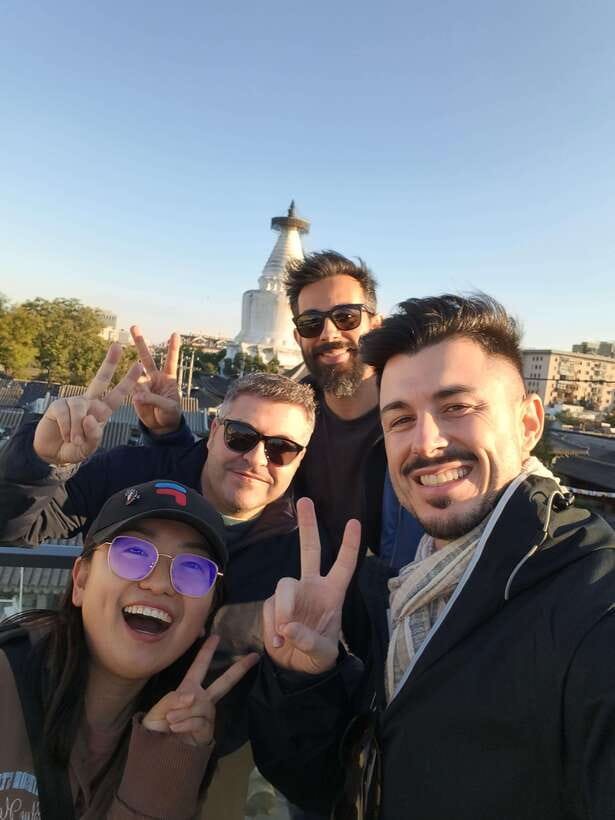
Reviewed · HUTONG TOURS
Hutong Walking Tour: Discover Real Beijing without Crowds
Beijing’s best stories often sit in the narrow lanes behind its grand monuments. This 2.5-hour walk from Xisi Station takes you through old hutongs, temples, a cathedral, historic buildings, and ordinary neighborhoods where daily life still carries on. Guides such as Dee, Tracy, and Heidi add useful context about architecture, local customs, and modern Beijing.
I like the way the tour connects old courtyard design with today’s city planning, and I like the small-group format, limited to eight people. The complimentary drink is another nice touch, especially when it turns into plum juice or iced tea on a rooftop. One point to understand before booking: only about half the tour takes place in hutongs. The rest covers nearby sights and distinctive buildings.
Key points at a glance
- Start at Xisi Station: Meet at Exit D, then walk into one of Beijing’s older central districts.
- See more than alleyways: The route includes hutongs, temples, a cathedral, a bookstore, historic architecture, and a local café.
- Learn to read Beijing’s buildings: Siheyuan courtyards, religious sites, palace architecture, and urban changes all become part of the story.
- Small groups help: The maximum is eight people, and guides can answer questions at a comfortable pace.
- Expect about 3km on foot: Comfortable shoes, water, a hat, and sunscreen are practical essentials.
- Finish with a local drink: The final refreshment may be plum juice, iced tea, or another traditional Beijing drink.
Why Xisi is a smart starting point
The tour begins at Metro Line 4’s Xisi Station, Exit D. That makes the meeting point fairly simple to reach, and starting underground puts you close to the old city rather than wasting the first part of the morning in a vehicle.
Xisi is useful for orientation because it shows Beijing in transition. You move from the modern transport system into older streets, then encounter a mix of traditional homes, religious buildings, shops, and newer urban development. The contrast is not just visual. It helps you understand how Beijing has changed while sections of its older street pattern remain.
The route covers around 3km. That is manageable for most people who are comfortable walking, but it is not a quick stroll between two monuments. You will spend much of the time on foot, with stops for explanations and visits. I would avoid scheduling this immediately after a long morning at another major sight.
Other old-lane walks in Beijing:
- Beijing Hutong Walking Food and Beer Tour at Hidden Restaurants
★ 5.0 · 1,132 reviews - Temple Heaven, Summer Palace, Lama Temple, Hutong Bus Tour
★ 4.7 · 319 reviews - Temple of Heaven, Summer Palace, Lama Temple, Hutong Tours
★ 5.0 · 311 reviews
Guangji Temple and Beijing’s layered religious life
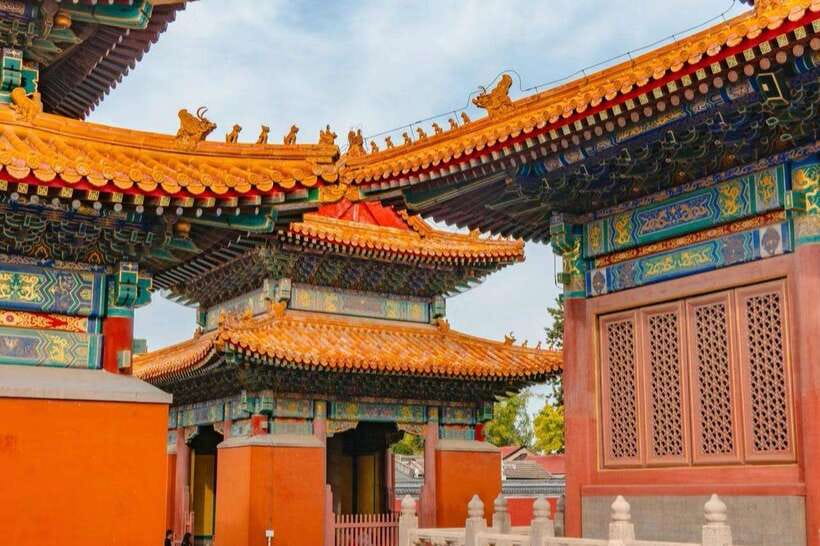
Guangji Temple is one of the early stops. A guided visit here gives you a chance to look at Buddhist architecture and learn how religious places fit into the city’s history and daily life.
This is a useful stop for visitors who want more than exterior photographs. The guide can explain what you are seeing, from the arrangement of the buildings to the cultural meaning attached to the site. Several guides, including Dee and Tracy, have been praised for explaining Chinese history, symbolism, and customs in clear English.
The temple also changes the rhythm of the walk. You leave the traffic and street noise for a more reflective place, then return to the lanes with a better sense of how old Beijing was organized around temples, courtyards, and local communities.
A cathedral beside the old lanes
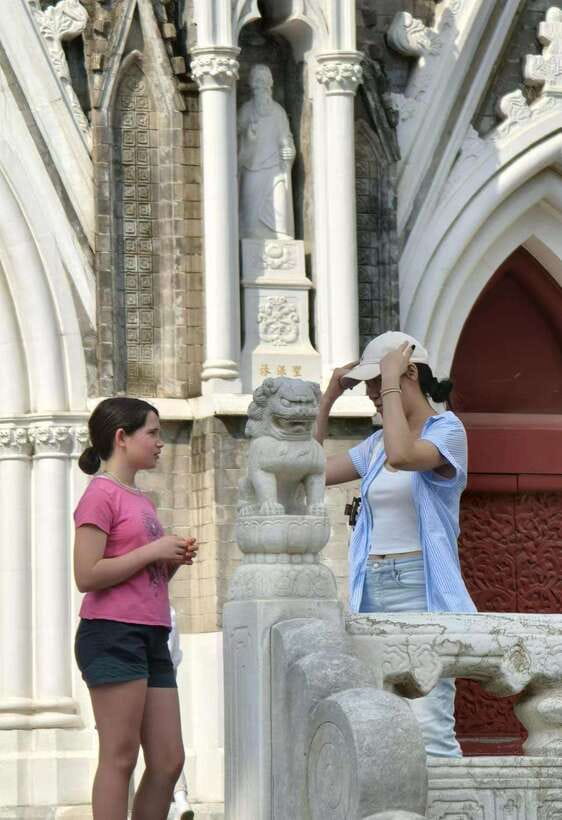
The Church of the Saviour, Beijing, adds a different piece to the city’s story. Including a cathedral on a hutong walk is a smart choice because it prevents the tour from presenting Beijing as culturally uniform.
The church provides a chance to consider the city’s religious and architectural variety. You see how a European-influenced church fits into a district otherwise shaped by Chinese courtyards, temples, and narrow lanes. Angeline specifically enjoyed the combination of the local temple and cathedral, and that pairing is one of the tour’s more unusual features.
The visit is also a reminder that Beijing’s past cannot be reduced to imperial palaces. The city has long included different communities, buildings, beliefs, and outside influences. Your guide helps connect those pieces instead of treating each stop as an isolated photo opportunity.
Zhengyang Bookstore and a closer look at local culture
The stop at Zhengyang Bookstore, written as 正阳书局 in the route details, gives the walk a more everyday cultural angle. It is listed as a guided visit with time for shopping, so you can browse as well as listen.
This is the kind of stop that suits you if you like books, local design, and small cultural businesses. It also breaks up the temples and historic monuments with a place linked to reading and neighborhood life. The tour is not simply a procession of grand buildings. It shows how local culture is preserved and shared through smaller spaces too.
Do not expect a long shopping session. The tour has only 2.5 hours, and this is one stop among several. Think of it as a short cultural pause, with the guide providing context about the area and the material on offer.
Other walks around Beijing:
- Private Beijing Walking Tour of the Forbidden City with 7 Options
★ 5.0 · 675 reviews - Forbidden City Private Walking Tour with Optional Sights
★ 5.0 · 400 reviews - Beijing Private Hutong Food Walking Tour
★ 5.0 · 299 reviews - Beijing: Hutong Culinary Walking Tour with 15+ Tastings
★ 5.0 · 162 reviews
Zhuanta Hutong and the texture of old Beijing
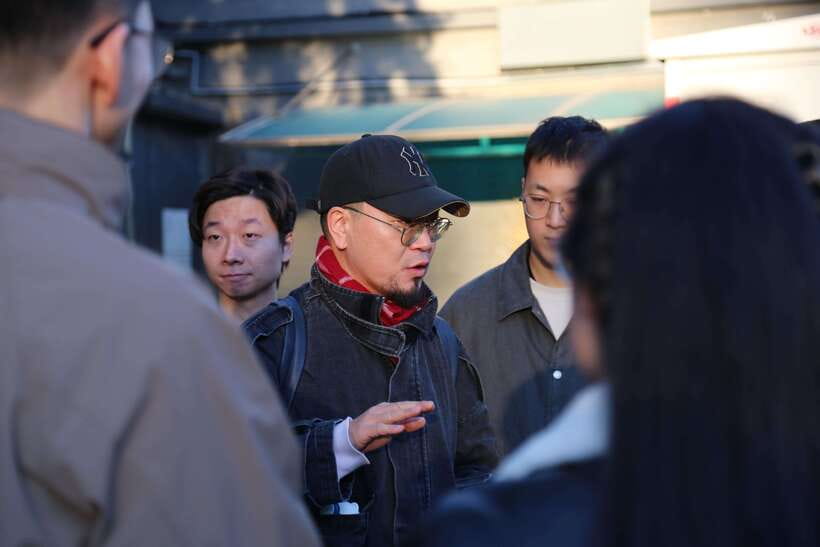
Zhuanta Hutong is where the walk most clearly delivers its central promise. Here, you get a closer look at the lanes, walls, entrances, and residential patterns that define old Beijing.
A siheyuan, or courtyard residence, is more than a photogenic doorway. Its layout reflects family life, privacy, hierarchy, and the way homes were arranged around shared space. The guide explains these ideas while you walk, helping you notice features you might otherwise pass without a second thought.
This is also the part of the tour where you need to be considerate. People live in these neighborhoods, so keep voices low, avoid photographing residents without permission, and follow the guide’s advice. The point is to see local life without turning someone’s home into a stage set.
The hutong section is not presented as a frozen museum. You may see signs of repair, changes in use, and the pressure of modern development. That mix of old and new is more revealing than a perfectly preserved lane with no connection to daily life.
The Emperors’ Temple of Past Dynasties
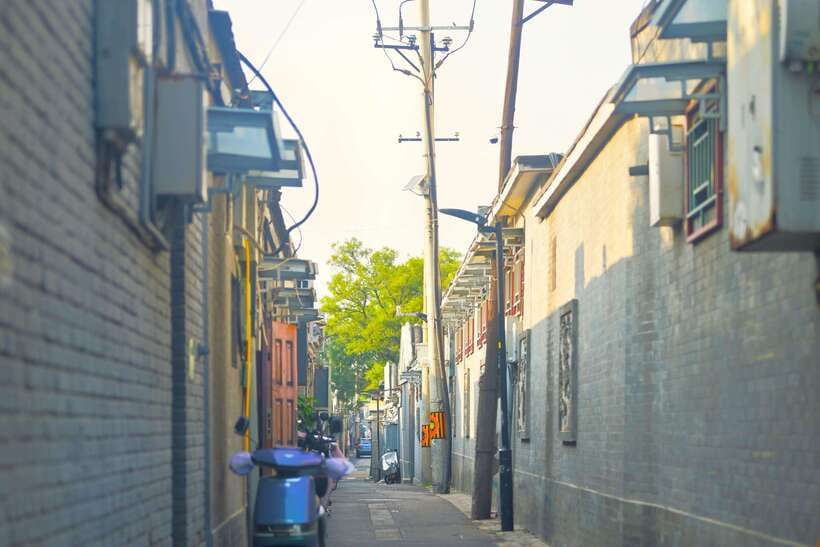
The Emperors’ Temple of Past Dynasties, also described as the Palace of Ancient Monarchs, is one of the main historical stops. The entrance fee is included, although the site is closed on Mondays.
This place adds political and ceremonial context to the walk. The guide can explain why particular rulers were honored and how traditional architecture expressed authority. It is a good place to practice reading Chinese design: roofs, courtyards, gates, symmetry, and the relationship between buildings all carry meaning.
The site is especially useful before visiting the Forbidden City. Several people who took this walk early in their Beijing stay found that the guide’s explanations about symbolism and architectural design helped them make better sense of larger imperial buildings later.
Because the tour includes several sites, your visit here is guided rather than leisurely and unstructured. If you want a long, quiet study of every courtyard, plan a separate visit. For a first introduction, the stop gives you a solid framework without taking over the entire morning.
The café break and a taste of Beijing
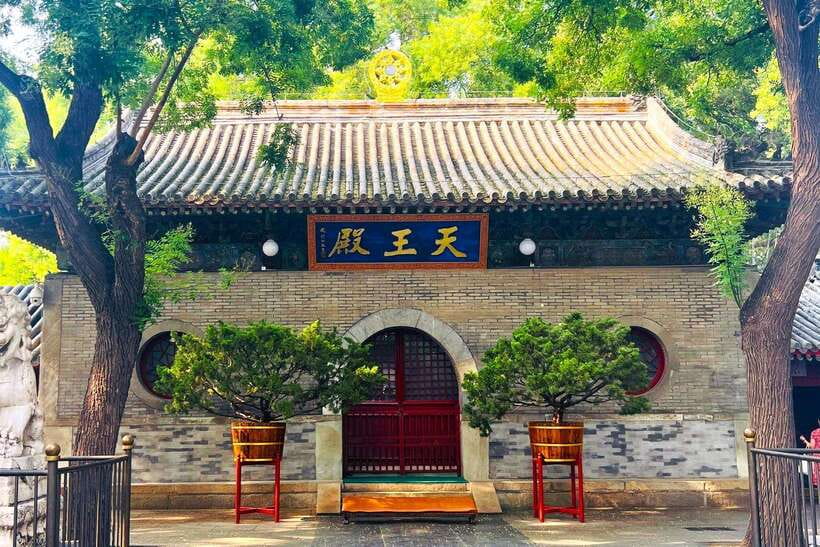
A local café provides a break during the route. The final drink is included, and the exact experience can vary. Past tours have included a traditional plum drink, iced tea with a view from a rooftop, and coffee at the final stop.
The drink is a small detail, but it improves the pacing. After several kilometers of walking, a place to sit and talk gives you time to ask questions and collect practical advice. Guides have also suggested restaurants, shopping areas, and places to visit next, which can be especially useful if this is your first day in Beijing.
One memorable version of the route included a traditional Chinese medicine center and a rooftop terrace. The supplied route lists a local café, so you should not book expecting a guaranteed rooftop or a particular drink. The reliable promise is a complimentary traditional Beijing drink and a short refreshment break.
Miaoying Temple and the white stupa
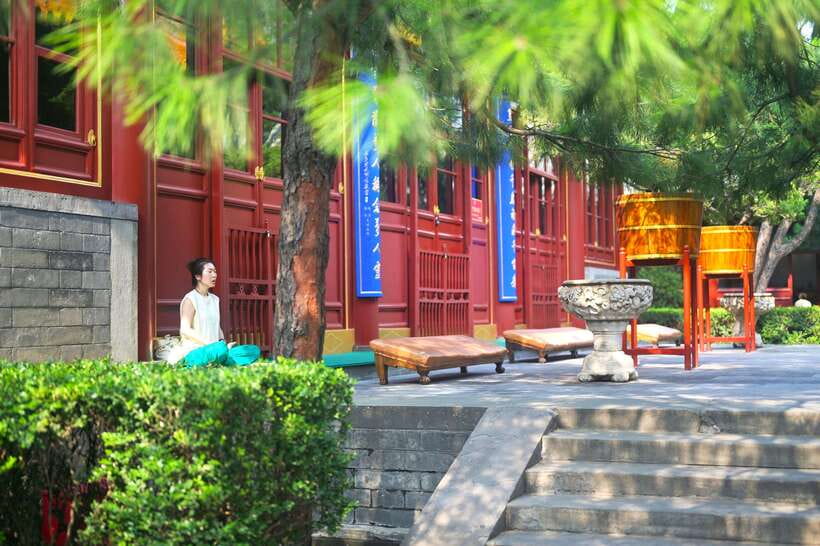
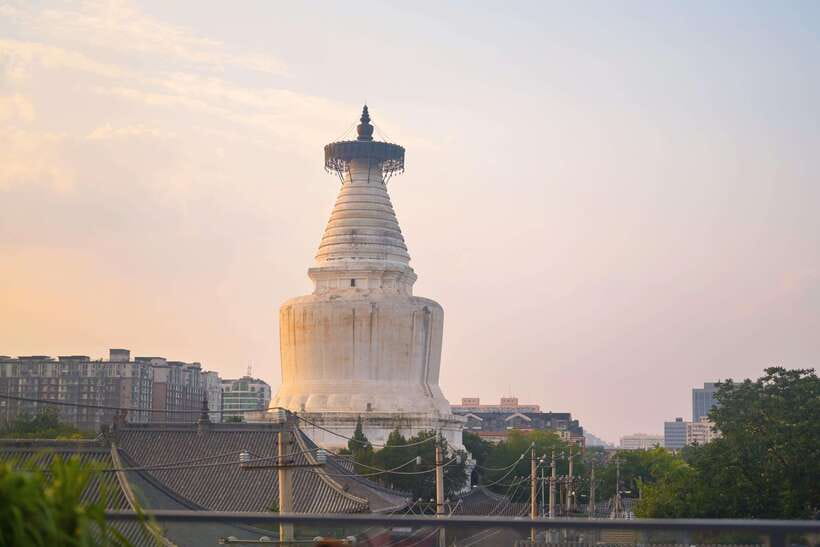
Miaoying Temple is another major stop, often used for photographs as well as a guided visit. Its white stupa gives the area a distinctive profile and adds another layer to the architectural story.
The temple works well near the end of the walk because you have already seen courtyards, a cathedral, hutongs, and the Emperors’ Temple. By this stage, you can compare different building traditions instead of receiving each one as a disconnected fact.
The guide’s role matters here. Tracy has been praised for explaining architecture and design principles, while Dee has been noted for connecting buildings with wider ideas about Beijing life. That kind of explanation is valuable at Miaoying Temple, where the shapes and spaces may not be familiar to you.
You should allow some flexibility around the exact order and length of stops. The route includes several visits within a short period, and a small group may spend more time on questions at one site than another.
What guides Dee, Tracy, Heidi, and Eva add
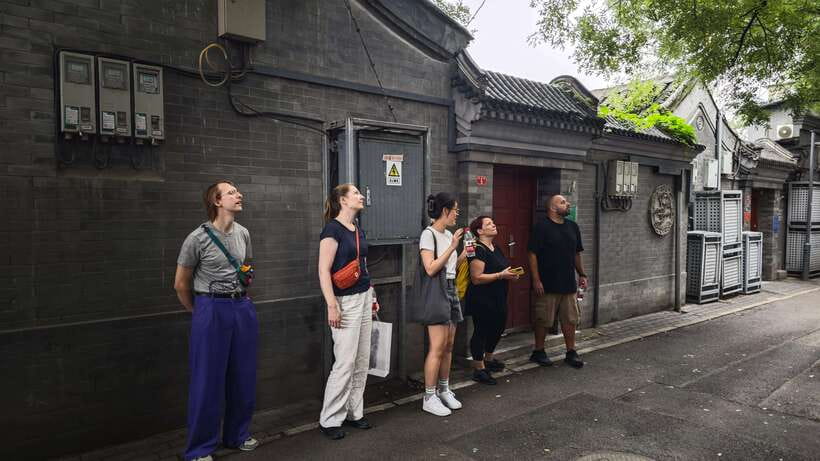
The guides are a major part of the experience. Dee appears frequently in the tour details, and Tracy and Heidi also lead the walk. Eva has guided the route in Mandarin, with English support varying by group.
Dee’s style, based on the available guide information, includes practical advice about food, shopping, transport, and later sightseeing. Tracy focuses strongly on history, Chinese architecture, symbolism, and everyday life. Heidi has also been described as attentive to families and willing to keep children engaged.
That range matters because this is not a headset tour. You can ask why a building looks a certain way, how a neighborhood has changed, or where to eat afterward. The guide can adjust the amount of explanation to the group, although the exact experience depends on who leads your departure.
The small-group limit of eight is a real advantage. It is easier to hear in narrow lanes, easier to ask questions, and less awkward when the group pauses near homes or temple entrances. On some dates, the group may be smaller than eight, and a private-style experience is possible if other bookings cancel, though that should not be expected.
What the $49 price gets you
At $49 per person, this is not the cheapest way to wander a neighborhood, but it offers more than a self-guided walk. The price includes 2.5 hours with a local guide, admission to the Emperors’ Temple of Past Dynasties, and the traditional drink.
The value comes from the connections. You are not paying only to enter one building. You are paying for someone to explain why a siheyuan is arranged as it is, how temples fit into the city, what changed in Beijing’s street design, and how to continue exploring after the walk.
Transportation, meals, and personal spending are not included. You should also budget time and energy for the full walking distance. If you already have strong knowledge of Beijing architecture and prefer to wander alone, $49 may feel less attractive. If you want a clear introduction early in your trip, the cost is reasonable.
Free cancellation up to 24 hours before the start and a reserve-now, pay-later option add useful flexibility. The important practical detail is to check the schedule before you commit, especially if you want to visit the Emperors’ Temple, which is closed on Monday.
Who should book this walk
I would choose this tour for a first or second day in Beijing. It gives you local orientation, practical food and sightseeing suggestions, and a way to understand the city before you tackle larger sights such as the Forbidden City.
It suits adults who enjoy architecture, urban history, religious sites, and ordinary neighborhoods. Families can also manage it if children are comfortable walking around 3km, and guides have made an effort to keep younger participants involved.
You should think twice if you want a tour spent entirely in hutongs. The operator clearly says that roughly half the time is devoted to other local attractions and distinctive buildings. You should also skip it if you cannot walk comfortably or need wheelchair access, since the route is not suitable for wheelchair users or people with mobility impairments.
Wear comfortable shoes and bring water, sunscreen, and a hat. Beijing weather can change the feel of the walk, and much of the route is outdoors. Smoking is not allowed.
Should you book the Hutong Walking Tour?
Book it if you want Beijing explained through its streets, buildings, beliefs, and local habits rather than through imperial sights alone. The strongest reasons are the small group, the thoughtful mix of stops, and guides such as Dee and Tracy, who bring architecture and daily life into the same conversation.
Skip it if your main goal is a long, uninterrupted hutong walk or a relaxed café morning. This is an active route with several visits, about 3km of walking, and a schedule that moves steadily.
For most first-time visitors, I would book it early in the trip, then use the guide’s restaurant and sightseeing advice for the days that follow. The complimentary drink is pleasant, but the real value is learning how to look at Beijing.
FAQ
Where does the Hutong Walking Tour start?
The meeting point is Metro Line 4, Xisi Station, Exit D, shown as 西四站D西南口.
How long does the tour last?
The walking tour lasts 2.5 hours.
How far do you walk?
The route involves around 3km of walking.
Is the tour entirely inside hutongs?
No. About half of the experience takes place in hutongs. The rest includes local attractions, temples, a cathedral, historic buildings, and other distinctive sites.
Which languages are available?
The tour is offered in English and Chinese.
How many people are in the group?
It is a small-group tour limited to eight participants.
Is a guide included?
Yes. A live local guide is included. Guides named in the tour information include Dee, Tracy, Heidi, and Eva.
Is the entrance fee included?
Admission to the Palace of Ancient Monarchs, also called the Emperors’ Temple of Past Dynasties, is included. It is closed on Monday.
Is a drink included?
Yes. A traditional Beijing drink is included. Past versions of the stop have included plum juice, iced tea, and other local refreshments.
Is the tour suitable for wheelchair users?
No. The tour is not suitable for wheelchair users or people with mobility impairments.
New reviews from Beijing
- Mutianyu Wall, Summer Palace & Old Summer Palace Day Tour★ 4.8 · 34 reviews
- Night Market Haggling Adventure with an English Guide!★ 4.8 · 7 reviews
- BusDa-Mutianyu Great Wall&Forbidden City Full-day Coach Tour★ 4.9 · 11 reviews
- Mutianyu Great Wall Ticket with Roundtrip Cable Car★ 5.0 · 20 reviews
- Mutianyu Great Wall Bus Trip+Ticket 7/8/9/10/13/13:30/15:30★ 4.7 · 24 reviews
- Mutianyu Great Wall Entry Ticket Chairlift Up Toboggan Slide★ 4.9 · 8 reviews
- Mutianyu Great Wall 5-KM Guided Hike with Uphill Cable Car★ 4.8 · 16 reviews
- Mutianyu Great Wall Admission Ticket★ 3.6 · 7 reviews
Hutong Tours, compared.

Beijing Hutong Walking Food and Beer Tour at Hidden Restaurants
Read our review →
Temple Heaven, Summer Palace, Lama Temple, Hutong Bus Tour
Read our review →
Temple of Heaven, Summer Palace, Lama Temple, Hutong Tours
Read our review →

Beijing City Walk: Explore Hutongs Life and Old Beijing
Read our review →Browse the lists this tour appears in