
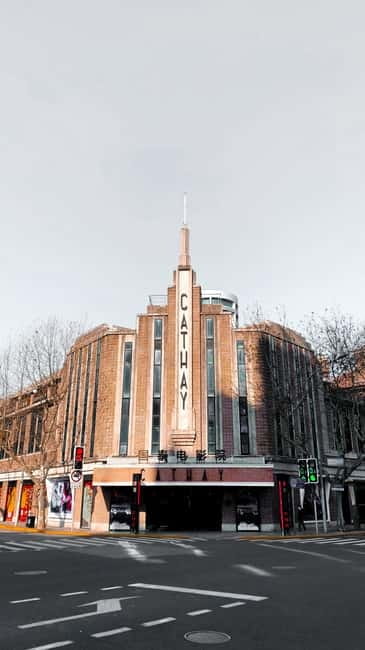
Reviewed · FRENCH CONCESSION TOURS
French Concession Walking Tour with Real Local
Shanghai’s French Concession makes the city’s past feel close at hand. In one walk, you move from tree-lined streets and wrought-iron railings to the former French Club, old residential lanes, Communist history sites, and the polished cafés of Xintiandi. I like the way local guide Bill connects grand events with ordinary Shanghai life, and I like that the walk ends in an area where you can continue on your own for food or shopping. The main drawback is that this is a walking tour with a fairly full route, so it is not suitable for wheelchair users and may feel brisk if you prefer slow sightseeing.
I also like the practical side of the experience. Bill has lived in Shanghai all his life and can answer questions about the city, China, shopping, tea, and places to eat. The one thing to keep in mind is that the tour covers a lot in 2.5 hours, so you should expect exterior visits and guided stops rather than long indoor tours at every site.
Five things to know before you book
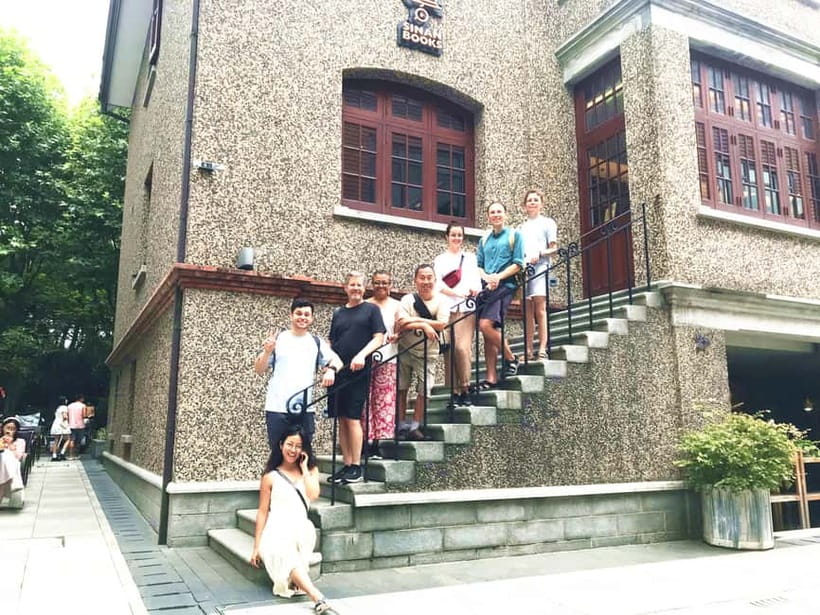
- A local view of the French Concession: Bill was born and raised in Shanghai, so the walk goes beyond architecture and dates.
- A strong mix of old and new: You’ll see old houses, tree-lined avenues, boutiques, galleries, cafés, office towers, and Xintiandi in one outing.
- Important Communist history: The route includes the former Communist Delegation Office and the birthplace of the Chinese Communist Party.
- A useful finish at Xintiandi: The tour ends among shops, bars, and restaurants, giving you an easy place to continue your evening.
- Simple central meeting point: Meet outside the Okura Garden Hotel, about 100 meters to the left of Exit 3 at South Shaanxi Road station.
- Flexible booking: You can reserve and pay later, cancel up to 24 hours before the tour for a full refund, and book as late as the tour’s start time.
Why the French Concession is worth your morning
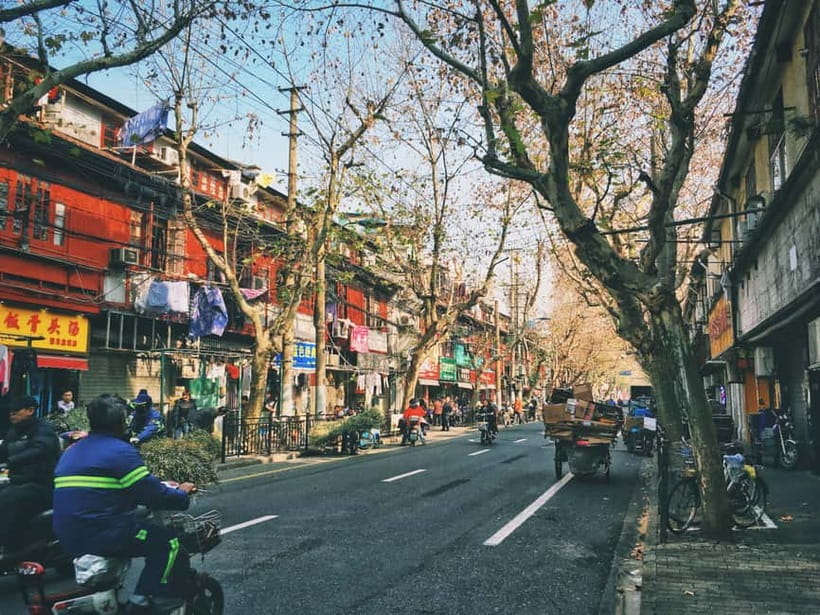
The French Concession was administered by the French government from 1849 until 1946. That political arrangement left a distinct mark on Shanghai, especially along its avenues and in its residential streets.
The area is often linked with the old nickname Paris of the East. You’ll see why in the wrought-iron fences, stair railings, mature street trees, and older villas. The comparison should not be taken too literally. This is still Shanghai, with high-rise apartments, busy roads, shopping centers, and modern office buildings pressing close to the old houses.
That contrast is the real appeal. You are not walking through a preserved museum district. You are moving through a living part of the city where renovated historic buildings sit beside contemporary businesses. A local guide helps you read those changes instead of simply photographing them.
I would choose this tour early in a Shanghai stay. The route gives you a useful sense of the city’s layout and its long political story. It also leaves you with a list of places to return to, especially if you want a café, a meal, shopping, or a slower look at one of the old neighborhoods.
Other walks through old Shanghai:
- Eat Like a Local Through Shanghai’s French Concession
★ 5.0 · 353 reviews - Late Night Food Tour in the Shanghai’s French Concession
★ 5.0 · 260 reviews - Shanghai Breakfast Walking Tour of Former French Concession
★ 5.0 · 139 reviews
Meeting Bill outside the Okura Garden Hotel
The tour begins in front of the Okura Garden Hotel on South Maoming Road. The nearest transport point is South Shaanxi Road subway station, served by Lines 1, 10, and 12. From Exit 3, walk about 100 meters to the left.
The meeting point is practical, but give yourself enough time to find the correct side of the station and reach the hotel entrance. If you take a taxi, the Chinese instruction is 花园饭店, 茂名南路58号. Having that address ready on your phone can save time.
Bill is a local Shanghainese guide who has lived in the city all his life. His role is more than pointing out buildings. He explains how Shanghai changed, why the French Concession developed as it did, and how major events affected the city. His relaxed style and sense of humor are useful on a history-heavy walk, particularly when the group has questions.
The English tour is guided rather than self-paced. That means you get a clear thread through the district, but you should not expect to stop at every attractive doorway or café. The route has several planned points and must reach Xintiandi within the two-and-a-half-hour schedule.
Middle Huaihai Road and the changing city
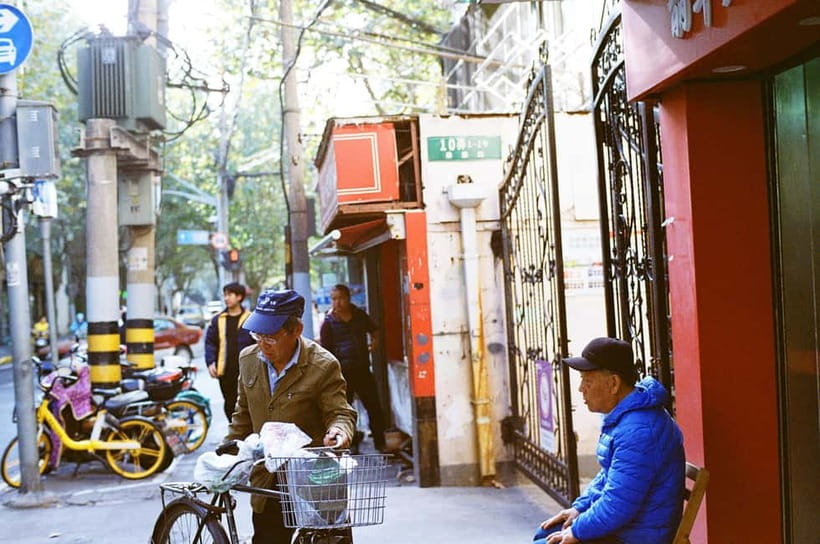
One of the early areas is Middle Huaihai Road, a major shopping and commercial artery. It helps show how the former French-administered district became one of Shanghai’s fashionable central areas.
The road is a good place to notice the layers of the neighborhood. Large residential and office buildings, hotels, shopping malls, and polished storefronts share the same broad area as older structures. Bill can provide context for that change, helping you understand why the French Concession remains desirable and how its appearance has shifted over time.
This section is less about one grand monument and more about orientation. You see the French Concession as a functioning city district, not a quiet relic. If your picture of the area is only old villas and shady lanes, Middle Huaihai Road supplies the necessary correction.
The Former French Club and Jinjiang Hotel
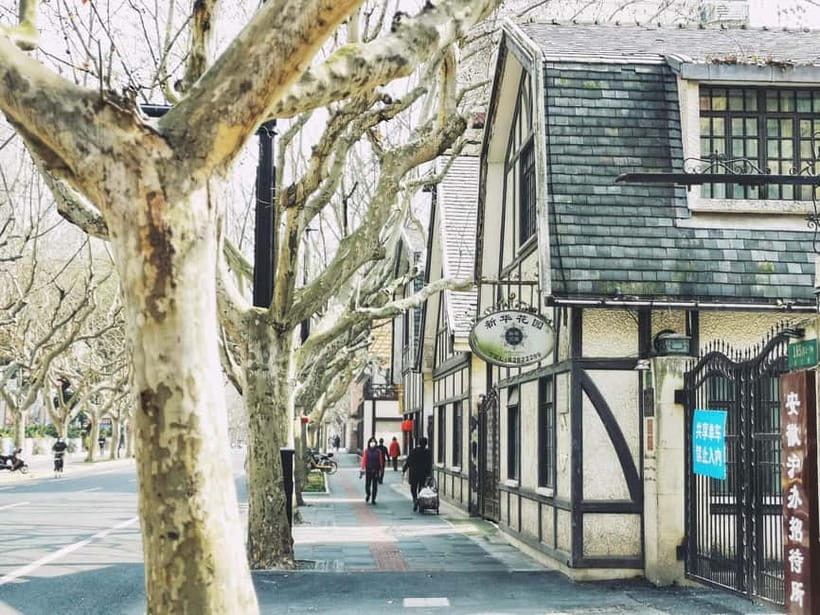
The Former French Club is one of the route’s clearest reminders of the district’s colonial-era social life. It points to the institutions and communities that developed while the French controlled the area.
The Jinjiang Hotel adds another layer. Together, these stops help show how the neighborhood moved from an exclusive foreign-administered district into a place connected with modern Chinese political and civic life. The value here comes from the sequence: you are not looking at isolated buildings, but tracing how their meaning changed as Shanghai changed around them.
Do not expect a long indoor visit at each location. The tour is built around walking, explanation, and exterior viewing. If you enjoy architecture but need time for detailed photographs or interior access, you may want to return independently after the tour.
Other walks around Shanghai:
- Shanghai Highlights Walking Tour With A Real Local
★ 4.9 · 153 reviews - Private Shanghai Evening Street Food Walking and Cruise Tour
★ 5.0 · 123 reviews - Shanghai: Evening Walking Food Tour
★ 4.9 · 115 reviews - Private Walking Tour in the Former French Concession
★ 5.0 · 67 reviews
A 1920s neighborhood and the texture of old Shanghai
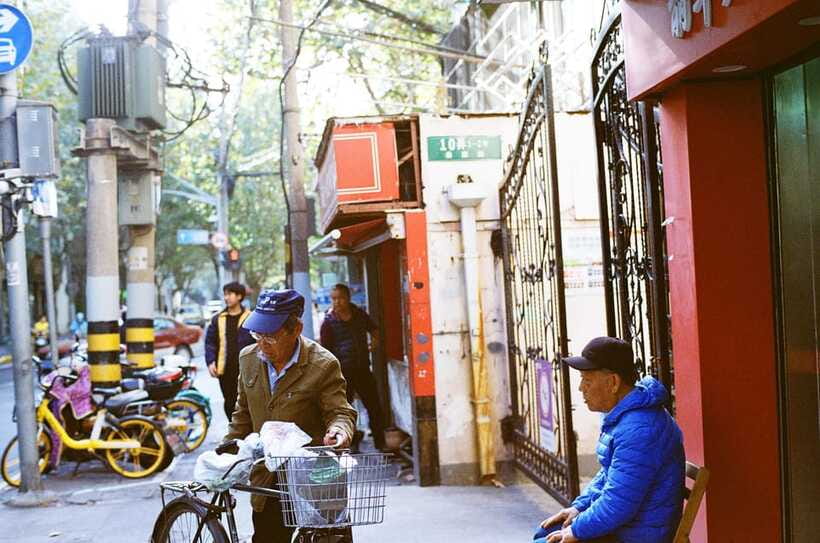
The route also passes through a 1920s neighborhood, where the appeal is found in smaller details. Older houses, gates, railings, and street patterns tell you more about daily life than a single monumental building can.
This is where the French Concession often feels most inviting. The avenues are shaded, the houses are varied, and renovated structures now hold boutiques, galleries, bars, and cafés. Some areas have been carefully refreshed, while others show the ordinary wear of a city that has continued to live in its old buildings.
I like this part of the walk because it gives you time to look around without needing a checklist. Notice the fences and stair rails, since those details help explain the district’s European influence. You might also see how quickly the mood changes from a quiet residential lane to a commercial street.
Shanghai Culture Square Theatre
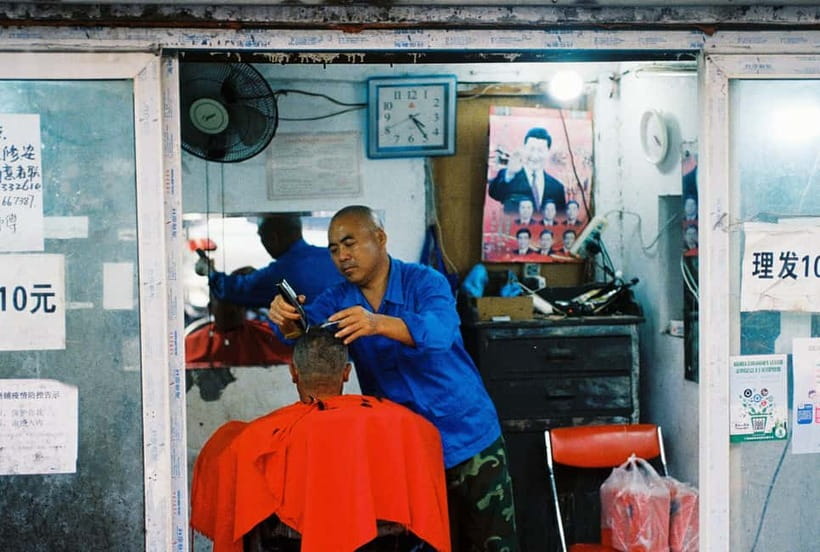
The tour includes a guided visit of about 20 minutes at Shanghai Culture Square Theatre. This is a shorter stop, but it adds a modern cultural note to the route.
The theater helps balance the older sites. Shanghai’s story is not limited to colonial buildings or revolutionary landmarks. It is also a city of performance, public culture, and new development. After walking through older neighborhoods, a contemporary theater shows how the district continues to serve present-day residents.
The stop is best treated as a guided orientation rather than a full performance visit. The tour does not include a show, and the schedule leaves limited time for lingering.
Communist history in the French Concession
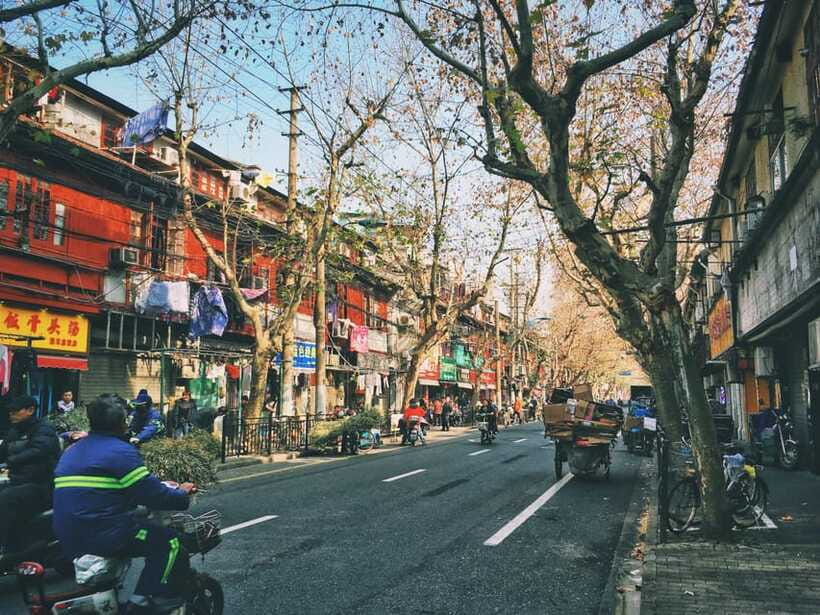
The political stops are among the most meaningful parts of the experience. The route includes the Communist Delegation Office and the birthplace of the Chinese Communist Party, linking the district to the early development of modern Chinese politics.
This is an important correction to the idea that the French Concession is only about elegant houses and café streets. The same district that held foreign clubs and fashionable residences also became connected with major political activity. Seeing these places in the middle of a modern neighborhood makes the history feel less remote.
Bill’s local perspective is especially useful here. These sites can be difficult to understand from a plaque alone, particularly if you are unfamiliar with China’s political history. You can ask direct questions, compare the different periods, and connect the buildings to the larger evolution of Shanghai.
The subject matter is serious, but the tour is not presented as a formal lecture. Bill is known for telling stories and explaining details in a conversational way. That makes the political history easier to follow during a walking route.
Sinan Mansions and Shanghai’s restored old buildings
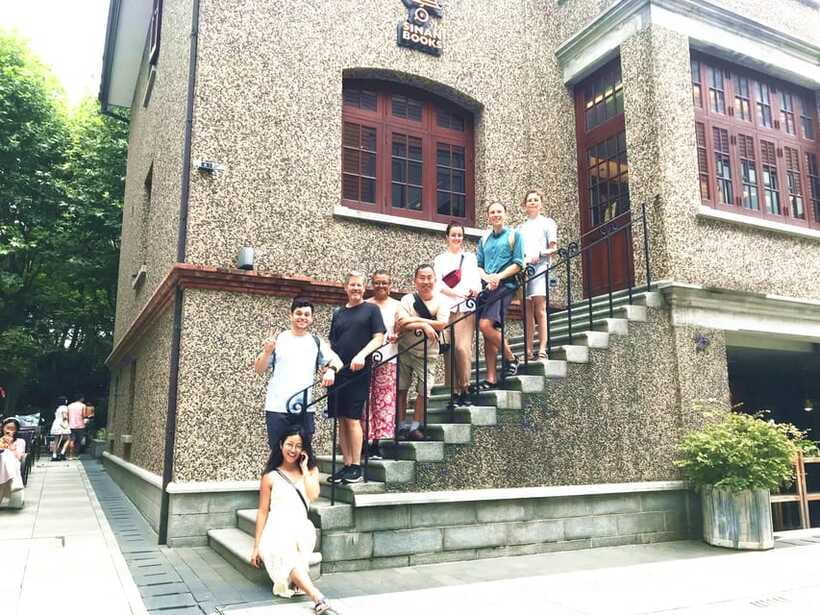
Sinan Mansions is another important part of the transition between old and new Shanghai. Restored historic buildings here sit within a district that has been updated for modern use.
This is a useful place to think about preservation. Renovation keeps old facades and street patterns visible, but it also changes how the buildings are used. Boutiques, restaurants, bars, and offices can bring life back to a district, yet the polished result may feel less ordinary than an untouched neighborhood.
You should expect a chance to see this tension rather than a simple lesson in architectural beauty. Shanghai has changed at remarkable speed, and the French Concession shows both the rewards and compromises of that process.
Finishing at Xintiandi
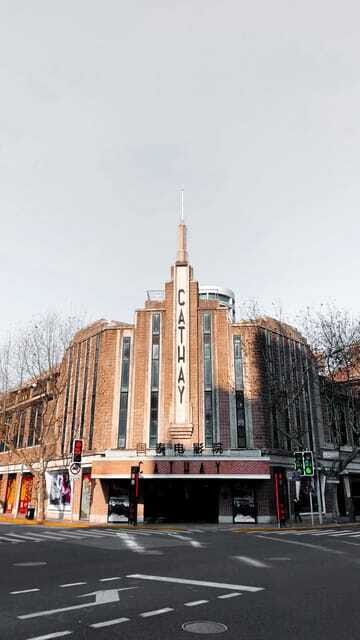
The tour ends at Xintiandi, a fashionable compound with shops, bars, and restaurants. It is a convenient finish because you do not have to work out where to go next. You can stop for a drink, arrange a meal, browse shops, or use the area as a starting point for further sightseeing.
Xintiandi is also a fitting final scene. It brings together restored older buildings and carefully planned modern commerce. After the quieter lanes and historic sites, the atmosphere here is more polished and social.
Keep your expectations clear. Xintiandi is designed for visitors and dining, so it does not offer the same everyday feel as a less renovated neighborhood. Its strength is convenience and atmosphere, not a completely untouched view of old Shanghai.
If you want a more local meal after the tour, ask Bill for suggestions. He offers advice about memorable dining, tea, shopping, and other parts of the city. That extra guidance can be one of the most useful parts of booking a local walk, especially if you have only a short stay.
Is $34 a fair price?
At $34 per person, this tour offers reasonable value if you want history, orientation, and local advice in a single outing. You are paying for a live English-speaking guide and a carefully connected route through several major parts of the French Concession, not just a walk past attractive buildings.
The value is strongest for first-time visitors. In 2.5 hours, you see architectural landmarks, political sites, a cultural venue, restored neighborhoods, and a major shopping district. You also finish somewhere useful rather than at an isolated meeting point.
The price is less compelling if you only want independent wandering. The French Concession is easy to explore at your own pace, and independent walkers can spend longer in cafés, shops, or side streets. You may also prefer another format if you want extensive interior access, frequent photo stops, or a very slow route.
The reserve-now-and-pay-later option keeps your plans flexible. You can cancel up to 24 hours in advance for a full refund, and late booking is possible until the tour begins. Availability still depends on the tour schedule, so do not treat last-minute booking as a guarantee.
Who will enjoy this walk most?
I would recommend it to you if you want a readable introduction to Shanghai and prefer stories to a list of dates. It suits first-time visitors, history fans, architecture lovers, and anyone who wants help choosing later places to eat or shop.
It is also a good fit if you enjoy contrasts. You will see colonial-era buildings, revolutionary sites, restored lanes, theaters, commercial roads, and a modern dining district within one route.
You may want a different plan if you use a wheelchair, since the experience is not suitable for wheelchair users. Smoking is not allowed. The distance and pace are not specified, but the schedule and number of stops suggest that you should be ready to walk continuously for much of the 2.5 hours.
My call: book it for context, not just photographs
I would book this tour if you want the French Concession to make sense. The best feature is the connection between places that can otherwise seem unrelated: the Former French Club, Jinjiang Hotel, old residential lanes, Communist history sites, Sinan Mansions, and Xintiandi.
Bill’s lifelong connection to Shanghai adds a personal layer, and his willingness to answer questions can help you make better choices for the rest of your stay. You should book with the understanding that this is a compact overview, not a slow architectural study or a series of long indoor visits.
For $34, the tour earns its price through context and practical guidance. Come ready to walk, listen, and ask questions. If you do, you’ll leave with a much clearer picture of why this part of Shanghai feels so different from the rest of the city.
FAQ
How long does the French Concession walking tour last?
The tour lasts 2.5 hours.
Where does the tour begin?
The meeting point is in front of the Okura Garden Hotel on South Maoming Road, about 100 meters to the left of Exit 3 at South Shaanxi Road subway station. The station is served by Lines 1, 10, and 12.
Where does the tour finish?
The tour finishes at Xintiandi, where you can find shops, bars, and restaurants.
What language is the tour conducted in?
The tour is conducted in English with a live guide.
Is the tour suitable for wheelchair users?
No. The experience is listed as not suitable for wheelchair users.
Can I cancel or book at the last minute?
You can cancel up to 24 hours in advance for a full refund. You can also reserve and pay later, and bookings remain open until the start of the tour, subject to availability.
New reviews from Shanghai
- Shanghai: 3-Hour Old Shanghai City Tour★ 4.9 · 45 reviews
- Make Soup Dumpling: Vegan or Pork in Shanghai Shikumen★ 4.9 · 6 reviews
- Immerse in Suzhou & Tongli: Private Day Trip★ 5.0 · 10 reviews
- Wuzhen Private Full-Day Tour from Shanghai★ 5.0 · 4 reviews
- Half-Day Zhujiajiao Water Town Wonders Small Group Tour★ 4.5 · 10 reviews
- Half-Day Zhujiajiao Water Town Wonders Private Tour★ 4.7 · 14 reviews
- Hangzhou Private Day Trip by Bullet Train from Shanghai★ 4.5 · 5 reviews
- From Shanghai: Hangzhou Private Day Trip by Bullet Train★ 4.6 · 15 reviews
French Concession Tours, compared.
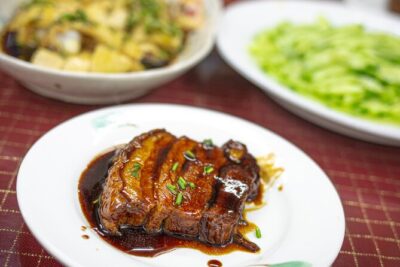
Eat Like a Local Through Shanghai’s French Concession
Read our review →
Late Night Food Tour in the Shanghai’s French Concession
Read our review →
Shanghai Breakfast Walking Tour of Former French Concession
Read our review →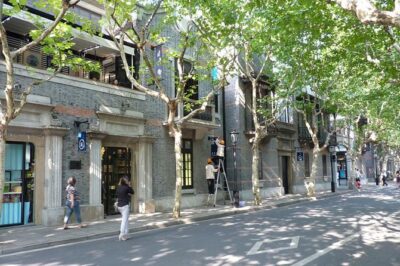
Private Walking Tour in the Former French Concession
Read our review →
Private Yu Garden, The Bund, French Concession, Pudong Half-Day Tour
Read our review →
Evening Food & Drink Tour in Former French Concession
Read our review →Browse the lists this tour appears in