Reviewed · TOURS IN SHANGHAI
Red Route Tour- Chinese Communist Party
The most revealing part of this Shanghai tour is the sharp contrast between fashionable Xintiandi and the modest site where the Chinese Communist Party held its First National Congress. You walk past polished restaurants and boutiques before reaching one of the most important political locations in modern China.
I like the private format, since you can ask direct questions instead of following a fixed lecture. I also like the stop at the Shanghai Propaganda Poster Art Centre, where Cultural Revolution-era posters give you something visual to study. The main drawback is cost: at $85 per person, you also pay for transport between stops and any admission fees, so the total can rise.
Key points to know before you book
- The First Congress site sits in Xintiandi: Modern shops and restaurants surround the place where the Communist Party began its national organization.
- A private historian leads the visit: Penny is the guide most often named in the feedback, and she is praised for clear explanations and practical Shanghai advice.
- The poster museum adds rare visual evidence: The Shanghai Propaganda Poster Art Centre displays material from the Cultural Revolution period.
- Hotel pickup keeps the morning simple: Pickup is offered from centrally located Shanghai hotels, though hotel drop-off is not included.
- You move through the city between stops: The route uses walking, subway, or taxi, with transport costs paid separately.
- The tour lasts about three hours: That is enough time for a focused introduction, not a full survey of China’s twentieth century.
Why this three-hour tour matters in Shanghai
Shanghai is often presented through its skyline, colonial streets, gardens, and food. This tour gives you another way to read the city. It connects fashionable neighborhoods with the political events that shaped the country after the fall of the Qing dynasty, the years of foreign influence, the civil war, and the Communist victory.
I like that the route does not remain inside one museum. You begin on foot in Xintiandi, then move to a collection of political posters. That shift matters. You first see a physical place tied to the party’s origin, then examine the images and slogans used to explain, defend, and promote Communist rule.
The tour is not built as a debate about present-day Chinese politics. It is a guided history experience, and the material can reflect the official version of events. You should arrive ready to ask questions and compare what you hear with what you already know. The guide’s job is especially important here, since the sites alone cannot explain the long chain of events.
The private setup helps. Your group has the guide’s attention, and you can ask for more background on a particular period. Past feedback gives special attention to Penny, who is described as lively, attentive, and able to place Chinese history in a wider international setting.
What else travellers book in Shanghai:
- Authentic Local Food Tour in Central Shanghai
★ 5.0 · 1,382 reviews - Zhujiajiao Water Town and Shanghai City Private Day Tour
★ 5.0 · 1,016 reviews - Private Shanghai Full Day City Tour with Old and New Highlights
★ 5.0 · 995 reviews
Xintiandi, from polished shops to a political birthplace
Your guide meets you at your centrally located hotel and takes you to Xintiandi. The neighborhood is known for restaurants, boutiques, and renovated traditional architecture, so the approach feels unexpectedly polished.
That contrast is part of the experience. You are not walking into an isolated monument. The Communist Party’s early history sits within a modern commercial district, surrounded by the ordinary business of contemporary Shanghai.
The route takes you through Xintiandi toward the birthplace of the Chinese Communist Party. The walking portion is not just a transfer. It gives your guide room to explain the setting and to connect the neighborhood’s older buildings with the city you see today.
Wear comfortable shoes. The tour involves walking, and Xintiandi can be a busy place, especially around restaurants and shops. The provided details do not give a precise walking distance, so you should not treat the three-hour schedule as a long hiking tour, but you will be on your feet.
The First National Congress site
The central stop is the location associated with the First National Congress of the Chinese Communist Party. This is where the tour becomes most important for anyone trying to understand how the party began its organized political life.
The admission is listed as free, but admission arrangements can vary, and the tour does not include ticket costs. Confirm the day’s entry details when booking if this stop is your main reason for going.
The value here comes less from a large collection of objects and more from the location itself. Your guide supplies the context: why the meeting mattered, how political movements were forming in China, and how the party’s early organization fit into the larger turmoil of modern Chinese history.
I would not expect a huge museum visit at this point. Think of it as a compact but meaningful historical site, best understood with explanation. Without a guide, you could easily walk past the building, take a photo, and miss why it matters.
The setting also helps you see how historical places are treated in present-day Shanghai. A serious political birthplace now shares space with leisure, shopping, and dining. That is a useful reminder that history in China is not always separated from daily life.
Walking through Xintiandi Beili
XinTianDi BeiLi is included as part of the Xintiandi portion of the route. The name refers to the northern area of Xintiandi, and the walk gives you a closer look at the neighborhood’s lanes and renovated buildings.
This is not a separate major museum stop. I would think of it as part of the transition around the party’s birthplace. It helps you understand the physical setting, but the historical weight remains with the First Congress site.
The area also gives your guide a chance to discuss how old urban spaces have been reused. The provided tour details do not promise a formal architecture talk, so do not book it as a design-focused walk. Its purpose is to connect the political site with the modern neighborhood around it.
If you enjoy seeing how Shanghai mixes old and new, you will appreciate this part. If you want nonstop political content, it may feel like a short pause between the two main historical stops.
Same city, a completely different day:
- Shanghai: Hop-on Hop-off Bus Ticket and Optional Attractions
★ 3.4 · 692 reviews - Shanghai Private Tour: Zhujiajiao Water Town and Boat Ride
★ 5.0 · 661 reviews - Eat Like A Local: Shanghai Night Food Tour
★ 5.0 · 616 reviews - Huangpu Night Cruise: Cozy Vibe & Modern Shanghai Glow
★ 4.3 · 520 reviews
Taking the subway or taxi to the poster centre
After Xintiandi, you continue by subway or taxi to the Shanghai Propaganda Poster Art Centre. Transport to the attractions is not included, and hotel drop-off is not provided, so budget for your own fare.
This arrangement gives the tour a more local, practical feel than a coach excursion. You are moving through Shanghai as part of the day rather than being sealed inside a vehicle. Still, it means the final cost is not simply the advertised $85.
The route may also depend on city traffic, subway conditions, and the location of your hotel. Pickup is offered only from centrally located hotels, so confirm that your accommodation qualifies. The experience is near public transport, which helps with the end of the tour, but no return transfer is included.
For me, this is one of the tour’s practical tradeoffs. You gain a private guide and a city-based route, but you handle the transfers yourself. If you prefer an all-inclusive outing with a vehicle waiting at every stop, this may not be the right fit.
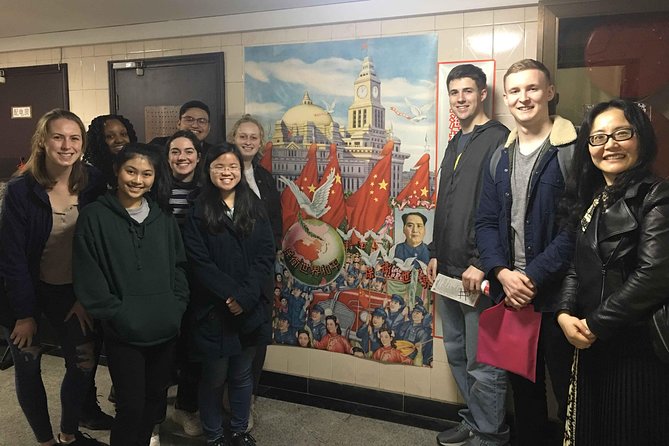
The Shanghai Propaganda Poster Art Centre
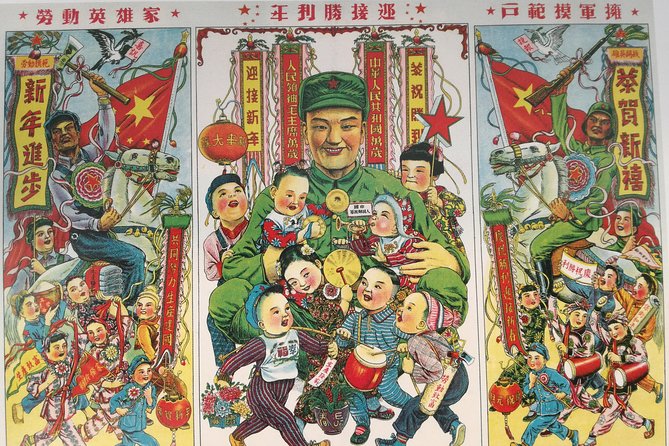
The poster centre gives you a visual record of political messaging, including material from the Cultural Revolution. This is the stop that turns a broad history lesson into something you can study directly.
Posters can show how leaders, workers, soldiers, students, and national goals were presented to the public. They also help you see the style of political communication used during a period when images and slogans were a major part of public life.
The collection is described as extensive, with a remarkable range of propaganda posters. That makes this more than a quick final stop. The museum may be small in physical scale, but the material can carry a great deal of historical weight.
Your guide’s explanation is useful here. Posters can be difficult to interpret if you do not know the political moment behind them. A guide can explain the figures, symbols, slogans, and changing priorities that appear across the collection.
Keep in mind that the tour does not include admission fees. The supplied information does not state the exact ticket price or how long you spend inside, so allow for some flexibility in your schedule.
The museum also raises a useful question about historical interpretation. Political posters were made to persuade, not to provide a neutral record. You should view them as evidence of how the state wanted events and values to be understood. That does not make them unimportant. It makes them especially revealing.
Penny and the value of a private guide
Penny is the guide named most often in the available feedback. Her strengths are described in practical terms: she explains Chinese history clearly, keeps the material lively, and pays attention to the group’s questions.
One especially useful feature is the way she connects Communist Party history with the role of foreign powers in China. That broader frame matters in Shanghai, a city shaped by international trade, colonial concessions, war, and political change.
You can also ask for help beyond the scheduled route. Penny has provided restaurant and shopping suggestions after the tour, which is a small but useful bonus when you are still finding your way around Shanghai.
The guide is not just there to point out buildings. The stops are relatively focused, and the background discussion supplies much of the tour’s value. If you already have a strong academic grasp of Chinese political history, you may want to use the private format for detailed questions rather than a basic introduction.
If this is your first serious look at modern Chinese history, the format should work well. The tour has enough structure to keep you moving, but a private group allows the conversation to adjust to your interests.
What $85 buys you
At $85 per person, the price is fair only if you value the guide highly. You are paying for a private, three-hour experience with hotel pickup and a historian guide, not for an all-inclusive sightseeing package.
The price includes:
- A professional historian guide
- Pickup from a centrally located hotel
- A private tour for your group
The price does not include:
- Food and drinks
- Transport between attractions
- Hotel drop-off
- Admission fees
That list is important. The subway or taxi fares may be modest, but they are still extra. Admission is also extra, even though the First Congress stop is listed with free admission. The poster centre’s ticket cost is not provided, so ask about current charges before you commit your budget.
Compared with a large group tour, the private format may be good value if you want to ask questions or shape the discussion. Compared with a free self-guided walk, it is expensive. The difference is the interpretation, local help, and time saved figuring out how the places connect.
The tour is also commonly booked about 34 days ahead. That suggests you should reserve early if your Shanghai dates are fixed, especially because the activity is private and availability may be limited.
Who will enjoy this experience most
I would recommend this tour to you if you have a real interest in China’s political history, the Communist Party, propaganda, or the forces that shaped modern Shanghai.
It is also a good choice for:
- First-time visitors who want more than scenery and shopping
- History students and teachers
- People who prefer a private guide to a large group
- Anyone curious about the Cultural Revolution
- Visitors who want hotel pickup from a central location
- Curious families with children old enough to follow a serious history discussion
Children must be accompanied by an adult. Most people can participate, but comfortable walking shoes are recommended.
I would be more cautious if you want a relaxed sightseeing tour with little discussion. The subject is political and historical, and the value depends on your willingness to listen, ask questions, and think about how history is presented.
Practical planning for the three-hour route
Allow about three hours, but keep your schedule loose. The tour includes walking in Xintiandi and a transfer to the poster centre, and the exact timing can be affected by transport.
Arrange pickup from a centrally located hotel. Hotel drop-off is not included, so plan what you will do afterward. Since the route ends near public transportation, you should be able to continue sightseeing, return to your hotel, or reach a restaurant on your own, but the tour does not provide that transfer.
Bring comfortable shoes and keep your phone charged for the mobile ticket. Food and drinks are not included, so eat beforehand or plan a meal after the tour.
The activity is private, which means only your group participates. That is useful if your interests are specific, but it also means you cannot rely on a larger group to spread the cost. Group discounts are available, so check the current terms if you are booking for several people.
Free cancellation is available up to 24 hours before the start time. Changes or cancellations made later are not accepted for a refund.
Should you book the Red Route Tour?
Book it if you want a focused introduction to the Chinese Communist Party that combines real places with visual material. The First Congress site gives the story a physical anchor, while the poster centre shows how political ideas were communicated to the public.
I especially like the contrast between Xintiandi’s modern shops and its political importance. I also value the chance to ask questions in a private setting, with Penny or another historian guide supplying the wider context.
Skip it if you want an inexpensive walk, a fully chauffeured tour, or a neutral political history presented without interpretation. At $85, plus transport and admission, it is not a budget outing.
For the right reader, though, this is one of Shanghai’s more useful history tours. It helps you look beyond the city’s famous skyline and see how political memory, commercial redevelopment, and modern daily life occupy the same streets.
FAQ
How long does the Red Route Tour last?
The tour lasts approximately three hours.
Where does the tour begin?
Your historian guide meets you at your centrally located Shanghai hotel.
Is hotel pickup included?
Yes. Pickup from a centrally located hotel is included.
Is hotel drop-off included?
No. The tour includes pickup, but hotel drop-off is not included.
Is transportation between the attractions included?
No. You travel between attractions by subway or taxi, and those transport costs are not included.
What places does the tour visit?
The route includes Xintiandi, the birthplace of the Chinese Communist Party, XinTianDi BeiLi, and the Shanghai Propaganda Poster Art Centre.
Is admission included?
No. Admission fees are not included. The First Congress site is listed with free admission, but the tour does not cover ticket costs.
Is this a private tour?
Yes. Only your group participates.
Can I cancel for a full refund?
Yes, if you cancel at least 24 hours before the experience start time. Cancellations or changes made less than 24 hours in advance are not accepted for a refund.
New reviews from Shanghai
- Shanghai To Beijing Bullet Train Ticket with Local Private Transfer★ 5.0 · 12 reviews
- Shanghai Spicy Food Tour★ 5.0 · 3 reviews
- Shanghai Uncommon Historic Sites Tour★ 5.0 · 3 reviews
- Shanghai Pudong airport transfer to Disneyland:Private with Meet & Great service★ 5.0 · 3 reviews
- Shanghai Tower Observation Deck 118 floor Tickets Pre-booking.★ 5.0 · 4 reviews
- Pudong Airport to Hangzhou: Private with Meet and Greet Service★ 4.5 · 4 reviews
- Private Transfer: Hotel to Shanghai Wusongkou Cruise Terminal (Baoshan Port)★ 3.5 · 6 reviews
- Shanghai Pudong International Airport (PVG) to Shanghai Hotel★ 5.0 · 4 reviews
Tours in Shanghai, compared.
Authentic Local Food Tour in Central Shanghai
Read our review →
Zhujiajiao Water Town and Shanghai City Private Day Tour
Read our review →
Private Shanghai Full Day City Tour with Old and New Highlights
Read our review →
Hop-on Hop-off Bus Ticket and Optional Attractions
Read our review →
Shanghai Private Tour: Zhujiajiao Water Town and Boat Ride
Read our review →
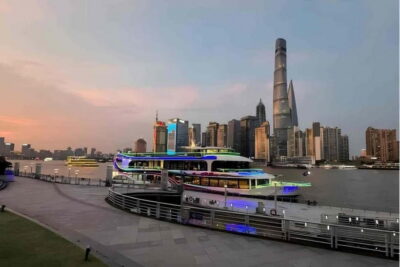
Huangpu Night Cruise: Cozy Vibe & Modern Shanghai Glow
Read our review →