

Reviewed · LOCAL LIFE & HIDDEN CORNERS
Small-Group Tour: Hidden Gems of Old Hong Kong island
Hong Kong reveals its everyday character on this three-hour walk through Quarry Bay, North Point, and Causeway Bay. You move from Montane Mansion to a working wet market, ride the old ding ding tram, watch a traditional street ritual, and finish with wonton noodles in a family-run shop. I like the mix of ordinary city life and small cultural stops. I also like the group size, capped at eight, which gives your guide room to answer questions. The main drawback is the price: at $118.08 per person, this is costly for a short walking tour, especially if transport arrangements are not handled clearly.
The best guides make this experience feel personal rather than scripted. Lyona received special praise for her overview of old Hong Kong, while Kenniess was noted for her warm, attentive manner. I would wear sturdy shoes, bring appetite for a modest noodle meal, and confirm exactly which transport fares are covered before setting out.
Key points to know before you book
- Montane Mansion in Quarry Bay: See one of Hong Kong’s most striking clusters of connected residential towers, with free admission and about 20 minutes to look around.
- Chun Yeung Street market: Ride the ding ding into North Point and walk through a market still used for daily shopping.
- Made-in-Hong-Kong slippers: Spend a short but memorable five minutes at a family-run Chinese embroidery slipper shop operating since 1960.
- Causeway Bay street ritual: Watch a traditional petty person beating session near Goose Neck Bridge.
- Small group and local meal: The group is limited to eight, and the tour includes wonton noodles, one drink, and bottled water.
- Three kinds of city transport: You travel by MTR, tram, and double-decker bus, though you should confirm the fare details at booking.
Why this walk shows a more useful side of Hong Kong
Many Hong Kong sightseeing days revolve around skyscraper views, shopping streets, and major harbor sights. This tour takes a different route. It focuses on places where people live, shop, work, and keep small traditions alive.
That difference matters because Hong Kong can feel polished and futuristic at first glance. A visit to a residential complex, a produce market, or a tiny craft shop gives you a better sense of how the city functions from street level. You are not simply passing landmarks. You are seeing a city of tight spaces, layered neighborhoods, old businesses, and constant movement.
The experience lasts about three hours and ends near Causeway Bay MTR station. That makes it easy to fit into a larger Hong Kong day. You could use it as an introduction to the eastern side of Hong Kong Island, then continue shopping or sightseeing in Causeway Bay afterward.
The pace is active but manageable for anyone with moderate physical fitness. You walk through several neighborhoods, board public transport, stand in market areas, and spend time outdoors. Hong Kong’s heat, humidity, and crowds can make a three-hour walk feel longer, so comfortable shoes and water are sensible. One bottle of water is supplied.
Other trips that stay off the main sights in Hong Kong:
- Private Hong Kong Tour with a Local, Highlights & Hidden Gems 100% Personalised
★ 5.0 · 490 reviews - Hong Kong’s Tin Hau Hidden Eats Food Tour with 7+ Local Tastings
★ 5.0 · 352 reviews - Highlights & Hidden Gems With Locals: Best of Hong Kong Private Tour
★ 5.0 · 105 reviews
Starting at Montane Mansion in Quarry Bay
The tour begins with a guide meeting you at your hotel, followed by a trip on the MTR to Quarry Bay. The published schedule gives an 11 a.m. start, while the detailed meeting information says the guide meets you at about 10:30 a.m. Confirm the exact pickup time when you book so you are not waiting at the wrong time.
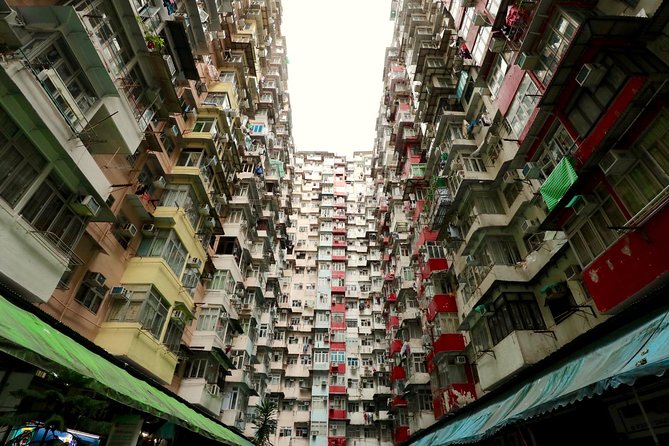
Montane Mansion is the first major stop. This residential complex consists of five connected buildings and is known for its dense, dramatic architecture. The buildings rise around a tight interior space, creating the kind of view that explains Hong Kong’s reputation for making every square meter count.
You receive about 20 minutes here. That is enough for photographs and a quick explanation, but not enough for an extended architectural study. The complex has also become increasingly popular with photographers, so it is not completely unknown anymore. Still, the short visit keeps the focus on the building as part of a living neighborhood rather than treating it like a formal attraction.
I like this stop because it gives you context for Hong Kong’s housing patterns. You see more than a famous photo angle. You see the scale of ordinary residential life, with homes, shops, and shared spaces packed into a compact urban setting. Please remember that this is a residential area. Keep your voice low, do not block entrances, and avoid treating the residents’ home as a film set.
Riding the ding ding to Chun Yeung Street
From Quarry Bay, you take the traditional Hong Kong tram, usually called the ding ding for its bell. The ride brings you toward North Point and adds a useful piece of local transportation to the tour.
The tram is not just a convenient way to move between stops. It lets you see Hong Kong from street level, with the city unfolding slowly rather than flashing past from an MTR platform. The experience also shows the contrast between the speed of modern Hong Kong and an older form of transport that still carries people through the center of the city.
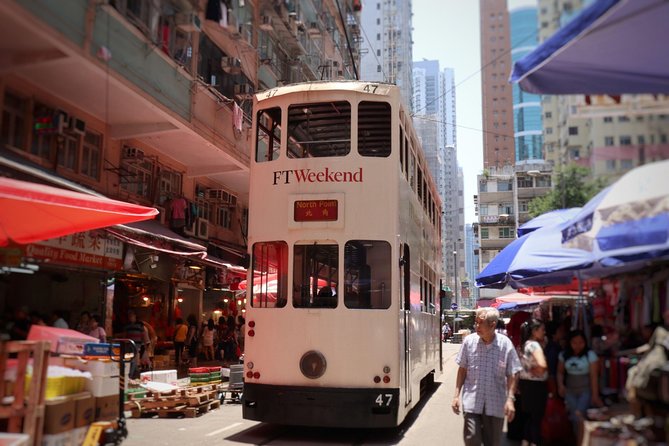
The main stop in North Point is Chun Yeung Street. This market street retains a local shopping function, with stores on both sides and people buying everyday food and household goods. The market is a stronger cultural stop than a quick photo opportunity because you see the practical side of the neighborhood.
Your guide can help explain what you are seeing, since a wet market may be confusing if you do not know the local shopping habits. You might find produce, meat, seafood, and small food shops in close quarters, though the exact vendors and displays can change. The scheduled visit lasts about 45 minutes, giving you time to walk rather than rush through.
This is one of the best parts of the tour for anyone interested in ordinary life. You can watch how residents shop, notice the compact arrangement of businesses, and compare the market with the polished malls elsewhere on Hong Kong Island. It is also the place where the tour feels most dependent on good guiding. A friendly guide such as Kenniess can make a market visit engaging by pointing out details you would likely miss on your own.
Keep your belongings close and be considerate with photography. A market is a working place, not a museum. Follow your guide’s lead, especially in narrow sections.
A five-minute stop at a family slipper shop
In North Point, the group visits a family-run shop producing Chinese embroidered slippers. The business began in 1960 and continues to offer handmade, Hong Kong-made footwear.
The stop is listed at only five minutes, so think of it as a brief introduction rather than a full workshop. You may see the slippers and learn why this small business matters, but there is no promise of an extended demonstration or time to watch every stage of production.
I find this short visit valuable because it connects the tour to a type of local manufacturing that is easy to miss. Hong Kong is often associated with finance, shopping, and high-rise buildings. A small shop still making traditional goods gives you a different view of the city’s working culture.
If you like buying useful souvenirs rather than mass-produced gifts, this may be your best shopping chance during the tour. The supplied information does not specify prices, sizes, or payment methods, so ask the guide if you want to purchase something.
Same city, a completely different day:
- Hong Kong: Dolphin Cruise, Big Buddha & Lantau Island Tour
★ 4.2 · 1,512 reviews - Ngong Ping 360: Cable Car Return Tickets & Combos
★ 4.6 · 1,431 reviews - Lantau Island Day Trip – Big Buddha & Tai O
★ 4.5 · 1,328 reviews - Big Bus Hong Kong Open Top Hop-On Hop-Off Sightseeing Tour
★ 4.0 · 1,077 reviews
Watching petty person beating in Causeway Bay
The group then takes the ding ding farther toward Causeway Bay. The next stop is Goose Neck Bridge, in one of the busiest parts of the district.
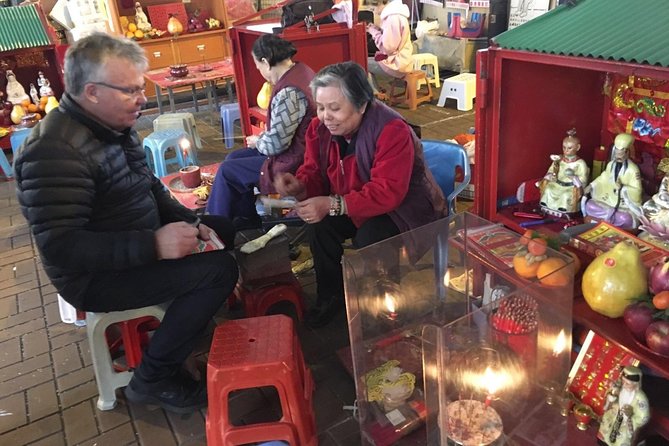
Here, you watch a traditional practice known as petty person beating. A beater uses paper offerings and ritual actions to symbolically curse or drive away troublesome people. The tour includes one session, referred to as petty person beating, but the cost of other purchases or services is not included.
This is a distinctly Hong Kong experience because it links an old folk custom with a crowded modern business district. You may be standing near towers, shops, traffic, and commuters while watching a practice that comes from a very different part of the city’s culture.
The scheduled stop lasts about 25 minutes. The activity itself can vary, and the information does not promise that a specific person will receive a ritual on your behalf. I would treat it as a chance to observe and understand the custom rather than as a guaranteed personal service.
This stop also shows why a local guide helps. Without an explanation, you might see a group of people striking paper objects and have no idea what is happening. The guide can provide the cultural frame and help you observe respectfully.
Finishing with wonton noodles
After walking through several neighborhoods, you sit down at a family-run traditional noodle shop in Causeway Bay. The meal includes one bowl of wonton noodles and one beverage, subject to availability.
Wonton noodles are a classic Cantonese comfort food: thin noodles served with small dumplings and broth. This is not presented as a long restaurant meal or a large tasting menu. It is a simple local lunch that gives the tour a satisfying finish after the walking and public transport.
The meal is included, which helps offset the tour price somewhat. Still, one bowl and one drink should be viewed as a modest meal rather than a major food experience. One comment on the tour found the food portion too limited for the overall cost, and that is a fair point to keep in mind.
Vegetarian food is available if you request it when booking. You should also provide any other dietary requirements in advance. The supplied details do not promise a full range of substitutions, so do not wait until the restaurant visit to raise an allergy or dietary concern.
The noodle stop lasts about 45 minutes. That gives you time to eat without having to rush straight back onto the street. It also gives you a chance to ask your guide about the areas you have just visited.
What the small group changes
The group limit is eight people. That is a useful size for market streets, tram boarding, and small shops. A guide can usually keep the group together more easily and answer questions without relying on a microphone or a rigid script.
The human side of the tour matters here. Lyona was singled out for providing an excellent overview of old Hong Kong, and Kenniess was praised for being attentive and pleasant throughout the walk. Guide quality can shape the whole experience because several stops depend on explanation rather than grand scenery.
A small group does not mean private touring. You still share the guide, transport, and meal setting with other people. But compared with a large coach outing, eight people gives you more room to ask why a market works the way it does or what a street custom means.
The tour is conducted by a licensed English-speaking guide. The information does not guarantee that Lyona or Kenniess will lead your departure, so consider those names examples of the type of guide experience possible, not a booking promise.
Is $118.08 a fair price?
The listed price is $118.08 per person, which places this tour in the expensive range for a three-hour experience. The value comes from the combination of a licensed guide, a group limited to eight, several forms of transport, a noodle meal, a drink, water, and access to small local businesses that would be difficult to connect on your own.
The price feels easier to justify if you care about context and convenience. You are not paying simply to see Montane Mansion. You are paying for a guide to link residential architecture, a working market, traditional footwear, folk practice, public transport, and Cantonese food into one short route.
The price is harder to justify if you mainly want photographs or a cheap introduction to Hong Kong. Montane Mansion is free, the market is free, and the tour covers only one bowl of noodles. One French-speaking customer also considered the tour too expensive and noted concerns about transport fares and the size of the included meal.
There is an important practical issue with transport. The inclusions say tram fare and double-decker bus fare are covered, while MTR costs and other transport not belonging to the tour are excluded. A past service problem involved a guide forgetting to pay a fare, so I would confirm the exact arrangement before departure and keep any receipt if you are asked to pay first.
Who should book this experience?
I would choose this tour if you have already seen the major Hong Kong sights or want your first day to include more than skyline views. It suits you if you enjoy walking, local markets, traditional food, public transport, and small cultural encounters.
It is also a good fit if you prefer a guide to handle the route. Moving between Quarry Bay, North Point, and Causeway Bay requires some planning, and the guide provides the connection between places that might otherwise feel unrelated.
You may want to skip it if you dislike markets, have trouble walking in warm weather, or expect a large meal and a long craft demonstration. The five-minute slipper-shop stop is brief, and the noodle portion is practical rather than lavish.
Wear comfortable walking shoes. The tour takes place as scheduled except during a Red or Black storm warning or Typhoon Signal No. 8 or higher. It requires moderate physical fitness, and cancellation is free up to 24 hours before the start time. If bad weather cancels the tour, you are offered another date or a full refund.
My verdict: a strong local introduction at a high price
This is a thoughtful way to see Hong Kong Island beyond the usual postcard stops. Montane Mansion gives you memorable architecture, Chun Yeung Street gives you daily neighborhood life, the slipper shop preserves a small piece of local craft, and Causeway Bay adds a folk custom and a bowl of Cantonese noodles.
I especially like the small group, the tram rides, and the chance to see places that are not usually joined in a standard sightseeing route. The price is the sticking point. Book it if personal guiding and cultural context matter more to you than getting the lowest cost. If you do book, confirm the pickup time, transport fares, and dietary needs in advance. That small bit of preparation should help you get the most from this compact but busy introduction to old Hong Kong.
FAQ
How long does the Hidden Gems of Old Hong Kong Island tour last?
The experience lasts approximately three hours.
Where does the tour start and finish?
It starts in Quarry Bay and ends near Causeway Bay MTR station.
What transport is used during the tour?
You travel by MTR to Quarry Bay, Hong Kong’s ding ding tram, and a double-decker bus. The supplied details state that tram and double-decker bus fares are included, while other transport costs may not be.
What food is included?
You receive one bowl of wonton noodles and one beverage at a family-run noodle shop. Bottled water is also provided.
Is a vegetarian option available?
Yes. A vegetarian option is available, but you must request it when booking. You should also provide any other dietary requirements in advance.
How large is the group?
The tour has a maximum of eight people.
New reviews from Hong Kong
- Victoria Peak Tram and Sky Terrace 428 Admission Hong Kong★ 4.5 · 33 reviews
- Walking Tour in Hong Kong – Local Experience (New & Best)★ 4.5 · 33 reviews
- Full Day Private Trip in Hong Kong( impeccable local )walk tour★ 5.0 · 11 reviews
- Hong Kong Guided Dinner + Laser Show Lounge Entry (2023) | 200+ booked★ 3.5 · 7 reviews
- Group Vegetarian Food & Cultural Tour★ 5.0 · 16 reviews
- Hong Kong Victoria Harbour Sightseeing Cruise Tickets★ 4.5 · 8 reviews
- The Legendary Bruce Lee Experience Tour★ 4.5 · 9 reviews
- STARLIGHT: Victoria Harbour Night Yacht Tour★ 4.5 · 38 reviews
Local Life & Hidden Corners, compared.

Beijing Hutong Walking Food and Beer Tour at Hidden Restaurants
Read our review →

Private Hong Kong Tour with a Local, Highlights & Hidden Gems 100% Personalised
Read our review →
Eat Like a Local Through Shanghai’s French Concession
Read our review →
Hong Kong’s Tin Hau Hidden Eats Food Tour with 7+ Local Tastings
Read our review →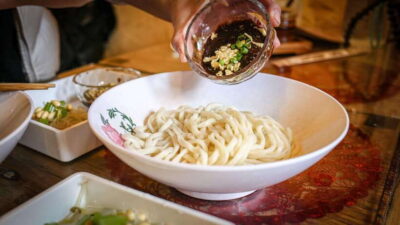
Hidden Gems Guided Food Tour with Beer and Tastings
Read our review →
Eat Like a Local: Street Breakfast Tour in Shanghai
Read our review →
Highlights & Hidden Gems With Locals: Best of Hong Kong Private Tour
Read our review →Browse the lists this tour appears in