
Reviewed · WALKING TOURS
Dark Side of Hong Kong – Kowloon Caged Homes Walking Tour
Hong Kong’s polished skyline tells only half the story. This two-hour walk through Kowloon takes you into Sham Shui Po and nearby streets, where tiny subdivided flats, rooftop structures, traditional markets, and million-dollar apartments reveal the pressure behind the city’s housing crisis. It is less about sightseeing and more about understanding how ordinary people get by.
I like the clear housing lesson, which links scarce land, post-war growth, and Hong Kong’s low-tax economic model. I also like the mix of street-level scenes and social context, from Cedar Street apartments to SoCo, a charity that advocates for people on the margins.
The main caution is simple: this is not a tour of occupied cage homes. You see a staged 100-square-foot display unit and the buildings and streets around them. If you want a cheerful city walk or a long list of attractions, this serious tour may feel heavy and a little expensive.
Key points to know before you book
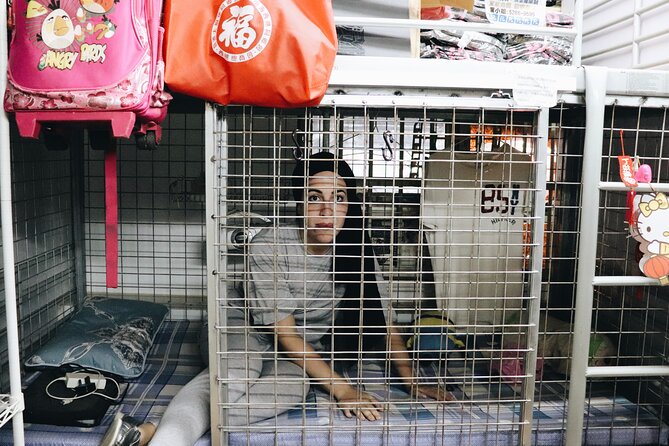
- A 100-square-foot display flat puts the housing crisis into physical scale. You see how a bed, kitchen, and living area can share one tiny room.
- The walk connects history with present-day housing pressure. Post-war population growth, limited land, and economic policy all enter the discussion.
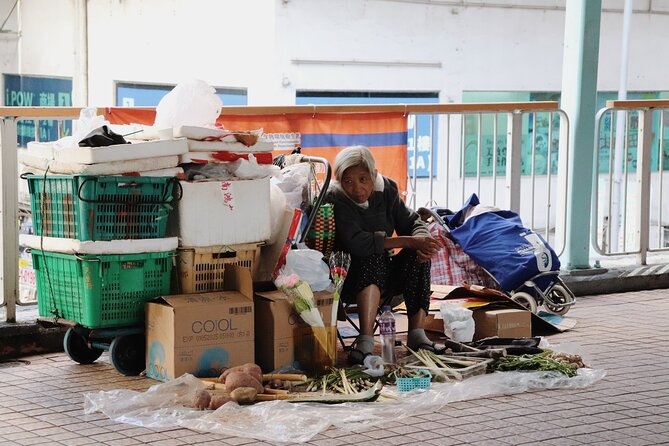
- You visit Sham Shui Po’s ordinary streets, markets, rooftops, and back lanes. This is a working neighborhood, not a museum set.
- The tour is led by local guides such as Alice, Isaac, Grace, Summer, and Wind. The guide makes a major difference, especially during the question period.
- You do not enter a real occupied cage home. The display flat is staged, which protects residents but may disappoint anyone expecting direct access to private homes.
- The group can reach 30 people. That is manageable, but a large group may make narrow streets and discussion stops less intimate.
Hong Kong beyond the postcard skyline
I find the strongest part of this experience is its refusal to let the city’s glass towers tell the whole story. Hong Kong is famous for expensive property, spotless shopping centers, and dramatic views, yet many working people live in rooms so small that the usual idea of a private home barely applies.
The walk uses Kowloon as a classroom. You do not simply hear that housing is costly. You see old buildings, subdivided interiors, dense streets, and sharply different types of housing placed close together. That physical contrast does more work than a lecture alone.
The subject is serious, and the tone is not light entertainment. One parent brought a 16-year-old and found the experience difficult but worthwhile. That gives you a fair sense of the mood: thoughtful, sometimes sad, and designed to make you pay attention.
Other walks around Hong Kong:
- Introduction to Hong Kong: Central Tip Based Walking Tour
★ 5.0 · 202 reviews - Full-Day Private Customized Walking Tour of Hong Kong
★ 5.0 · 106 reviews - Hong Kong: Kowloon Street Market & Food Culture Walking Tour
★ 5.0 · 105 reviews
Starting near Prince Edward Station
The meeting point is on Nathan Road near Prince Edward, with an 11:00 am start. The walk finishes in Sham Shui Po, near Sham Shui Po MTR Station, so you do not return to the starting point.
The opening stop on Cedar Street asks why Hong Kong is often described as the world’s least affordable city. You look at the idea of a typical 500-square-foot apartment being divided into five 100-square-foot units. The figures are easy to grasp, and they set the scale for everything that follows.
This first stop is useful because it moves the housing problem away from vague statistics. A 500-square-foot apartment may already feel compact to many people. Dividing that space into five units shows how landlords and residents adapt when demand is high and alternatives are limited.
You will be on public streets from the beginning, so expect city noise, traffic, and a working neighborhood rather than a quiet historical quarter. The group may pause in places where other people are going about their day. Listen closely, keep your camera respectful, and avoid treating residents as scenery.
Ki Lung Street and the forces behind the crisis
At Ki Lung Street, the guide explains how several forces came together. Hong Kong’s post-war population growth increased demand quickly. Scarce land kept supply tight. The city’s low-tax capitalist model created great wealth, but that wealth did not give every resident an affordable home.
I appreciate this part because it avoids blaming one simple cause. Housing pressure is not presented as the result of one bad building or one unlucky family. You get a wider explanation of how planning, economics, population growth, and land supply can shape daily life.
This stop will appeal most if you enjoy learning how cities work. Isaac has been singled out for giving clear facts and answering questions, while other guides such as Alice, Grace, and Summer have been praised for explaining the subject in a calm, direct way. Guide quality matters here because the same streets can feel either like a social lesson or just a walk through older buildings.
Inside a 100-square-foot subdivided flat
The most concrete stop comes back on Cedar Street. You step into a display unit of about 100 square feet, arranged to show a kitchen, bed, and living space for a minimum-wage family. You also see how a cage home is designed for one resident.
This is the moment when the numbers become physical. There is no room for abstract language when a bed, cooking area, and daily life must share such a tight footprint. You begin to understand why privacy, storage, ventilation, and personal space are not minor comforts in this setting.
Be clear about what you are seeing. The unit is staged, not an occupied home, and actual cage homes are not visited. That is an important ethical boundary. The tour aims to explain housing conditions, not bring paying visitors into someone’s private living space.
For some people, this will be enough. For others, it will feel like the tour should show more. A three-star assessment of the experience focused on this exact limitation: the display unit was useful, but the rest of the visit felt mainly like walking through the neighborhood, with tea described as a possible time filler. I think that is a fair warning if you expect a series of interior visits.
Same city, a completely different day:
- Hong Kong: Dolphin Cruise, Big Buddha & Lantau Island Tour
★ 4.2 · 1,512 reviews - Ngong Ping 360: Cable Car Return Tickets & Combos
★ 4.6 · 1,431 reviews - Lantau Island Day Trip – Big Buddha & Tai O
★ 4.5 · 1,328 reviews - Big Bus Hong Kong Open Top Hop-On Hop-Off Sightseeing Tour
★ 4.0 · 1,077 reviews
Lui Seng Chun and the personal side of housing
At Lui Seng Chun, the discussion becomes more personal. The guide shares firsthand experience of trying to find housing in one of the world’s toughest property markets.
That personal element can make the larger economic talk easier to understand. Statistics explain the system, but a guide’s own account shows what it means to search, compare, compromise, and live with limited options. Alice, Grace, Summer, Isaac, and other guides have been praised for taking questions seriously, including basic and philosophical ones.
You should make use of this stop by asking specific questions. The guide can explain how the housing system feels from a local point of view, while the group discussion may also show that affordability problems affect major cities around the world. The tour stays focused on Hong Kong, but it gives you a useful way to compare what you see with housing pressure at home.
Yee Kuk Street and the darker back lanes
Yee Kuk Street brings the tour into the back streets of Sham Shui Po. Here, the guide discusses the less visible links between the drug trade and sex trade.
This section adds another layer to the neighborhood. Housing pressure does not exist apart from work, poverty, immigration, family life, and informal economies. You begin to see how a district can be both a home and a place where people face risks that rarely appear in glossy city advertising.
The wording dark side should not lead you to expect a crime-themed attraction. The point is social context, not spectacle. The streets are real, and the subject is sensitive. If you want only food stalls, temples, and shopping, this stop may be uncomfortable. If you want a fuller picture of city life, it is an important part of the walk.
Hai Tan Street and the sharpest contrast
Hai Tan Street offers one of the tour’s clearest visual comparisons. New apartments priced around US$1.5 million sit beside dense clusters of subdivided units and cage homes.
That side-by-side view explains income disparity faster than a chart. The buildings are not separated by a long ride across the city. High property values and extreme crowding can exist within the same small area.
I especially like this stop because it gives the tour a physical argument. You do not just hear that Hong Kong contains great wealth and serious hardship. You see how closely those realities can sit together.
The contrast can also raise difficult questions. Who benefits from rising property values? Who gets pushed into smaller rooms? What happens to families when wages do not keep pace with rent? The guide cannot solve those problems in ten minutes, but the stop gives you the right questions to carry through the rest of your visit.
Pei Ho Street and the rooftop view
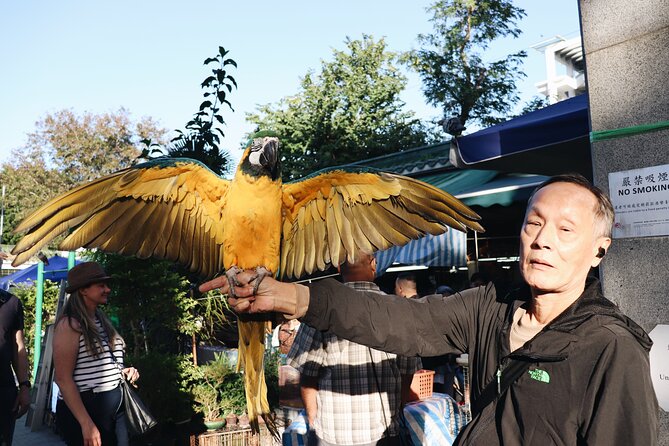
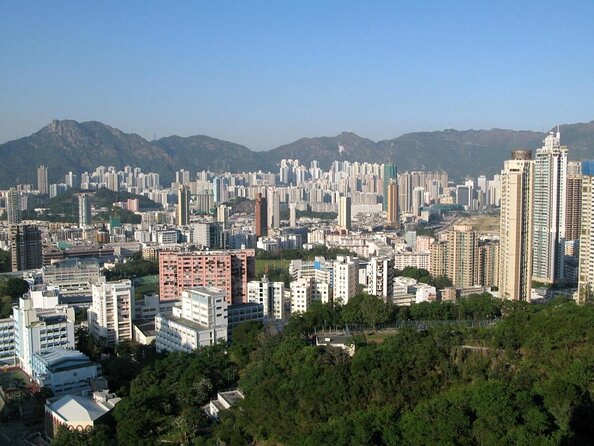
On Pei Ho Street, you climb to a rooftop in central Sham Shui Po to see the area’s less visible living spaces. The rooftop view is not a grand harbor panorama. It is a look across the roofs and structures that do not appear on standard Hong Kong postcards.
This is likely the most memorable visual stop. From ground level, you may notice old facades and crowded streets. From above, the pattern of dense construction becomes easier to read. The city feels compressed, with homes, workspaces, rooftops, and newer buildings occupying every possible corner.
The climb is one reason the tour asks for moderate physical fitness. The experience is a walking tour with stairs and standing, not a vehicle-based sightseeing trip. Wear comfortable shoes, and expect heat to matter. One person found that many stops were indoors on a very hot day, but weather conditions can still affect how tiring the walk feels.
Kweilin Street, SoCo, and possible solutions
The final stop is on Kweilin Street at SoCo, a charity with 50 years of advocacy for marginalized people. Here, the conversation shifts from describing the problem to discussing what might help Hong Kong’s future.
That ending is important. A tour about poverty can leave you feeling helpless if it only shows hardship. SoCo gives the discussion an organization, a history of advocacy, and a place to consider policy and community responses.
Do not expect a complete answer to Hong Kong’s housing crisis in two hours. You get an introduction to the pressures and some discussion of possible solutions. The value is in leaving with a sharper understanding, not a finished policy plan.
The tour finishes in Sham Shui Po, near the MTR station. That is practical because you can continue exploring the district on your own, though the experience itself does not include hotel pickup or drop-off.
How much does the US$32.82 price buy you?
At US$32.82 per person, this is not the cheapest way to spend two hours in Kowloon. You are paying for a guide, structured access to a difficult subject, and the work of connecting scattered details into one clear story. The attraction is not a major monument, a meal, or an expensive view.
I think the price is fair if you value context and conversation. The best guides, including Alice, Isaac, Grace, Summer, and Wind, have been described as warm, factual, and willing to answer questions. That personal attention is the main product.
The value is weaker if you mainly want interiors or dramatic sights. You see one staged subdivided flat, not a real occupied cage home. Much of the experience takes place on public streets, and part of the time is spent listening rather than looking at a formal attraction.
The maximum group size is 30. A smaller group would make the narrow streets and rooftop discussion feel more personal, but 30 is still workable if the guide handles the group well. The 96 percent recommendation and 4.8 rating suggest the format suits most people who book it, but the lower scores point to a real expectation issue: know what you are buying.
Who should take this walk?
I would choose this tour if you want to understand Hong Kong rather than simply collect famous sights. It suits people interested in housing, economics, urban planning, income inequality, immigration, and the daily life behind a wealthy city’s public image.
It can also work well for families with older children and teenagers who can handle serious topics. A 16-year-old joined one group, and the experience was described as hard but worthwhile. Use your judgment, since the subjects include poverty, illicit trade, and cramped living conditions.
Street photographers may find the neighborhood visually rewarding, but photography needs tact. The streets contain real homes and real people. Ask before photographing individuals, and remember that the purpose of the walk is understanding, not collecting images of hardship.
I would skip it if you want a light morning, a food-focused route, or a tour packed with major landmarks. I would also skip it if you expect to enter several actual homes. The tour does not offer that.
Practical details that affect the day
You receive a mobile ticket, and confirmation comes when you book. The meeting time is 11:00 am on Nathan Road near Prince Edward. The route ends at Sham Shui Po MTR Station, so plan your onward route from there.
Service animals are allowed, and the starting area is near public transportation. A moderate level of physical fitness is expected. You will walk, stand, and climb to a rooftop, so comfortable shoes are more useful than dress shoes.
The tour requires good weather and may be canceled if conditions are poor or if too few people book. In those cases, you are offered another date or a full refund. You can cancel for a full refund up to 24 hours before the start time, but changes or cancellations inside that window are not accepted.
Should you book the Dark Side of Hong Kong walk?
Book it if you want a serious, grounded look at Hong Kong’s housing crisis and income gap. The strongest parts are the 100-square-foot display unit, the contrast between luxury apartments and subdivided homes, the rooftop view, and the guide-led discussion at SoCo.
Go in with the right expectations. You are not entering occupied cage homes, and you are not seeing poverty as a tourist attraction. You are walking through a real Kowloon neighborhood while a guide explains the history, economics, and human cost behind what you see.
At US$32.82, I consider it good value for a purposeful city walk, especially if you ask questions and care about how cities function. If that sounds like your kind of travel, book it. If you want bright sights and easy entertainment, spend your two hours elsewhere.
FAQ
How long does the Dark Side of Hong Kong tour last?
The tour lasts approximately two hours.
Where does the tour start?
It starts on Nathan Road near Prince Edward in Hong Kong at 11:00 am.
Where does the tour finish?
The tour finishes in Sham Shui Po, near Sham Shui Po MTR Station.
Is hotel pickup included?
No. Hotel pickup and drop-off are not included.
Do you visit an actual occupied cage home?
No. The tour includes a staged 100-square-foot subdivided flat and shows a cage-home design, but actual occupied cage homes are not visited.
What housing issues does the tour explain?
The guide discusses Hong Kong’s housing crisis, scarce land, post-war population growth, the low-tax capitalist economic model, subdivided flats, cage homes, and income disparity.
Is the tour suitable for people with limited mobility?
The experience requires a moderate level of physical fitness. It includes walking, standing, and climbing to a rooftop.
How many people can join the tour?
The tour has a maximum group size of 30 people.
Can I cancel for a full refund?
Yes. You can cancel at least 24 hours before the local start time for a full refund. Cancellations or changes made less than 24 hours before the start time are not accepted.
New reviews from Hong Kong
- Lantau Island: Priority Cable Car, Tai O & Direct Transfer★ 4.0 · 11 reviews
- Hong Kong: Ngong Ping Private Cable Car Skip-the-Line Ticket★ 4.6 · 7 reviews
- Hong Kong: Lantau Private Coach, Tai O & Big Buddha Tour★ 4.8 · 8 reviews
- From Hong Kong: Macau Day Tour with R/T Ferry, Lunch, Pickup★ 4.6 · 39 reviews
- Monopoly Dreams Hong Kong★ 3.5 · 8 reviews
- 4-Hour Private Hong Kong Layover Tour★ 5.0 · 39 reviews
- A Perfect Hong Kong Layover – 5h private tour★ 5.0 · 10 reviews
- Private custom layover tour of Hong Kong – 7 hours★ 5.0 · 17 reviews
Walking Tours, compared.

Beijing Hutong Walking Food and Beer Tour at Hidden Restaurants
Read our review →
Private Beijing Walking Tour of the Forbidden City with 7 Options
Read our review →
Forbidden City Private Walking Tour with Optional Sights
Read our review →
Introduction to Hong Kong: Central Tip Based Walking Tour
Read our review →

Shanghai Highlights Walking Tour With A Real Local
Read our review →
Beijing City Walk: Explore Hutongs Life and Old Beijing
Read our review →Browse the lists this tour appears in