Reviewed · SILK ROAD TOURS
8-Day Silk Road Trip of Dunhuang, Jiayuguan, Zhangye with Accommodation
Dunhuang is where this tour earns its keep: Mogao Caves, desert dunes, ancient frontier walls, and Silk Road ruins arrive one after another. Over eight days, you travel east through the Hexi Corridor to Jiayuguan and Zhangye, with private transport and a guide handling the long distances.
I like the practical setup: seven breakfasts, lunches, and dinners are included, and the hotels, bottled water, airport transfers, and air-conditioned vehicle are covered. I also like the range of stops, from painted Buddhist caves to the red-and-gold formations of Zhangye Danxia. The main consideration is the price, $2,199 per person, and the pace: several days involve long drives and full sightseeing schedules.
Key points to know before you book
- Mogao Caves and the Digital Film Center: A four-hour visit introduces one of China’s major Buddhist cave complexes, with 492 grottoes, painted statues, and vast mural galleries.
- Desert and frontier history: You’ll see Crescent Moon Spring, the Singing Sand Dunes, Yumen Pass, the Han Dynasty Great Wall, and Jiayuguan Pass.
- Private touring: Only your group participates, with a local guide and air-conditioned vehicle for the route from Dunhuang to Zhangye.
- All major meals are covered: Seven breakfasts, seven lunches, and seven dinners remove much of the daily planning.
- A strong Zhangye finish: Zhangye Danxia, the Giant Buddha Temple, Horse Hoof Temple Grottos, and Pingshanhu Grand Canyon give the final days plenty of variety.
- Good for small groups: Group discounts are available, and wheelchair and infant-seat support can be arranged.
Why the Dunhuang to Zhangye route works
This is not a single-city sightseeing package. It is a point-to-point journey across western Gansu, following a route shaped by trade, religion, military defense, and desert travel.
You begin in Dunhuang and finish in Zhangye, with departure help at Zhangye Airport or Railway Station on the last day. That makes sense if you plan to continue through China by air or high-speed train. You do not need to return to Dunhuang, which saves a long backtrack.
The route is also well balanced in subject matter. One day focuses on Buddhist art, another on desert scenery, another on frontier ruins, and later days shift toward mountain formations and ancient temples. I like this variety because eight days of only caves or only ruins would feel repetitive.
The private format matters here. The itinerary includes places that are spread far apart, including Yumen Pass, Yulin Caves, Suoyangcheng, Jiayuguan, and Zhangye Danxia. Having one vehicle and one guide for your group should make the transfers easier than arranging each section on your own.
Other Silk Road trips from China:
- Xi’an Silk Road: Legend of Camel Bell Show Ticket w/Transfer
★ 4.9 · 45 reviews - Private Customized the Silk Road Tour
★ 5.0 · 20 reviews - Xi’an: Silk Road(Camel Bell) Legend with Roundtrip Transfer
★ 5.0 · 12 reviews
Day 1: A simple arrival in Dunhuang
Your guide meets you at Dunhuang Airport or Dunhuang Railway Station and transfers you to the hotel by car, van, or bus. The first day is deliberately light, giving you time to settle into the accommodation.
That is useful after a long journey, especially because the main sightseeing days begin early and run for several hours. The tour uses a four-star hotel in Dunhuang and good hotels in Jiayuguan and Zhangye. Air-conditioning and bottled water are included, which are practical comforts in this dry part of China.
The exact hotel names are not provided, so I would ask for them before booking if location or room style matters to you. You should also share passport details and dietary needs at booking. Vegetarian meals can be requested.
Day 2: Mogao Caves, White Horse Pagoda, and an evening show
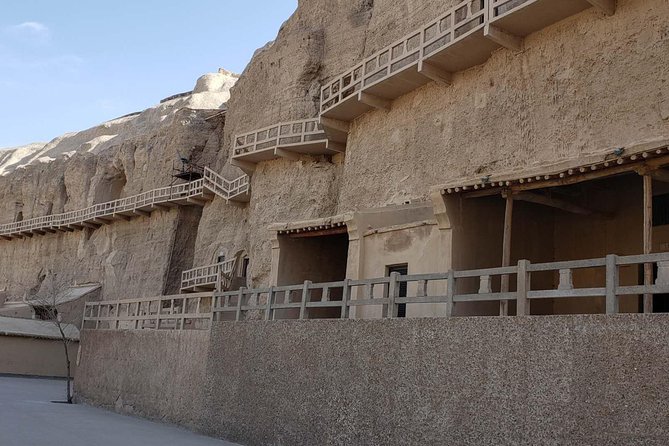
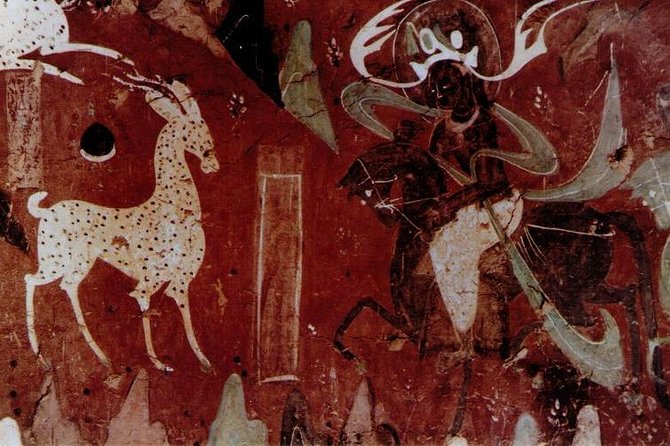
The Mogao Caves are the cultural centerpiece of the first half of the tour. The complex contains 492 grottoes, around 45,000 square meters of murals, about 2,400 painted statues, and more than 250 former residential caves.
You first visit the Mogao Caves and Digital Film Center for about four hours. The film center is useful because it gives you background before you enter the cave complex. Inside, the experience is about close looking: painted figures, religious scenes, color, and the small details preserved across centuries.
The exact caves open to you can vary, so do not expect to see all 492 grottoes. Still, the scale of the site explains why a guided visit is valuable. You can spend your time noticing the artwork instead of trying to work out the layout and historical setting by yourself.
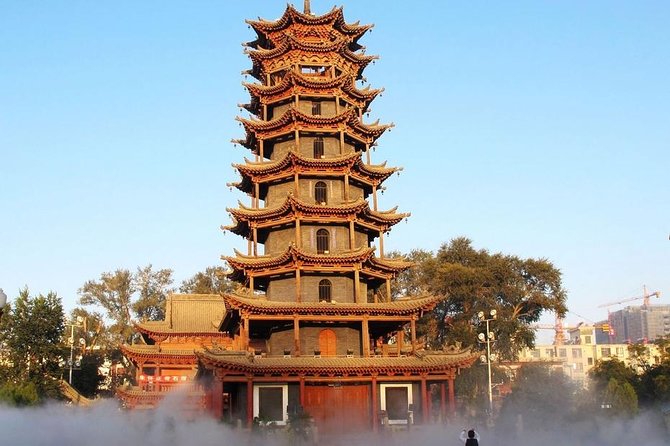
After lunch, you visit the White Horse Pagoda. The stop lasts about 30 minutes and works as a short, quieter contrast to the Mogao Caves.
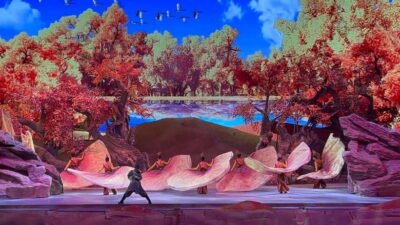
In the evening, the Silk Road dance drama at Dunhuang Theater is scheduled for about two hours. It is not available from November through March, so the winter version of the tour has a different rhythm. Check the operating season before you commit if the show is important to you.
This is a full day, but it is one of the strongest on the trip. The cave visit gives you serious cultural depth, while the evening performance offers a more theatrical interpretation of the region.
Day 3: Han frontier walls and the Singing Sand Dunes
Day 3 moves from Buddhist art to military history and desert scenery. At Yumen Pass, you see part of the old frontier system connected with the Han Dynasty. The Han built walls in this region to protect the frontier and support routes toward the western regions.
The visit to Yumen Pass and the Han Great Wall lasts about two hours. This is a remote, open setting rather than a polished city monument. You should expect the value to come from the location and the sense of distance, not from a large collection of indoor displays.
After lunch, the focus changes completely. Mingsha Shan, also called the Echoing Sand Mountain or Singing Sand Dunes, leads you to Crescent Moon Spring. The stop lasts about three hours and includes a camel ride in the dunes.
The camel ride is optional in the practical sense that you can choose how much you want to participate, but the tour description presents it as part of the desert experience. Ask your guide about the day’s exact arrangements. Sand, sun, and walking make this a day when water, sun protection, and sensible shoes matter.
Crescent Moon Spring is the visual counterpoint to the dunes. You get open desert, a water source, and the old travel routes that made Dunhuang important. It is one of the more memorable combinations on the itinerary, though the desert portion may feel tiring if you are not comfortable walking or riding in sand.
Same city, a completely different day:
- From Beijing: Mutianyu Great Wall Tours with Options
★ 4.9 · 9,216 reviews - Beijing: Forbidden City Tour(Group/Private)-Tickets Included
★ 4.8 · 7,974 reviews - Beijing: T-Square & Forbidden City Group or Private Tour
★ 4.8 · 4,446 reviews - Beijing: Mutianyu Great Wall Daily Tour with Ticket & Lunch
★ 5.0 · 3,056 reviews
Day 4: Yulin Caves and Suoyangcheng
Yulin Caves are often described as a sister site to Mogao because of shared origins, artistic style, and painting traditions. The visit lasts about two hours, giving you another look at Buddhist cave art after the larger Mogao complex.
I like the placement of Yulin Caves. You have already had an introduction to Mogao, so you can compare the two sites instead of treating them as isolated attractions. At the same time, two cave visits in close succession may feel similar if your main interest is scenery rather than art.
After lunch, you visit Suoyangcheng, a former Silk Road stop that was listed by UNESCO in 2015. The ruins are scheduled for about two hours, followed by a transfer to Guazhou.
This is a good day for understanding how the route worked as a network. The caves show religious exchange and artistic movement. Suoyangcheng shows the settlement side of the same system, with a former stop positioned along an important east-west route.
The day also includes another long transfer, so expect the vehicle time to be part of the experience. The private air-conditioned transport and included bottled water are especially useful here.
Day 5: Jiayuguan Pass and the Overhanging Great Wall
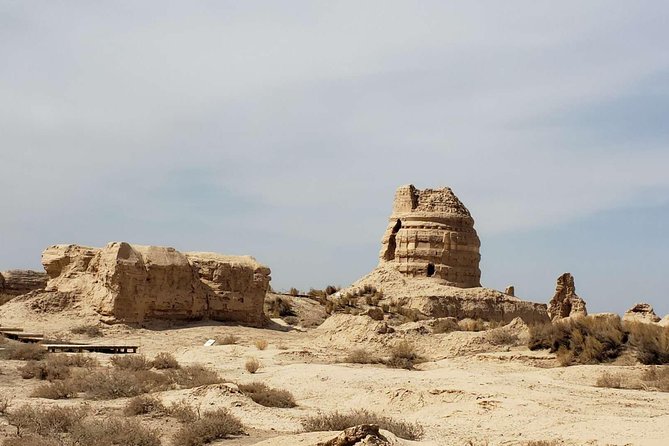
You travel by bus to Jiayuguan and visit Jiayuguan Pass and the Great Wall Museum. Jiayuguan Pass is presented as the western end of the Ming Dynasty Great Wall, giving this stop a different period and setting from the Han frontier walls near Dunhuang.
The visit lasts about two hours. A museum stop helps place the fortifications in context, while the pass itself gives you the strongest sense of a defended gateway on the route.
Later, you climb the Overhanging Great Wall for about 90 minutes. This is not a gentle museum visit. You should expect stairs and an uphill walk, though the itinerary does not provide a detailed difficulty rating.
The two wall sites work well together. Jiayuguan Pass shows the formal gateway and defensive complex. The Overhanging Great Wall gives you a more active visit and a wider view from above. If you have limited mobility, discuss this day in advance. Wheelchair support is available for the tour, but the climbing portion may still require adjustment.
Day 6: Zhangye Danxia and painted tomb bricks
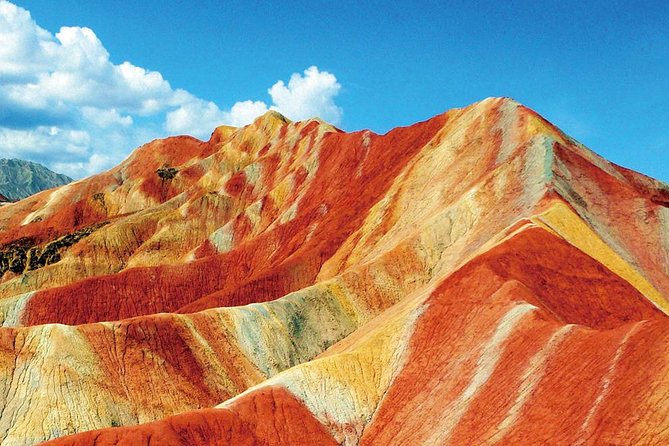
The sixth day is the longest scheduled sightseeing day, with about eight hours at Zhangye Danxia Geopark. The red, orange, and other colored rock formations are among the trip’s major visual highlights.
The itinerary also refers to painted bricks from Wei and Jin Dynasty tombs. These images cover political, economic, military, and cultural subjects. That pairing gives you both natural scenery and a record of daily and public life from an earlier era.
You should expect a full day. Zhangye Danxia is not a quick roadside stop, and the total time allows for movement through the park and the related historical visit. Ask your guide to confirm the exact order of these stops, since the description combines them in one day.
This is one of the best days for people who want variety but do not want to choose between nature and history. The drawback is simply fatigue. After several days of cave visits, desert sites, and long transfers, an eight-hour schedule can feel demanding.
Day 7: Zhangye’s Giant Buddha and Horse Hoof Temple
The route turns back toward religious art with the Dafo Temple in Zhangye. It is described as home to the biggest Nirvana Buddha in Asia. The scheduled visit is about one hour.
The Giant Buddha gives you a different experience from the Mogao and Yulin Caves. Instead of a broad cave complex, the focus is a major temple image and the space around it. The short visit makes it easy to fit into the day, though you may want to confirm how much time is allotted to each site.
The itinerary also includes the Horse Hoof Temple Grottos, known for deity horse footprints. These grottos add another layer to Zhangye’s Buddhist sites and connect art with local religious tradition.
Because the listed time for Day 7 is brief, ask how the Giant Buddha Temple and Horse Hoof Temple are divided. If both are important to you, you will want the day’s schedule spelled out clearly before departure.
Day 8: Pingshanhu Grand Canyon and onward travel
The final morning takes you to Pingshanhu Grand Canyon. The supplied details do not give a visit length, so you should confirm the morning timing with the operator.
After lunch, you transfer to Zhangye Airport or Zhangye Railway Station. The tour company can help book high-speed train tickets, which is useful if you are continuing to another Chinese city.
The final transfer is one of the itinerary’s practical strengths. You finish in Zhangye rather than looping back, and the guide can help connect the tour with your next leg.
What the $2,199 price includes
At $2,199 per person, this is a substantial purchase. The value depends on how much you would otherwise need to arrange yourself.
Included are seven nights of accommodation, local guiding, an air-conditioned vehicle, airport or port pickup and drop-off, bottled water, and seven breakfasts, lunches, and dinners. The scheduled attractions list admission tickets as included. You are also paying for a private format, not a large shared coach group.
The meals are useful in a region where menu choices and restaurant logistics can add daily friction. They also let you sample local food without making every meal a research project. Still, ask what drinks and extras are included if you have a strict budget.
The price makes the most sense for a small group that values convenience, private transport, and a fixed route. It may be less attractive to a solo visitor who prefers independent rail travel or to someone who wants free afternoons.
The tour has earned a 100 percent recommendation rate from 16 published ratings, with repeated praise for organization, clean and comfortable buses, hotel locations, food variety, and prompt communication. Steven Kang is specifically named as a professional and proactive organizer who helped shape longer Gansu routes for some groups. That is useful if you want help beyond the standard eight-day plan.
Who should book this Silk Road trip
I would choose this tour if you want to see the major Dunhuang, Jiayuguan, and Zhangye sights without arranging every transfer, meal, hotel, and admission yourself.
It suits:
- Small private groups
- First-time visitors to western China
- People interested in Buddhist art and Silk Road history
- Families needing infant-seat support
- Visitors who value an English-speaking tour structure and direct airport or rail transfers
- People comfortable with full sightseeing days and long road transfers
It may not suit you if you want a slow holiday, nightlife, independent food choices, or a very flexible schedule. The desert and Great Wall stops also require some walking, and the eight-hour Zhangye day is not a light one.
Confirmation is normally provided at booking, though reservations made within three days of departure may take up to 48 hours and depend on availability. Children must travel with an adult, and all participants need a current passport on the day of the tour.
Should you book it?
Book it if you want a well-organized private route through the Hexi Corridor, especially if Mogao Caves, desert scenery, Great Wall sites, and Zhangye Danxia all belong on your must-see list.
Before paying, confirm the hotel names, the exact cave access, the Day 7 timing, the winter replacement for the Silk Road show, and the details of any optional desert activities. If those points suit you, the $2,199 fee buys a lot: seven nights, 21 included meals, private transport, a guide, and a carefully connected chain of major western China sites. Cancellation is free up to 24 hours before the start time, subject to the stated weather and timing rules.
FAQ
How long is the tour?
The experience lasts approximately eight days and includes seven nights of accommodation.
Where does the tour begin and end?
It begins with pickup at Dunhuang Airport or Dunhuang Railway Station. On the final day, you are transferred to Zhangye Airport or Zhangye Railway Station.
Are meals included?
Yes. Seven breakfasts, seven lunches, and seven dinners are included.
Is this a private tour?
Yes. Only your group participates in the private tour or activity.
Is the Silk Road show available all year?
No. The Dunhuang Theater Silk Road show is not available from November through March.
What information is needed when booking?
Passport name, passport number, passport expiry date, and country are required for all participants. You should also advise the operator about vegetarian meals or other dietary requirements when booking.
New reviews from China
- Shanghai: 3-Hour Old Shanghai City Tour★ 4.9 · 45 reviews
- Sichuan: Big Panda Volunteer Day tour★ 4.4 · 10 reviews
- Nanjing:Must-See Attractions in One Day+Customized Itinerary★ 5.0 · 3 reviews
- Mutianyu Wall, Summer Palace & Old Summer Palace Day Tour★ 4.8 · 34 reviews
- Night Market Haggling Adventure with an English Guide!★ 4.8 · 7 reviews
- BusDa-Mutianyu Great Wall&Forbidden City Full-day Coach Tour★ 4.9 · 11 reviews
- Mutianyu Great Wall Ticket with Roundtrip Cable Car★ 5.0 · 20 reviews
- Nanjing: Night Cruise on Outer Qinhuai River for Adults★ 4.0 · 4 reviews
Silk Road Tours, compared.
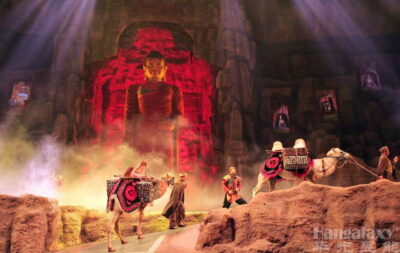
Xi’an Silk Road: Legend of Camel Bell Show Ticket w/Transfer
Read our review →