
Reviewed · HUTONG TOURS
Private Hutong Tour: Prince Gong’s Palace, Drum & Bell Tower
Beijing’s old city comes into focus on this private six-hour tour, which links the Drum and Bell Towers, Prince Gong’s Mansion, and the hutongs around Shichahai. I like the mix of imperial architecture and ordinary neighborhood life, and I like that a private guide can adjust the pace instead of rushing a group from one sight to the next. The main catch is that transportation is not included, so you pay for taxis or public transit as you go.
I also like the strong focus on explanation. Guides such as Henry and Tony have been praised for clear English and detailed coverage of late Qing history, while Catherine Lu Tours has earned praise for easy communication and competitive pricing. You should still expect a fair amount of walking, stairs at the towers, and a six-hour outing that works best with comfortable shoes.
Key points to know before booking
- Three very different sides of old Beijing: See imperial power at Prince Gong’s Mansion, ceremonial timekeeping at the towers, and daily life in the hutongs.
- Private guiding keeps the pace flexible: Your group travels with its own English-speaking guide rather than joining a large shared party.
- A live drumming performance adds sound and motion: The Drum Tower is not only a viewpoint and historic building.
- Shichahai brings the tour back to street level: Walk beside the lakes and through old residential lanes after the formal sights.
- Admission is covered, but transportation is not: Budget separately for public transit or taxis, plus any food, drinks, or rickshaw ride.
- The route lasts about six hours: Choose an 8 a.m. or 1 p.m. start, and plan your day around the substantial walking time.
Why this route gives you more than a palace visit
Beijing can feel like a city of grand gates and enormous squares. This tour takes a smaller-scale route through the old center, where a former princely estate gives way to drumbeats, lakes, alleyways, and courtyard homes.
That change of setting is the best reason to book. You are not spending the entire day inside one major monument. Instead, you see how imperial Beijing, public ceremony, and local neighborhood life fit together.
I especially like the contrast between Prince Gong’s Mansion and Shichahai. The mansion shows how an elite Qing household lived behind formal walls. The hutongs show a more human scale, with narrow lanes and old-style homes arranged around courtyards. The Drum and Bell Towers add another layer, explaining how the city once marked the hours.
Because this is a private activity, you can ask questions as they occur to you. That matters in Beijing, where a building can look beautiful at first glance but become far more interesting once you understand who used it, how it functioned, and what changed over time.
Other old-lane walks in Beijing:
- Beijing Hutong Walking Food and Beer Tour at Hidden Restaurants
★ 5.0 · 1,132 reviews - Temple Heaven, Summer Palace, Lama Temple, Hutong Bus Tour
★ 4.7 · 319 reviews - Temple of Heaven, Summer Palace, Lama Temple, Hutong Tours
★ 5.0 · 311 reviews
Starting at the Drum and Bell Towers
The day begins with pickup in your hotel lobby at either 8 a.m. or 1 p.m. You then travel by public transportation or taxi to the hutong area near the Drum and Bell Towers. The transport cost comes from your own pocket, so keep some budget aside for this first connection and later movements.
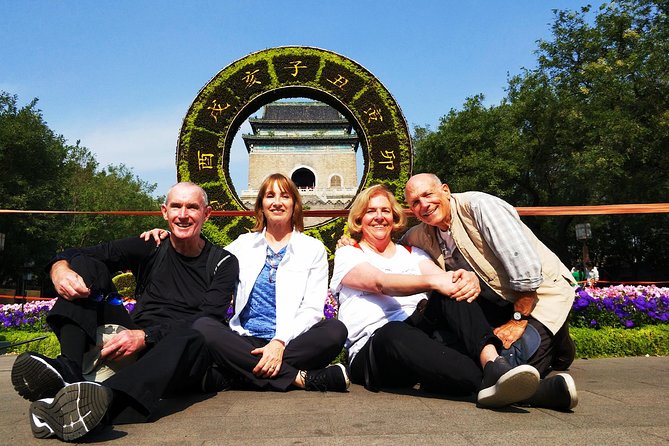
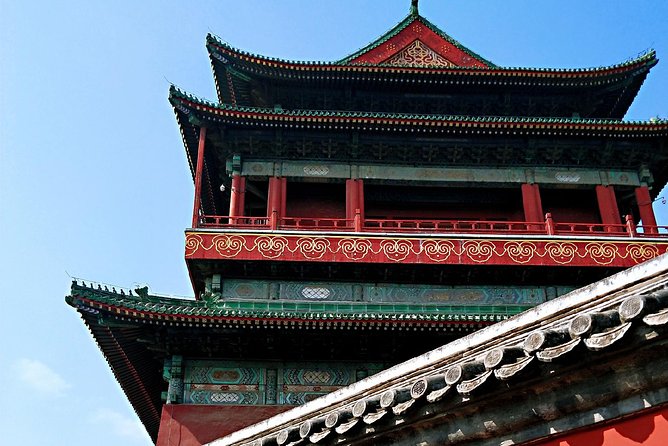
The towers are a strong opening because they give you both history and a sense of place. The Drum Tower is associated with the traditional marking of time in Beijing, and the route includes a live drumming performance. That performance helps turn an old building into something you can hear and feel, rather than simply photograph.
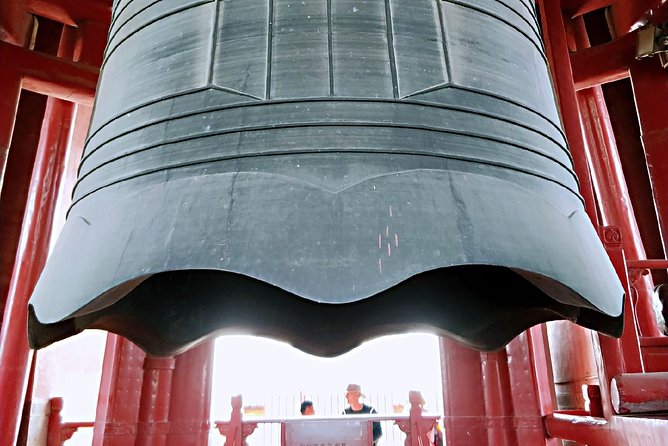
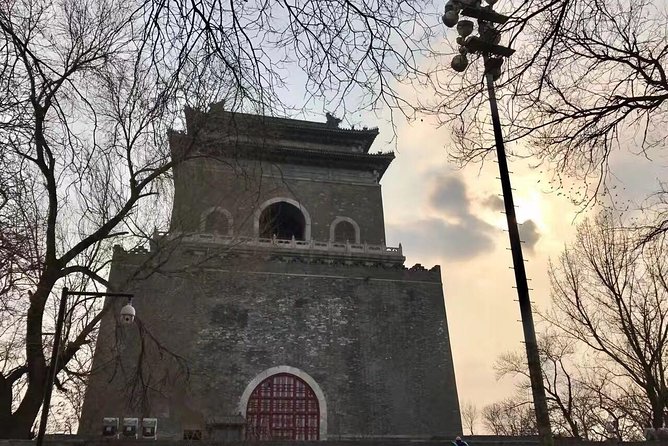
You also visit the Bell Tower. Together, the two structures form one of the old city’s most recognizable historic pairs. The towers offer views from above, which can help you understand the hutong districts spreading around them. The climb is part of the experience, but stairs may be tiring for some people, so comfortable footwear is important.
Allow about one hour here. That is enough time for the towers, the performance, the views, and a short explanation from your guide. It is not a long museum visit, and the tour does not pretend otherwise. You get a focused introduction before moving into the larger mansion complex.
Prince Gong’s Mansion and the late Qing court
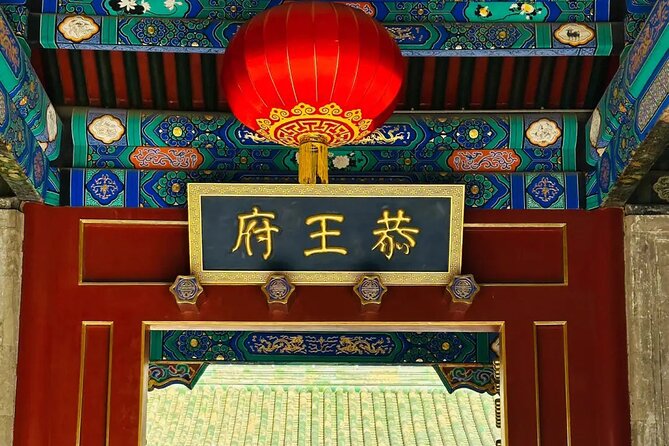
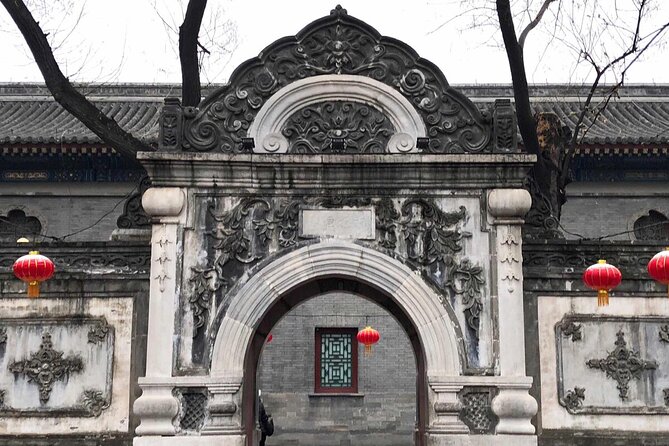
The central stop is Prince Gong’s Mansion, also called Gong Wang Fu. You spend about two hours here, and that longer time is justified. This is one of the best-preserved Qing Dynasty princely residences in Beijing, and its scale gives you a clearer idea of how elite life was organized.
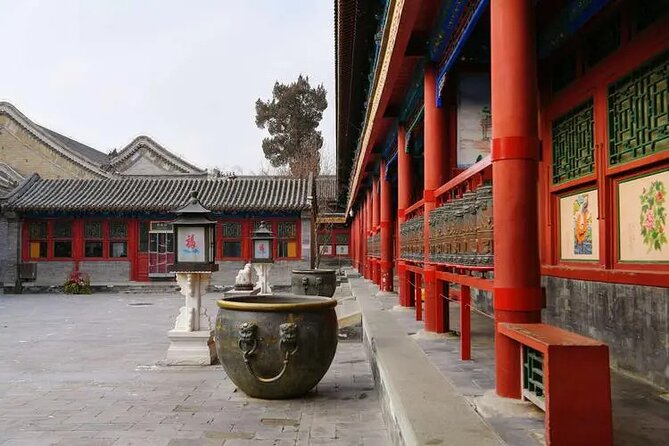
A visit here is not just about ornate buildings. The complex was used by several families, so it offers a useful example of a typical princely mansion and household arrangement. Your guide can help connect the courtyards, halls, gardens, and residential areas to the social order of the period.
Tony has been praised for his command of late Qing history, clear English, and plain-spoken explanations. That style suits this stop. Palace and mansion grounds can blur together after a few days in Beijing, but a guide who explains the people and politics behind the rooms gives the visit a sharper focus.
The mansion is also a good place to slow down. Instead of racing through a list of buildings, you can ask about Qing society, the people who lived there, and how the estate functioned. With a private guide, your group can spend more time on the parts that interest you most, within the allotted visit.
You should expect a substantial amount of walking across the grounds. The admission ticket is included, which makes the $115 price easier to assess, especially for visitors who want context rather than a simple entrance and photo stop. Still, the value depends on your group. If you are comfortable arranging historic-site visits on your own and reading independently, you may find a private tour expensive. If you want a guide who can make sense of the setting, the fee is more reasonable.
Walking the hutongs around Shichahai
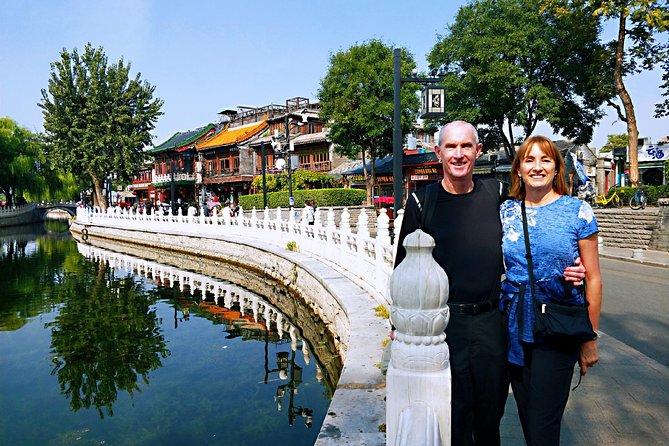
After the mansion, the route moves toward Shichahai and its old lanes. The area includes Front Lake, West Lake, and Rear Lake, surrounded by traditional Beijing houses and hutongs.
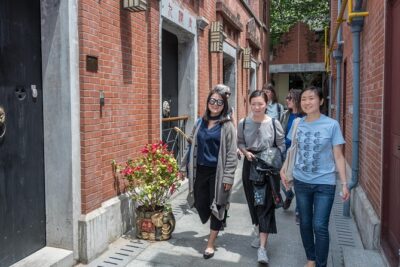
This is where the day becomes less formal. The towers and mansion represent public and elite Beijing. The hutongs show the city at street level, with narrow passageways and courtyard homes that reveal how older residential districts were laid out.
Your guide can help you notice the relationship between the lakes, lanes, and houses. Without that context, you might simply see a pleasant walk near the water. With an explanation of the area’s old housing pattern, you gain a better sense of how Beijing once worked as a collection of close-knit neighborhoods.
The Shichahai section lasts about one hour. It is free of an additional admission charge, but it is not filler. This walk balances the grand scale of the mansion and the height of the towers. It also gives you room to look around, ask questions, and see a part of Beijing that can be missed if you stick to major ticketed attractions.
The route may include uneven pavement, steps, and extended walking. The provider advises comfortable walking shoes, and that is practical advice rather than a formality. You should also dress for the weather because the experience operates in all conditions.
A few more days out in Beijing worth the ticket
- Beijing: Forbidden City Tour(Group/Private)-Tickets Included
★ 4.8 · 7,974 reviews - Beijing: T-Square & Forbidden City Group or Private Tour
★ 4.8 · 4,446 reviews - Beijing:Mutianyu Great Wall Private Trip with English Driver
★ 5.0 · 1,263 reviews - Private Mutianyu Great Wall Trip with English-Speaking Driver
★ 5.0 · 927 reviews
What the private format changes
The private format is the tour’s main advantage. Only your group participates, so you do not have to match the pace of strangers or wait for a large party to gather around every explanation.
That flexibility is useful at Prince Gong’s Mansion, where some people want detailed historical background and others mainly want to see the buildings and gardens. It also helps in the hutongs, where you may want to pause for a closer look or ask how the old neighborhoods relate to modern Beijing.
A private guide cannot remove every practical issue. You still pay for transportation, and the route uses public transportation or taxis rather than including a dedicated vehicle. If you prefer a fully bundled outing with transport handled in advance, this arrangement may feel less convenient.
On the other hand, using local transportation keeps the day connected to the city around you. You are not sealed inside a tour vehicle from one attraction to the next. For visitors who want a more local feel and do not mind paying transit costs separately, that is a worthwhile trade.
The two start times also help. The 8 a.m. option gives you a full afternoon afterward. The 1 p.m. option suits a slower morning and carries the route into the later part of the day. The total duration is about six hours, so neither option is a quick add-on.
How the guides shape the experience
The quality of a history tour depends heavily on the person leading it. The strongest feedback here focuses on the guides’ command of Beijing’s history, their English, and their pleasant, direct manner.
Henry has been praised for explaining the areas visited and for making the mansion and towers easier to understand. Tony’s strength is late Qing history, with clear English and an erudite but plain style. Catherine Lu Tours has also been described as easy to work with, with prices that compare well against similar private outings.
Guide assignments can vary, so you should not assume a particular person will lead your booking unless the company confirms it. Still, these names show the level of guiding the operator has provided on this route.
I would choose this tour for someone who enjoys asking questions. The route contains enough architectural detail for a visual sightseeing day, but its real value comes from the stories behind the sites. If you only want a driver and a series of photo stops, you may not get the full benefit.
Is $115 per person a fair price?
At $115 per person, this is not a budget walking tour. The price includes the English-speaking guide and entrance tickets to the sights, but not transportation, meals, drinks, personal expenses, or a rickshaw ride.
The value improves if you are traveling with family or friends and want a private day without building the route yourself. You are paying for a guide’s time, site admissions, local route planning, and the ability to move at your own pace. Group discounts may also be available, so larger private parties should ask about the final rate.
The value is weaker if you are a solo visitor counting every expense, especially since taxis or public transit come separately. You might spend less by visiting the sites independently, but you would need to arrange tickets, navigation, and historical background on your own.
For many visitors, the best comparison is not the ticket price alone. Ask how much you value clear explanation at Prince Gong’s Mansion and the hutongs. If those details matter, the private format earns its cost. If you mainly want to see the exteriors, an independent visit may be enough.
Who should book this Beijing history tour?
This outing suits first-time visitors who want a guided introduction to old Beijing beyond the largest central attractions. It also works well for families and small groups who want to keep their own pace.
History-minded visitors will get the most from the mansion and the late Qing background. Architecture fans will enjoy the formal residences, towers, courtyards, and old homes. People interested in everyday city life will likely value the Shichahai hutong walk most.
The tour may be less suitable if you want a relaxed day with little walking. Six hours is a substantial commitment, and the route includes towers, a large historic residence, lakeside paths, and old lanes. You should also consider the extra transport costs before booking.
Children must be accompanied by an adult, and most people can participate. Since the tour runs in all weather, dress appropriately for the forecast and wear shoes that can handle a long day on foot.
Booking, cancellation, and practical details
Confirmation is provided when you book. Hotel pickup and drop-off are offered, but the actual transportation during the tour is not included, so clarify the meeting arrangement and carry enough money for public transit or taxis.
Food and drinks are not included. You may want to eat before the tour or plan a meal around its six-hour length, but no meal stop is specified as part of the experience. A rickshaw ride is also optional and costs extra.
Free cancellation is available if you cancel at least 24 hours before the local start time. Cancellations or changes made inside that window are not refunded or accepted, so keep your plans firm once the deadline passes.
Should you book it?
Book this tour if you want Beijing explained as a living old city, not just a collection of famous buildings. The combination of the Drum and Bell Towers, Prince Gong’s Mansion, and Shichahai gives you a useful spread of imperial, ceremonial, and neighborhood life.
I would especially recommend it to small groups that value a private guide and to visitors who enjoy history told in clear, conversational English. Henry and Tony represent the kind of strong guiding this route can offer, with particular praise for late Qing history and easy explanations.
Think twice if you want all transport and meals bundled into the price, or if six hours of walking sounds too demanding. At $115 per person plus transport, this is best viewed as a focused private history day. For the right group, it offers more context and flexibility than simply checking the same sights off a map.
FAQ
How long does the private hutong tour last?
The experience lasts about six hours.
What start times are available?
Pickup is offered at either 8 a.m. or 1 p.m.
Which sights are included?
The route includes the Drum Tower, Bell Tower, Prince Gong’s Mansion, and the hutongs around Shichahai.
Are admission tickets included?
Yes. Entrance tickets to the sights are included in the tour price.
Is transportation included?
No. You travel by public transportation or taxi, and those costs are paid separately.
Is a rickshaw ride included?
No. A rickshaw ride is not included and costs extra.
Is this a private activity?
Yes. Only your group participates.
Can I cancel for a full refund?
Yes, if you cancel at least 24 hours before the experience’s local start time. Cancellations made less than 24 hours in advance are not refunded.
New reviews from Beijing
- Private Transfer to Mutianyu Great Wall with professional driver★ 5.0 · 19 reviews
- One day tour to downtown Tianjin from Beijing by high speed train★ 5.0 · 3 reviews
- camp on the Great Wall overnight with sunrise and sunset on the wall★ 5.0 · 11 reviews
- ZANBUS: Trip to the Jinshanling Great Wall Departing at 7:30 AM★ 5.0 · 5 reviews
- BusDa:Ancient Great Wall &Badaling Great Wall Full-day Bus Tour★ 4.5 · 6 reviews
- Yuxiandu Chinese Royal Cuisine Museum with Show and Royal Banquet★ 5.0 · 4 reviews
- Wild Great Wall Hikes★ 5.0 · 10 reviews
- Wild Great Wall Huanghuacheng Half Day Tour★ 5.0 · 15 reviews
Hutong Tours, compared.

Beijing Hutong Walking Food and Beer Tour at Hidden Restaurants
Read our review →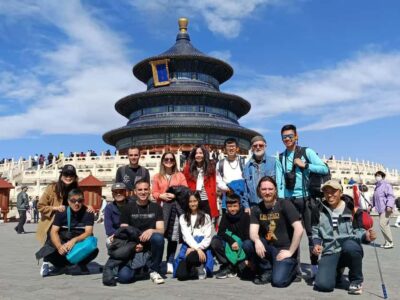
Temple Heaven, Summer Palace, Lama Temple, Hutong Bus Tour
Read our review →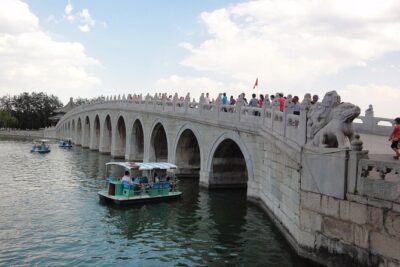
Temple of Heaven, Summer Palace, Lama Temple, Hutong Tours
Read our review →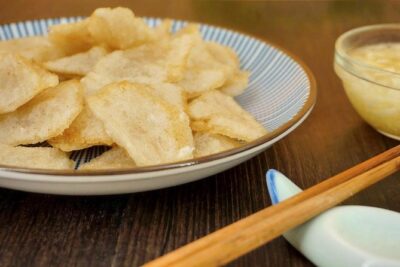

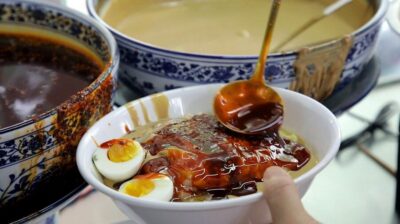
Beijing City Walk: Explore Hutongs Life and Old Beijing
Read our review →Browse the lists this tour appears in