
Reviewed · HUTONG TOURS
Beijing: Hutong Culinary Walking Tour with 15+ Tastings
Beijing’s Hutongs are best understood one small bite at a time. This private walking tour leads you through quiet lanes and local eateries while you sample more than 15 foods, from sesame cakes and soup dumplings to hot pot, lamb skewers, and baijiu. The food is the main event, but the neighborhood stories give each stop a useful sense of place.
I like the way the guide can adjust the route for your appetite and comfort. I also like the sheer variety: you can move from a sweet rice cake to a spicy bowl of malatang, then finish with Xinjiang lamb skewers and naan bread. The main consideration is quantity. Arrive very hungry, because three hours of small tastings can add up to a full meal, or several.
Key points to know before you book
- 15-plus tastings in three hours: Expect a grazing-style meal spread across several local food stops.
- A flexible private tour: Your guide can favor familiar classics or offer bolder choices such as intestines, fried liver, or thousand-year-old egg.
- A Hutong setting: The walk through traditional Beijing lanes adds neighborhood context between meals.
- English-speaking local guides: Guides including Jimmy, Lucy, Anson, Mike, Miko, Andy, Allen, Jay, May, and others lead the experience.
- A strong first-day activity: The tour helps you recognize dishes and eating customs early in your Beijing stay.
- Optional hotel transfer: Pickup and drop-off are available if you choose that option.
Why a Hutong food walk works so well in Beijing
A restaurant meal gives you a dish. This tour gives you a pattern of eating.
You move from one modest local stop to another, trying a few bites at each place instead of sitting down for one large order. That format is useful in Beijing, where menus can be hard to read and unfamiliar dishes often arrive without much explanation. Your guide can identify what you are eating, explain how it is served, and help you decide how adventurous to be.
The setting matters, too. The tour begins at Dongsi Subway Station Exit B, then heads into Hutong lanes. These narrow residential alleys offer a look at a more local side of Beijing, with food shops and neighborhood businesses close to the street. The guide also talks about Hutong life, food traditions, and basic eating etiquette as you walk.
I would consider booking this early in your stay. Several guides have helped first-time visitors get comfortable with Chinese food, from ordering unfamiliar vegetables at hot pot to recognizing snacks they might later seek out on their own. It is a practical introduction, not just an evening of eating.
Other old-lane walks in Beijing:
- Beijing Hutong Walking Food and Beer Tour at Hidden Restaurants
★ 5.0 · 1,132 reviews - Temple Heaven, Summer Palace, Lama Temple, Hutong Bus Tour
★ 4.7 · 319 reviews - Temple of Heaven, Summer Palace, Lama Temple, Hutong Tours
★ 5.0 · 311 reviews
Starting at Dongsi and getting your bearings
The meeting point is Dongsi Subway Station Exit B. You can arrive by subway, taxi, or optional private transfer from your hotel. If you take a taxi, the suggested Chinese destination is 请带我去东四地铁B出口附近, which means take me near Dongsi Subway Station Exit B.
Your guide waits with a sign bearing your name. The tour is offered as a private group, so the pace can be more personal than on a large shared outing. That is useful when you have a vegetarian in the group, children, food dislikes, or a particular wish to try something unusual.
The walk starts with Hutong stories before the serious eating begins. Expect your guide to discuss the area, local food customs, and how people eat different dishes. Guides such as Lucy have also added language and city-history notes along the way, while Anson and Andy have been praised for explaining how regional Chinese cuisines connect with Beijing food.
The exact route and stops change from day to day. That is worth understanding before booking. You are not buying a fixed list of restaurants with guaranteed dishes. You are buying a guide-led food walk that responds to what is open, what fits your preferences, and what you have already eaten.
Sesame cakes, fried dough, and the sweet side of Beijing
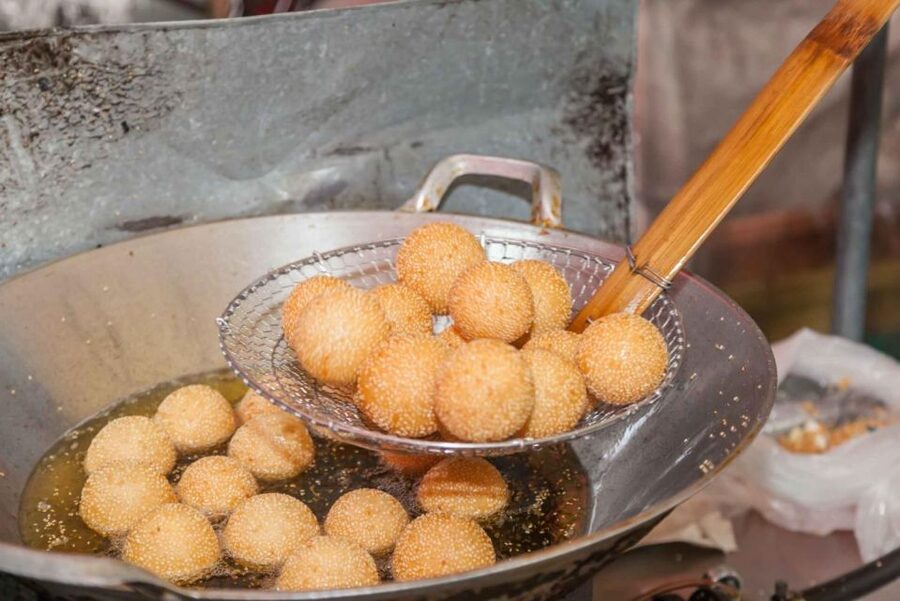
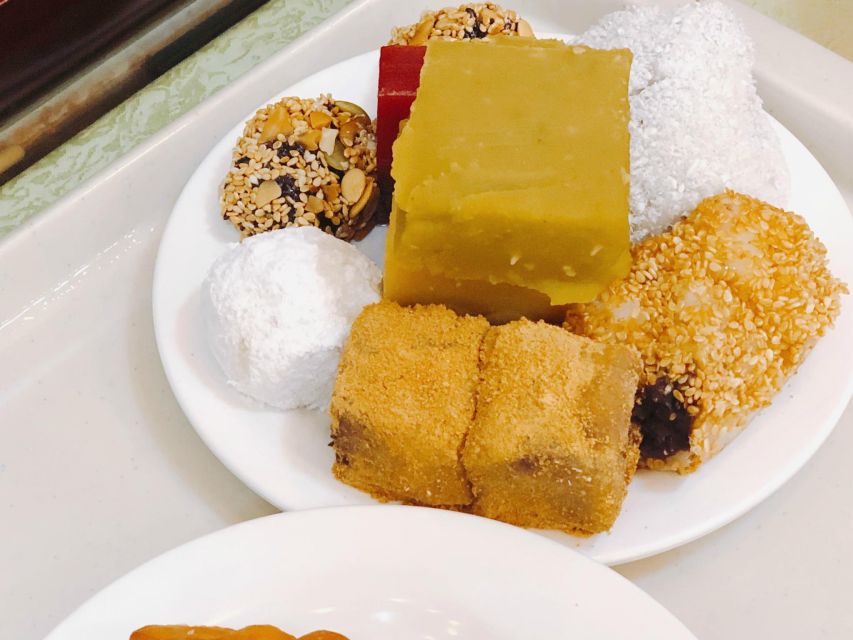
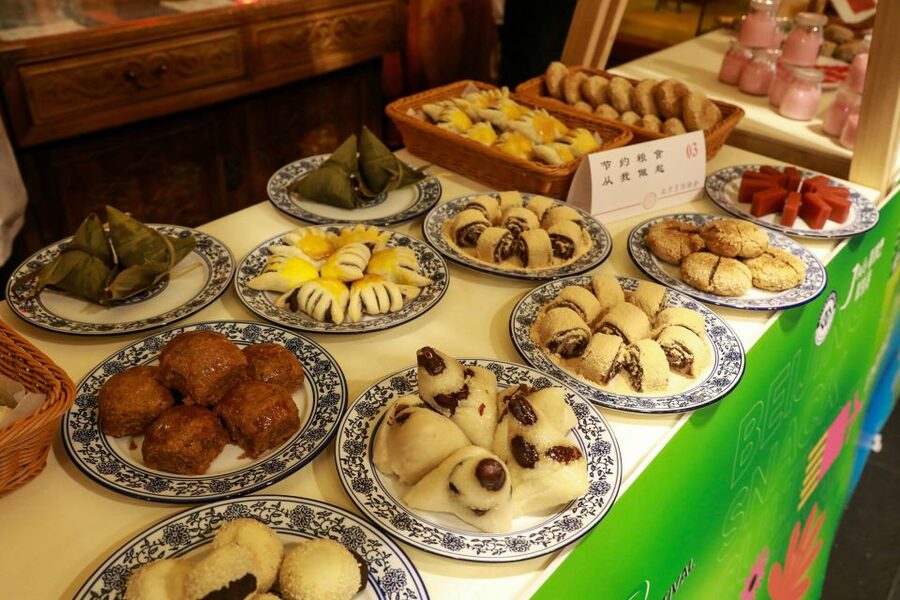
The opening foods may include sesame cakes, ma hua, fried dough twists, and steamed rice cakes with sweet fillings. These are simple-looking foods, but they show how much Chinese snacking depends on texture.
Sesame cakes can be sweet, often with honey, while ma hua gives you a crisp, fried pastry with a twist. Steamed rice cakes offer a softer contrast and may come with sweet stuffing. You might also try other Beijing pastries or local snacks selected by the guide.
This part of the tour is friendly to cautious eaters. The flavors are generally easier to approach than some of the more unusual options later. I like having these familiar entry points before the tour moves into spicy soup, organ meats, or strong liquor.
The amount can still surprise you. A tasting does not always mean one tiny sample. A pancake, dumpling order, pastry, or bowl of soup can be filling, especially when several stops arrive close together. Pace yourself from the beginning.
Jianbing and the appeal of street-style food
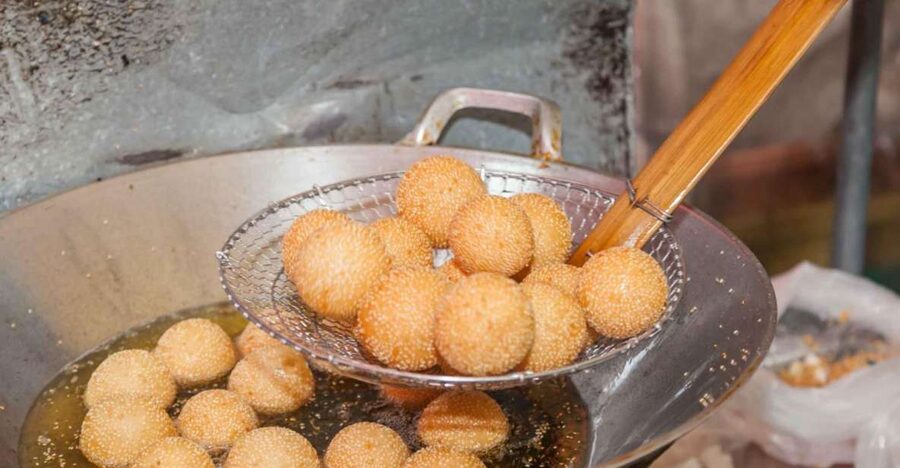
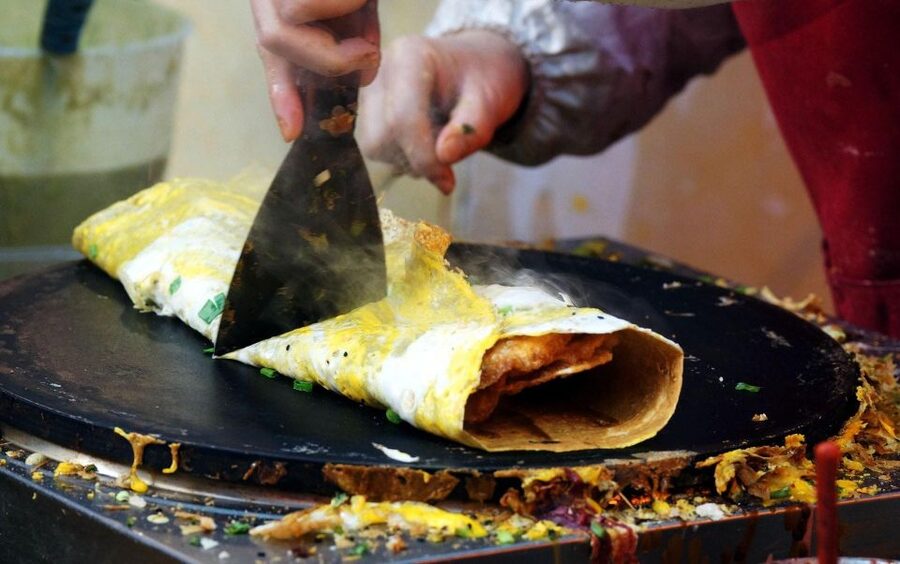
Jianbing, a fried savory pancake, is one of the most useful foods to encounter on a Beijing food tour. It is quick, filling, and closely tied to everyday eating. The tour may also include a crispy fried ring, another common household-style snack.
These foods help you see the difference between special-occasion dining and ordinary city meals. They are not presented as formal restaurant dishes. They are the sort of foods people can eat as part of a normal day, often bought quickly and eaten warm.
One useful part of having a guide is learning how to handle unfamiliar textures and fillings. The guide can point out what is inside, suggest the best way to eat it, and explain how the snack fits into local food habits. This is especially helpful if you are trying to order similar food on your own later.
Stop locations vary, so do not count on one named stall or exact vendor. The value is the explanation and the chance to try the style of food in a local setting.
Other walks around Beijing:
- Private Beijing Walking Tour of the Forbidden City with 7 Options
★ 5.0 · 675 reviews - Forbidden City Private Walking Tour with Optional Sights
★ 5.0 · 400 reviews - Beijing Private Hutong Food Walking Tour
★ 5.0 · 299 reviews - Beijing City Walk: Explore Hutongs Life and Old Beijing
★ 5.0 · 146 reviews
Dumplings, noodles, and soup with a regional accent
Soup dumplings are often a highlight of the route. They require a little care, since the filling and broth can be hot. Your guide can show you how to approach them without making a mess, then explain what makes the dish different from other dumpling styles.
The tour may also include cross-bridge rice noodles, a dish from Yunnan Province. Its presence is a reminder that Beijing food is not limited to northern specialties. China’s regional cooking traditions appear side by side in the capital, and a food walk can show that variety in a single evening.
Several food stops may be close together, which keeps the walking manageable and leaves more time for eating and conversation. One detailed account described hand-made noodles, dumplings, pastries, and a made-to-order soup with vegetables, tofu, and egg. That gives you a sense of the range, though the exact combination depends on the day.
I would ask your guide early if you have already eaten a certain dish elsewhere in Beijing. The route can be adjusted, and the guide may replace a familiar stop with something new.
Malatang: a hot bowl built to your taste
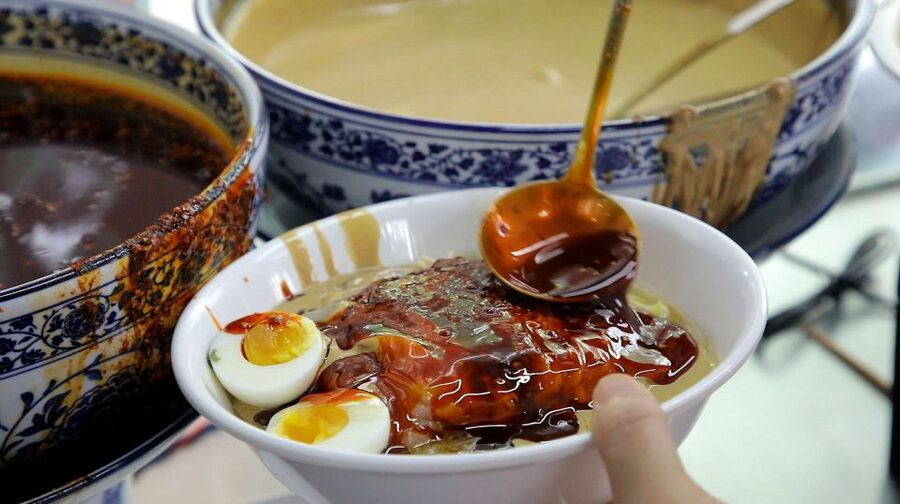
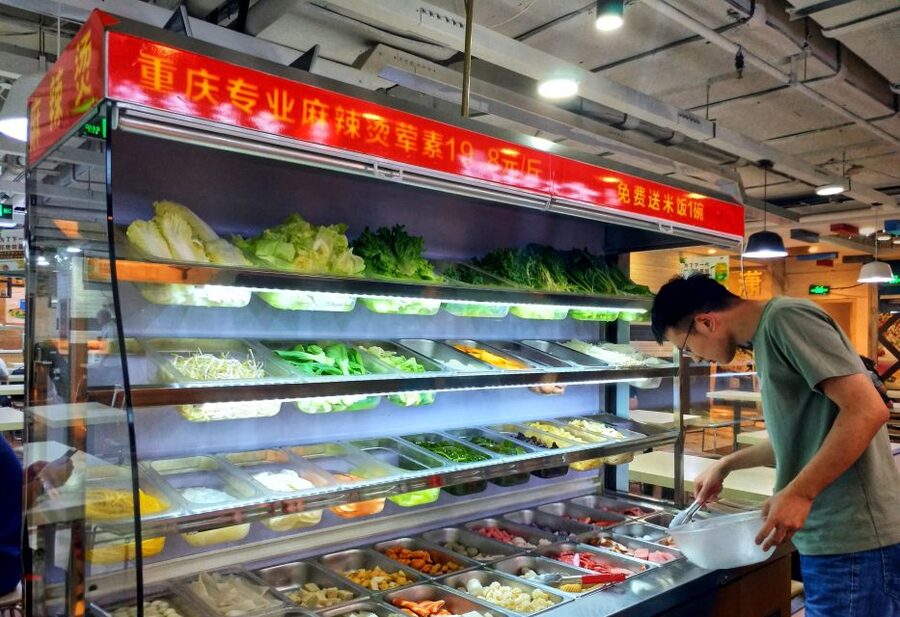
Malatang is one of the more interactive stops. It uses a spicy hot-pot broth with a choice of ingredients that can include vegetables, meats, seafood, and noodles. Rather than receiving one fixed plate, you may select from a range of items for the bowl.
This is a good moment to tell your guide how much spice you want. The supplied details do not promise a specific spice level or a particular selection each day, so explain your limits before the order is made. The guide can also help identify ingredients if you are unsure.
For many people, this becomes the most educational food stop. You see how a soup is assembled and how ingredients with unfamiliar names look before they reach the bowl. One family with a vegetarian child received suitable vegetarian dishes, and other groups had substitutions for foods they did not want to try.
Malatang can also be filling. If it arrives after dumplings, pancakes, and pastries, you may need to slow down. The tour is designed as a feast, not a series of tiny museum samples.
Lamb skewers, naan, and a taste of Xinjiang
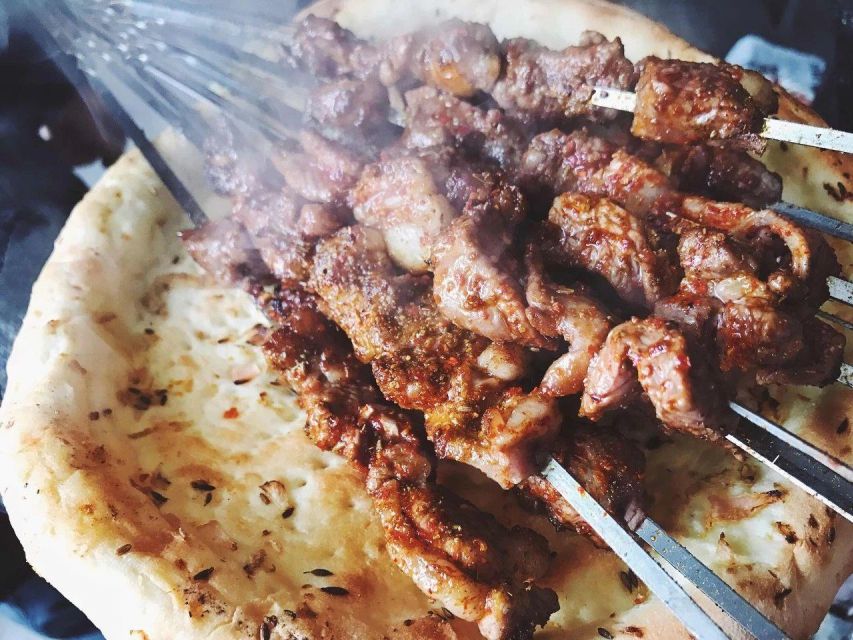
The final savory section may include Xinjiang lamb skewers, vegetable kabobs, and nang bread. The skewers bring smoky, grilled flavors and a different regional influence from the Beijing snacks earlier in the walk.
This stop works well near the end because it feels substantial. Lamb, bread, and vegetables make a satisfying finish to the savory food, though you may still have desserts or drinks ahead. If you enjoy grilled food, this is likely to be one of your safer choices.
The guide can explain the regional connection and help you understand how food from across China appears in Beijing. You get more than a list of dishes. You get a sense of how the capital’s food scene draws from different parts of the country.
Again, treat the lamb and bread as real food, not a token taste. You may leave very full, especially if you tried every stop.
How adventurous should you be?
The standard route can include baijiu, a clear Chinese liquor usually ranging from 35 to 60 percent alcohol by volume. It may also offer more unusual choices such as donkey burger, fried liver, intestine soup, thousand-year-old egg, or bamboo worm.
These are optional adventure foods. You can tell your guide if you want classic bites only, or if you would like to push beyond the usual menu. You can also ask for a substitute if an ingredient is not appealing. One group chose an alternative instead of intestines, while another unexpectedly enjoyed pig liver and intestines.
I like this approach because it avoids turning unfamiliar food into a dare. You remain in control of what goes into your bowl. The guide’s job is to explain the dish and help you decide, not to pressure you.
Use sensible restraint with baijiu. The stated alcohol range is high, and the tour includes many food stops over several hours. If you do not drink, make that clear at the start. Bottled water and local soft drinks are included.
The guides make the difference
The food route changes, but the guide is the constant. The most frequently praised guides include Jimmy, Lucy, Anson, Mike, Miko, Andy, Allen, Jay, and May. Names are assigned according to availability, so you may not receive a specific person unless the operator confirms that in advance.
Jimmy has led families with children and adjusted dishes for a vegetarian child. Lucy has been praised for explaining food, language, Hutong life, and local history while also helping with dietary needs. Anson is known for detailed food and culture explanations, careful communication, and tailoring the tour to the group.
Mike, Miko, Andy, Allen, and Jay have also led groups through local restaurants and snack stops, with an emphasis on explaining daily life and culinary customs. The strongest part of the experience is not simply that these guides speak English. It is that they help you ask better questions and make sense of what you are eating.
If you have allergies, strong dislikes, or dietary restrictions, contact the provider and repeat the information to your guide at the meeting point. The experience can adjust preferences, but the provided details do not promise that every dietary restriction can be accommodated.
What the $76 price buys you
At $76 per person, this is not the cheapest way to eat in Beijing. You can buy individual snacks for very little money. The price makes more sense when you count the guide, the private format, the 15-plus tastings, bottled water, soft drinks, and three to four hours of walking and eating.
You are also paying to remove guesswork. Without a local guide, you may pass small restaurants without knowing what to order, how much to buy, or what a dish contains. Here, the guide handles that work and creates a route that links food with the neighborhood.
The value is strongest for first-time visitors, people staying only a few days, and anyone who wants a broad introduction rather than one formal dinner. It is less attractive if you already know Beijing’s food scene, prefer to eat slowly in one restaurant, or want a guaranteed menu with fixed prices for every dish.
Hotel pickup and drop-off are available with the appropriate option. If you meet at Dongsi Subway Station, the subway keeps the starting point straightforward. The activity lasts three to four hours, so check the available starting times and avoid scheduling another major activity too tightly afterward.
Practical advice for a better evening
Eat lightly for several hours before the tour, but do not arrive dehydrated. You will cover many foods, and the guides themselves advise arriving hungry.
Wear comfortable shoes. The experience includes a Hutong walk between food stops, and the lanes may be uneven or crowded with local activity. Keep your group together near restaurant entrances and follow your guide through the neighborhood.
Tell the guide what you want during the first few minutes. Say if you prefer classic Beijing snacks, want vegetarian choices, have already eaten dumplings, or hope to try the more unusual dishes. The route is flexible enough to make that conversation useful.
Also, leave room for surprise. A food tour works best when you accept that the exact stops can change. The trade-off is less certainty, but the reward is a more responsive evening.
Cancellation is free up to 24 hours before the activity for a full refund, and you can reserve now and pay later. English is the stated tour language.
Who should book this Hutong food tour?
I would choose this for a first evening in Beijing, especially if you want help reading the city through its food. It suits couples, families, and private groups with mixed appetites because the guide can adjust the selection.
It is also a good fit for adventurous eaters who want to try intestine soup, fried liver, baijiu, or bamboo worm without ordering blindly. Cautious eaters can still enjoy the classic pancakes, dumplings, pastries, noodles, hot pot, and grilled lamb.
I would hesitate if you need a fixed itinerary, require a strictly controlled menu, or dislike moving between several small food stops. The tour is generous with food, but that also means a long evening of eating. Book it when you want local guidance more than restaurant formality.
FAQ
Where does the tour meet?
The meeting point is Dongsi Subway Station Exit B. Your English-speaking guide waits with a sign bearing your name.
How long does the experience last?
The tour lasts about three to four hours, with roughly three hours devoted to walking and eating around the Hutong neighborhood.
How many foods are included?
More than 15 food tastings are included. The exact dishes and restaurant stops vary by day.
What foods might I try?
Possible foods include sesame cakes, ma hua fried dough twists, soup dumplings, Beijing jar yogurt, cross-bridge rice noodles, jianbing, crispy fried rings, sweet steamed rice cakes, malatang, Xinjiang lamb skewers, nang bread, and vegetables.
Are unusual foods available?
Yes. Adventure options may include donkey burger, fried liver, intestine soup, thousand-year-old egg, and bamboo worm. These are optional, and bamboo worm is at your own cost.
Can the tour accommodate food preferences?
The guide adjusts stops according to your preferences and can offer classic foods or bolder choices. You should explain dietary needs and dislikes to the guide at the start.
Is hotel pickup available?
Hotel pickup and drop-off are available if you choose the private transfer option. Otherwise, you meet at Dongsi Subway Station Exit B.
Can I cancel the booking?
You can cancel up to 24 hours in advance for a full refund. Reserve now and pay later is also available.
Should you book it?
Book this tour if you want a guided introduction to Beijing food, especially near the start of your visit. The combination of Hutong walking, 15-plus tastings, flexible choices, and local conversation gives you a useful first look at how people eat in the city.
At $76, the cost is justified by the amount of food and personal guidance, not by any one snack. Go hungry, tell your guide what you want, and expect the menu to change. If that sounds like the right kind of food adventure, Fun Beijing Travel offers a strong way to begin eating your way through Beijing.
New reviews from Beijing
- Night Market Haggling Adventure with an English Guide!★ 4.8 · 7 reviews
- Mutianyu Wall, Summer Palace & Old Summer Palace Day Tour★ 4.8 · 34 reviews
- BusDa-Mutianyu Great Wall&Forbidden City Full-day Coach Tour★ 4.9 · 11 reviews
- Mutianyu Great Wall Ticket with Roundtrip Cable Car★ 5.0 · 20 reviews
- Mutianyu Great Wall Bus Trip+Ticket 7/8/9/10/13/13:30/15:30★ 4.7 · 24 reviews
- Mutianyu Great Wall Entry Ticket Chairlift Up Toboggan Slide★ 4.9 · 8 reviews
- Mutianyu Great Wall 5-KM Guided Hike with Uphill Cable Car★ 4.8 · 16 reviews
- Mutianyu Great Wall Admission Ticket★ 3.6 · 7 reviews
Hutong Tours, compared.
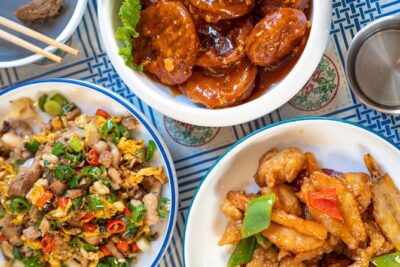
Beijing Hutong Walking Food and Beer Tour at Hidden Restaurants
Read our review →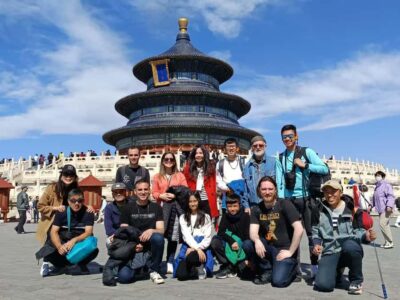
Temple Heaven, Summer Palace, Lama Temple, Hutong Bus Tour
Read our review →
Temple of Heaven, Summer Palace, Lama Temple, Hutong Tours
Read our review →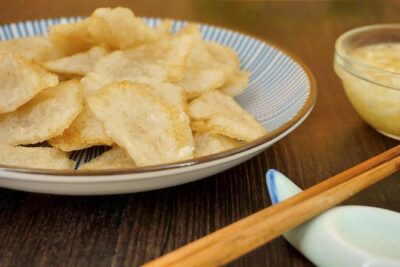

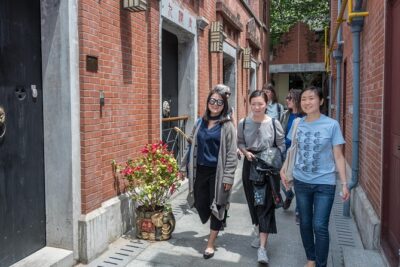
Beijing City Walk: Explore Hutongs Life and Old Beijing
Read our review →
Browse the lists this tour appears in