
Reviewed · TOURS IN BEIJING
3-Hour Private Night Tour: Beijing Foodie Experience
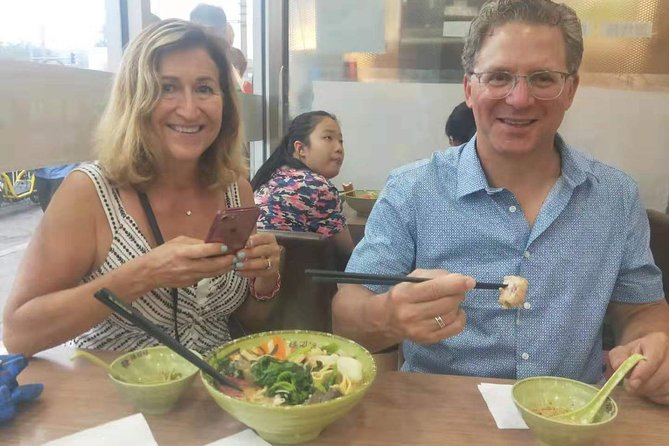
Beijing’s best food often arrives in small portions from modest shops tucked along old alleyways. This evening tour takes you through Dongsi Hutong and nearby streets for a steady run of lamb kebabs, savory pancakes, sesame cakes, noodles, steamed buns, sweets, and local drinks. It is less a formal dinner than a moving meal with a guide who helps you order and explains what is on the table.
I like the private format, since your guide can slow down for an older parent, adjust dishes for vegetarian diners, or explain unfamiliar foods at your pace. I also like the way the route mixes eating with hutong walks, giving you a look at everyday Beijing life rather than keeping you inside one polished restaurant.
The main drawback is the sheer amount of food. You may visit close to ten small eateries and leave very full. Some dishes are unusual, and a few stops may close early, so the exact food lineup can change.
Key points to know before booking
- Expect a full evening of tasting: Lamb kebabs, tanjianbing, baozi, sesame cakes, cold noodles, rice cakes, yogurt, tanghulu, and more may appear.
- Your guide handles the hard parts: Guides such as Lucy, Kevin, Roy, Miko, Bella, and Jimmy have been praised for ordering help, cultural explanations, and friendly pacing.
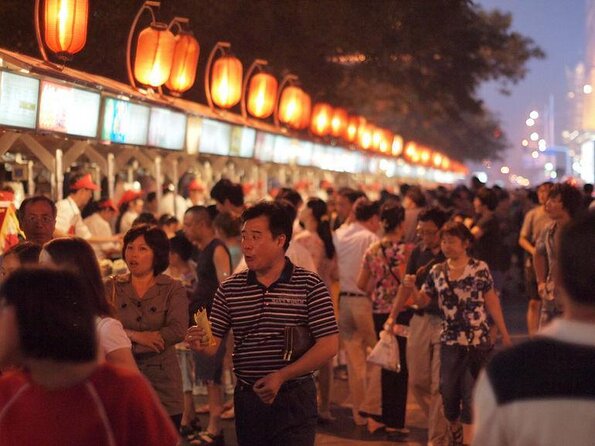
- The setting is part of the meal: You walk through Dongsi Hutong, LongFuSi Jie, and Zhangzizhong Street between food stops.
- Transport needs checking: Central hotel pickup is free, but taxi or public transport to the hutong is generally at your own cost unless you select private transport.
- Vegetarian diners can participate: Tell the operator about dietary needs when booking.
- Budget about three hours: The tour costs $79.20 per person, before any stated transport charges or optional food purchases.
Why this Beijing food tour works best at night
Night gives this experience its character. Beijing’s hutongs are more atmospheric after the day’s heat has faded, and food stalls, small restaurants, and snack shops become the focus. You are not simply being taken to one famous dish. You move from place to place, tasting how different foods fit into daily life.
I appreciate the broad range. The menu moves from grilled meat and drinks to fried pancakes, filled pastries, noodles, rice cakes, fermented dairy, and sweet snacks. That variety helps you understand Beijing food as a collection of regional and street traditions rather than one signature meal.
The private setup matters here. At a crowded snack shop, ordering can be confusing if you cannot read the menu or do not know how much to buy. Your guide can choose portions, explain ingredients, and ask about your preferences. That is especially useful if one person in your group is adventurous and another prefers familiar flavors.
You should still arrive hungry. The portions are reported to be generous, and the tour can include more stops than you expect. Think of lunch as a light meal on tour day.
Other food worth going out of your way for in Beijing:
- Beijing Hutong Walking Food and Beer Tour at Hidden Restaurants
★ 5.0 · 1,132 reviews - Beijing: Hidden Gems Guided Food Tour with Beer and Tastings
★ 4.9 · 306 reviews - Beijing Private Hutong Food Walking Tour
★ 5.0 · 299 reviews
Meeting your guide and reaching Dongsi Hutong
The guide meets you in your hotel lobby if you are staying inside central Beijing. From there, you travel together to the hutong area by taxi or public transportation, with the cost generally paid separately. A private vehicle can be selected as an option.
This is an important detail when judging the $79.20 price. The food and guiding are included, but transport may add about $5 per person according to the supplied details. The wording also lists a transport charge from the hotel to the hutong, so I would confirm the exact amount and transport choice before booking.
The meeting arrangement is convenient because you do not need to find a restaurant in an unfamiliar neighborhood. Guides have also handled metro or taxi travel for guests, including Roy, who accompanied one group by metro. If you prefer to end in the food district and continue exploring, you can do that. Your guide can give directions or help you find a taxi back to the hotel.
Dongsi Hutong: food with a sense of place
The first part of the evening introduces Dongsi Hutong and the surrounding old alleyways. The walk is not a separate sightseeing tour, but it adds useful context to the food. You get a feel for the lanes, local restaurants, and neighborhood rhythm between tastings.
I like this combination because the meal does not feel staged. You are moving through streets where people live and eat, then stopping at small places that may be difficult to locate or order from on your own. Several guides have been praised for adding stories about hutong life and Beijing culture while walking between restaurants.
This is also where a private guide can make the route more comfortable. Kevin, for example, was described as keeping an elderly guest’s pace and checking food preferences before ordering. That sort of attention is more useful than a memorized speech, particularly if your group includes children, older adults, or anyone with limited walking stamina.
The exact order of stops can vary. The route information places the main tasting area around LongFuSi Jie and Zhangzizhong Street, with Dongsi Hutong providing the neighborhood setting.
Xinjiang Taste Restaurant and the first round of kebabs
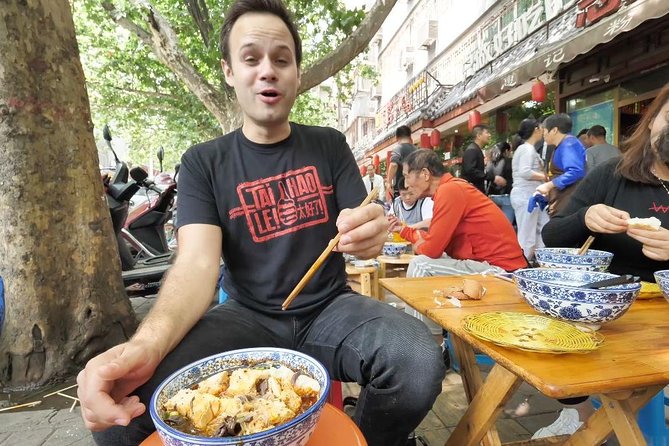
The first major food stop is Xinjiang Taste Restaurant. The specialty is lamb kebabs, with three to five types available. Side dishes may include eggplant, beans, garlic, leeks, and nang, the flatbread associated with Xinjiang cuisine.
This is a good opening course because grilled meat gives you an immediate, savory start. The different skewers let you compare seasoning and texture rather than eating one large portion of a single dish. The side dishes also help balance the meal.
Erguotou, a strong Chinese white liquor, is served here. You do not need to treat it as a drinking challenge. Ask for a small taste and let your guide explain its place in local food culture. If you do not drink alcohol, mention that when booking or at the start of the tour so the guide can adjust.
The Xinjiang stop also shows why this tour goes beyond a narrow Beijing menu. You are eating in Beijing, but the city’s food scene draws from many parts of China. That regional mix is one of the most interesting aspects of the evening.
Other trips that run after dark in Beijing:
- Great Wall at Gubeikou and Jinshanling Private Sunset Tour
★ 5.0 · 307 reviews - Private Night Sightseeing Tour of Beijing
★ 5.0 · 124 reviews - Beijing: Mutianyu Great Wall Tours–Tickets&Day/Night Options
★ 4.8 · 113 reviews - Beijing: Badaling Great Wall Ticket with Day & Night Options
★ 4.6 · 94 reviews
Tanjianbing and the snack streets around Zhangzizhong
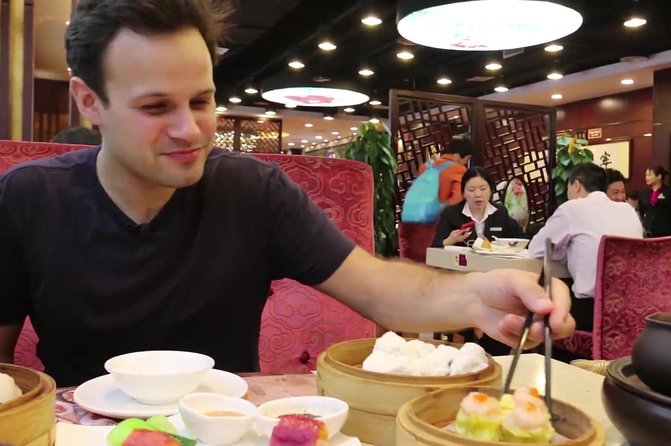
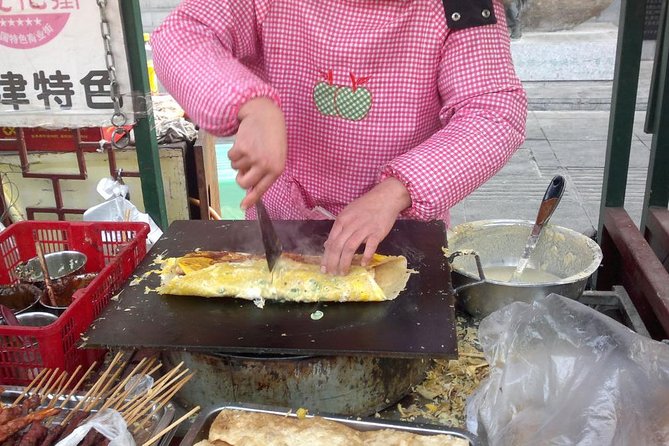
Next comes tanjianbing, a popular savory fried pancake. It is a street food classic, and the cooking method is part of its appeal: batter is spread on a hot surface, then combined with savory fillings and crisp elements. Your guide explains how to eat it and what goes into it.
From there, the tasting expands rapidly. Possible stops include sweet dough, sesame cakes, mahua, zongzi, baozi, Beijing jar yogurt, and tanghulu. Tanghulu is a local snack made with crabapple coated in a hard, sweet layer. The mix of salty, chewy, creamy, crisp, and sweet foods keeps the meal from becoming repetitive.
You may also receive a Beijing snack set with glutinous rice roll covered in sweet bean flour, yellow pea cake, steamed rice cakes with sweet filling, and seasoned millet porridge. These are the kinds of foods that can be hard to identify from a menu, so the guide’s explanations are valuable.
One practical point: the snack lineup is not guaranteed to be identical every night. One experience may include a sweet stop, while another may miss it because a shop has already closed. If a particular item matters to you, ask about it early in the tour rather than waiting until the end.
Sichuan skewers and Yunnan specialties
Another stop brings five to twelve Sichuan skewers, with a peanut beverage or orange soda. Sichuan food is known for strong seasoning, but the supplied information does not promise a fixed level of heat. Tell your guide if you want mild food or more spice.
The tour then shifts to a Yunnan restaurant. This is a useful change of pace after the grilled and fried foods. You may try flower cakes, cold pea cakes, grilled bread covered with rice flour, rice wine, plum liquor, and Yunnan-style Cross Bridge rice noodles.
Cross Bridge rice noodles are especially worthwhile because they offer a different style of Chinese noodle dish from the cold noodles or other snacks earlier in the evening. The Yunnan stop gives your guide another chance to explain how regional foods have become part of Beijing’s dining scene.
Adventurous eaters can purchase the restaurant’s specialty dish of fried bamboo worm at their own expense. This is optional, not a required part of the tour. If the idea does not appeal to you, there is plenty else to eat.
How much food will you actually eat?
Plan on a substantial meal. The route includes multiple restaurants and stands, and the tasting list is long enough to function as dinner for most people. You might sample several bites at each place, but those bites add up quickly.
I would avoid booking this after a large lunch. Come hungry, but do not arrive dehydrated or expecting to drink heavily. Erguotou, rice wine, and plum liquor may be offered, and you can simply taste them or skip them.
The format works well for groups with mixed appetites because a private guide can help manage ordering. Still, do not assume every dish will suit everyone. The point is to try unfamiliar foods, and some flavors or textures may not be to your liking.
Guide quality makes the biggest difference
The strongest part of this experience is the guide. Names associated with particularly positive experiences include Lucy, Kevin, Roy, Miko, Bella, and Jimmy. Individual assignments can change, so you may not receive one of these specific guides, but the qualities to value are clear.
A good guide does three jobs:
- Explains the ingredients and cultural background.
- Orders efficiently at places where communication may be difficult.
- Adjusts the pace and food choices to fit your group.
Lucy was especially praised for adding hutong walks and cultural insight. Kevin was noted for his humor and care with an elderly parent. Roy helped with hotel pickup and metro travel, while Miko provided useful explanations and good vegetarian choices. Bella was praised for finding restaurants that would be difficult to locate independently.
Those details tell me that the guide is not just a food server. The experience depends on having someone who can connect the dishes to Beijing life and help you make sensible choices.
Dietary needs, walking, and comfort
Vegetarian food is available, but you must advise the operator when booking. The tour includes meat, alcohol, dairy, gluten-containing foods, and unfamiliar ingredients, so clear communication is important.
Children under four can join free, and children must be accompanied by an adult. The tour is described as suitable for most people and near public transportation. It does involve walking between food stops, standing at shops, and moving through neighborhood streets, so comfortable shoes are sensible.
The private format helps if someone needs a slower pace. It does not remove every physical demand, since the evening still involves getting around the hutong and entering several food businesses.
Is $79.20 good value?
At $79.20 per person, the value depends on how much use you make of the guide. If you only want a few inexpensive snacks, you could spend less on your own. But doing this route independently would require finding the businesses, ordering without much menu help, managing transportation, and knowing which foods to try.
The tour includes the food tastings, a local guide, and hotel lobby pickup within central Beijing. Transport is separate unless you select the private vehicle option, and the bamboo worm dish is also extra. Those costs should be included in your comparison.
For first-time visitors, I think the price is easier to justify. The evening offers a large sample of foods and removes much of the guesswork. For repeat visitors who already know Beijing’s snack streets and can order comfortably, the private guiding may be less essential.
The private format also makes the price more reasonable for a small group. You are not sharing the evening with a large busload, and the guide can focus on your dietary needs and interests.
Who should book this experience?
I would choose this tour if you want:
- A first introduction to Beijing food beyond standard restaurant dishes.
- A private guide who can explain unfamiliar foods.
- A mix of hutong walking and eating.
- Plenty of small tastings rather than one fixed dinner.
- Help with vegetarian choices or mixed food preferences.
- A relaxed option for a family or small group.
I would think twice if you dislike strong flavors, do not enjoy trying unfamiliar textures, or want a carefully controlled meal with exact dishes. The route is generous and flexible, but that also means the experience can feel a little improvised.
The tour received a 4.8 rating from 53 reviews, with 96 percent recommending it. The most consistent strengths are the guides, the variety, the generous amount of food, and the chance to enter local restaurants you might not find alone. The weaker points are occasional closed stops and the lack of a clear backup plan in at least one illness-related situation.
Should you book the Beijing foodie experience?
Book it if food is one of your main reasons for visiting Beijing and you want a guide to do the ordering. You will get far more than a standard restaurant meal: lamb kebabs, fried pancakes, regional noodles, rice cakes, sweets, drinks, and an evening walk through old neighborhoods.
Before paying, confirm the hotel location, transport cost, dietary requests, and whether the current route includes the foods you most want to try. Arrive hungry, keep an open mind, and leave room for surprises. If you do that, this is a strong first-night introduction to Beijing’s local food culture.
FAQ
How long does the Beijing foodie experience last?
The tour lasts approximately three hours.
What does the tour cost?
The listed price is $79.20 per person.
Is the tour private?
Yes. Only your group participates in the private activity.
Is hotel pickup included?
A local guide meets you in your hotel lobby. Pickup is free if your hotel is inside central Beijing.
Is transportation included?
Taxi or public transportation from the hotel to the hutong is generally at your own expense. The supplied details list a transport charge of about $5 per person, and private transport may be selected as an option.
What food will be served?
Possible tastings include lamb kebabs, eggplant, garlic, leeks, nang, tanjianbing, sesame cakes, mahua, zongzi, baozi, Beijing jar yogurt, tanghulu, cold noodles, rice cakes, seasoned millet porridge, Sichuan skewers, flower cakes, Cross Bridge rice noodles, and other local snacks.
Is vegetarian food available?
Yes. A vegetarian option is available, but you must advise the operator when booking.
Can children join?
Yes. Children must be accompanied by an adult, and children under four can join free.
Is the fried bamboo worm included?
No. The fried bamboo worm is an optional specialty dish and must be paid for separately.
Can I cancel the tour?
You can cancel at least 24 hours before the start time for a full refund. Cancellations or changes made within 24 hours are not accepted for a refund.
Can I stay in the area after the tour?
Yes. You can continue exploring the area, and your guide can give directions or help you find a taxi back to your hotel.
New reviews from Beijing
- Mutianyu Wall, Summer Palace & Old Summer Palace Day Tour★ 4.8 · 34 reviews
- Night Market Haggling Adventure with an English Guide!★ 4.8 · 7 reviews
- BusDa-Mutianyu Great Wall&Forbidden City Full-day Coach Tour★ 4.9 · 11 reviews
- Mutianyu Great Wall Ticket with Roundtrip Cable Car★ 5.0 · 20 reviews
- Mutianyu Great Wall Bus Trip+Ticket 7/8/9/10/13/13:30/15:30★ 4.7 · 24 reviews
- Mutianyu Great Wall Entry Ticket Chairlift Up Toboggan Slide★ 4.9 · 8 reviews
- Mutianyu Great Wall 5-KM Guided Hike with Uphill Cable Car★ 4.8 · 16 reviews
- Mutianyu Great Wall Admission Ticket★ 3.6 · 7 reviews
Tours in Beijing, compared.
Forbidden City Tour(Group/Private)-Tickets Included
Read our review →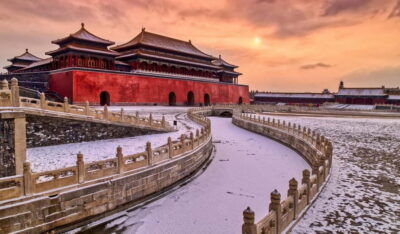
T-Square & Forbidden City Group or Private Tour
Read our review →
All-Inclusive Tour: Tiananmen Square, Forbidden City, Great Wall
Read our review →
MuBus: Mutianyu Great Wall ENG/ESP/RUS Guided Bus Tour
Read our review →
4-Hour Small Group Tour to Forbidden City with Entry Tickets
Read our review →
Beijing Full Day Tours: Tiananmen Sq, Forbidden City, Great Wall
Read our review →
Tianmen Square, Forbidden City & Royal Museum Tours
Read our review →Browse the lists this tour appears in