
Reviewed · TOURS IN SHENZHEN
200-year-old Hakka Residence Tour +Ancient Buddhist temple
Shenzhen is known for glass towers and fast trains, but this tour takes you to a very different side of the city: a 200-year-old Hakka residence with more than 300 rooms, followed by a peaceful Buddhist temple said to be 1,000 years old. It is a useful history lesson in a city where much of the older fabric has disappeared.
I like the chance to see original rooms, kitchens, furniture, and Confucian classrooms rather than only restored monuments. I also like the small group size and the river wetlands, which show how Longgang River was brought back from severe pollution. The main drawback is that this is a walking tour with no meal or bottled water included, so you need comfortable shoes and your own drink.
Key points at a glance
- A 25,000-square-meter Hakka residence: See the original layout of one of the largest old Hakka housing complexes in China, with more than 300 rooms.
- A working glimpse of imperial-era family life: Kitchens, furniture, and classrooms help explain how ordinary families lived and studied.
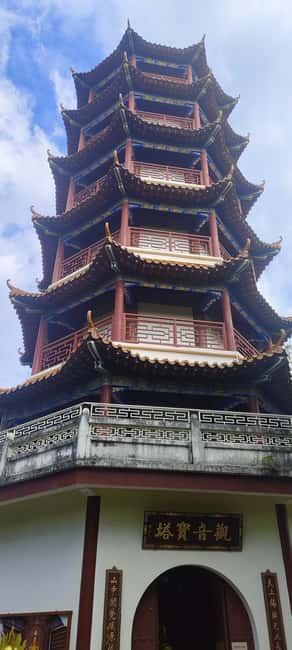
- A 1,000-year-old Buddhist temple: Walk among several monastery buildings and visit a pagoda dedicated to a female deity.
- Longgang River wetlands: See a natural river that was rehabilitated with wetlands after years of pollution.
- A very small group: The group is limited to five people, giving you room to ask questions.
- A simple half-day outing: Meet at Nanlian Metro station at 2pm, then travel between the sites with the guide.
Why this is a useful break from modern Shenzhen
Shenzhen changed from a small settlement into a major modern city in roughly three decades. That speed brought jobs, towers, roads, and new metro lines, but it also erased much of the older city. This outing gives you a way to see what existed before the current skyline.
The experience is not built around grand city attractions. Instead, it focuses on local life: where Hakka families lived, how children studied Confucian teachings, where food was prepared, and how people practiced religion. If you have already seen Shenzhen’s shopping centers and high-rise districts, the contrast is sharp and worthwhile.
The tour lasts about 2.5 hours. That is long enough to visit the three main areas without turning the day into a tiring full-day excursion. You will need to stay on your feet, though. The activity is described as a walking tour, and comfortable shoes are specifically recommended.
The meeting point is Nanlian Metro station, Line 3, Exit C1. From Luohu, the ride takes about 60 minutes by MTR. That travel time is part of the cost of reaching older sites outside the city center, so allow enough time to arrive promptly for the 2pm meeting.
What else travellers book in China:
- From Beijing: Mutianyu Great Wall Tours with Options
★ 4.9 · 9,216 reviews - Beijing: Forbidden City Tour(Group/Private)-Tickets Included
★ 4.8 · 7,974 reviews - Beijing: T-Square & Forbidden City Group or Private Tour
★ 4.8 · 4,446 reviews
Entering the Luo Clan residence
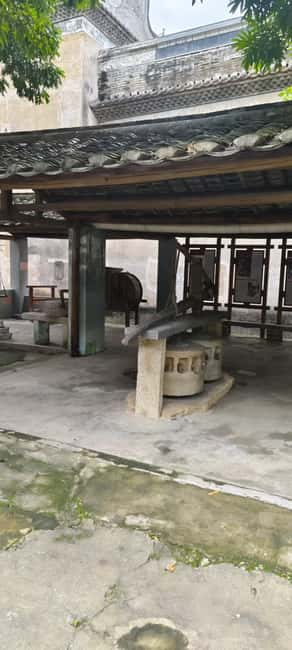
The Hakka housing complex is the main reason to book this outing. Built by the Luo Clan about 200 years ago, it covers more than 25,000 square meters and contains over 300 rooms. Its size helps you understand that this was not simply one large family house. It was a substantial community arranged around shared family and social life.
The Hakka people moved from central China toward the Shenzhen area about 500 years ago. The residence reflects that movement and the way Hakka families organized themselves after settling in southern China. You are not just looking at old walls. You are seeing how a community protected its family structure, customs, and daily routines.
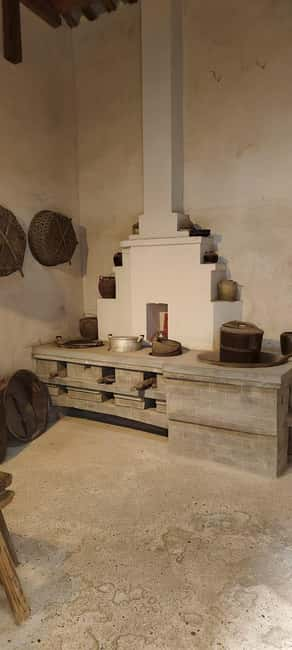
Inside, the original layout is still visible. Furniture remains in some rooms, and the old kitchen is intact. The kitchen is especially useful because it connects the building to ordinary work. Large historic residences can feel distant when you only see ceremonial rooms, but a kitchen tells you about cooking, storage, and the practical side of family life.
You can also see classrooms where children studied Confucianism. This detail gives the residence another layer. Education was not separate from family and social values. The classroom helps you picture children learning within the same complex where their relatives lived and worked.
The building is also good for photography. The historic structures, courtyards, rooms, and surviving furnishings provide plenty to look at, but I would keep your camera ready without letting it replace the explanation. The real value is understanding the layout and asking why different parts of the complex existed.
Your guide makes a difference here. Jimmy is specifically noted for his clear English, humor, patience, and enthusiasm for teaching Chinese history. A fellow guide may lead the tour instead, but the group is limited to five people, so you should have a chance to ask about the residence rather than simply follow a large crowd.
What the Hakka complex tells you about daily life
The word ancient can make a site sound grander than it feels. Here, the appeal is more direct. You can think about where a family cooked, where children learned, how rooms were arranged, and how a large clan shared space.
That makes the residence a good choice if you enjoy social history. You do not need a specialist background in Chinese architecture to appreciate it. The guide’s job is to connect the rooms to people and routines, and the small group format should make those explanations easier to follow.
The site may not suit you if you want a polished museum with extensive displays in every room. The attraction is the surviving structure and its original arrangement. Some visitors may find the experience less visually dramatic than a famous imperial palace, but the focus on ordinary life is exactly what gives it character.
I would also avoid expecting total solitude. This is a historical site in Shenzhen, not a remote rural settlement. The information provided does not promise quiet conditions at every point, so treat the visit as an active walking tour rather than a private architectural study.
A quiet stop at the 1,000-year-old Buddhist temple
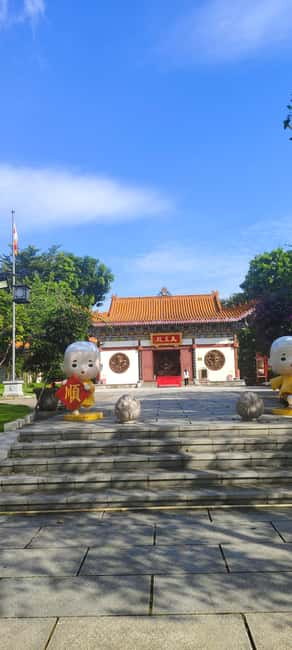
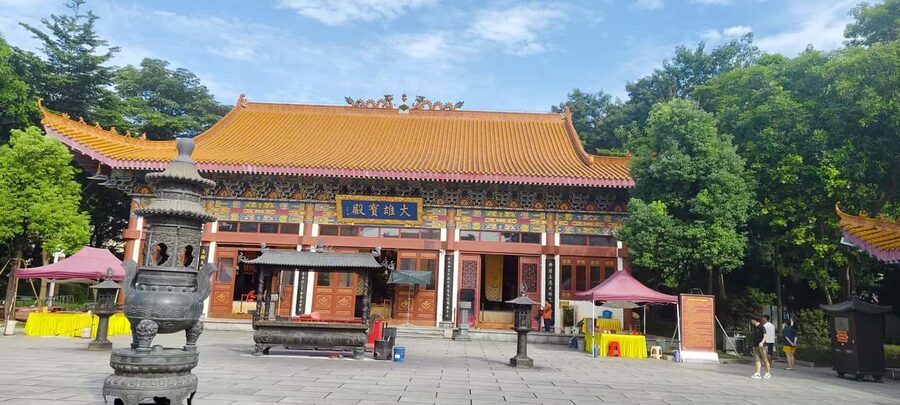
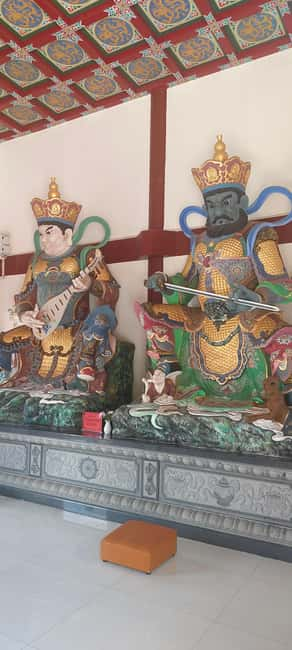
After the Hakka residence, the tour continues to a Buddhist temple with a history of about 1,000 years. The temple complex contains several structures, forming a monastery rather than a single isolated hall.
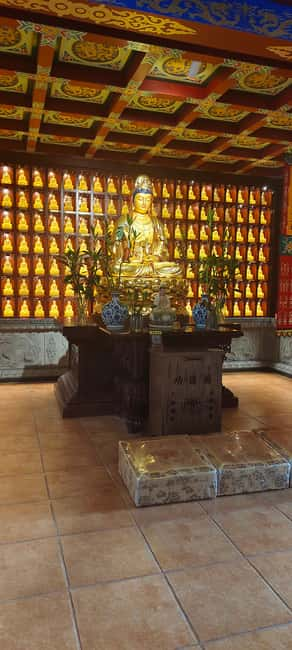
The mood changes here. The residence explains family life and education, while the temple offers a slower look at belief and local custom. You can walk around the buildings, take in the peaceful setting, and see the pagoda dedicated to a female deity.
The pagoda is also a place where local people pray for luck and good fortune. You can make a wish there if that feels meaningful to you, or simply observe the religious practice with respect. This is one of the more personal parts of the outing because it connects an old building to beliefs that continue in the present.
The temple has been renovated, so you should not expect every surface to be untouched for a thousand years. Renovation can reduce the sense of age, but it also helps keep the complex in use and gives you a safer, clearer place to walk. The contrast between the old religious setting and the restored structures is worth noticing.
The temple is well suited to anyone who wants a calm pause after the larger residence. It also adds variety. You are not spending the entire tour looking at one architectural type or hearing only about clan life.
Same city, a completely different day:
- Beijing: Mutianyu Great Wall Daily Tour with Ticket & Lunch
★ 5.0 · 3,056 reviews - All-Inclusive Tour: Tiananmen Square, Forbidden City, Great Wall
★ 5.0 · 2,873 reviews - MuBus: Mutianyu Great Wall ENG/ESP/RUS Guided Bus Tour
★ 5.0 · 2,361 reviews - 4-Hour Small Group Tour to Forbidden City with Entry Tickets
★ 5.0 · 1,863 reviews
Seeing Longgang River return as wetlands
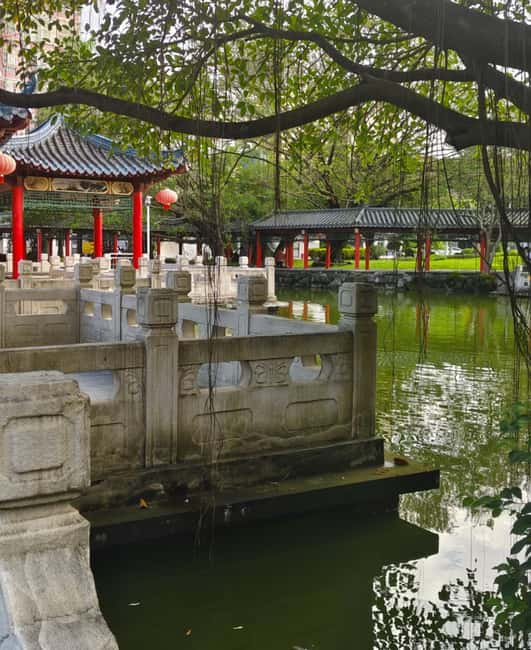
The final highlight is the Longgang River, a natural waterway that runs toward the Shenzhen River, the river separating Shenzhen from Hong Kong. The river was once among the most polluted in Shenzhen. During the past decade, wetlands were created to filter pollution and help return the waterway to a more natural state.
This part of the tour gives you a practical environmental story rather than another old building. You can see how wetland areas work as a form of natural filtration and how urban restoration can change the feel of a river corridor.
The river view may be the least structured part of the outing. There is no promise of a formal nature walk, wildlife program, or long riverside hike. Instead, you get a scenic stop and context about the river’s recovery. I like that it shows Shenzhen as a city dealing with the results of rapid growth, not just celebrating its modern success.
Bring your own water. Drinks and meals are not included, and walking in warm weather can make a bottle especially useful. The supplied information does not specify food stops, so eat before the tour or plan your meal for afterward.
What the $47 price gets you
At $47 per person, this is not the cheapest way to spend a few hours in Shenzhen. You could reach parts of the city by metro for much less. The value comes from combining transport between the sites with an English-speaking guide who explains places that would be harder to understand on your own.
You are paying for access to three different themes in one short outing: Hakka family life, Buddhist practice, and river restoration. The guide also saves you from having to piece together the significance of the residence, temple, and wetlands yourself.
The small group limit matters. With no more than five participants, you should be able to hear the guide and ask questions without competing with a large tour group. If Jimmy leads your visit, his humor and patience should help keep the history approachable. If another guide leads, the activity still promises a live English-language explanation.
The price does not include food or water. Transportation is included between the sites, but you should still budget for getting to Nanlian Metro station and returning afterward. From Luohu, the MTR ride is about 60 minutes, so the overall outing takes longer than the stated 2.5-hour tour once you include your metro journey.
Timing, walking, and who should book
Meet at Nanlian Metro station, Line 3, Exit C1, at 2pm. Look for the guide at the Chinese-marked exit, 南联站 C1出口. The start time makes this an easy afternoon plan, especially if you want to spend the morning in central Shenzhen.
You should wear shoes that are comfortable for walking. The tour is not suitable for pregnant women, according to the activity information. No other restrictions are given, so contact the provider if you have a specific mobility concern that is not covered here.
This outing suits you best if you:
- Want Shenzhen history beyond modern architecture
- Prefer a small group and a live English-speaking guide
- Enjoy old homes, temples, and local customs
- Are curious about how Hakka families lived
- Like combining cultural sites with an environmental story
- Have about half a day available, including metro travel
It is less suitable if you want a food tour, a long nature hike, or a fully private experience. Meals and water are not included, and the group is small rather than private.
Practical strengths and limits
The strongest part of the outing is its range. In 2.5 hours, you move from a large clan residence to a Buddhist monastery and then to a restored river environment. Each stop answers a different question about Shenzhen: how people lived, what they believed, and how the city has tried to repair damage caused by development.
The second strength is the guide-led format. The Hakka residence has many rooms and details that could seem confusing without context. A good guide can help you notice the kitchen, classroom, furniture, and original layout instead of seeing only a collection of old buildings.
The main limit is the amount of time. The residence covers 25,000 square meters, and the temple includes several structures. You will get an introduction to both rather than an exhaustive study of every room and building. If you like to linger for hours at one site, this schedule may feel brisk.
The metro journey is another consideration. The tour is advertised as a 60-minute MTR ride from Luohu, so it is not a quick stop from the center. Still, that distance is part of why the sites feel different from Shenzhen’s newer districts.
Free cancellation is available up to 24 hours before the activity, and you can reserve now and pay later. Those terms are useful if your Shenzhen schedule is still moving around, but check the current booking details before you confirm.
Should you book this Shenzhen history tour?
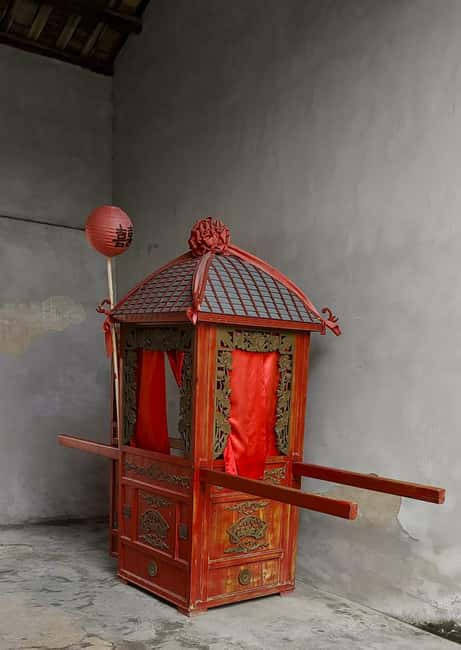
Book it if you want to see the city before the towers, and if you value explanations over a simple photo stop. The Hakka residence is the centerpiece, with its 300-plus rooms, old kitchen, surviving furniture, and Confucian classrooms. The temple and Longgang River add welcome variety.
I would especially recommend it to first-time visitors who want a local history outing, repeat visitors who have already covered modern Shenzhen, and anyone interested in architecture, religion, or environmental repair. Jimmy’s clear English and patient approach are a useful bonus when he is your guide.
Skip it if you dislike walking, need a meal included, or want a major landmark close to central Shenzhen. For everyone else, $47 is a fair price for a small-group afternoon that combines three parts of Shenzhen’s past and present in one manageable trip.
FAQ
Where does the tour meet?
Meet at 2pm at Nanlian Metro station on Line 3, Exit C1. The Chinese location is 南联站 C1出口.
How long does the tour last?
The guided experience lasts about 2.5 hours. From Luohu, the MTR journey to the meeting area takes about 60 minutes.
What sites are included?
The tour includes a 200-year-old Hakka residence, a Buddhist temple with about 1,000 years of history, and scenery along Longgang River and its wetlands.
Is transportation included?
Transportation between the tour sites is included. The information does not state that transportation to or from Nanlian Metro station is included.
Is the tour conducted in English?
Yes. The tour has a live English-speaking guide. Jimmy is one of the guides who may lead the experience.
Is food or water included?
No. Meals and water are not included, so bring your own water and arrange food before or after the tour.
Who should not join this activity?
The activity is not suitable for pregnant women. It is also a walking tour, so comfortable shoes are recommended.
New reviews from China
- Shanghai To Beijing Bullet Train Ticket with Local Private Transfer★ 5.0 · 12 reviews
- Shanghai Spicy Food Tour★ 5.0 · 3 reviews
- Shanghai Uncommon Historic Sites Tour★ 5.0 · 3 reviews
- Shanghai Pudong airport transfer to Disneyland:Private with Meet & Great service★ 5.0 · 3 reviews
- Shanghai Tower Observation Deck 118 floor Tickets Pre-booking.★ 5.0 · 4 reviews
- Pudong Airport to Hangzhou: Private with Meet and Greet Service★ 4.5 · 4 reviews
- Private Transfer: Hotel to Shanghai Wusongkou Cruise Terminal (Baoshan Port)★ 3.5 · 6 reviews
- Shanghai Pudong International Airport (PVG) to Shanghai Hotel★ 5.0 · 4 reviews
Tours in Shenzhen, compared.
Customizable Private Shenzhen Tour with Local guide and Car
Read our review →
Shenzhen Private Flexible Day Tour with Guide and Driver Service
Read our review →
Shenzhen Tech Tour: Robotaxi, Drone Delivery & Innovation Demos
Read our review →
Historia and Entertain Tour of the Youngest City of China
Read our review →
Tallest Building with Luxury Meal on Highest Floor
Read our review →
Huaqiangbei Insider Tour: Explore Shenzhen’s Tech Wonderland
Read our review →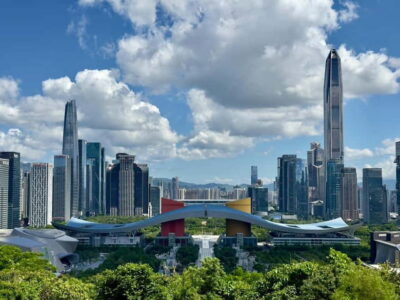
Shenzhen:8h City Walk & Future Experience Highlights Trip
Read our review →Browse the lists this tour appears in