
Reviewed · TOURS IN HONG KONG
Unveiling Hong Kong Cultural Gems [BRAND NEW 2024]
Hong Kong’s old customs are easiest to understand when you see them in the streets where they still belong. This four-hour walk links two temples, the Tai Hang fire dragon tradition, herbal tea, preserved fruit, old street signs, and a ride on the city’s iconic Ding Ding tram.
I like the way the tour mixes everyday food with living culture. The wonton noodles, milk tea or coffee, and herbal tea make the history feel close at hand. I also like the small scale: this is a private tour for your group, with guides such as Kenniess and Ling leading the way. The main drawback is the price, $157.44 per person, which is high for four hours and does not include your transport to or from the meeting point.
Key details before you book
- Two unusual temples: Visit Tin Hau Temple in Causeway Bay and Lin Fa Kung Temple in Tai Hang, both free to enter.
- A real taste of local life: Lunch includes wonton noodles and milk tea or coffee, plus a glass of herbal tea.
- Old customs still in view: See a petty person beating demonstration, a folk ritual linked with driving away bad luck.
- A short Ding Ding ride: One tram journey connects the walking route with Causeway Bay.
- A private experience: Only your group takes part, with an English-speaking licensed guide.
- A compact morning: The tour starts at 10 a.m. and lasts about four hours, with considerable walking between short stops.
Why these Hong Kong traditions matter
Many Hong Kong tours focus on skyline views, shopping, and famous food. This one takes a different route. It looks at the customs that help explain how neighborhoods functioned before modern towers and shopping centers filled the island.
The focus is intangible cultural heritage, meaning traditions, rituals, food practices, local crafts, and community stories rather than grand monuments alone. You see that idea in practice at a temple, a tea shop, a traditional confectionery store, and a street where old signs still point to the city’s earlier life.
I find this approach useful because Hong Kong can feel hard to read at first. Its streets move quickly, and the older customs are not always explained. A guide gives you the background that you would likely miss while walking on your own.
The tour is not a museum visit from beginning to end. You move through working neighborhoods, stop for food, ride public transport, and watch a folk custom. That mix gives the morning a human scale.
What else travellers book in Hong Kong:
- Hong Kong: Dolphin Cruise, Big Buddha & Lantau Island Tour
★ 4.2 · 1,512 reviews - Ngong Ping 360: Cable Car Return Tickets & Combos
★ 4.6 · 1,431 reviews - Lantau Island Day Trip – Big Buddha & Tai O
★ 4.5 · 1,328 reviews
Tin Hau Temple begins the morning
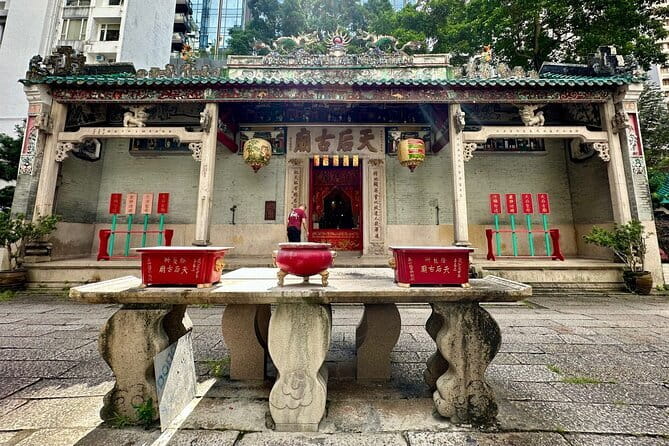
The first stop is Tin Hau Temple in Causeway Bay. The shrine was built in the 18th century by the Tai clan and honors Tin Hau, also known as the Empress of Heaven and Goddess of the Sea.
You have about 15 minutes here, and admission is free. That is enough time for a focused introduction, though not enough for a long, unhurried visit. Your guide can explain why a sea goddess has such an important place in a city shaped by fishing, shipping, and the water.
The temple is described as ancient and beautiful, with traditional architectural details that reward a close look. You may want to keep your camera away for part of the visit and simply watch how the space is used. The value is less about ticking off a major attraction and more about seeing a place of worship tied to local community life.
If you are sensitive to incense, smoke may be a consideration at temples, though the tour information does not specify conditions on the day.
Lin Fa Kung and Tai Hang’s local character
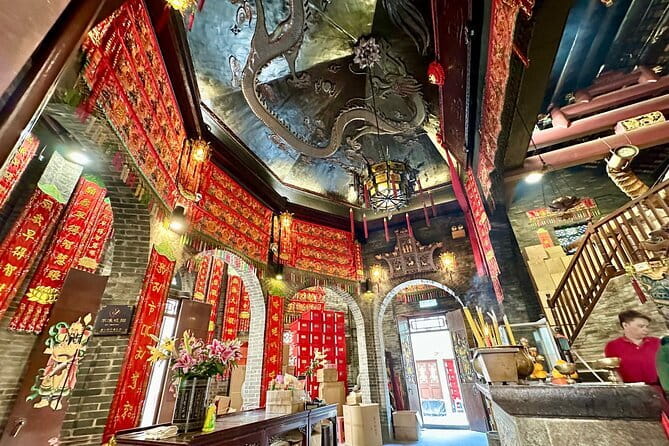
A short visit to Lin Fa Kung Temple follows. The name means Temple of Lotus, and the building has been a Declared Monument since 2014.
The temple is known for its unusual shape and a large stone inside. That detail gives the stop a distinct identity. You are not seeing a second temple that feels interchangeable with the first. The guide can point out what makes Lin Fa Kung different and explain its place in Tai Hang.
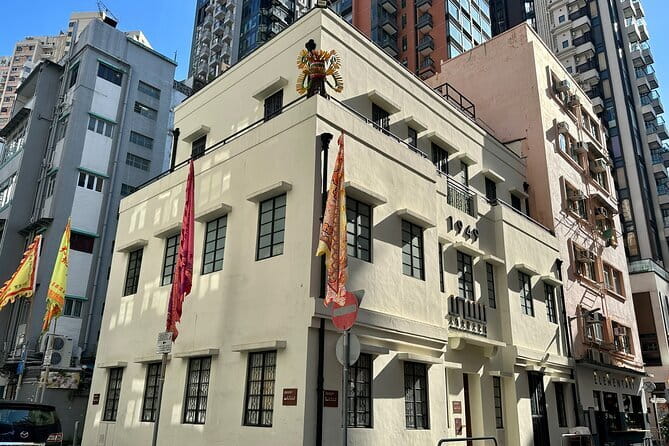
The visit lasts about 15 minutes. Afterward, you walk through the Tai Hang area, where older streets meet present-day city life. The tour uses this neighborhood as a bridge between the temples and the Fire Dragon Heritage Centre.
Tai Hang is especially important because the fire dragon tradition is connected to the community here. Walking the area before hearing about the celebration helps you understand that it is not simply a performance arranged for tourists. It grew from local custom and neighborhood belief.
The walking pace is manageable for most people, according to the supplied tour details, but you should still expect to be on your feet. Comfortable shoes are a sensible choice.
A tea stall and the Fire Dragon Heritage Centre
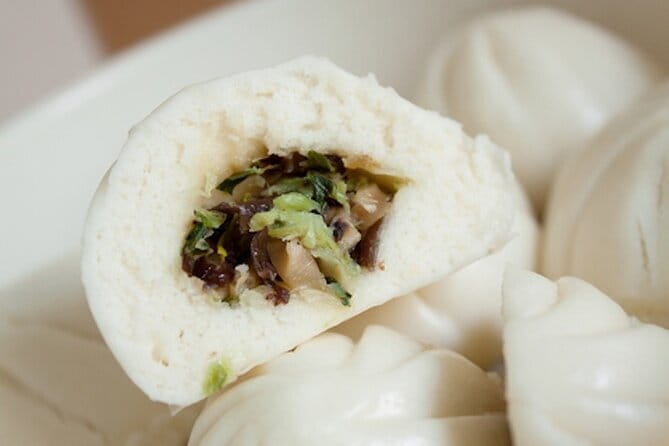
Along the route, you pass a Hong Kong-style traditional tea stall. The family-run shop has made tea for three generations. The stop is presented as a pass-by, so do not assume you will have a long tasting here. Its value is in seeing an old-style business still connected to daily life.
The Fire Dragon Heritage Centre is the next major cultural stop. The original building was constructed in 1909 and was first called Hung Shing Yi Hok, meaning Confucius free school for the poor. It was later destroyed, and the center now helps explain the fire dragon tradition and its place in Tai Hang.
You have about 10 minutes inside. That is brief, so the guide’s explanation matters. The fire dragon custom is one of the strongest reasons to choose this tour. It gives you a look at a local tradition that is far less familiar to most visitors than the Peak, the Star Ferry, or the night markets.
Do not expect a full festival during this morning visit. You are learning about the tradition at its heritage center rather than watching the complete event. For some people, that will feel too short. For others, it is a useful introduction that fits into a wider morning.
Same city, a completely different day:
- Big Bus Hong Kong Open Top Hop-On Hop-Off Sightseeing Tour
★ 4.0 · 1,077 reviews - Hong Kong Day Tour: City Landmarks & Highlights
★ 4.5 · 798 reviews - Hong Kong International Airport Plaza Premium Lounge Access
★ 3.5 · 787 reviews - Hong Kong Disneyland Park Tickets
★ 4.6 · 522 reviews
Riding the Ding Ding to Causeway Bay
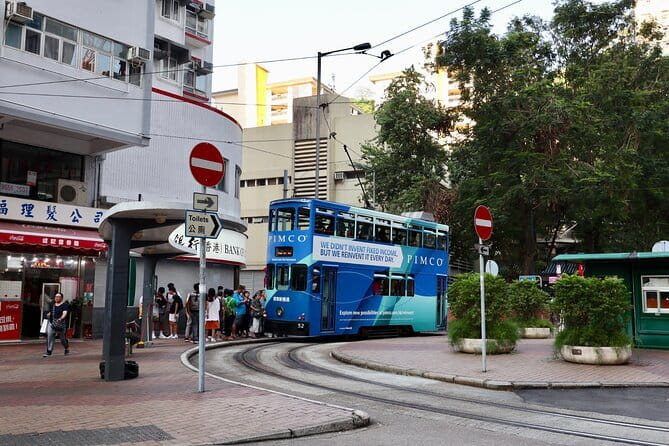
The tour includes one ride on a Hong Kong Ding Ding tram. These double-decker trams are part of the city’s everyday transport system, not a sightseeing vehicle created for visitors.
The ride links Tai Hang with Causeway Bay and gives your legs a break after the temple and neighborhood walking. It also adds a practical piece of Hong Kong life to the tour. You are not only hearing about the city’s traditions. You are moving through it as residents do.
The tram segment is only one ride, so it will not replace a full tram sightseeing trip. Still, it is a smart inclusion. The tour would feel much more like a standard walking route without it.
The group meets at Tin Hau, Causeway Bay, at 10 a.m., and finishes on Great George Street near Causeway Bay MTR station. Transport from your hotel back to the meeting point and after the tour is not included. Pickup is offered in the tour details, but you should confirm the exact arrangement when booking rather than assume private hotel transport is included in the price.
Wonton noodles, milk tea, and a welcome pause
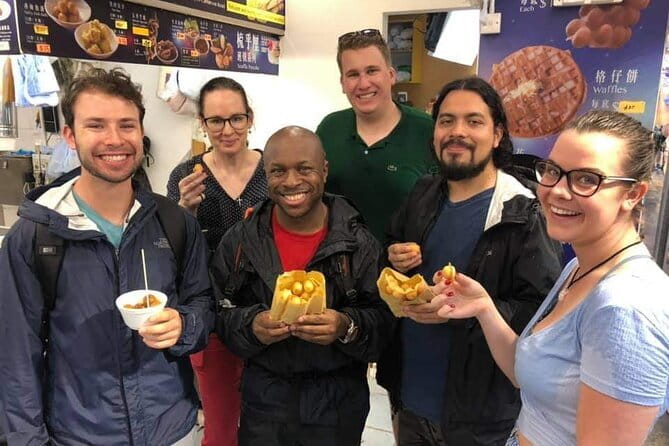
After the tram ride, you stop at a popular wonton noodle restaurant in Causeway Bay. This is the longest stop, at about 45 minutes, and lunch is included.
Each person receives wonton noodles and a cup of milk tea or coffee. This is a useful part of the price because it turns a quick snack into a proper pause. Hong Kong-style wonton noodles are a classic local meal, and eating them during the tour gives you a direct connection to the city’s food culture.
The wording supplied for the meal is slightly unclear about portion size, so I would not book this expecting a large feast. It is best viewed as a set lunch during a walking tour. If you want extra food or drinks, those purchases are your responsibility.
Milk tea is the more traditional choice, but coffee is also available. If you have dietary restrictions, ask ahead. The tour details do not list substitutions or allergy arrangements.
Old street signs tell a quieter story
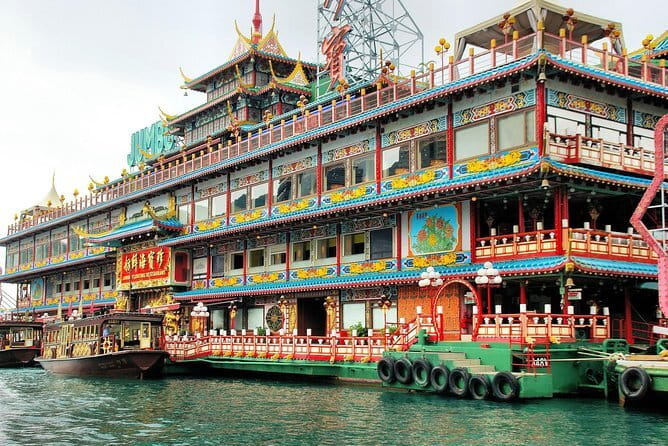
After lunch, the guide explains historic street names and signs in Causeway Bay. The stop lasts about five minutes, but the subject has more depth than the short timing suggests.
Hong Kong’s street names reflect its years as a British colony as well as older Chinese customs and local geography. Signs can reveal how the city was organized, what trades once took place nearby, and how official naming changed over time.
This is a quick look rather than a formal architecture walk. You may find the stop most useful if you enjoy small clues: wording on a sign, an older name, or a detail that connects the modern road to an earlier period. Admission is not included, though this is an outdoor stop and there is no listed entry charge.
Seeing petty person beating in practice
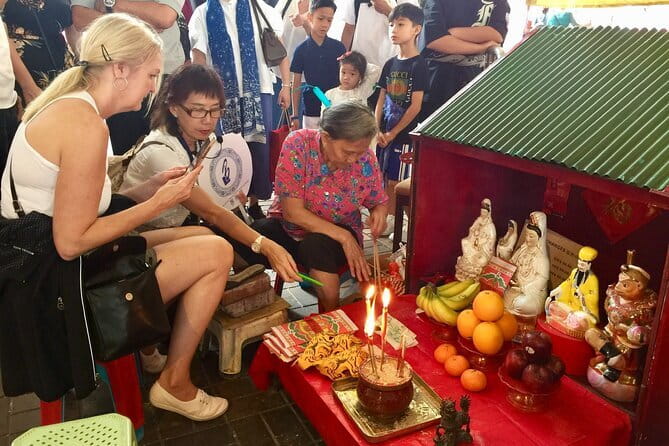
One of the most unusual parts of the morning is a demonstration of petty person beating, called da siu yan in Cantonese. This folk ritual is associated with dispelling evil, particularly troubles connected with a troublesome person or bad influence.
The demonstration lasts about 20 minutes and is included. It gives you a chance to see a form of living culture that is easy to miss if you only visit temples and museums.
The custom may sound comic at first, but it has a serious cultural purpose. The guide can place it in context and explain how people use ritual to deal with fears, conflict, and bad luck. You should approach it with curiosity and respect rather than treating it as a staged stunt.
This is also a good example of why a guide matters. Without explanation, the action could seem odd or confusing. With context, it becomes a window into folk belief and everyday coping practices.
Herbal tea and preserved fruit to finish
The final stops focus on food traditions. First comes a traditional herbal tea shop, where you receive one glass of herbal tea.
Herbal tea has a long place in Hong Kong folk culture. People drink it for reasons tied to health, balance, and family knowledge. The tea may taste bitter or unfamiliar if you normally prefer sweet drinks, but that is part of the point. You are trying a drink with cultural meaning, not ordering a neutral refreshment.
The tour then passes a traditional Chinese confectionery shop. Hong Kong has a long tradition of making preserved fruits, and this old food industry is part of the city’s culinary identity.
Only about five minutes are assigned to this stop, and admission is free. It is more of a final introduction than a shopping session. There are no mandatory shopping stops, which is important if you want cultural context without pressure to buy.
You can purchase extra food or drinks during the tour, but those costs are not covered. The included items are the lunch, one herbal tea, and the listed tram ride.
Is $157.44 a fair price?
At $157.44 per person, this is not a budget walk. The value depends on how much you want explanation and private guiding rather than a long list of major attractions.
The price includes a licensed English-speaking guide, the wonton noodle lunch, milk tea or coffee, one tram ride, herbal tea, and the petty person beating demonstration. It also covers a private experience, so your group is not combined with strangers.
That makes the cost easier to justify for two or more people who want a tailored morning. It is harder to justify if you mainly want inexpensive transport, a broad city overview, or more time inside each site.
The tour is also often booked well in advance, with an average booking lead time of 111 days. If your dates are fixed, reserve early. The operator offers free cancellation up to 24 hours before the start time. Poor weather can lead to a new date or a full refund, which matters because the tour includes outdoor walking.
Who will enjoy this four-hour route?
I would choose this tour if you have already seen the obvious Hong Kong sights, or if you want your first morning to explain how the city works beneath the skyline.
It suits you if you enjoy:
- Small temples and local worship
- Traditional food in simple neighborhood settings
- Folk customs and cultural explanation
- Short walks mixed with public transport
- A private guide rather than a large group
- A moderate pace with time for lunch
It may not suit you if you want long temple visits, extensive museum time, shopping, or dramatic viewpoints. The stops are short, and the tour covers a lot in four hours.
Families can take part, and a maximum of two children aged 2 to 11 may receive a special discount when accompanied by two paying adults. Most people can participate, but you should be ready to walk between stops and use city streets.
Should you book Unveiling Hong Kong Cultural Gems?
Book it if you want Hong Kong explained through its food, temples, neighborhood customs, and small historic details. The strongest parts are the private format, the unusual petty person beating demonstration, the Tai Hang fire dragon connection, and the chance to eat wonton noodles during the route.
I would skip it if $157.44 feels too high for a half-day activity or if you prefer to explore at your own speed. For the right person, this is a thoughtful introduction to local culture, with guides such as Kenniess and Ling adding the personal explanation that makes short stops worthwhile.
FAQ
Where does the tour start?
The tour starts at Tin Hau in Causeway Bay, Hong Kong, at 10 a.m.
Where does the tour end?
It ends on Great George Street in Causeway Bay, near Causeway Bay MTR station.
How long does the tour last?
The tour lasts approximately four hours.
Is the tour private?
Yes. Only your group participates in the activity.
Is an English-speaking guide included?
Yes. The tour is led by a friendly English-speaking licensed tour guide.
What food is included?
Each person receives wonton noodles and one cup of milk tea or coffee for lunch. One glass of herbal tea is also included.
Is the Ding Ding tram ride included?
Yes. The tour includes one ride on a Hong Kong Ding Ding tram.
Is the tour suitable for children?
Most people can participate. Up to two children aged 2 to 11 may receive a special discount when accompanied by two paying adults.
Are hotel transfers included?
Transportation from your hotel to the meeting point and back to your hotel is not included. Pickup is offered, so confirm the exact pickup arrangement when booking.
Can I cancel for a full refund?
You can cancel for a full refund up to 24 hours before the experience start time. If poor weather causes cancellation, you will be offered another date or a full refund.
New reviews from Hong Kong
- Victoria Peak Tram and Sky Terrace 428 Admission Hong Kong★ 4.5 · 33 reviews
- Walking Tour in Hong Kong – Local Experience (New & Best)★ 4.5 · 33 reviews
- Full Day Private Trip in Hong Kong( impeccable local )walk tour★ 5.0 · 11 reviews
- Hong Kong Guided Dinner + Laser Show Lounge Entry (2023) | 200+ booked★ 3.5 · 7 reviews
- Group Vegetarian Food & Cultural Tour★ 5.0 · 16 reviews
- Hong Kong Victoria Harbour Sightseeing Cruise Tickets★ 4.5 · 8 reviews
- The Legendary Bruce Lee Experience Tour★ 4.5 · 9 reviews
- STARLIGHT: Victoria Harbour Night Yacht Tour★ 4.5 · 38 reviews
Tours in Hong Kong, compared.
Dolphin Cruise, Big Buddha & Lantau Island Tour
Read our review →
Ngong Ping 360: Cable Car Return Tickets & Combos
Read our review →
Hong Kong Day Tour: City Landmarks & Highlights
Read our review →
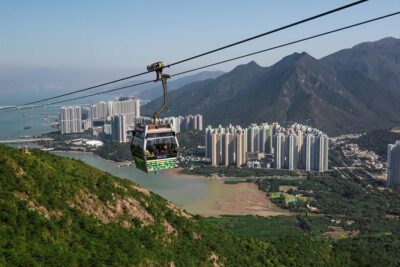
Ngong Ping 360 Cable Car Ticket on Lantau Island
Read our review →
Private Hong Kong Tour with a Local, Highlights & Hidden Gems 100% Personalised
Read our review →
Dark Side of Hong Kong – Kowloon Caged Homes Walking Tour
Read our review →Browse the lists this tour appears in